Per the BSEE borehole file, there were 2 deepwater exploratory well starts since 4/1/2023. The Shell well is another GoM milestone in that it is the 150th well spudded in >8000′ of water. The first was in the year 2000.
Operator
spud date
location
water depth
Chevron
5/5/2023
Mississippi Canyon 608
6678′
Shell
4/13/2023
Alaminos Canyon 728
8660′
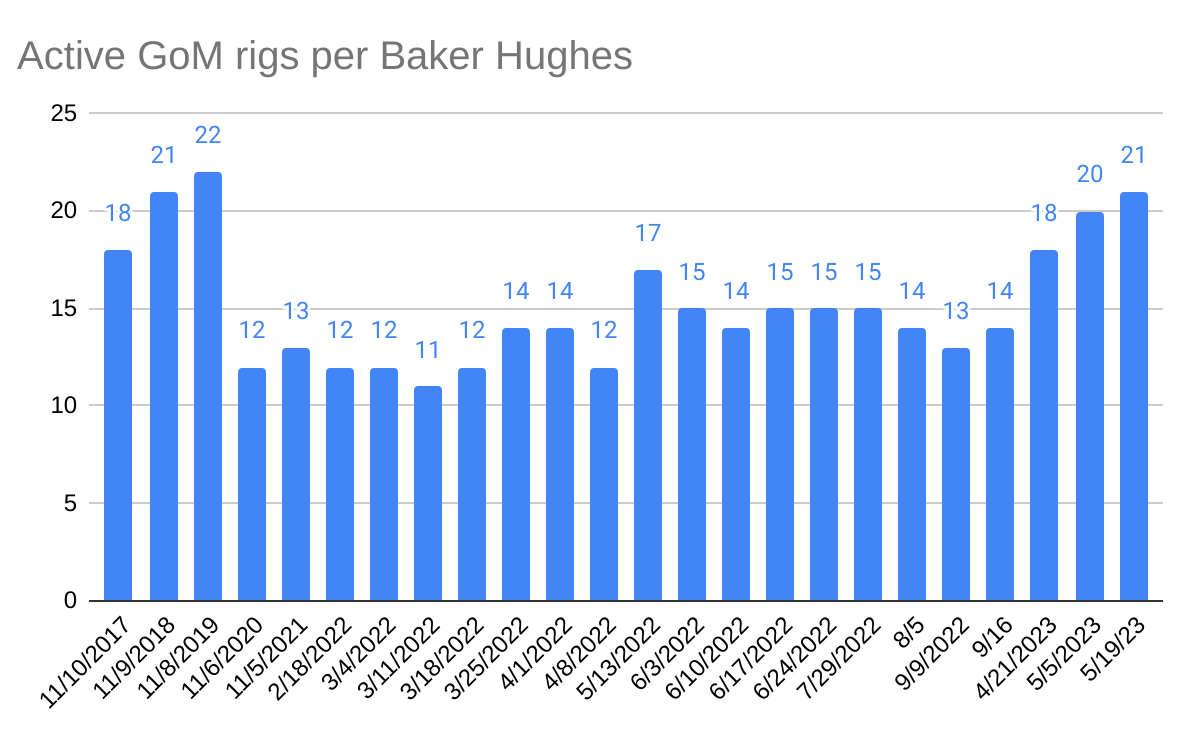
Arena and Cantium continue to drive shelf drilling. Below are the shelf development wells since 4/1/2023:
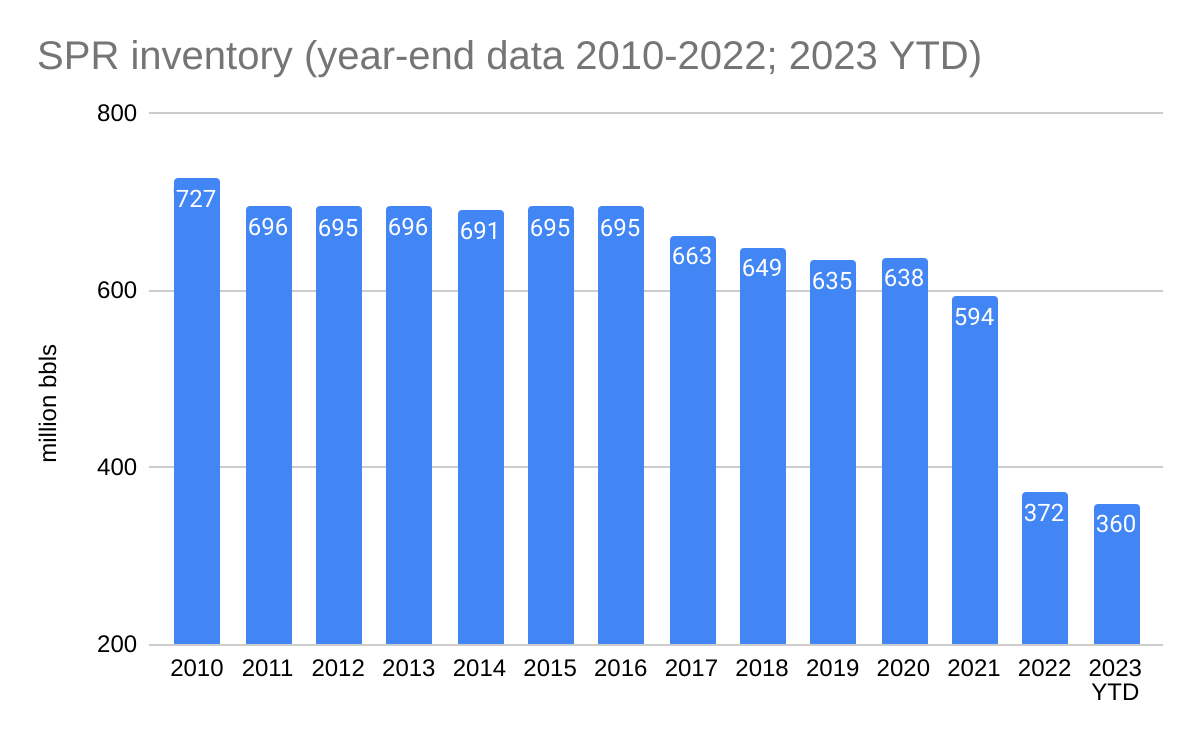
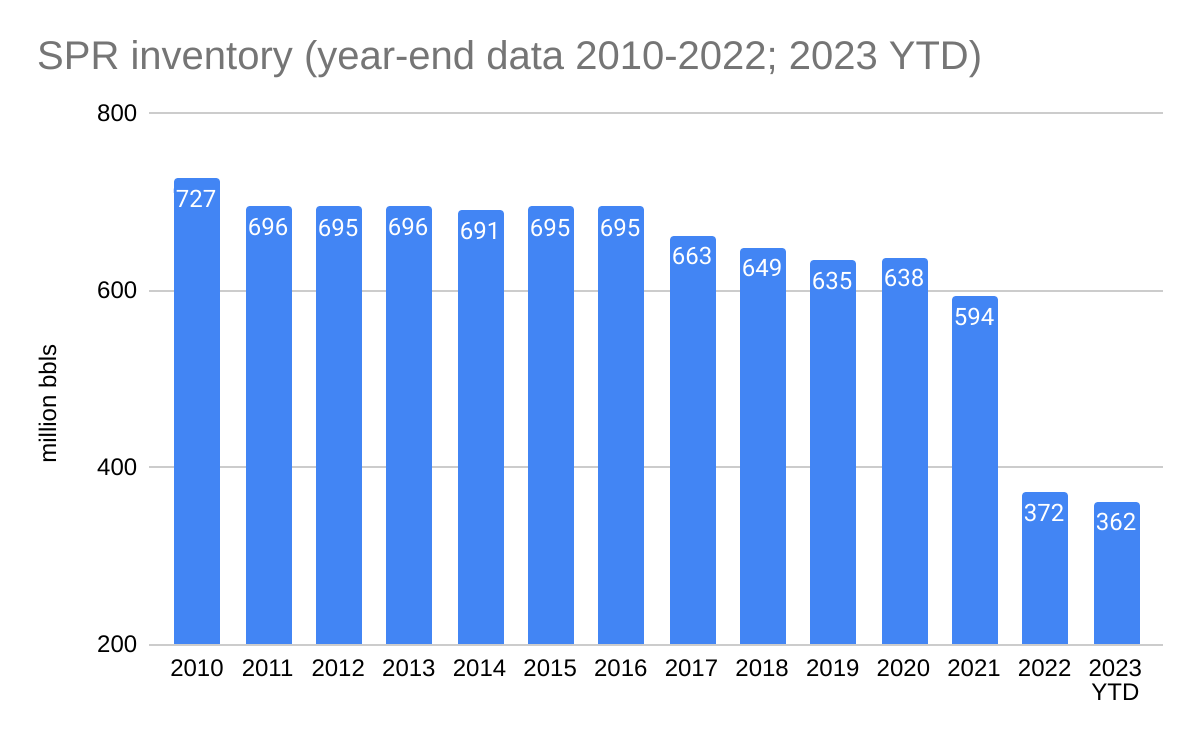
Per the latest update (5/12/2023), the Strategic Petroleum Reserve is down to 359.6 million barrels, more than 2 million bbls below the previous week. The “deficit” (i.e. the volume needed to completely refill the reserve) is now 367 million bbls, and you can’t print oil. The reserve volume is the lowest since 9/23/1983, when the SPR was still being filled.
A complete refill at the maximum rate would require 536 days.
This excludes acquisition, operational, and maintenance delays, which are likely to be significant.
Just adding 100 million barrels would require at least 146 days
Purchases of that magnitude significantly affect oil markets. Total US oil production is currently about 12 million bopd.
Filling the reserve to its 727 million barrel capacity was a 28 year process.
But fear not, DOE is soliciting the replacement of 0.1 to 1.0% of the oil that has been withdrawn from the SPR since January 2021. This amounts to only 2.5 to 25% of the oil sold from the reserve in 2023 alone (when we were supposedly refilling the reserve) and 0.04 to 0.4% of capacity!
DOE issued a solicitation May 15 for the oil, with delivery to occur Aug. 1-31, at a minimum offer quantity of 300,000 bbl and a maximum offer of 3 million bbl. Requests for earlier deliveries will be accommodated to the extent possible on a best-efforts basis.
Regulatory fragmentation occurs when multiple federal agencies oversee a single issue. Using the full text of the Federal Register, the government’s official daily publication, we provide the first systematic evidence on the extent and costs of regulatory fragmentation. We find that fragmentation increases the firm’s costs while lowering its productivity, profitability, and growth. Moreover, it deters entry into an industry. These effects arise from regulatory redundancy and, more prominently, regulatory inconsistency between agencies. Our results uncover a new source of regulatory burden: companies pay a substantial economic price when regulatory oversight is fragmented across multiple government agencies.
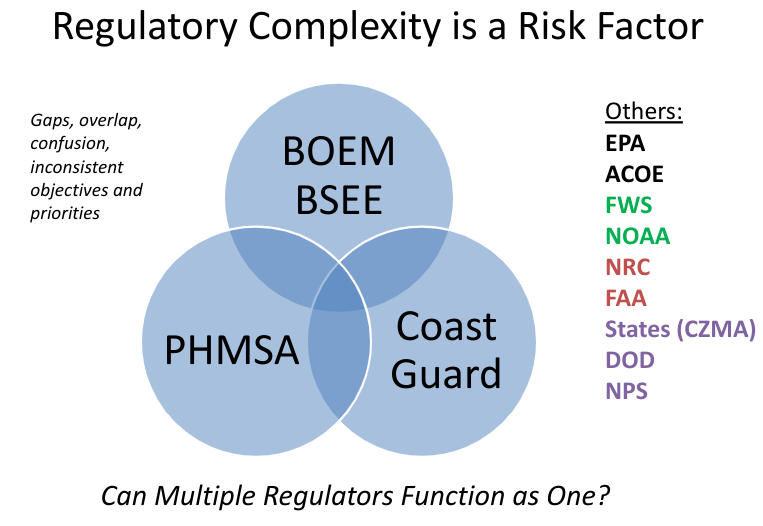
The US has a highly fragmented offshore regulatory regime that has become even more fragmented with the complex division of responsibilities between BOEM and BSEE. The slide below is from a presentation on this topic.
While the linked paper focuses on costs and productivity, fragmentation may also be a significant safety risk factor. A UK colleague once asseted that “overlap is underlap,” and I believe there is something to that. If multiple agencies have jurisdiction over a facility, system, or procedure, the resulting redundancy, inconsistency, and ambiguity may create significant gaps in industry and governmental oversight.
For example, regulatory fragmentation was arguably a significant factor in the most fatal US offshore fire/explosion incidents in the past 35 years – the South Pass B fire in 1989 and the Macondo blowout in 2010. More specifically:
South Pass 60 B: The investigation of the 1989 South Pass 60 B platform explosion that killed 7 workers noted the inconsistency in regulatory practices for the platform, regulated by DOI, and the pipeline regulated by DOT. Cutting into the 18-inch pipeline riser did not require an approved procedure, and the risks associated with hydrocarbon pockets in the undulating pipeline were not carefully assessed. Oversight by the pipeline operator was minimal, and the contractor began cutting into the riser without first determining its contents. A massive explosion occurred and 7 lives were lost.
One would hope that this major spill will lead to an independent review of the regulatory regime for offshore pipelines. Consideration should be given to designating a single regulator that is responsible and accountable for offshore pipeline safety (a joint authority approach might also merit consideration) and developing a single set of clear and consistent regulations.
Macondo: While the root causes of the Macondo blowout involved well planning and construction decisions regarding the casing point, cementing of the production casing, and well suspension procedure, the blowout would likely have been at least partially mitigated (and lives saved) if the gas detection system was fully operable, the emergency disconnect sequence was activated in a timely manner, flow was automatically diverted overboard, or engine overspeed devices functioned properly. Indeed, regulatory overlap led to underlap as summarized below:
Macondo contributing factor
jurisdiction
flow not automatically diverted overboard
DOI/USCG (also concerns about EPA discharge violations)
some gas detectors were inoperable
DOI/USCG
generators did not automatically shutdown when gas was detected
USCG/DOI
failure to activate emergency disconnect sequence in a timely manner (training deficiencies and chain-of-command complications)
USCG/DOI
engine overspeed devices did not function
USCG/DOI
hazardous area classification shortcomings
USCG/DOI
MOUs and MOAs are seldom effective regulatory solutions as they are often unclear or inconclusive, and tend to be more about the interests of the regulator and protecting turf. They also do nothing to ensure a consistent commitment among the regulators. In the case of the US OCS program, BOEM-BSEE have a greater stake in the safety and environmental outcomes given that offshore energy is the reason for their existence. That is not the case for any of the other regulators identified in the graphic above.
Among the more important workstreams of the International Regulators’ Forum, a group of offshore safety regulators, are country performance data which provide a means of measuring and comparing offshore safety performance internationally. As we near the midpoint of 2023, the last data posted are for 2020. This lag makes it difficult to assess current trends and risks.
In addition to more timely updates, there are significant holes in the IRF data sets. For example, per IRF guidelines fatalities associated with illnesses or “natural causes” are not counted; nor are helicopter incidents that are not in the immediate vicinity of an offshore facility. Also, incidents associated with geophysical surveys, many pipeline segments, and (inexplicably) subsea wells and structures are excluded (see excerpts below).
Exclude Geophysical and Geotechnical surveying and support vessel operations not directly associated with activities at an Offshore Installation
Exclude horizontal components associated with incoming and outgoing pipelines and flowlines beyond either the first flange at the seabed near an Offshore Installation or a 500 meter radius, whichever is less.
Exclude helicopter operations at or near an Offshore Installation
Exclude mobile or floating Offshore Installations being transported to or from the offshore location.
Exclude subsea wells and structures.
Do not include Fatalities and Injuries that are self-inflicted.
Do not include Occupational Illnesses in Fatality or Injury counts.
Do not include fatalities that are due to natural causes.
Perhaps the IRF can consider these and other data collection and publication issues at their next conference. Because voluntary incident reporting schemes have always suffered from incomplete or selective reporting, the regulators have to drive incident data collection and transparency.
Parallel US concerns about offshore incident data: After a review of BSEE fatality data provided in response to a Freedom of Information Act request, WWNO reported that “nearly half of known offshore worker fatalities in the Gulf of Mexico from 2005 to 2019 didn’t fit BSEE’s reporting criteria.” They noted that 24 of the 83 known offshore worker fatalities during that period were classified as “non-occupational.” (As previously posted, the rash of “natural cause” deaths (12) at Gulf of Mexico facilities in 2021 and 2022 is particularly troubling and warrants further investigation.)
Oil and Energy Minister Terje Aasland takes over the constitutional responsibility for the Petroleum Safety Authority with effect from 11 May 2023. Labor and Inclusion Minister Marte Mjøs Persen previously held responsibility. With this, the government wishes to strengthen comprehensive and good management of HSE, safety and preparedness on the Norwegian continental shelf.
The transfer of responsibility to the Ministry of Oil and Energy (OED) is in line with the main principle in Norwegian administration that one ministry and one cabinet minister have the constitutional responsibility for the sector as a whole.
The Petroleum Safety Authority and the Norwegian Petroleum Directorate, the resource management agency, now report to the same ministry. Prior to a December 2003 decree that established the PSA, both the safety and resource functions were administered by the NPD.
Could this be the start of a trend toward better coordination of regulatory and resource management functions? If so, that would be a positive development. Fragmented oversight is neither in the best interest of safety nor resource management. (More on this in an upcoming post.)
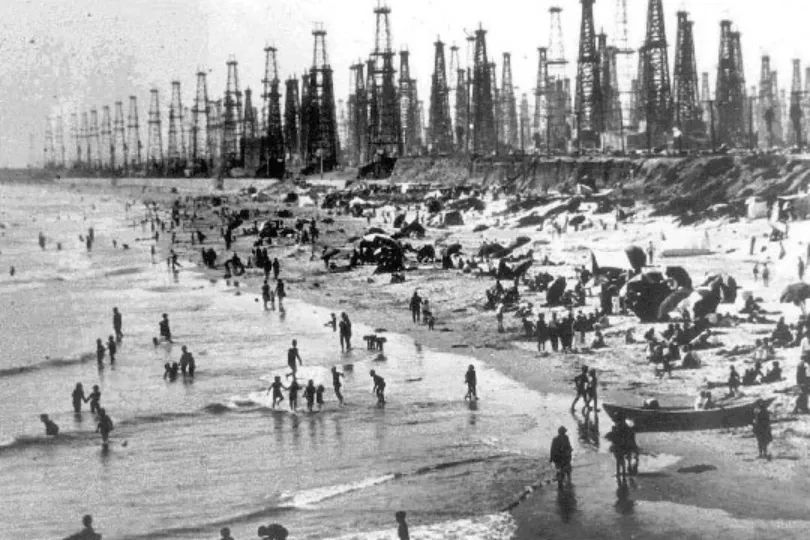
Exploration and development have improved dramatically over the past 100 years, and have become much more efficient. Only 57 platforms are producing about 1.7 million barrels/day in the deepwater Gulf of Mexico. Still work to do and continuous improvement must always be the objective.
Perdido Platform, Gulf of Mexico, 7835′ water depth, 320km south of Freeport, Texas
The data in the paper appear to be reasonably accurate. However, there is one glaring error regarding Pacific operations, and the reference to the Macondo blowout in the environmental discussion is rather provocative and misleading.
Per the authors:
California wells are drilled in relatively shallow water—mostly less than 100 feet—while GoM wells can be in up to 10,000 feet of water.
With regard to the environmental risks, the Nature Energy paper’s reference to the Macondo blowout, while muted, is what some media outlets embraced. Per the authors:
Releases from improperly abandoned wells will probably be chronic and small compared with Macondo, but the underlying biochemical and ecological processes that influence the ecological impacts have many similarities.
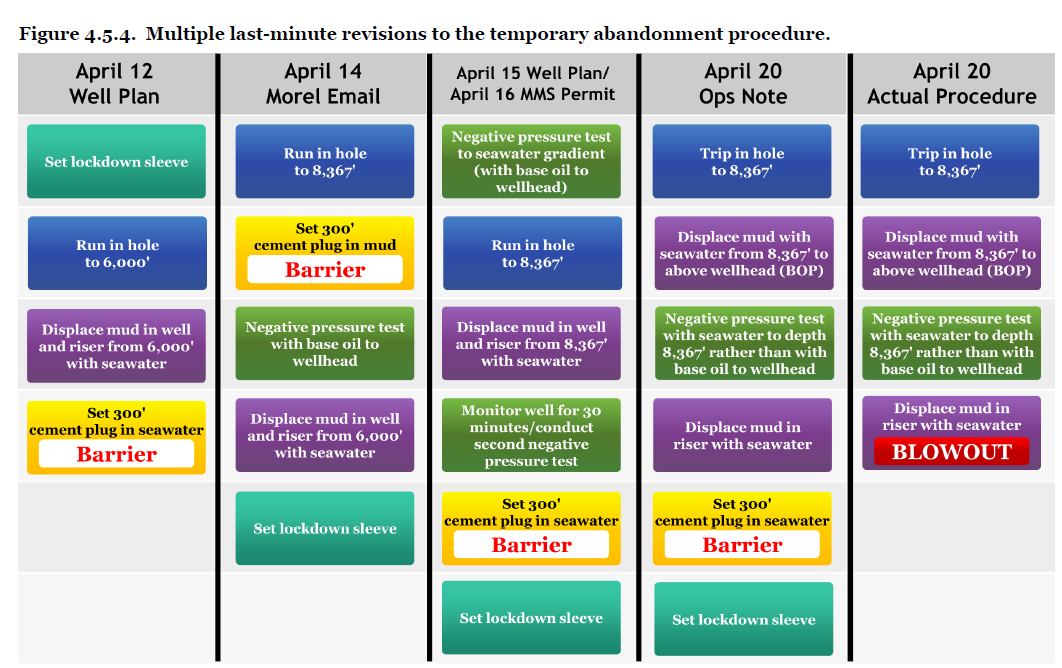
The Macondo well blew out while it was being suspended in preparation for subsequent completion operations. Ill advised changes to the well suspension plan were among the primary contributing factors to the blowout (see diagram below). The Macondo well was entirely different from the depleted end-of-life wells that are the subject of the paper.
Some media outlets ran with the Macondo angle, weak as it was. This ABC news piece featured numerous Macondo pictures. Other outlets noted that Macondo was a temporarily abandoned well, which it was not. The Macondo well never got to that point.
National Commission, Chief Counsel’s Report, p. 132
There are a number of recent articles related to the Guyana Supreme Court ruling on Exxon’s financial assurance obligations. An Oil Now piece (quoted below) is the most informative. It seems that the Supreme Court decision is based on a provision of Exxon’s EPA permit and that EPA is siding with Exxon in this dispute.
The Guyana government and the Environmental Protection Agency (EPA) are set to appeal a recent Guyana Supreme Court ruling that determined that the EPA and ExxonMobil affiliate, Esso Exploration and Production Guyana Limited (EEPGL), breached the terms of the Liza 1 environmental permit. The permit was revised and granted to EEPGL last year for operations in the Stabroek Block, offshore Guyana.
Justice Sandil Kissoon granted several declarations, including that the EPA failed to enforce compliance by EEPGL of its Financial Assurance obligations to provide an unlimited Parent Company Guarantee Agreement and/or Affiliate Company Guarantee Agreement to indemnify and keep indemnified the EPA and the Government of Guyana against all environmental obligations of the Permit Holder (EEPGL) and Co-Venturers (Hess and CNOOC) within the Stabroek Block.
While acknowledging the court’s ruling, the Government of Guyana, as a major stakeholder, maintained in a statement that the Environmental Permit imposes no obligation on the Permit Holder to provide an unlimited Parent Company Guarantee Agreement and/or Affiliate Company Guarantee Agreement. The government believes that Justice Kissoon erred in his findings and that the ruling could have significant economic and other impacts on the public interest and national development.
Unlimited liability is a rather daunting and open-ended obligation that would trouble permittees in any industry.
In the US, the liability for oil spill cleanup costs is unlimited for offshore facilities, but there is a liability cap for the resulting damages. That cap is currently $167.8 million after a recent inflation adjustment. BP, of course, paid far more than that for damages associated with the Macondo blowout. BP’s costs, which amounted to an astounding $61.6 billion, were both voluntary and compulsory as a result of agreements and settlements. Keep in mind that the damage liability limit was only $75 million at the time. One can imagine what would have happened if a company with less financial strength or more inclination to fight had been responsible for the spill.
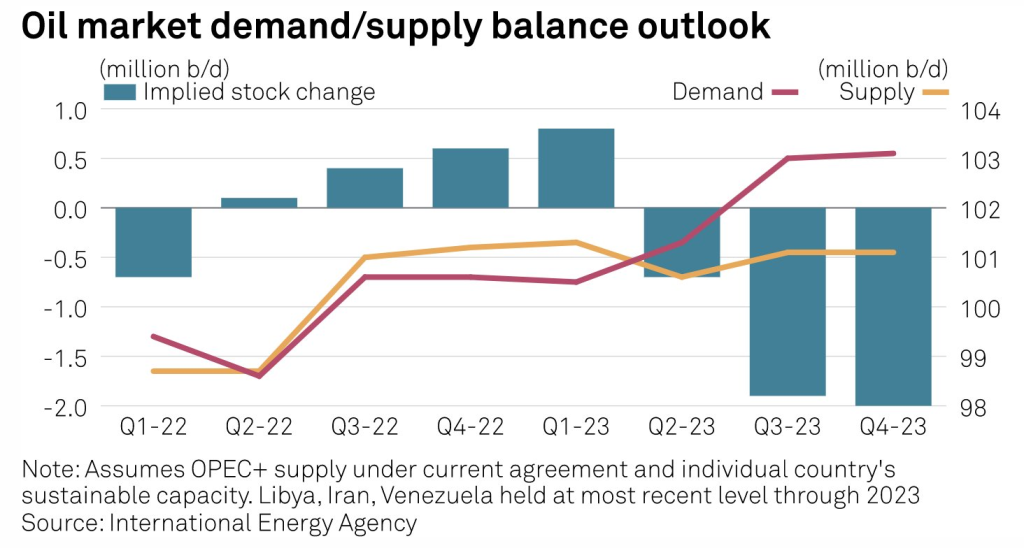
Per Bloomberg, DOE says they could begin refilling the reserve this fall “if the price is right.” What if it isn’t?
Keep in mind that the maximum refill rate is 685,000 bopd. A complete refill at the maximum rate would thus require 533 days, not counting acquisition, operational, and maintenance delays. Filling the reserve to its 727 million barrel capacity was a 28 year process.
Lastly, when will DOE conduct the strategic SPR review called for by the General Accountability Office (GAO) in 2018, well before DOE began rashly withdrawing oil to moderate prices? DOE concurred with GAO’s priority recommendation for periodic strategic reviews of the SPR that would be submitted to Congress. DOE told GAO that they “would complete a SPR Long-Term Strategic Review by the end of fiscal year 2021–5 years from the last review in 2016.” That review has still not been completed.


 Bud's Offshore Energy (BOE)