Feeds:
Posts
Comments

Archive for the ‘Offshore Energy – General’ Category

John Smith shared the attached Santa Ynez Unit regulatory update for the 8 state agencies that have oversight roles (see regulatory fragmentation).

John notes that Exxon’s March 26 contractual deadline for Sable to have the SYU up and running is fast approaching.  What will Exxon do in the likely event that Sable fails to meet that deadline? Does Exxon want to re-enter the SYU legal and regulatory quagmire?

The SYU’s 500+ million barrels of oil, 3 deepwater platforms, and onshore processing facilities are an enormous prize, but is that prize attainable?

Meanwhile, the latest skirmish between Sable and the Office of the State Fire Marshal (OFSM) pertains to metal loss anomalies and inspection tool tolerances. The dispute is summarized in the linked filing.

Sable contends that the Fire Marshal’s letter contradicts guidance from OSFM staff and provides examples. Sable goes a step further at the end of their response by calling for the FIre Marshal to coordinate better with the experts on his staff:

We respectfully request that, given this background, you coordinate further with the expert team at OSFM and revisit the statements in your October 22nd letter.”

It’s not looking good for a quick resolution of these issues.

Read Full Post »

Good: OCS oil and gas permitting and inspections appear not to be significantly affected by the govt shutdown to-date. 14 planning documents were approved on Oct. 21, and 37 drilling permits have been approved in Oct. (through 10/21).

152 facility inspections were conducted from 10/1 through 10/19. Natural Resources Worldwide (NRW), which is currently the operator of just one Cox legacy platform, has the dubious distinction of being the Shutdown’s Shut-in Leader. 16 Incidents of Non-Compliance (9 warnings and 7 component shut-ins) were issued to NRW during a single facility inspection in October.

Bad: This level of effort is not sustainable given limits on offsetting funds from fees, rentals, etc.

Ugly: The personnel who are performing these duties are not being paid during the shutdown. The longer the shutdown drags on, the greater the hardship on those individuals and their families. Shameful!

Warren Buffett’s proposal would stop deficit spending and address the root cause of shutdowns:

Buffett: I could end the deficit in five minutes. You just pass a law that says that any time there’s a deficit of more than three percent of GDP, all sitting members of Congress are ineligible for re-election.

Read Full Post »

Energy Secretary Chris Wright

In a post on X, Chris Wright commented:

Only in California! Newsom is blocking oil production off California’s coast from reaching their own refineries, driving gasoline prices even higher for Californians! Now, this oil production will have to be shipped elsewhere, lowering gas prices for other areas— just not for California! This is the opposite of common sense!

BOE was a fan of Chris Wright long before he became Energy Secretary, and I agree that the resumption of Santa Ynez Unit production is economically desirable for California and the nation. However, his comment implies that OS&T processing and tanker transport is a realistic option, and I do not believe that is the case.

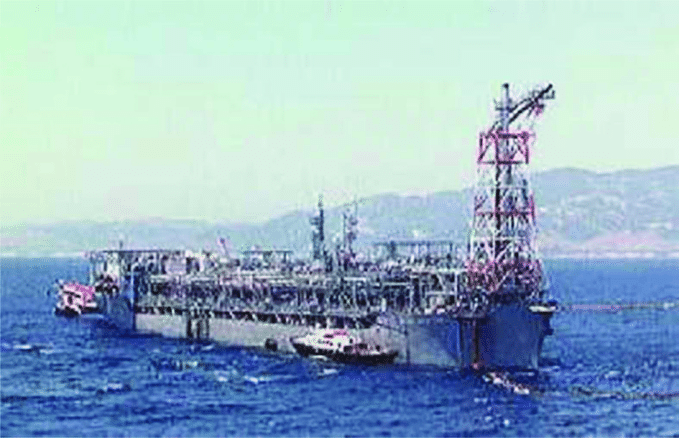
John Smith and I have discussed Sable’s OS&T announcement on a number of occasions, and we don’t see a reasonable path forward for this option. In addition to the significantly higher capital and operational costs and the need to acquire and retrofit a suitable floating production, storage, and offloading vessel (FPSO), the legal and permitting challenges could be even more complex than for the pipeline option (as daunting as that may sound).

The OS&T option would require a revised development and production plan, and the associated environmental review (almost certainly an EIS).  An EIS would not favor this option, and the California Coastal Commission would surely rule that the OS&T/tanker alternative was inconsistent with their CZM plan. (Keep in mind that the SYU/OS&T production in the early 1980’s was approved prior to the passage of the Coastal Zone Management Act.) The Secretary of Commerce could overrule the Commission’s consistency determination, but legal objections to the override would likely delay the project for years and have a good chance of success.

Onshore processing and pipeline transportation using existing facilities is clearly the environmentally and economically preferable option. The only reasonable path forward for Sable or Exxon is to continue to pursue the onshore pipeline approvals. Federal attention should focus on jurisdiction over that pipeline, which is inherently an interstate line because it transports OCS production, and State actions that are blocking interstate commerce.

Finally, keep in mind that the SYU would still be producing today were it not for the entirely preventable pipeline rupture and the resulting Refugio oil spill. Plains Pipeline, the party responsible for this ugly incident, is no longer the owner, but that doesn’t comfort coastal residents; nor does it absolve the companies that transported their oil through the line from all responsibility.

The Refugio spill will be discussed further in an upcoming post.

·

Read Full Post »

John Smith shared the linked ruling against Sable Offshore and in favor of the California Coastal Commission. On February 18, 2025, Sable had filed a petition against the Commission requesting, among other things, declaratory relief for impairment of vested rights.

Today, Judge Thomas Anderle concluded:

As the above discussion demonstrates, the issue before the Court is not whether the specific work conducted by Sable was or is ultimately necessary or appropriate for pipeline safety. The issue before the Court is whether the Commission abused its discretion in issuing the April 10 Orders under the standards for review by petition for administrative writ of mandate.

Based on the foregoing analysis and a review of all of the arguments of the parties and the AR, the Court finds the Commission’s factual findings are supported by substantial evidence and that Sable has not met its burden to show an abuse of discretion by the Commission in issuing the April 10 Orders.

Accordingly, the petition for administrative mandate as set forth in the first cause of action of Sable’s FAP will be denied.

The road ahead for Sable continues to get rockier, and their share price took a major hit today.

Read Full Post »

The Snorre field is in 300-380m of water in the North Sea ~200 km west of Floro.

According to Reuters and others, Equinor will no longer pursue electrification of Snorre A and B, Heidrun, Aasgard B, and Kristin platforms, but still plans to proceed with projects at Grane and Balder fields.

A number of BOE posts since Jan. 2022 have questioned Norway’s electrification strategy for offshore platforms. Our reasons:

  • Most offshore platforms produce sufficient gas to support their power demands
  • Assuming gas that is not used to power a platform is marketed and consumed elsewhere, the net (global) reduction in CO2 emissions from electrifying offshore platforms is negligible. (Perhaps there is actually a small increase in net emissions given the power required to transport the gas to markets and the emissions associated with onshore power generation).
  • Offshore power demands are highly variable, especially when drilling operations are being conducted.
  • Gas turbines are reliable, and capable of responding to variable power demand. Excess generation capacity is typically provided.
  • Power from shore increases the cost of platform operations and could decrease ultimate recovery of oil and gas resources.
  • Per NPD, electrification of the shelf will increase electricity prices for onshore consumers and increase the need for onshore facility investment.
  • Gas turbines or diesel generators are still necessary to satisfy emergency power needs at the platforms.
  • Long power cables are vulnerable to damage (accidental or intentional), as are onshore power stations.

The reliability, cost, and cable vulnerability concerns have clearly been validated. The reality is that powering distant platforms from shore increases operating costs, safety risks, and onshore electricity prices with no net environmental benefit.

It also seems rather hypocritical for a major natural gas exporter to prevent offshore operators from powering their platforms with gas produced at their platforms.

Read Full Post »

In light of the fantastic Middle East news, planning for the redevelopment of Gaza is underway. The Gaza Marine Gas Field should be a high priority given the power generation and revenue potential.

The field, which was discovered in 1999 by British Gas (now part of Shell), is located approximately 30-36 km off the coast of Gaza in the eastern Mediterranean and has estimated natural gas reserves of ~ 1 Tcf.

Who should be licensed to develop the field? In June 2023, there was a proposed agreement between the Palestinian Authority and an Egyptian consortium led by state-owned Egyptian Natural Gas Holding Company (EGAS). A resurrection of this arrangement may align with Palestinian interests. EGAS has experience in Mediterranean gas projects including the giant Zohr field (see map below).

Other candidates for developing the Gaza Marine field (pure speculation):

  • Chevron would be a logical choice given their extensive eastern Mediterranean experience as a result of their acquisition of Noble Energy. However, there might be concerns about undue US and Israeli control of this important resource.
  • Regional giants like Saudi Aramco, Qatar Energy, and Abu Dhabi National Oil Company (ADNOC) would be good candidates.
  • Another interesting possibility might be Equinor, which is 2/3 owned by the Norwegian govt. Equinor seems to sometimes make socially desirable investments that are less profitable.

Some combination of the above companies might also be a possibility. In any event, it’s critical to manage this resource in a manner that best benefits the recovery effort.

Read Full Post »

California Senate Bill 237 — disapprovingly dubbed by some environmental groups as Newsom’s “Drill Bill” —  is meant to ease environmental regulations hampering onshore oil development in Kern County. However, the bill also includes language that heightens Sable’s regulatory hurdles.

As a result, on Sept. 29 Sable Offshore filed a declaratory judgement action against the State of California in Kern County. Sable is asking the court to confirm that the objectionable permitting provisions of SB 237 do not apply to their Las Flores Pipeline System. 

Also, on Oct. 6 Sable filed a motion increasing the monetary damages in its ongoing case against the California Coastal Commission to $347 million. Sable asserts that their pipeline repair program was authorized by existing permits issued by the County of Santa Barbara under its Local Coastal Program and delegated Coastal Act authority.

These seem like good tactical moves on the part of Sable.

More on Sable and the Santa Ynez Unit.

Read Full Post »

On Friday (10/3/2025), Judge Cain found that President Biden exceeded his authority under Section 12(a) of the Outer Continental Shelf Lands Act (OCSLA) by attempting to permanently withdraw large areas of the OCS from future oil and gas leasing. The Biden withdrawals, executed in his final days in office (by autopen?), resulted in the largest ever permanent ban on offshore oil and gas leasing in the US, and to the best of my knowledge, anywhere in the world (see link for details on the ban).

Although President Trump rescinded Biden’s action via executive order on January 21, 2025, the court proceeded with the case, acknowledging the high likelihood of similar actions in the future.

Judge Cain concluded that Biden departed from historical executive practice and exceeded statutory limits under OCSLA Section 12(a), which allows the president to “withdraw from disposition any of the unleased lands of the outer Continental Shelf,” but does not explicitly authorize permanent or irrevocable bans.

The judge emphasized that prior withdrawals were typically temporary or modifiable, and attempts to make them permanent encroached on congressional powers.

Judge Cain extended the ruling to Obama’s extensive end-of-term withdrawals in 2016, finding them similarly unlawful for intending permanence.

The ruling reinforces that OCSLA withdrawals must be revocable by future presidents, limiting executive power to bind successors on public lands disposition. The ruling should prevent future reliance on leasing bans.

Judge Cain’s decision is important because leasing bans should be carefully considered and should not be executed casually at the end of a term for purely political purposes. 

Read Full Post »

Salamanca FPU (Repsol photo)

Every deepwater platform installed since Feb. 2018, when Chevron installed its Big Foot tension leg platform (TLP), has been a Floating Production Unit (aka FPU or production semisubmersible). During that period, no new SPARs, FPSOs, or TLPs were installed.

The list (below) of these simpler, safer, greener FPUs has grown by two with the initiation of production at Shenandoah and Salamanca. Note the water depth range from 3725 to 8600 ft.

platformoperatorwater depth (ft)first production
AppomattoxShell7400May 2019
King’s QuayMurphy3725April 2022
VitoShell4050Feb 2023
Argosbp4440April 2023
AnchorChevron4600Aug 2024
WhaleShell8600Jan 2025
ShenandoahBeacon5840July 2025
SalamancaLLOG6405Sept 2025

The efficiencies achieved with the simpler platform designs combined with the high pressure (>15,000 psi) technology developed over the past 2 decades is facilitatihg production from the highly prospective Paleogene (Wilcox) deepwater fans. (For those interested in learning more about the geology, see the excellent presentation by Dr. Mike Sweet, Univ. of Texas, that is embedded in this post.)

With bp’s commitment to Tiber, 3 new high-pressure projects, ala Chevron’s Anchor, are in the pipeline:

platformoperatorwater depth (ft)discovery datefirst production
Kaskidabp600020062029
SpartaShell470020122028
Tiberbp413020092030
All of the operators note the cost-saving similarities in their FPU designs. For example, Vito and Whale are very much the same despite the 4550′ difference in water depth.

Read Full Post »

Thumbs up to Santa Ynez Unit production from Phil Mickelson!

Phil also believes SYU production would reduce natural seepage:UCSB and State Lands Commission studies (Quigley, Luyendyk, Hornafius, Peltonen, and others) have shown that when oil production is active, reservoir pressure is reduced and natural seepage declines by up to 50%. That means: •Cleaner beaches (less tar and oil) •Cleaner ocean surface (fewer sheens) •Healthier marine life with reduced chronic stress

Note that those studies are specific to Platform Holly and the Coal Oil Point area. To the best of my knowledge, no studies have associated SYU production with a reduction in natural seepage.

From a related 2010 BOE post entitled “Slick Talk About Seeps” (note that production at Platform Holly has since been terminated):

While Platform Holly may be a negative spillage facility (i.e. Holly’s seep reduction may significantly exceed the platform’s production spillage), this type of seepage reduction has not been demonstrated at other platforms.  Decisions on offshore exploration and development should be driven by the economic, energy security, and environmental benefits.  To the extent that production reduces natural seepage, all the better.  However, seepage reduction is not a primary reason for producing offshore oil and gas.

Thoughts on Sable’s production options:

Option 1 (use of existing onshore infrastructure) is preferable from cost, air emissions, spill risk, State and local revenue, and regional energy supply standpoints. This is the only option that makes sense despite the enormous permitting challenges.

Option 2 (floating processing facility and tankers) would literally be an “in your face” act of defiance given the coastal visibility of the offshore facilities. Supporters of this option should be aware that there was no Coastal Zone Management Act when Exxon produced from Platform Hondo (the only SYU platform at the time) to the Offshore Storage and Treatment (OS&T) vessel in the 1980s. An EIS would not favor this option, and the California Coastal Commission would surely rule that this option was inconsistent with their CZM plan. The Secretary of Commerce could overrule the Commission’s decision, but legal objections to the override would seem to have a good chance of success.

The only reasonable path forward is to do the right thing and continue to pursue the State pipeline/onshore approvals. Although these approvals are substantively warranted, more litigation is probably inevitable. It will be far better to defend a good project (option 1) than a contrived workaround (option 2).

Read Full Post »

« Newer Posts - Older Posts »