Feeds:
Posts
Comments

Archive for the ‘climate’ Category

From ONRR OGOR B data:

20212022
OWG flared59196987
OWG vented14051638
GWG flared311213
GWG vented548722
total flared and vented81839559
total gas prodution791,983784,238
% flared or vented1.031.22
OWG=oil well gas; GWG=gas well gas; all volumes are in MMCF

Observations:

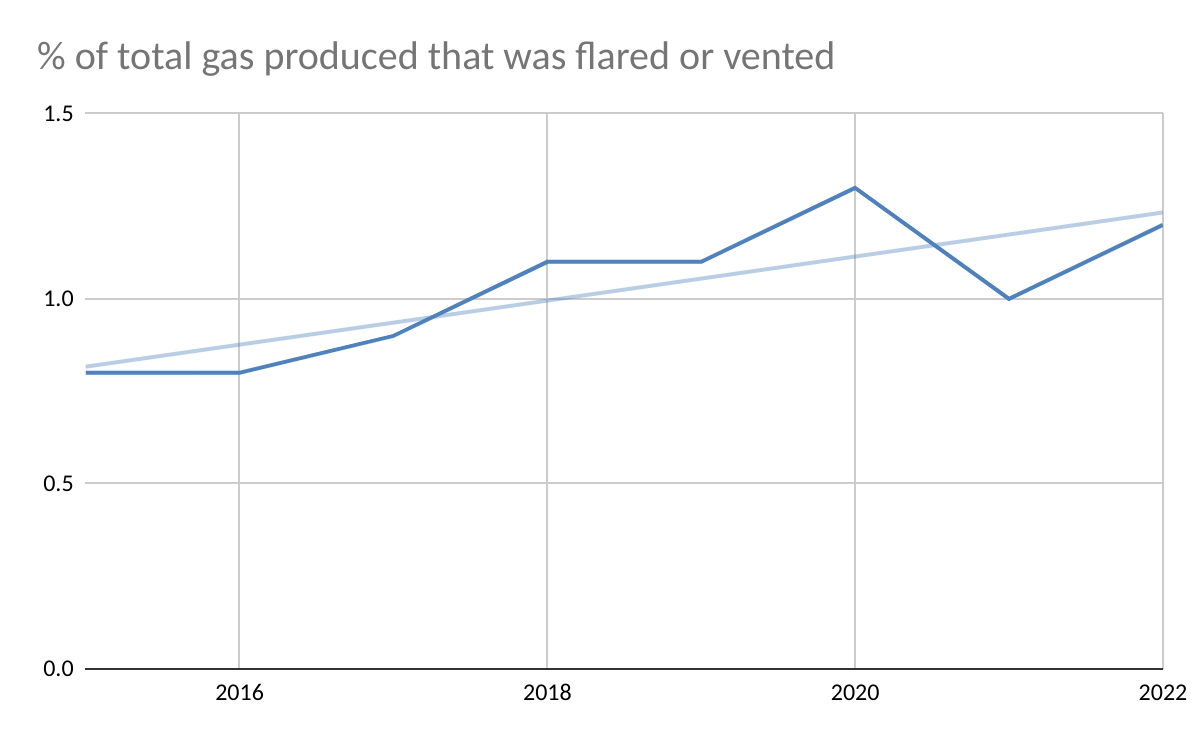
  • Of the 784 bcf produced, 9.6 bcf (1.2%) were either vented or flared (vs. 1.03% in 2021). With the exception of 2020 (1.3%), this is the highest % of gas flared/vented from 2015-2022.
  • The % of gas produced that is flared or vented is trending upward (first chart below).
  • Both the gas flaring and venting volumes were higher in 2022 (vs. 2021) despite lower gas production.
  • Assuming oil-well gas (OWG) production of 600 bcf (final 2022 volume not yet available), approximately 1.4% (8.6/600) of the OWG was flared or vented.
  • 2022 OWG flaring volume increased by 18% vs. 2022 despite nearly identical total oil production
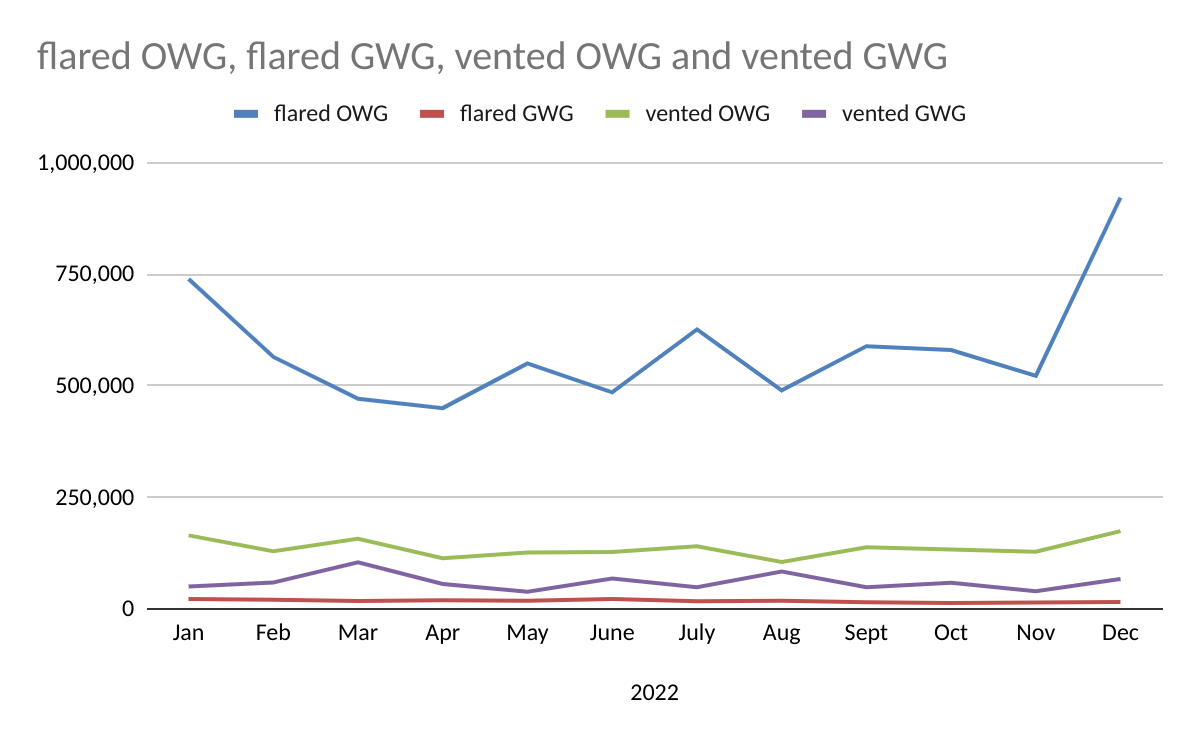
  • A very large increase in OWG flaring in December skewed the 2022 data (921 million cu ft vs 522 million in November, see 2nd chart below). OWG vented and gas-well gas (GWG) vented also spiked in December (third chart). Were these spikes associated with production startups, major compressor issues, administrative/accounting corrections, or other issues?
  • Although total venting increased by 407 million cu ft (21%) in 2023 vs. 2022, the overall venting trend is still favorable (last chart).
  • The previously noted inconsistencies in flaring data sets remain a concern.
  • Kudos to ONRR for posting the flaring/venting data.
  • More regulator/industry transparency on flaring episodes is needed, particularly in light of the PNAS paper and the June 2022 Inspector General Report.

related:

Read Full Post »

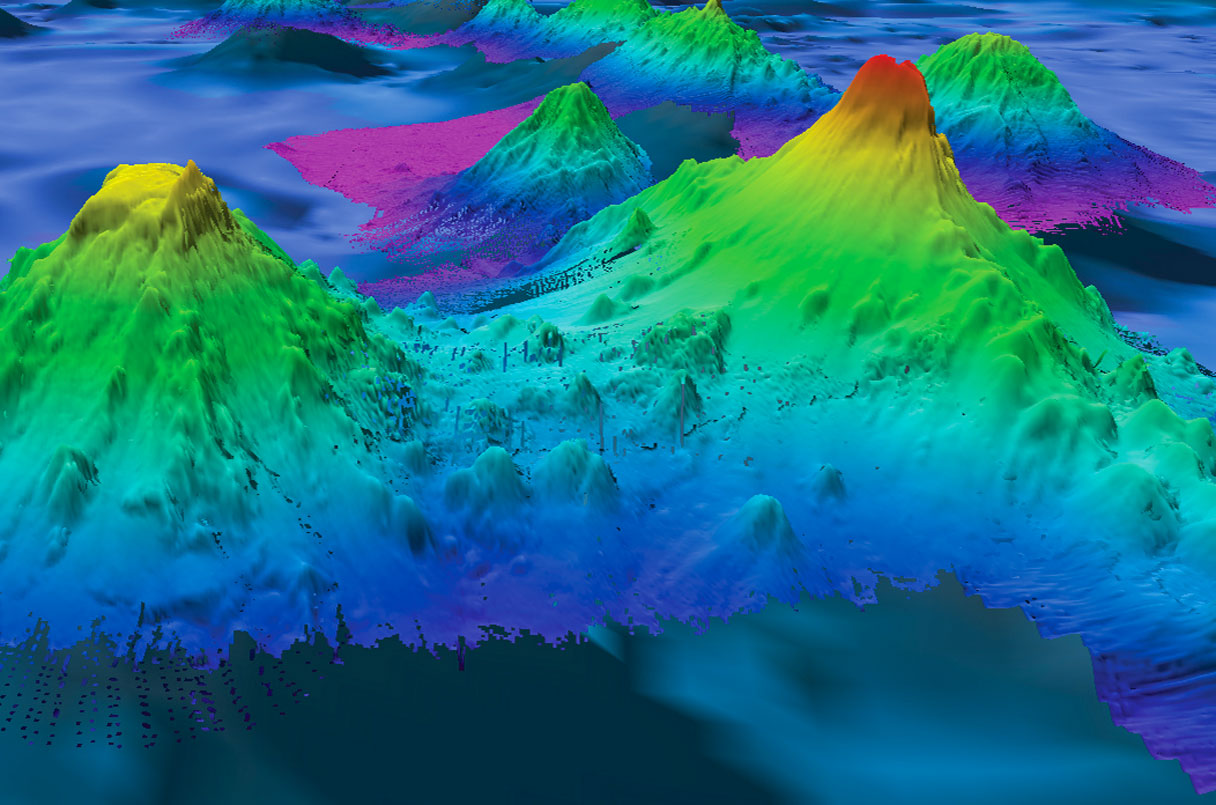
“The 4776-meter-tall Pao Pao Seamount (right) in the South Pacific Ocean has been mapped by sonar. Many others haven’t.” NOAA OFFICE OF OCEAN EXPLORATION AND RESEARCH

This Science article underscores how little we know about the oceans.

With only one-quarter of the sea floor mapped with sonar, it is impossible to know how many seamounts exist. But radar satellites that measure ocean height can also find them, by looking for subtle signs of seawater mounding above a hidden seamount, tugged by its gravity. A 2011 census using the method found more than 24,000. High-resolution radar data have now added more than 19,000 new ones. The vast majority—more than 27,000—remain uncharted by sonar. “It’s just mind boggling,” says David Sandwell, a marine geophysicist at the Scripps Institution of Oceanography, who helped lead the work.

Besides posing navigational hazards, the mountains harbor rare-earth minerals that make them commercial targets for deep-sea miners. Their size and distribution hold clues to plate tectonics and magmatism. They are crucial oases for marine life. And they are pot-stirrers that help control the large-scale ocean flows responsible for sequestering vast amounts of heat and carbon dioxide, says John Lowell, chief hydrographer of the National Geospatial-Intelligence Agency (NGA), which runs the U.S. military’s satellite mapping efforts.

Read Full Post »

An interesting study published in the Proceedings of the National Academy of Sciences (PNAS) was brought to my attention by leading offshore energy historian Tyler Priest. The study used airborne observations and emissions reports to measure the carbon intensity (CI) of Gulf of Mexico oil and gas production. Their CI measure is grams of CO2 equivalent of greenhouse gas emissions per megajoule of energy produced.

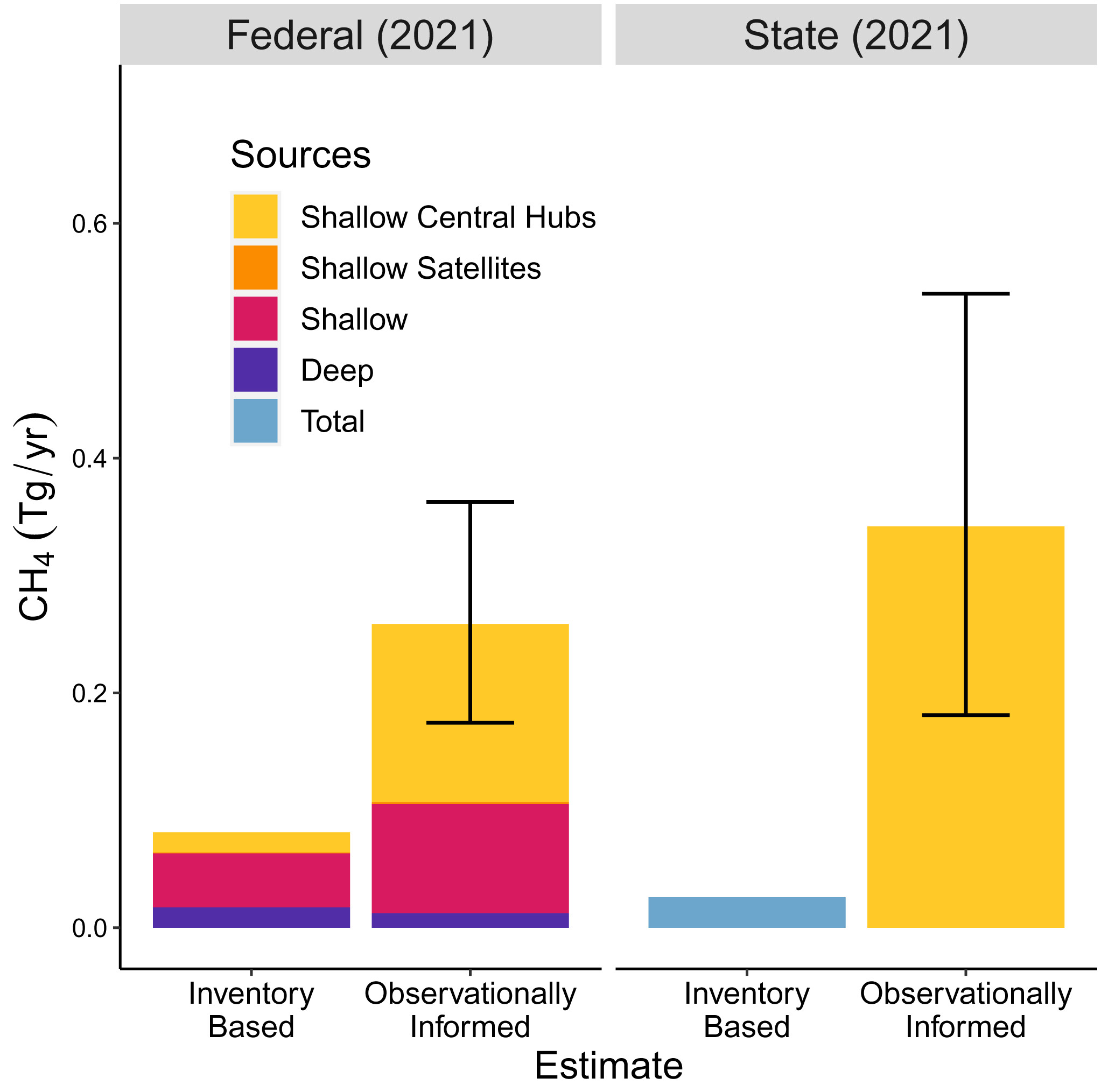
The authors conclude that inventory emissions of CO2 (as reported to BOEM) “are generally consistent with observations from our aircraft survey, suggesting that combustion is well represented in the federal inventory.

However, that is not the case for methane (CH4) emissions which are underestimated by the Federal inventories. As summarized in the chart below, deepwater facility methane emissions are consistent with the reported inventories, but shelf emissions in State and Federal waters differ significantly.

Comments:

  • As previously discussed, the lower CI for deepwater production is entirely consistent with expectations. When the most modern 5% (57) of GoM platforms are producing 93% of the oil and 76% of the gas, their CI should be impressive (which indeed it is).
  • As summarized using ONRR data, more gas-well gas was vented from 2015-2021 than was flared, which is not what you want from a GHG standpoint. Gas wells are predominantly at shallow water facilities, many of which are not equipped with flare booms.
  • Oil-well gas, most of which is produced at deepwater platforms, is flared rather than vented by a ratio of approximately 4 to 1.
  • About 15 years ago, the Federal government (MMS) considered requiring that older production platforms be retrofitted with flare booms, but safety, space limitations, and cost considerations precluded such a regulation. Instead, additional flaring/venting limits, and measurement and reporting requirements were imposed.
  • One bad actor may have been a major contributor to the shelf methane emissions observed during the study’s observational flights. That company entered into bankruptcy proceedings. Presumably those issues have been resolved and more rigorous monitoring and enforcement practices have been implemented. I’ll be looking at the 2022 ONRR flaring and venting data for evidence of such improvement. The remainder of the 2022 data should be available in May.
  • The subject study’s only observational measurements were in August 2020. Followup airborne measurements would be helpful.
  • The study only considered production emissions. Shelf facilities are primarily natural gas producers and would thus have a lower relative CI when consumed.
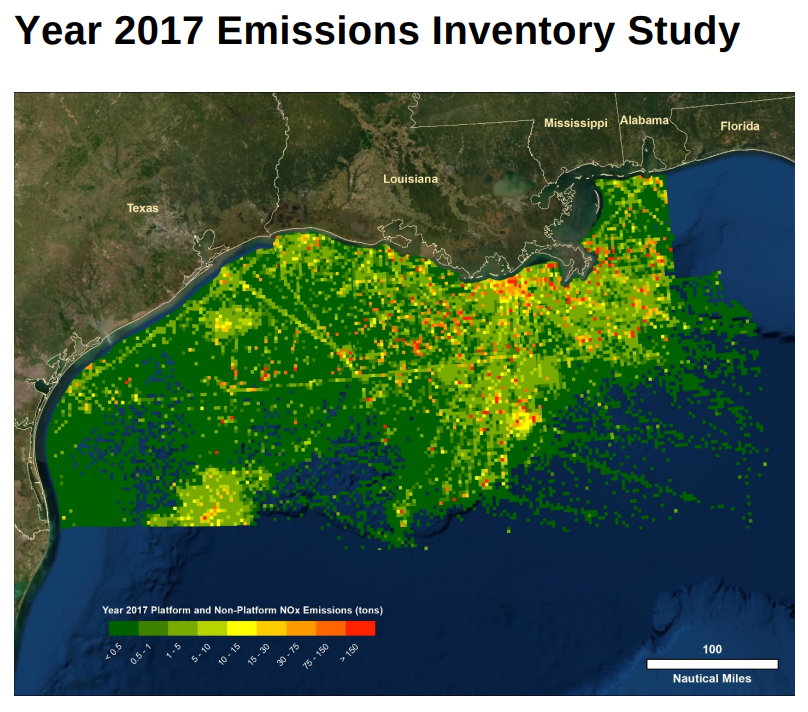
  • When will updated BOEM GOADS flaring and venting data be available? The latest data are for 2017 (cover below)? Are GOADS data being compared with ONRR and World Bank data?

Read Full Post »

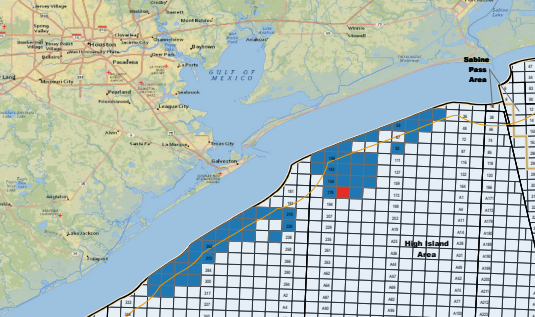
In addition to the 94 nearshore Texas leases Exxon acquired in Sale 257, the company was the sole Sale 259 bidder for all but one of 69 nearshore Texas blocks. The exception was High Island 177 (in red above). So who gets that lease?

  • the company (Exxon) that was the sole participant in a de facto CCS sale (bid of $182,750)
  • the company (Focus Exploration) that was participating in the announced oil and gas lease sale (bid of $145,177)

If Exxon is just acquiring these leases for evaluation purposes in preparation for a possible CCS sale in the future, their lease acquisitions may be okay. If they are planning on retaining these leases for actual sequestration operations, that is not okay, at least not until a competitive process has been established for awarding or reclassifying such leases. To date, no lease terms or bid evaluation procedures have been proposed for carbon sequestration leases; nor has an environmental review been conducted pursuant to NEPA.

Questions about Gulf of Mexico carbon sequestration

Read Full Post »

Read Full Post »

The Minister is optimistic about the prospects for production offshore Barbados:

“I don’t want to go and give news now before it is ready to be given, but let us say the prospectivity is highly regarded,” he told a local academic forum in the Eastern Caribbean tourism paradise.

He also sends a message to “keep it in the ground” crowd.

 “Let’s be frank: All of the oil producers of the world, including Canada, speak the language of climate change and putting a stop to that, which is now being done by small entities or like those of us in Barbados who are contemplating finding natural gas, but the reality is, none of them is saying ‘I will not continue to produce the oil that I produce’ or ‘I’m shutting down all my wells,’” he said. “The Americans are not going to tell you that that’s what’s going to happen in Texas. The British, for all their partnership value, will not tell you that the North Sea will not be full of Brent crude. They’re not going to do that because they intend to produce for the next 50 years. Nobody is coming forward to say we are prepared to pay you to keep the natural gas and the oil in the ground.”

Read Full Post »

The BBB or BoerBurgerBeweging (Farmer-Citizen Movement) party won 17 seats in the Senate, more than any other party.

Read Full Post »

HOUSTON — Oil and gas industry leaders say they’ve seen a big shift in tone from the Biden administration over the past year, helping to smooth over one of the president’s rockiest relationships.

Washington Post

Perhaps the Washington Post reporter is correct, but the “big shift in tone” is not apparent in the offshore sector. The only lease sales have been mandated by Congress, the 5 year plan is still 9 months from completion, the lease sale terms have been less than favorable, and language in the draft 5 year plan does in fact express the intent to phase out oil and gas.

Read Full Post »

Washington, DC — Today, U.S. Senator Joe Manchin (D-WV), Chairman of the Senate Energy and Natural Resources Committee, released the following statement on the Department of the Interior’s (DOI) unprecedented delay in releasing a five-year leasing plan. 

“Monday night, the Department of the Interior made it painfully clear – again – that they are putting their radical climate agenda ahead of our nation’s energy security, and they are willing to go to great lengths to do it. The earliest that Interior will release a legally required program for 2023-2028 offshore oil and gas leasing will be the end of this year. That’s 18 months late. This is the first time in our nation’s history that we haven’t had a 5-year leasing program released before the old plan expired. Every other Administration, Democrat and Republican, has managed to follow the law in a timely fashion.

“Let me be clear – this is not optional. The Outer Continental Shelf Lands Act mandates that the Secretary of the Interior “shall prepare” this program to “best meet national energy needs.”

“What is even more terrifying is that on top of this disturbing timeline, Interior refuses to confirm if they intend to actually include any lease sales in the final plan, which is an issue I sounded the alarm about when Secretary Haaland appeared before the Senate Energy and Natural Resource Committee on May 19, 2022. I will remind the Administration that the Inflation Reduction Act also prevents them from issuing any leases for renewables, like offshore wind or onshore solar unless there are first reasonable lease sales for oil and gas that actually result in leases being awarded. And I will hold their feet to the fire on this.” 

Senator Manchin

Plain English; no need for interpretation 😉

Read Full Post »

“I am of a firm view that the world will need oil and gas for a long time to come,” (Shell Chief Executive) Sawan, who started the job on Jan. 1, told Times Radio in the U.K. on Friday. “As such, cutting oil and gas production is not healthy.

Back in 2021, Shell predicted that its own oil production would decline every year and drop by as much as 18% by 2030. BP had a similar outlook, but CEO Bernard Looney rolled back its climate targets this year and said it will increase investment in exploration and production.

BP and Shell have trailed their U.S. peers in price to earnings ratios. Analysts have said investors interested in exposure to oil and gas have shunned them for putting more money into renewables, while investors focusing on environmental concerns haven’t rewarded them. That’s kept European energy firms trading at a discount.

Barron’s

It will never happen, but a separate company composed of BP and/or Shell upstream US assets would be very attractive to investors.

Read Full Post »

« Newer Posts - Older Posts »