Feeds:
Posts
Comments

Posts Tagged ‘California’

John Smith, a decommissioning specialist who retired from BOEM, has published numerous professional papers on the topic. He has kindly shared his comments (below) on the new GAO report.

The Appeal Process is Broken – The GAO should have emphasized this point.  Companies routinely appeal orders to decommission platforms to forestall having to spend money on plugging wells and removing platforms, pipelines and other facilities. The appeal process commonly takes 5 or more years to reolove (e.g., DCOR appeal of BSEE order to decommission Platform Habitat).

Well P&A – BSEE has been negligent in requiring operators to plug and abandon wells no longer useful for operations. I’m shocked BSEE has curtailed or stopped issuing Inc’s for the failure of operators to P&A wells.  That’s a major failure on the part of BSEE management. That may explain why operator performance criteria was proposed to be eliminated for financial assurance.

Failure to Issue Civil Penalties for Well P&A – From GAO Report “BSEE officials explained that their reluctance to pursue civil penalties stems in part from concerns about whether inducing financial harm against an operator is an effective approach to compel decommissioning. They expressed reservations about taking actions—such as issuing civil penalties—that might strain the financial resources of operators to the point of pushing them into bankruptcy.”   This attitude underscores a real problem – an abrogation of regulatory and enforcement responsibility by BSEE. 

POCS Well P&A –  More than 700 wells have been drilled from the 23 California OCS platforms. The GAO report notes that approximately 200 are in the process of being plugged and abandoned – about 50% of those are probably associated with Gail, Grace, Harvest, Hermosa, Hidalgo, where P&A work has largely been completed by Chevron and Freeport McMoRan.  The vast majority of the remaining 500 wells are no longer useful for operations and have been idle for several decades.  Note POCS was never part of the Idle Well and Idle Iron Program, which was exclusive to the GOM. GAO gave POCS BSEE a pass by not highlighting that problem in POCS. It would have been interesting to know how many of the remaining 500 POCS wells are considered no longer useful for operations, and how many of those have been temporarily plugged and abandoned pursuant to regulations.  The GAO report broke that down for the GOM.

Footnote 46 of GAO Report – “Two of the eight platforms due for decommissioning in the Pacific—platforms Hogan and Houchin—have posed serious safety, environmental, and financial risks, including poor safety compliance records, severe corrosion, and ongoing disputes about who will assume decommissioning liabilities for the platforms and their associated wells, according to BSEE officials and documentation. According to BSEE, these platforms are currently being attended, monitored, and maintained as part of an agreement between BSEE, BOEM, Interior’s Office of the Solicitor, and the three predecessor operators pending a decision from the Interior Board of Land Appeals on the predecessors’ appeal. BSEE estimates that approximately $5 million of the estimated costs to decommission 21 orphaned sidetrack wells associated with these platforms are uncovered by financial assurances.”    $5 million divide 21 = $238,000 per well  – extremely conservative cost estimate given age of wells, likely collapsed casing, and downwhole equipment that needs to be removed.  The cost could easily be 3-4 times higher and there is no bonding so the federal government and taxpayers are on the hook for those costs.

Platform Hogan and Houchin Wells – approximately 75 wells were drilled from the platforms.  It would be interesting to know the status of those wells.  How many have been properly temporarily plugged and abandoned with long-term barriers installed to prevent leaks before decommissioning pursuant to OCS regulations?  Are the 21 orphaned wells mentioned above the Signal wells?  What about the other 54 wells?  Have the predecessor lessees agreed they are responsible for plugging and abandoning those wells?  

Platform Habitat – GAO could have noted this is another example of the broken appeal process. It would be interesting to know whether the 21 wells (primarily if not all gas wells) on Habitat have been temporarily abandoned. There are likely to be significant fugitive emission levels at the platform.  Hopefully the APCD is on top of that.  Note – the platform is unmanned and as I previously mentioned a potential catastrophe was avoided several years ago when a fire broke out on the platform.

Read Full Post »
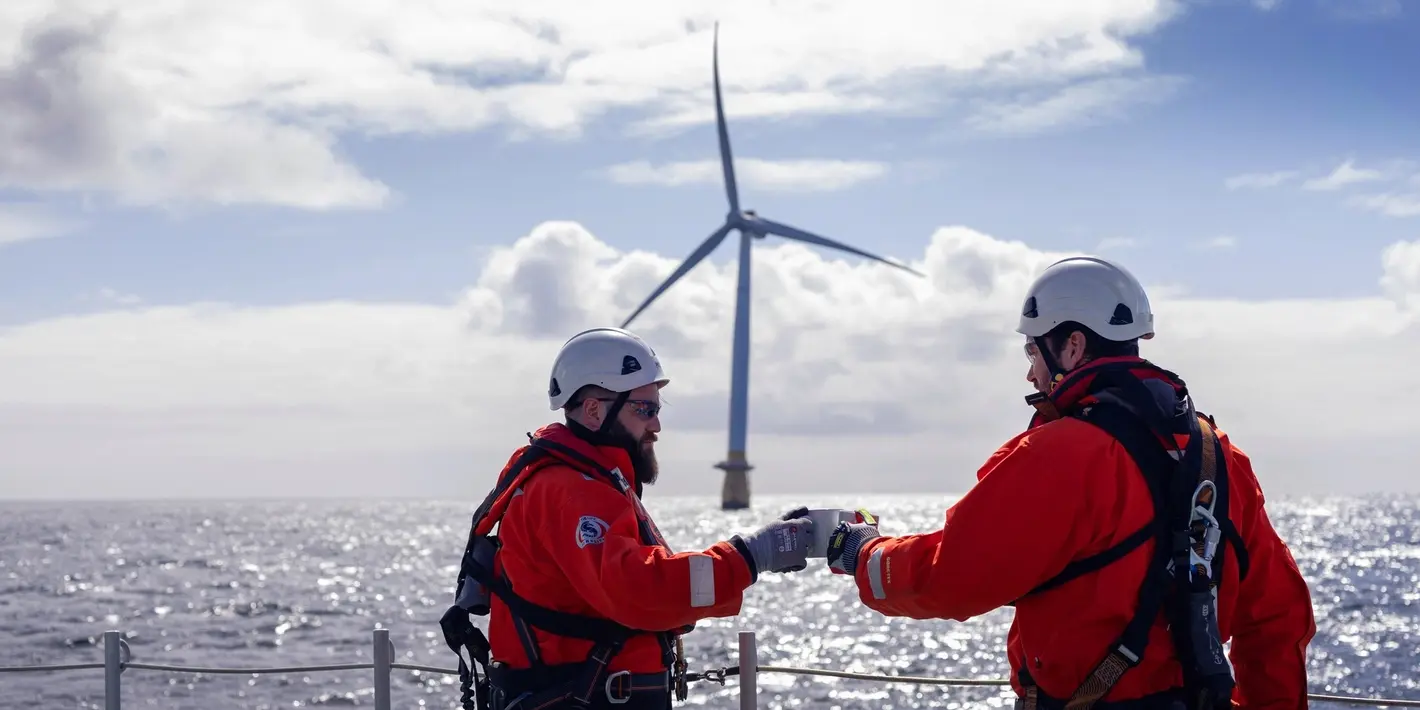
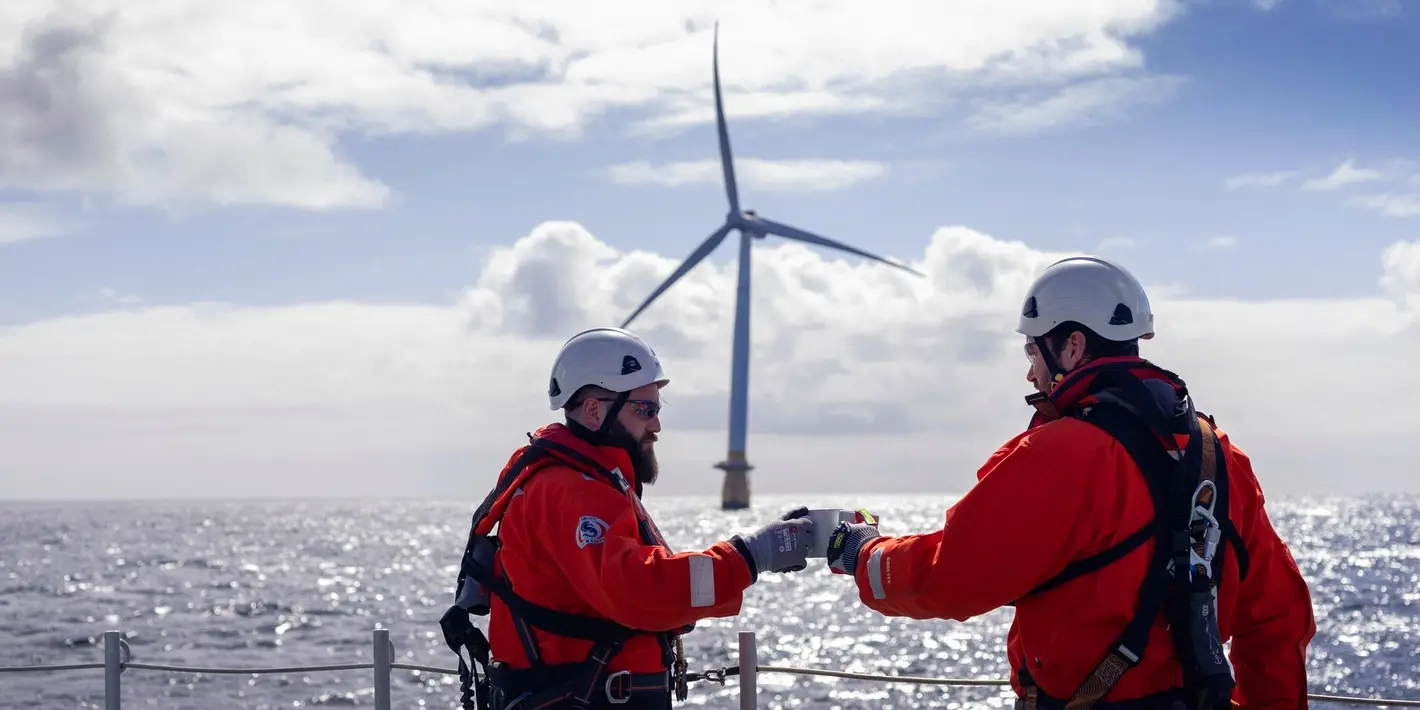
Hywind Scotland, Equinor

It’s prudent, if not imperative, to tow floating wind turbines to sheltered coastal locations for major maintenance. For that reason, Hywind, the world’s first floating wind farm will be offline for up to 4 months this summer.

Hywind Scotland‘s operator, Norwegian power giant Equinor, says that operational data has indicated that its wind turbines need work. The pilot project has been in operation since 2017.

The five Siemens Gamesa turbines will be towed to Norway this summer. An Equinor spokesperson said, “This is the first such operation for a floating farm, and the safest method to do this is to tow the turbines to shore and execute the operations in sheltered conditions.”

electrek

Published data indicate that Hywind has been the UK’s best performing offshore wind farm. Performance data for Hywind, and a chart illustrating the capacity factors since commissioning, are posted below. The 2024 capacity factor will, of course, be substantially reduced as a result of the essential offsite maintenance.

rolling 12 month capacity factor
ending 5/2022
life capacity
factor
age
(years)
installed
capacity
(MWp)
total elec
generated
(GWh)
power/
unit area spanned
(W/m2)
Hywind Scotland49.5%52.6%4.6306421.0
capacity factor = total energy generated/(hours since commissioning x capacity)

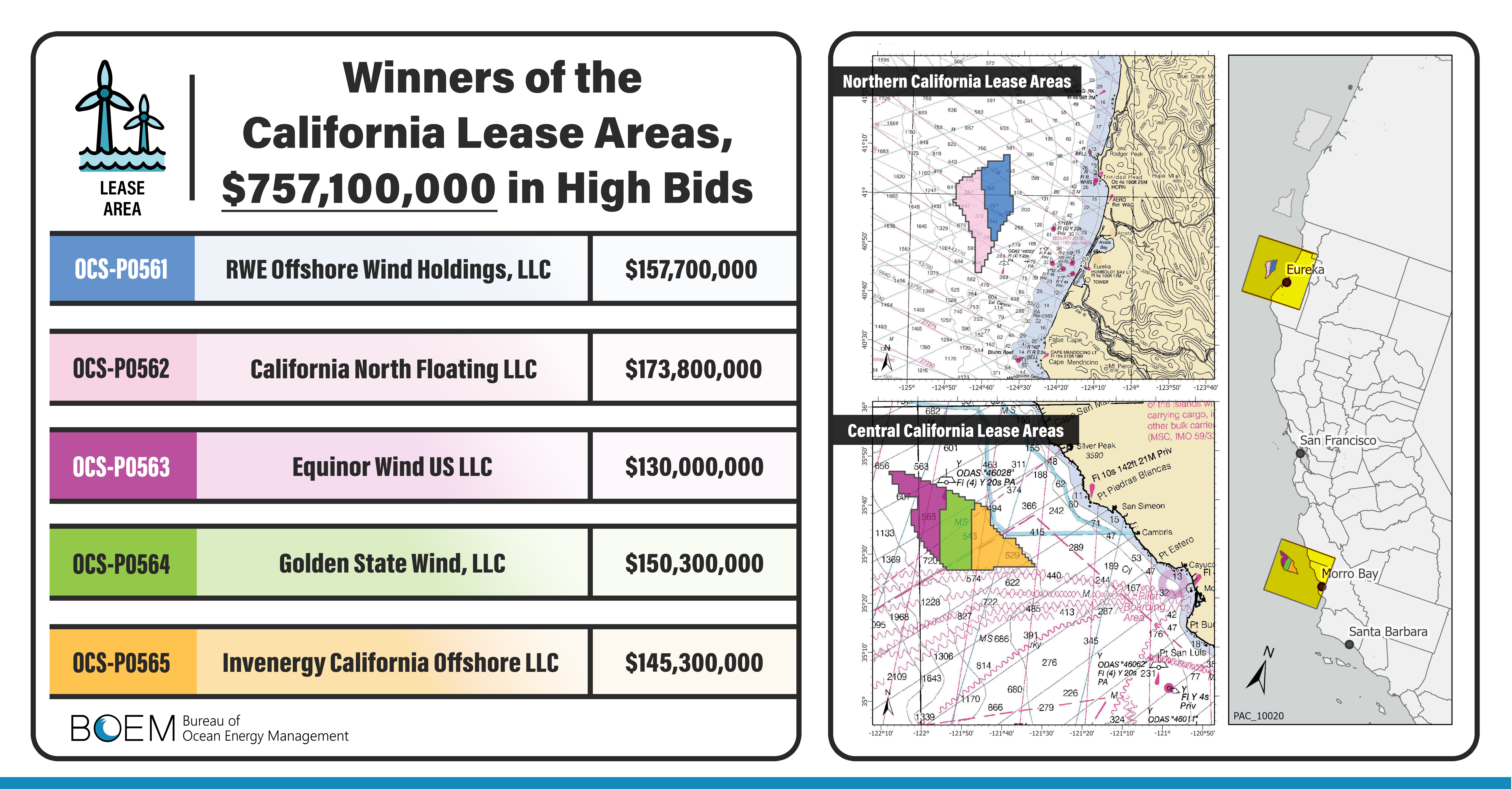
The first US floating turbines are expected to be at these California offshore leases, and Hywind operator Equinor is one of the lessees:

Given the financial challenges facing the offshore wind industry, the still emerging technology, and the risks inherent in California offshore development, the amounts bid on these leases only 13 months ago are stunning.

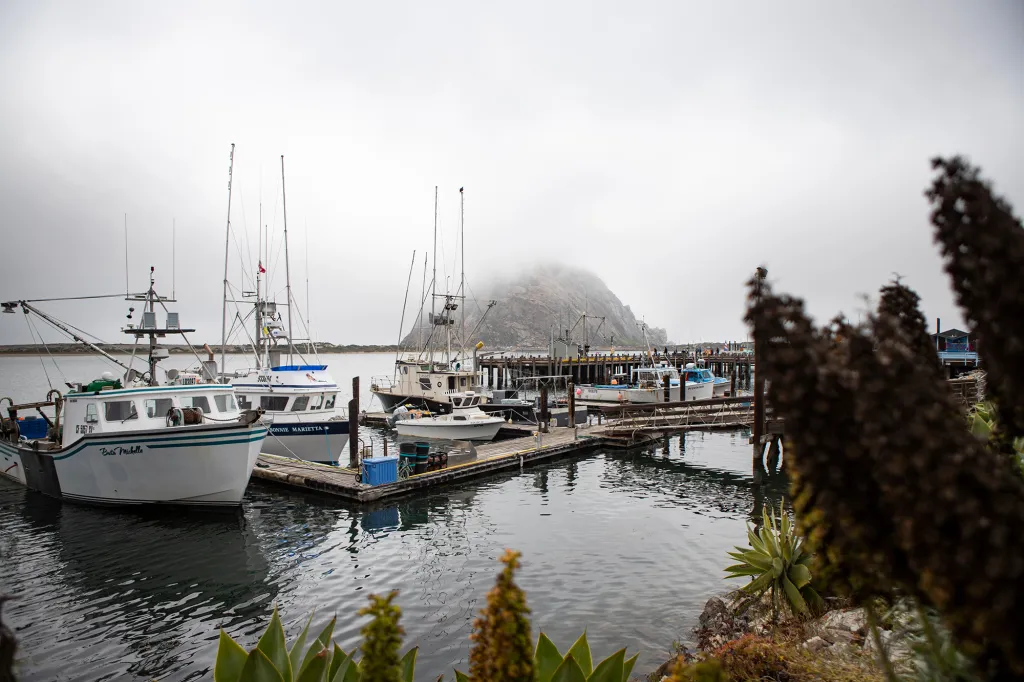
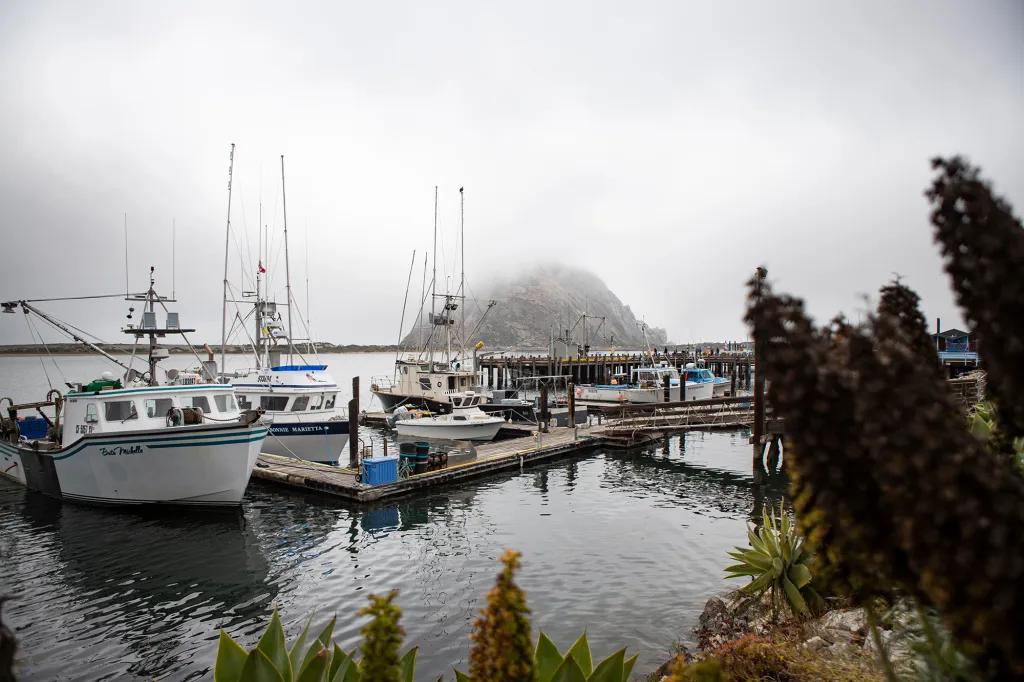
Some Central Coast residents are not enamoured with “another attempt to industrialize the coast.” Although the turbines will be >20 miles offshore, they will have to be towed to shore for major maintenance. For the Central California leases, nearby harbor areas like Morro Bay (pictured below) would be overwhelmed by the large structures and the maintenance and repair operations. Towing the towers to LA/Long Beach, albeit rather distant from the leases, would seem to be the preferred option for such work.

Ironically, a report for BOEM, points to synergies between the offshore wind industry and oil and gas decommissioning industry. Such synergies will only be possible if longstanding oil and gas decommissioning obstacles are satisfactorily addressed and the offshore wind projects proceed as planned.

Which will come first – platform decommissioning or wind turbine commissioning? For those young enough to find out, what is the over-under for the years until (1) half of those platforms are decommissioned, and (2) half of the wind turbines commissioned? Any number <10 is unrealistic for either.

Morro Bay Harbor

Read Full Post »

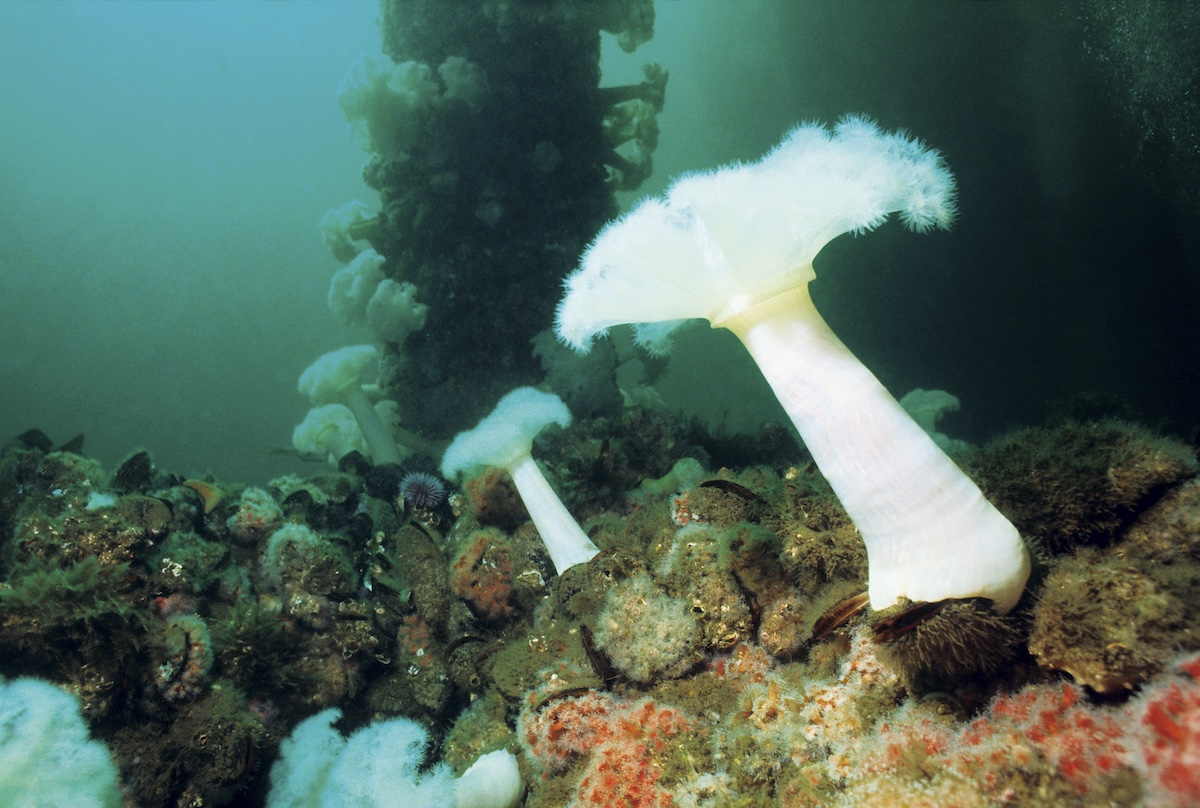
Giant Plumose Anemones standing on mussels 75 feet down Platform Hilda (Decommissioned) (photo courtesy of BobEvansPhotography.com), Montecito Journal

Montecito Journal: Oil Platforms’ Removal?:Reefing the Superior Environmental Option

On December 7, 2023, the Bureau of Safety and Environmental Enforcement (BSEE) issued a Record of Decision (ROD) recommending the full removal of California’s 23 offshore oil platforms in federal waters, following a Programmatic Environmental Impact Statement (PEIS) conducted to assess decommissioning options for platforms, pipelines, and other related infrastructure. However, upon close review, the PEIS and ROD appear to have reached misguided and detrimental conclusions due to critical oversights in their analyses.

Asher Radziner, Montecito Journal

The author aptly summarizes the flaws in the PEIS and the BSEE decision document. Very good analysis.

Read Full Post »

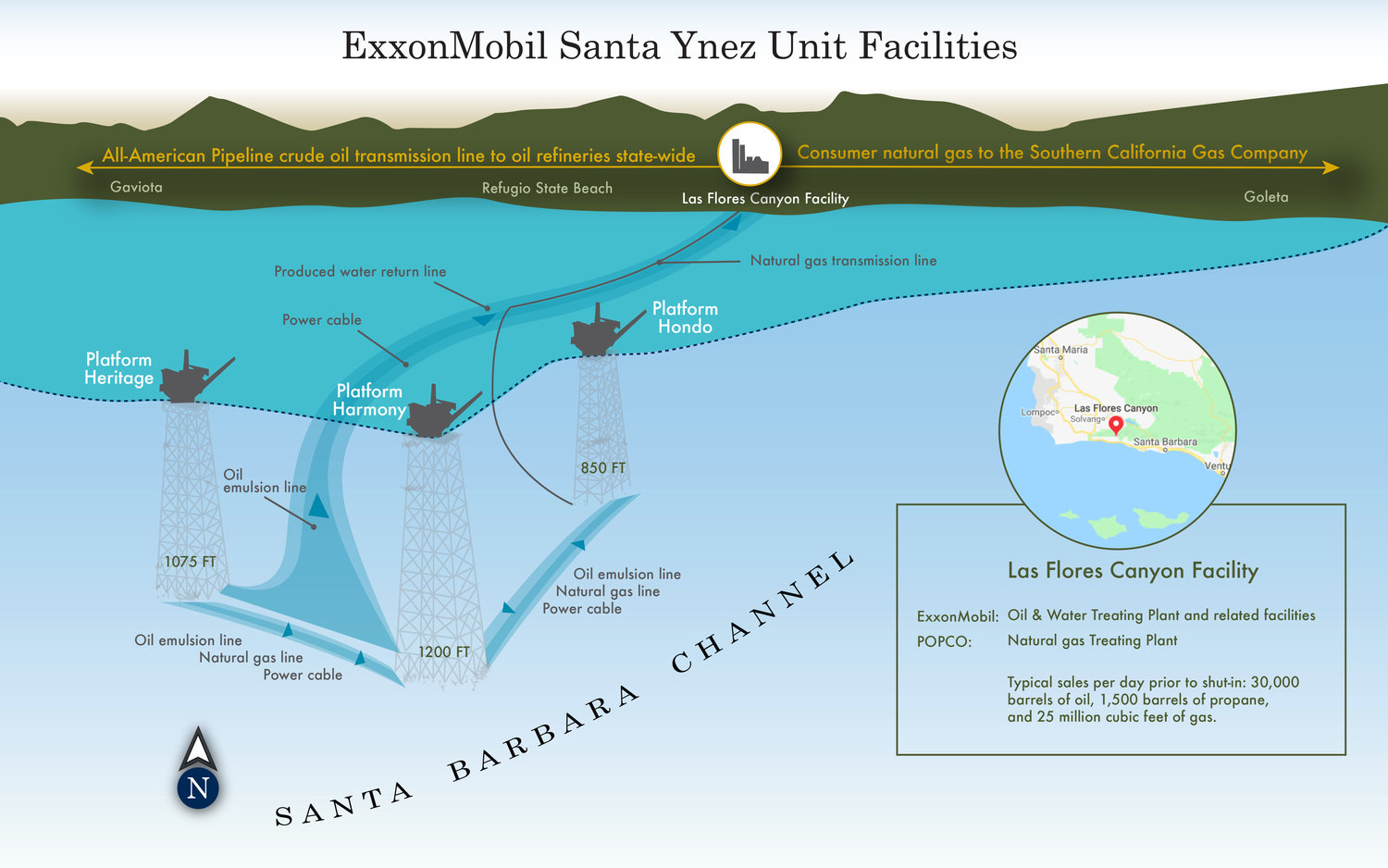
Exxon has joined Chevron in announcing Q4 write downs associated with California operations. In Exxon’s case, the estimated $2.4 billion to $2.6 billion impairment is the result of their troubled Santa Ynez unit facilities in the Santa Barbara Channel where the unit’s 500+ million barrels of reserves are unlikely to ever be produced.

The Santa Ynez saga is really quite remarkable. More here and here.

Read Full Post »

On January 2, 2024, Chevron Corporation announced that for fourth quarter 2023, the Company will be impairing a portion of its U.S. upstream assets, primarily in California, due to continuing regulatory challenges in the state that have resulted in lower anticipated future investment levels in its business plans. The Company expects to continue operating the impacted assets for many years to come. In addition, the Company will be recognizing a loss related to abandonment and decommissioning obligations from previously sold oil and gas production assets in the U.S. Gulf of Mexico, as companies that purchased these assets have filed for protection under Chapter 11 of the U.S. Bankruptcy Code, and we believe it is now probable and estimable that a portion of these obligations will revert to the Company. We expect to undertake the decommissioning activities on these assets over the next decade.

SEC filing

On Monday, we will be posting comments on the proposed bankruptcy sale of Cox’s GoM assets and the related safety and decommissioning concerns.

Read Full Post »

A mile offshore during the big year-end swell (map below). Rigs-to-Rides!

Read Full Post »

This Santa Barbara Independent article discusses the Record of Decision (ROD) for the Programmatic Environmental Impact Statement on Pacific OCS Decommissioning. A quote from the article regarding BSEE’s support for complete removal of all infrastructure follows:

“It’s great that the federal government finally has a loose game plan for getting oil companies to clean up their rusty messes,” said Miyoko Sakashita, oceans program director at the Center for Biological Diversity. 

Apparently the Center for Biological Diversity supports complete removal, the decommissioning alternative that would destroy “the most productive marine habitats per unit area in the world.” How’s that for irony?

Complete removal may be the most politically expedient alternative in California, but it is by far the most environmentally damaging and poses the greatest safety risks. Old disputes about offshore oil and gas production should not be driving decommissioning policy.

beneath Platform Gilda, Santa Barbara Channel

Read Full Post »

PNAS: “among the most productive marine fish habitats globally”
beneath Platform Gilda, Santa Barbara Channel

These platforms are habitat for millions of animals. My opinion is that it’s immoral to kill huge numbers of animals in any kind of habitat.

Dr. Milton Love, UCSB marine biologist

Inexplicably, BSEE’s Record of Decision (ROD) for the Programmatic Environmental Impact Statement on Pacific OCS Decommissioning (EIS cost: $1,604,056) endorses such habitat destruction by designating the most environmentally harmful, unsafe, punitive, and costly alternative as the “preferred alternative.”

Alternative 1 (the preferred alternative) calls for “the complete removal of platforms, topside, conductors, the platform jackets to at least 4.6 m (15 ft) below the mud line, and the complete removal of pipelines, power cables, and other subsea infrastructure (i.e., wells, obstructions, and facilities).”

Ironically, the ROD correctly acknowledges that alternative 2 (partial removal) is environmentally preferable. So what drove the decision to select the alternative that destroys “the most productive marine habitats per unit area in the world?” Was there pressure to choose the alternative that is most punitive to an industry that is despised by California activists? If so, their schadenfreude is certain to be delayed by administrative and legal challenges that draw further attention to the social costs and environmental damage associated with “complete removal.”

In 2020, BOEM estimated the total cost of decommissioning the 23 Federal offshore platforms at $1.7 billion, and today’s real costs are likely to be much higher. Also, keep in mind that some thorny decommissioning liability issues remain to be resolved, particularly with regard to Platforms Hogan and Houchin.

The decommissioning costs for Hogan and Houchin are estimated by BOEM at $85.6 million, even though the cost of completing removing Platform Holly (single platform in similar water depth in CA State waters) may reach $475 million. Per the BOEM data, there is no collateral, supplemental financial assurance, or third party guarantee that could defray the Hogan and Houchin costs. The extent to which prior lessees could be held accountable is questionable given that the lease was assigned to (now bankrupt) Signal Hill in 1991, well before the predecessor liability language was added to the MMS bonding rule. Irregularities in the management of Signal Hill’s Abandonment Escrow Account for Hogan and Houchin further complicate the liability issues.

The path for timely facility decommissioning with the least environmental damage and safety risk has two essential elements:

Absent those steps, the noise will continue, the platforms will remain in place, and the best outcome for all parties will not be achieved.

Read Full Post »

Platform Harmony jacket

An excellent paper by John Smith and Bob Byrd is attached.

The authors recommend the operators of large OCS platforms offshore California and in the Gulf of Mexico who propose to partially remove platform jackets prepare Comparative Assessments to support their decommissioning applications. The Comparative Assessments can also be prepared to support the case for allowing partial removal of smaller platform jackets and allowing pipelines and drill muds and cuttings to remain in-situ.

Read Full Post »

Guardian: Juvenile rockfish seen on an oil platform off the coast of Santa Barbara. For the scientists who study them, preserving these accidental marine ecosystems has become a moral issue. Photograph: Scott Gietler

Excellent Guardian article featuring my former colleague Dr. Ann Bull and Dr. Milton Love from the University of California at Santa Barbara.

According to a 2014 study they (Bull and Love) co-authored, the rigs were some of the most “productive” ocean habitats in the world, a term that refers to biomass – or number of fish and how much space they take up – per unit area. The research showed the rigs to be about 27 times more productive than the natural rocky reefs in California.

Guardian

More on decommissioning platforms offshore California.

Read Full Post »

« Newer Posts - Older Posts »