A mile offshore during the big year-end swell (map below). Rigs-to-Rides!

Posted in California, Offshore Energy - General, rigs-to-reefs, Uncategorized, tagged big swell, California, platform Esther, rigs-to-rides, surf on December 31, 2023| Leave a Comment »
Posted in California, decommissioning, Offshore Energy - General, tagged BSEE, California, decommissioning, partial removal, PEIS, ROD on December 27, 2023| Leave a Comment »
This Santa Barbara Independent article discusses the Record of Decision (ROD) for the Programmatic Environmental Impact Statement on Pacific OCS Decommissioning. A quote from the article regarding BSEE’s support for complete removal of all infrastructure follows:
“It’s great that the federal government finally has a loose game plan for getting oil companies to clean up their rusty messes,” said Miyoko Sakashita, oceans program director at the Center for Biological Diversity.
Apparently the Center for Biological Diversity supports complete removal, the decommissioning alternative that would destroy “the most productive marine habitats per unit area in the world.” How’s that for irony?
Complete removal may be the most politically expedient alternative in California, but it is by far the most environmentally damaging and poses the greatest safety risks. Old disputes about offshore oil and gas production should not be driving decommissioning policy.

Posted in California, decommissioning, Offshore Energy - General, tagged California, Decommissioning EIS, Hogan and Houchin, Milton Love, partial removal, platform habitat, reef legislation on December 19, 2023| Leave a Comment »


“These platforms are habitat for millions of animals. My opinion is that it’s immoral to kill huge numbers of animals in any kind of habitat.”
Dr. Milton Love, UCSB marine biologist
Inexplicably, BSEE’s Record of Decision (ROD) for the Programmatic Environmental Impact Statement on Pacific OCS Decommissioning (EIS cost: $1,604,056) endorses such habitat destruction by designating the most environmentally harmful, unsafe, punitive, and costly alternative as the “preferred alternative.”
Alternative 1 (the preferred alternative) calls for “the complete removal of platforms, topside, conductors, the platform jackets to at least 4.6 m (15 ft) below the mud line, and the complete removal of pipelines, power cables, and other subsea infrastructure (i.e., wells, obstructions, and facilities).”
Ironically, the ROD correctly acknowledges that alternative 2 (partial removal) is environmentally preferable. So what drove the decision to select the alternative that destroys “the most productive marine habitats per unit area in the world?” Was there pressure to choose the alternative that is most punitive to an industry that is despised by California activists? If so, their schadenfreude is certain to be delayed by administrative and legal challenges that draw further attention to the social costs and environmental damage associated with “complete removal.”
In 2020, BOEM estimated the total cost of decommissioning the 23 Federal offshore platforms at $1.7 billion, and today’s real costs are likely to be much higher. Also, keep in mind that some thorny decommissioning liability issues remain to be resolved, particularly with regard to Platforms Hogan and Houchin.
The decommissioning costs for Hogan and Houchin are estimated by BOEM at $85.6 million, even though the cost of completing removing Platform Holly (single platform in similar water depth in CA State waters) may reach $475 million. Per the BOEM data, there is no collateral, supplemental financial assurance, or third party guarantee that could defray the Hogan and Houchin costs. The extent to which prior lessees could be held accountable is questionable given that the lease was assigned to (now bankrupt) Signal Hill in 1991, well before the predecessor liability language was added to the MMS bonding rule. Irregularities in the management of Signal Hill’s Abandonment Escrow Account for Hogan and Houchin further complicate the liability issues.
The path for timely facility decommissioning with the least environmental damage and safety risk has two essential elements:
Absent those steps, the noise will continue, the platforms will remain in place, and the best outcome for all parties will not be achieved.
Posted in California, decommissioning, Offshore Energy - General, UK, tagged assessment, California, decommissioning, John B. Smith, Robert Byrd on October 30, 2023| Leave a Comment »

An excellent paper by John Smith and Bob Byrd is attached.
The authors recommend the operators of large OCS platforms offshore California and in the Gulf of Mexico who propose to partially remove platform jackets prepare Comparative Assessments to support their decommissioning applications. The Comparative Assessments can also be prepared to support the case for allowing partial removal of smaller platform jackets and allowing pipelines and drill muds and cuttings to remain in-situ.
Posted in California, decommissioning, rigs-to-reefs, tagged Ann Bull, California, decommissioning, marine oases, Milton Love, offshore platforms, Platform Holly, rigs to reefs, UCSB on October 16, 2023| Leave a Comment »

Excellent Guardian article featuring my former colleague Dr. Ann Bull and Dr. Milton Love from the University of California at Santa Barbara.
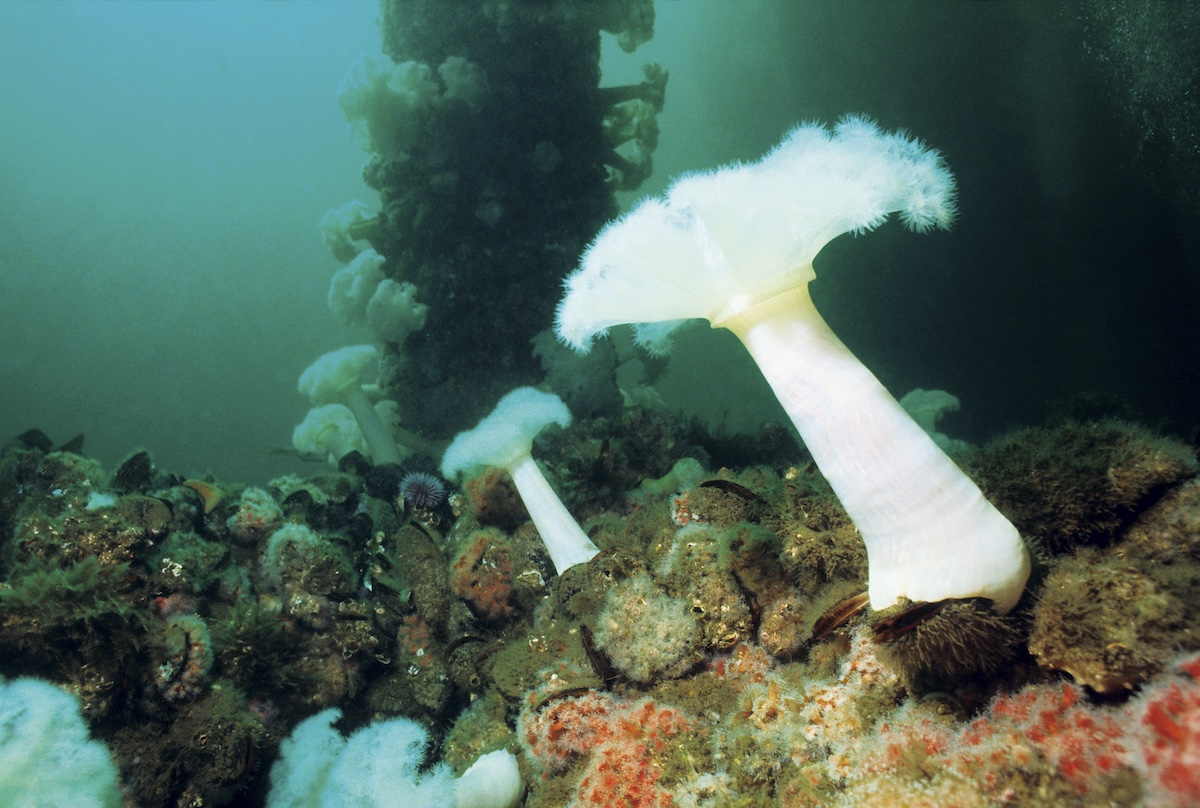
According to a 2014 study they (Bull and Love) co-authored, the rigs were some of the most “productive” ocean habitats in the world, a term that refers to biomass – or number of fish and how much space they take up – per unit area. The research showed the rigs to be about 27 times more productive than the natural rocky reefs in California.
Guardian
Posted in California, Offshore Energy - General, tagged California, fracking, NEPA, SCOTUS, well stimulation on June 6, 2023| Leave a Comment »
The Supreme Court has decided to allow the 9th Circuit decision on offshore well stimulation to stand.
From a regulatory and technical standpoint, the 9th Circuit decision is highly questionable. The limited well stimulation operations offshore California were conducted 9-31 years ago and were carefully reviewed and monitored. No fluids were released or escaped to the marine environment.
During the Obama administration (and under the capable leadership of Directors Brian Salerno and Abigail Ross Hopper), BSEE and BOEM conducted a Programmatic Environmental Assessment (EA) and issued a Finding of No Significant Impact (FONSI) from the use of specific well stimulation treatments in oil and gas activities on the Pacific OCS. The 9th Circuit decided that wasn’t enough and the SCOTUS chose not to review their decision.
Given the current state of Pacific offshore operations, the court decisions will have little or no effect on well activity now or in the foreseeable future. If the BSEE well permitting site is up-to-date, there have been no Pacific well operations in the past 3 years. For the 2 years prior to that, the only well operations were for plugging and abandonment purposes. Therefore, the main concerns are the decision to require an EIS prior to any future well stimulation operations, and perhaps more importantly, the implications of the decision on offshore operations elsewhere.
Posted in California, decommissioning, Offshore Energy - General, tagged California, decommissioning, Smith and Byrd on June 5, 2023| Leave a Comment »
In the attached paper, John Smith and Robert Byrd summarize the daunting decommissioning challenges facing California offshore operators:
Does the regulatory framework prevent you from doing what the regulations require? Catch-22?
Posted in California, climate, decommissioning, Gulf of Mexico, Offshore Energy - General, tagged California, decommissioning, financial responsibility, Gulf of Mexico, macondo, Nature Energy, well plugging and abandonment on May 11, 2023| Leave a Comment »
The subject Nature Energy paper is helpful in that it contributes to the important dialogue on the financial aspects of offshore decommissioning. There have been numerous posts on that topic on this blog. The use of Federal funds to cover well abandonment expenses for OCS wells, although rather limited to date, is a major disappointment for those of us who have worked hard to prevent such an outcome.
The data in the paper appear to be reasonably accurate. However, there is one glaring error regarding Pacific operations, and the reference to the Macondo blowout in the environmental discussion is rather provocative and misleading.
Per the authors:
California wells are drilled in relatively shallow water—mostly less than 100 feet—while GoM wells can be in up to 10,000 feet of water.
California’s fault block shelf drops off very quickly, and deepwater drilling activity has been common for decades. Of the 23 platforms in Federal waters, only Platform Gina is in <100′ of water (95′). The other platforms are in water depths of 154 to 1178′. Six of the platforms are in >600′ of water and 2 are in >1000′. Platform Harmony (jacket pictured below) is one of the world’s largest and heaviest steel tower platforms. Relative to the numbers of facilities, the decommissioning challenges offshore California are more daunting and complex than those in the Gulf. This includes the financial liability aspects.

With regard to the environmental risks, the Nature Energy paper’s reference to the Macondo blowout, while muted, is what some media outlets embraced. Per the authors:
Releases from improperly abandoned wells will probably be chronic and small compared with Macondo, but the underlying biochemical and ecological processes that influence the ecological impacts have many similarities.
The Macondo well blew out while it was being suspended in preparation for subsequent completion operations. Ill advised changes to the well suspension plan were among the primary contributing factors to the blowout (see diagram below). The Macondo well was entirely different from the depleted end-of-life wells that are the subject of the paper.
Some media outlets ran with the Macondo angle, weak as it was. This ABC news piece featured numerous Macondo pictures. Other outlets noted that Macondo was a temporarily abandoned well, which it was not. The Macondo well never got to that point.
National Commission, Chief Counsel’s Report, p. 132
Posted in Mexico, Offshore Energy - General, Uncategorized, tagged California, Hidden Gem, Manzanillo, nodules, seafloor mining, TMC on March 21, 2023| Leave a Comment »
Relax; just kidding about the California part (or am I? 😉).
BOE’s Mexican correspondent, Andrew Konczvald, took pictures of what looks like a deepwater drillship parked near the beautiful Pacific coast resort town of Manzanillo. Upon further review, our crack investigators determined that the rig is the Hidden Gem, a deepsea mining vessel, owned by The Metals Company (TMC). Last year, TMC conducted a pilot nodule collection program in the Clarion Clipperton Zone between Hawaii and Mexico.


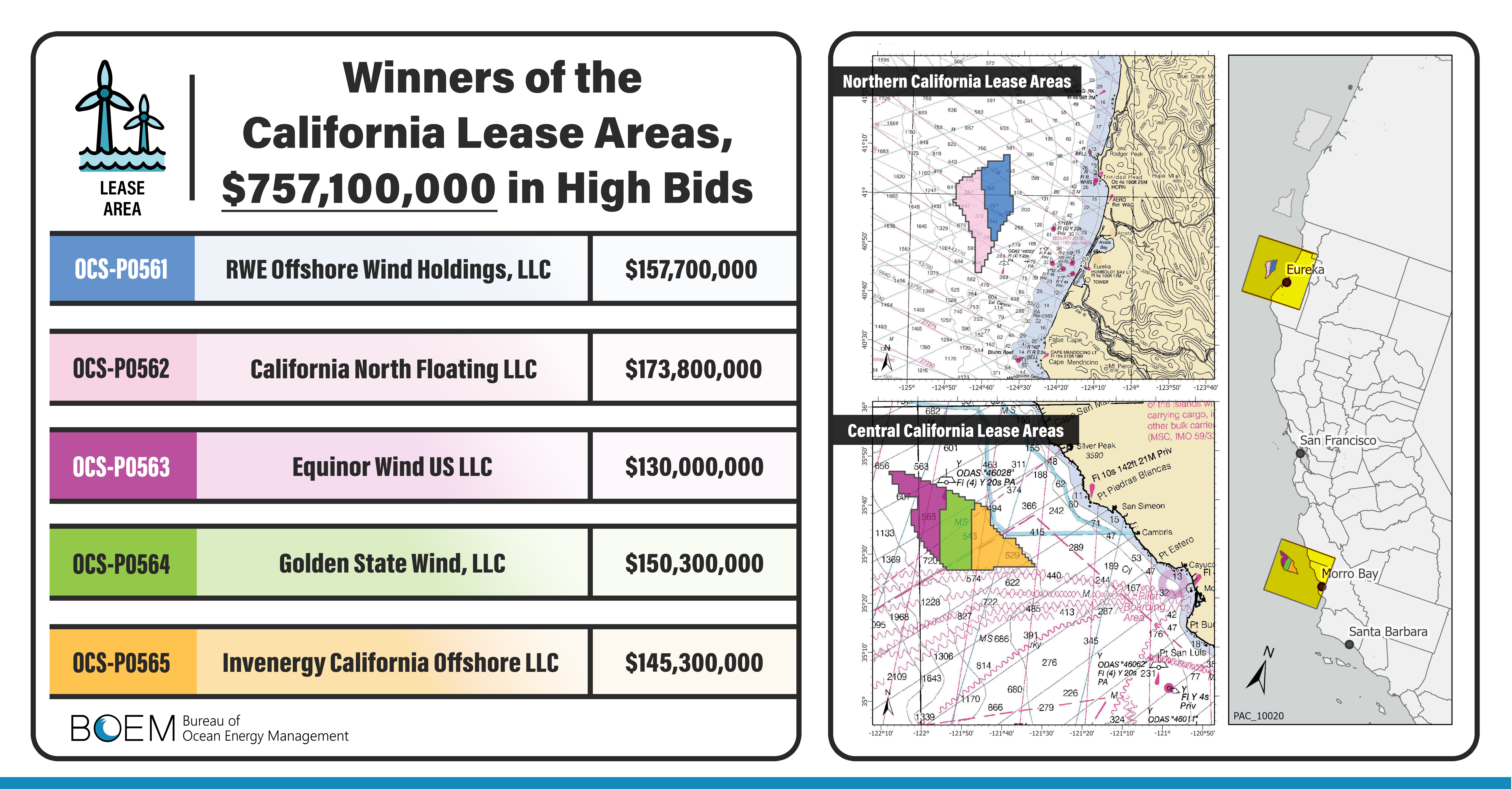
Posted in California, Offshore Wind, tagged auction process, California, offshore wind lease sale on December 7, 2022| Leave a Comment »
After 20 rounds yesterday, the sale resumes today.
The biggest difference between the wind and the oil and gas programs may be the way the sales are conducted. For oil and gas leases, you submit a single sealed bid. Here is a simplified description of how a wind lease sale is conducted:
Perfectly clear? You can read the full description in the Sale Notice.
Is this the best way to award offshore wind leases?