On January 2, 2024, Chevron Corporation announced that for fourth quarter 2023, the Company will be impairing a portion of its U.S. upstream assets, primarily in California, due to continuing regulatory challenges in the state that have resulted in lower anticipated future investment levels in its business plans. The Company expects to continue operating the impacted assets for many years to come. In addition, the Company will be recognizing a loss related to abandonment and decommissioning obligations from previously sold oil and gas production assets in the U.S. Gulf of Mexico, as companies that purchased these assets have filed for protection under Chapter 11 of the U.S. Bankruptcy Code, and we believe it is now probable and estimable that a portion of these obligations will revert to the Company. We expect to undertake the decommissioning activities on these assets over the next decade.
“It’s great that the federal government finally has a loose game plan for getting oil companies to clean up their rusty messes,” said Miyoko Sakashita, oceans program director at the Center for Biological Diversity.
Complete removal may be the most politically expedient alternative in California, but it is by far the most environmentally damaging and poses the greatest safety risks. Old disputes about offshore oil and gas production should not be driving decommissioning policy.
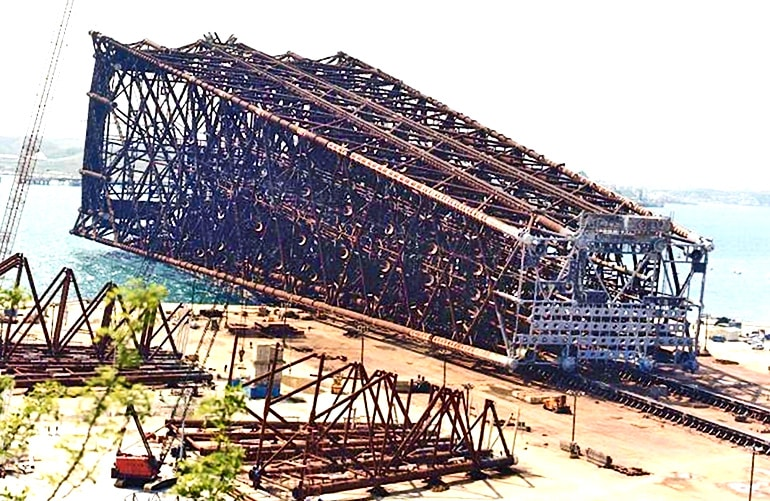
Alternative 1 (the preferred alternative) calls for “the complete removal of platforms, topside, conductors, the platform jackets to at least 4.6 m (15 ft) below the mud line, and the complete removal of pipelines, power cables, and other subsea infrastructure (i.e., wells, obstructions, and facilities).”
Ironically, the ROD correctly acknowledges that alternative 2 (partial removal) is environmentally preferable. So what drove the decision to select the alternative that destroys “the most productive marine habitats per unit area in the world?” Was there pressure to choose the alternative that is most punitive to an industry that is despised by California activists? If so, their schadenfreude is certain to be delayed by administrative and legal challenges that draw further attention to the social costs and environmental damage associated with “complete removal.”
An excellent paper by John Smith and Bob Byrd is attached.
The authors recommend the operators of large OCS platforms offshore California and in the Gulf of Mexico who propose to partially remove platform jackets prepare Comparative Assessments to support their decommissioning applications. The Comparative Assessments can also be prepared to support the case for allowing partial removal of smaller platform jackets and allowing pipelines and drill muds and cuttings to remain in-situ.
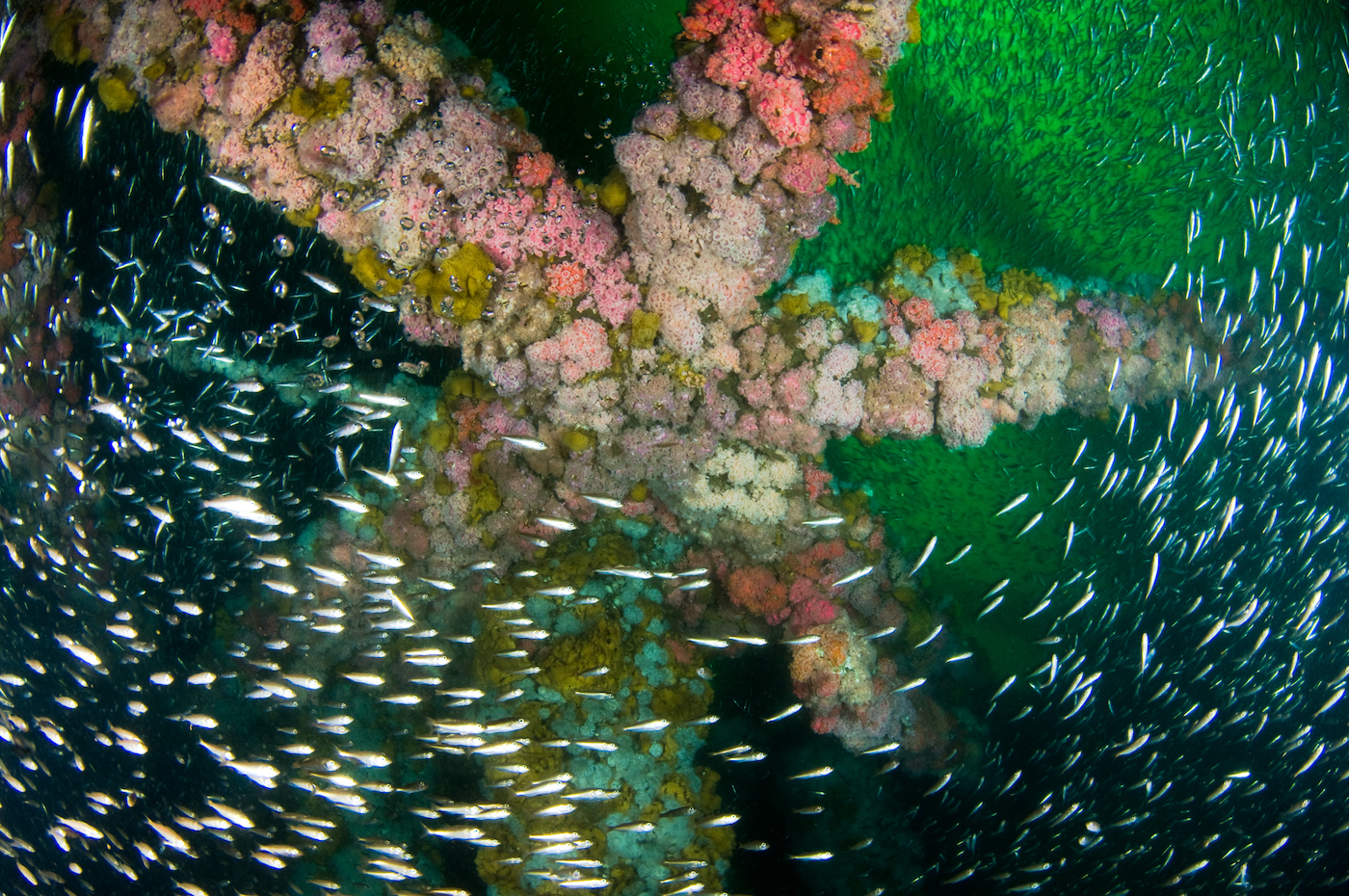
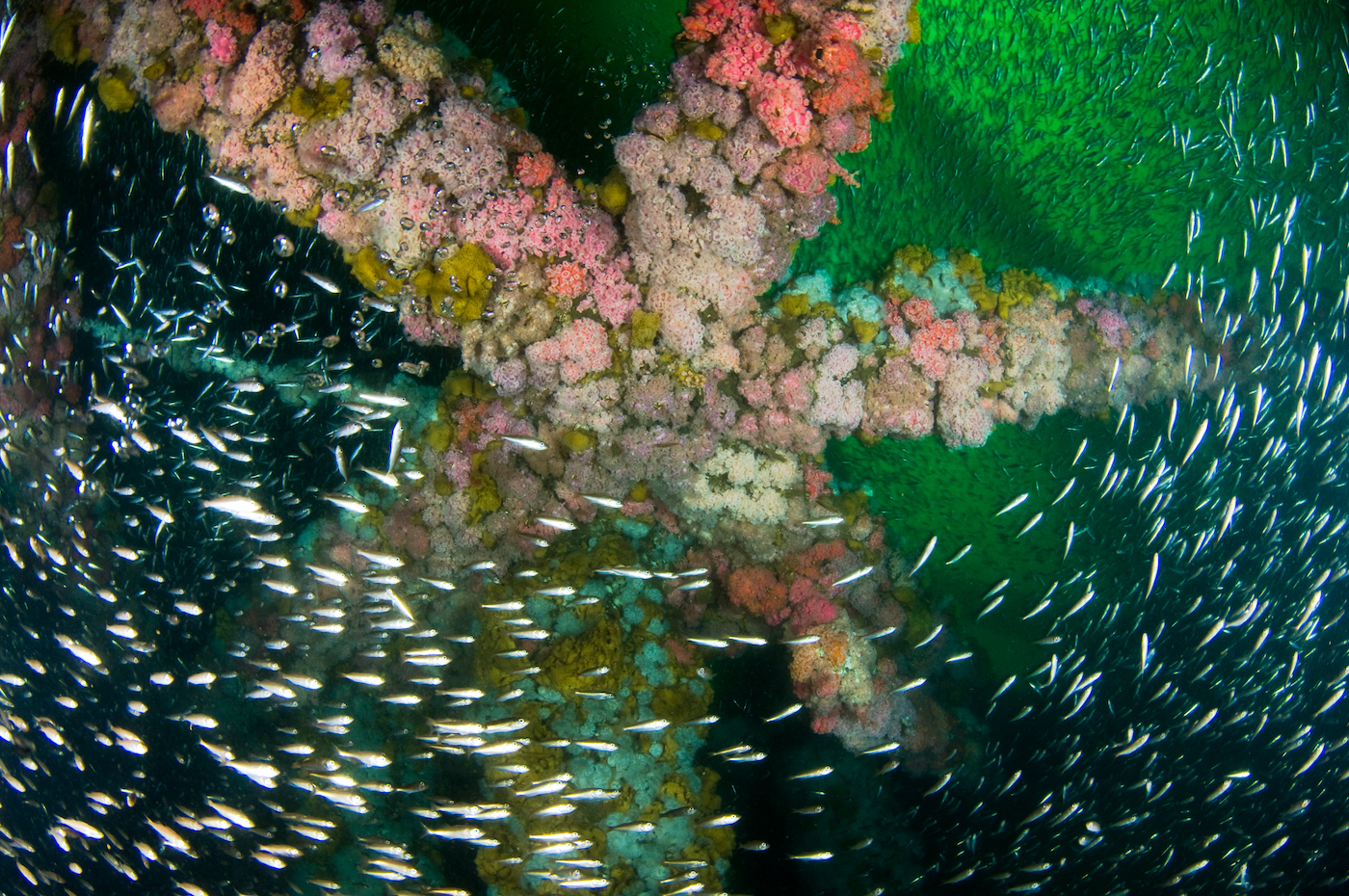
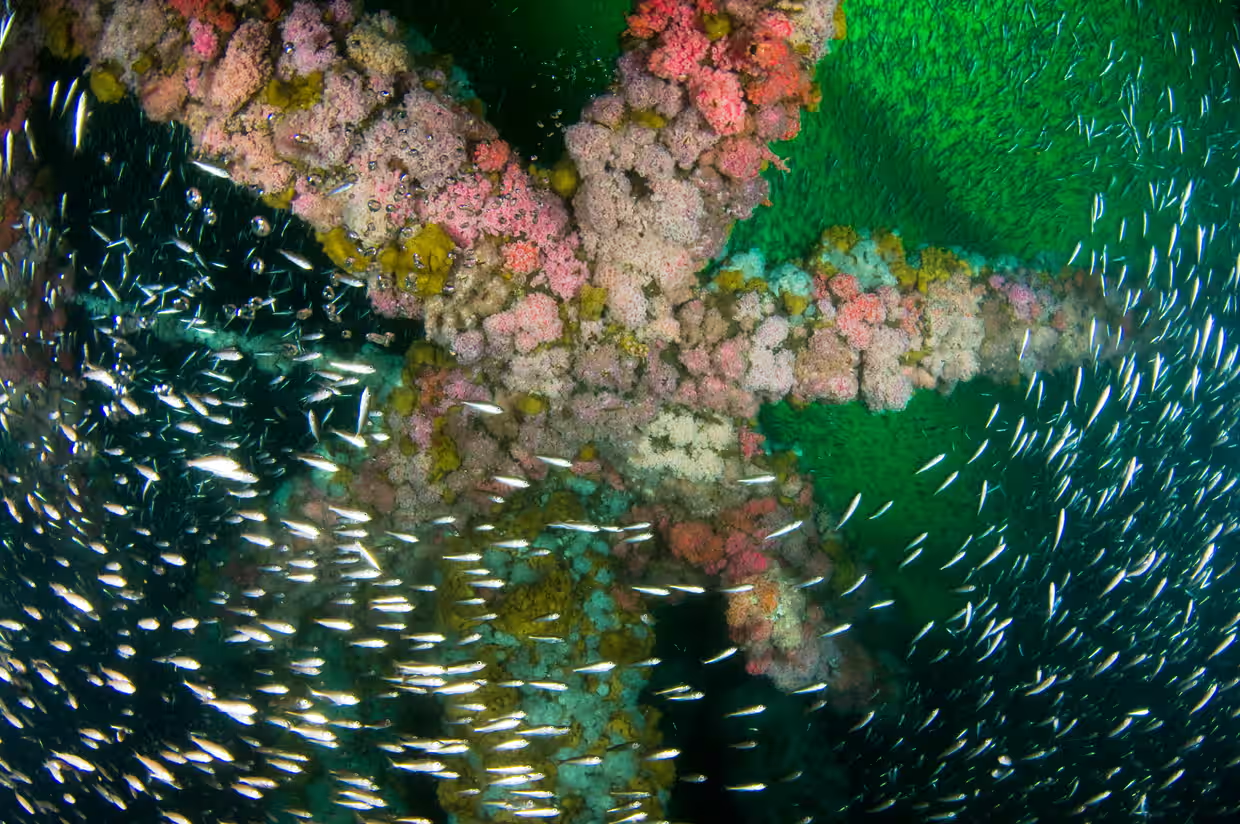
Guardian: Juvenile rockfish seen on an oil platform off the coast of Santa Barbara. For the scientists who study them, preserving these accidental marine ecosystems has become a moral issue. Photograph: Scott Gietler
Excellent Guardian article featuring my former colleague Dr. Ann Bull and Dr. Milton Love from the University of California at Santa Barbara.
According to a 2014 study they (Bull and Love) co-authored, the rigs were some of the most “productive” ocean habitats in the world, a term that refers to biomass – or number of fish and how much space they take up – per unit area. The research showed the rigs to be about 27 times more productive than the natural rocky reefs in California.
Given the current state of Pacific offshore operations, the court decisions will have little or no effect on well activity now or in the foreseeable future. If the BSEE well permitting site is up-to-date, there have been no Pacific well operations in the past 3 years. For the 2 years prior to that, the only well operations were for plugging and abandonment purposes. Therefore, the main concerns are the decision to require an EIS prior to any future well stimulation operations, and perhaps more importantly, the implications of the decision on offshore operations elsewhere.
The data in the paper appear to be reasonably accurate. However, there is one glaring error regarding Pacific operations, and the reference to the Macondo blowout in the environmental discussion is rather provocative and misleading.
Per the authors:
California wells are drilled in relatively shallow water—mostly less than 100 feet—while GoM wells can be in up to 10,000 feet of water.
With regard to the environmental risks, the Nature Energy paper’s reference to the Macondo blowout, while muted, is what some media outlets embraced. Per the authors:
Releases from improperly abandoned wells will probably be chronic and small compared with Macondo, but the underlying biochemical and ecological processes that influence the ecological impacts have many similarities.
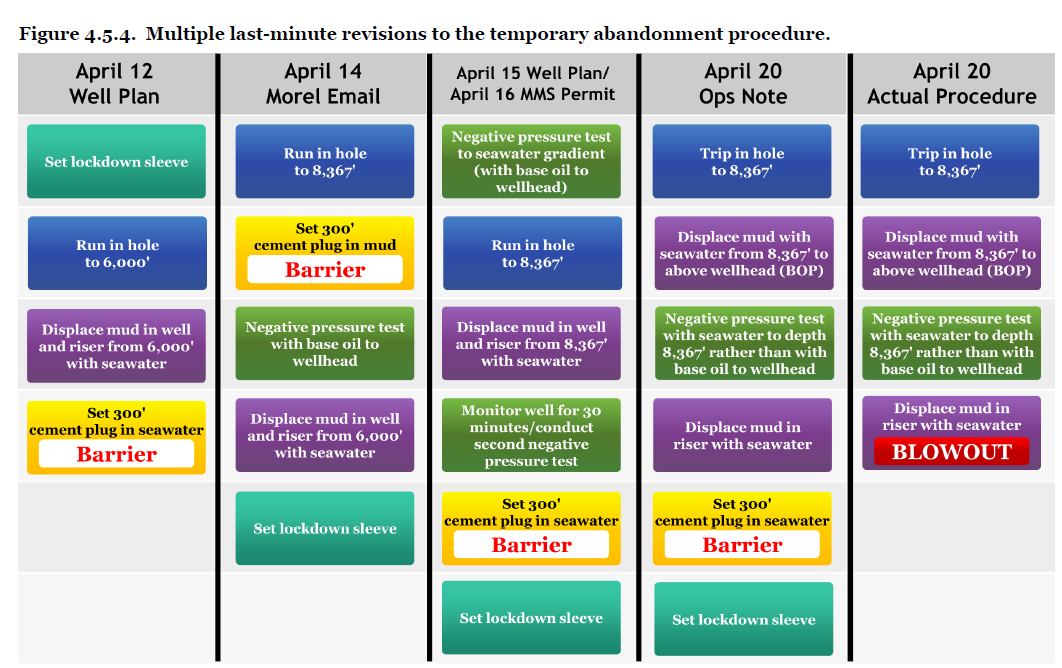
The Macondo well blew out while it was being suspended in preparation for subsequent completion operations. Ill advised changes to the well suspension plan were among the primary contributing factors to the blowout (see diagram below). The Macondo well was entirely different from the depleted end-of-life wells that are the subject of the paper.
Some media outlets ran with the Macondo angle, weak as it was. This ABC news piece featured numerous Macondo pictures. Other outlets noted that Macondo was a temporarily abandoned well, which it was not. The Macondo well never got to that point.
National Commission, Chief Counsel’s Report, p. 132
Relax; just kidding about the California part (or am I? 😉).
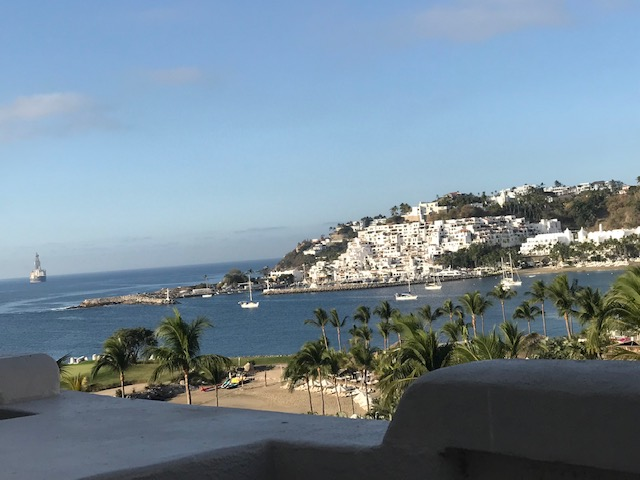
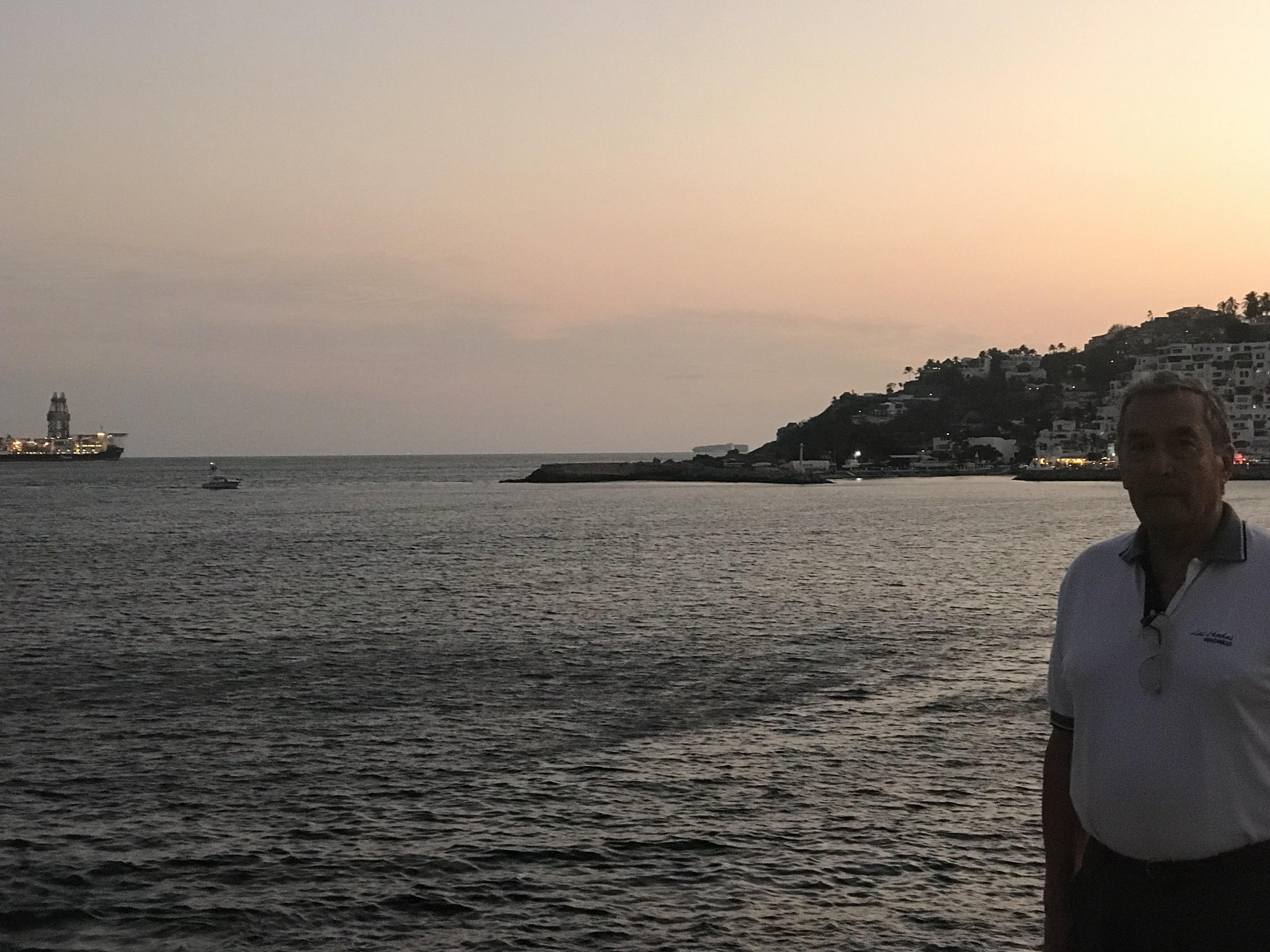
BOE’s Mexican correspondent, Andrew Konczvald, took pictures of what looks like a deepwater drillship parked near the beautiful Pacific coast resort town of Manzanillo. Upon further review, our crack investigators determined that the rig is the Hidden Gem, a deepsea mining vessel, owned by The Metals Company (TMC). Last year, TMC conducted a pilot nodule collection program in the Clarion Clipperton Zone between Hawaii and Mexico.