Feeds:
Posts
Comments

Note: I have attached a PDF for those who want to download the charts and table. I have also added a “flaring and venting” category for easy access to these posts.

Minimizing flaring and venting is important from both environmental and resource conservation standpoints. Flaring and venting volumes are also good indicators of how well production systems are designed, managed, and maintained.

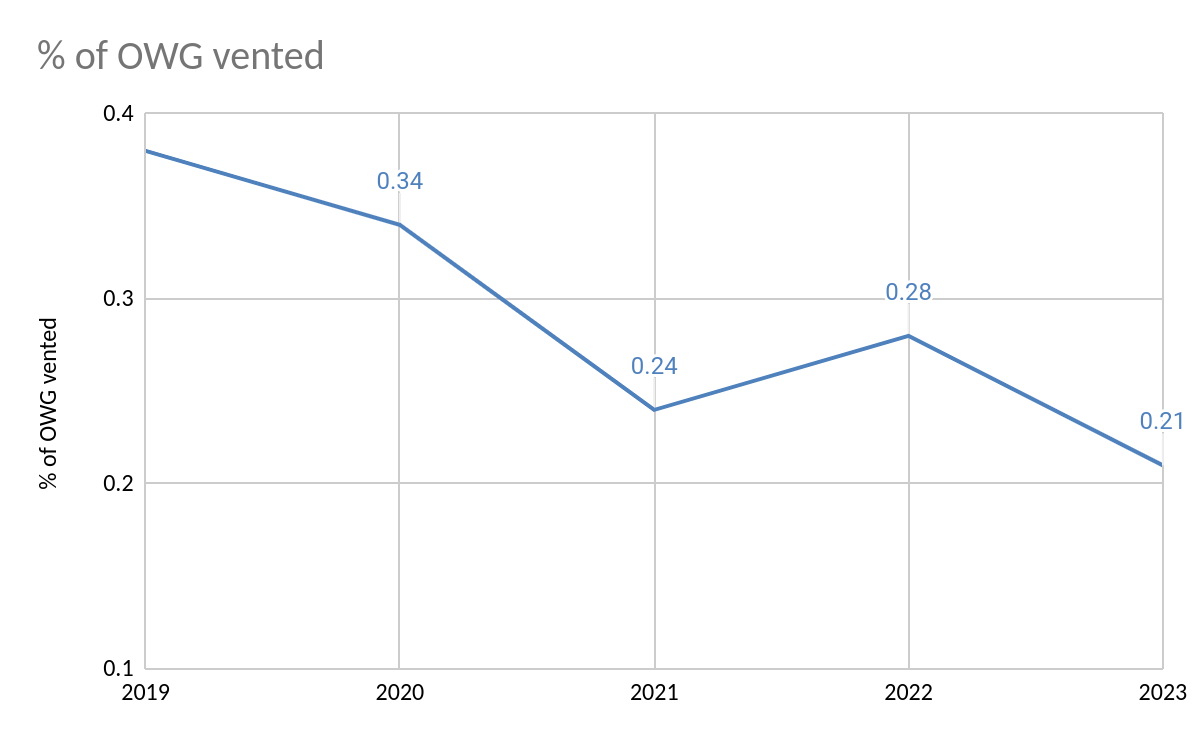
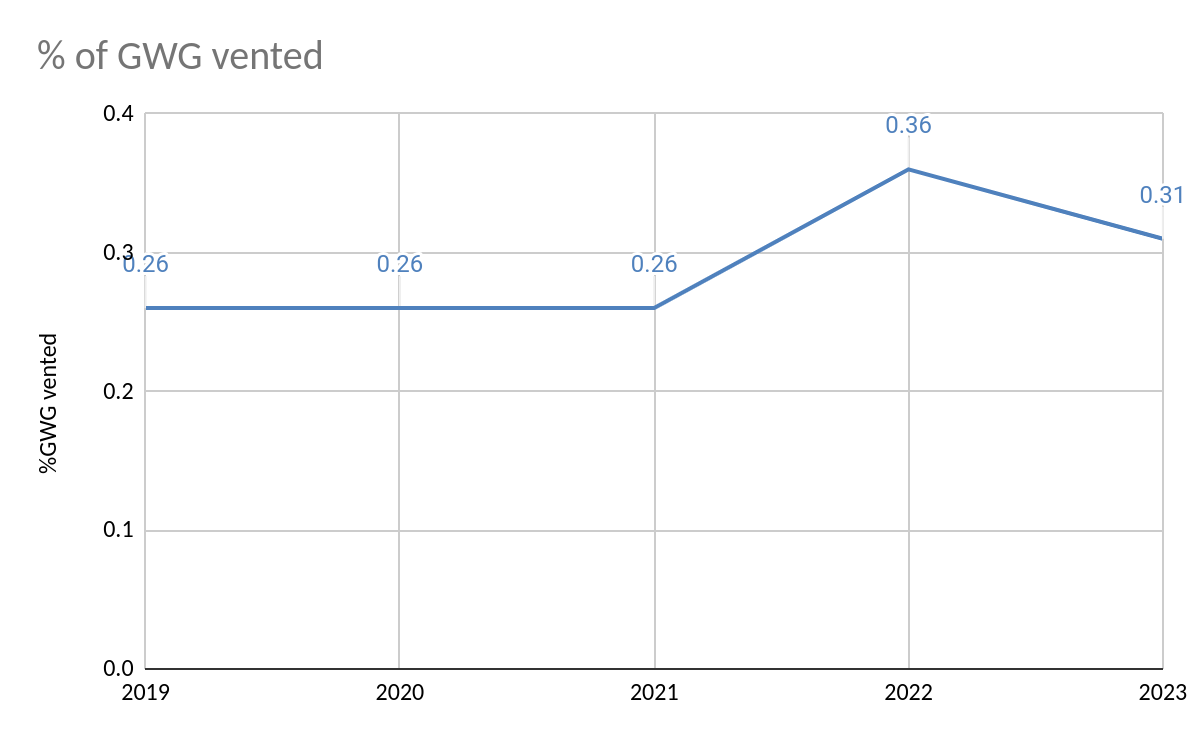
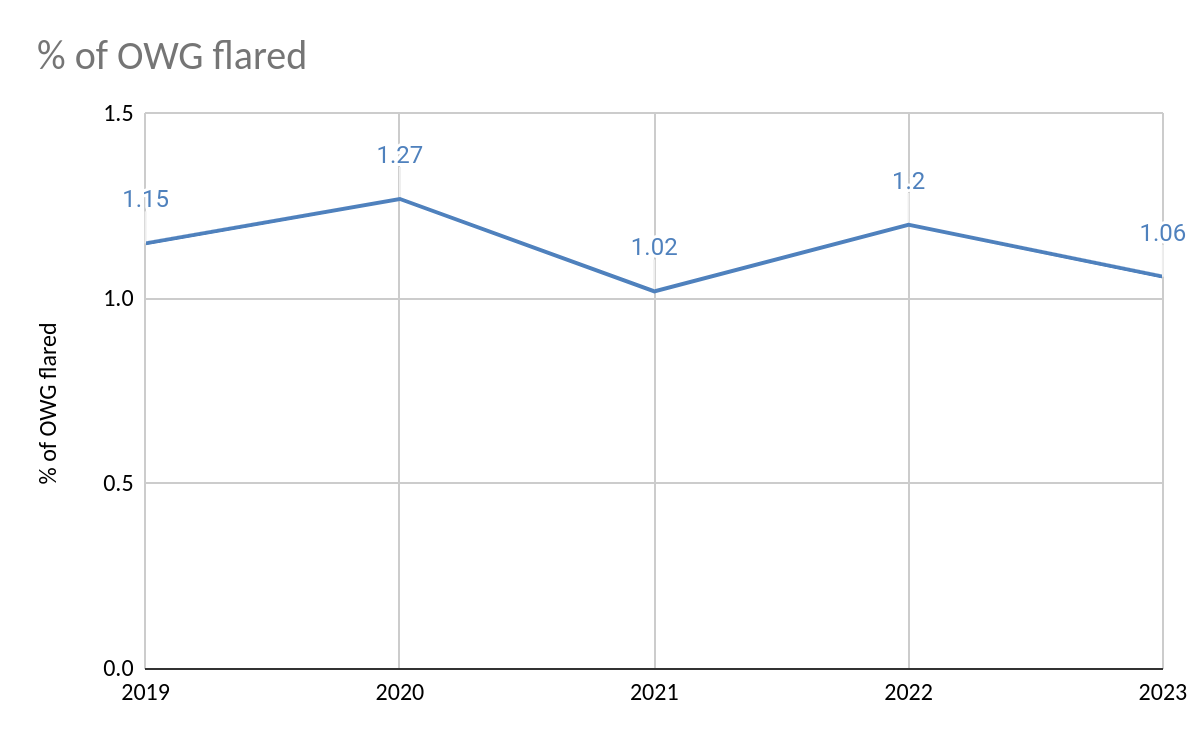
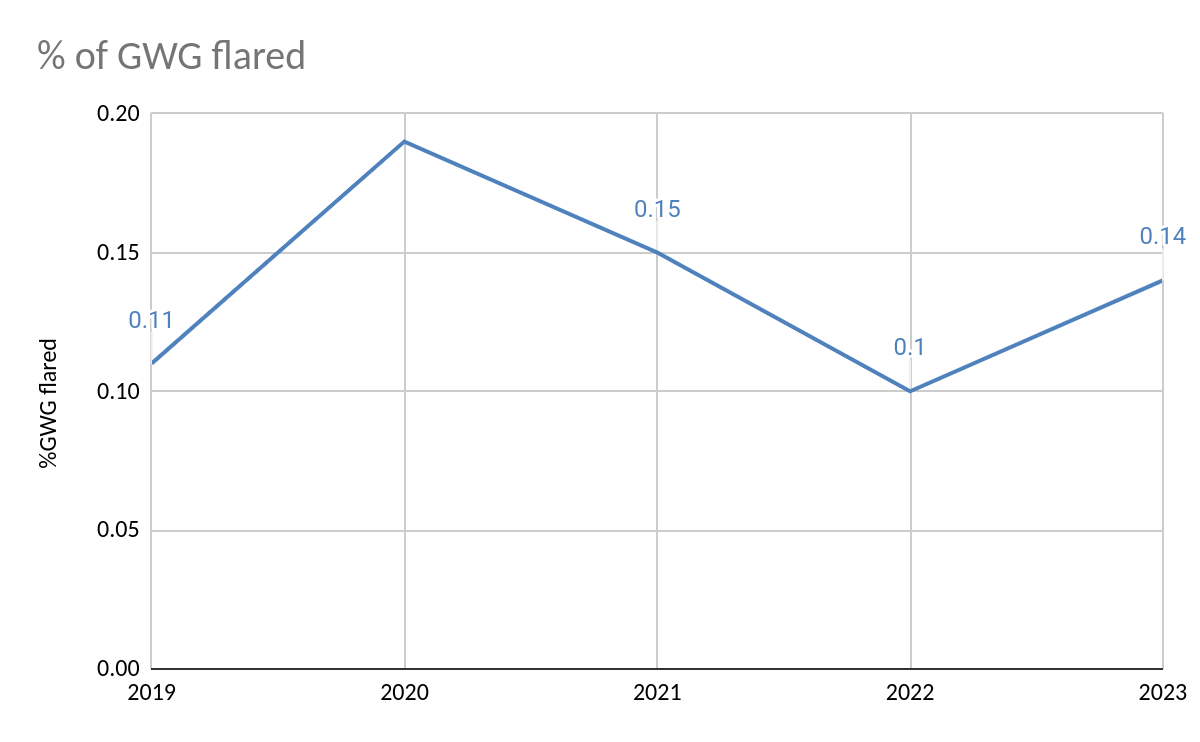
The best performance indicators are the percentages of produced gas that are flared and vented both for oil-well gas (OWG, also known as associated gas or casinghead gas) and gas-well gas (GWG or non-associated gas).

I compile monthly flaring and venting volumes for the Gulf of Mexico using data submitted to the Office of Natural Resources Revenue (ONRR). Reporting these data is mandatory and strictly enforced. Violators are subject to civil and criminal penalties.

In assessing performance trends, it’s important to segment venting and flaring volumes for both OWG and GWG production. Venting produced gas (mostly methane) is a more significant environmental concern from both air quality and greenhouse gas (GHG) perspectives. Reductions in methane emissions are a priority for regulators and leading operators.

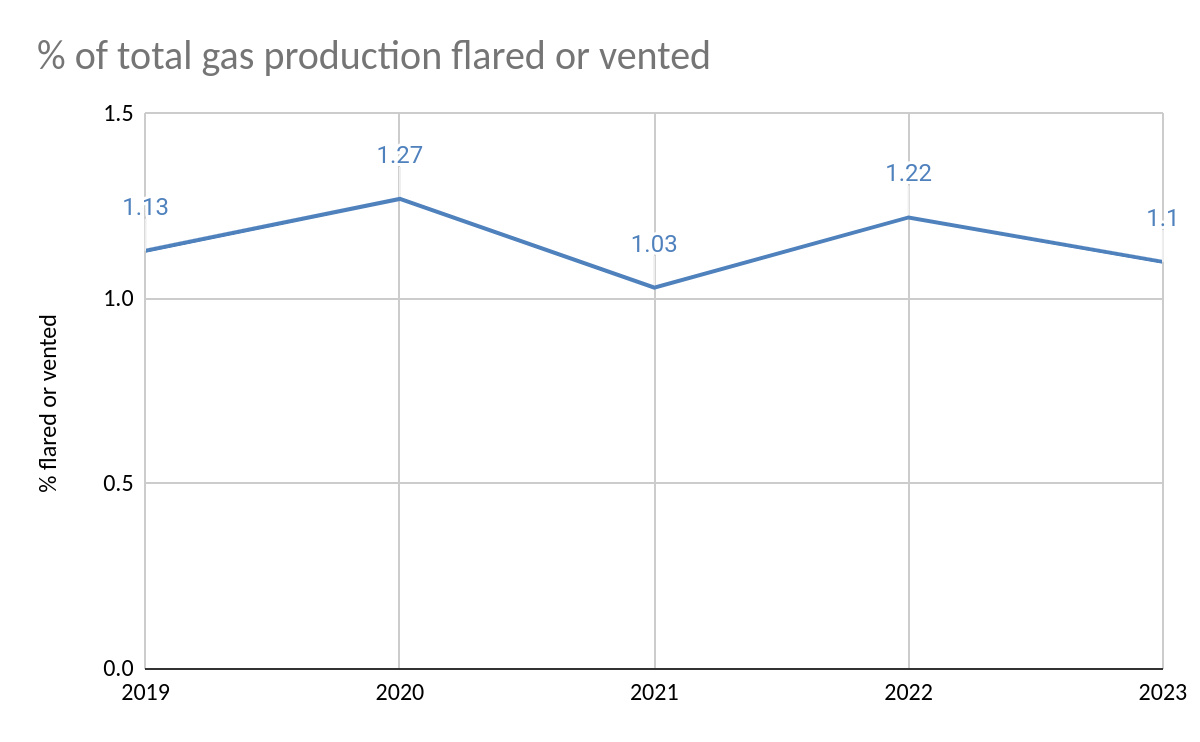
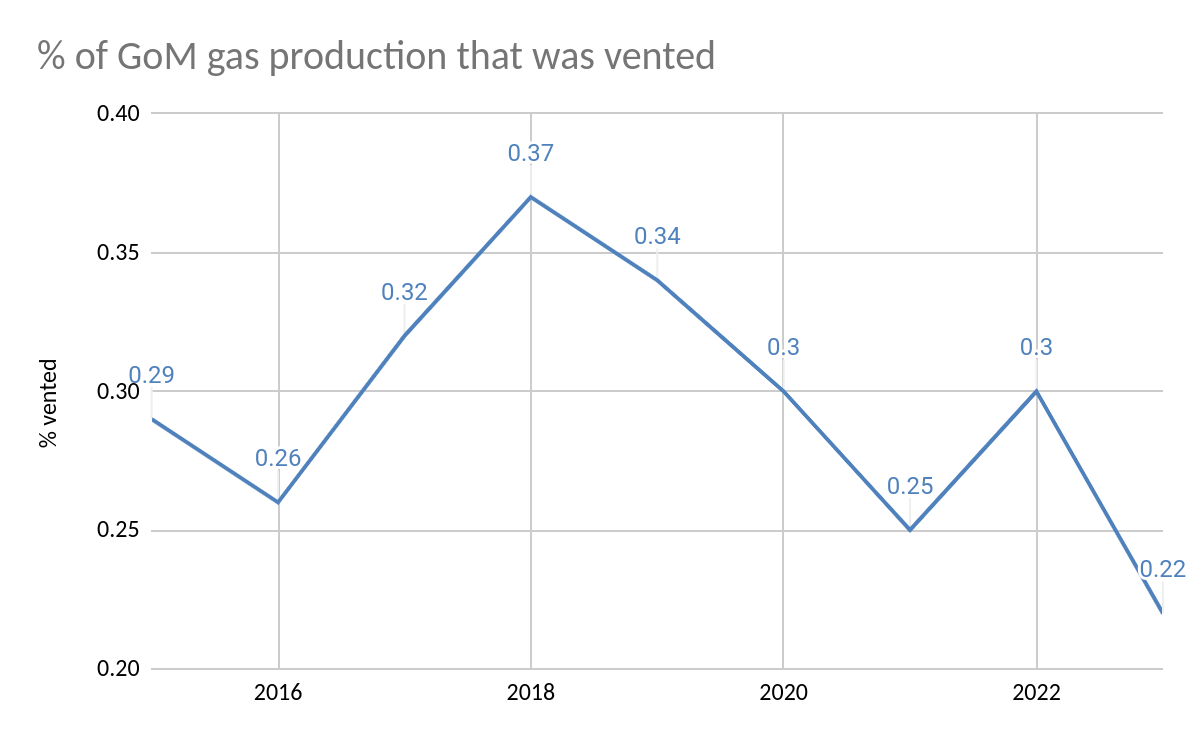
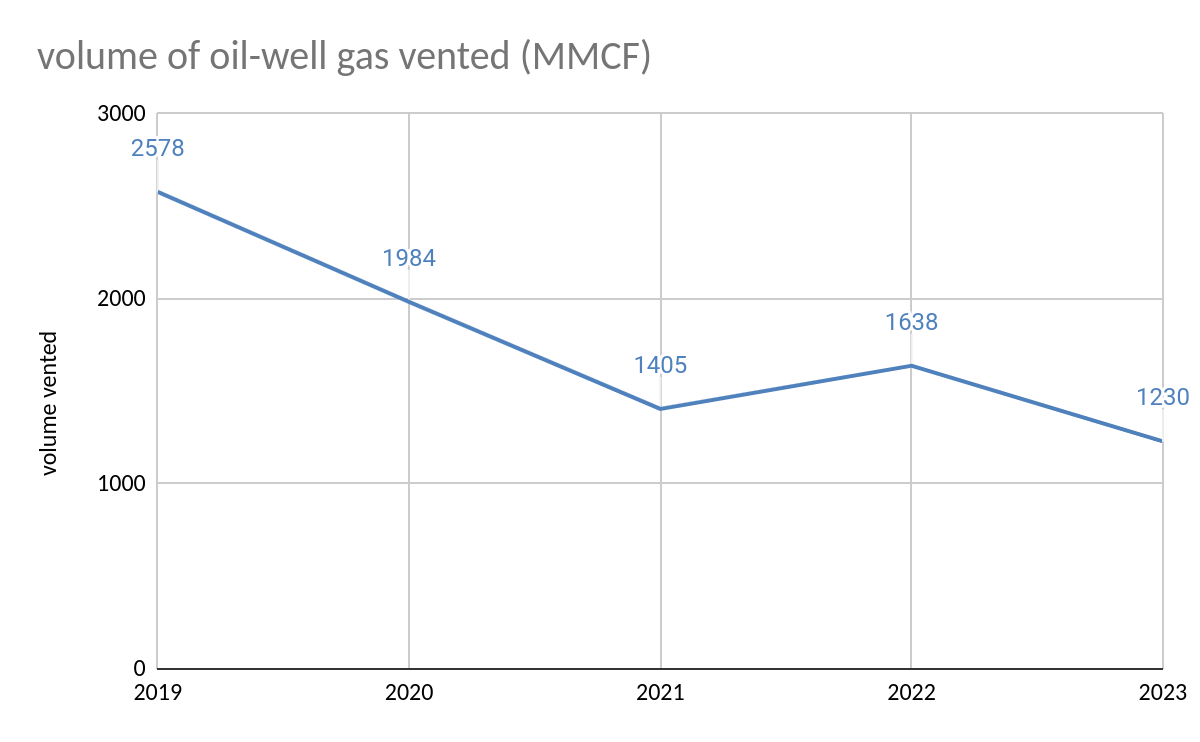
Flaring and venting data for 2019-2023 are summarized in the charts and table below. All volumes are in millions of cubic feet (MMCF). For the last chart (% of total gas production vented), I added ONRR data for 2015-2018 to provide a longer term perspective on overall venting performance.

Observations:

  • OWG venting has declined significantly both in terms of the total volume and % flared. Most OWG is now produced at modern deepwater platforms equipped with efficient flare stacks. Venting from these facilities is minimal. A performance target of <0.2% for OWG venting should therefore be achievable.
  • GWG venting volumes have declined sharply. However, given the parallel decline in GWG production, the % of GWG vented has actually increased. Most gas wells are on older shelf platforms where flare booms cannot be safely and economically added. Nonetheless, it’s disappointing that the % of GWG vented increased to > 0.3% in both 2022 and 2023.
  • OWG flaring has remained relatively constant both in terms of the volume and % flared. Given that most OWG is produced at deepwater facilities, reduction of the flaring % to <1.0 should be achievable.
  • The % of the total gas flared or vented has remained relatively constant at >1.0%. Again, a target of <1.0% should be achievable.
  • In the table, the figures in blue are particularly encouraging and the figures in red are the most disappointing.
  • Overall, the numbers are good, but continuous improvement should be the objective. Reductions in GWG venting and OWG flaring should be prioritized.
  • As previously discussed, flaring/venting performance could be better assessed if information on large flaring/venting episodes was made publicly available. Explanations are needed for spikes in monthly ONRR flaring/venting volumes. Are these spikes associated with production startups, tropical storm restarts, major compressor issues, administrative/accounting corrections, or something else?
20192020202120222023
OWG flared77277385591969876342
OWG vented25781984140516381230
OWG produced670,699582,254582,824581,235598,005
% OWG flared1.151.271.021.201.06
% OWG vented0.380.340.240.280.21
GWG flared405432311213212
GWG vented958578548722468
GWG produced364,082224,808209,558203,342152,400
%GWG flared0.110.190.150.100.14
%GWG vented0.260.260.260.360.31
total flared and vented1166810233818395598252
total gas production1,034,782807,062792,382784,577750,405
% flared or vented1.131.271.031.221.10
total vented35362416195323601698
% vented0.340.300.250.300.22
total flared81327817623072006554
% flared0.790.970.790.920.87

OWG=oil well gas; GWG=gas well gas; all volumes are in MMCF

2024 will be the first year since 1958 without a single OCS oil and gas lease sale. There would not have been a sale in 2023 either were it not for a legislative mandate. The only 2022 lease sale was a micro-sale in the Cook Inlet that resulted in only a single bid. So, at the end of 2024 three years will have elapsed with only one meaningful sale, and that sale was mandated by Congress.

The current plan is for these de facto sanctions on US offshore production to continue. The Dept. of the Interior’s 5 year leasing plan includes a maximum of 3 sales, by far the fewest sales in any 5 year plan in OCS program history.

Meanwhile, the sanctions on Venezuelan production were further eased with the understanding that the Maduro regime would hold fair elections. To the surprise of no one, the evidence strongly suggests that those elections were not fair. Nonetheless, the sanctions on production have not been reimposed.

Apparently, the climate activists who have imposed their will on the OCS oil and gas program have less influence over our policy toward Venezuela. Or perhaps the production (and consumption) of Venezuelan oil is cleaner and greener (🙃 sarcasm intended!)

The Confederated Tribes of the Coos, Lower Umpqua and Siuslaw Indians (“Tribe”) filed a lawsuit against BOEM in Oregon Federal District Court.   The lawsuit (attached) challenges BOEM’s cursory environmental review for the development of private offshore wind energy facilities in two areas off the Oregon Coast near Coos Bay and Brookings.  

The Tribe has consistently urged that BOEM delay moving forward with wind energy development until a better understanding is made of the impacts to fish, wildlife, the marine environment, and cultural resources important to the Tribe,” said Tribal Council Chair Brad Kneaper.  “No one, including BOEM has an understanding on how wind development will impact the fragile marine environment.  BOEM developed an environmental assessment document that narrowly focused on the impacts of the lease sale and completely turned a blind eye to the inevitable impacts that construction and operation of these private energy facilities will have on Coastal resources, the Tribe, and other residents.”

The timeframe for wind development appears to be driven by politics, rather than what is best for Coastal residents and the environmental,” said Chair Kneaper.

This suit and the Aquinnah Wampanoag tribe’s call for a moratorium on offshore wind development have to be uncomfortable for Secretary of the Interior Deb Haaland given her Native American heritage.

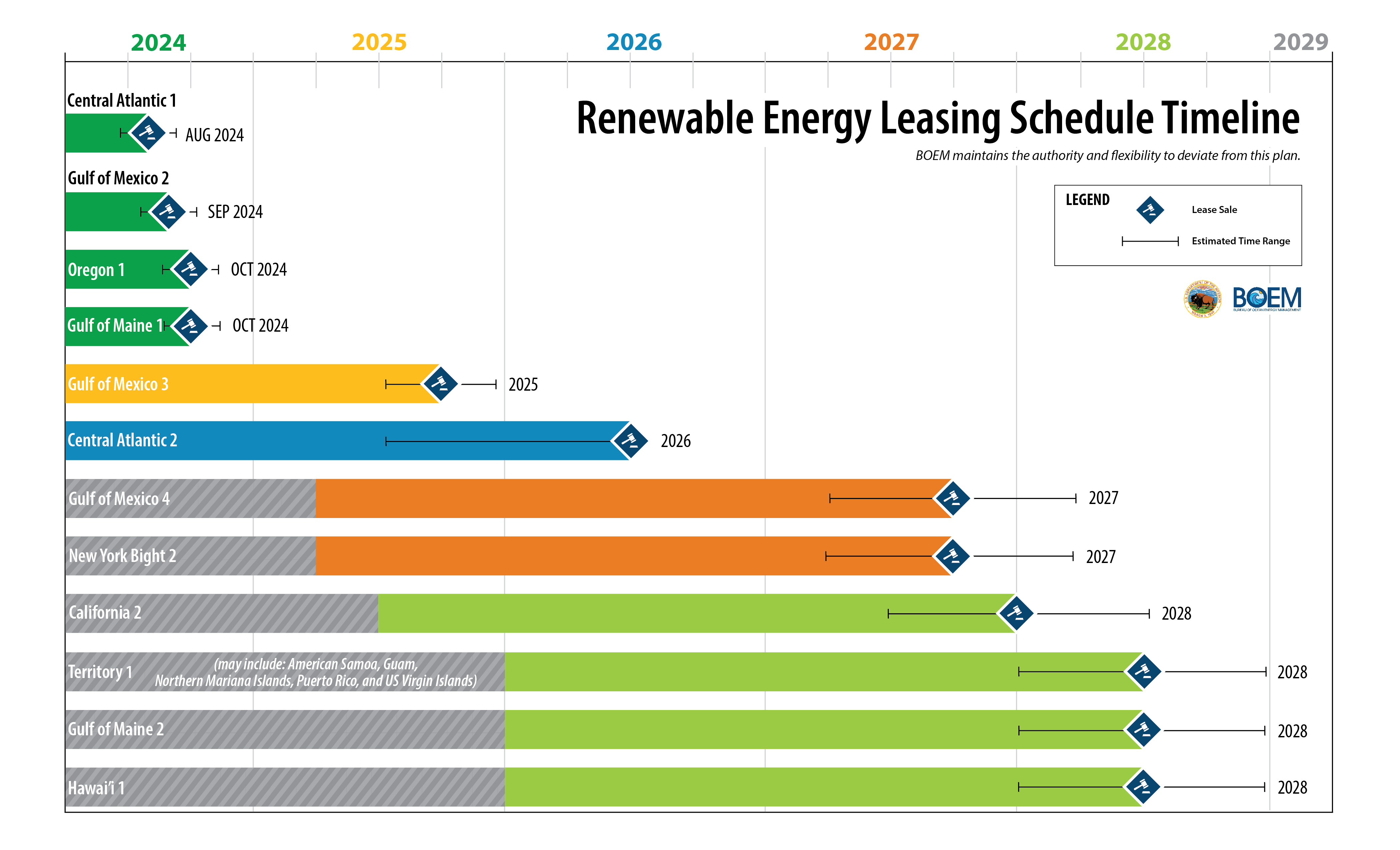
BOEM’s front-loaded 5 year wind leasing plan (graphic below) may have been influenced by (1) the possibility that the upcoming elections could affect offshore wind policy, and (2) the legislative prohibition on issuing wind leases after 12/20/2024 unless an oil and gas lease sale is held prior to that date.

Given that the next oil and gas lease sale will be in 2025 or later, BOEM was perhaps motivated to hold wind sales prior to the 12/20/2024 deadline (with a bit of a buffer to issue the lease documents). Indeed, the wind leasing plan proposed 4 sales between August and October of 2024 and only a single 2025 sale. That 2025 wind sale is in the Gulf of Mexico, where industry interest in wind leases is, at best, tepid.

JL’s wind monitor

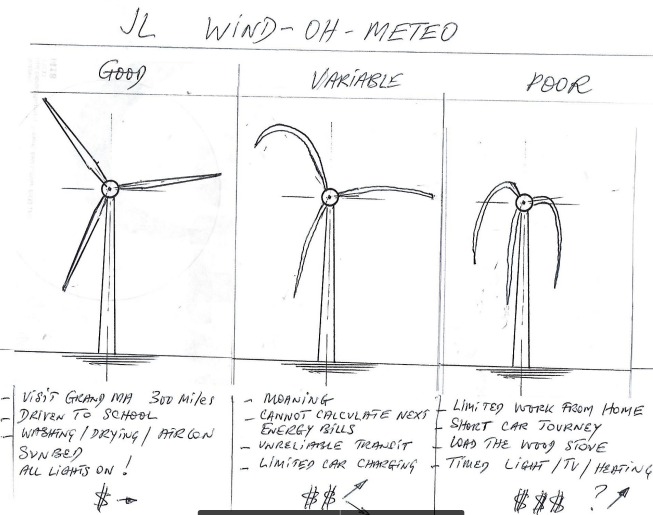
JL Daeschler reports that there has been no wind for the past 4 days at his home in Scotland, and his wind gauge is droopy. (See his sketch below and read the fine print 😉)

As previously noted, these power generation realities cannot be ignored:

  • Wind and solar power are intermittent, such that demand must respond to variable supply (not a prescription for economic growth).
  • Assuming sufficient capacity, gas power plants respond to variable demand.
  • Power grids can function effectively with only natural gas, but not with only wind/solar.
  • Integrated wind, solar, and gas systems can reduce, but not eliminate, demand for gas-generated power.

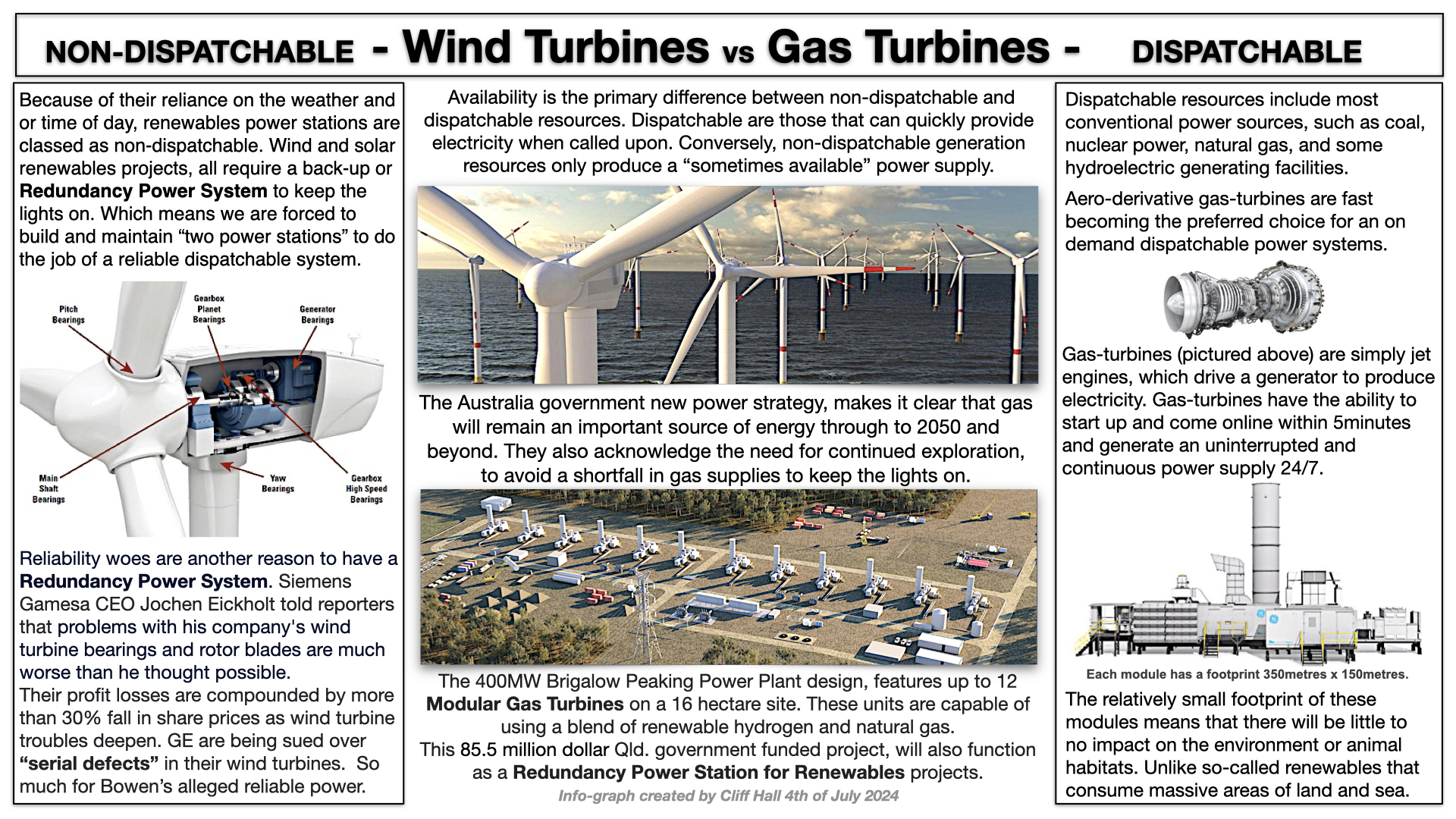
This graphic by Australian Cliff Hall explains the importance of “dispatchable” power. Of course, imported electricity, on which wind-leader Denmark relies heavily, is an alternative to dispatchable power. However, that option is less than optimal from economic growth and energy security standpoints.

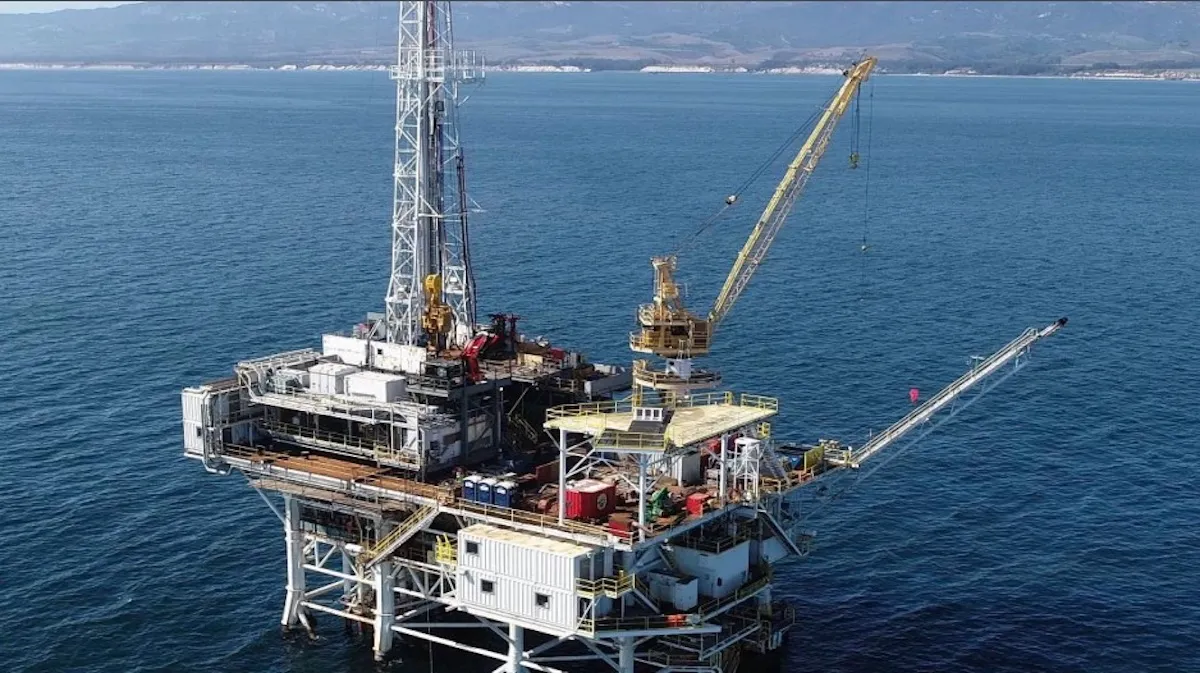
Platform Holly, California State waters in the Santa Barbara Channel, formerly operated by Venoco

Platform Holly sits immediately offshore from the Univ. of California at Santa Barbara, and UCSB scientists have studied the platform and surrounding ecology extensively. Multiple studies have shown that production from Holly reduced natural seepage and methane pollution from shallow formations beneath the Channel. Platform Holly was thus a “net negative” hydrocarbon polluter.

The natural seepage in the Santa Barbara Channel was important to the earliest inhabitants of the area. The Chumash used the tar for binding and sealing purposes, including caulking their canoes. Since Holly shut down in 2015 following the Refugio pipeline spill, offshore workers and supply boat crews have reported a considerable increase in gas seepage.

Earlier this month, it was reported that well plugging operations at Holly had now been completed, but decisions regarding the final decommissioning of the platform remain.

Venoco declared bankruptcy in 2015 and the State of California became the platform owner. According to the State Lands Commission, Exxon will pay the costs for decommissioning the platform. This is because Exxon acquisition Mobil operated the platform from 1993-1997 before Venoco became owner.

The most recent Holly development is that Venoco has settled its law suit with Plains, the company responsible for the 2015 Refugio pipeline spill that halted production from Holly. Terms of the settlement have not been disclosed.

Note: As an aside, I’m curious as to whether Mobil provided a decommissioning guarantee as part of the sale to Venoco or whether the State is simply holding ExxonMobil accountable as a legacy owner. If it’s the latter, why isn’t bp (bp acquisition Arco was Holly’s operator from 1966-1993) also liable? Is it a matter of Mobil being the more recent predecessor owner?

Cox bankruptcy update

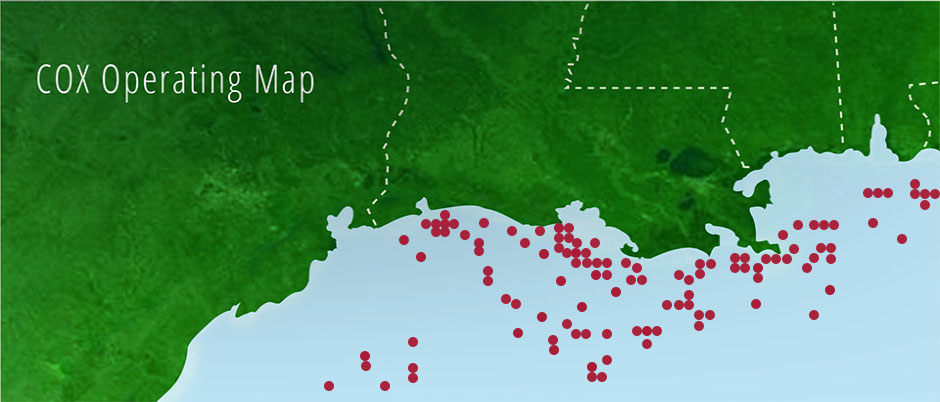
The previously discussed sale of Cox assets in 6 GoM fields to W&T was completed in January for $72 million, $16.5 million less than the proposed price. W&T, an established GoM operator, believes they can increase the pre-bankruptcy production (8300 boepd) through workovers, recompletions, and facility repairs.

The extent to which W&T is assuming decommissioning liability for the Cox assets is unclear to this observer. Decommissioning information from W&T’s SEC filing is pasted at the end of this post.

In February, Cox won court approval to sell “about a dozen oil fields to Natural Resources Worldwide LLC for about $20 million following a bankruptcy court auction.” This sale is more concerning given that the purchaser has no operating history in the GoM, and scant information about the company can be found online. Perhaps they are affiliated with Natural Resources Partners L.P., an energy investment firm which “owns mineral interests and other rights that are leased to companies engaged in the extraction of minerals,” but “does not mine, drill, or produce minerals, has no operations, and conducts business solely in an office environment.”

Per BOEM data, Cox filed requests to assign a number of leases to Natural Resources Worldwide (NRW) in May, but those requests have yet to be approved. Hopefully, BOEM is taking a hard look at these requests and their obligations following the court auction. Decommissioning liabilities should be their number one concern. (Note: NRW was just listed as the operator of the former Cox platform at EI 361, so presumably at least some of those assignments have now been approved.)

According to BOEM’s platform data base, Cox and affiliates Energy XXI and EPL still operate 243 platforms, down from 435 in June 2023. Also per the data base, the Cox companies have not removed any platforms during 2023 or 2024 YTD, so the reduction in platforms is presumably the result of the W&T transaction. Most of the remaining Cox platforms are old – 16 of their 77 major platforms were installed in the 1950s!

Meanwhile, Cox and affiliates continue to be the GoM violations leader by far with 549 incidents of non-compliance (INCs) in 2024 YTD, 45% of the GoM total for all operators. No other company has more than 100 INCs (although Whitney Oil and Gas has a disappointing 93 INCs, including 33 facility shut-ins on only 65 inspections!)

operatorplatforms/
major platforms
warning INCscomponent shut-in INCsfacility shut-in INCs
Cox209/69407444
Energy XXI19/77312
EPL5/11611
Total Cox233/77496467
Total GoM1519/73683131768
INCs are for 2024 as of 9/17/2024. A major platform has at least 6 well completions or more than 2 pieces of production equipment.

From W&T’s quarterly SEC filing:

Contingent Decommissioning Obligations

The Company may be subject to retained liabilities with respect to certain divested property interests by operation of law. Certain counterparties in past divestiture transactions or third parties in existing leases that have filed for bankruptcy protection or undergone associated reorganizations may not be able to perform required abandonment obligations. Due to operation of law, the Company may be required to assume decommissioning obligations for those interests. The Company may be held jointly and severally liable for the decommissioning of various facilities and related wells. The Company no longer owns these assets, nor are they related to current operations.

During the three months ended March 31, 2024, the Company incurred $2.6 million in costs related to these decommissioning obligations and reassessed the existing decommissioning obligations, recording an additional $5.3 million. As of March 31, 2024, the remaining loss contingency recorded related to the anticipated decommissioning obligations was $20.8 million.

Although it is reasonably possible that the Company could receive state or federal decommissioning orders in the future or be notified of defaulting third parties in existing leases, the Company cannot predict with certainty, if, how or when such orders or notices will be resolved or estimate a possible loss or range of loss that may result from such orders. However, the Company could incur judgments, enter into settlements or revise the Company’s opinion regarding the outcome of certain notices or matters, and such developments could have a material adverse effect on the Company’s results of operations in the period in which the amounts are accrued and the Company’s cash flows in the period in which the amounts are paid. To the extent that the Company does incur costs associated with these properties in future periods, the Company intends to seek contribution from other parties that owned an interest in the facilities.

5.62% of the oil and 9.68% of the gas remain shut-in.

BSEE data as of 12:30 p.m. ET on the specified date. Peak figures highlighted. The 9/17 report was BSEE’s final update.

date9/109/119/129/139/149/159/169/17
oil s.i.(BOPD)
% of total
412,070
23.55
674,833 
38.56
730,472
41.74
732,316
41.85
522,233
29.84
338,690
19.35
213,204
12.18
101,778
5.62
gas s.i.(MMCFD)
% of total
494
25.56
904
48.77
991.7
53.32
973.2
52.3
755
40.6
514.8
27.64
298
16.02
180
9.68
platform evacs
% of total
130
35
171
46
169
45.55
144
31.81
52
14
37
10
24
6.47
16
4.31
rig evacs
% of total
2
40
3
60
3
60
2
40
0
0
0
0
00
DP rigs moved
% of total
3
15
4
20
2
10
2
10
2
10
2
10
00
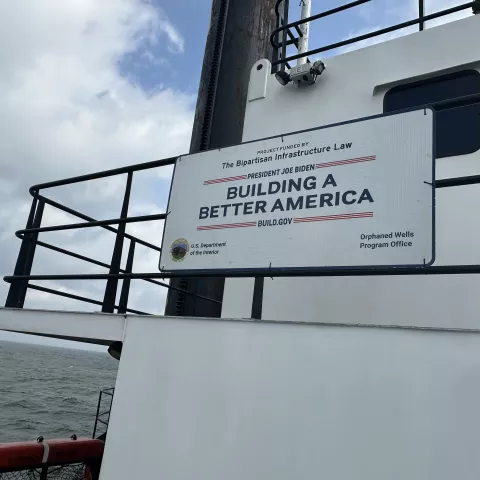
Federally funded decommissioning in the Matagorda Island area of the Gulf of Mexico. Not a success story.

I’m not typically aligned with the sponsors of the attached “Plug Offshore Wells Act,” but the call for transparency is understandable given that taxpayer funds are, for the first time, being used to decommission offshore platforms in the Matagorda Island area of the Gulf of Mexico, massive liabilities associated with the Cox bankruptcy loom, and the Hogan and Houchin saga drags on without resolution.

The bill would require an annual report on well, platform, and pipeline decommissioning including applications, deadlines, and enforcement actions. BSEE does have a good facility infrastructure page for the GoM, but much of the information called for in H.R. 9168 is not publicly available.

Improved oversight of decommissioning requirements for offshore wind projects should also be considered in light of the precedent setting waiver granted to Vineyard Wind and BOEM’s “modernization rule” that relaxes financial assurance requirements for wind development.

BSEE data as of 12:30 p.m. ET on the specified date. Peak figures highlighted.

date9/109/119/129/139/149/159/16
oil s.i.(BOPD)
% of total
412,070
23.55
674,833 
38.56
730,472
41.74
732,316
41.85
522,233
29.84
338,690
19.35
213,204
12.18
gas s.i.(MMCFD)
% of total
494
25.56
904
48.77
991.7
53.32
973.2
52.3
755
40.6
514.8
27.64
298
16.02
platform evacs
% of total
130
35
171
46
169
45.55
144
31.81
52
14
37
10
24
6.47
rig evacs
% of total
2
40
3
60
3
60
2
40
0
0
0
0
0
DP rigs moved
% of total
3
15
4
20
2
10
2
10
2
10
2
10
0