Feeds:
Posts
Comments
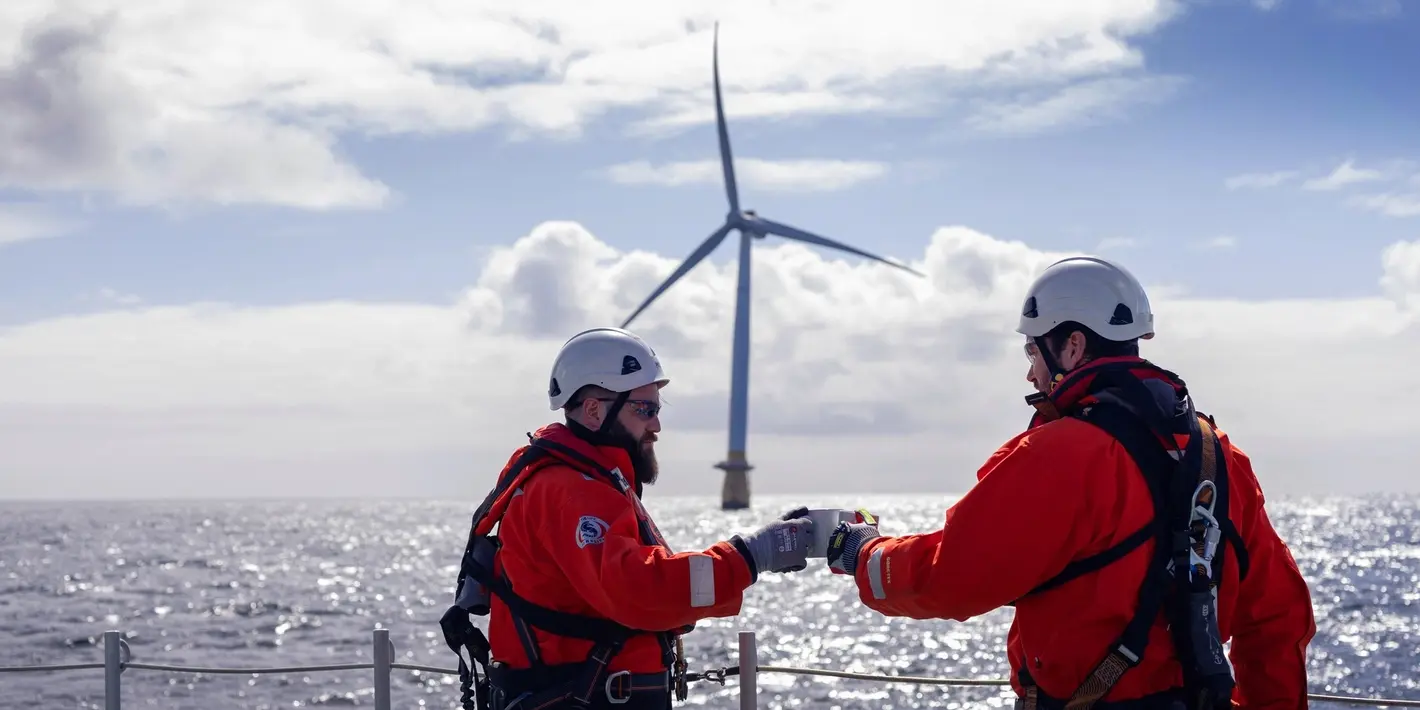
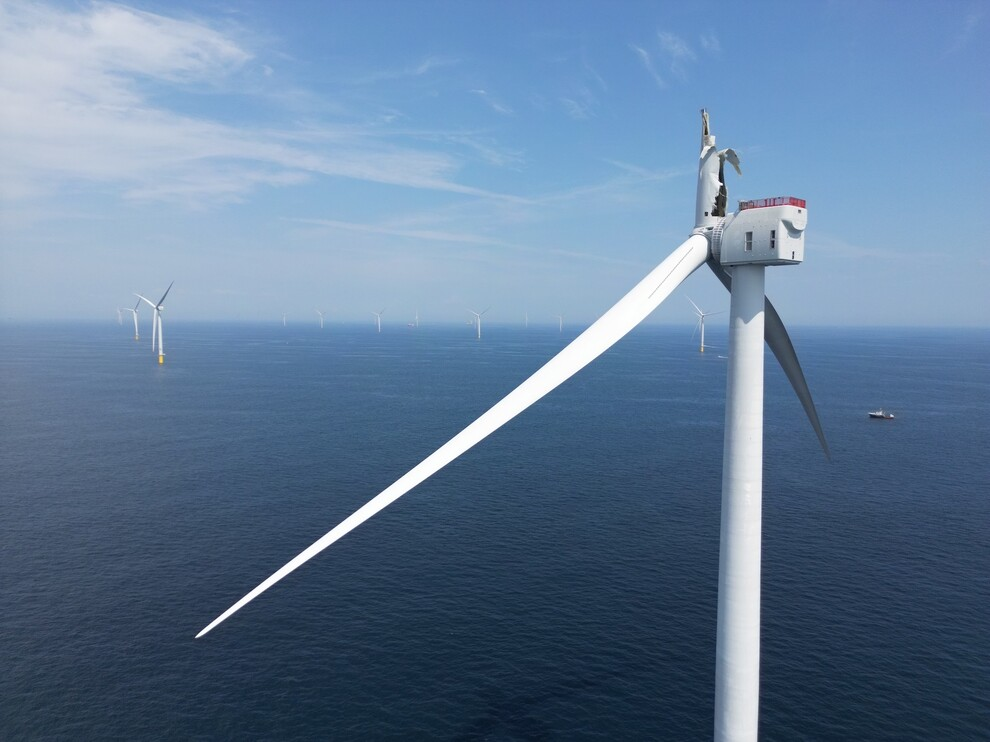
Damaged Vineyard Wind turbine; Kit Noble photo
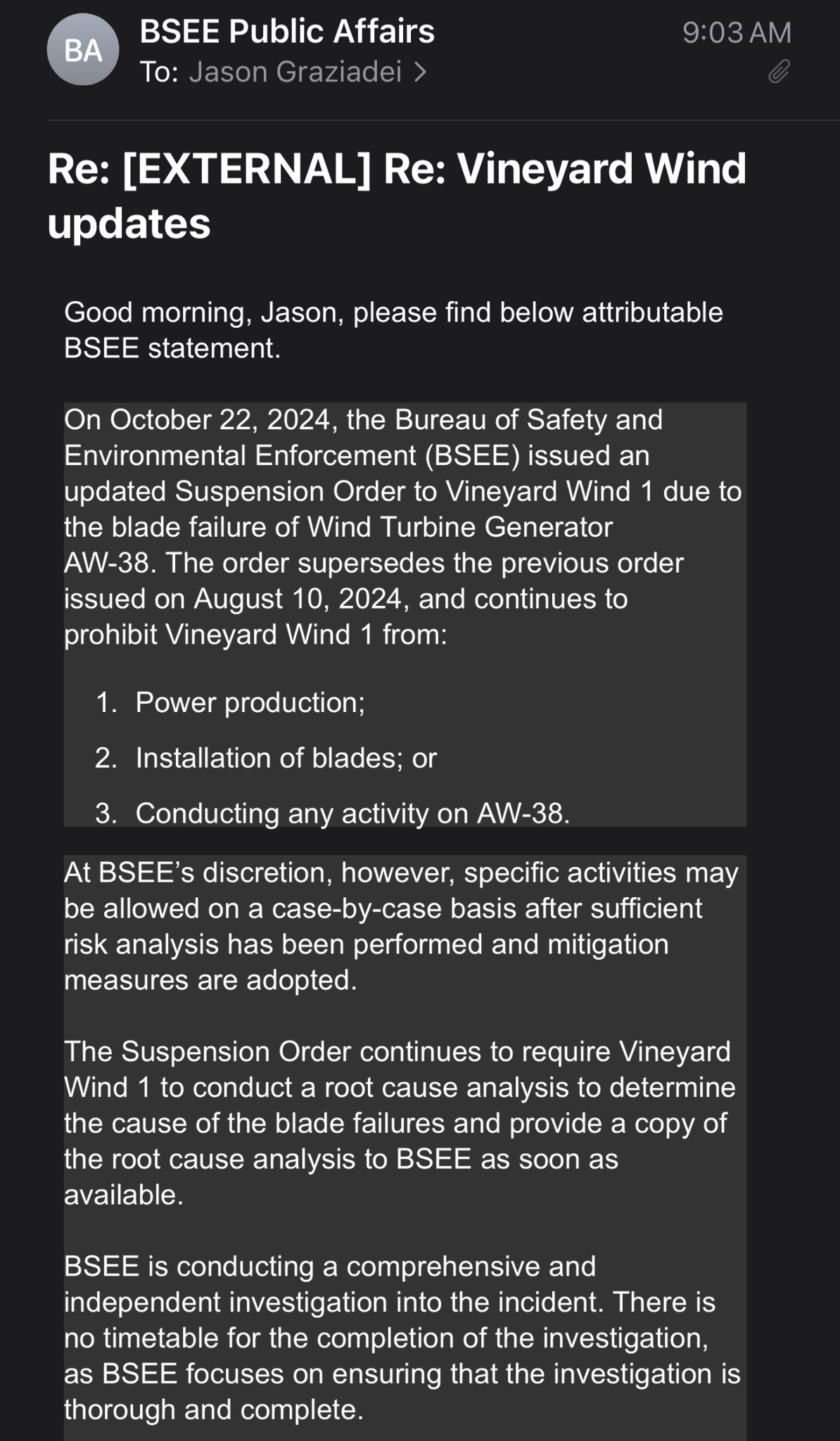
BSEE statement to the Nantucket Current

Comparing the above BSEE statement with recent GE Venova (GE) statements:

  • GE: We were “granted approval to return to installing new blades on turbines at the project once stringent safety and operational conditions are met.” (Positive spin of the BSEE statement implying that approval is assured.)
  • GE: “We have finalized root cause analysis and confirm the blade at issue at Vineyard Wind was caused by a manufacturing deviation from our factory in Canada.” (Then why doesn’t BSEE have the analysis? Is the Canadian plant being scapegoated?)

Finally, as expected, we can now conclude that the blades being shipped from New Bedford to France were defective.
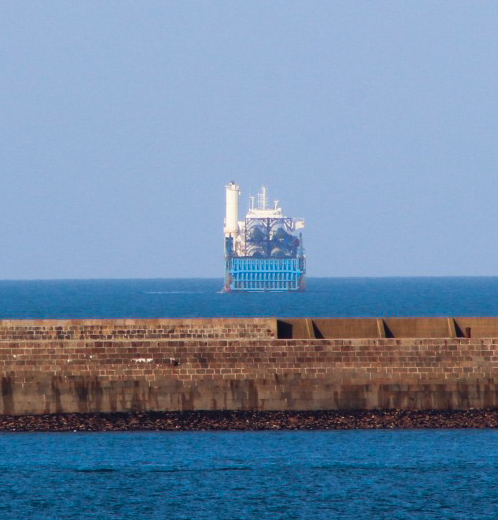
Rolldock Sun arriving in Cherbourg with defective blades

Breaking report from the Nantucket Current:

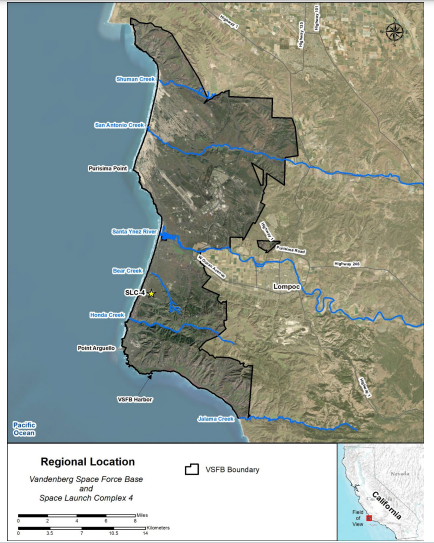
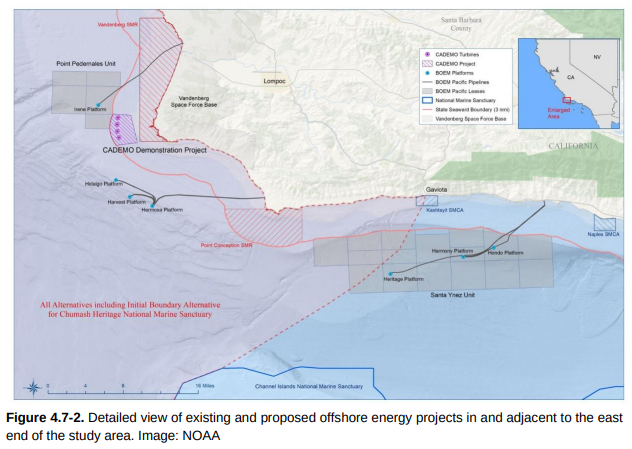
Almost 40 years ago, four large oil and gas platforms were installed in the beautiful offshore area that was part of our Santa Maria District (Pacific Region of the Minerals Management Service). Those platforms are now within the boundaries of the Chumash Heritage National Marine Sanctuary (see map above).

We watched those platforms being installed, inspected the drilling and production operations, and performed a myriad of other duties including the curtailment of offshore operations prior to launches from Vandenberg AFB. Those Vandenberg launches weren’t always perfect as this link clearly demonstrates. Even knowing that, it was still a bit unnerving when missiles were recovered during post-abandonment site clearance trawls.

All four of those Santa Maria District platforms are now on terminated OCS leases. All were installed by companies that are now part of Chevron Corp. (Chevron, Texaco, and Unocal). They are currently maintained by Freeport-McMoRan Oil & Gas, with Chevron retaining financial responsibility for decommissioning.

PlatformInstall yr.installed bywater depth (ft)Est. removal weight (short tons)wells drilled
Harvest1985Texaco67535,15019
Hermosa1985Chevron60330,86813
Hidalgo1986Chevron43023,38414
Irene1985Unocal2428,76226

BSEE reports that the 46 wells on Harvest, Hermosa, and Hidalgo have been plugged and tested, and that the well conductors have been removed. No information has been posted on the status of the wells at Platform Irene, but presumably they are (or will soon be) plugged in accordance with BSEE regulations.

Will the inclusion of these platforms in the Chumash Marine Sanctuary further complicate the already difficult decommissioning process? Decommissioning specialist John Smith thinks it may:

In addition to the BOEM and BSEE approval process, Chevron and FMC are going to be dealing with the NOAA permitting regime for Sanctuaries.  Those permitting and environmental compliance requirements are extensive.  NOAA’s NEPA documentation for West Coast marine sanctuaries will also need to be amended to include the Chumash.”

So the “Mission Impossible” that is California OCS decommissioning now has yet another complex regulatory element.

John also thinks the Sanctuary designation presents yet another obstacle for Sable’s plans to restart Santa Ynez Unit production:

“Even though most of the SYU facilities are outside the Sanctuary, the proximity of the operations to the Sanctuary is problematic. The Chumash are now going to be a co-manager of the Sanctuary, adding another player in the process.   Sable is going to obtain multiple Federal, State and local permits to restart SYU, and law suits are likely at every stage of the process.” 

BOE will be watching!

Hywind Scotland, Equinor

Equinor reports that all 5 Hywind turbines have been returned to service after being towed to Norway as part of a 4-month maintenance campaign.

Even though the turbines had only been in operation since 2017, Equinor puts a positive spin on the 4-month maintenance outage, declaring total victory:

“The successful completion of the maintenance campaign on Hywind Scotland is a testament to the collaborative efforts of our teams and partners. As the world’s first floating offshore wind farm, Hywind Scotland has demonstrated the immense potential of floating wind. Through this maintenance campaign, we’ve gained valuable insights that will help us refine maintenance practices and optimise this technology for the future. By sharing our learnings, we aim to contribute to the growth and development of the floating wind industry.”

Some of the folks in Scotland have a different take as evidenced in this video:

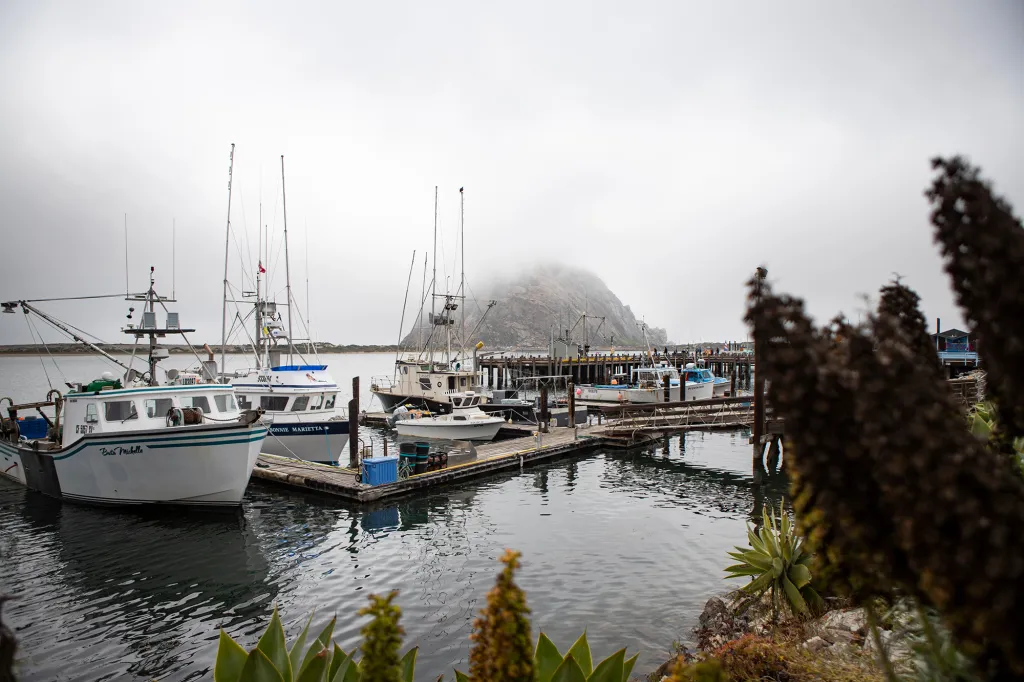
Meanwhile, the turbines planned for offshore Central California will also have to be towed to shore for major maintenance. Nearby harbor areas like Morro Bay (pictured below) would be overwhelmed by the large structures and the maintenance and repair operations. Central Coast residents are not enamored with “another attempt to industrialize the coast.” Towing the towers to LA/Long Beach, albeit rather distant from the leases, would seem to be the preferred option for such work.

Looking forward, the first power generation from floating wind turbines on the Central Coast is forecast for 2034. Betters may want to take the over!

Per a related post, the full SpaceX lawsuit is attached. It’s mostly exhibits, so don’t be intimidated by the length.

This excerpt summarizes the case nicely:

“Rarely has a government agency made so clear that it was exceeding its authorized mandate to punish a company for the political views and statements of its largest shareholder and CEO. Second, the Commission is trying to unlawfully regulate space launch programs—which are critical to national security and other national policy objectives—at Vandenberg Space Force Base (the Base), a federal enclave and the world’s second busiest spaceport.”

Even Gov. Newsome sides with SpaceX saying “I’m with Elon.”

Will this case teach the Commission some humility? Probably not, but we shall see.

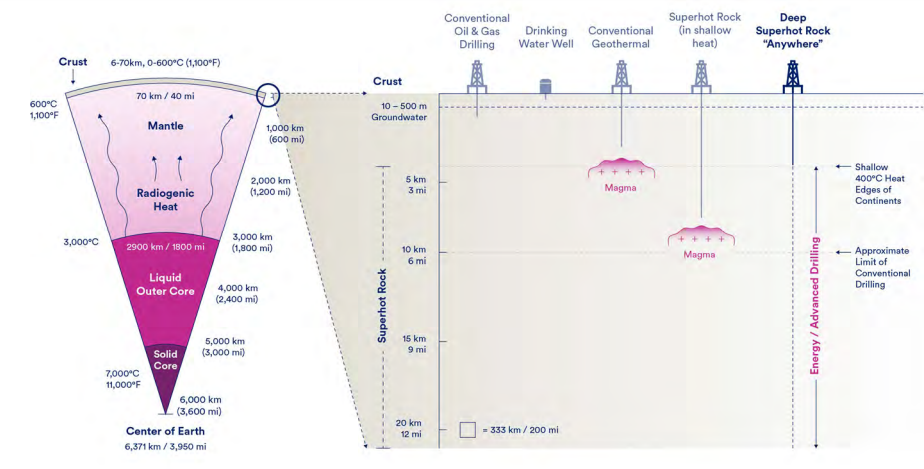
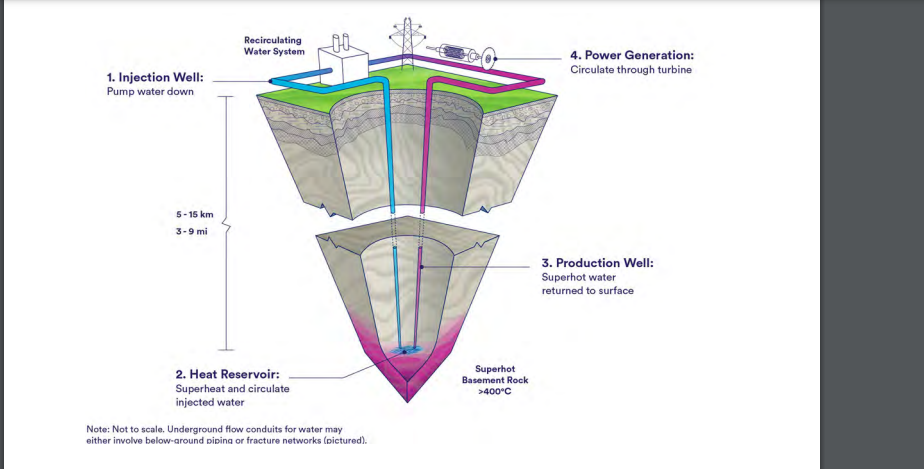
Ultra-deep geothermal is arguably the renewable energy resource with the greatest long term potential. It is accessible everywhere, can replace thermal energy sources at existing power plants, and isn’t handicapped by the intermittency, space preemption, aesthetic, and wildlife protection challenges inherent in wind and solar development.

from Superhot Rock Energy

A new study found that rock that fractures at superhot conditions (see diagram above) can be ten times more permeable than rock that fractures at conditions closer to the Earth’s surface, and can also deform more readily.

Why is this important?

from Superhot Rock Energy

The next big step for ultra-deep geothermal is demonstrating the technology to efficiently drill wells to depths of ~20 km. In that regard, we are awaiting Quaise Energy’s field test of their gyrotron drilling system.

The attached letter was obtained by the Nantucket Current through a FOIA request. Key points:

  • Vineyard Wind power generation and blade installation suspension order remains in effect.
  • Vineyard Wind directed to conduct a site-specific study that evaluates the environmental harm and other potential damage from the blade failure, and to identify potential mitigation measures.
  • Vineyard Wind was required to submit a plan for the study by Oct. 11. It’s not clear whether the plan was submitted.
  • The study must include a mass balance of unrecovered debris material based on the weight of debris recovered and the weight of the subsea debris retrieved.

Comments:

  • The study requirement is appropriate given the significance of the blade incident and the implications for offshore wind development.
  • Why was a FOIA request needed to learn about the study requirement?
  • What about the 6 turbine blades being returned to France? Were they defective?

David Scarborough, Island Operating Co., was one of the 4 workers who died in the 2022 crash at a West Delta 106 platform.

The California Coastal Commission, which exercises enormous power and limited restraint, is making headlines for preventing SpaceX, arguably America’s most extraordinary company, from increasing the number of satellite launches from the Vandenberg Space Force Base, a Federal facility. The Coastal Commission made this decision just 3 days before SpaceX’s awe inspiring rocket booster catch in Texas:

Sable Offshore, despite being spawned by super-major Exxon, is a relative minnow compared to SpaceX, at least politically. The restart of production from Sable’s Santa Ynez Unit is facing another obstacle now that the Coastal Commission has entered the fray.

The Coastal Commission has ordered Sable to stop the installation of pipeline shutdown valves that are not only prudent, but required by the California Fire Marshall, the State’s safety authority for pipelines. The Commission has intervened by asserting that the pipeline upgrades require a coastal development permit.

Sable argues that repair and maintenance activities are exempt from Coastal Act permitting requirements, and have been conducted under their existing permits for 35+ years.

The Commission does not like to see its authority questioned, and is influenced by groups whose sole objective is to prevent the restart of production. We’ll see how this sorts out.

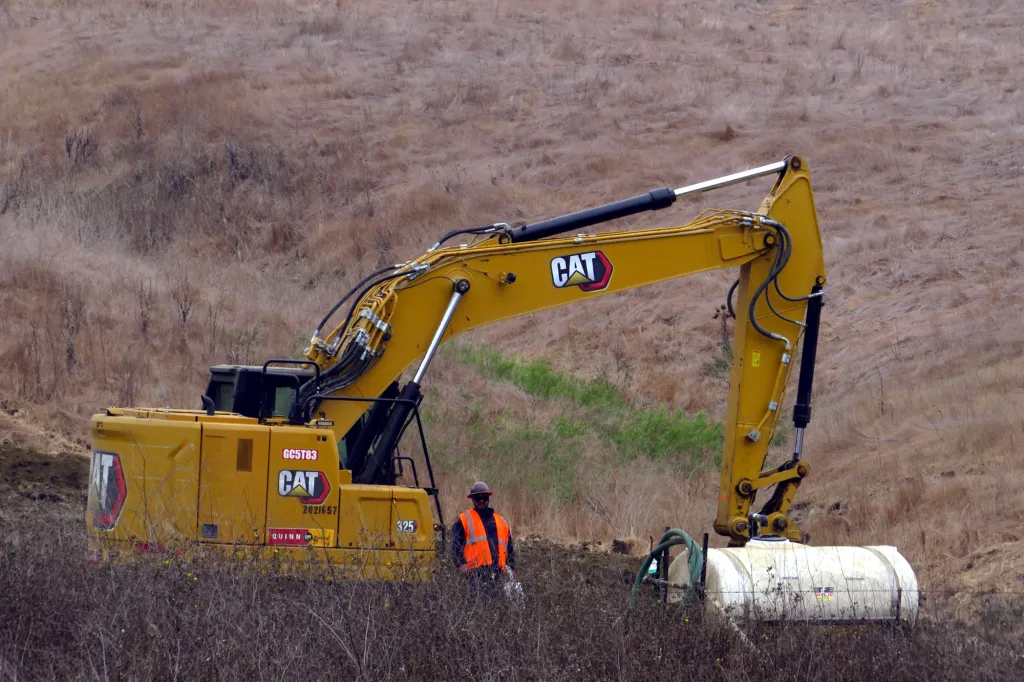
Center for Biological Diversity photo of pipeline repair work as published by Noozhawk

Meanwhile, Elon Musk did not hold back after the Commission’s decision not to allow an increase in the number of launches from Vandenberg:

“The California Coastal Commission should be dissolved as an organization.  An utterly insufferable and misanthropic group of Karens if there ever was one! Their idea of the perfect coastline is one where there are zero humans or even signs of human! Anyone who has had any dealings with them will attest to this.  They should not exist.”

Ouch! Tell us what you really think Elon! 😉

Jeffrey Brodsky, a journalist who traveled to all four Nord Stream blast sites, shared Nord Stream AG’s response (attached) to the 30 Sept. court filing by the insurers.

Particularly noteworthy is Nord Stream’s response to the insurers’ claim (par. 22.2 (a) of their filing) that the pipeline damage was the result of “the conflict between Russia and Ukraine.” In par. 13.1 of their response (attached), Nord Stream called the insurers’ assertion “embarrassing for want of particularity.” (clever wording that may prove useful in the future 😉)

Brodsky’s observations on the Nord Stream filing:

  • Nord Stream AG calls the insurers (Lloyd’s and Arch) failure to provide evidence for the country that blew up the pipelines “embarrassing.” (See above comment.)
  • Nord Stream argues that the insurers still must pay even if the sabotage was an act of war. This aligns with what legal scholar Said Mahmoudi told Brodsky.
  • Mahmoudi: “The defendants’ argument is prima facie irrelevant if one cannot prove that the damage is caused by a named government that has been directly involved in a war in the area. The burden of proof in this case is…on the defendant.”
  • Mahmoudi: “Even if the sabotage is an act of terrorism, the author of the act can be a state or a private entity.”
  • Mahmoudi: “If a private entity, the insurance company, is the only source for the compensation; if a state is responsible for the terrorist act, it is the insurance company & that state that have a legal obligation to compensate for the damage.”

Related comment by Erik Andersson: Nord Stream AG has consistently claimed they should receive compensation regardless of whether or not a government was responsible for the sabotage. Nord Stream AG does not seem interested in providing an alternative to Lloyds’ claim that Ukraine did this as an act of war. (That horse might be too big to ride 😉)