Large, sudden pipeline spills are usually caused by external impacts (e.g. anchor dragging). If that was not the case, the spill was presumably caused by significant, undetected corrosion.
The internal (smart pig) and external inspection history of the pipeline will be an important part of the investigation.
Another important consideration is the extent to which pressure and volumetric monitoring systems were in place and functioning. Early reports imply that the leak was not discovered until the slick was observed on the water surface.
An excellent 2008 case study details the challenges that were experienced in internally inspecting this pipeline. This presentation provides good background information on the pipeline and the initial internal inspection efforts.
Why isn’t BSEE, the Federal bureau that inspects the Beta Unit facilities and approves the spill response plan, part of the Unified Command? BSEE is also a leader in spill response research.
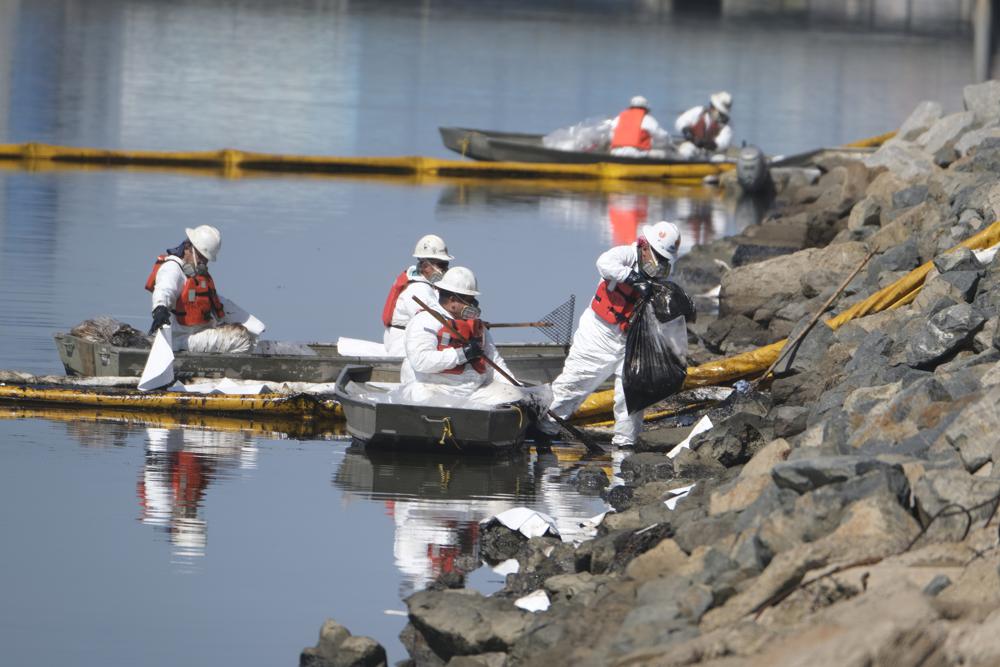
Per the Unified Command, 1218 gallons of oil-water mix were recovered as of Sunday. This is pretty minimal – only 29 barrels (including water) and <1% of the estimated spill volume, but is not atypical for mechanical spill response operations. It may also be that the 3000 bbl spill estimate was overly conservative (i.e. high).
Also per the Unified Command: “One oiled Ruddy duck has been collected and is receiving veterinary care. Other reports of oiled wildlife are being investigated.” If this was the extent of wildlife impacts as of Sunday, some of the reporting on this spill has been hyperbolic.
A comprehensive review of the balkanized regulatory regime for offshore pipelines is long overdue, as is an update to Federal pipeline regulations.
This spill, Hurricane Ida, and offshore COVID issues have further demonstrated the importance of BSEE. Why has the Administration still not appointed a BSEE Director? Keep in mind that this appointment does not require Senate confirmation.
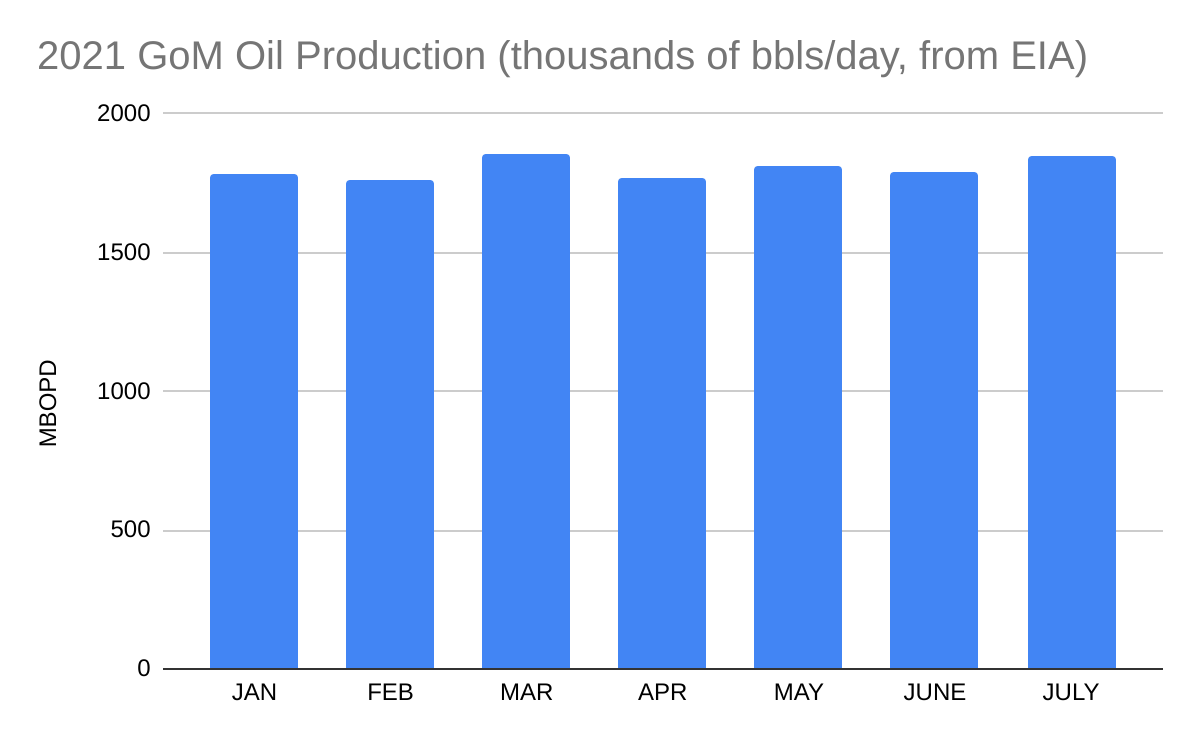
EIA just released the July data, and GoM oil production averaged 1.845 million BOPD, which was consistent with expectations. 2021 production through July was relatively stable averaging from 1.762 to 1.845 million BOPD. This will, of course, change dramatically when the August data are released, and even more so for September. Most production was shut-in for Ida beginning on 8/28 and some production has not yet been restored. Per BSEE’s final update (9/23), about 300,000 BOPD remained shut-in.
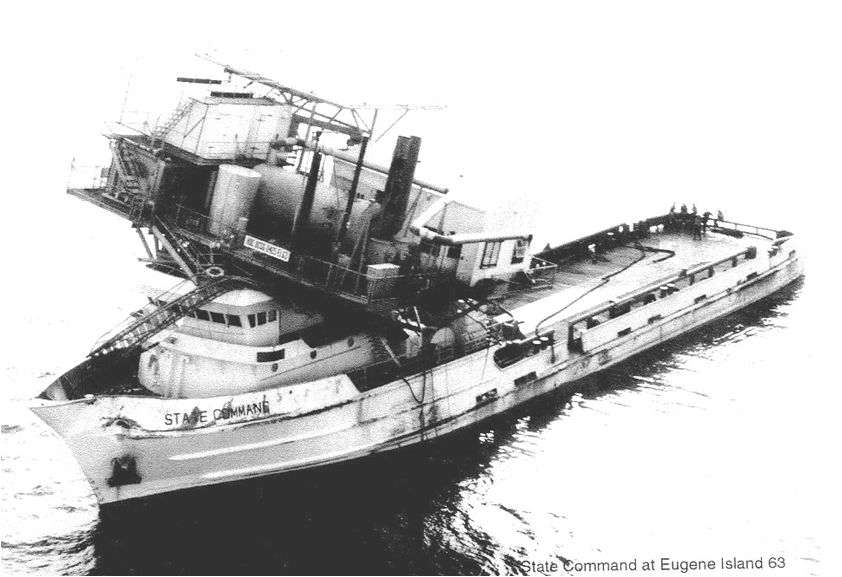
This comment by the late John Borne, an outstanding USGS and MMS engineer/philosopher, reflects on the persistent vessel allision incidents over the years. The reporting of these incidents was spotty, but some could not be denied. Pictured below is the State Command arriving in Morgan City (~1973?) topped by a platform deck. Fortunately, the platform was unmanned and there were no injuries to vessel personnel. You could say this was the first floating production platform 😃
US Coast Guard Subchapter N (current language as of 9/29/2021)
33 CFR §140.4 Relationship to other law.
(b) Any apparent conflict between the application of any requirement of this subchapter and any regulation or order of the U.S. Geological Survey should immediately be brought to the attention of the Officer in Charge, Marine Inspection.
I was proud to have worked for the Conservation Division of the U.S Geological Survey (USGS) when the US offshore program was at its peak in terms of scope and activity. I therefore like the nostalgia value of this provision. That said, USGS has not been the offshore safety regulator since 1982. While updating regulations can be extraordinarily difficult, simple administrative fixes are not. Such corrections are a good way to give old, outdated rules a fresh look. 😃
While the official BOEMRE-USCG and National Commission/Chief Counsel investigation reports were quite good and there are countless court documents and ad hoc reviews of the blowout, some important Macondo issues have not been fully addressed. BOE will touch on these issues periodically starting with the decision to terminate the top kill operation on 5/28/2010.
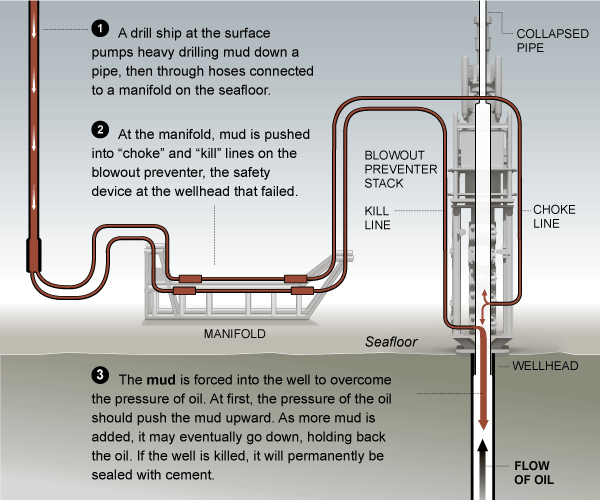
The top kill operation (see diagram above) was intended to overcome and halt the flow of oil by pumping heavy mud into the well bore. The operation was not successful because the pumping rate and mud weight did not generate sufficient pressure. Per an excellent paper by Dr. Mayank Tyagi and colleagues at LSU (Analysis of Well Containment and Control Attempts in the Aftermath of the Deepwater Blowout in MC252):
It is very likely that if the top kill had been designed to deliver more than 109 bpm of 16.4 ppg drilling fluid below the BOP stack for a sustained period, the Macondo blowout could have been stopped between May 26-28, 2010. Given that the well was successfully shut-in with the capping stack in July, and that the subsequent bullhead (static) kill was successful, certainly a higher rate top kill would have been successful at that time.
The American Thinker, citing the New York Times, reports that Energy Secretary Chu stopped the top kill operation over the objections of some BP engineers. While it was reasonable to be concerned about possible casing leaks and the fracturing of subsurface formations, the subsequent (7/15/2010) closure of the capping stack demonstrated that the well had sufficient integrity to support the top kill operation. Questions regarding why a higher rate top kill effort was not attempted and how that decision was made are therefore important and merit discussion. Did the Macondo well flow unnecessarily into the Gulf for an additional 48 days (5/28-7/15)? Did the National Incident Command facilitate or delay source control?
Keep in mind that the NIC almost made a similar mistake in July. Even after the capping stack successfully shut-in the well on 7/15, Incident Commander Thad Allen (USCG) continued to call the closure of the capping stack a temporary test and threatened to require BP to resume flow from the well. Fortunately, informed input from experienced engineers prevailed. The well remained shut-in and the static well-kill operation was successful.
Attached is an outstanding presentation by Jason Mathews that reviews the latest Gulf of Mexico incident data and trends. The collection and analysis of incident data are critical to safety achievement and continuous improvement, and are among an offshore energy regulator’s most important functions. Kudos to BSEE’s Gulf of Mexico Region for their timely and comprehensive reviews and alerts.
For those interested in California offshore decommissioning, attached is an excellent update presented at a 2020 forum by my former colleague John Smith.
The growing interest in green hydrogen inspired me to write a post about Rick Carrier, a war hero and visionary who is largely unknown to the offshore energy community. Rick’s plan for a Mid-Atlantic wind-hydrogen demonstration project was the first offshore wind proposal submitted to the Minerals Management Service, the bureau that initiated the offshore wind program in the U. S.
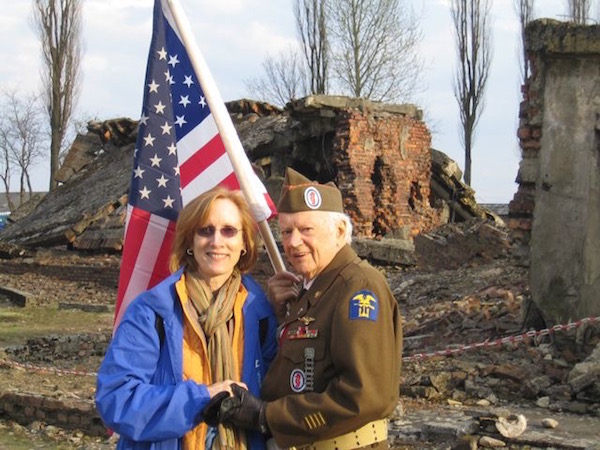
Rick Carrier lived an amazing life – WWII hero, artist, playwright, diver, conservationist, green hydrogen pioneer, and more. Perhaps most noteworthy were his military accomplishments. He was among the first Americans to land on Utah Beach during the D-Day invasion. He subsequently became the first allied soldier to discover the Buchenwald concentration camp. The next day, April 11, 1945, he marched into the camp with Patton’s Third Army and liberated the prisoners. Rick is pictured above at the 2012 March of The Living, an annual walk down the 3-kilometer path from Auschwitz to Birkenau. In June of 2014, Rick returned to Normandy for a ceremony marking the 70th anniversary of D-Day. Later that year, the President of France awarded him the Chevalier of the Legion of Honor — France’s highest honor.
Rick founded the USA Bald Eagle Command in 1975 to protect the endangered American Bald Eagle. The organization’s efforts played a role in President Reagan’s declaration of June 20, 1982 as National Bald Eagle Day. Through the efforts of this and other conservation groups, the Bald Eagle was removed from the Endangered Species list in 2007.
Rick’s green hydrogen proposal was yet another patriotic venture. Through his non-profit, Bald Eagle Energy, he sought to demonstrate the commercial potential for using offshore wind energy to produce hydrogen from sea water. Unfortunately, the framework for permitting such projects had not yet been established. While we tried to find a way to make the project possible, the obstacles were too great.
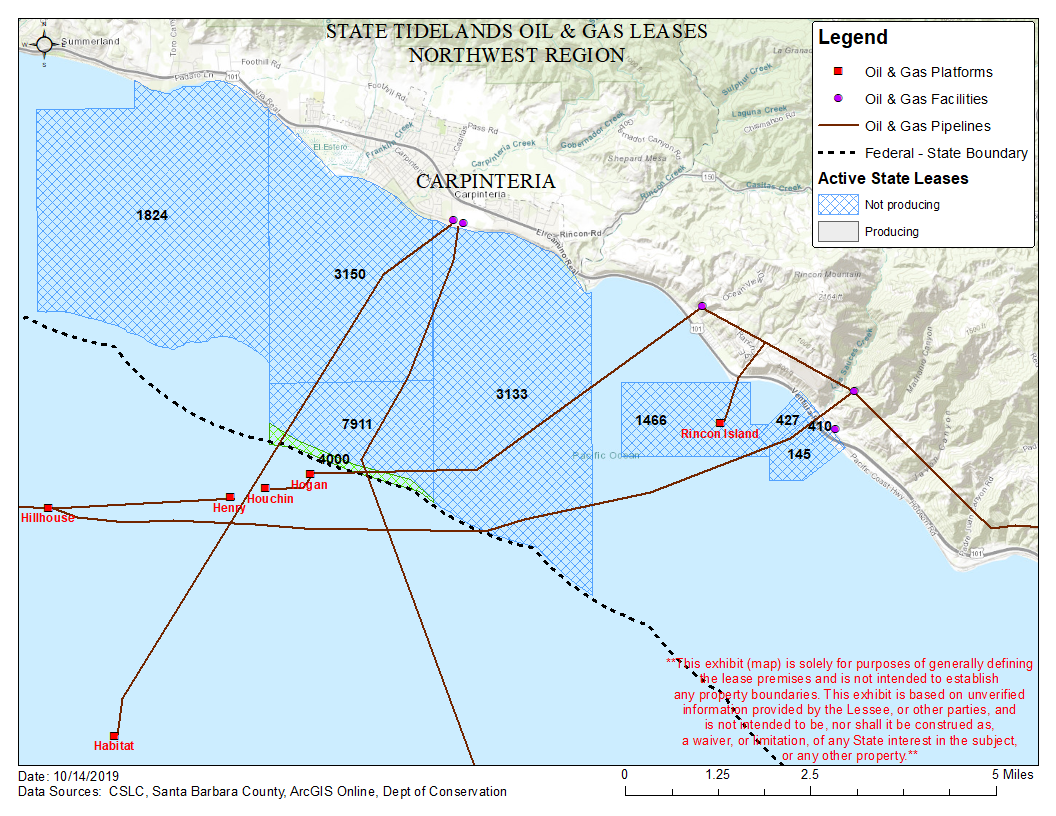
The troubled past of Platforms Hogan and Houchin extends into California State waters. In the 1990’s, Signal Hill and affiliates launched plans to drill directionally from Hogan into adjacent State leases 4000, 7911, and 3133 (see map above). These plans were dubious from the outset given MMS (Federal regulator) concerns about Hogan’s structural integrity. The planning process was never successfully concluded and the 3 State leases were terminated in 2019. For full details see this California State Lands Commission report:
In a related action, the State is suing Signal Hill for unpaid rentals on the pipeline lease that carried production from Hogan to shore. The amount due is approximately $287,000.