Feeds:
Posts
Comments

Archive for the ‘Offshore Energy – General’ Category

PNAS: “among the most productive marine fish habitats globally”

Secretarial Order No. 3418 identified energy policies and regulations requiring immediate Interior Dept. review. A policy decision that should be added to the list is BSEE’s Record of Decision (ROD) for the Programmatic Environmental Impact Statement on Pacific OCS Decommissioning.

Inexplicably, BSEE’s ROD designates the most environmentally harmful, unsafe, and costly alternative as the “preferred alternative.” The decision is contrary to the opinions expressed by the leading experts on the ecology of California offshore platforms, most notably Dr. Milton Love of the University of California at Santa Barbara.

Why did BSEE select alternative 1 (complete removal) when their $1.6 million EIS acknowledges that alternative 2 (partial removal) is environmentally preferable? Was their decision influenced by activists who support the alternative that is most punitive to the industry they despise?

The Interior Dept. needs to immediately review this decision so that stalled decommissioning projects can move forward in a manner that is most efficient and best protects “the most productive marine habitats per unit area in the world.”

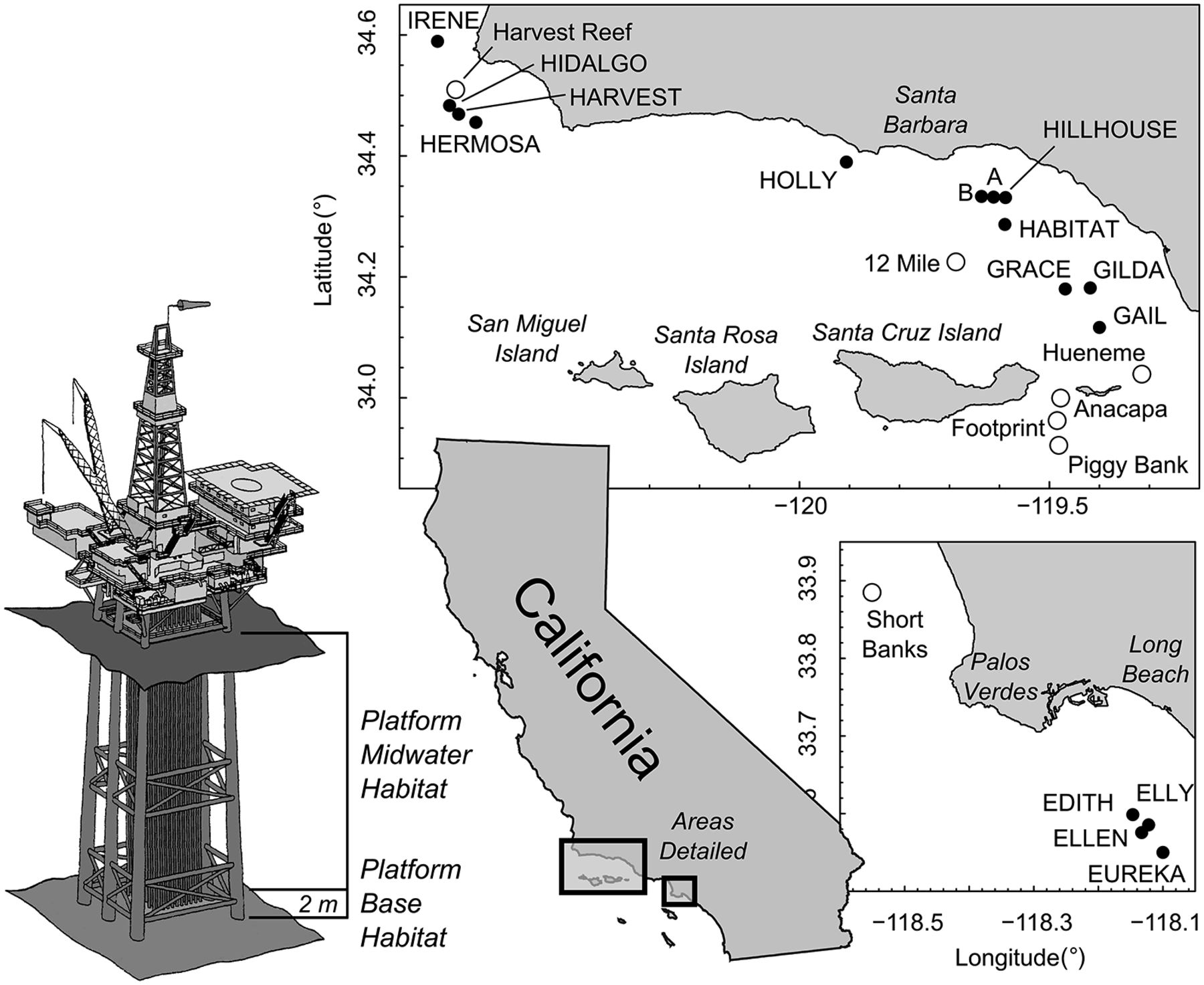
beneath Platform Gilda, Santa Barbara Channel

On December 7, 2023, the Bureau of Safety and Environmental Enforcement (BSEE) issued a Record of Decision (ROD) recommending the full removal of California’s 23 offshore oil platforms in federal waters, following a Programmatic Environmental Impact Statement (PEIS) conducted to assess decommissioning options for platforms, pipelines, and other related infrastructure. However, upon close review, the PEIS and ROD appear to have reached misguided and detrimental conclusions due to critical oversights in their analyses.” Asher Radziner, Montecito Journal

More posts on California decommissioning

Read Full Post »

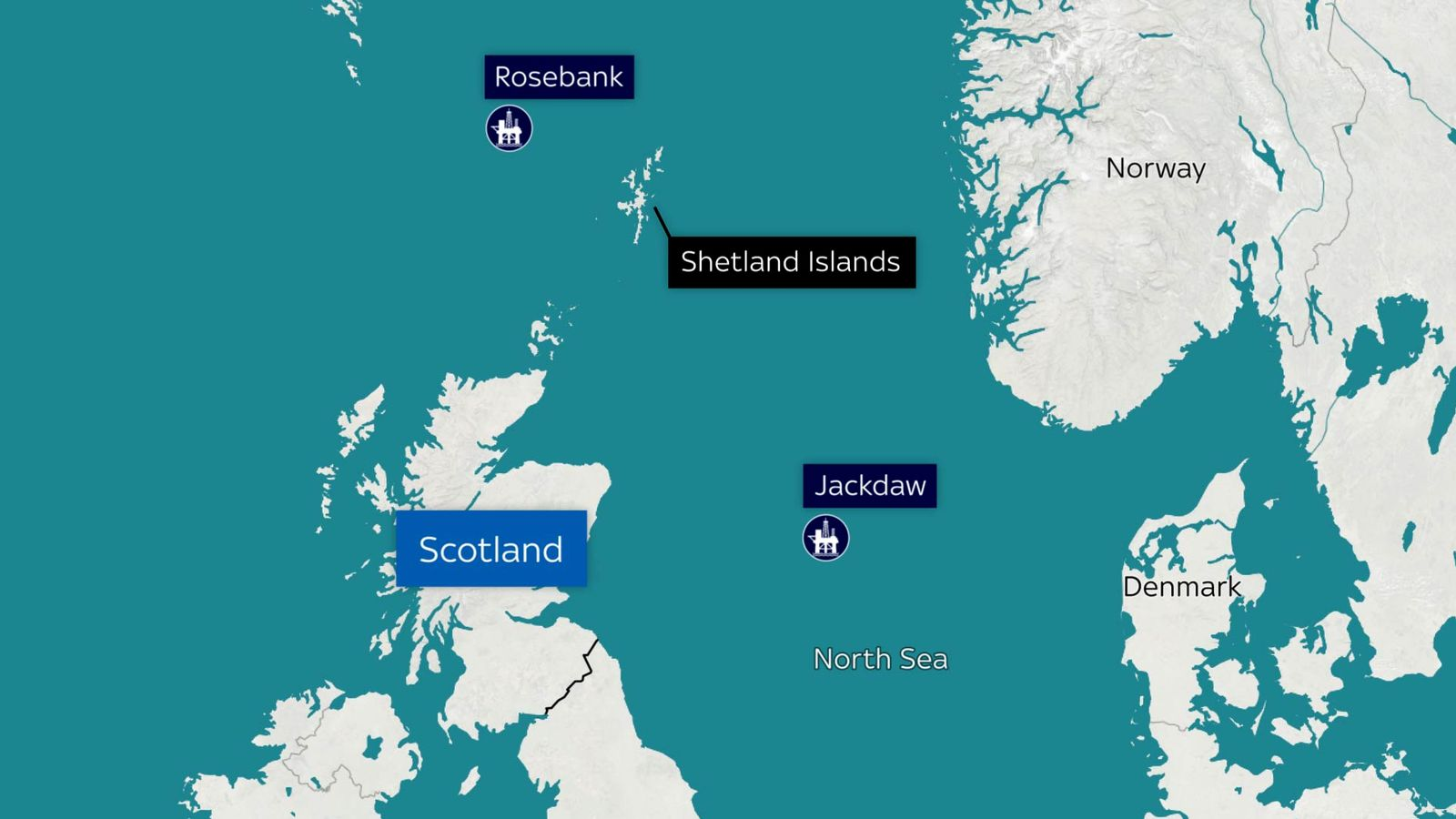
The recent Rosebank and Jackdaw decision in the UK is similar to the OCS Sale 257 fiasco in the US. In both cases, the court ruled that downstream GHG emissions weren’t adequately considered in the environmental reviews.

In the case of the Rosebank and Jackdaw fields, Lord Ericht ruled that the environmental assessment must take into account the climate effect of downstream emissions resulting from the consumption of oil and gas produced at those fields.

The Sale 257 decision was even more extreme in that Judge Contreras ruled that BOEM failed to consider the “positive” effect that higher prices (which might result from lower US offshore production) would have in reducing worldwide demand and the associated GHG emissions.

Regardless of one’s opinion on the extent to which GHGs affect the climate, halting UK and US projects will have virtually no effect on international oil and gas demand. That demand will be satisfied by other suppliers who will reap the economic benefits.

The Sale 257 decision was overturned by legislative action.

Presumably, revised environmental assessments, will allow the previously approved UK projects, for which some facilities have already been constructed and installed, to go forward. The UK government has been considering how to calculate downstream emissions. The model will no doubt yield outcomes that are highly uncertain.

In the meantime, the UK sector of the North Sea, unlike its Norwegian counterpart, continues to flounder.

Wisdom from the Scotsman regarding UK offshore production:

We need more of it because even the most ardent supporters of renewable energy, the most vocal proponents of net zero, quietly admit oil and, especially, gas will be needed for a couple of decades at least. That obvious truth, that inarguable necessity, is not, apparently, enough for ministers to encourage UK production, however, or temper their rhetoric around renewables.

Allowing our rigs and refineries to power down and relying on other countries to keep the lights on still seems a little, well, counter-intuitive. We will import oil and gas but not produce it while happily exporting contracts, skills and jobs overseas? The practical impact of Labour’s refusal to grant new exploration licences in the North Sea might remain unclear but the message it sent was absolutely crystal.

Read Full Post »

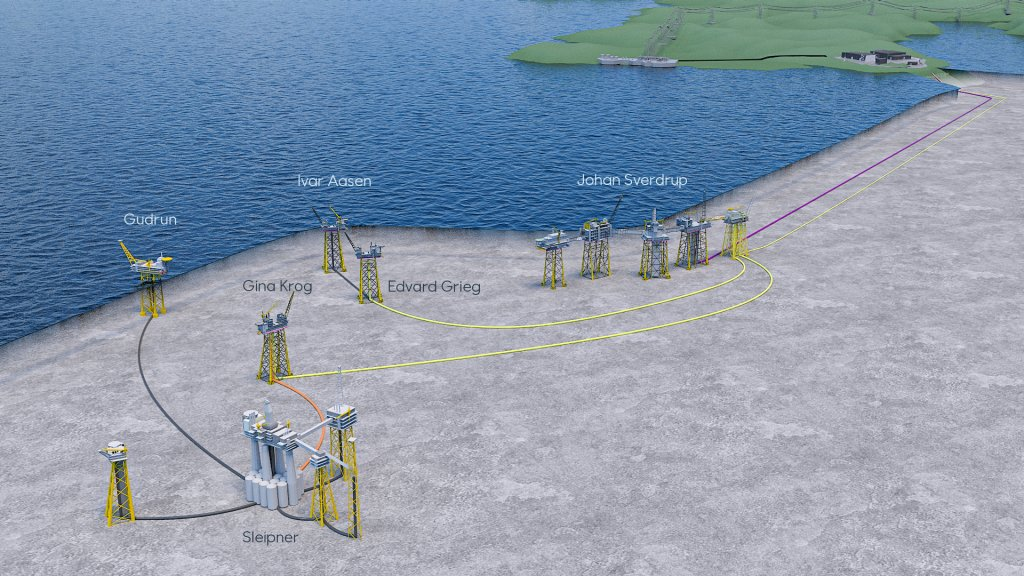
Johan Sverdrup field, 155 km from shore

On Tuesday, Equinor halted all production from the Johan Sverdrup field, western Europe’s biggest producer. An outage in the offshore power system has been cited as the cause.

A Jan. 26, 2022 BOE post questioned Norway’s electrification policy for offshore platforms. Another post discussed a loss of power to the Sverdrup field only 10 weeks ago.

In addition to the production losses, these incidents increase safety risks and onshore electricity prices with no net environmental benefit.

Hopefully, the investigation reports will be posted so that the lessons learned can be shared.

Electric cables from shore power the Johan Sverdrup field

Read Full Post »

Check it out!

Of particular interest are mandated reviews of the:

  • RIsk Management and Financial Assurance Rule: Those who want to gut this rule should come to the table with proposals that better protect the taxpayer from decommissioning liabilities. Pretending that decommissioning financial risks don’t exist or that they are someone else’s (or the govt’s) problem is unacceptable.
  • 5 Year leasing program – This review is urgently needed. See this and this!
  • BOP/Well Control Rule – This keystone safety rule has undergone multiple reviews in recent years. Because of the rule’s importance, further review for continuous improvement purposes may nonetheless be warranted. Here are the blog comments on the current version of the rule.

Not on the list, but should have been: A review of the fragmented regulatory regime for offshore pipelines, and the outdated and inconsistent regulations.

Read Full Post »

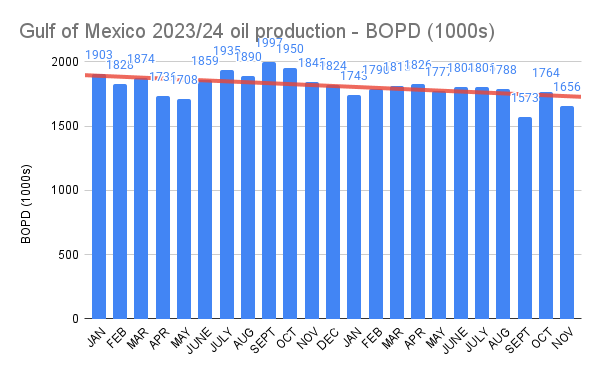
November 2024 Gulf of Mexico oil production was the lowest in the 2023/24 timeframe, with the exception of Sept. 2024 when production was reduced by Tropical Storms Francine and Helene.

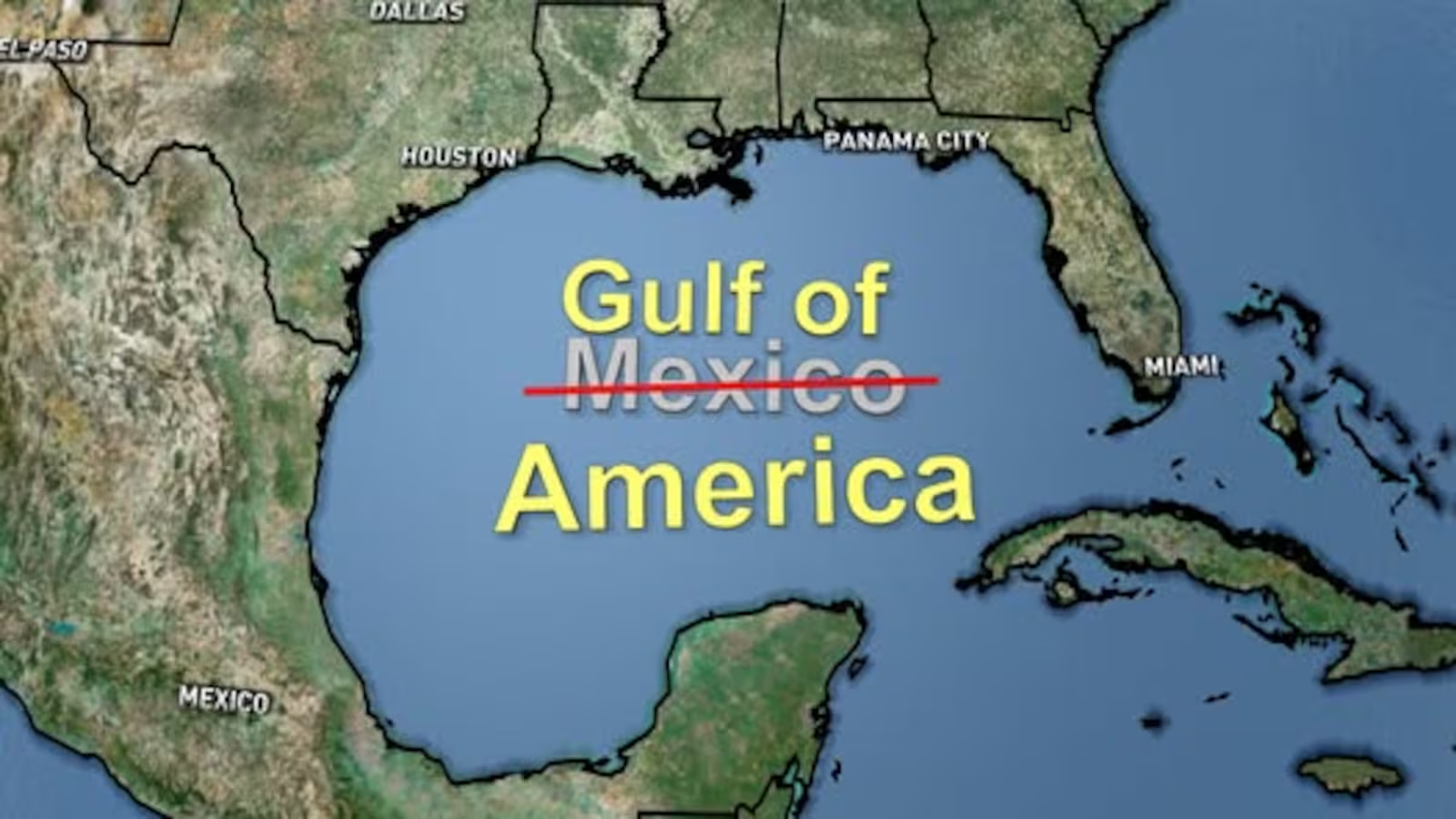
Look for production in the Gulf of America to soar! (eventually😉)

Read Full Post »

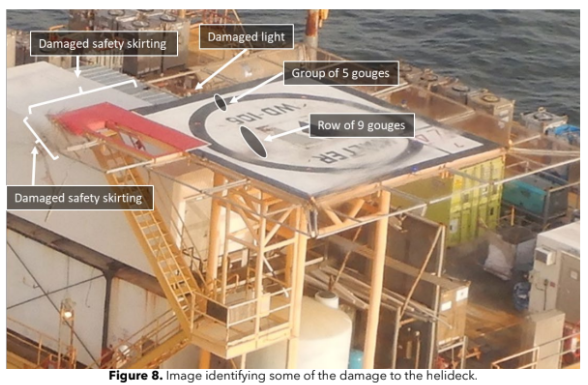
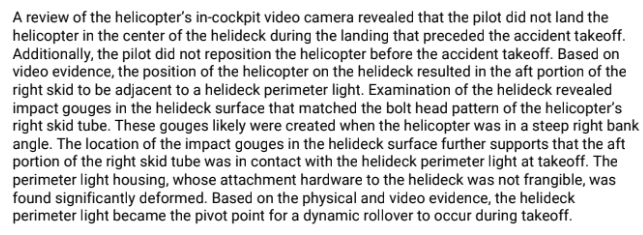
The NTSB has finally issued their report (attached) on the 12/29/2022 helicopter crash that resulted in 4 fatalities at Walter’s West Delta 106 A platform. The NTSB report on the Huntington Beach pipeline spill took a comparable amount of time (26 months) to complete. By comparison, the lengthy and complex National Commission, BOEMRE, Chief Counsel, and NAE reports on the Macondo blowout were published 6 to to 17 months after the well was shut-in.

The gist of the NTSB’s findings is pasted below.

The report summarizes operations standards, but does not consider the associated operator/contractor safety management systems that are intended to prevent such incidents. The report notes that:

Was the contractor/operator aware of these deviations from company policy? Should they have been?

The report implies that human (pilot) error was the cause of the dynamic rollover, but fails to assess the organizational controls that are intended to prevent such errors. How was a pilot with 1667.8 flight hours (1343.8 as the PIC), who had made 23 trips to this platform, repeatedly making fundamental positioning and takeoff errors?

The report also notes that:

This is interesting wording given that the perimeter light was identified as the pivot point, one of the 3 requirements for a dynamic rollover. Why wasn’t that violation observed by the operator/contractor and corrected? What helideck inspection procedures were in place? Did NTSB consider the fragmented regulatory regime for helicopter safety, particularly with regard to helidecks?

Read Full Post »

Centre Party leader Trygve Slagsvold Vedum: “What we were clear about all along is that beginning the process of linking ourselves more closely to the EU’s dysfunctional electricity market and energy policy is completely out of the question.”

While looking at electric prices and power sharing, consideration should be given to the desirability of transmitting electricity from shore to distant offshore platforms that have ample natural gas for power generation purposes. This practice increases electric prices for consumers and introduces reliability/safety concerns with no net environmental benefits.

No photo description available.
Picture of Old Stavanger where former colleague and BOE contributor Odd Bjerre Finnestad (RIP) once lived. Stavanger is both a lovely city and the “Oil Capital of Norway.”

Read Full Post »

The Secretary of the Interior is, by far, the most important offshore energy official in the Federal government. Yesterday, Doug Burgum was easily confirmed to be the next Secretary. Nonetheless, the following 18 senators chose to vote against his confirmation:

Read Full Post »

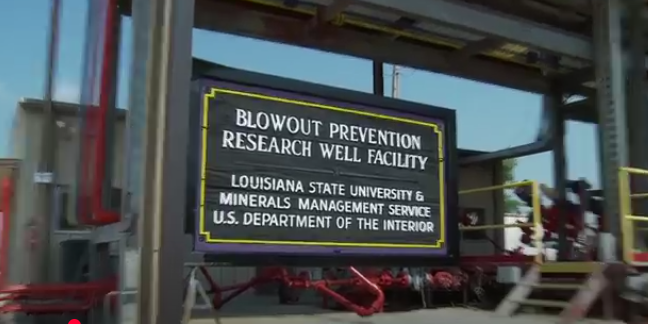
Pioneering offshore engineer J.L. Daeschler, a Frenchman who lives in Scotland and has worked on drilling rigs worldwide, shared his 1974 training certificate signed by Bill Hise, the first director of the Blowout Prevention and Well Control Training Center at LSU. JL recalls his training:

The LSU well control course was new and very well organized. Training options were limited at that time. LSU took a step forward and incorporated equipment donated by Cameron Iron Works, Armco Steel /National, VETCO, and others.

The course was split between indoor class room style and outdoor training on a live well to remind us of the real things, like hard hats, tally books, and safety shoes.

LSU had a 1200 ft vertical well and a small 2″ diameter gas injection line to create a bottom hole gas kick, using a nitrogen truck as the supply. (note: the live well was a first for any well control school.) You had a choice of several manual chokes.  I selected the Cameron Willis choke to circulate the gas kick out with no increase in mud weight (drillers method).

The mud return level, kick detection, and general management of the operation were realistic as if on a rig. The gas would whistle and escape thru a vent line.

The training was simple and effective in that proper well control procedures were learned. In the process, there were many errors. Mud was seen flying out of the mud shaker/pits. School management would bring things under control and explain the errors that were made !!!

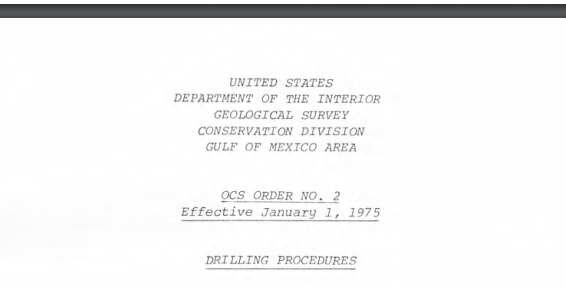
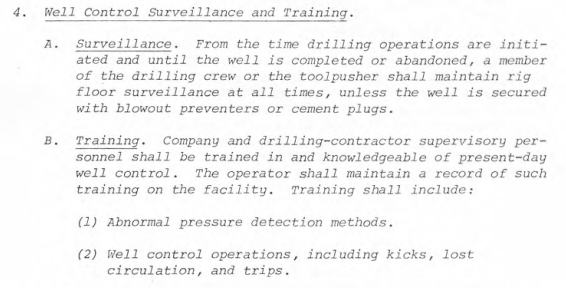
Given the importance of minimizing drilling risks, the Minerals Management Service (MMS) was the primary funder of the LSU facility. MMS predecessor, the Conservation Division of USGS, first established well control training requirements in 1975 (pasted below).

LSU’s well control center video:

Read Full Post »

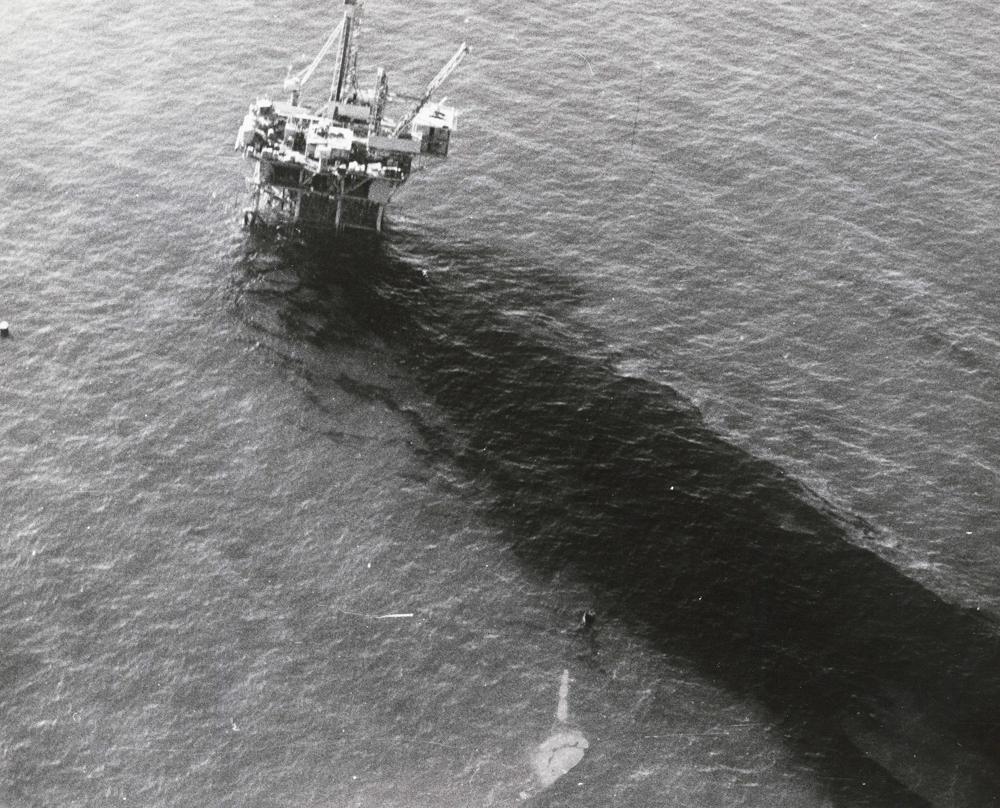
… Union Oil Company’s reckless well plan forever scarred the U.S. offshore program. Learn more about the details.

Santa Barbara blowout

Examinations of the Santa Barbara, Montara, and Macondo blowouts, the Piper Alpha fire, and other major incidents should be a part of every petroleum engineering curriculum, and should be mandatory for those who conduct and regulate offshore oil and gas operations.

There is no better learning experience than studying the failures that had such enormous human and economic consequences.

Read Full Post »

« Newer Posts - Older Posts »