The first ever Gulf of America oil and gas lease sale 😉 will be held on Dec. 10, 2025. Instead of numbering the sale sequentially (i.e. Sale 262), the sale has been designated OCS Oil and Gas One Big Beautiful Bill Act Lease Sale 1 (BBG1). 🙄 This change is a bit too cute for some of us old-timers, but we’ll judge the sale by its results, not its name.
The Notice of Sale is attached. The terms are very attractive, with the lowest allowable royalty rate (1/8th) on all shelf and deepwater leases. Note the comparison of royalty rates in the table below. The 6.25% difference for deepwater leases is substantial when you consider their high production potential.
Gulf Sale No.
Date
% royalty: <200m water depth
% royalty: >200m water depth
256
11/18/2020
12.5
18.75
257
11/17/2021
12.5
18.75
258
12/30/2022
18.75
18.75
259
3/29/2023
18.75
18.75
261
12/20/2023
18.75
18.75
BBG1
12/10/2025
12.5
12.5
The rental rates for the BBG1 Sale are also very attractive compared to Sale 261:
Water Depth
Sale 261 rental rates ($/ac)
BBG1 Sale rental rates ($/ac)
0 to <200m
years 1-5: $10 year 6: $20 year 7: $30 year 8+: $40
years 1-5: $7 year 6: $14 year 7: $21 year 8+: $28
200 to <400m
years 1-5: $16 year 6: $32 year 7: $48 year 8+: $64
years 1-5: $11 year 6: $22 year 7: $33 year 8+: $44
400+ m
years 1-5: $16 year 6: $22 year 7: $22 year 8+: $22
years 1-5: $11 year 6: $16 year 7: $16 year 8+: $16
Will the bidding reflect the very favorable lease terms?
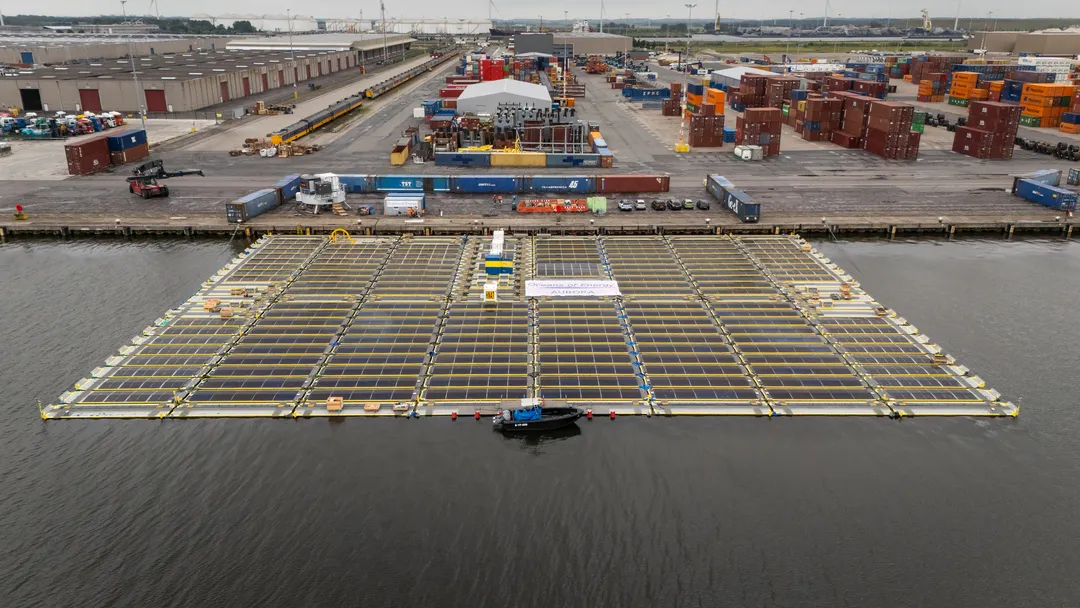
26 June 2025 – Festive inauguration: A festive ceremony is held in the Port of Amsterdam by Oceans of Energy to celebrate the successful assembly of the world’s first commercial offshore solar farm “Nymphaea Aurora”. The solar farm is 18.5 kilometers off the Dutch coast near Egmond aan Zee, and consists of 1,400 photovoltaic panels mounted on 196 flotation segments. It is larger than a football field with the expectation to scale up.
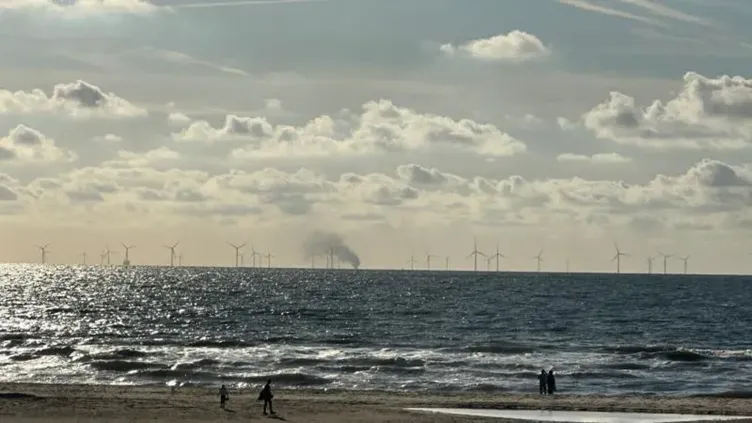
9 August 2025 – First fire: Soon after installation at sea Nymphaea Aurora is on fire.
5 September 2025 – Second fire: A second fire breaks out in Nymphaea Aurora. The Dutch Coast Guard extinguishes the fire. Both fires were caused by overheating due to strong solar radiation and faulty panel connectors. The developer calls it a kind of technical childhood disease that is typical for new technology. (Seriously?☹)
fire observed from shore; the solar farm is co-located with an existing wind farm
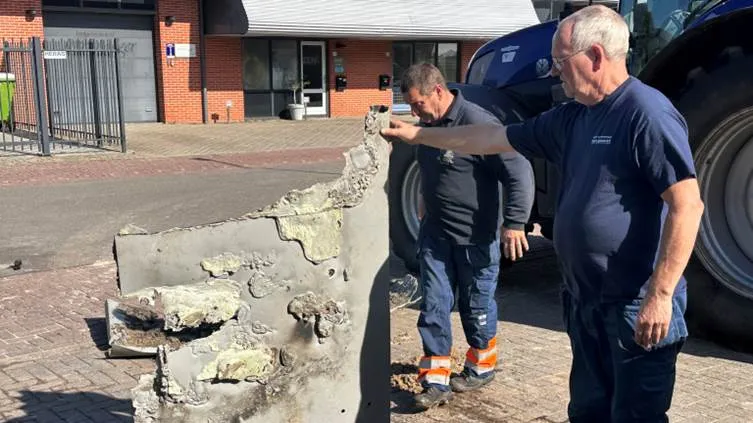
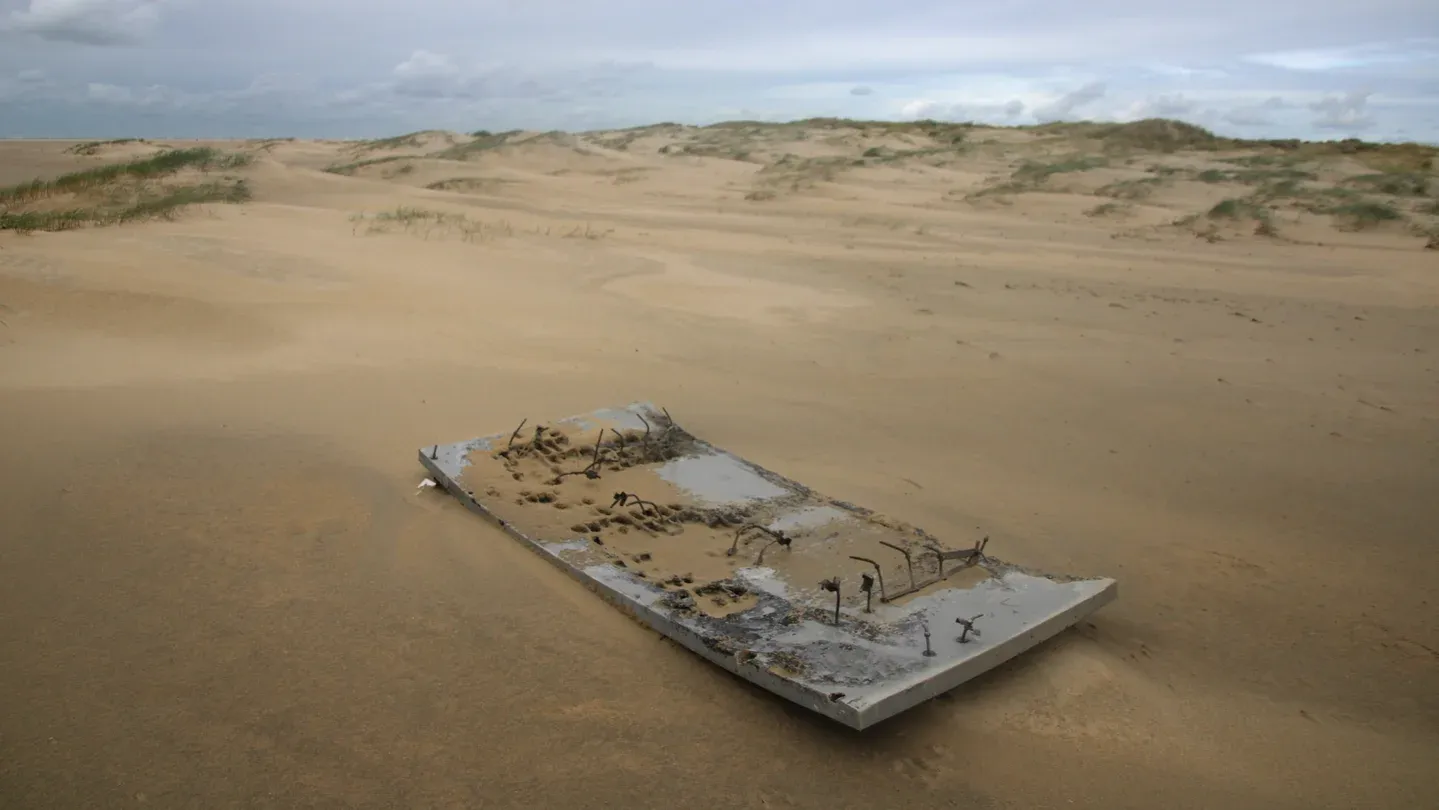
19 September 2025 – Debris from solar farm starts washing up on the beaches
burnt panel that washed up on beach
20 September 2025: Debris is found all over the beaches of Egmond, Bergen and Schoorl, varying from 20 to 30 cm sized pieces to tiny polystyrene foam fragments. Parts of Nymphaea Aurora wash up on Texel, an island further north on the Dutch coast (photo below).
4 October2025: Storm batters the Netherlands with wind speeds between 75 and 90 kilometers per hour hitting Noord-Holland. No news about Nymphaea Aurora.
7 November 2025: No news from the developer, Oceans of Energy, since since 27th June 2025 and no updates on LinekdIn since 21 September 2025. It has been very quiet from ‘The company that brought Offshore Solar in high waves from a (perceived) impossibility to a reality.’ It is probably no longer at sea.
To date, BSEE has used carryover funds and offsetting collections from inspection, rental, and cost recovery fees to continue their priority permitting and inspection programs during the govt shutdown. However, these funds are limited.
At some point, BSEE will have to stop issuing new permits. If the shutdown continues, the next step could be to curtail drilling and production operations. Needless to say, this would not be completely unacceptable.
In the meantime, BSEE employees continue to work without pay. Flying offshore everyday to inspect operations is no picnic and can be hazardous. I lost a colleague in a helicopter crash and others have been injured. It’s shameful that these people are not being paid while members of congress are!
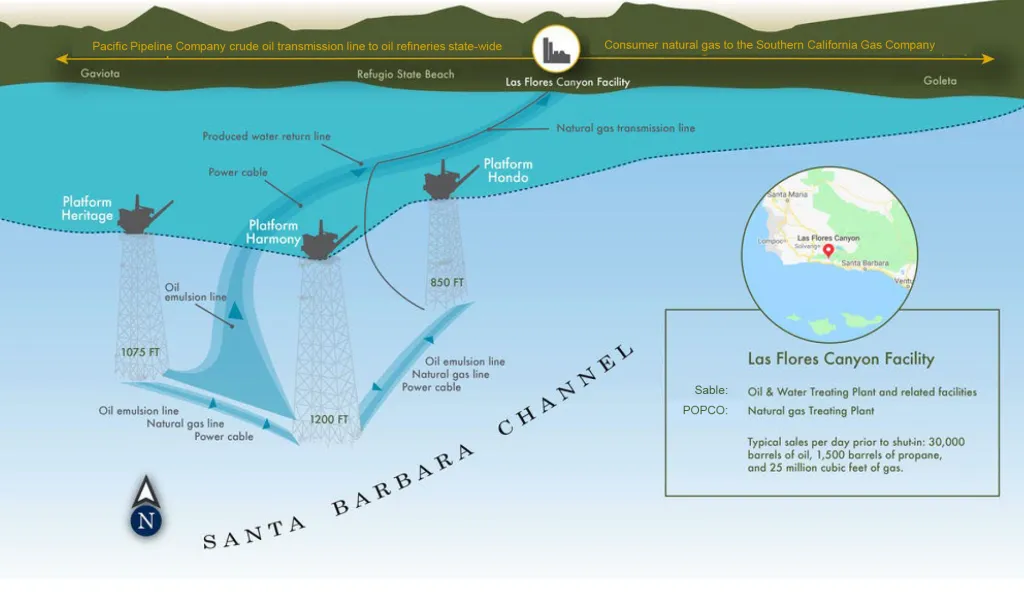
Attached is John Smith’s comprehensive summary of lawsuits related to Sable Offshore’s attempts to restart Santa Ynez Unit production.
If you are keeping score, there are 10 separate cases including a class action lawsuit filed by investors. New legal battles are sure to follow given Sable’s OS&T strategy. Per John:
“The combined legal challenges, injunctions, and restraining orders have significantly delayed Sable’s restart plans and prompted the company to pursue an Offshore Storage and Treatment Vessel (OS&T) strategy, which was utilized to process SYU production in federal waters from 1981 – 1994, and transport oil to markets using tankers.“
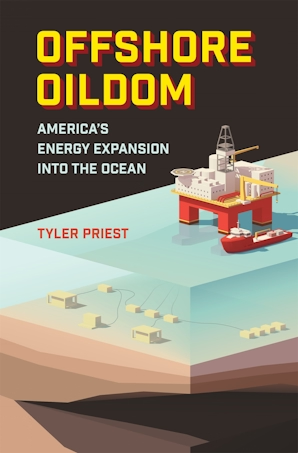
Tyler Priest, the leading historian on US offshore oil and gas operations, has published another gem. His book, Offshore Oildom, is a fascinating account of the history of the technologically innovative and economically important, yet highly controversial, OCS Oil and Gas program. His bookis highly recommended.
Consider this recommendation by Daniel Yergin:
“Tyler Priest, a preeminent historian of energy and the environment, explores how a single well drilled off a pier near Santa Barbara in 1898 gave rise to a major American industry—offshore oil and gas. In spirited prose, Priest demonstrates how this U.S. industry was created not only by innovation, creative engineering, and complex execution; it was also the result of fierce political battles.” ~Daniel Yergin, Pulitzer Prize–winning author of The Prize: The Epic Quest for Oil, Money, and Power and The New Map: Energy, Climate, and the Clash of Nations
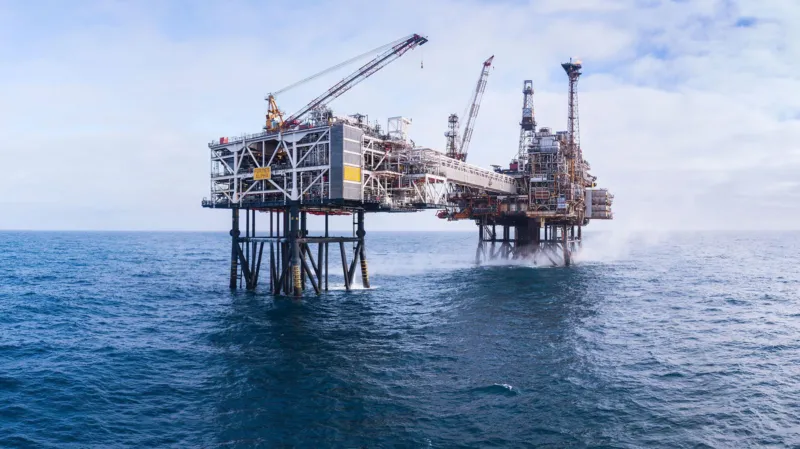
Queen Elizabeth inaugurated Forties field production.
Marking the Forties field’s half-century, the current operator Apache said it stood as a testament to Scottish grit, industrial excellence, and enduring human spirit.
In November 2024 Apache said it had suspended new drilling and would end all its operations in the North Sea by 2029. ☹
Bucks Fizz performed on a Forties field platform in the 1980s
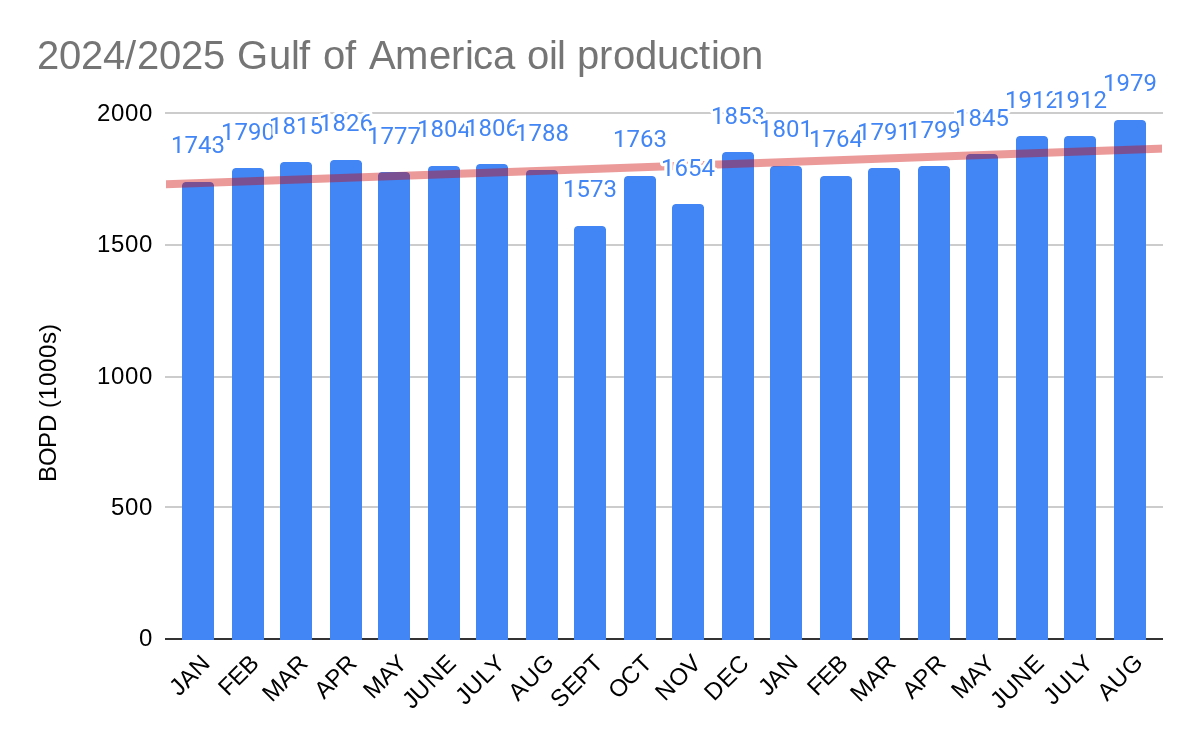
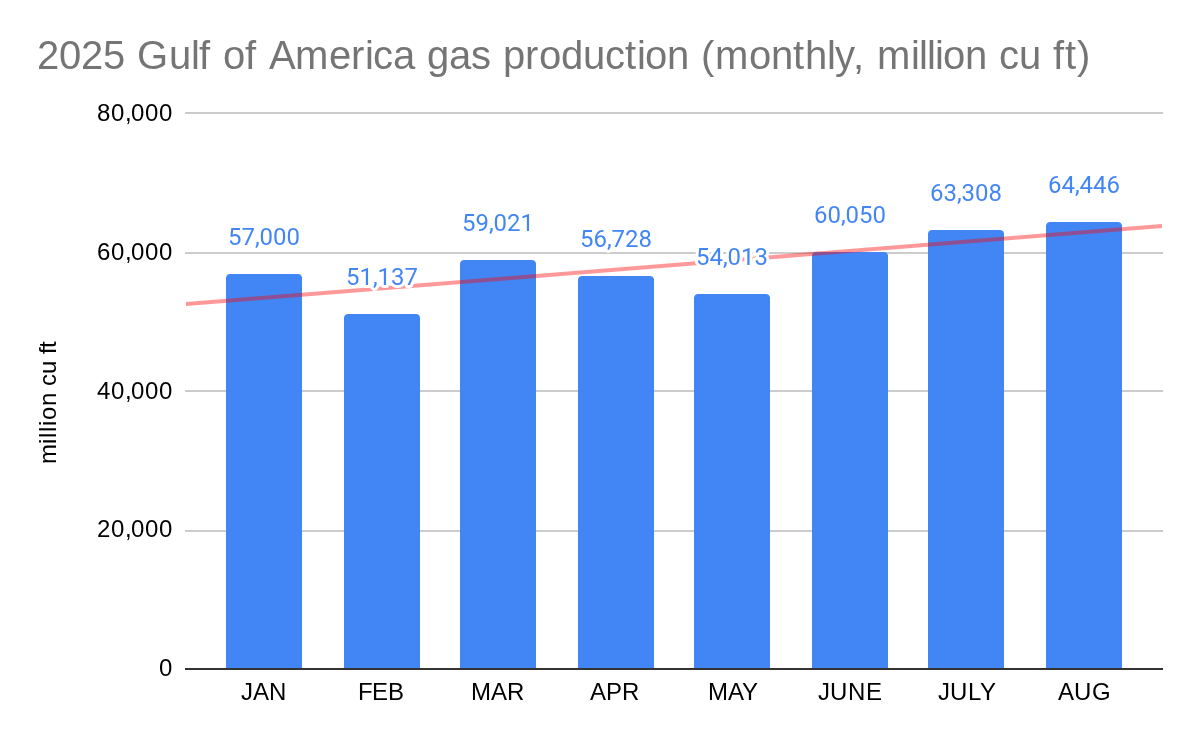
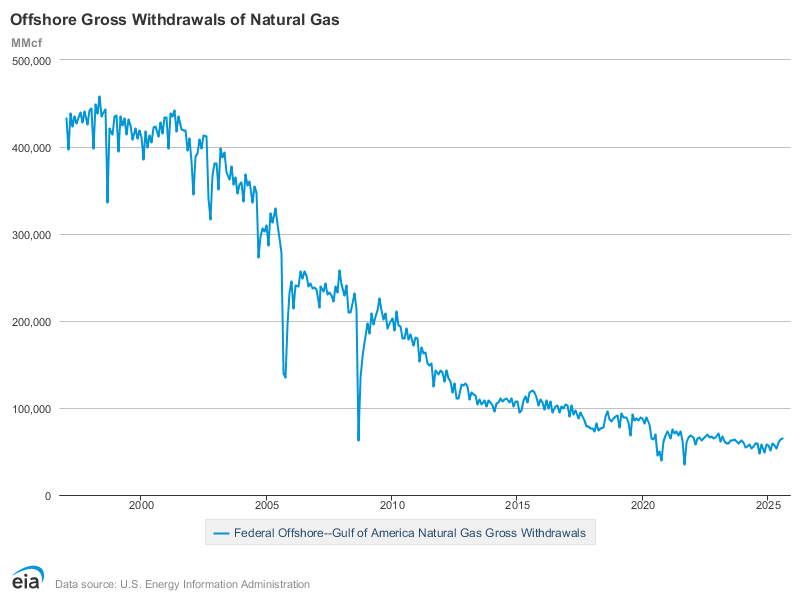
Gas production, which is now overwhelmingly from oil wells, also ticked up. However, gas production remains at historically low levels. (See charts below.)
Time to take another look at ultradeep shelf gas? More on this in a later post.
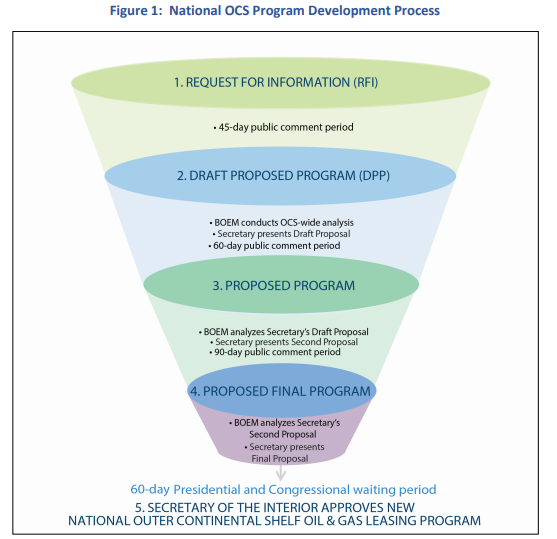
A leaked Dept. of the Interior (DOI) document will likely have little in common with the Draft Proposed Program (DPP, step 2 above). The DPP decisions will be made by the President, not by DOI staffers or managers.
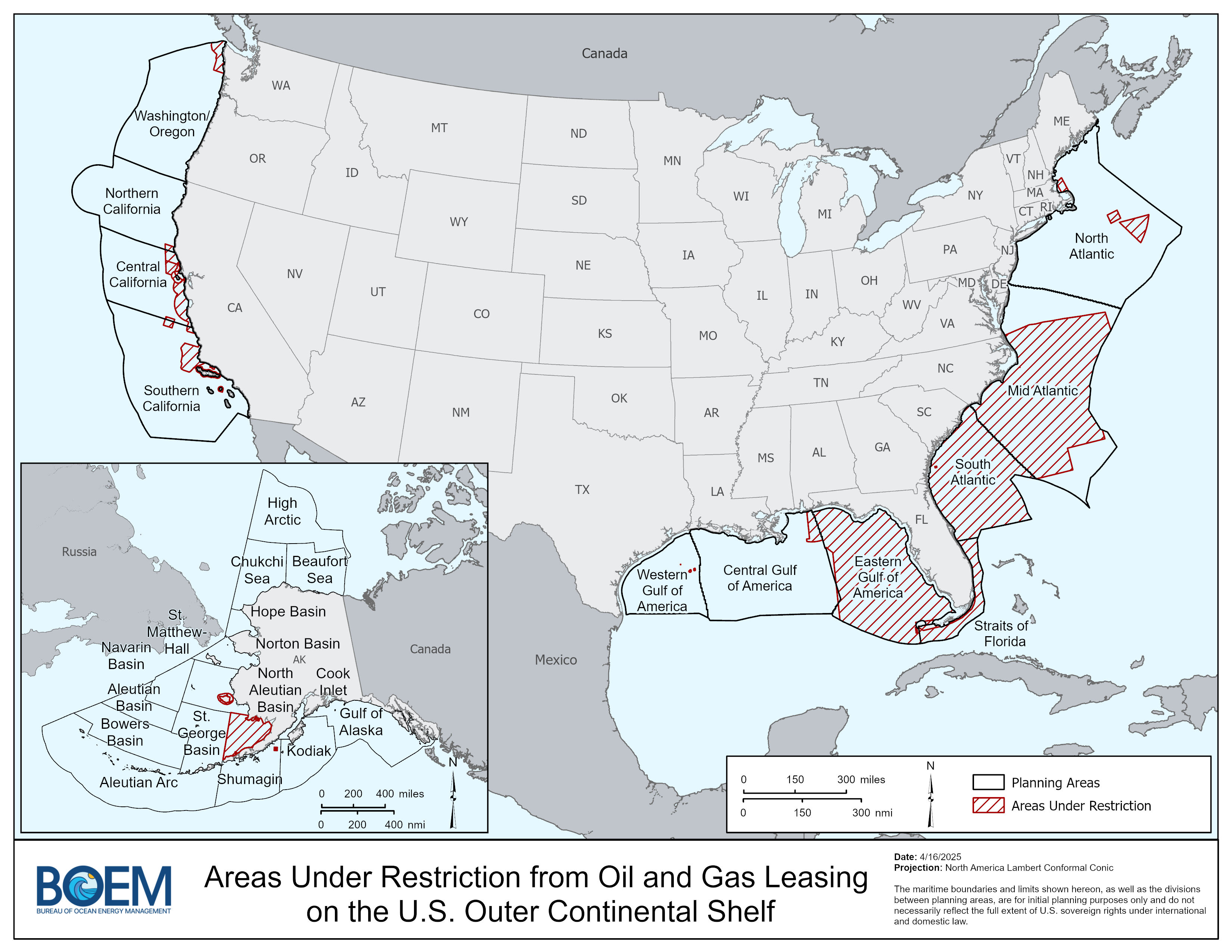
According to media reports, the leaked document includes lease sales offshore New England, the Carolina’s and California. Unless the President revokes his own 2020 withdrawals, the Carolina’s are off-limits until 2032. Ditto for the Eastern Gulf within 125 miles from Florida. (See the map below.)
Including North Atlantic and offshore California in the DPP would unleash a firestorm of opposition. In the case of the North Atlantic, the acreage may not be sufficiently prospective to justify the fight.
To the extent that marine sanctuary determinations do not preclude California offshore leasing, the litigation and legislative battles probably would. In the unlikely event that a sale could be held, who would bid? Who wants to be the next Sable?
The Beaufort Sea is the most likely frontier area to be included in the DPP given plans to open ANWR, operational history, resource potential, and State support.
Assuming the South Atlantic withdrawal could be partially lifted, a small, targeted lease sale would be of great interest to petroleum geologists and could have significant economic and national security implications. The late Paul Post, the foremost expert on the petroleum geology of the US Atlantic, saw great potential in the paleo deep- and ultra-deepwater areas. He advocated exploration concepts proven successful in analogous West African and South American settings where massive discoveries have been made. Samuel Epstein, another prominent petroleum geologist, also believes the deepwater Atlantic has great resource potential.
Finally, the extent of the Florida buffer needs to be considered given the high resource potential of the Eastern Gulf. Be it 75, 100, or 125 miles, leasing beyond that buffer should be a priority.
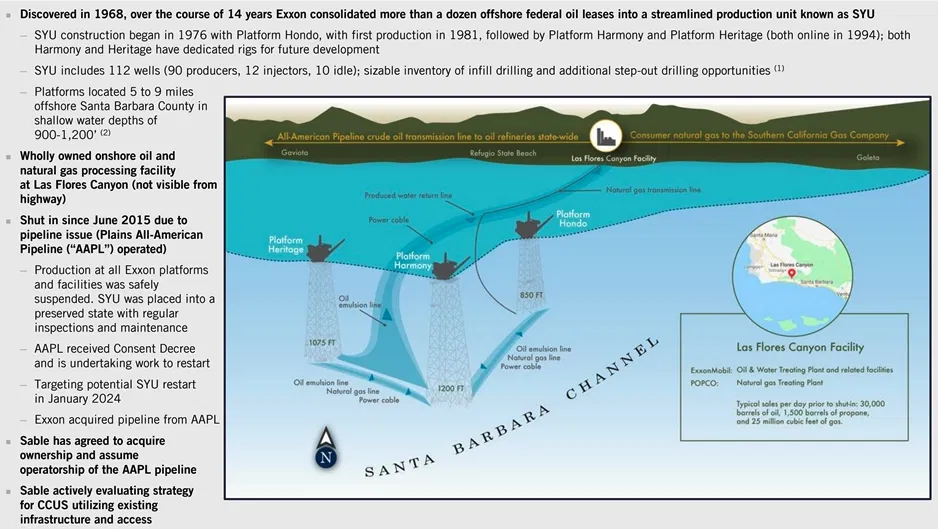
John notes that Exxon’s March 26 contractual deadline for Sable to have the SYU up and running is fast approaching. What will Exxon do in the likely event that Sable fails to meet that deadline? Does Exxon want to re-enter the SYU legal and regulatory quagmire?
The SYU’s 500+ million barrels of oil, 3 deepwater platforms, and onshore processing facilities are an enormous prize, but is that prize attainable?
Meanwhile, the latest skirmish between Sable and the Office of the State Fire Marshal (OFSM) pertains to metal loss anomalies and inspection tool tolerances. The dispute is summarized in the linked filing.
Sable contends that the Fire Marshal’s letter contradicts guidance from OSFM staff and provides examples. Sable goes a step further at the end of their response by calling for the FIre Marshal to coordinate better with the experts on his staff:
“We respectfully request that, given this background, you coordinate further with the expert team at OSFM and revisit the statements in your October 22nd letter.”
It’s not looking good for a quick resolution of these issues.




 Bud's Offshore Energy (BOE)