Feeds:
Posts
Comments

Archive for the ‘Gulf of Mexico’ Category

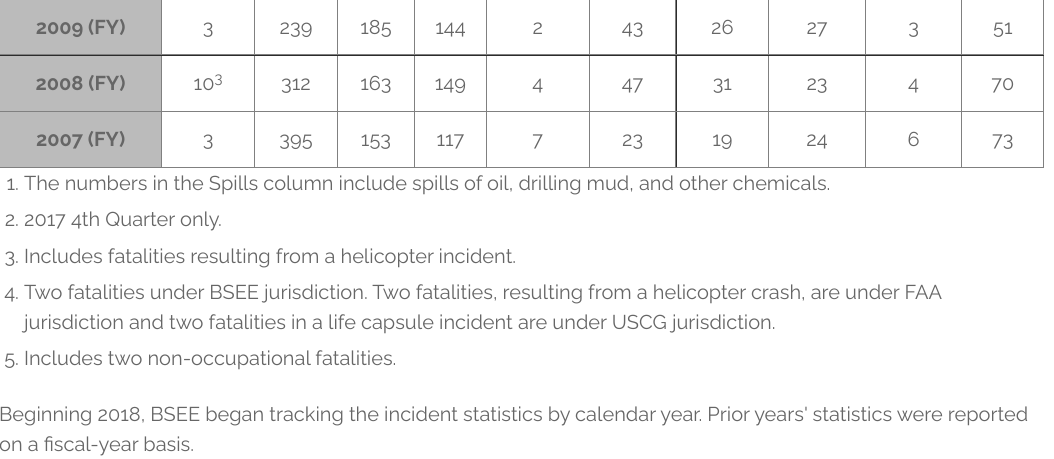
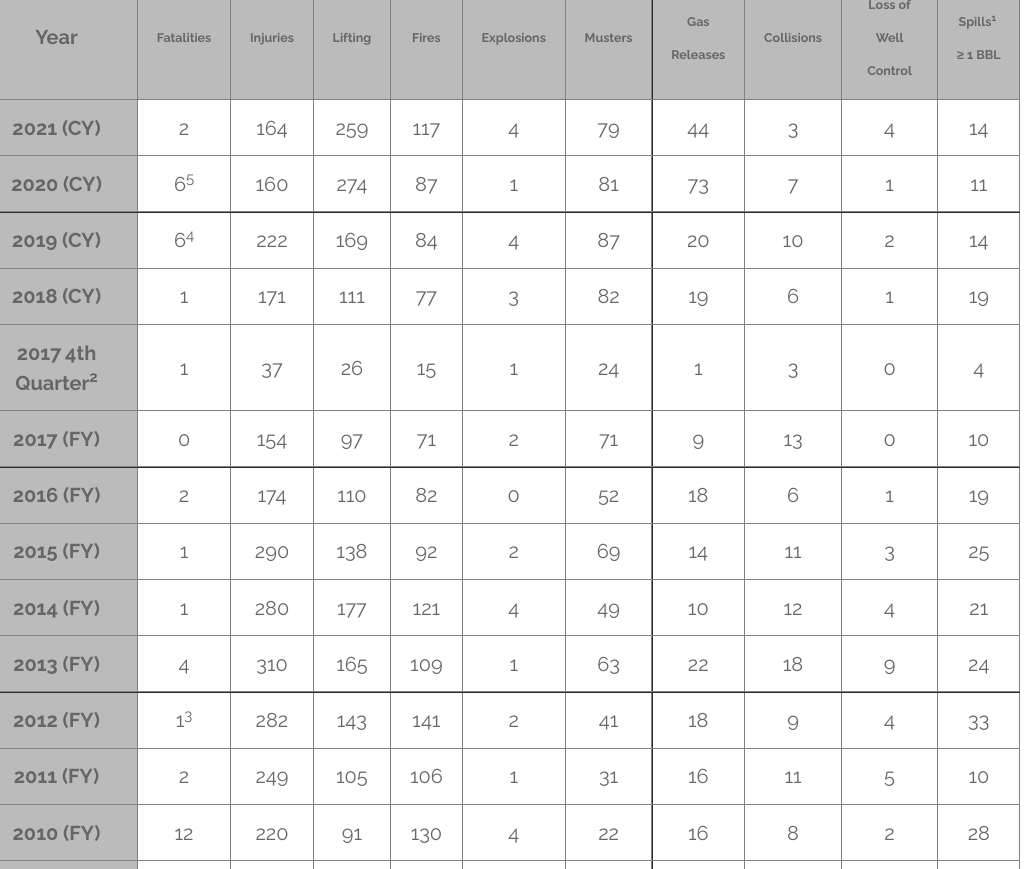
BSEE has posted the 2021 incident data for US OCS oil and gas operations. While the 13 month publishing lag is disappointing, the spreadsheet (below the table at this link and attached at the end of this post) appears to be comprehensive and complete.

Of the 8 fatalities in 2021, 6 are classified as “non-occupational” and are thus not included in the 2021 fatality count (see table below).

The 2 occupational fatalities are the result of falling metal plates on a drilling rig and the release of casing pressure on a production platform. These fatalities are still being investigated.

The 6 non-occupational fatalities on OCS facilities also merit further attention. While historical data on health-related OCS fatalities are not readily available, 6 such fatalities seems high relative to past experience, particularly given that the total number of hours worked has declined by more than 50% since 2011. Are these and other health related questions being considered?

  • Were covid or covid related health issues a factor?
  • Are health screening programs sufficient, particularly for contractors? Contractors are 80% of the workforce but accounted for 100% of the 2021 fatalities?
  • Are offshore medical care and evacuation capabilities sufficient?
Read Full Post »

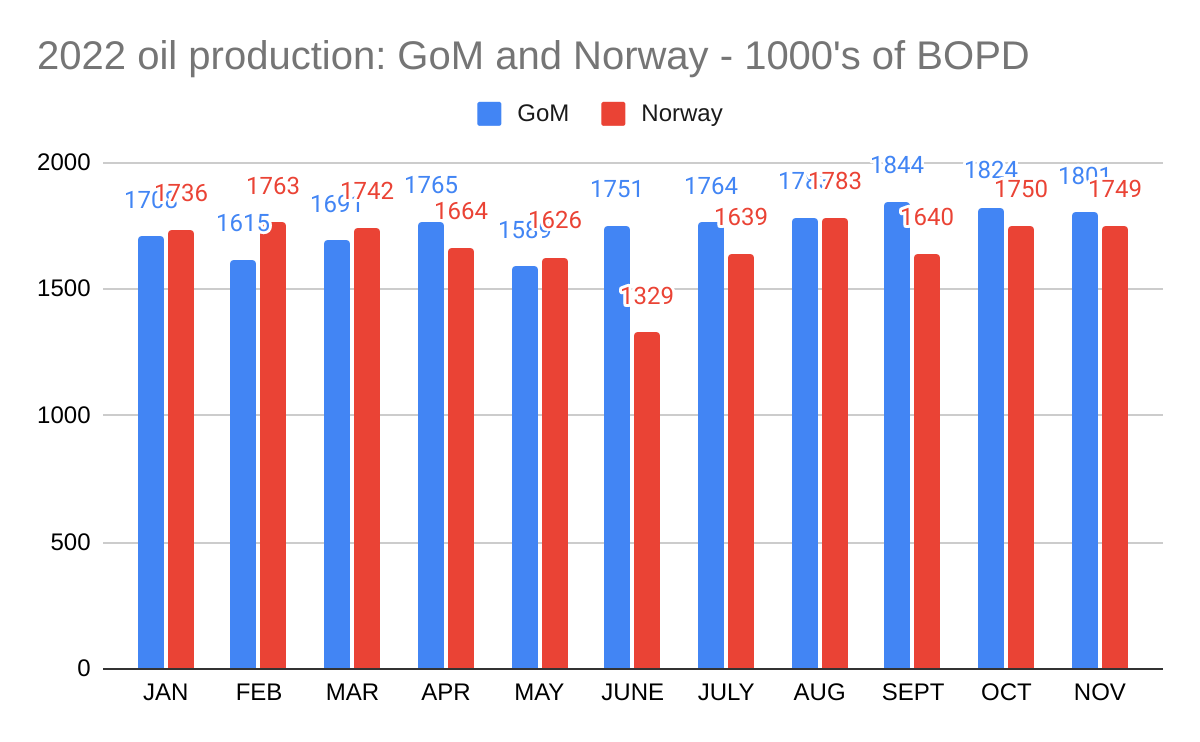
…and were in fact identical in August (1.763 million BOPD). GoM production should strengthen a bit in 2023 as new deepwater projects come online. Norwegian production should also increase. The longer term is more uncertain, particularly for the US OCS which is seemingly being managed to fail.

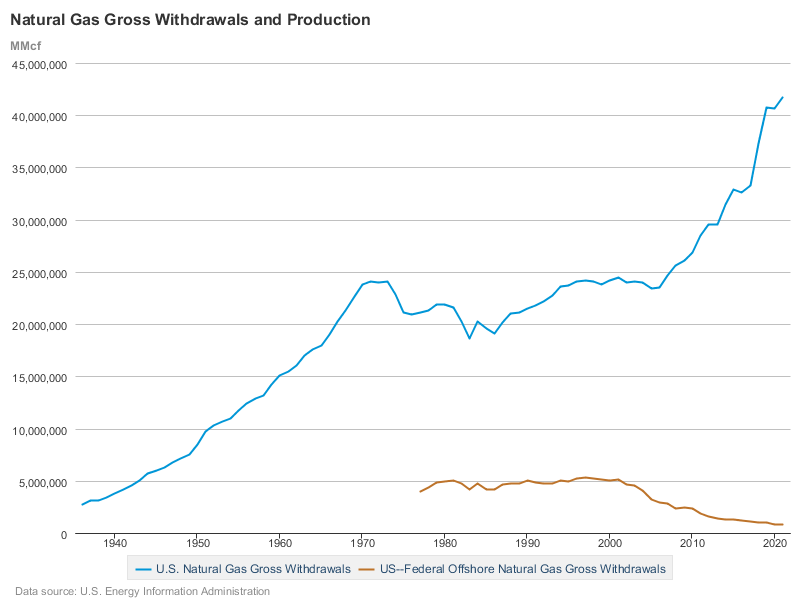
Natural gas production is a different story. Norway has been sustaining and growing offshore gas production, while Gulf of Mexico gas production has been in free-fall. Total US production has nonetheless grown sharply over the past 17 years thanks to the shale boom (see the chart below). In the 1980’s, the GoM accounted for 20-25% of US gas production. The GoM share is now only 2%, most of which is gas that is associated with deepwater oil production. Nonassociated offshore gas has important advantages that should not be ignored.

Read Full Post »

This misleading headline was featured in Reuters’ “Power Up” newsletter (26 Jan 2023):

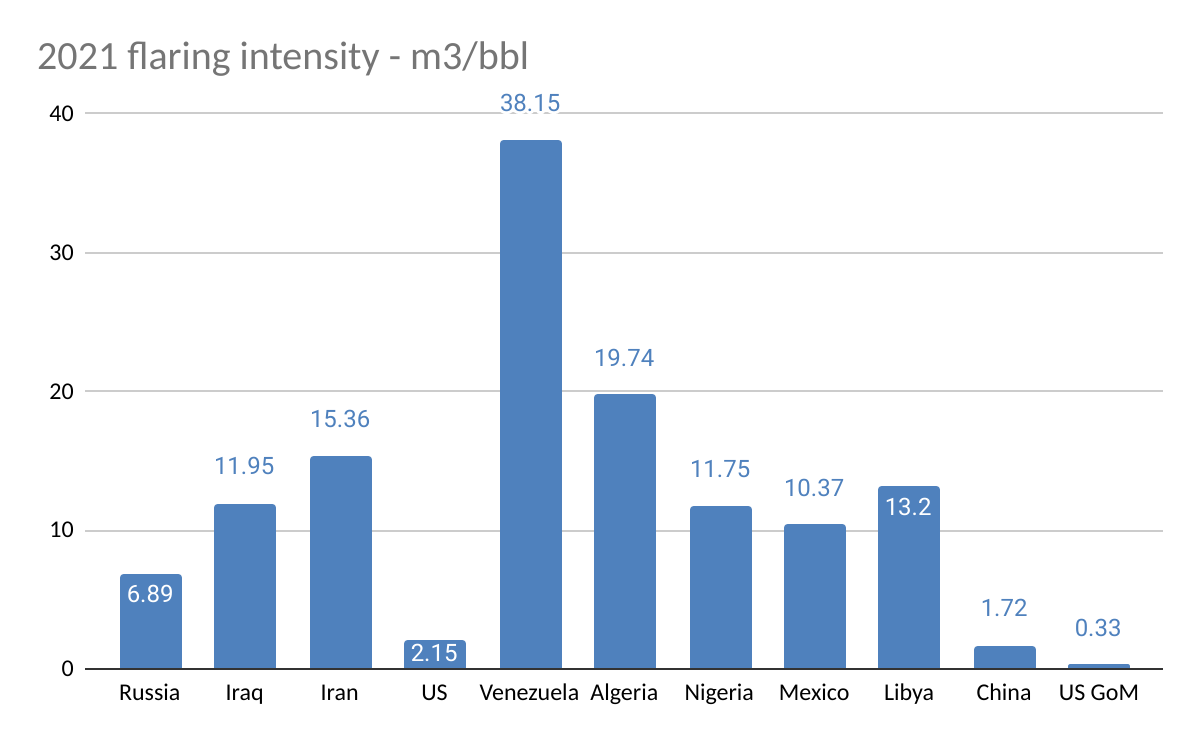
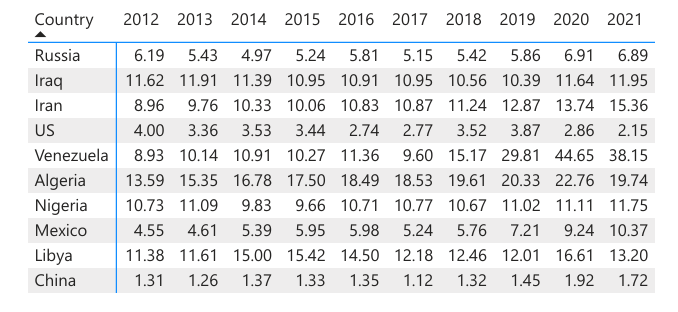
An objective flaring assessment would have also considered the volume of oil and gas produced. The World Bank uses flaring intensity (m3 flared per bbl of oil produced) to normalize their flaring data and provide perspective. The chart below is derived from World Bank flaring intensity data and Gulf of Mexico data from mandatory flaring and venting reports for the same year (2021). These normalized data sharply contradict the Reuters message.

Reuters might also have noted (World Bank table below) that the US flaring intensity score declined by 46% between 2012 and 2021. Each of the other “top flaring” countries had flaring intensity increases during that period.

World Bank

Finally, while I applaud the World Bank’s efforts to monitor worldwide flaring, some issues with their methodology were identified in a prior BOE post.

Read Full Post »

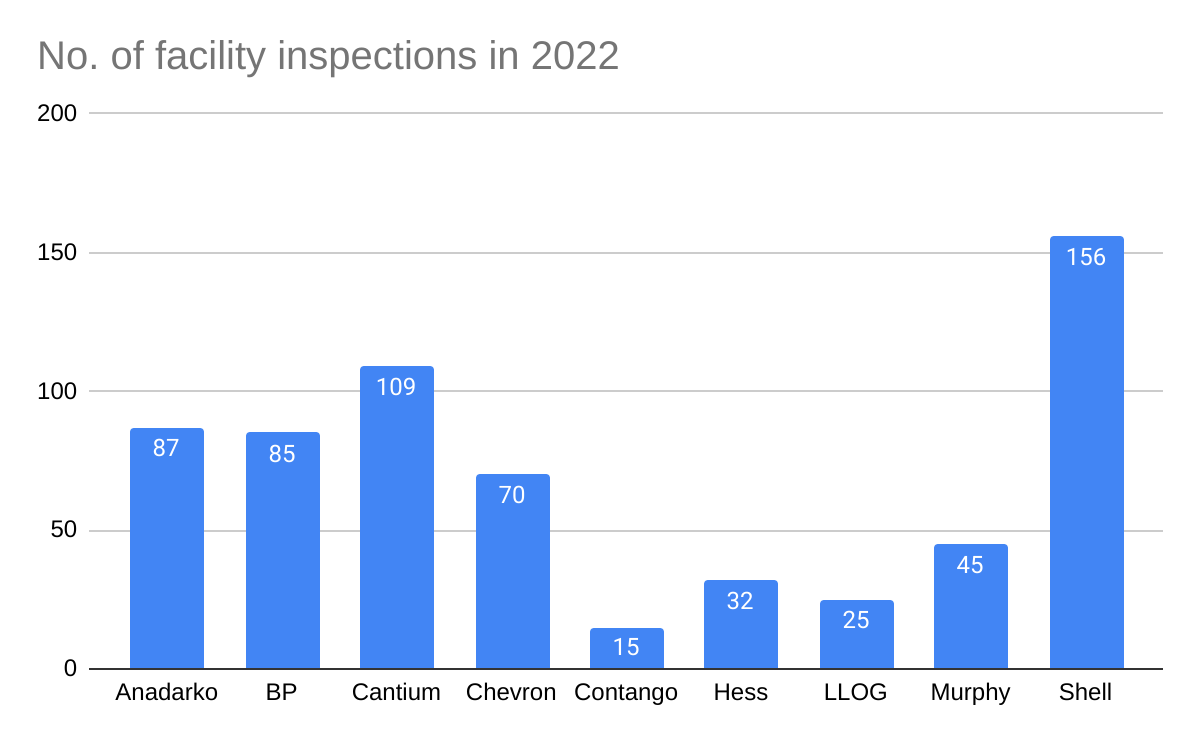
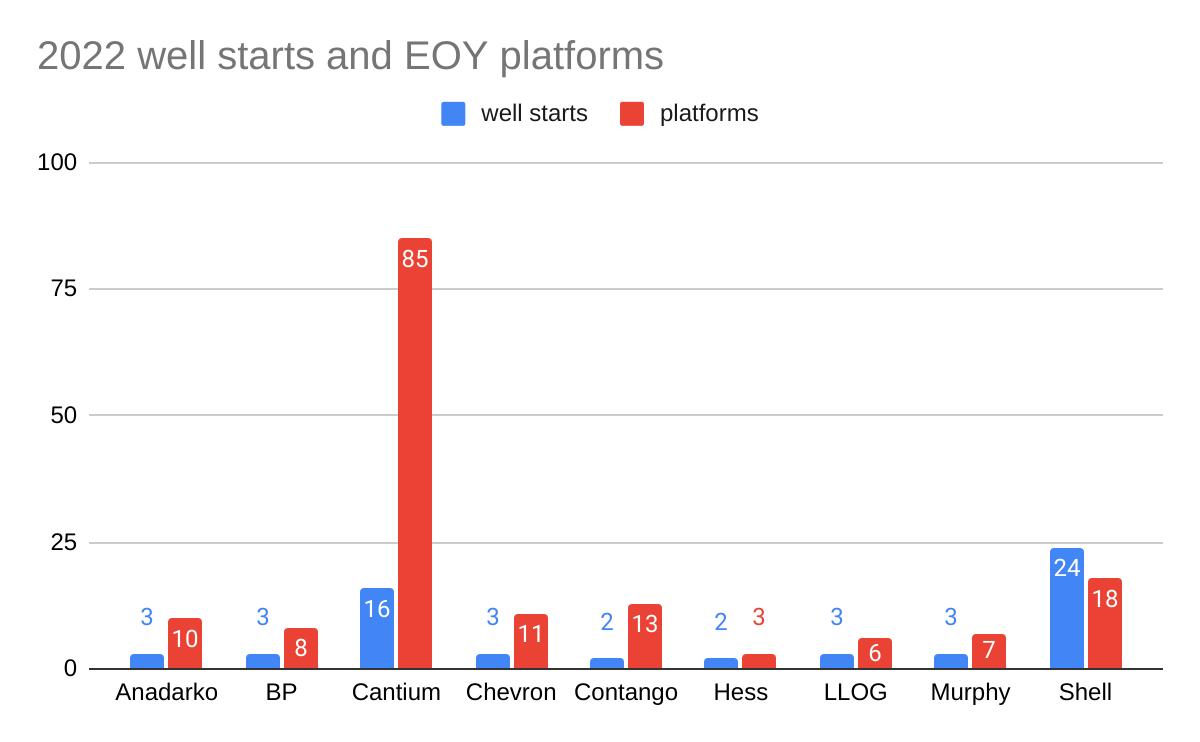
The Honor Roll companies for 2022 (listed alphabetically) are Anadarko (Oxy), bp, Cantium, Chevron, Contango, Hess, LLOG, Murphy, and Shell.

Our criteria:

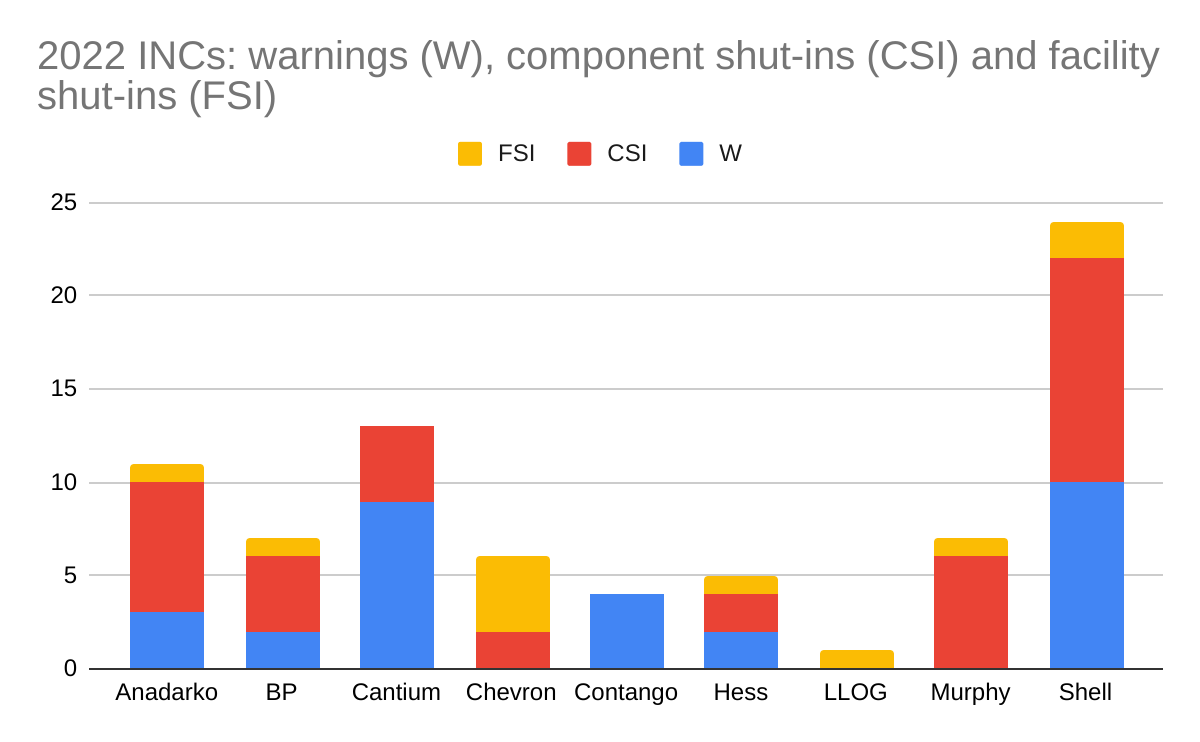
  • Must average <0.3 incidents of noncompliance (INCs) per facility-inspection.
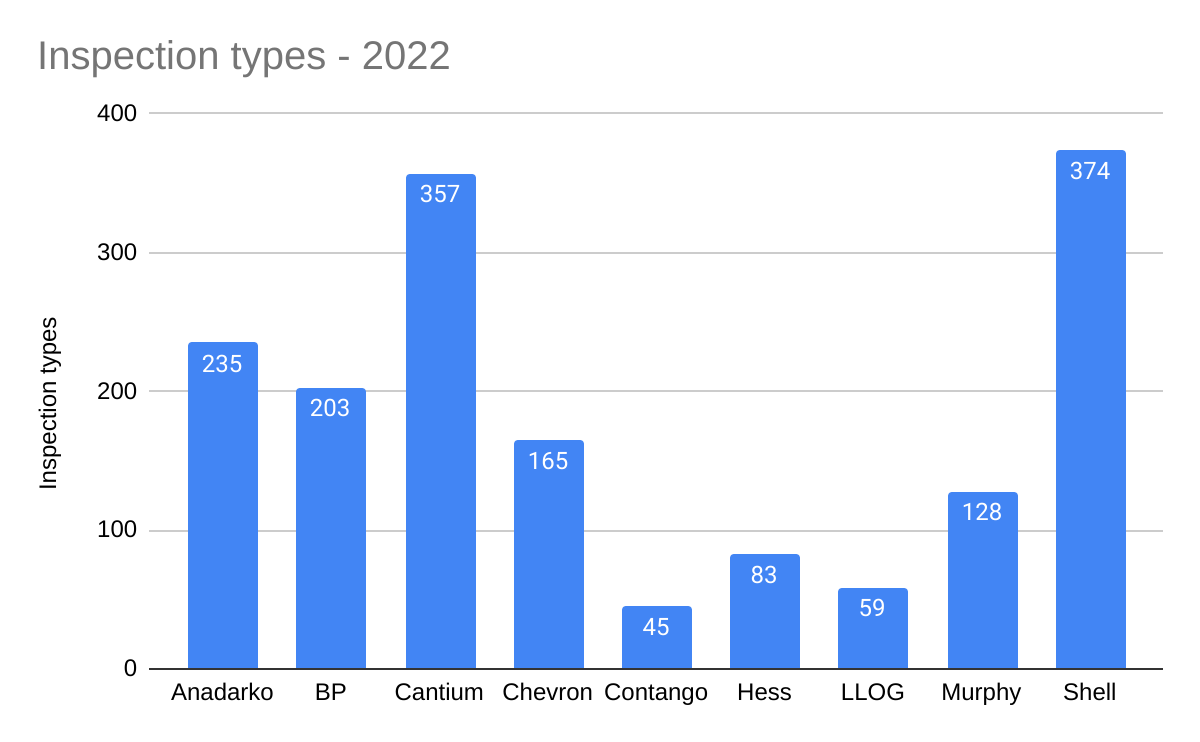
  • Must average <0.1 INCs per inspection-type. (Note that each facility-inspection may include multiple types of inspections (e.g. production, pipeline, pollution, Coast Guard, site security, etc). On average, each facility-inspection included 3.25 types of inspections in 2022. Here is a list of the types of inspections that may be performed.)
  • Must operate at least 3 production platforms and have drilled at least one well (i.e. you need operational activity to demonstrate compliance and safety achievement).
  • May not have a disqualifying event (e.g. fatal or life-threatening incident, significant fire, major oil spill). Due to the extreme lag in updates to BSEE’s incident tables, investigation and news reports are used to make this determination.
  • Pacific and Alaska operations will be considered separately.
oil (million bbls)gas (BCF)
Shell145.8163.5
bp82.457.1
Chevron79.445.2
Anadarko59.650.8
Murphy28.145.5
LLOG19.634.3
Hess17.939
Cantium3.95.3
Contango0.023.5
2022 production through Oct.

Mid-Year 2022 review

Read Full Post »

Nine operating companies have qualified.

Read Full Post »

A rare photo of a Big-Fin Squid, caught on camera on November 11th 2007 by a Shell Oil company ROV, at a depth of 2,386 meters (1.5 miles). This species of Squid dwell at extreme depths, and are characterised by their long, thin tentacles. They can reach almost 20ft long when fully grown.

Hasan Jasim

ROV video:

Of course, much of our knowledge about deepwater biology is attributable to oil and gas exploration and the associated environmental studies. This includes the discovery and study of chemosynthetic communities in the Gulf of Mexico:

Some of the same conditions responsible for petroleum deposits also provide the basis for biological communities that receive energy from chemicals through a process called chemosynthesis (in contrast to photosynthesis that provides energy to terrestrial and shallow-water communities through processes in which sunlight is the basic energy source).

NOAA
An aggregation of ice worms inhabiting methane hydrate. These worms eat chemoautotrophic bacteria using chemicals in the hydrate. Image courtesy of the NOAA Office of Ocean Exploration and Research, Gulf of Mexico 2012

Read Full Post »

The attached NTSB report includes details on the timing of the accident, observations from personnel remaining on the platform, condition of the helipad, nature and location of the debris, and the recovery of the fuselage and separated tail boom. The engine control unit (ECU) was recovered and sent to an NTSB lab for data extraction.

Link to previous posts on the crash.

Read Full Post »

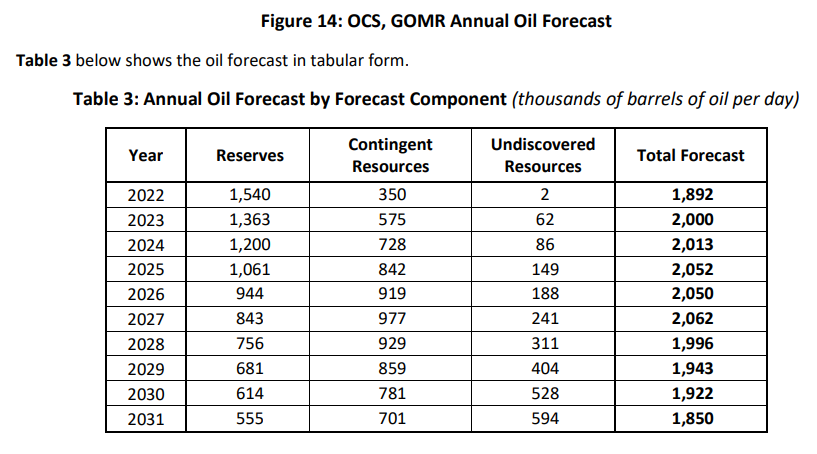
As is evident from the first table below, the EIA’s new short-term production forecast for the Gulf of Mexico differs significantly from the optimistic BOEM forecast.

The EIA 2022 figure is spot-on, as it should be given that 10 months of 2022 production data are now in hand. However, BOEM’s 2022 forecast (published in July) missed the mark considerably. (In fairness to BOEM staff, their work was probably completed months before publication pending internal reviews.)

Of greater concern, given the policy implications, is the rosy BOEM forecast for the out-years. Despite historically low levels of leasing and exploratory drilling, BOEM forecasts oil production to exceed 2 million BOPD through 2027 and to remain well above the current (2022) level through 2031 (second table below).

As previously noted, the authors of the proposed 5 year OCS leasing plan have used the BOEM forecasts to justify a skeleton leasing plan that is unprecedented in program history. Contrary to the OCS Lands Act’s mandate and EIA projections regarding future oil and gas consumption, the proposed leasing plan not so subtly announces the intention to phase out the offshore oil and gas program.

202220232024
EIA1.751.871.85
BOEM1.8922.0002.013
Notes: (1) forecasts are for average daily production – millions of barrels
(2) actual 2022 production averaged 1.74 million BOPD through Oct.

Read Full Post »

Offshore gas has important environmental advantages, particularly nonassociated gas-well gas (GWG). While the GoM production chart (below) is not pretty, there are signs that gas production may have bottomed and is slowly rising. This is largely due to growth in oil-well gas (OWG) associated with deepwater oil production.

A successful offshore program requires a mix of strategies, and it is encouraging that companies are still pursuing natural gas on the GoM shelf. The second chart (below), based on BOEM data, shows 2022 YTD (probably through Oct.) GWG production for the 11 companies that (1) produced more GWG than OWG and (2) produced more than 1 BCF of GWG.

Interestingly, 100% of the gas produced by Contango, Samchully, and Helis in 2022 was from gas wells. Contrast this with bp, the third largest GoM gas producer. None of bp’s gas production was from gas wells.

One has to wonder about the extent to which deepwater gas reservoirs are being stranded due to the less favorable economics. Preventing such resource losses was once an important regulatory consideration given the conservation mandate in the OCS Lands Act and the importance of maximizing the public benefit. However, current policy, as expressed in the proposed 5 year leasing plan, is to phase out offshore production rather than sustain it. This is difficult to reconcile.

Read Full Post »

Liz is an experienced attorney and leader in clean energy, climate change, and environmental law and policy. A member of the Biden-Harris administration since January 20, 2021, Liz has served as Senior Counselor to Secretary Haaland with an emphasis on water policy and climate change resilience. In this role, Liz also served as Chair of the Indian Water Rights Working Group, which manages, negotiates and implements settlements of water rights claims.

Prior to joining the Administration, Liz was Deputy Director of the non-partisan State Energy & Environmental Impact Center at NYU School of Law, which supports state Attorneys General addressing clean energy, climate, and environmental initiatives of regional and national importance. President Biden is the third President under which Liz has served at Interior, having worked for both the Clinton and Obama administrations. Under Secretaries Ken Salazar and Sally Jewell, Liz served as Interior’s Associate Deputy Secretary as well as Principal Deputy Assistant Secretary in the Office of Policy, Management and Budget. She was a key architect of the Obama Administration’s work to create a new offshore wind industry and leasing program.

DOI

Congratulations to Ms. Klein on being appointed to lead the Bureau of Ocean Energy Management. In addition to her commendable support for offshore wind energy, I trust that she appreciates the national importance of the OCS oil and gas program and the need for regular lease sales.

Read Full Post »

« Newer Posts - Older Posts »