Rystad Energy projects a 10% annual compound growth rate for the subsea market from 2024 to 2027, with total spending anticipated to exceed $42 billion by the end of this period.
Brazil dominates the subsea umbilical risers and flowlines (SURF) market. Unsurprisingly, the US is lagging given the absence of a robust offshore leasing program and the dearth of deepwater discoveries in recent years.
Additionally, ultimate authority over the wind farm remained unclear, with various federal agencies claiming responsibility over different portions of the permitting, licensing, review, and operation of the wind farm.
“Sometimes I have a hard time figuring out, who do we talk to? Who is going to keep us safe? Who is the responsible boss here? Who is going to make the hard decision?” Select Board member Matt Fee asked.
Separate legislation granting redundant or overlapping authority to different departments or agencies.
Legislation that is non-specific, assigning broad authority to the President or cabinet level level officials, leaving it up to the bureaus to resolve.
Bi- and multi-lateral agreements like MOA’s and MOU’s, which are intended to “coordinate the redundancy,” often cause more confusion than they prevent, creating gaps in the process.
“Fixing” problems by adding redundancy.
The Dept. of the Interior’s division of responsibilities for offshore wind, which was finalized in January 2023, inexplicably assigns review and approval of Construction and Operations Plans to the Bureau of Ocean Energy Management (i.e. the land manager, lessor, and wind energy promoter) rather than the Bureau of Safety and Environmental Enforcement (i.e. the principal regulator of the activities described in those plans).
More significantly, the offshore wind responsibilities of the 2 bureaus are so intertwined (as is also the case for offshore oil and gas), that attempts to separate the functions have, at a minimum, created inefficiencies and increased regulatory and operational costs.
FTR, the idea that having the BOEM and BSEE functions combined in a single bureau, as was the case with the predecessor bureau (MMS), had anything to do with the Macondo blowout is a complete fallacy. Regarding the accusations that were made toward MMS, the Chief Counsel for the national commission that investigated the tragic incident found no evidence that ethical lapses on the part of MMS employees played any role in causing the blowout.
There were important regulatory changes made after the Macondo blowout. These included capping stack requirements, mandatory safety management systems, and updated rules and standards for cementing/zonal isolation and blowout preventer systems. None of these improvements were precipitated by or dependent on the division of MMS into two bureaus.
API is challenging the Dept. of the Interior’s 5 year oil and gas leasing plan, which includes the fewest lease sales in program history. That challenge was filed on 12 February, 60 days after Secretary Haaland approved the 5 plan and the first day appeals could be filed pursuant to 43 U.S. Code § 1349.
18 weeks after the API suit was filed, the Supreme Court overturned the Chevron Doctrine. That doctrine (described above) instructed judges to defer to agency interpretations when the language in a law was unclear.
Extending the Secretary’s general safety and environmental authority for OCS operations to include global climate considerations is a stretch and the type of interpretive administrative decision that the Supreme Court struck down.
As the above examples illustrate, turbine blade failures, like the Vineyard Wind incident near Nantucket, are not unique to GE Vernova. GE’s rivals, Siemens Gamesa and Vestas, have also experienced serious quality control issues.
Per ReviewEconomy (2023), “Unexpected and increasing wind turbine failure rates, largely in newer and bigger models, are savaging the profits of some of the world’s biggest manufacturers, as Siemens Gamesa, GE and Vestas report heavy repair and maintenance losses.”
In light of the manufacturing challenges, all 3 companies report increased emphasis on quality control. Why has quality control to date been inadequate and how will the past problems be corrected?
Has the wind industry’s sense of entitlement, as evidenced in their tax credit, rate increase, and departure expectations, affected their safety and quality culture? Has industry and governmental wind energy promotion rushed development and compromised design and fabrication decisions? It’s time for wind developers, manufacturers, and regulators to make sure their priorities are in order.
Contrary to the regulations, Vineyard Wind was authorized to begin the fabrication of facilities beforeBOEM “received and offered no objections to the their Facility Design Report (FDR) and Fabrication and Installation Report (FIR).” The approval letter is attached, and excerpts (emphasis added) are pasted below. [Note: The requirement that was then at §585.700(b) is found at §585.632 in the current regulations.]
“Vineyard Wind requests a regulatory departure from §585.700(b) requiring that fabrication of approved facilities not begin until BOEM provides notification that it has received and has no objections to the submitted Facility Design Report (FDR) and Fabrication and Installation Report (FIR). Vineyard Wind proposes to fabricate, but not install the following project elements: 1) Monopile foundations; 2) Electrical service platform; 3) Export cable; 4) Inter-array cables; and 5) Wind turbine generator facilities.
….allowing these fabrication activities to take place earlier in time would allow Vineyard Wind to adhere to its construction schedule, maintain its qualification for the Federal Investment Tax Credit, and meet its contractual obligations under the Power Purchase Agreements with Massachusetts distribution companies.
30 cfr 585.103 requires that a departure provide safety and environmental protection equal to or greater than the provision in the regulations that is waived. BOEM’s letter fails to explain how allowing fabrication to begin before fundamental design and fabrication reports are submitted and reviewed meets this test.
Perhaps even more troubling is BOEM’s response to subsequent requests by other companies to waive the FDR and FIR requirement (example). In these responses, BOEM asserts that their “current interpretation” is that no departure is needed because “the regulation prohibits only fabrication and installation activities on the Outer Continental Shelf (OCS) itself.” How does that make sense given the important activities, including the fabrication of turbine blades and other turbine components, that take place onshore?
In their letters approving the Vineyard Wind and other departures, BOEM implies that their review of these reports is unnecessary because “the design and fabrication of these components would occur under the supervision of the approved CVA” (Certified Verification Agent). That assertion misconstrues the role of the CVA. These agents, nominated and funded by the operator, provide third party oversight that is complementary to, not a substitute for, BOEM/BSEE project reviews.
According to this memo, DNV was the CVA for Vineyard Wind. Their insights on the turbine blade failure will presumably be included in BSEE’s investigation report.
A recent millimeter wave drilling test conducted at the Quaise laboratory, in preparation for upcoming field demonstrations
Ultradeep geothermal has enormous potential for power generation without being handicapped by the intermittency, space preemption, aesthetic, and wildlife protection challenges inherit in wind and solar projects.
Quaise Energy is an exciting company, not only because of ultradeep geothermal’s unlimited energy potential, but also because of their fascinating gyrotron technology that vaporizes hard rock and could enable drilling to depths of 20-30 km and temperatures of >1000° C.
Quaise Energy’s latest update includes some good photos of laboratory tests of their drilling technology. The first field tests of their drilling technology are supposed to be conducted later this year, but no details have been provided.
Quaise describes millimeter waves (MMWs) as follows: “… a portion of the electromagnetic spectrum between microwaves and infrared. Named for their wavelength measuring 1-10 millimeters, MMWs are everywhere yet invisible to the naked eye. The fingerprints of the Big Bang still linger as MMWs all around us in the cosmic microwave background. And if you’re reading this on a phone, chances are it was transmitted by 5G using MMWs.”
The plan is to drill through sedimentary rocks with conventional technology and use MMWs to vaporize basement rock with dielectric heat. There are many hurdles to clear, starting with the field tests, but the enormous energy potential is undeniable.
The dearth of deepwater discoveries over the past 6 years (chart below derived from BOEM data) should be a major concern to those engaged in energy policy. Technical innovation has facilitated simpler, safer, and greener deepwater development. However, most of those discoveries were made 7-15 years ago.
The decline in discoveries is no surprise given the decline in deepwater exploratory drilling documented by Lars Herbst in Dec. 2022. That trend continues, and the BSEE data summarized below indicate that deepwater exploratory drilling has remained at historically low levels.
Onshore oil and gas production, mostly from private lands, has responded to growing US demand, but the offshore sector could be contributing more and offers some important advantages:
The Deepwater Advantage:fewer facilities + fewer wells + high production rates + efficient power generation + advanced processing + restricted flaring + pipeline transportation = fewer environmental impacts and low GHG intensity production
… for their coverage of the Vineyard Wind turbine blade incident and their investigative reporting. From a recent Current article (emphasis added):
“The technology may not be new, but the size and scale of the Haliade-X turbine is novel for the offshore wind industry. And these jumbo-sized turbines have only recently been installed in just two locations in the world within the last year – at Vineyard Wind off Nantucket, and the Dogger Bank Wind Farm off the northeast coast of England. The Haliade-X turbine blades – which are supposed to have at least a 25-year lifespan – have suffered failures in both locations.“
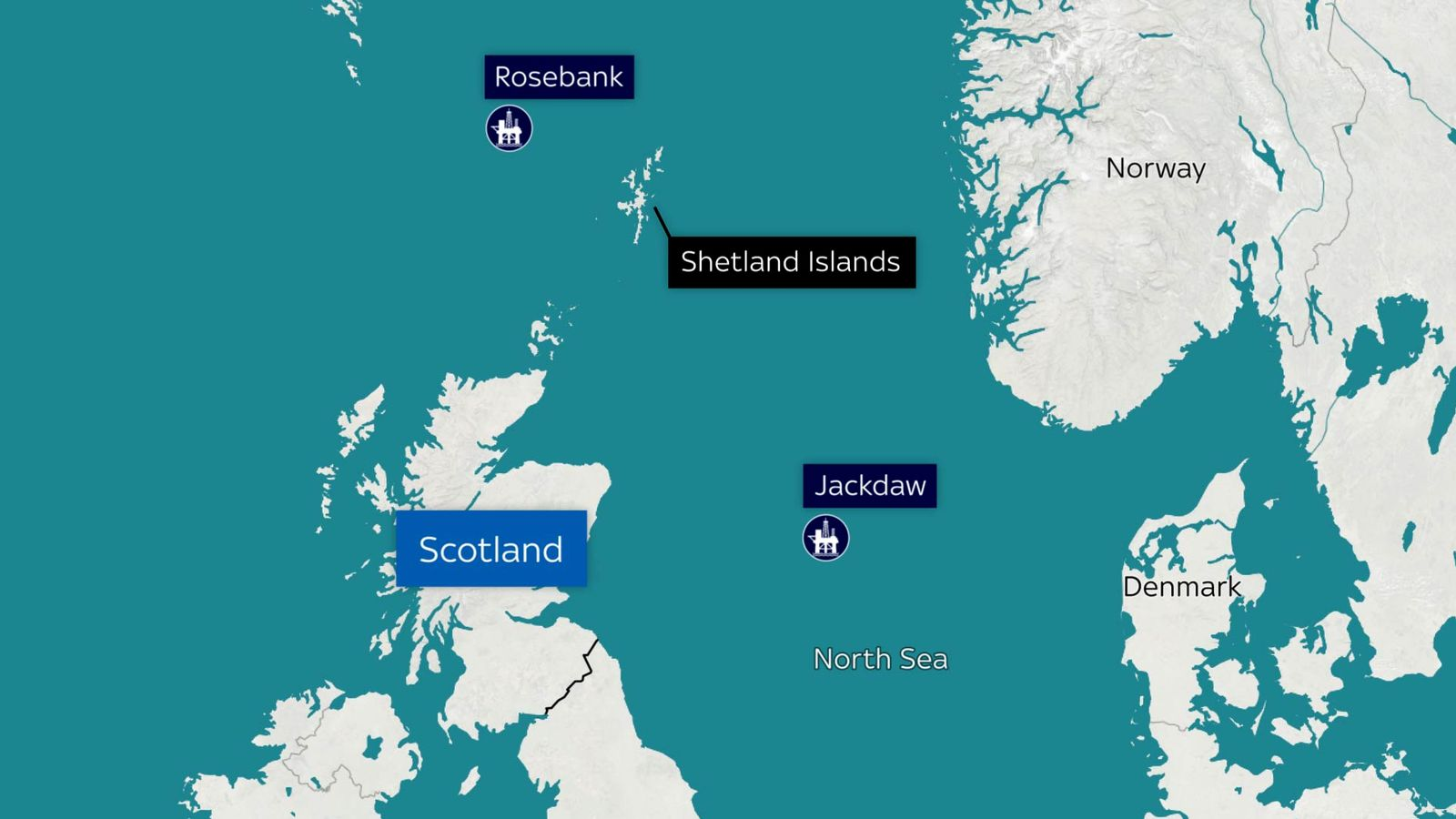
“At the Dogger Bank Wind Farm – which is being completed in three sections which combined will make up the largest offshore wind farm in the world – the first GE Vernova Haliade-X turbine was installed in the fall of 2023 and began producing power on Oct. 10. But little is known about the blade failure that occurred just months later during the first week of May 2024. The damaged blade was disclosed by Dogger Bank’s owners – SSE Renewables, Equinor, and Vårgrønn – a week after the incident. In a statement, the companies said only that “damage was sustained to a single blade on an installed turbine at Dogger Bank A offshore wind farm.”
“One reason the turbine blade incident at the Dogger Bank may not have generated more attention at the time is that the wind farm is located 100 miles off the coast of England, rather than just the 15 miles in the case of Vineyard Wind and Nantucket. If any debris was generated, it would have a far wider area to disperse in before nearing land – if it made it that far at all.“
Interestingly per the Current:
The Haliade-X turbine is the same one Orsted – a partner in Vineyard Wind – is planning to use for offshore wind farms slated for the waters off New Jersey and Maryland.
Land-based turbines have come apart in Sweden, Germany, Lithuania, Cypress, Brazil, and the US (and presumably elsewhere).
Greater transparency regarding turbine incidents, both in the US and internationally, is clearly needed. As we have learned from decades of experience with the oil and gas industry, most companies prefer reporting systems (if any) that protect details and information about the responsible parties from public disclosure. It’s the responsibility of the regulators to make sure that incident data and investigation reports are timely, complete, and publicly available. This is made more difficult by the promotional role that government agencies have assumed for offshore wind.
“The order comes as the bureau continues its oversight and investigation into the July 13, 2024, turbine generator blade failure. The order continues to prohibit Vineyard Wind 1 from generating electricity from any of the facilities or building any additional wind turbine generator towers, nacelles, or blades. This order also requires Vineyard Wind 1 to submit to BSEE an analysis of the risk to personnel and mitigation measures developed prior to personnel boarding any facility. Vineyard Wind 1 is not restricted from performing other activities besides those specifically directed for suspension or additional analysis. For example, Vineyard Wind 1 is still permitted to install inter-array cables and conduct surveys outside of the damaged turbine’s safety exclusion zone.”
BSEE also advises that they are conducting their own investigation, and promises to release the findings to the public.
Hercate lease request – C & D. Wind areas that were considered for 2nd GoM sale – I, J, & K. Active RWE lease – blue.
GoM wind leasing update:
BOEM’s highly promoted 2023 GoM wind sale was a bust. The sole bidder, the German company RWE, acquired a single lease.
BOEM’s second GoM wind sale failed to get off the ground. Because only one company expressed interest in participating, that sale has been cancelled.
BOEM is now surveying interest in other GoM areas as a result of an unsolicited lease request from Hercate Energy.
If BOEM does not receive competing indications of interest, they may (and probably will) issue a noncompetitive lease to Hecate.
BOEM calls Hercate an “industry leader.” However, per their website, Hecate is mainly a solar energy company with only 2 wind projects. Both of those wind projects are onshore (Kentucky), and are “in development” (i.e. not yet operating). Hercate is no doubt a fine company, but have they demonstrated the technical expertise and financial strength needed for offshore wind development?
BOEM’s aggressive wind leasing policy stands in stark contrast to their current oil and gas policy. Not a single oil and gas sale will be held in 2024. Were it not for a provision in the “Inflation Reduction Act,” the last 3 GoM sales (257, 259, and 261) would probably not have occurred.
The new 5 year oil and gas leasing plan confirms that the Dept. of the Interior (DOI) has no intention of fulfilling their statutory oil and gas leasing mandate. In announcing the new 5 year plan, DOI boasted that the plan includes the fewest sales (3) of any plan in the history of the program. DOI strongly implied that the only reason those 3 sales were included was to sustain the wind program.,
When we drafted the OCSLA amendments that authorize offshore wind leasing, we envisioned complementary and synergistic programs, not a dogmatic pro-wind bias. As experts like Daniel Yergin have repeatedly warned, the notion that wind energy can eliminate the need for oil and gas is pure folly.