


These seven companies are on the updated list of restricted joint bidders for OCS oil and gas leases (attached).
Restrictions limiting joint bidding by major oil companies date back to the Energy Policy and Conservation Act of 1975. Although these restrictions were intended to increase competition and revenues, OCS program economists have asserted, and studies have shown, that the ban results in fewer bids per tract and lower bonuses to the government.
Three of these restricted bidders, although major international producers, are relative minnows on the US OCS. Exxon has essentially exited the Gulf, holding only 6516 net acres, and now ranks only 17th in Gulf oil production. Eni has 65,582 net acres and ranks 20th in oil production. Total has 106,318 net acres and, according to MMA, is credited with no 2026 production.
Prohibiting joint bidding does not prevent the consolidation of operations or companies. For example, last year Total acquired a 25% working interest in 40 of Chevron’s Gulf leases. Total already owned interest in Chevron’s Ballymore (40%), Anchor (37.14%), Jack (25%), and Tahiti (17%) fields. How does it make sense for Federal regulations to prohibit Total from jointly bidding with Chevron for any leases at the time of the sales?
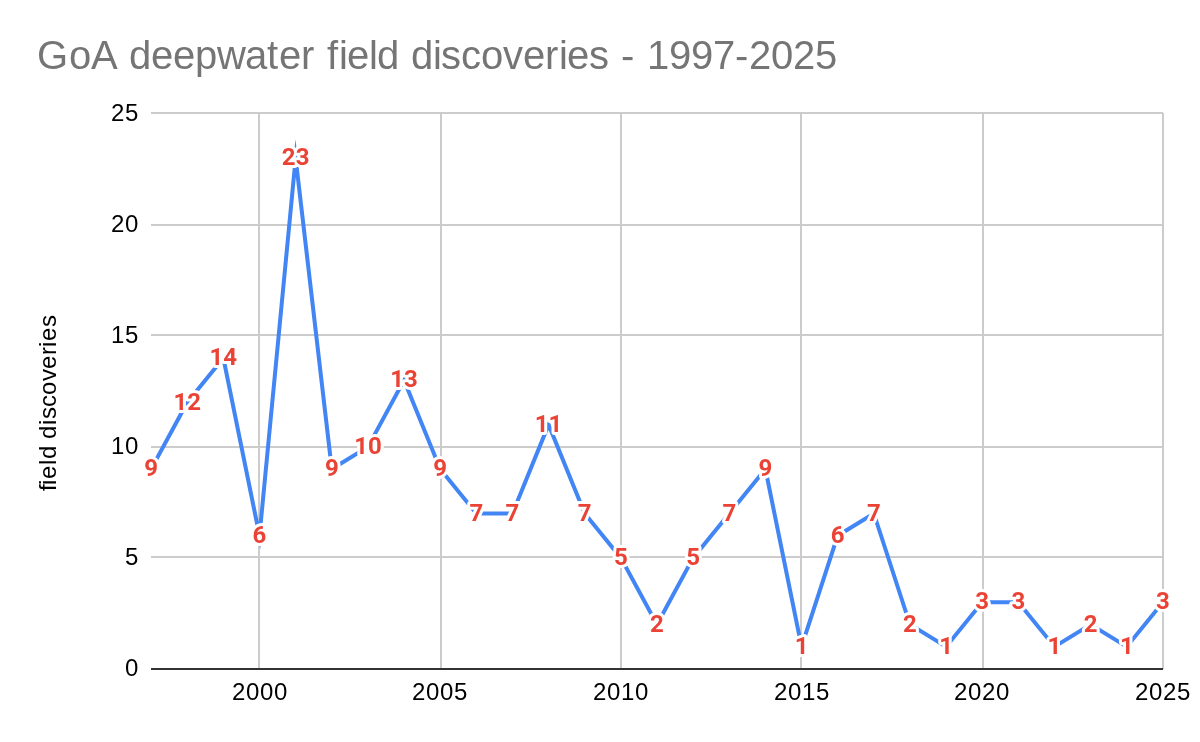
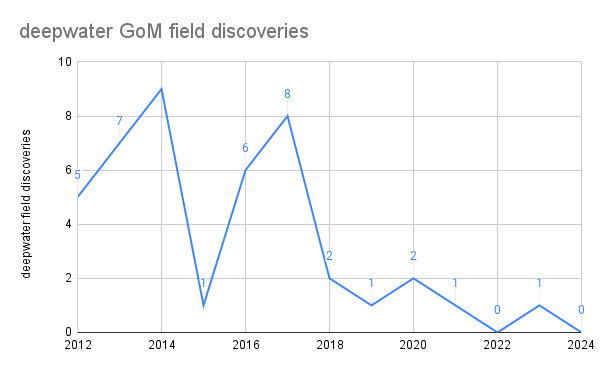
Former BSEE Director Scott Angelle has voiced concerns about the the decline in Gulf of America exploratory drilling and the low number of discoveries (chart below). Scrapping the joint bidding restrictions would be a simple, revenue positive step toward addressing those declines.