Feeds:
Posts
Comments

Archive for the ‘decommissioning’ Category

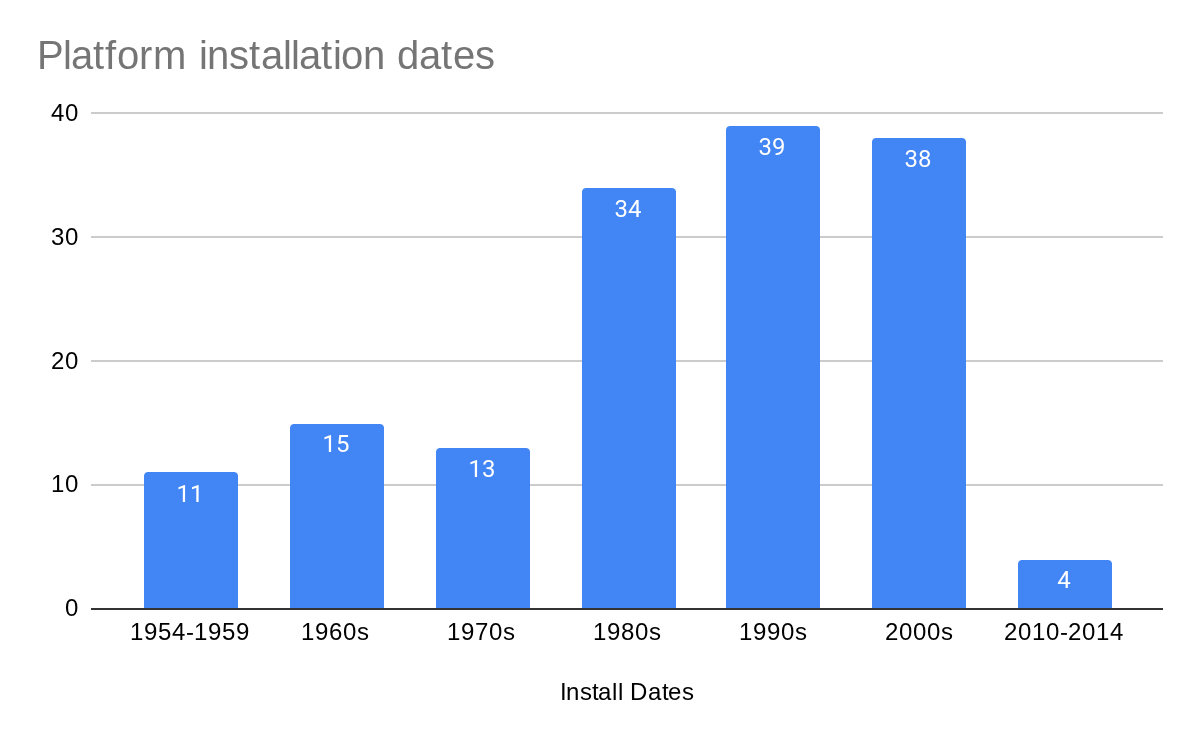
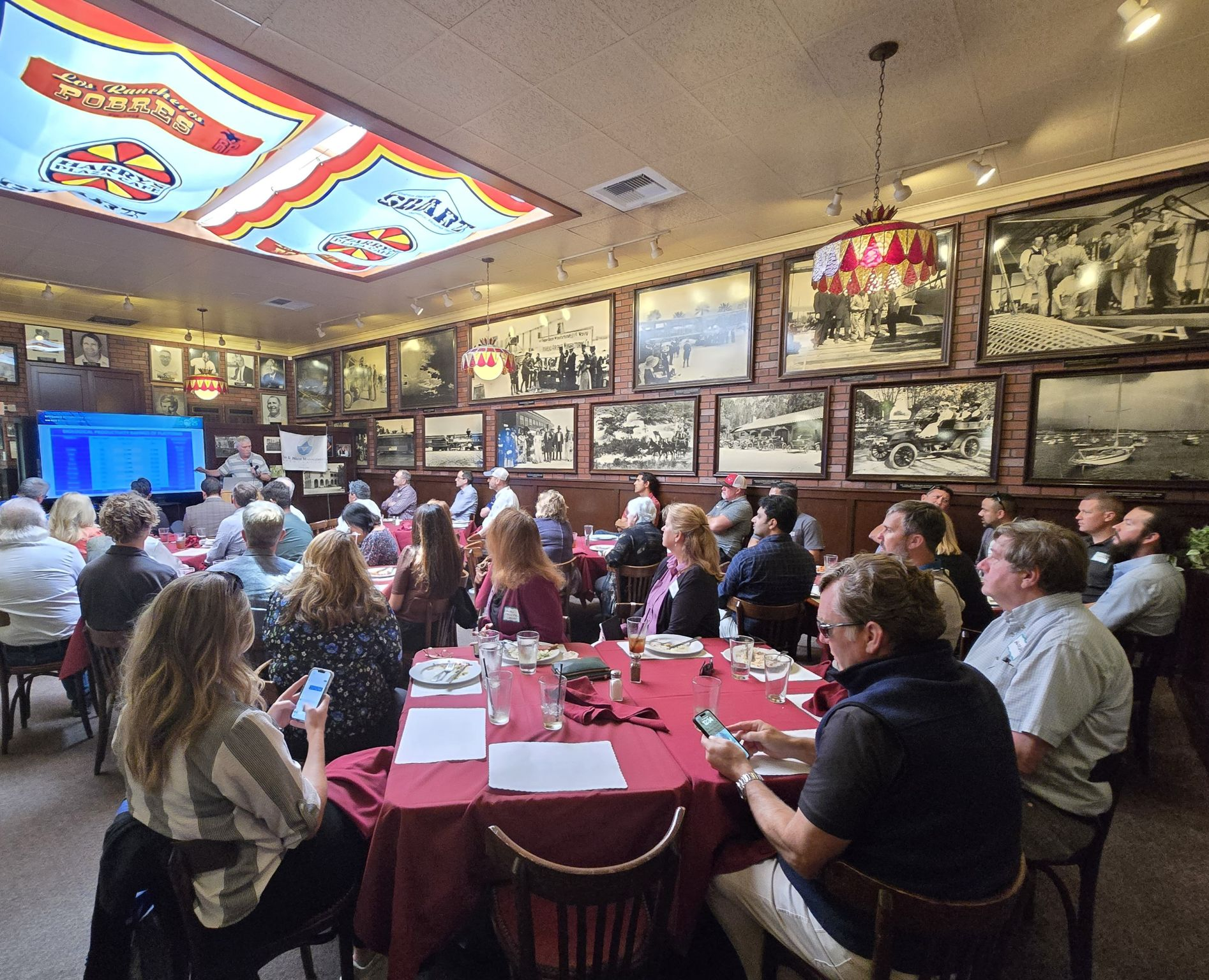
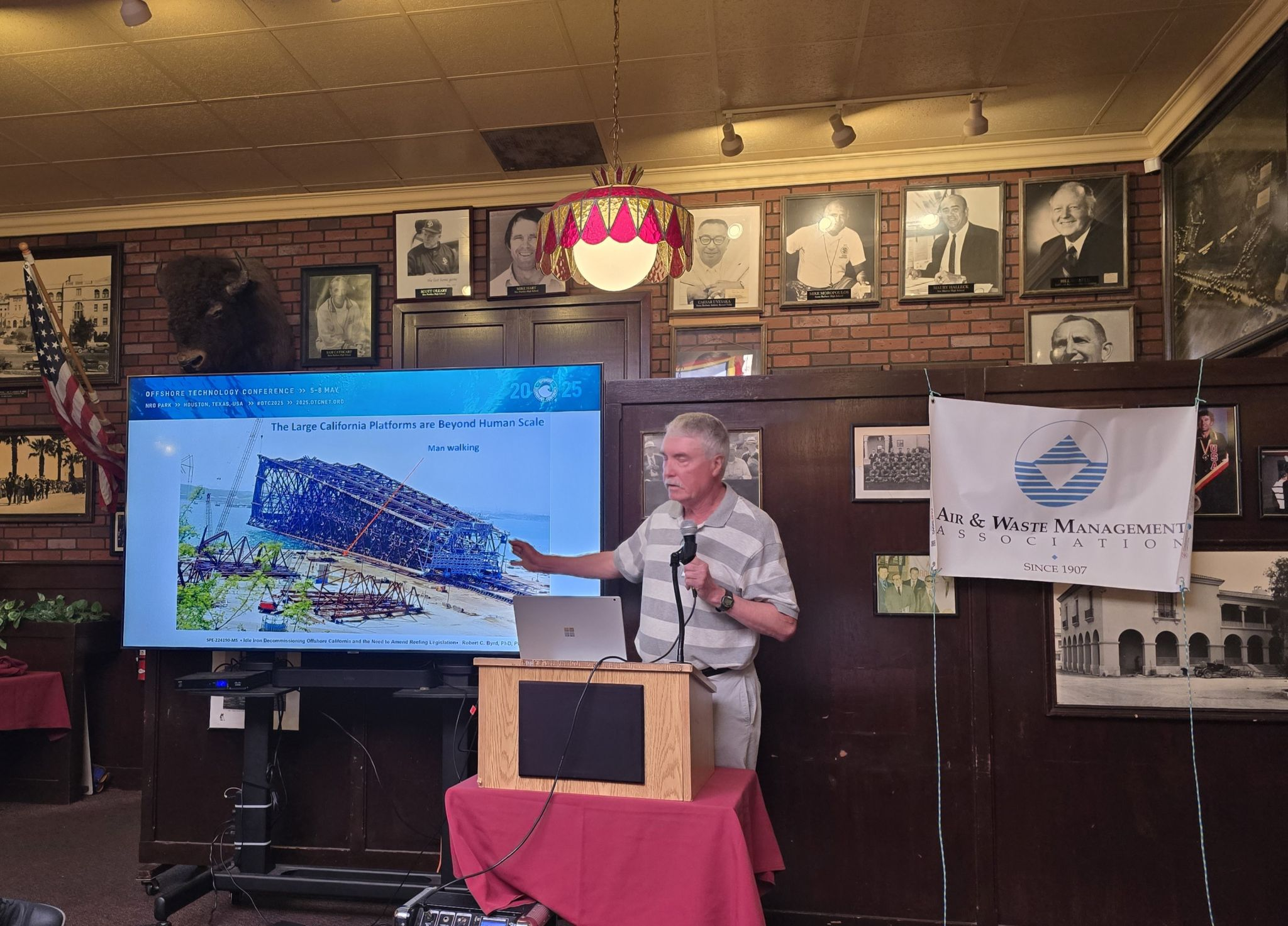
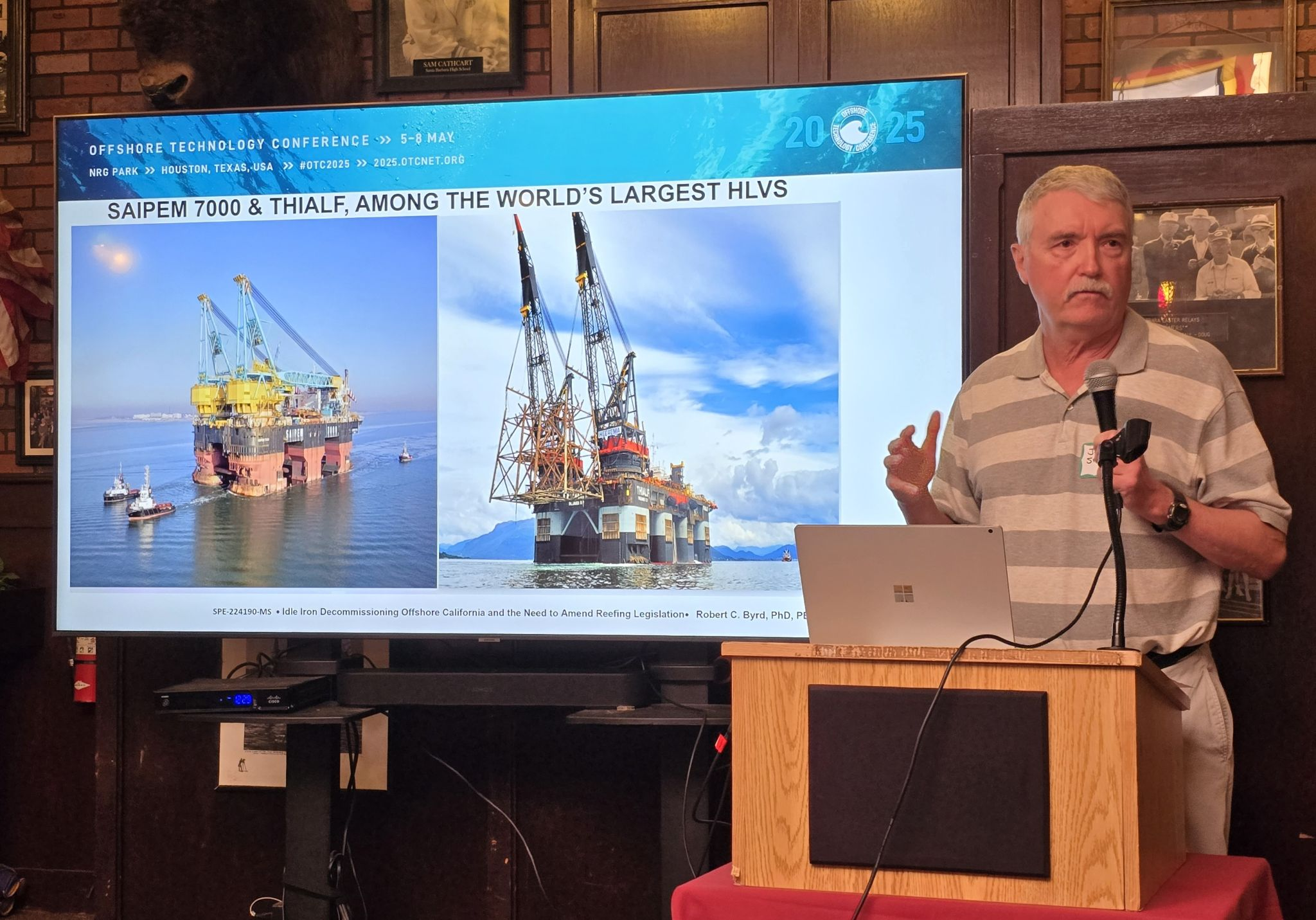
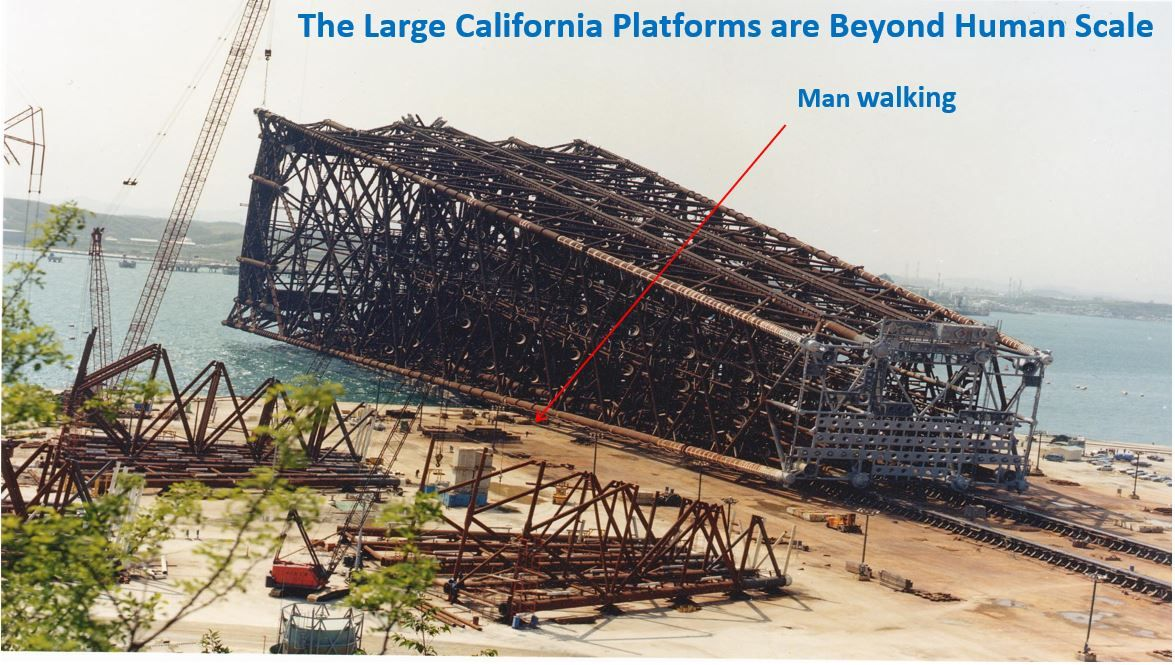
Sharing pictures from John Smith’s excellent decommissioning presentation at the Western States Petroleum Assoc. luncheon in Santa Barbara in May. You can view or download the presentation here.

Read Full Post »

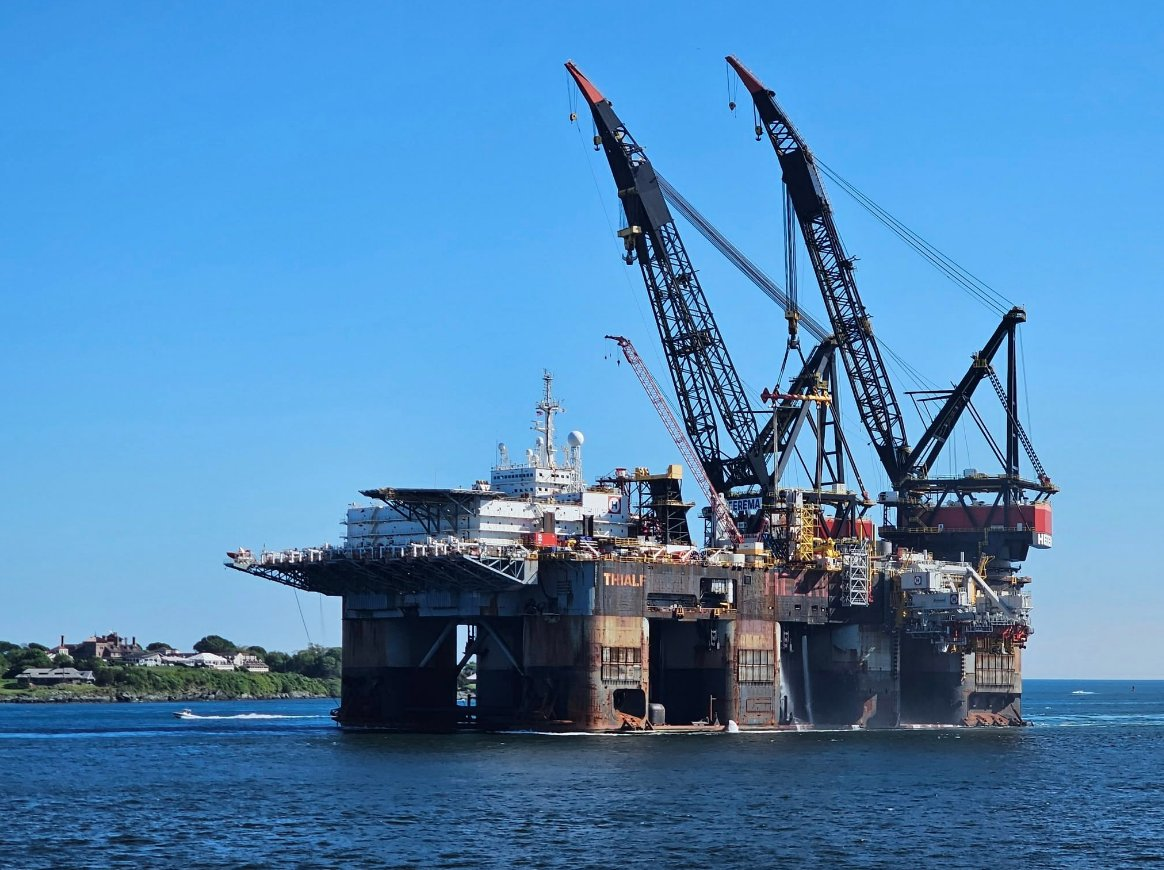
Thialf: a character in Norse mythology who was Thor’s servant.

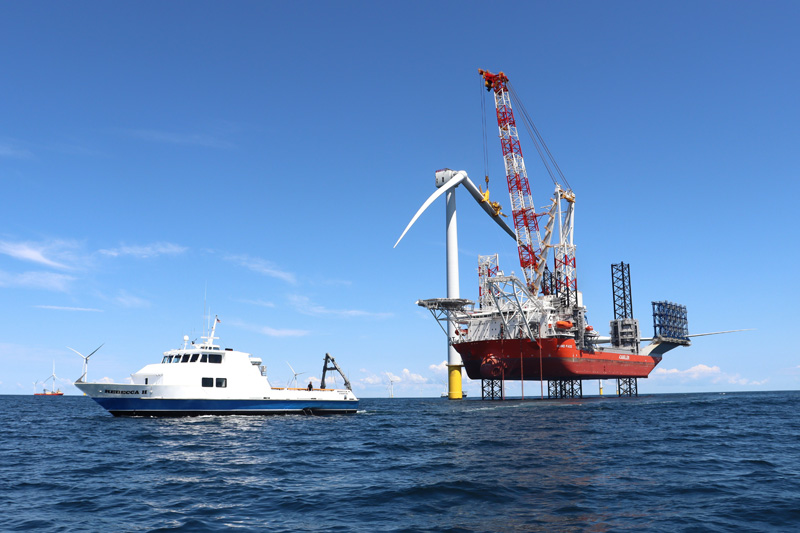
The Heerema Thialf, a semi-submersible crane vessel (SSCV), is a rather massive presence in coastal waters. The vessel is 661 feet long and 470 feet high, with a lifting capacity of up to 14,200 metric tons, and is the second-largest of its kind.

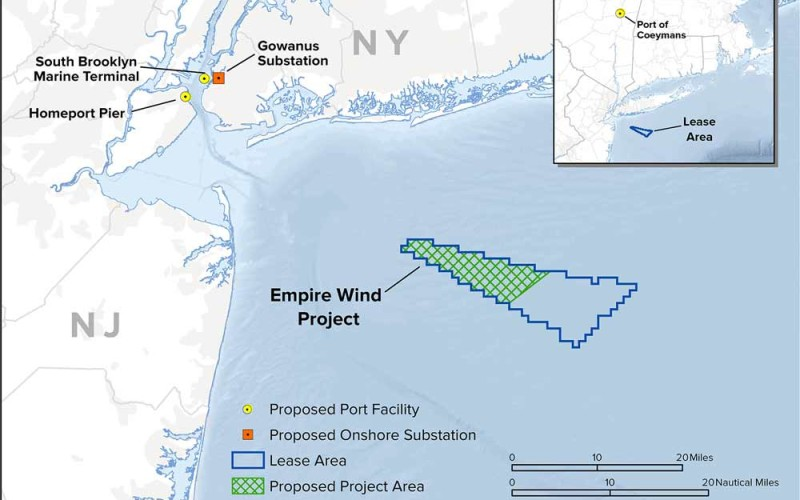
The Thialf, which set a world record in 2000 by lifting the 11,883-metric-ton Shearwater topside structure in the North Sea, will be driving piles for 54 Vestas 15 MW wind turbines and a substation structure that are part of Equinor’s controversial Empire Wind project.

John Smith tells me that the Thialf is one of the heavy lift vessels being considered for removing California offshore oil and gas platforms. The vessel is too large for the Panama Canal and would have to make the trip around South America or across the Pacific, depending on where it was last working.

The Thialf’s day rate has not been disclosed, but is likely greater than $500k. Equinor claimed to be losing $50 million/week when the project was paused. Thialf costs were presumably a significant chunk of those losses.

Read Full Post »

John Smith’s excellent decommissioning presentation at the recent Western States Petroleum Assoc. luncheon in Santa Barbara is attached. John used an amended version of Bob Byrd’s OTC powerpoint, adding slides on the proposed California Marine Legacy Act amendments.

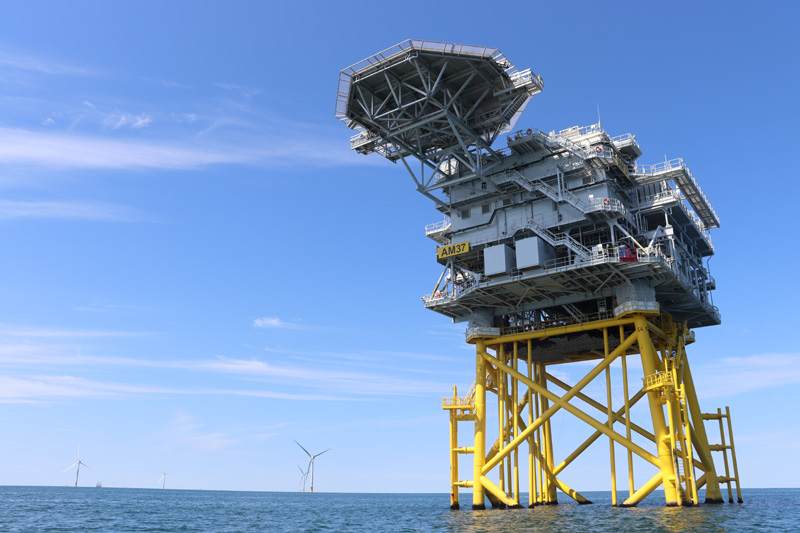
For those who have been following the Santa Ynez Unit story, Harmony, Heritage, and Hondo are the platforms in that unit. Platform Harmony, where production resumed on the date of John’s presentation (5/15), is in 1198′ of water and is one of the world’s largest offshore structures.

Read Full Post »

John Smith shared an outstanding paper (attached) that was presented by co-author Robert Byrd at the SPE Regional Meeting in Garden Grove, CA last week.  


John Smith: “My objective in writing the paper is to hopefully spur legislators to recognize the benefits of reefing and the legislative fixes required to facilitate reefing and the removal of aging infrastructure.  The California Department of Fish and Wildlife Habitat Lead was very complimentary of the paper and has distributed it to the Interagency Team which is developing a California Artificial Reefing Plan.”  

John adds: “They are in the process of creating a statewide artificial reef plan and you can sign up for updates and get more information. The California Artificial Reef Program (CARP) Plan won’t discuss the specifics of Rigs-to-Reefs but will be compliant with the National Fisheries Enhancement Act and National Artificial Reef Plan and meet the BSEE requirement of having an adopted state artificial reef plan. The intent is to add an addendum to the plan when resources become available to move Rigs-to-Reefs forward in California. You can check out the latest program update that further discusses the CARP Plan and Rigs-to-Reefs.”

Read Full Post »

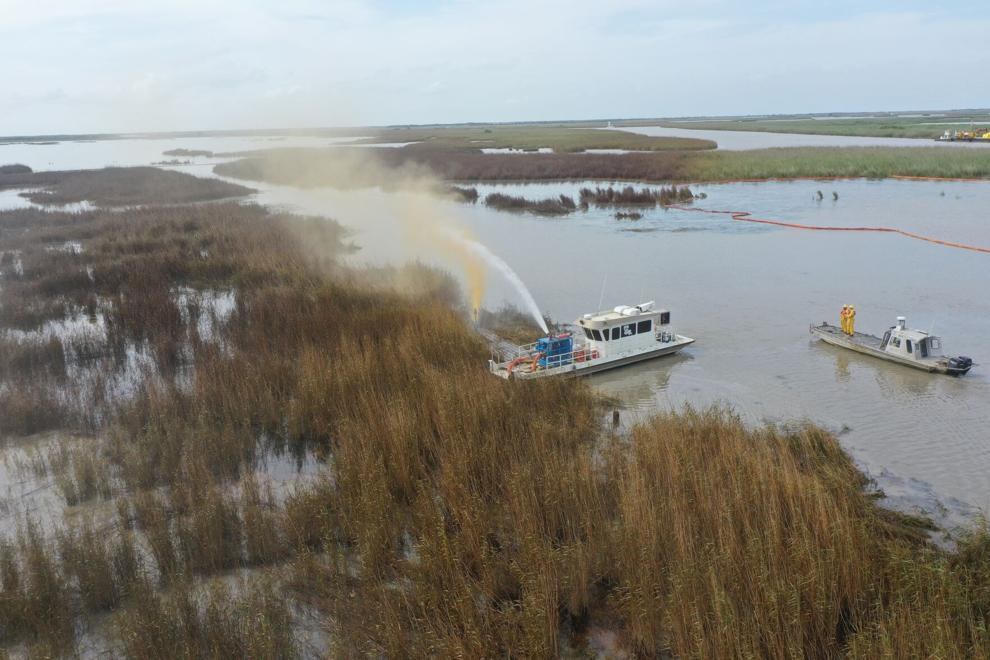
Coast Guard photo. Thanks to Lars Herbst for bringing this incident to my attention.

In what the Coast Guard is describing as an “uncontrolled discharge” (euphemism for blowout), an 82-year-old oil well has been spewing oil, gas, and water into the coastal marshes of southern Plaquemines Parish, Louisiana, for more than a week.

In hopes of future production, prior and current owners had elected not to permanently plug the well, apparently with the State’s acquiescence.

The well is currently operated by an affiliate of Spectrum Energy. Typical of these situations, the previous owner, Whitney Oil and Gas, was in bankruptcy.

The Coast Guard has taken over the response and has accessed the Oil Spill Liability Trust Fund.

We don’t need relaxed decommissioning and financial assurance requirements. We need a cooperative Federal, State, and industry effort to ensure that wells are plugged in a timely manner and that financial assurance is provided to protect the public interest.

Read Full Post »

The U.S. Department of the Interior today (5/2/2025) announced its intent to “update” the Bureau of Ocean Energy Management’s 2024 Risk Management and Financial Assurance for OCS Lease and Grant Obligations Rule. 

Those who are concerned about minimizing the Federal government’s decommissioning risk exposure should closely monitor this process. Some companies and their political allies have sought to minimize the financial risks associated with plugging wells and removing facilities. As a result, it has been necessary to defend BOEM from unwarranted commentary about decommissioning issues and the financial assurance rule. Stay tuned!

Read Full Post »

the early years

Remember that Chevron was once Standard Oil of California. The attached WSJ article discusses the ugly divorce after all these years.

Chevron tired of California’s attempts to dictate corporate strategy. Per Chevron CEO Mike Wirth:

“Putting bureaucrats in charge of centrally planning key segments of the economy hasn’t worked in other socialist states,” Wirth said in a Nov. 1 call with investors. “I doubt it will be any different in California.”

California wanted Chevron to commit to the State’s energy agenda:

Chevron has a future in clean energy in California. They can join us in our steady, long-term transition to a state powered by clean energy,” said Daniel Villaseñor, a spokesman for the governor’s office.

California wanted the interests of shareholders to be subordinate to the State’s carbon goals:

Newsom said Wirth had invested far more in shareholder payouts than in developing low-carbon energy.

Other State actions that contributed to the divorce:

  • accused Chevron and other companies of price gouging
  • accused Chevron, as a fossil fuel producer, of indirectly causing tragic fires
  • banning the sale of gasoline-powered cars by 2035
  • rules that increased gasoline prices
  • lawsuit alleging climate change deception

Not mentioned in the article are the costly challenges Chevron and others are experiencing in decommissioning offshore platforms.

Read Full Post »

PNAS: “among the most productive marine fish habitats globally”

Secretarial Order No. 3418 identified energy policies and regulations requiring immediate Interior Dept. review. A policy decision that should be added to the list is BSEE’s Record of Decision (ROD) for the Programmatic Environmental Impact Statement on Pacific OCS Decommissioning.

Inexplicably, BSEE’s ROD designates the most environmentally harmful, unsafe, and costly alternative as the “preferred alternative.” The decision is contrary to the opinions expressed by the leading experts on the ecology of California offshore platforms, most notably Dr. Milton Love of the University of California at Santa Barbara.

Why did BSEE select alternative 1 (complete removal) when their $1.6 million EIS acknowledges that alternative 2 (partial removal) is environmentally preferable? Was their decision influenced by activists who support the alternative that is most punitive to the industry they despise?

The Interior Dept. needs to immediately review this decision so that stalled decommissioning projects can move forward in a manner that is most efficient and best protects “the most productive marine habitats per unit area in the world.”

beneath Platform Gilda, Santa Barbara Channel

On December 7, 2023, the Bureau of Safety and Environmental Enforcement (BSEE) issued a Record of Decision (ROD) recommending the full removal of California’s 23 offshore oil platforms in federal waters, following a Programmatic Environmental Impact Statement (PEIS) conducted to assess decommissioning options for platforms, pipelines, and other related infrastructure. However, upon close review, the PEIS and ROD appear to have reached misguided and detrimental conclusions due to critical oversights in their analyses.” Asher Radziner, Montecito Journal

More posts on California decommissioning

Read Full Post »

Check it out!

Of particular interest are mandated reviews of the:

  • RIsk Management and Financial Assurance Rule: Those who want to gut this rule should come to the table with proposals that better protect the taxpayer from decommissioning liabilities. Pretending that decommissioning financial risks don’t exist or that they are someone else’s (or the govt’s) problem is unacceptable.
  • 5 Year leasing program – This review is urgently needed. See this and this!
  • BOP/Well Control Rule – This keystone safety rule has undergone multiple reviews in recent years. Because of the rule’s importance, further review for continuous improvement purposes may nonetheless be warranted. Here are the blog comments on the current version of the rule.

Not on the list, but should have been: A review of the fragmented regulatory regime for offshore pipelines, and the outdated and inconsistent regulations.

Read Full Post »

After a zero fatality year in 2023, the first in at least 60 years, Jason Mathews of BSEE advises that one worker was killed during US OCS oil and gas operations in 2024.

The fatality occurred during decommissioning operations on the Helix D/B EPIC HEDRON at Talos Energy’s Ship Shoal Block 225 “D” platform in the Gulf. The platform was to be reefed in Eugene Island Block 276.

The victim, who worked for Triton Diving Services, was moving hoses on the port side of the barge and got caught between the bulwark and counterweight of the crawler crane (see picture below).

The victim’s family have filed a wrongful death lawsuit against Helix Energy Services and Triton Diving Services. The plaintiffs assert that prior to the crane movement the crane operator and crew had not undertaken measures to assure that the crane’s swing area was clear of other crew members. Per their filing, Triton and Helix were negligent as follows:

They further assert that:

The incident remains under investigation by BSEE.

Read Full Post »

« Newer Posts - Older Posts »