Feeds:
Posts
Comments

Archive for the ‘accidents’ Category

Historically, falls are the most common cause of offshore injuries and fatalities, and hazardous grating is a leading contributing factor to these incidents.

BSEE’s risk-based inspection and safety alert programs have effectively drawn attention to grating risks. Attached is a recent alert describing a grating incident that could have been fatal.

A worker installing a pump in a skid above unsafe grating was kneeling on scaffolding boards. The tip of his boot was on the corroded grating when it suddenly gave way. The worker was able to grab a nearby section of piping to support himself. The 36″ x 36″ piece of grating collapsed and fell into the water.

Read Full Post »

BSEE statement:

BSEE’s report on the initial (7/13/2024) blade failure has still not been released.

Read Full Post »

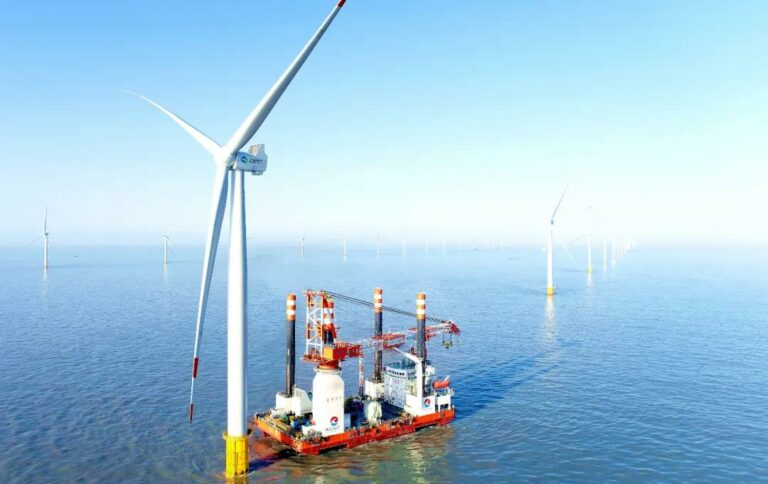
The same Vineyard Wind turbine blade that failed last summer has now been struck by lightning:

Lightning struck the fractured stub of Vineyard Wind’s broken turbine blade in the early morning hours on Friday (2/27), according to representatives from Vineyard Wind and the Coast Guard. It was the remnants of the broken blade that snapped this July that were still attached to the turbine.”

It appears the town (Nantucket) was not informed of the lightning strike by Vineyard Wind until it received media inquiries about it, over 48 hours after it happened.”

More on the Vineyard Wind saga.

Read Full Post »

Electric cables from shore power the Johan Sverdrup field offshore Norway

At least 11 Baltic cables have been damaged in the last 15 months.

Politico.EU: “NATO will send around 10 ships to guard important underwater infrastructure in the Baltic Sea by the end of the week, Finnish newspaper Yle reported on Tuesday.

Why increase operating costs and expose platform operations to power disruption risks when there is no net environmental benefit?

Read Full Post »

Posted on Facebook by the Wayne County, Nebraska Sheriff’s Office:

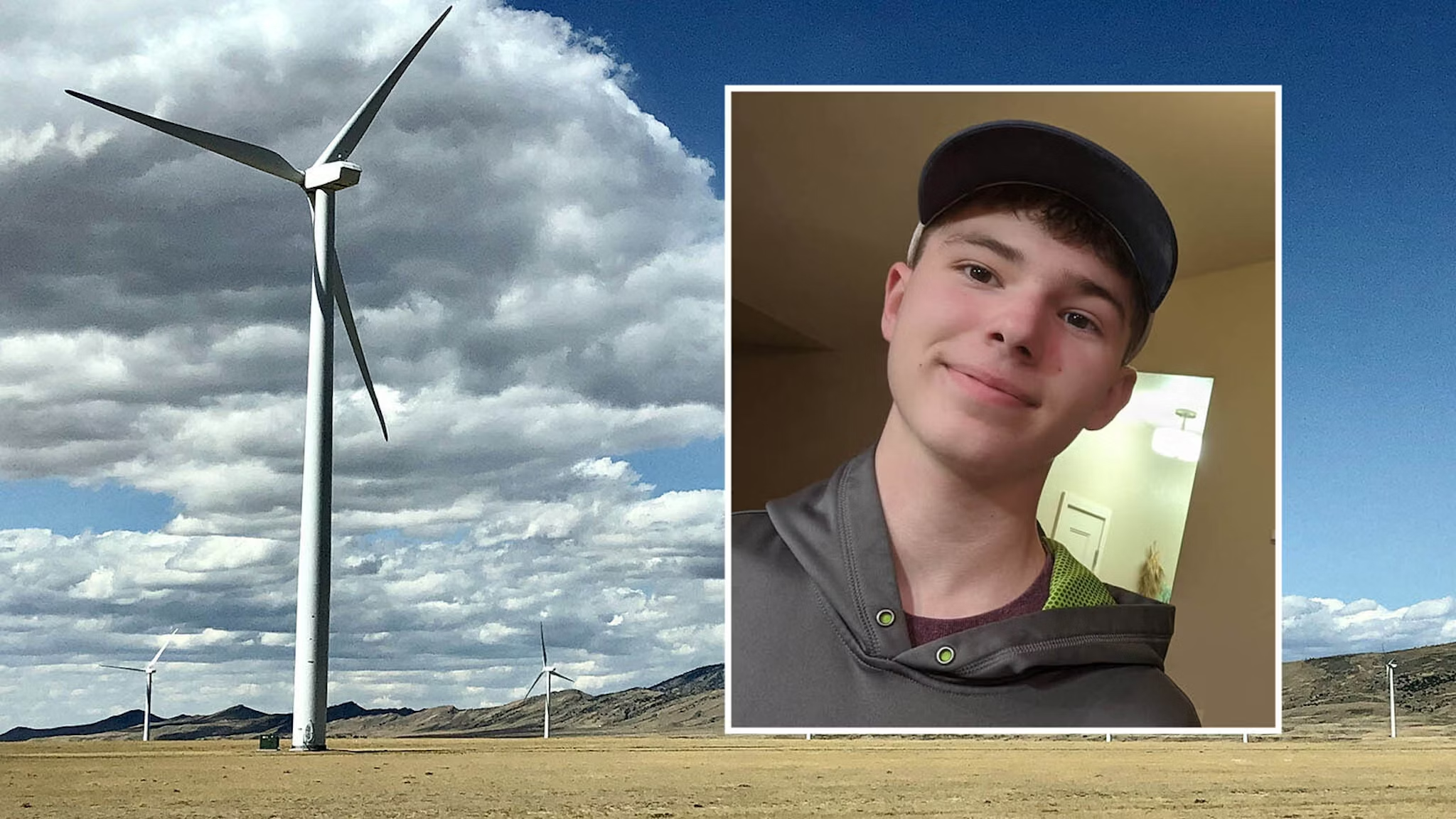
On 02-22-25, the Wayne County Sheriff’s Office responded to a report of two work-related fatalities.

South of Winside, NE, a wind turbine maintenance crew experienced an equipment failure, which resulted in two men falling from a turbine. Eddy Noriega Sebinet (age 46) and Raidel Justiz Noriega (age 37) were pronounced deceased at the scene.

The Wayne County Sheriff’s Office was assisted at the scene by the Winside Volunteer Fire Department.

The accident remains under investigation.”

Read Full Post »

Details on the Ocean Ranger disaster, 15 Feb 1982

Read Full Post »

Germany’s national elections are on 23 FEB. The Alternative für Deutschland (AfD) party, which has gained strength in the polls, supports a Nord Stream restart.

Denmark’s energy agency granted Nord Stream AG permission to conduct preservation work on the Nord Stream 2 gas pipeline in the Baltic Sea (Reuters). One of the two Nordstream 2 lines is undamaged.

-An Equinor executive stated on February 5, 2025, that the Nord Stream 1 pipeline is “permanently destroyed.”

-The Swiss canton of Zug extended the moratorium on debt restructuring for Nord Stream AG until May 9. The moratorium is seen as a way for the German government to preserve its influence over the future of the pipeline. If the company is liquidated, investors, including the German state-owned energy firm Uniper, would lose control over the pipeline and the considerable funds invested by German taxpayers in its construction.

-Consideration is being given to transporting hydrogen from Finland via the undamaged Nord Stream 2 string. (The H2 might have to be mixed with methane to prevent embrittlement.)

-Resumption of Nord Stream flow could be part of a Russia-Ukraine ceasefire deal (along with Ukraine’s rare minerals).

-American investor Stephen Lynch continues his pursuit of the Nord Stream 2 pipeline.

Chat GPT was asked what the likelihood was of the US orchestrating the Nord Stream sabotage. Response (see below): 60-80%

Read Full Post »

Johan Sverdrup field, 155 km from shore

On Tuesday, Equinor halted all production from the Johan Sverdrup field, western Europe’s biggest producer. An outage in the offshore power system has been cited as the cause.

A Jan. 26, 2022 BOE post questioned Norway’s electrification policy for offshore platforms. Another post discussed a loss of power to the Sverdrup field only 10 weeks ago.

In addition to the production losses, these incidents increase safety risks and onshore electricity prices with no net environmental benefit.

Hopefully, the investigation reports will be posted so that the lessons learned can be shared.

Electric cables from shore power the Johan Sverdrup field

Read Full Post »

The NTSB has finally issued their report (attached) on the 12/29/2022 helicopter crash that resulted in 4 fatalities at Walter’s West Delta 106 A platform. The NTSB report on the Huntington Beach pipeline spill took a comparable amount of time (26 months) to complete. By comparison, the lengthy and complex National Commission, BOEMRE, Chief Counsel, and NAE reports on the Macondo blowout were published 6 to to 17 months after the well was shut-in.

The gist of the NTSB’s findings is pasted below.

The report summarizes operations standards, but does not consider the associated operator/contractor safety management systems that are intended to prevent such incidents. The report notes that:

Was the contractor/operator aware of these deviations from company policy? Should they have been?

The report implies that human (pilot) error was the cause of the dynamic rollover, but fails to assess the organizational controls that are intended to prevent such errors. How was a pilot with 1667.8 flight hours (1343.8 as the PIC), who had made 23 trips to this platform, repeatedly making fundamental positioning and takeoff errors?

The report also notes that:

This is interesting wording given that the perimeter light was identified as the pivot point, one of the 3 requirements for a dynamic rollover. Why wasn’t that violation observed by the operator/contractor and corrected? What helideck inspection procedures were in place? Did NTSB consider the fragmented regulatory regime for helicopter safety, particularly with regard to helidecks?

Read Full Post »

Pioneering offshore engineer J.L. Daeschler, a Frenchman who lives in Scotland and has worked on drilling rigs worldwide, shared his 1974 training certificate signed by Bill Hise, the first director of the Blowout Prevention and Well Control Training Center at LSU. JL recalls his training:

The LSU well control course was new and very well organized. Training options were limited at that time. LSU took a step forward and incorporated equipment donated by Cameron Iron Works, Armco Steel /National, VETCO, and others.

The course was split between indoor class room style and outdoor training on a live well to remind us of the real things, like hard hats, tally books, and safety shoes.

LSU had a 1200 ft vertical well and a small 2″ diameter gas injection line to create a bottom hole gas kick, using a nitrogen truck as the supply. (note: the live well was a first for any well control school.) You had a choice of several manual chokes.  I selected the Cameron Willis choke to circulate the gas kick out with no increase in mud weight (drillers method).

The mud return level, kick detection, and general management of the operation were realistic as if on a rig. The gas would whistle and escape thru a vent line.

The training was simple and effective in that proper well control procedures were learned. In the process, there were many errors. Mud was seen flying out of the mud shaker/pits. School management would bring things under control and explain the errors that were made !!!

Given the importance of minimizing drilling risks, the Minerals Management Service (MMS) was the primary funder of the LSU facility. MMS predecessor, the Conservation Division of USGS, first established well control training requirements in 1975 (pasted below).

LSU’s well control center video:

Read Full Post »

« Newer Posts - Older Posts »