I never liked the label “slips, trips, and falls” (STFs) because the words “slips and trips” trivialize the most common cause of serious offshore casualties. Perhaps, the name of this category should be simplified to “falls,” because that is the consequence of concern.
Unfortunately, STFs persist at an unacceptably high rate. In the attached Safety Alert, BSEE informs that between May 2024 and April 2025, 22% of all injuries were attributed to STFs. Many of these injuries were classified as major.
BSEE conducted focused inspections of 19 facilities (17 different operators) to better assess the STF problem. They found common deficiencies in training, hazard identification, and other preventive measures. These deficiencies and the associated safety management recommendations are listed in the Safety Alert.
Kudos to BSEE for their excellent Safety Alert program. Unfortunately, unacceptable delays in updating their incident tables and OCS performance measures data make it difficult to assess industry wide safety performance trends. The most recent data are for 2023, and some of those data raise concerns. For example, the number of fires (152) was the highest in the history of the performance measures data set (dates back to 1996) by some margin. What happened in 2024 and the first half of 2025? These data should be readily available and posted in a timely manner. No offshore facility fire is trivial.
NRW contracted with Array Petroleum to operate the former Cox Assets. Array subsequently sued NRW, asserting that NRW received $78,000,000 in revenue, but disbursed only about $48,000,000 to pay Array’s invoices and those of the subcontractor.
The court filing claimed that NRW failed to pay Array $2.5 million, the subcontractors $10.7 million, and the United States $12 million. A large share of the subcontractor costs were probably for well operations given that 21 Array workover applications were approved in 2024 and 2025. The $12 million due to the Federal government is reportedly for royalty payments. Were any revenues set aside for decommissioning liabilities?
Array’s lawsuit was dismissed by the court on January 3, 2025, after a joint motion to dismiss was filed by the defendants. Information on the reasons for the dismissal is not publicly available.
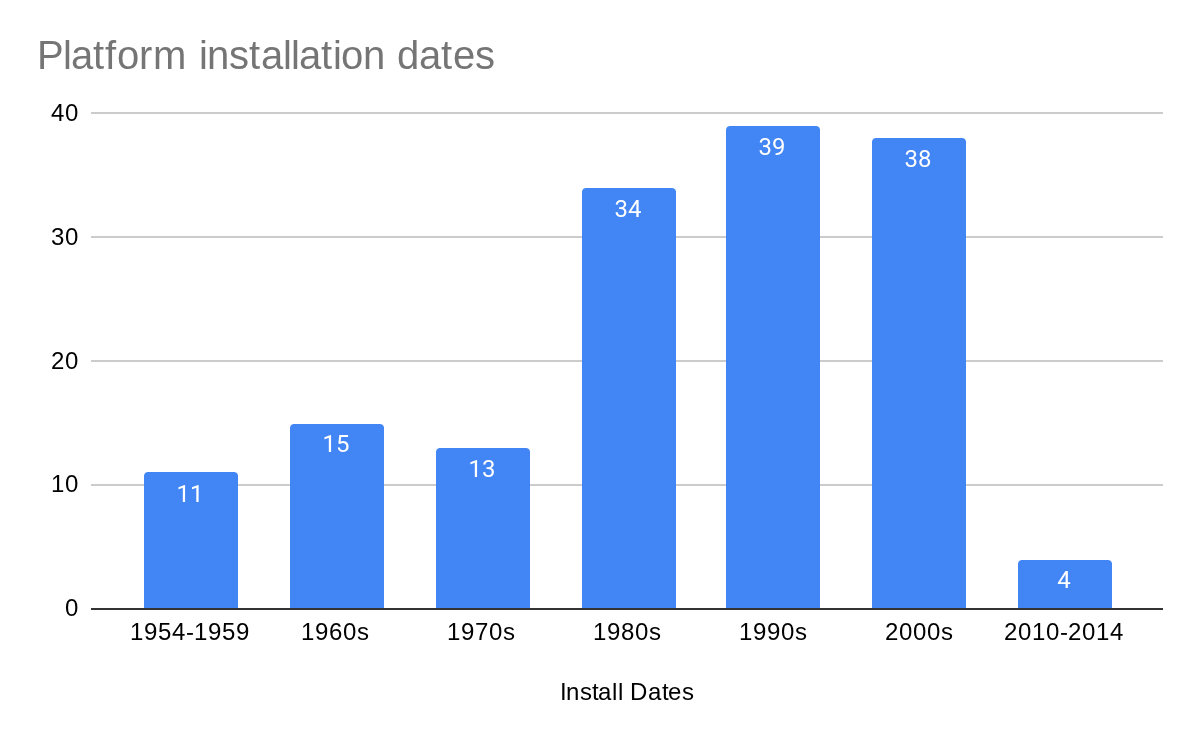
Old platforms: According to BOEM records, Array operates 154 platforms previously owned by Cox. These platforms are in the Ship Shoal, South Marsh Island, and West Delta areas of the Gulf of America. Most are >30 years old and four are more than 70 years old (see chart below). 41 are classified as major structures including 15 of the 26 platforms installed in the 1950s and 1960s. 44 are manned on a 24 hour basis. 79 have helidecks. Massive decommissioning liabilities loom.
Violations: NRW/Array ranks 37th out of 42 companies in GoA oil production (2025 YTD) and 36th out of 42 companies in gas production, but leads the pack in Incidents of Noncompliance (INCs):
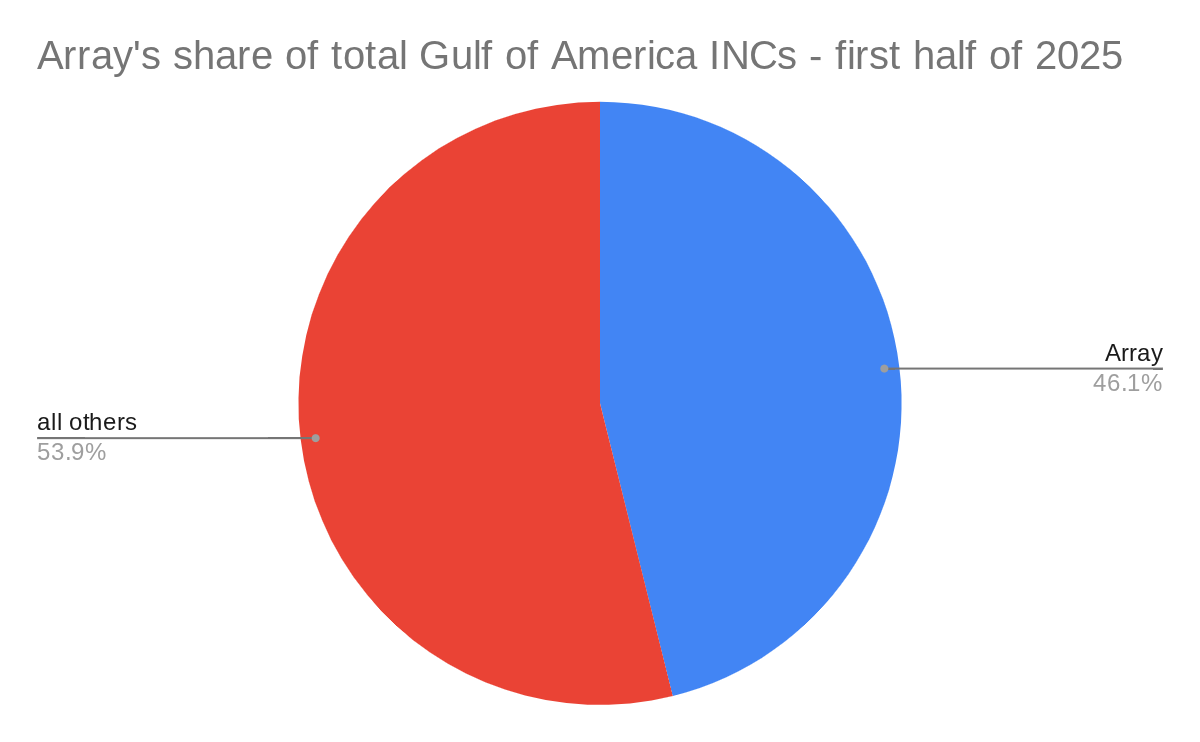
Array accounted for nearly half of all GoA INCs issued in the first half of 2025 (chart below).
Array was issued 9 times more warning INCs (311) than any other operator. Apache was second with 34.
There are many small and mid-sized companies that are responsible operators. Their participation in the OCS program should be encouraged. However, others have demonstrated, by their inattention to financial and safety requirements, that they are not fit to operate OCS facilities.
The growth of Fieldwood, Cox, Signal Hill, and Black Elk was in part facilitated by lax lease assignment and financial assurance policies.
Operating companies should have to demonstrate that they can operate safety and comply with the regulations before they are approved to acquire more properties.
Expect the ultimate public cost of the Cox bankruptcy, in terms of decommissioning liabilities and the need for increased oversight, to be large.
The Federal govt (Justice/Interior) should strongly oppose bankruptcy court asset sales that increase public financial, safety, and environmental risks.
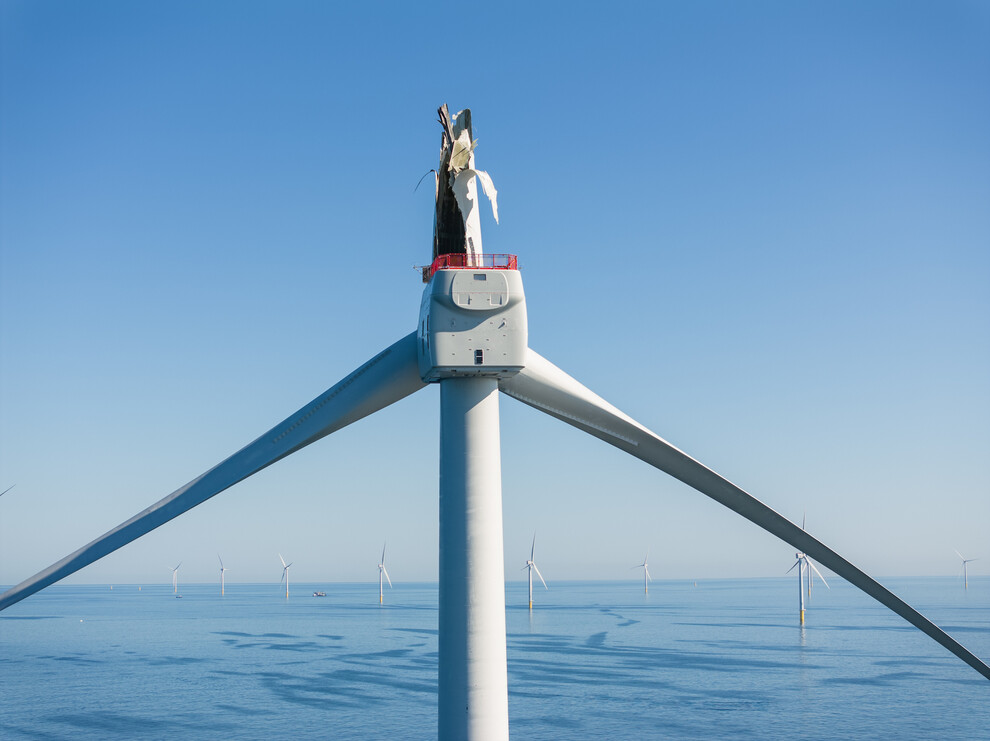
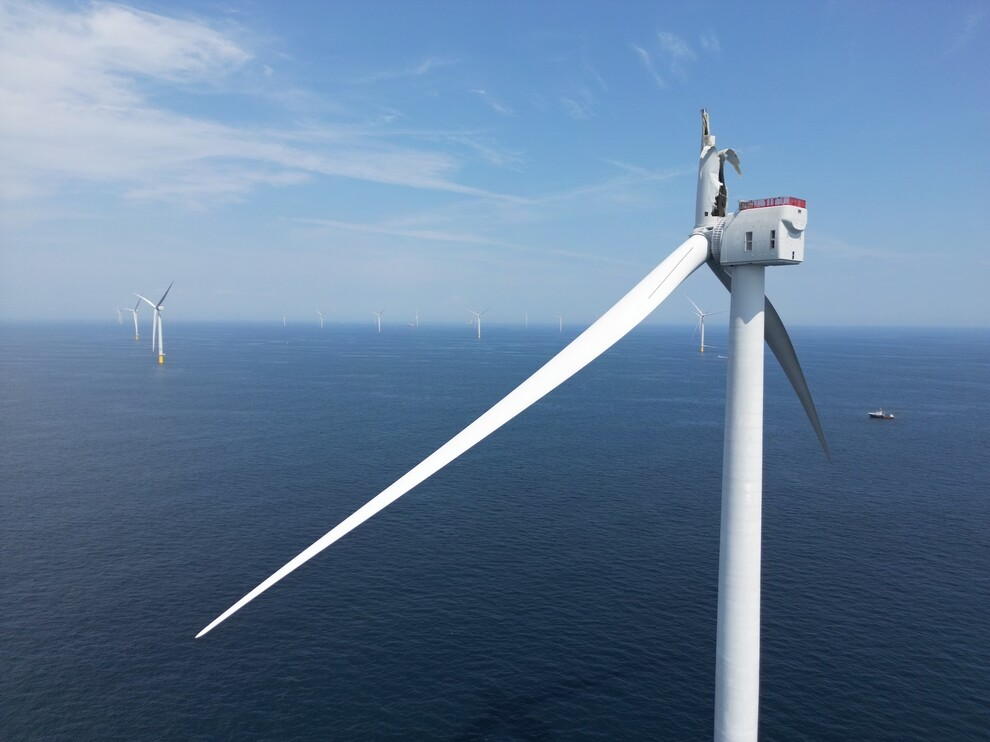
Nantucket Current:Nantucket officials and attorneys will hold a press conference next Tuesday, July 29th, at 9:30 a.m. regarding “Vineyard Wind’s failure to meet its legal and public commitments to the community.”
“BSEE’s comprehensive and independent investigation is ongoing,” an agency spokesperson wrote in an email to the Current on Tuesday. “There is no timetable for the completion of the investigation, as BSEE focuses on ensuring that the investigation is thorough and complete.”
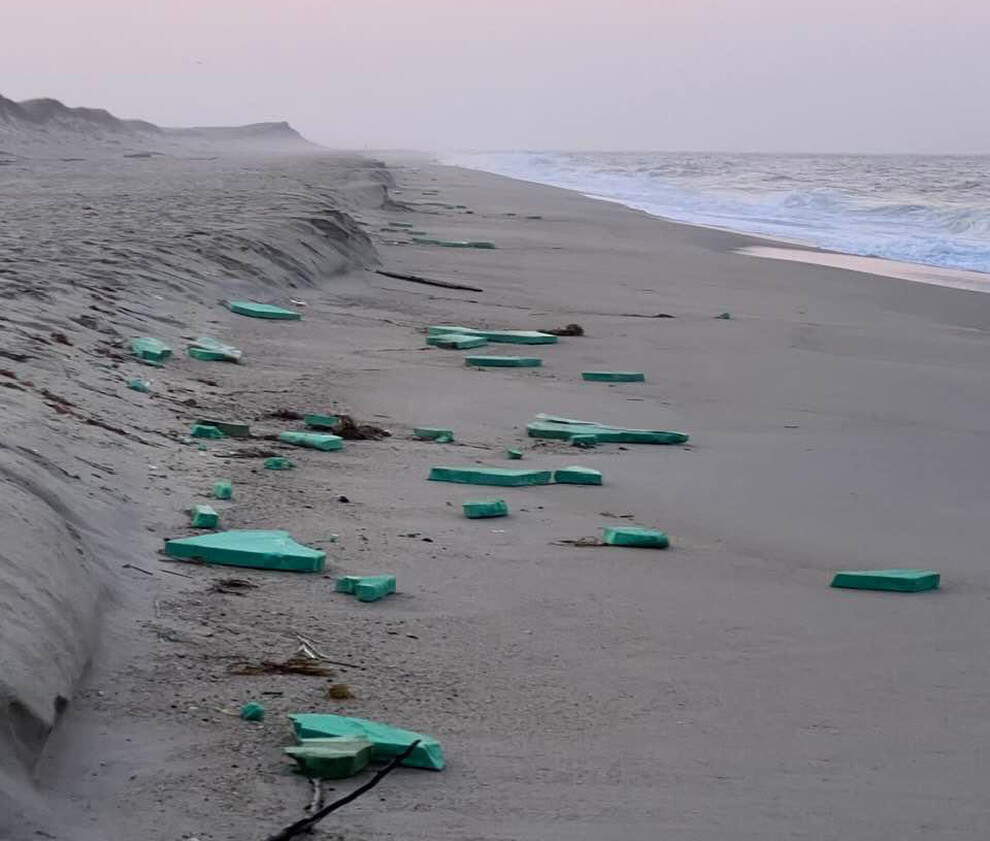
Debris from the failed Vineyard Wind blade littering the south shore of Nantucket in July 2024. Nantucket Current photo.
Nantucket reached a settlement agreement (attached) with turbine manufacturer GE Vernova (GEV), praising that company while criticizing Vineyard Wind (VW), the lessee and operator:
“The Town of Nantucket commends GE Vernova for its leadership in reaching this agreement. By contrast, the Town has found Vineyard Wind wanting in terms of its leadership, accountability, transparency, and stewardship in the aftermath of the blade failure and determined that it would not accept Vineyard Wind as a signatory to the settlement,”the town stated Friday morning.
Comments:
For a relatively modest sum ($10.5 million) paid by the contractor (GEV), the agreement further limits the Town’s ability to hold Vineyard Wind, the lessee and operating company, accountable. See sections 4, 5(a), and 9 of the agreement.
The Town’s ability to challenge the project was already compromised by their unpopular “Good Neighbor Agreement.”
What ever happened to operator responsibility? This fundamental tenet of the OCS oil and gas program also applies to offshore wind. Vineyard Wind should be the party that is fully accountable for the damages associated with their project. VW can seek compensation from GEV, but VW is the accountable party.
Can you imagine if BP had attempted to stay on the sidelines while Transocean and other contractors settled claims associated with the Macondo blowout? Unthinkable!
Nantucket should have insisted on VW’s participation, rather than excluding them.
What does the lessor, the Federal govt, have to say about damage compensation? Are civil penalties forthcoming? When will we finally see the BSEE investigation report!
Given the investigation’s significance, not only for Vineyard Wind, but for other offshore wind projects planned or under construction, how is the delay in issuing the report acceptable?
Keep in mind that the lengthy and complex National Commission, BOEMRE, Chief Counsel, and NAE reports on the Macondo blowout were published 6 to to 17 months after the well was shut-in.
The Safety Alert is attached. Per BSEE, the fires resulted from an accumulation of gas caused by improperly installed or disconnected exhaust vent piping on gas starters.
Incident 1: Two workers sustained burns to the hands, arms, and face. BSEE investigators discovered that the engine’s air intake hose was disconnected, which may have allowed gas-enriched air to be drawn into the carburetor causing the backfire.
Incident 2: While attempting to start the gas engine of a pipeline pump, the lead mechanic sprayed ether into the engine’s carburetor. The exhaust vent piping for the starter had not been installed. The combination of the gas-rich atmosphere and ether caused the engine to backfire and ignited the accumulated gas. The lead mechanic, sustained burns to his face, arms, and hands.
The Alert includes important recommendations for proper venting, mechanical integrity awareness training, maintenance, and the use of gas detectors and a temporary fire watch during engine startup.
As explained in the attached Safety Alert, BSEE’s risk-based inspection program has identified deficiencies in safety device bypass practices including:
inadequate documentation
inoperative data history software
bypassing more devices than is necessary
bypassing devices for longer than necessary
missing audit documentation
mistakenly bypassing the entire safety system during production
The regulations restricting the bypassing of safety devices are core elements of OCS regulatory and operator management programs. Because they are critical to process safety, these requirements are widely supported and strictly enforced.
Attached is the full NTSB report. Here’s what happened:
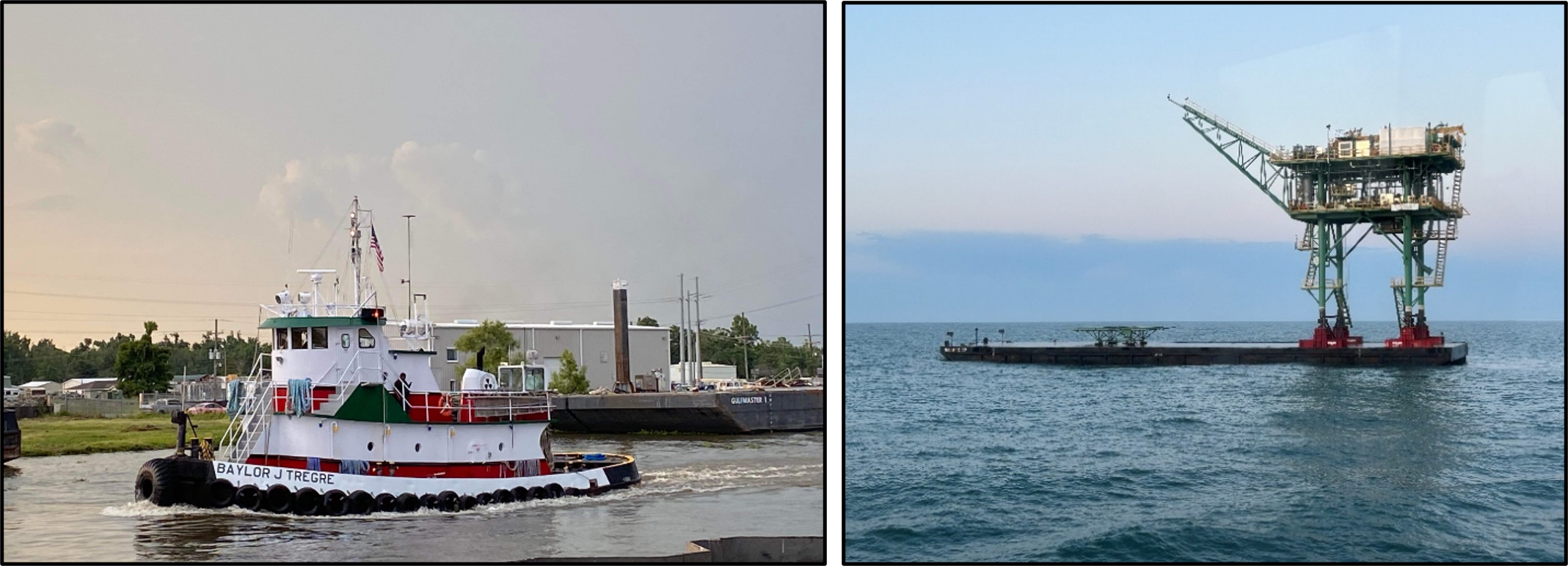
In May 2024, the Baylor J. Tregre tugboat was towing a platform on the barge MARMAC 27 to Brazos Block 538 in the Gulf of America.
The tug capsized in stormy conditions.
The 4 crew members were rescued by the Coast Guard.
The NTSB determined that the probable cause of the capsizing was “the mate’s inability to maneuver the tow into the wind due to the overwhelming towline force generated by the towed barge during the sudden onset of severe weather, resulting in unrecoverable heeling.”
Comments:
Who knew? When a tugboat capsizes while towing a platform on a barge, endangering the crew, that’s a very serious incident. Yet there was no public announcement by the companies involved or the Coast Guard, and there was no media coverage following the incident (May 2024). The NTSB docket includes only the final investigation report.
The NTSB report says a production platform was being towed, but it was actually a gas transmission platform owned by Transco Gas Pipe Line Co. There is no production in Brazos Area Block 538, an unleased block.
Here and here are bits of information on the Transco’s Brazos Area 538 Platform modification project.
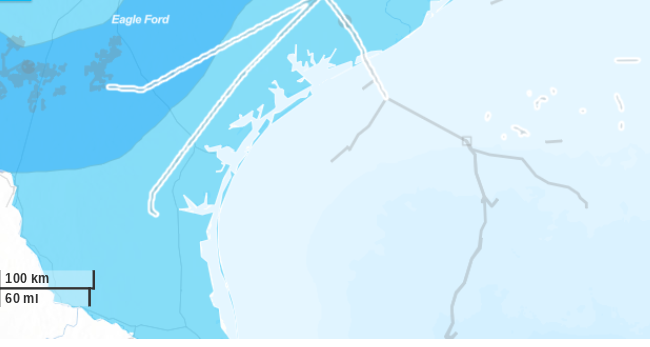
Per a 2007 article, Williams’ Seahawk gathering system, which collects deepwater gas production, connects at Brazos Block 538 with a pipeline that transports gas to the Transco processing plant in Markham, TX (see map below).
The NTSB report lacks contextneeded to understand the planning process, organizational factors, and timing/urgency of the project.
The NTSB report attributes the failure to the mate’s inability to respond to the weather conditions, but provides no information on the safety management system, risk assessment, job safety job planning process, crew training, and other project management factors.
Two of the crew members are suing Trinity Tugsalleging that they suffered personal injuries resulting from the negligence of Trinity and the unseaworthiness of the M/V BAYLOR J. TREGRE.
Deepwater gas gathering system connects with Brazos 538 transmission platform at the “Y” in the center of the screen.
Operator/licensee responsibility:The definitions correctly establish the operator or license holder as the responsible party. This means that in the event of a well blowout while drilling from a mobile drilling unit, the licensee/operator would be the responsible party. This aligns with the “operator responsibility” mantra that is fundamental to the US offshore program. Drilling and other contractors are managed by the operator and are the operator’s responsibility.
Unlimited liability: The liability section (Part VI) establishes an unlimited liability standard for the responsible party. As previously discussed in more detail, this is a daunting, open-ended obligation that would trouble permittees in any industry. The unlimited liability provision could preclude responsible independent operators, including Guyanese companies, from seeking licenses.
The unlimited liability standard (par. 17) is qualified with a provision (pasted below) that also favors major international companies.
The unlimited liability provision therefore does not seem to apply to parent companies idemnifying a project. This was a point of contention during the parliamentary debate. The Kaieteur News delves into the issue and is not entirely convinced by the Government’s defense. Their article closes as follows:
It is important to note that stakeholders have argued that since ExxonMobil Guyana Limited (the responsible party) does not have adequate assets, the burden of oil spill-related costs could be left on Guyana, especially in the absence of unlimited coverage from the parent company. These and other “flaws” have prompted Guyanese to urge President Irfaan Ali not to assent to the Bill, passed in the National Assembly on May 16, 2025. Be that as it may, the Ministry maintained that the “robust statutory framework now established protects Guyana and its people.”