Feeds:
Posts
Comments

Archive for August, 2026

AAPG explains:

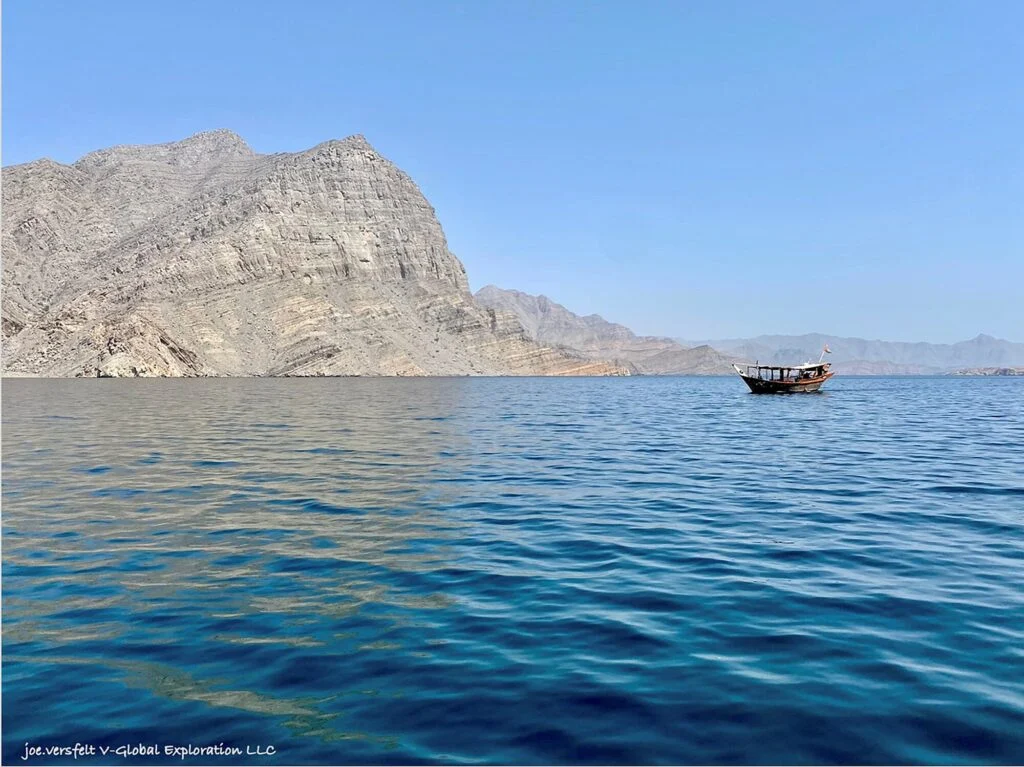
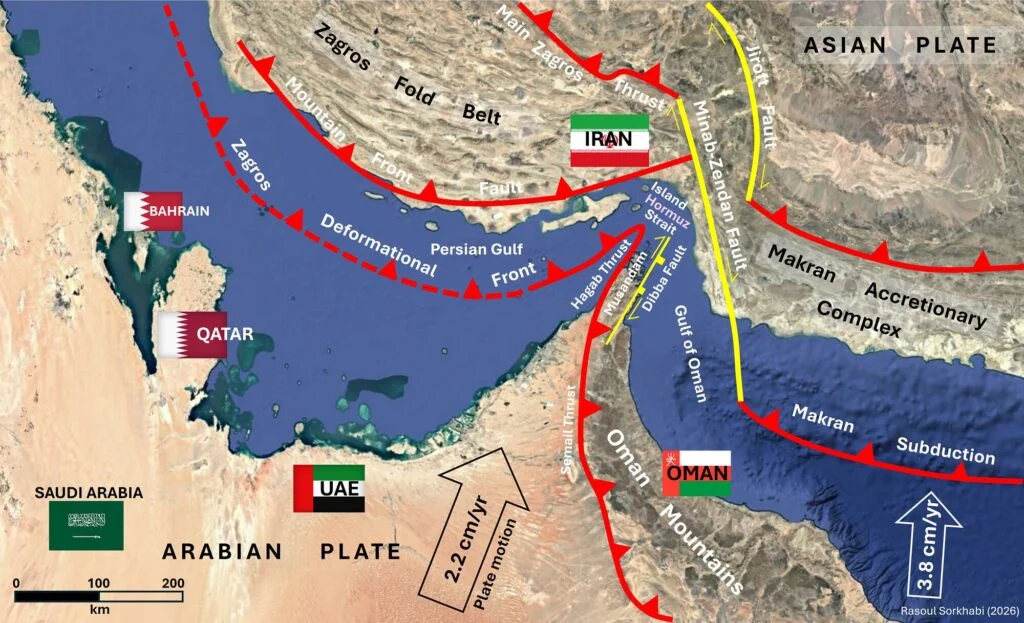
Contrary to what you might see or read on social media, the Strait of Hormuz has not “opened” by continental rifting between Iran and Oman. This waterway is the locus of converging plate tectonic interactions between the Arabian and Asian plates and offers a natural laboratory to study plate tectonic subduction and collision.

This narrow waterway, only 60- to 24-miles wide, is the passage for one-fifth of the world’s oil transportation, or about 20 million barrels per day. According to the International Energy Agency, 80 percent of this oil goes to Asian markets; however, any major disruption in oil flow impacts the global economy because of the international connectedness of the oil industry.

Upthrust of Jurassic-Cretaceous sediments of the vanished Tethys Ocean outcropped in Oman along the Hormuz Strait. Photo courtesy of Joe Versfelt.

Read Full Post »

The proposed revisions to the Arctic drilling regulations are a positive initiative that will improve the prospects for renewal of Beaufort and Chukchi Sea exploration.

In particular, removing the same-season-relief-well (SSRW) requirements in the current regulations is an essential regulatory action. The SSRW provision has the effect of precluding exploratory drilling while providing no added environmental protection and increasing operational risks. Given that there is at least a 50% chance that rig mobilization, relief well planning, drilling, repeated surveying, and plugging the flowing well would take more than the specified 45 days, a SSRW is not a legitimate well control option.

The preamble includes important questions for respondents. These questions are compiled beginning on p. 108 of the attachment. In particular, the comments on Subsea Isolation Devices (SSIDs) should be interesting. Given the required blowout preventer stack redundancy, it’s not clear to me that SSIDs would reduce blowout risk. They would however increase operational complexity.

For floating drilling operations in the Arctic and elsewhere, the focus needs to be on well design, integrity, and control.  Fortunately, by carefully verifying casing and cement integrity, ensuring complete barrier redundancy, and having standby capping and containment capability, the probability of a sustained oil blowout can be reduced to 106  or lower. 

Lastly for now, these regulations further demonstrate the importance of consolidating BOEM and BSEE in a single bureau.

Read Full Post »
The proposed revisions to the Arctic drilling regulations have just been posted and are attached for your convenience.

From a risk management standpoint, the current Arctic drilling rule, particularly the same season relief well (SSRW) provisions, is arguably the worst in the history of the OCS program. Regardless of the prospects for Arctic exploration, offshore drilling is not feasible under the current regulations. Hopefully, this proposal represents a significant improvement. More to follow after the text has been reviewed.

Read Full Post »

Interesting article by Amanda Van Dyke. Highly recommended.

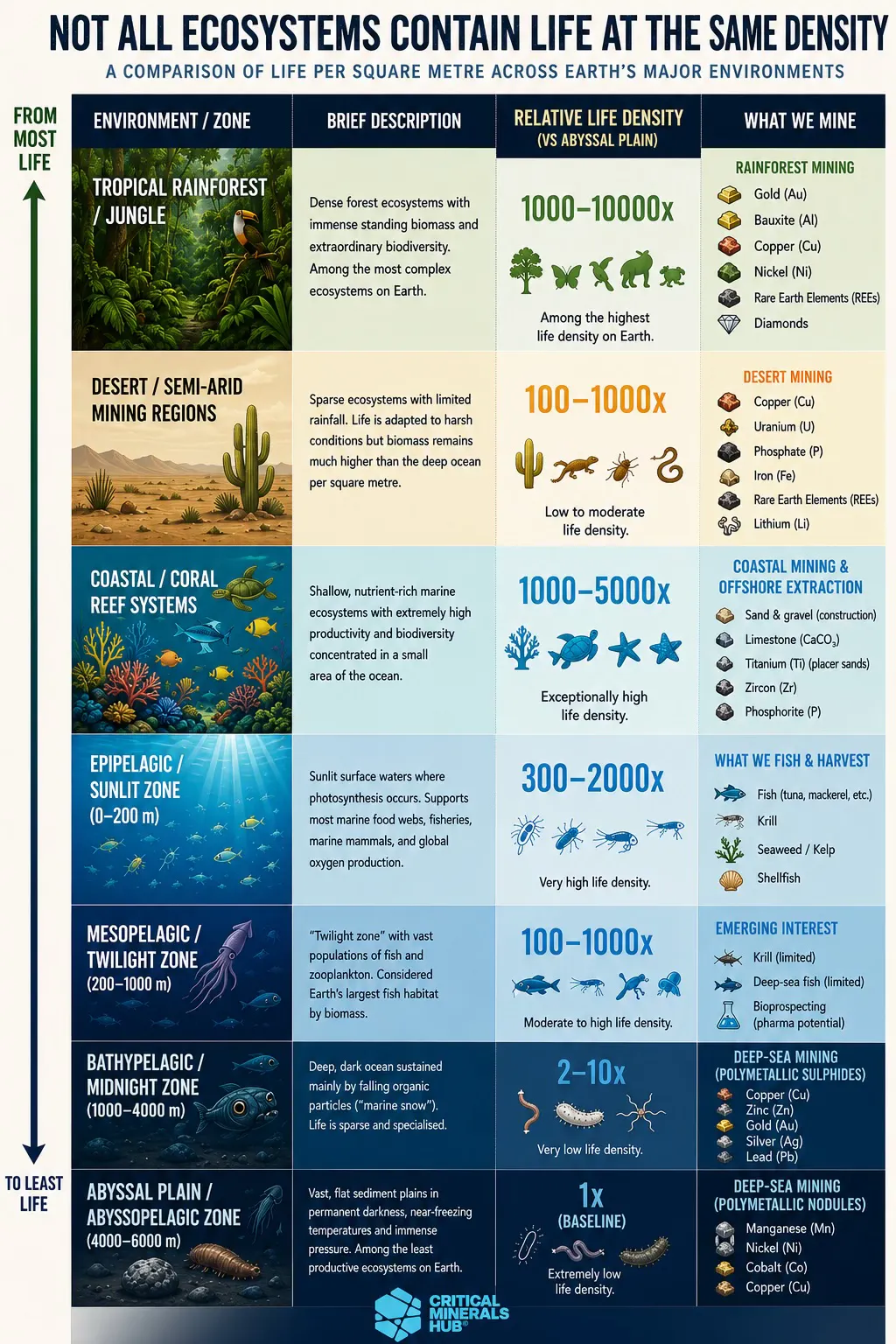
There are 67 NGOs with observer status at the International Seabed Authority (ISA) as of March 2026, which explains why nothing gets done. More than thirty years after its creation, there is still no final Mining Code for nodule exploitation.

Deep‑sea mining disturbs low‑productivity abyssal ecosystems and may have long‑lasting local effects on small communities of widely distibuted organisms reliant upon the nodules themselves, but avoids the deforestation, human displacement and occupational hazards of many terrestrial mines. The ethical question is whether it is better to concentrate impacts on a relatively small portion of the most common habitat on Earth, or to continue expanding high‑impact mining frontiers on land like tropical rainforests.

The job of a regulator is not to deliver closure for activists. It is to regulate access to resources designated as the “common heritage of mankind” in a way that balances environmental protection, equitable benefit sharing and global development needs. That will always involve trade‑offs.

Read Full Post »

Per EIA, Gulf of America oil production declined in May by over 200,000 bopd from April’s record production, which was corrected upward by 2000 bopd. Was the April number anomalous? We’ll need additional monthly data and the audited ONRR numbers to get a better read.

EIA posted corrected April and May totals of 30,000 bopd for the Pacific (California OCS), a 150% increase from February owing to the Sable Santa Ynez Unit restart. Although Pacific OCS production has been in the doldrums for years, the region has an impressive record of 202,000 bopd from Dec 1995.

Meanwhile EIA has still not corrected their 2025 OCS production totals to correspond with the audited ONRR data.

2025 OCS total – ONRR2025 OCS total – EIA2025 Gulf only – ONRR2025 Gulf only – EIA
713,673,419697,020,000708,803,859692,634,000

Read Full Post »

« Newer Posts