There are 67 NGOs with observer status at the International Seabed Authority (ISA) as of March 2026, which explains why nothing gets done. More than thirty years after its creation, there is still no final Mining Code for nodule exploitation.
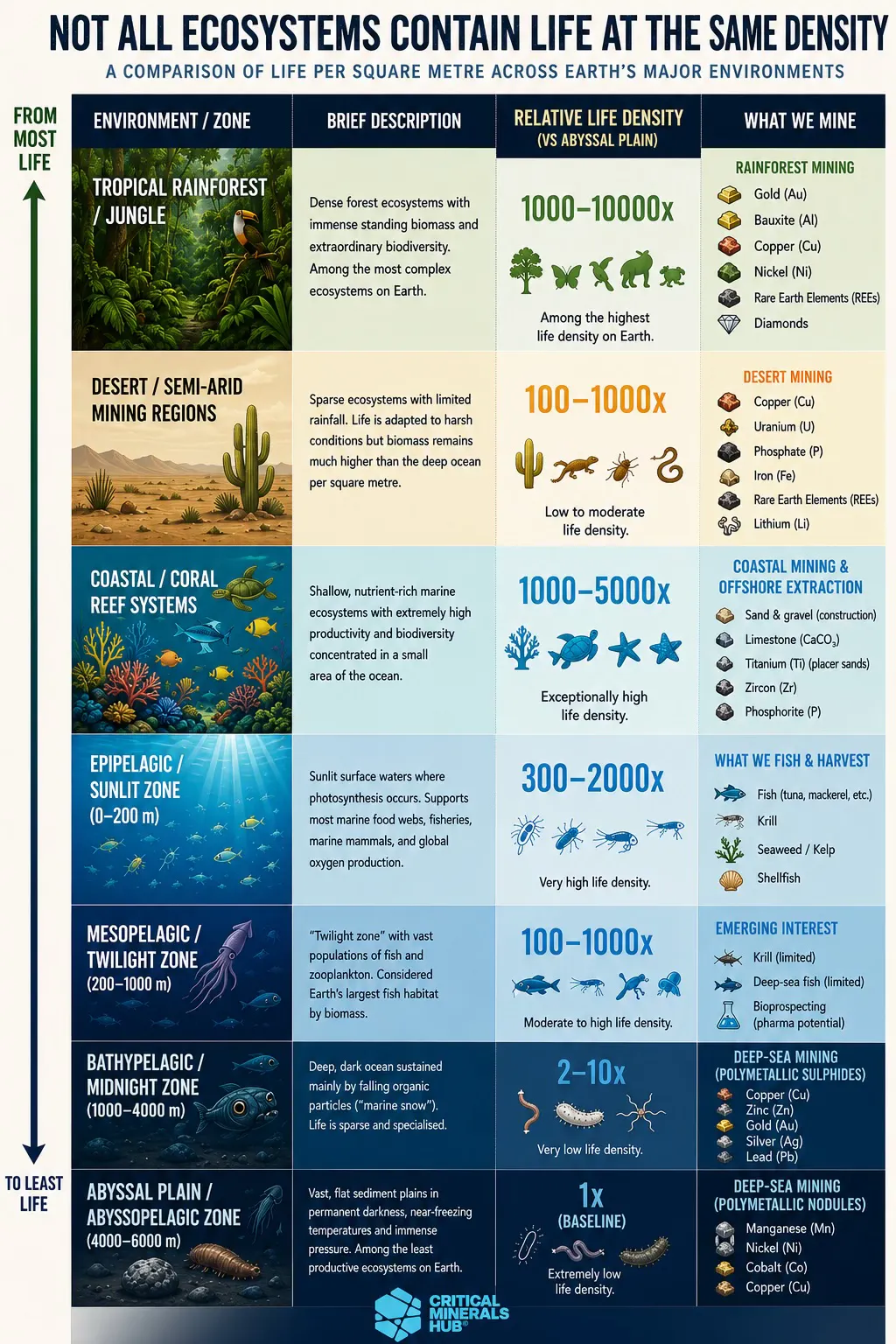
“Deep‑sea mining disturbs low‑productivity abyssal ecosystems and may have long‑lasting local effects on small communities of widely distibuted organisms reliant upon the nodules themselves, but avoids the deforestation, human displacement and occupational hazards of many terrestrial mines. The ethical question is whether it is better to concentrate impacts on a relatively small portion of the most common habitat on Earth, or to continue expanding high‑impact mining frontiers on land like tropical rainforests.“
“The job of a regulator is not to deliver closure for activists. It is to regulate access to resources designated as the “common heritage of mankind” in a way that balances environmental protection, equitable benefit sharing and global development needs. That will always involve trade‑offs.“
… and shared a mineral water toast! 😉 (Weak joke, but at least it’s original and topical!)
NOAA and TMC, a Canadian company, are working together to bypass the stifling UN deep sea minerals bureaucracy.
NOAA raises a glass: Yesterday, President Trump signed an Executive Order establishing a framework for American companies to identify and retrieve offshore critical minerals and resources. The Executive Order prioritizes U.S. leadership in seabed mapping and mineral exploration, ensuring reliable access to critical minerals like manganese, nickel, cobalt and rare earth elements.
In support of the Executive Order, NOAA is committed to an expeditious review of applications for exploration licenses and commercial recovery permits. The agency will provide the necessary resources for license and permit reviews to ensure that those reviews go forward without undue delays.
TMC is positioned to play a central role in supporting an American industrial ecosystem underpinned by deep-seabed minerals, and poised to mobilize tens of billions in private investment in the U.S. across shipbuilding, ports, mineral processing, and advanced manufacturing
The Company through its U.S. subsidiary expects to file license and permit applications under the U.S. Deep Seabed Hard Mineral Resources Act (DSHMRA) in the second quarter of 2025
China boos: “The US authorization… violates international law and harms the overall interests of the international community,” Chinese foreign ministry spokesman Guo Jiakun said on Friday.
TMC and other companies like Impossible Metals (see below) have had enough of the endless delays at the United Nations’ International Seabed Authority, which is still developing regulations. Mining companies and others have spent years gathering data and providing input.
Meanwhile in US waters:
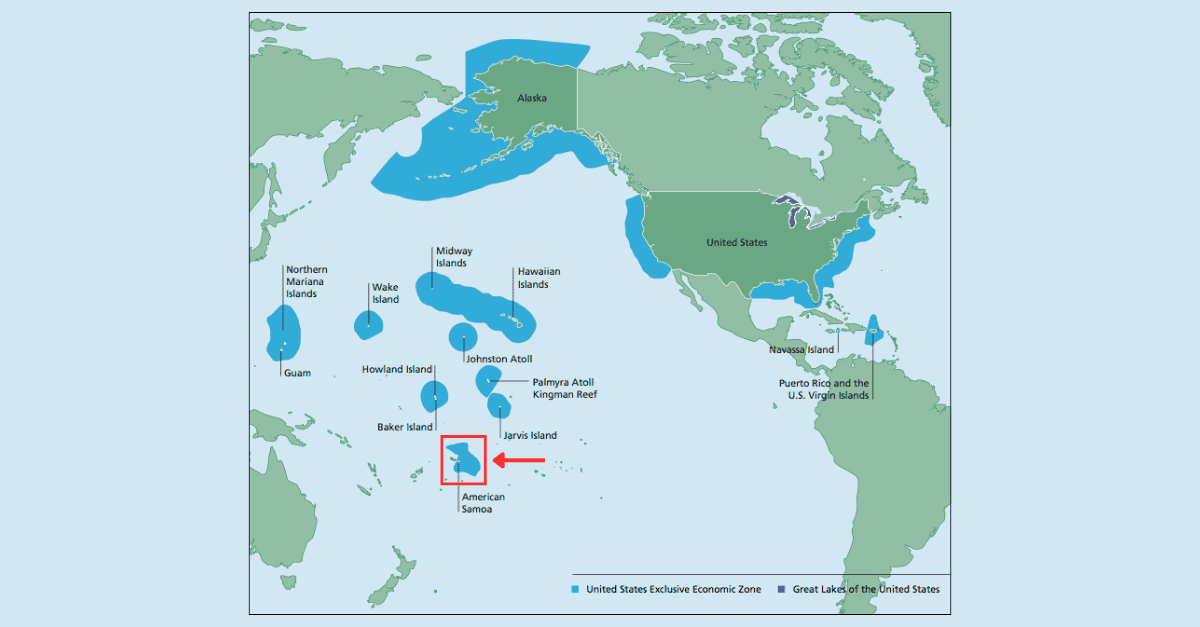
San Jose, CA – Impossible Metals, a pioneering US-based deep-sea mining company, has submitted a request to commence a leasing process for exploration and potential mining of critical minerals in the deep sea off the coast of American Samoa. Impossible Metals is the first company to request a lease of critical minerals under the Outer Continental Shelf Lands Act of 1953, which is regulated by the U.S. Bureau of Ocean Energy Management (BOEM), part of the U.S. Department of the Interior.
Impossible Metals has developed the only autonomous underwater robot (AUV) for selective harvesting. The novel underwater robot uses advanced robotics, AI, and a buoyancy engine to hover above the seabed, accurately identifying and avoiding nodules with visible life while minimizing disruption to the habitat and native biodiversity. This method will have the lowest environmental impact and cost among land and deep-sea mining approaches, setting a new standard for responsible resource collection.