Florida HB 1645 (attached) was signed by Gov. DeSantis on 5/15/2024. The bill boosts natural gas, prohibits offshore wind turbines, and deletes references to climate change and greenhouse gases in state law. Given the State’s support for traditional energy sources, is it time to renew the dialogue about exploration and production in the Eastern Gulf of Mexico (EGOM)?
HB 1645 prohibits offshore and coastal wind development (p. 30), acknowledges that natural gas is critical for power resiliency, prohibits zoning regulations that restrict gas storage facilities and gas appliances (p.8), and relaxes permitting requirements for pipelines <100 miles long.
Given Florida’s energy preferences as expressed in this legislation, the State could assist regional energy planners by better defining its position on oil and gas leasing in the EGOM. What limits, in terms of lease numbers and minimum distances from shore, would best improve Florida’s energy supply options while further minimizing environmental risks?
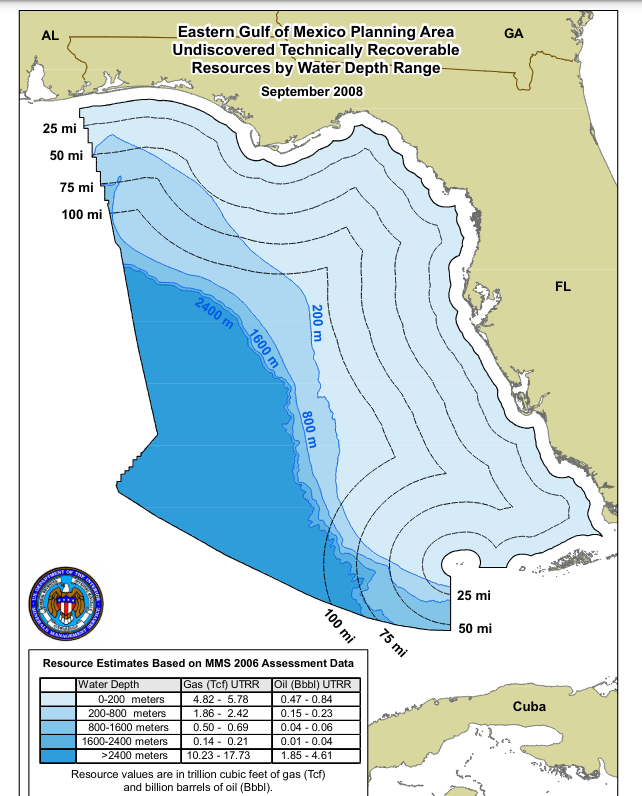
As illustrated on the map below, the petroleum geology of the EGOM and Florida’s preferences are likely aligned in that the best prospects for oil and gas production are in deep water and more than 100 miles from the State’s coast.Does Florida support a 100 mile buffer?
The 4/20/2010 Macondo blowout was a tragic failure that has been, and will continue to be, discussed at length on this blog. We should also acknowledge that prior to Macondo 25,000 wells were drilled on the US OCS over a 25 year period without a single well control fatality, an offshore safety record that was unprecedented in the U.S. and internationally. We should also applaud recent advances in well integrity and control, including the addition of capping stack capabilities that further reduce the risk of a sustained well blowout.
Florida’s independent thinking on energy policy is commendable. That independence is contingent on importing petroleum products and natural gas from elsewhere in the Gulf region. Securing that supply over the intermediate and longer term should be a priority for Florida. In that regard, EGOM production is an important consideration.
The government’s decision to require that a capping stack be located in Guyanais prudent. Although the need for a capping stack is dependent on multiple barrier failures and is thus extremely low, the environmental and economic consequences of a prolonged well blowout warrant timely access to this tertiary well control option.
A capping stack must be properly maintained and deployable without delay. In that regard, BSEE has a good program for testing Gulf of Mexico capping stack readiness. Capping stack drills are an important post-Macondo addition to the unannounced oil spill response program that dates back to 1981.
“Troy Naquin, BSEE New Orleans District, observes as a capping stack is carefully lowered onto the deck of ship to be transported more than 100 miles offshore for a drill designed to test industry’s ability to successfully deploy it in case of an emergency, May 8, 2023.” BSEE photo/Bobby Nash
I had the pleasure of working with Jason Mathews when he was a young MMS engineer. He truly cared about our safety mission and has taken that commitment to the next level at BSEE. Jason shared this important, heartfelt message on the anniversary of the Macondo blowout.
One of the greatest gifts I ever received in life is having a little girl and having the opportunity to go home every evening and spending time with her at cheer, softball, doing homework, etc. I have a great deal of respect for the men and women who work offshore and put their lives on hold for 14-28 days to deliver much needed OCS production to meet US demand. Undoubtedly, they are better / tougher people than me.
Over the last year, my team has seen multiple incidents that had a high potential severity that could have led to a fatal / serious injury or major incident in the GOM. Although we can sit and debate the causal factors for hours, one that jumps to the top of the discussion is the Human Factor – Complacency. Of all the things a leader should fear, complacency heads the list. There is no doubt success breeds complacency, and complacency breeds failure.
To this day, I am still shook by the mindset and complacency of many onboard the Deepwater Horizon prior to the incident. During testimony in the public hearings, John Guide, the BP well team leader for the Horizon, believed that the rig crew had become “too comfortable” because of its good track record for drilling difficult wells. Ross Skidmore, a BP contractor on the rig on April 20, testified that the crew became complacent after completing drilling because “when you get to that point, everybody goes to the mindset that weʹre through, this job is done.” To me, the complacency on the Deepwater Horizon could be attributable to the crew not having access to all of the well data (OptiCem reports – cement job risk) available to BP personnel onshore and the well site leaders on the rig. Our investigation concluded, the overall complacency of the Deepwater Horizon crew was a possible contributing cause of the kick detection failure.
As regulators, we have special roles in the GOM as it relates to safety:
Driving the avoidance of complacency and risk-free mindsets of the offshore employees
Understanding we can’t be selfish – Our success is not our individual personal growth / gains, but it is being unwavering in your promotion of offshore safety to ensure all offshore employees return home to their families safely
Holding each other (internally) and industry (externally) accountable when necessary
In order to achieve greatness offshore, we ,as a regulator, have to believe we can, and never sit still until we achieve it.
Everyone on this email has a very critical function and role. Never underestimate the value of what you do, have the proper mindset, and avoid complacency.
Do whatever it takes to ensure the people offshore are gifted the same gift we receive every day – going home to our families.
All In –
Jason P. Mathews, Petroleum Engineer, Field Operations – OSM
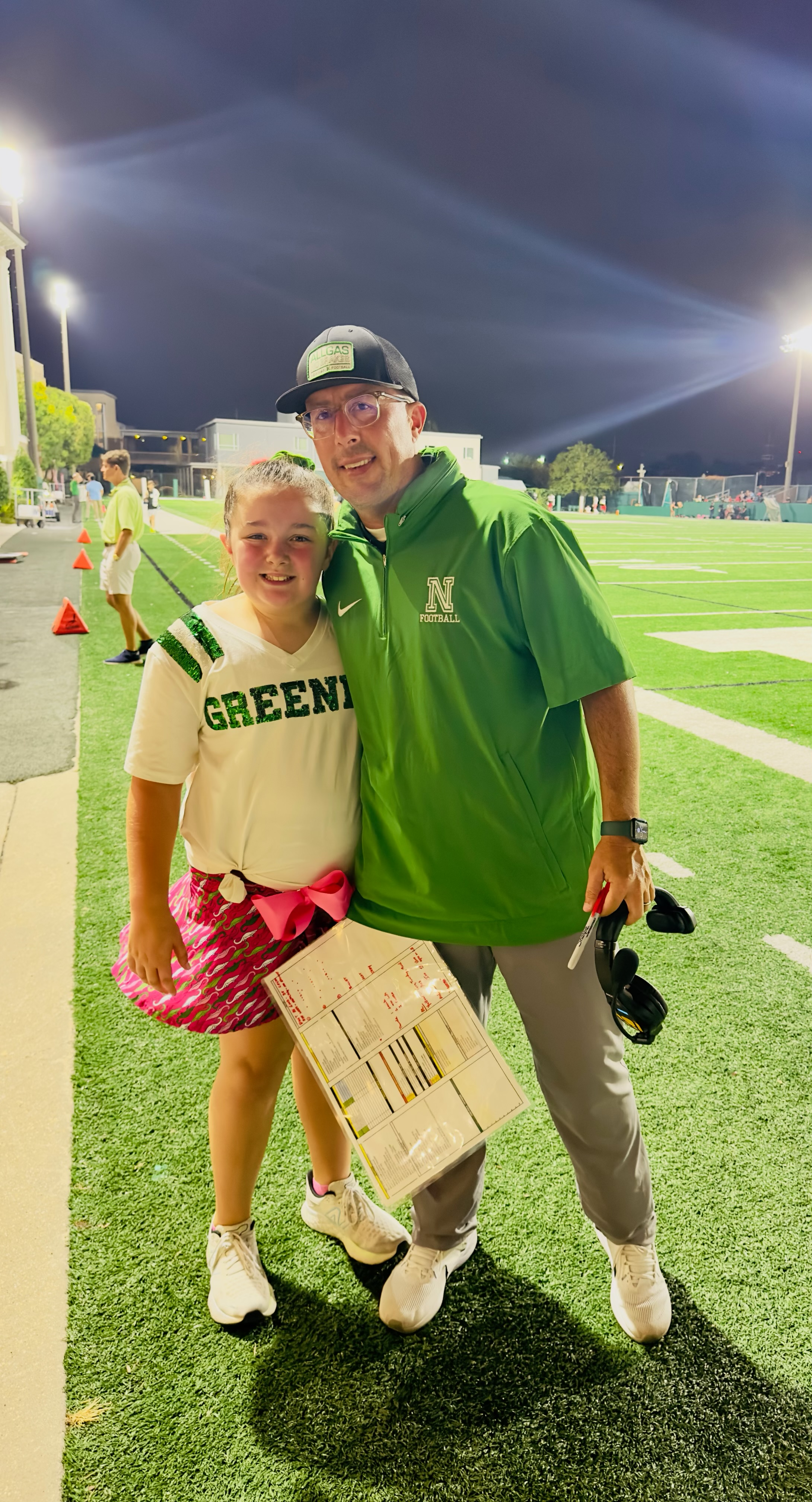
Friday Night LIghts: Coach Mathews and his daughter
The active rig count in the GoM in 2001 was 148 (AL-4, LA-119, TX-25), which is >8 times the current Baker Hughes rig count of 18. The 2001 rig count was not a one year blip; the number of rigs active in the GoM exceeded 100 for the ten year period from 1994-2003.
While the current rig count is anemic by comparison, the capabilities of the fleet are anything but. Below is a list derived from drilling contractor status reports of deepwater rigs now operating in the Gulf.
All of these rigs are dynamically positioned and are capable of drilling in 12,000′ of water. They have dual derricks and 15,000 psi rated BOP rams (one has a 20,000 psi stack, and another can be upgraded to 20,000 psi). The annular preventers are rated at 10,000 psi. All have impressive storage and hook load capacities, the latest tubular handling equipment, advanced control systems, and efficient power generation.
Note that most of the rigs fly the flag of the Marshall Islands. This “flag of convenience” registration is preferred for reasons related to taxation and operational freedom. For the record, the fact that the Deepwater Horizon was registered in the Marshall Islands had little to do with the Macondo blowout. The DWH was subject to all Coast Guard and MMS regulations under the OCS Lands Act.
The main cause of the Macondo blowout was the poorly planned and executed well suspension operation. Certain equipment capability, maintenance, and employee training issues were contributing factors. However, with that said, the Marshall Islands report on the blowout candidly acknowledges that “the complexity of and interdependence between the drilling and marine systems and personnel suggests a need for increased communication and coordination between the flag State and coastal State drilling regulators.” Hopefully, that coordination is being achieved and the risks associated with the fragmented regulationof mobile drilling units are being effectively managed.
Contractor
Rig
Operator
Est. end date
Flag
Transocean
Deepwater Titan
Chevron
3/2028
Marshall Islands
Transocean
Deepwater Atlas
Beacon
4/2025
Marshall Islands
Transocean
Deepwater Poseidon
Shell
4/2028
Marshall Islands
Transocean
Deepwater Pontus
Shell
10/2027
Marshall Islands
Transocean
Deepwater Conqueror
Chevron
3/2025
Marshall Islands
Transocean
Deepwater Proteus
Shell
5/2026
Marshall Islands
Transocean
Deepwater Thalassa
Shell
2/2026
Marshall Islands
Transocean
Deepwater Asgard
Hess
4/2024
Marshall Islands
Stena
Evolution
Shell
4/2029
Marshall Islands
Noble
Stanley Lafosse
???
11/2024
Liberia
Noble
Valiant
LLOG
2/2025
Marshall Islands
Noble
Globetrotter I
Shell
5/2024
Liberia
Noble
Globetrotter II
Shell
5/2024
Liberia
Valaris
DS-18
Chevron
8/2025
Marshall Islands
Valaris
DS-16
Oxy
6/2026
Marshall Islands
Diamond Offshore
BlackHawk
Oxy
10/2024
Marshall Islands
Diamond Offshore
BlackHornet
bp
3/2027
Marshall Islands
Diamond Offshore
BlackLion
bp
9/2026
Marshall Islands
Short video about the Stena Evolution, the newest entry to the Gulf of Mexico fleet:
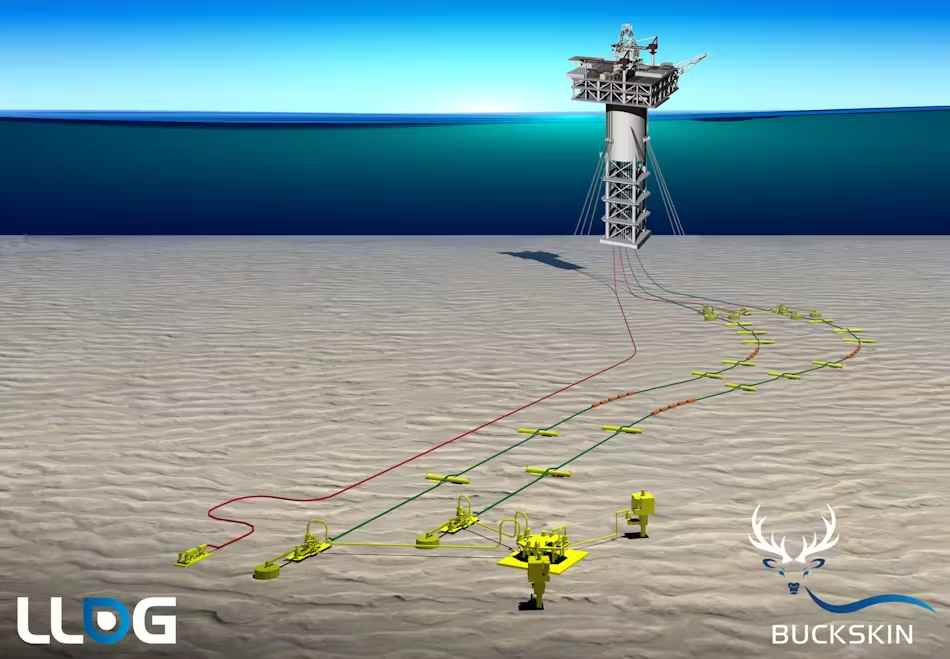
Houston, TX, March 29, 2024. Beacon Offshore Energy LLC (“Beacon”) announced today the completion of the divestment of its non-operated interests in certain fields in the deepwater Gulf of Mexico in accordance with a previously executed definitive agreement with GOM 1 Holdings Inc., an affiliate of O.G. Oil & Gas Limited. The divestment includes Beacon’s 18.7% interest in the Buckskin producing field, 17% interest in the Leon development, 16.15% interest in the Castile development, 0.5% interest in the Salamanca FPS/lateral infrastructure, and 32.83% interest in the Sicily discovery.
According to BOEM records, GOM 1 HOLDINGS INC, a Delaware company, registered with BOEM effective 3/15/2024. The parent entity, O.G. Oil & Gas Limited, is a privately held E&P company incorporated in 2017 and based in Singapore.
O.G. Oil & Gas Ltd is part of the Ofer Global Group, “a private portfolio of international businesses active in maritime shipping, real estate and hotels, technology, banking, energy and large public investments.”
After a partial takeover by O.G Oil & Gas Limited in 2018, New Zealand Oil and Gas is now 70% owned by the Ofer Global Group. Among other interests, NZ Oil and Gas produces from fields offshore Taranaki, NZ.
Because they are jointly and severally liable for safe operations and decommissioning, minority investors should take a strong interest in safety management and financial assurance. Investors should remember that partners are adversely affected by the mistakes of the operating company. Anadarko and Mitsubishi took a hit following the Macondo blowout. To what extent had they been monitoring bp’s risk and safety management programs for drilling operations?
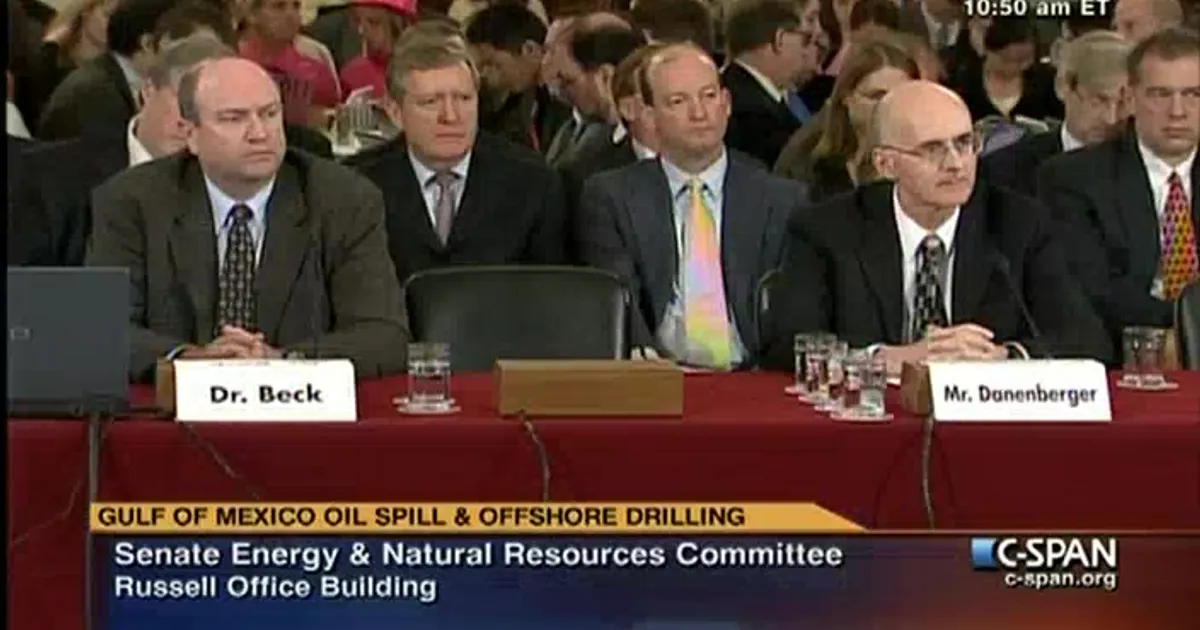
I was on the first panel to appear before a Senate committee during the Macondo blowout. All of the senators were respectful and professional with two exceptions, one of whom was Bob Menendez. Perhaps Senator Menendez’s penchant for political grandstanding was an indication of more significant character flaws.
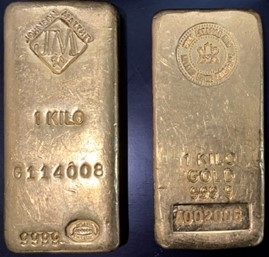
Robert Menendez Allegedly Agreed to Use His Official Position to Benefit Wael Hana, Jose Uribe, Fred Daibes, and the Government of Egypt in Exchange for Hundreds of Thousands of Dollars of Bribes to Menendez and His Wife Nadine Menendez, Which Included Gold Bars, Cash, and a Luxury Convertible
Last week, Sen. Menendez was cited for additional charges accusing him of accepting bribes from a foreign government and conspiring to act as a foreign agent.
Tommy first served as Senior Advisor in the Bureau of Ocean Energy Management, Regulation, and Enforcement (BOEMRE), a transition bureau in the wake of the blowout, and was later named Director of the Bureau of Ocean Energy Management (BOEM), one of the two new bureaus that were established to manage the offshore program. He subsequently served as DOI Chief of Staff, and was appointed Deputy Secretary in 2021.
Tommy was a strong leader and an energy moderate. He was highly regarded by the rank and file in BOEMRE and BOEM.
The press release announcing his departure is very professional with appropriate quotes from Secretary Haaland and Tommy. No reasons for his resignation are provided. However, given his balanced perspective on energy development, it would not be wildly speculative to suggest that he might have been a bit uncomfortable working in the policy bubble that produced documents like the latest offshore leasing plan.
Regulatory fragmentation occurs when multiple federal agencies oversee a single issue. Using the full text of the Federal Register, the government’s official daily publication, we provide the first systematic evidence on the extent and costs of regulatory fragmentation. We find that fragmentation increases the firm’s costs while lowering its productivity, profitability, and growth. Moreover, it deters entry into an industry. These effects arise from regulatory redundancy and, more prominently, regulatory inconsistency between agencies. Our results uncover a new source of regulatory burden: companies pay a substantial economic price when regulatory oversight is fragmented across multiple government agencies.
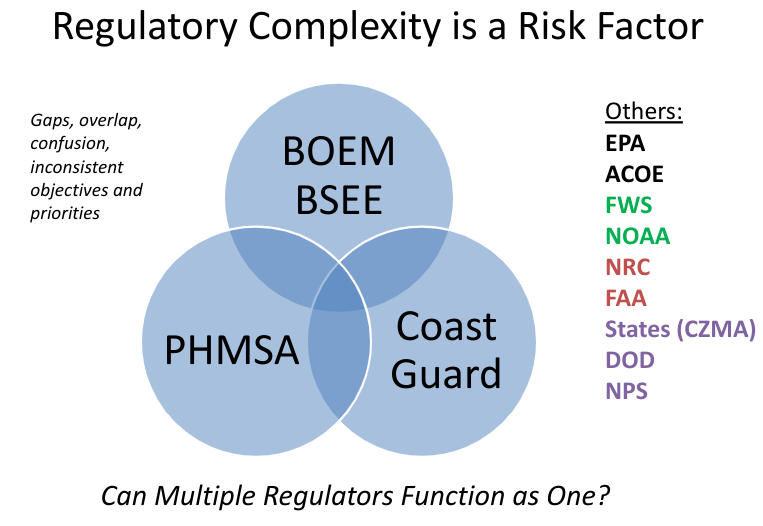
The US has a highly fragmented offshore regulatory regime that has become even more fragmented with the complex division of responsibilities between BOEM and BSEE. The slide below is from a presentation on this topic.
While the linked paper focuses on costs and productivity, fragmentation may also be a significant safety risk factor. A UK colleague once asseted that “overlap is underlap,” and I believe there is something to that. If multiple agencies have jurisdiction over a facility, system, or procedure, the resulting redundancy, inconsistency, and ambiguity may create significant gaps in industry and governmental oversight.
For example, regulatory fragmentation was arguably a significant factor in the most fatal US offshore fire/explosion incidents in the past 35 years – the South Pass B fire in 1989 and the Macondo blowout in 2010. More specifically:
South Pass 60 B: The investigation of the 1989 South Pass 60 B platform explosion that killed 7 workers noted the inconsistency in regulatory practices for the platform, regulated by DOI, and the pipeline regulated by DOT. Cutting into the 18-inch pipeline riser did not require an approved procedure, and the risks associated with hydrocarbon pockets in the undulating pipeline were not carefully assessed. Oversight by the pipeline operator was minimal, and the contractor began cutting into the riser without first determining its contents. A massive explosion occurred and 7 lives were lost.
One would hope that this major spill will lead to an independent review of the regulatory regime for offshore pipelines. Consideration should be given to designating a single regulator that is responsible and accountable for offshore pipeline safety (a joint authority approach might also merit consideration) and developing a single set of clear and consistent regulations.
Macondo: While the root causes of the Macondo blowout involved well planning and construction decisions regarding the casing point, cementing of the production casing, and well suspension procedure, the blowout would likely have been at least partially mitigated (and lives saved) if the gas detection system was fully operable, the emergency disconnect sequence was activated in a timely manner, flow was automatically diverted overboard, or engine overspeed devices functioned properly. Indeed, regulatory overlap led to underlap as summarized below:
Macondo contributing factor
jurisdiction
flow not automatically diverted overboard
DOI/USCG (also concerns about EPA discharge violations)
some gas detectors were inoperable
DOI/USCG
generators did not automatically shutdown when gas was detected
USCG/DOI
failure to activate emergency disconnect sequence in a timely manner (training deficiencies and chain-of-command complications)
USCG/DOI
engine overspeed devices did not function
USCG/DOI
hazardous area classification shortcomings
USCG/DOI
MOUs and MOAs are seldom effective regulatory solutions as they are often unclear or inconclusive, and tend to be more about the interests of the regulator and protecting turf. They also do nothing to ensure a consistent commitment among the regulators. In the case of the US OCS program, BOEM-BSEE have a greater stake in the safety and environmental outcomes given that offshore energy is the reason for their existence. That is not the case for any of the other regulators identified in the graphic above.
The data in the paper appear to be reasonably accurate. However, there is one glaring error regarding Pacific operations, and the reference to the Macondo blowout in the environmental discussion is rather provocative and misleading.
Per the authors:
California wells are drilled in relatively shallow water—mostly less than 100 feet—while GoM wells can be in up to 10,000 feet of water.
With regard to the environmental risks, the Nature Energy paper’s reference to the Macondo blowout, while muted, is what some media outlets embraced. Per the authors:
Releases from improperly abandoned wells will probably be chronic and small compared with Macondo, but the underlying biochemical and ecological processes that influence the ecological impacts have many similarities.
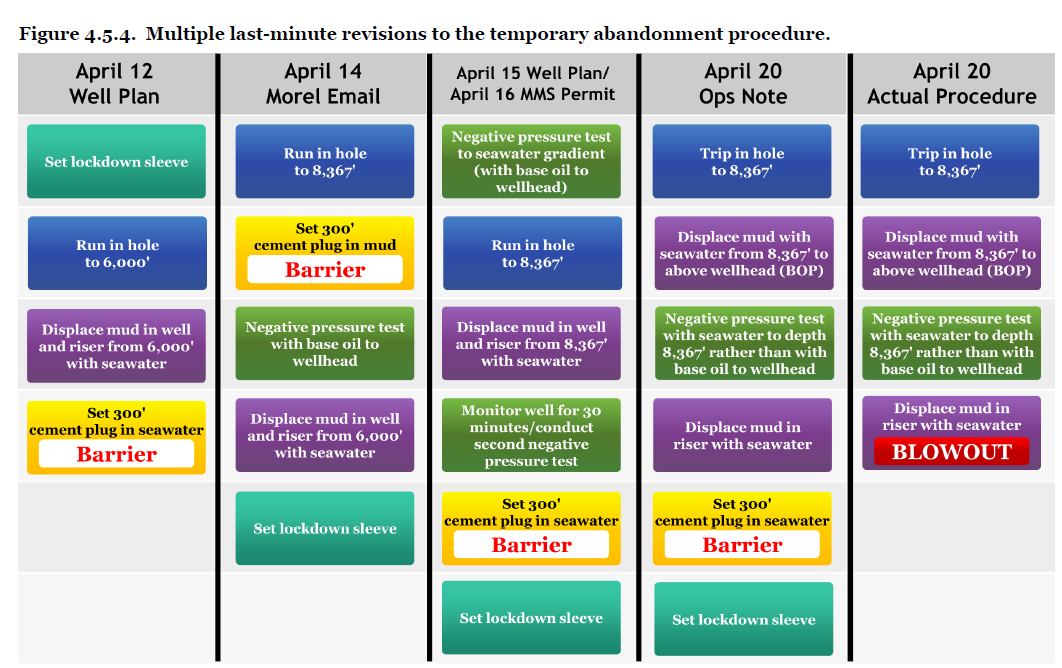
The Macondo well blew out while it was being suspended in preparation for subsequent completion operations. Ill advised changes to the well suspension plan were among the primary contributing factors to the blowout (see diagram below). The Macondo well was entirely different from the depleted end-of-life wells that are the subject of the paper.
Some media outlets ran with the Macondo angle, weak as it was. This ABC news piece featured numerous Macondo pictures. Other outlets noted that Macondo was a temporarily abandoned well, which it was not. The Macondo well never got to that point.
National Commission, Chief Counsel’s Report, p. 132
There are a number of recent articles related to the Guyana Supreme Court ruling on Exxon’s financial assurance obligations. An Oil Now piece (quoted below) is the most informative. It seems that the Supreme Court decision is based on a provision of Exxon’s EPA permit and that EPA is siding with Exxon in this dispute.
The Guyana government and the Environmental Protection Agency (EPA) are set to appeal a recent Guyana Supreme Court ruling that determined that the EPA and ExxonMobil affiliate, Esso Exploration and Production Guyana Limited (EEPGL), breached the terms of the Liza 1 environmental permit. The permit was revised and granted to EEPGL last year for operations in the Stabroek Block, offshore Guyana.
Justice Sandil Kissoon granted several declarations, including that the EPA failed to enforce compliance by EEPGL of its Financial Assurance obligations to provide an unlimited Parent Company Guarantee Agreement and/or Affiliate Company Guarantee Agreement to indemnify and keep indemnified the EPA and the Government of Guyana against all environmental obligations of the Permit Holder (EEPGL) and Co-Venturers (Hess and CNOOC) within the Stabroek Block.
While acknowledging the court’s ruling, the Government of Guyana, as a major stakeholder, maintained in a statement that the Environmental Permit imposes no obligation on the Permit Holder to provide an unlimited Parent Company Guarantee Agreement and/or Affiliate Company Guarantee Agreement. The government believes that Justice Kissoon erred in his findings and that the ruling could have significant economic and other impacts on the public interest and national development.
Unlimited liability is a rather daunting and open-ended obligation that would trouble permittees in any industry.
In the US, the liability for oil spill cleanup costs is unlimited for offshore facilities, but there is a liability cap for the resulting damages. That cap is currently $167.8 million after a recent inflation adjustment. BP, of course, paid far more than that for damages associated with the Macondo blowout. BP’s costs, which amounted to an astounding $61.6 billion, were both voluntary and compulsory as a result of agreements and settlements. Keep in mind that the damage liability limit was only $75 million at the time. One can imagine what would have happened if a company with less financial strength or more inclination to fight had been responsible for the spill.