Among the top 10 companies at Sale 261 (based on the number of high bids) are household names Shell, Chevron/Hess, Oxy/Anadarko, and bp, and international majors Equinor (Norway) and Woodside (Australia).
Lesser known companies have also become important deepwater players including two, Red Willow (owned by the Southern Ute tribe) and Houston Energy, that cracked the top 10 bidders list. Other emerging deepwater companies, Ridgewood, CSL Expl, Westlawn, Alta Mar, and CL&F were also active sale 261 participants. All of these companies bid in partnership with other independents.
Company
257
259
261
Red Willow
5
13
25
Houston Energy
5
9
18
Ridgewood
0
2
8
CSL Expl
1
1
3
Westlawn
0
3
5
Alta Mar
0
0
9
CL&F
0
0
3
Number of bids by emerging deepwater players at Sales 257, 259, and 261.
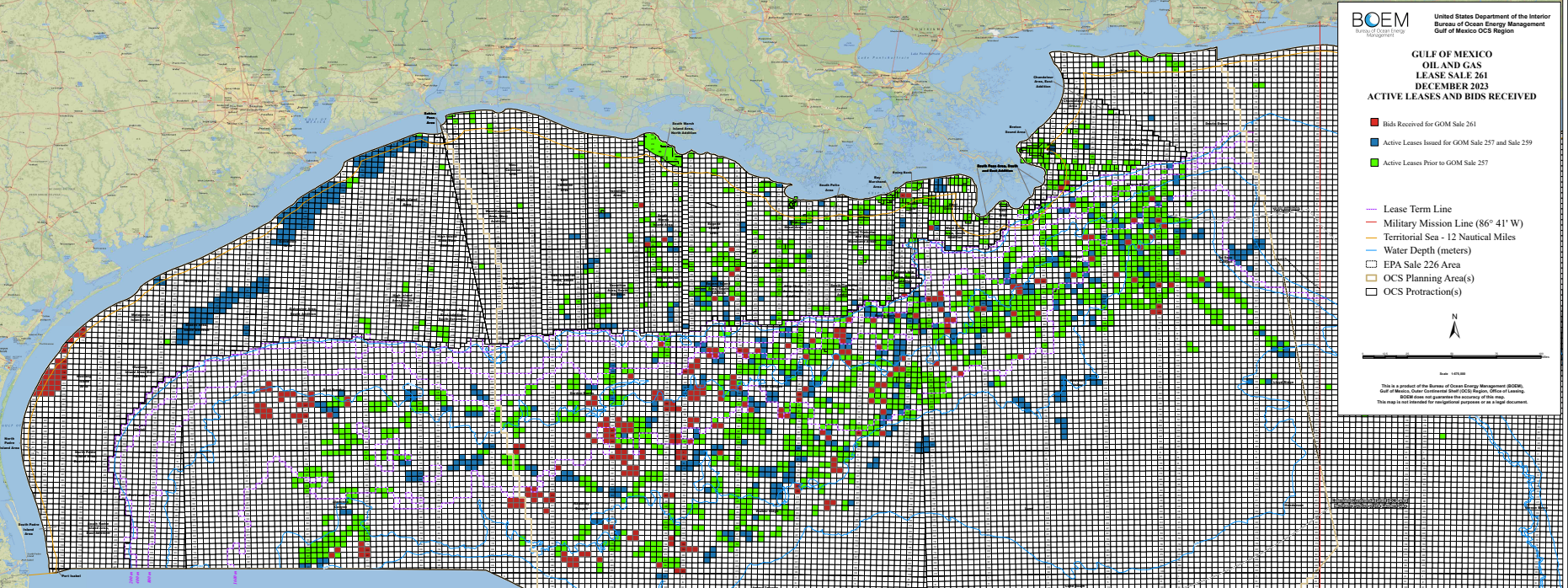
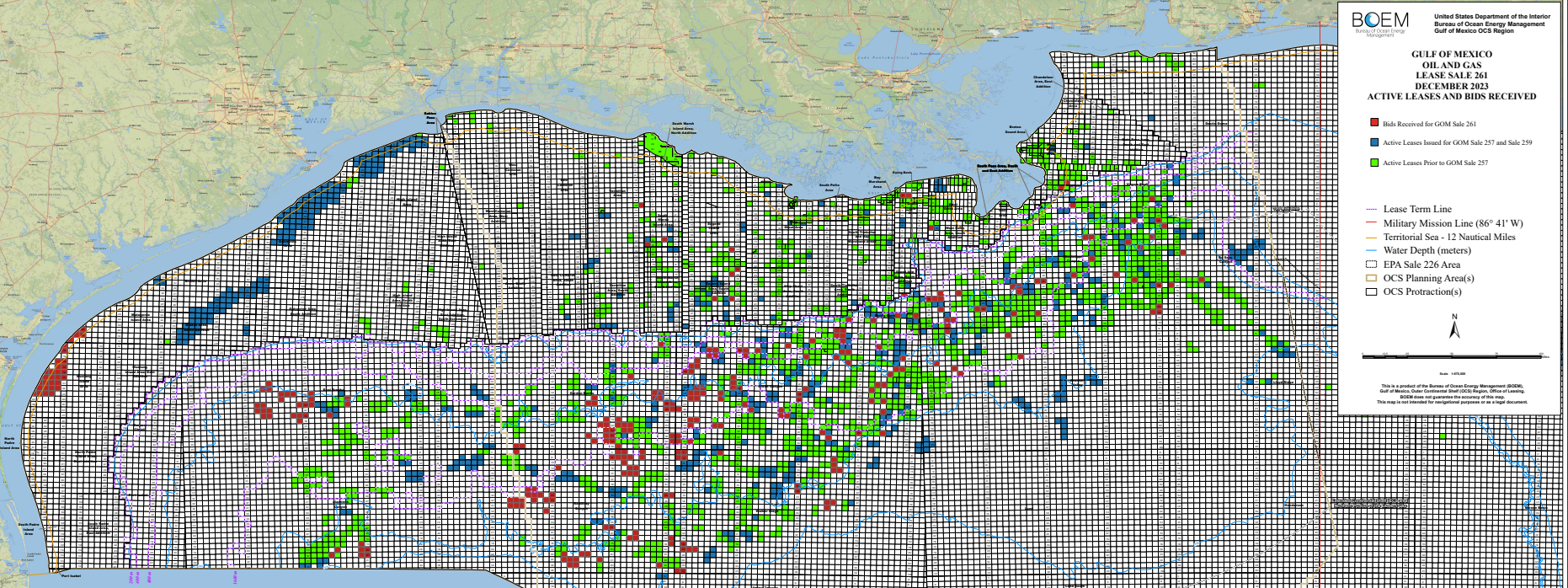
At Sale 261, Repsol was the sole bidder for 36 nearshore Texas tracts in the Mustang Island and Matagorda Island areas (red blocks at the western end of the map above). Exxon acquired 163 nearshore Texas tracts (blue in map above) at Sales 257 and 259.
Why Repsol’s carbon disposal bids should be rejected (as Exxon’s Sale 257 and 259 bids should have been):
Sale 261 was an oil and gas lease sale. The Notice of Sale said nothing about carbon sequestration and did not offer the opportunity to acquire leases for that purpose. Therefore, the public notice requirements in 30 CFR § 556.308 were not fulfilled.
Because there was no draft or final Notice of Sale for sequestration (carbon disposal) leasing, interested parties did not have the opportunity to comment on tract exclusions, stipulations, bidding parameters, rental fees, royalties, and other factors pertinent to any OCS lease sale.
30 CFR § 556.308 requires publication of a lease form. No carbon sequestration lease form has been posted or published for comment.
Carbon sequestration operations were not considered in the environmental assessments conducted prior to this or any other OCS lease sale.
No evaluation criteria for carbon sequestration bids have been published.
Hopefully, the carbon sequestration regulations that are under development will preclude conversion of leases acquired at Sales 257, 259, and 261. At a minimum, these regulations should require a competitive process for converting any oil and gas leases.
The difference between the conversion of the Exxon and Repsol leases and the conversion of other existing oil and gas leases is that the Exxon and Repsol leases were acquired solely for the purpose of carbon disposal with no intention of oil and gas exploration and production. Also, they can conduct geophysical surveys on their extensive (arguably monopolistic) nearshore Texas lease holdings, which gives them an unfair competitive advantage should a carbon sequestration lease sale be held.
To their credit, Repsol bid legitimately on 9 oil and gas leases at Sale 261. Exxon did not participate in Sale 261, and their only participation in Sales 257 and 259 was for carbon disposal purposes. Prior to Sale 257, the company had not acquired an OCS lease since 2008.
The 3rd quarter update by Jason Mathews and a followup inquiry confirm that there were no work-related fatalities associated with US OCS oil and gas operations in 2023! This major achievement deserves public recognition given that the zero fatality goal has long eluded offshore operators, contractors, and regulators.
In a proper safety culture, continuous improvement is the primary goal, and both good and bad outcomes must be carefully assessed. The 2023 zero-deaths milestone is thus tempered by life threatening incidents such as those described in the attached safety alert and investigation report. Address these issues, identify other potential problem areas, and continue to drive the culture forward. Be proud and confident through training, planning, and achievement, but be wary!
Biggest prize at the holiday party went to Anadarko: Mississippi Canyon 389 – 5 bids, $25.5 million high bid
Biggest holiday shopping spree: Shell’s 65 high bids accounted for 24% of the sale’s high bids (excluding CCS bids).
Big spender award: Hess – $88.3 million on only 20 high bids. Does Chevron approve? 😀
Aussie, Aussie, Aussie, Oi, Oi, Oi: Strong performance by Woodside. 18 high bids, $24.8 million
Heia Norge!: Equinor continues to shine in the GoM! 13 high bids, $20.6 million
Spirit of America award to Red Willow Offshore which is owned by the Southern Ute tribe. 22 high bids!
Deepwater independents for (energy) independence: Beacon, Murphy, LLOG, Kosmos, Talos, Houston Energy, Ridgewood, QuarterNorth, Alta Mar, CSL, CL&F, and Westlawn
Even pace wins the race: Another solid lease sale for bp – 24 high bids.
So happy together 😀: Chevron and Hess combined for 48 high bids, $114 million
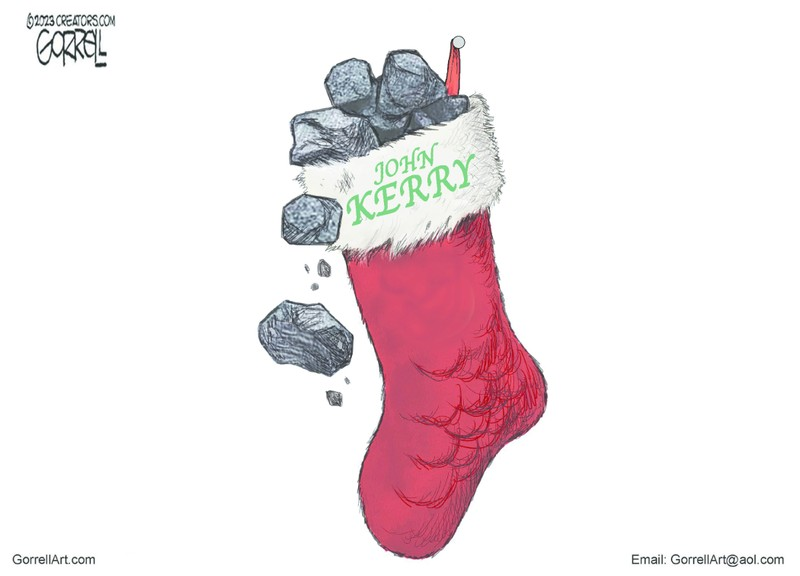
Coal in their stockings? Repsol (Sale 261) and Exxon (Sales 257 and 259) made up their own rules for acquiring carbon dumping leases. Perhaps some solid carbon in their Christmas stockings would be appropriate.
Christmas in July?: A lease sale in 2024 is needed. Sometime near the 4th of July holiday would be good. It’s up to you Congress!
Holiday greetings to our friends around the world!
26 companies participated (updated from pre-sale stats)
Strong participation by the GoM stalwarts: Shell, Chevron, Oxy/Anadarko, BP, Woodside (BHP), Equinor, Talos, LLOG, Walter, Kosmos, Beacon
Kudos to Arena, Byron, Cantium, Focus for keeping the shelf alive
Contrary to the regulations, it looks like we once again have a company seeking to acquire oil and gas leases for carbon disposal purposes. This time it’s Repsol which was the sole bidder for 36 low-value nearshore tracts in the Mustang Island and Matagorda Island areas (red blocks at the western end of the map above). At least Repsol also bid legitimately on 5 deepwater tracts.
Exxon was a complete no show, as was ConocoPhillips.
The Gulf of Mexico and Norwegian branches of the offshore family have a long record of technological innovation and production leadership.
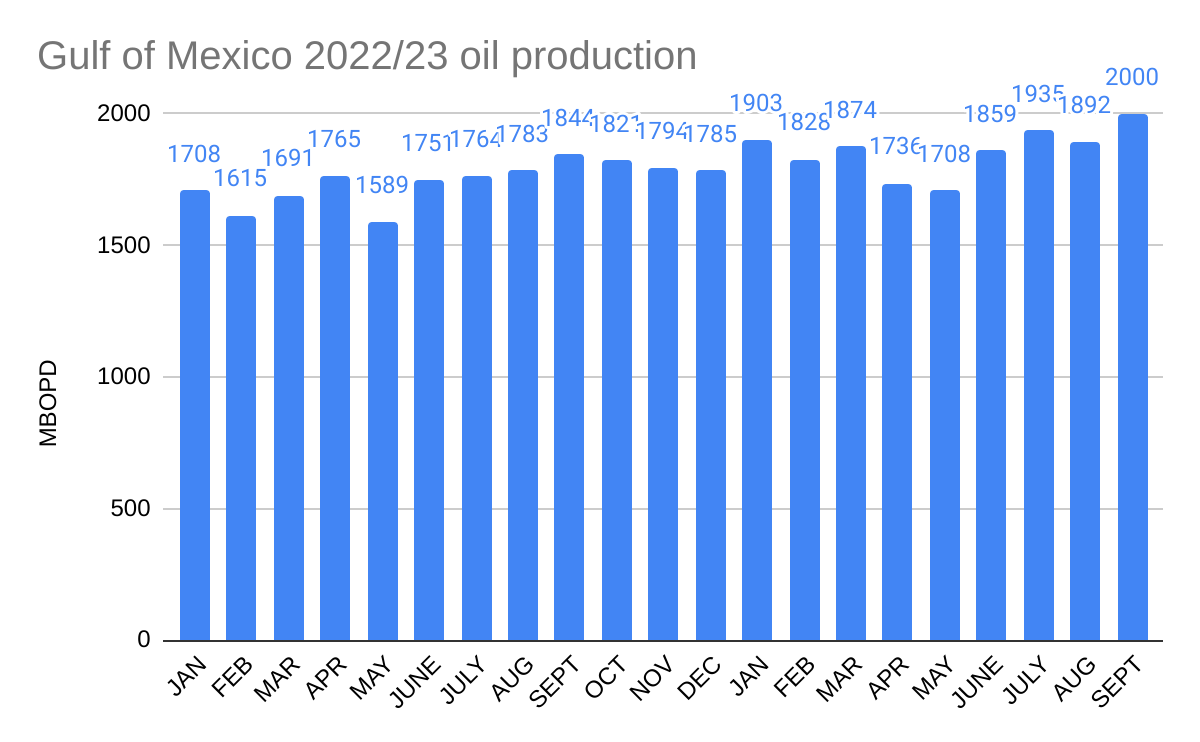
As a followup to our last GoM-Norway update, the respective oil production rates are presented below. The Gulf of Mexico now has a small edge as a result of new production from deepwater facilities.
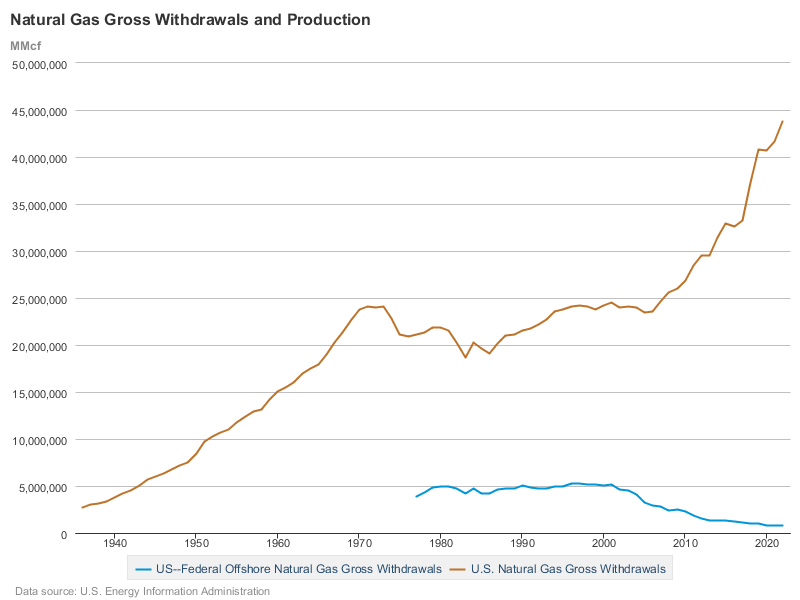
Natural gas is a different story, and Norway’s offshore gas production is much higher. US gas production (second chart below) has been dominated by the onshore sector since advances in horizontal drilling and well stimulation procedures triggered the shale gas revolution twenty years ago.
If you get a chance to visit Stavanger, the Norwegian Oil Museum is highly recommended. See the short video below.
This should be an interesting sale. Below are some of the questions that may be answered:
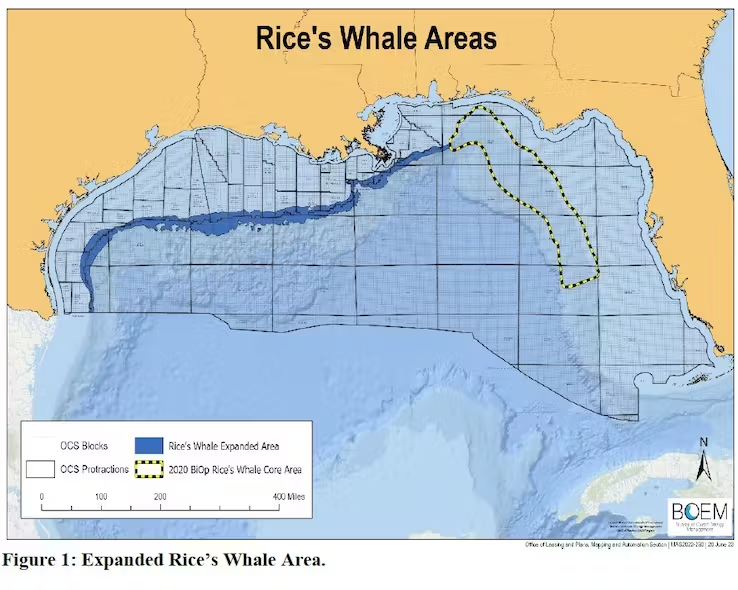
Will the Rice’s whale issues affect bidding for deepwater leases? The 5th Circuit’s ruling removes the Rice’s whale lease stipulation. However, BOEM’s Notice to Lessees and Operators (NTL) includes the same provisions and still stands pending further consultations with NOAA. Although the NTL is a “guidance document” (wink-wink), there are ways of making it stick through the plan approval process. Even without binding requirements, companies might choose to fully comply with the NTL to minimize legal risks.
Will the uncertainty about future sales spur or constrain bidding? Absent legislative action, no sale will be held in 2025.
Will the 14 blocks with rejected high bids at Sale 259 receive bids at Sale 261? If so, will the bids be higher or lower? Is it prudent to reject high bids without knowing when the next sale might be held?
Will bp, Chevron, Shell, Equinor, Oxy, and Woodside continue to be bullish on the GoM?
Will Red Willow Offshore, owned by the Southern Ute tribe, again be an active bidder?
Below is a report summary that was referenced in the Office of the Inspector General, Dept. of the Interior, Semiannual Report to Congress (9/30/2023). The summary does not identify the company that committed the violations.
Failing to identify the responsible company is not in the best interest of the OCS program or the many operators and contractors that are committed to safe operations and compliance with the regulations.
Presumably, BSEE has issued civil penalties, so we may be able to piece this case together when those penalties have finally been paid.
Summary: Offshore Servicing Company Failed to Conduct Mandated Safety Tests and Submitted False Information to BSEE Report Date: August 29, 2023 Report Number: 20-0425
The OIG investigated allegations that an offshore oil and gas servicing company bypassed safety valves and falsified mandated safety tests associated with an oil and gas production platform located in the Gulf of Mexico. The safety tests are required by Federal regulations enforced by the Bureau of Safety and Environmental Enforcement (BSEE) to ensure that equipment aboard the platform functions properly and prevents the discharge of hydrocarbons into Federal waters.
We found that the servicing company did not perform the mandated safety tests but submitted documentation to BSEE that falsely represented that the safety tests had been conducted. We also determined that multiple safety valves aboard the offshore platform were bypassed and remained in that condition for at least 59 days but potentially as long as 223 days. We presented our findings to the U.S. Department of Justice, which declined prosecution.
This is a summary of an investigative report we issued to the Director of BSEE for action as deemed appropriate.
Per EIA, September Gulf of Mexico production averaged 2 million bopd on the button! New production from Vito and Argos were no doubt contributors, as production reached the 2 million bopd mark for only the third month in the history of the OCS program. The other 2 months were in 2019.
Imagine what US offshore production might be if the OCS oil and gas program was actually managed to succeed!
Also, as the official hurricane season comes to a close today, we are fortunate in that there have been no production shut-ins from tropical storms in 2023.
Firstly, taking 2.5 years to publish an investigation report is unacceptable for an organization with BSEE’s talent, resources, and safety mandate. Unfortunately, such delays now seem to be the rule as the summary table (below) for the last 4 panel reports demonstrates. The most recent report implies that the actual investigation was completed in 2-3 months. Why were another 2+ years needed to publish the report? (Note that the lengthy and complex National Commission, BOEMRE, Chief Counsel, and NAE reports on the Macondo blowout were published 6 to to 17 months after the well was shut-in.)
incident date
report date
elapsed time (months)
incident type
5/15/2021
10/31/2023
29.5
fatality
1/24/2021
7/24/2023
30
fatality
8/23/2020
2/15/2023
30
fatality
7/25/2020
2/15/2023
31
spill
Four most recent BSEE panel reports
The subject (May 2021) fatality occurred during a casing integrity pressure test, and some of the risk factors were familiar:
The platform was installed 52 years prior to the incident, and had been shut-in for more than a year.
The well of concern (#27) was drilled in 1970, sidetracked in 1995, and last produced in February 2013.
Diagnostic tests clearly demonstrated communication between the tubing, production casing, and surface casing.
In light of the known well integrity issues and the absence of production for more than 8 years, the prudent action would have been to plug and abandon the well in a timely manner. However, under 30 CFR 250.526 as interpreted at the time, Fieldwood had another option – submit a casing pressure request to BSEE to confirm the integrity of the outermost 16″ casing and (per p. 10 of the report) “continue to operate the well in its existing condition.” Given that the well had not produced for 8 years and that the platform had been shut-in for more than a year, the option to continue operating the well should not have been applicable.
The only issue for Fieldwood to resolve with the regulator should have been the timing of the plugging operation. Additional well diagnostics would only serve to create new risks and further delay the well’s abandonment.
The resulting pressure test of the outermost (16″) casing was solely for the purpose of confirming a second well bore barrier. Per the report (p.10), there is a “known frequency of outermost casings in the GOM experiencing a loss of integrity as a result of corrosion.” Whether or not the 16″ casing passed the test, the inactive well had clear integrity issues and should have been plugged.
Fieldwood proceeded with the pressure test rather than correcting the problem. The regulations, as interpreted, thus facilitated the unsafe actions that followed. These factors heightened the operational risks:
Extensive scaffolding and a standby boat were needed for the test.
Process gas via temporary test equipment was used to conduct the test.
The Field-Person In Charge (PIC) heard about the test for the first time on the morning of the incident.
The PIC and victim had no procedures to follow, and had to figure out how to conduct the test on the fly.
A high pressure hose was connected without a pressure regulator or pressure safety valve.
The digital pressure gauge had two measurement modes, one to display pressure in psi and the other in bars. (One bar is equivalent to 14.5 psi. Assuming that the readings were in psi rather than bars would thus result in serious overpressure of the casing.)
Seconds after the victim told the field-PIC the pressure was 175 psi (presumably 175 bar and 2538 psi), the casing ruptured. The force of the explosion propelled the victim into the handrail approximately 4 feet away, which bent from the impact. The victim’s hardhat was projected 60 to 80 feet upwards, lodging into the piping.
The investigation report fails to address the wisdom of conducting the pressure test and the regulatory weaknesses that enabled Fieldwood to defer safety critical well plugging operations. The pressure test option in 30 CFR § 250.526, was not intended for long out-of-service wells with demonstrated well integrity issues. The only acceptable option was corrective action (plugging the well) without further delay. The pressure test option added risks without addressing the fundamental problem and helped enable the operator to further delay decommissioning obligations.
Postscript: According to BOEM data, the lease where the fatal incident occurred expired on 7/31/2021. Per the BSEE Borehole and structures files, neither the platform (#14) nor any of the other 4 structures remaining on the lease have been removed, and the well (#27) has yet to be plugged.







 Bud's Offshore Energy (BOE)