Feeds:
Posts
Comments

Posts Tagged ‘Chevron’

Leviathan platform, offshore Israel

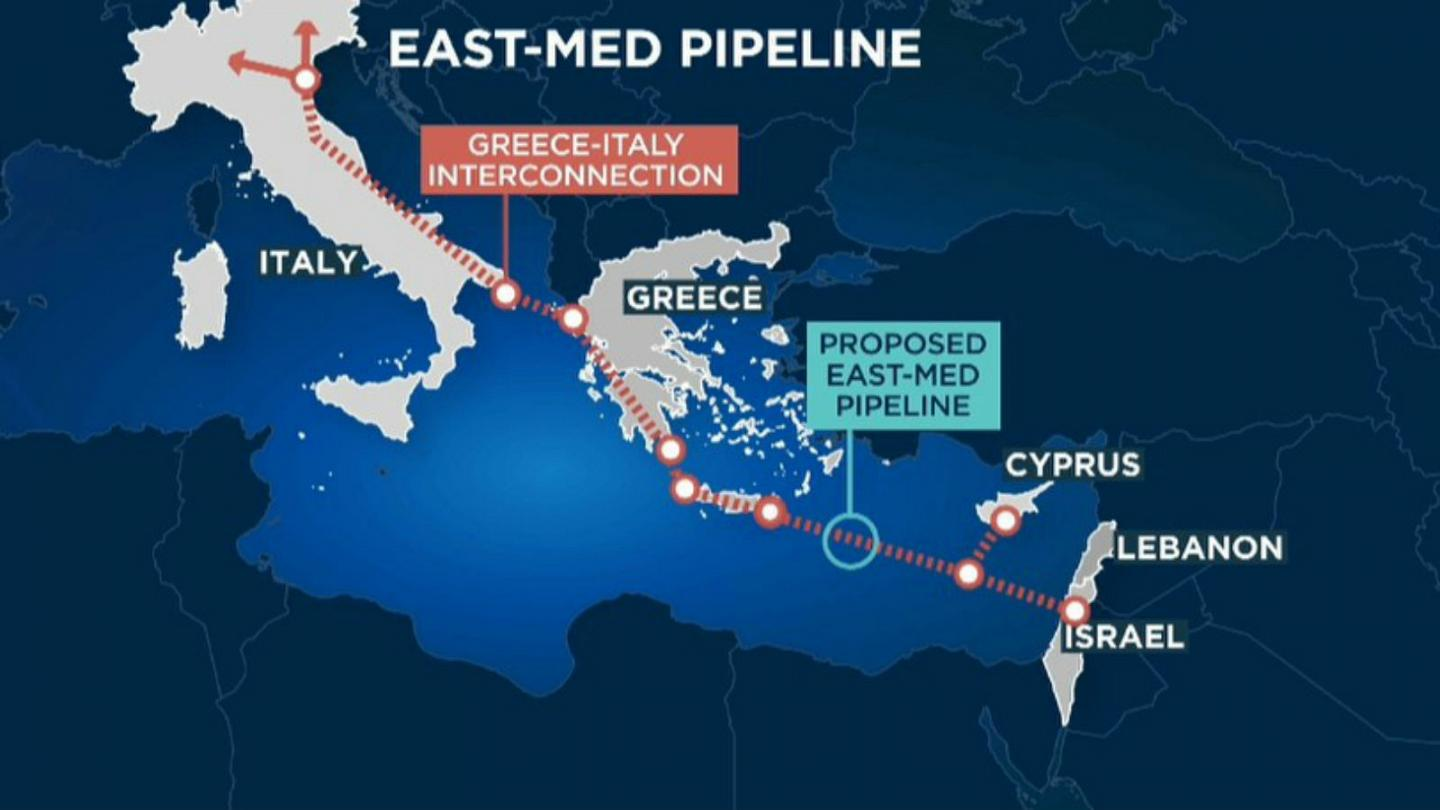
Gas reserves in the Eastern Mediterranean Basin are enormous:

Now the U.S. Geological Survey estimates that as much as 122 trillion cubic feet of gas and 1.7 billion barrels of oil lie in the eastern Mediterranean basin. That amount of gas is equivalent to about 76 years of gas consumption in the European Union.

Forbes

Another US energy/foreign policy blunder?

Last January, the US informed Israel, Greece and Cyprus that they no longer supported the proposed EastMed natural-gas pipeline from Israel to Europe citing the need to “(allow) for future exports of electricity produced by renewable energy sources, benefiting nations in the region.”

Jerusalem Post

It’s time to move forward with this strategically important energy project. Chevron is now the main player in the Eastern Mediterranean after their 2020 acquisition of Noble Energy.

Read Full Post »

While the Fieldwood Energy violations drove up the number of Incidents of Non-Compliance (INCs) in the Gulf of Mexico in 2021, most operating companies appear to have had good compliance records. Among companies that were subjected to at least 10 facility inspection and drilled at least one well, BHP Billiton, Eni US, and Murphy (listed alphabetically) had the most impressive compliance records. These three operators were cited for 7 or fewer INCs, none of which required a facility to be shut-in. Other operators that exceeded those activity thresholds and had excellent compliance records were (listed alphabetically) Anadarko, ANKOR Energy, Chevron, EnVen, Shell, and Walter Oil and Gas.

In the Pacific Region, Beta Operating Co., Chevron (now overseeing the former Signal Hill properties), and Exxon had excellent compliance records, although none of these facilities produced for the full year. In Alaska, Hillcorp had an excellent record at the Northstar Unit. (This is a gravel island facility in the State waters of the Beaufort Sea, but some of the wells produce from portions of the reservoir that are in the Federal sector).

Unfortunately, only summary inspection data are posted online. Without knowing the specific violations and circumstances, it’s not possible to fully assess the risk exposure. These oil and gas operations are conducted on public lands and are monitored by Federal employees. Inspection data and reports should be publicly accessible without having to submit Freedom of Information Act requests.

As has previously been discussed, incident updates should also be posted in a timely manner. Reference is made to this important recommendation in the 2016 National Academies report entitled Strengthening the Safety Culture of the Offshore Oil and Gas Industry:

Recommendation 4.2.2: Because accident, incident, and inspection data all are needed to identify and understand safety risks and corrective actions, the committee recommends full transparency such that regulators make all these data readily available to the public in a timely way, taking into consideration applicable confidentiality requirements.

Read Full Post »

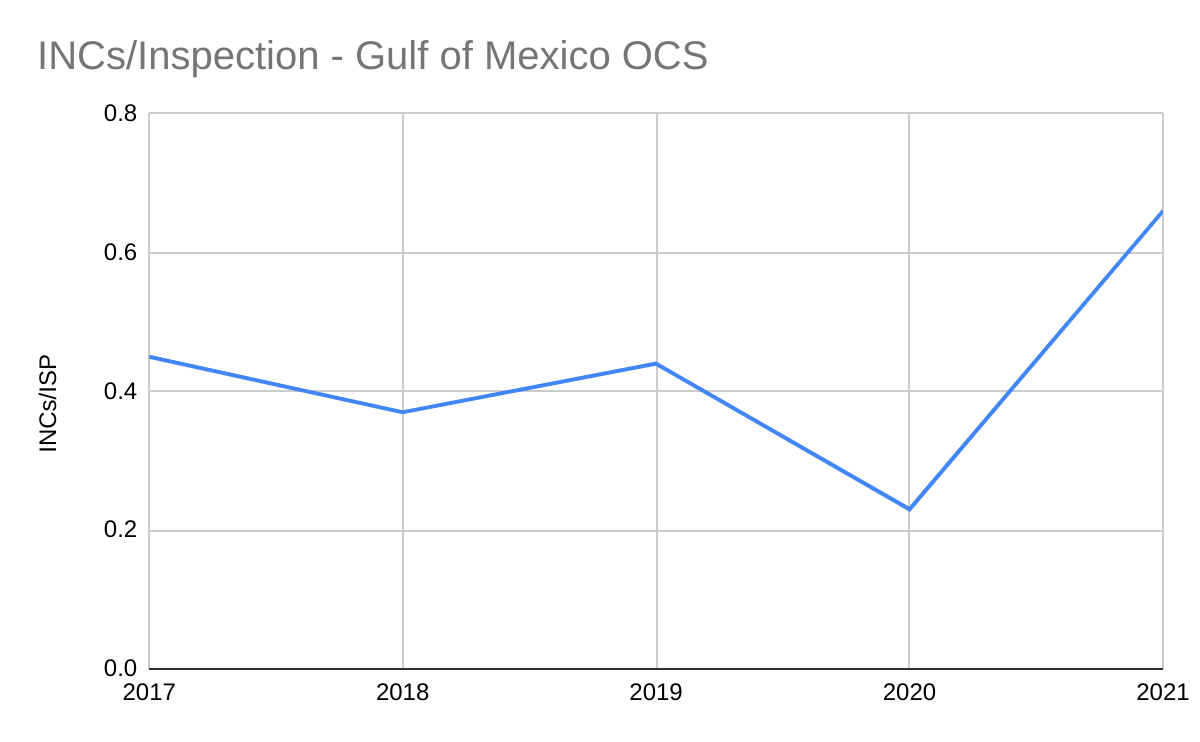
Per BSEE’s Incidents of Non-Compliance (INC) data base, the number of violations surged in 2021, both in terms of the total number of INCs and the INCs/inspection ratio (see chart below). Remarkably, a single company – Fieldwood Energy – was responsible for 845 INCs or 44% of the total number issued. Normalizing for the number of inspections, Fieldwood facilities were cited for 1.46 INCs/inspection versus 0.46 INCs/inspection for all other companies. An unprecedented 61 of Fieldwood’s 2021 INCs called for facility shut-ins, many times more than any other operator. Through the first 17 days of 2022, Fieldwood has already been cited for 21 INCs, 5 of which required facilities to be shut-in.

Fieldwood and its affiliates have experienced multiple bankruptcies and the company has once again been reorganized with the blessing of the courts. Chevron’s comprehensive objection to the reorganization plan asserted that Fieldwood has $9 billion in current and anticipated decommissioning obligations. These enormous decommissioning liabilities and their implications for predecessor lessees (former facility owners) and the Federal government were the main issue in these proceedings, and the bankruptcy plan includes settlements with predecessor companies and the government.

Even more significant than the financial matters and INCs are the following:

While BSEE regulations provide for the removal of operating rights for poor safety performance, companies can reorganize and problem managers can reappear elsewhere. As a result, marginally financed and ineffective operating companies are a major challenge for BSEE as evidenced by the INCs, civil penalties, and investigations. (See the related saga of Platforms Hogan and Houchin in the Pacific Region.)

Poor safety performers drag down the entire industry. The costs of mega-disasters like the Santa Barbara and Macondo blowouts have been widely discussed. However, chronic poor performance and the associated incidents also weaken the industry and damage the integrity of the offshore oil and gas program. These performance issues can’t be left entirely to BSEE and the Coast Guard to resolve. The industry needs to do a better job of self-evaluation, calling out poor performers, and exercising judgement in the assignment of offshore properties.

Read Full Post »

Were it not for the surprising CCS bidding, which was accomplished without public notice, last week’s Gulf of Mexico sale would have been pretty ordinary – $177 million on 214 tracts.

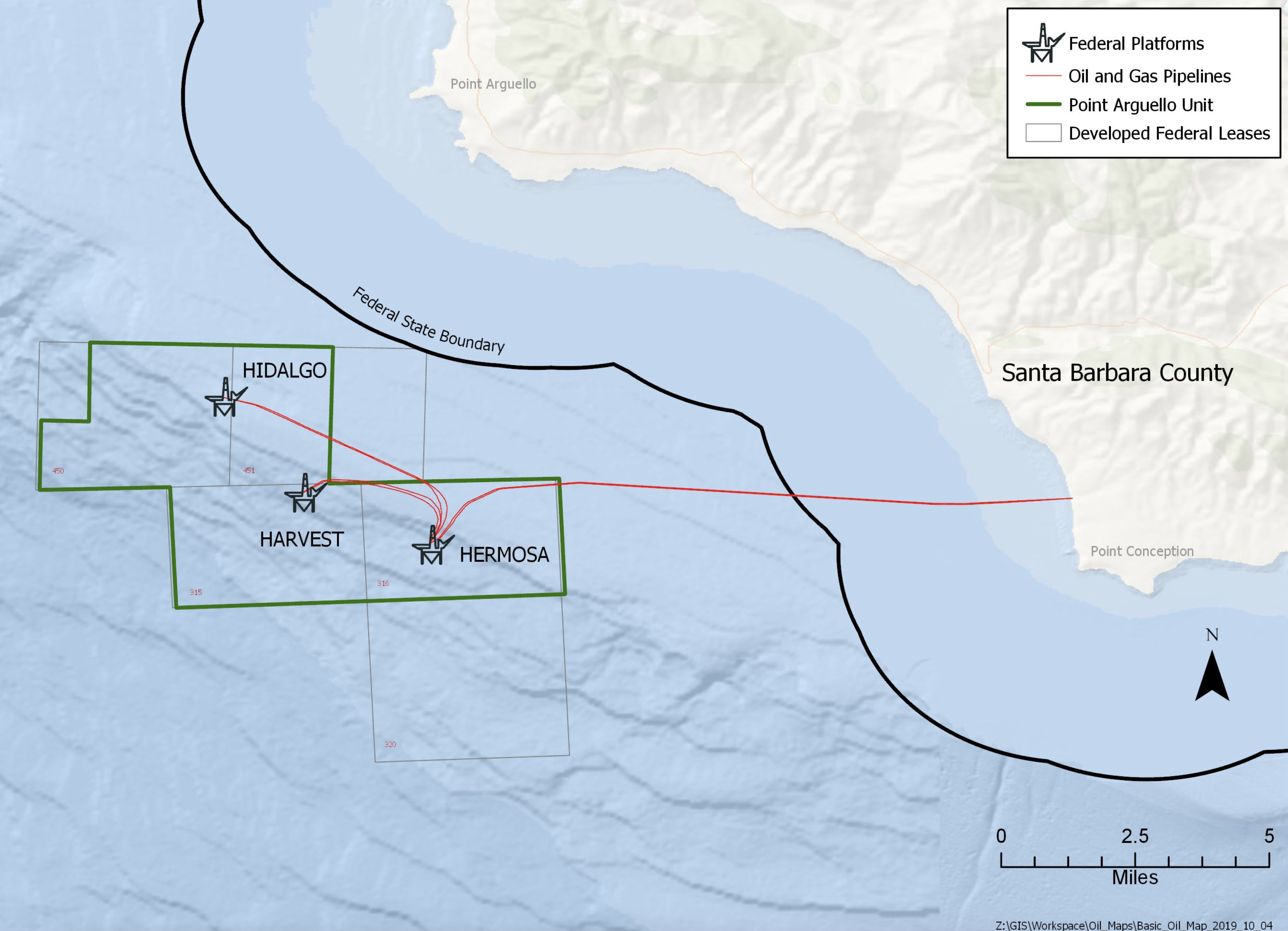
A 1981 lease sale offshore California was quite another matter. That sale (no. 53) set records that will never be surpassed. A single lease (OCS-P 0450) encompassing a little more than 5000 acres was sold to Chevron and Phillips for an astounding $333 million. This equates to $1.013 billion in 2021 dollars. That single bid (in 1981 dollars) exceeds the total high bids for any Gulf of Mexico sale since 2015.

High bids for Sale 53 totaled $2.3 billion ($7.0 billion in 2021 dollars!) for only 81 tracts. A GoM sale in 2008 received $3.7 billion in high bids, but that was for 603 tracts.

Unfortunately, production from lease 0450 never met expectations. Platform Hidalgo (0450) and the other two Pt. Arguello field platforms (Harvest and Hermosa) are no longer producing and are in the process of being decommissioned. An interesting criminal case involving Platform Harvest, then operated by Texaco, will be discussed at a later date.

Pt. Arguello Field

OCS Sale data

Pacific only data

John Smith’s Pacific decommissioning update

Read Full Post »

National Commission letter

Chevron Cement Report

Chevron’s report states, among other things, that its lab personnel were unable to generate stable foam cement in the laboratory using the materials provided by Halliburton and available design information regarding the slurry used at the Macondo well. Although laboratory foam stability tests cannot replicate field conditions perfectly, these data strongly suggest that the foam cement used at Macondo was unstable. This may have contributed to the blowout.

Further:

The documents provided to us by Halliburton show, among other things, that its personnel conducted at least four foam stability tests relevant to the Macondo cement slurry. The first two tests were conducted in February 2010 using different well design parameters and a slightly different slurry recipe than was finally used. Both tests indicated that this foam slurry design was unstable.

Read Full Post »

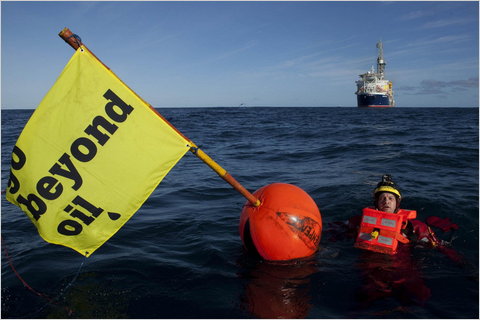
Greenpeace Photo

Despite protests, the UK has approved Chevron’s exploratory well in 1640′ of water west of the Shetland Islands.

It was a choice between producing oil and gas here in U.K. waters, where we have one of the most robust safety and regulatory regimes in the world, with all the economic benefits that will bring, or paying to import oil and gas from elsewhere. UK Department of Energy and Climate Change statement

It’s pretty hard to argue with that logic.

Read Full Post »

Max Ruelokke

BOE friends Max Ruelokke, Chairman of the Canada – Newfoundland and Labrador Offshore Petroleum Board and Stuart Pinks, CEO of the Canada – Nova Scotia Offshore Petroleum Board, will appear before the House of Commons Standing Committee on Natural Resources on Tuesday, May 25th.  The meeting is at 9:00 am ET and will be broadcast live on the web.  Click on Meeting No. 17.

Among the topics certain to be discussed is Chevron’s Lona 0-55 well, which is currently being drilled in 2600m of water in the Orphan Basin offshore Newfoundland.  Max and Stuart are very bright and capable engineers and regulators; I’m sure you will appreciate their insights.

Read Full Post »

« Newer Posts