While a graduate student more than 50 years ago, I wrote a paper entitled “The Use of Natural Gas in Improving Air Quality.” My professor, Dr. Richard Gordon (RIP), a terrific economist who greatly influenced my thinking about energy, liked the paper but thought I was too optimistic about the availability of gas.
The sense at the time was that natural gas was a premium energy source in short supply. I was blissfully ignorant and thought we geologists and petroleum engineers would find and produce the gas. The Shale Boom, for which I can take zero credit, has proven me correct, so I’m taking another victory lap. 😀
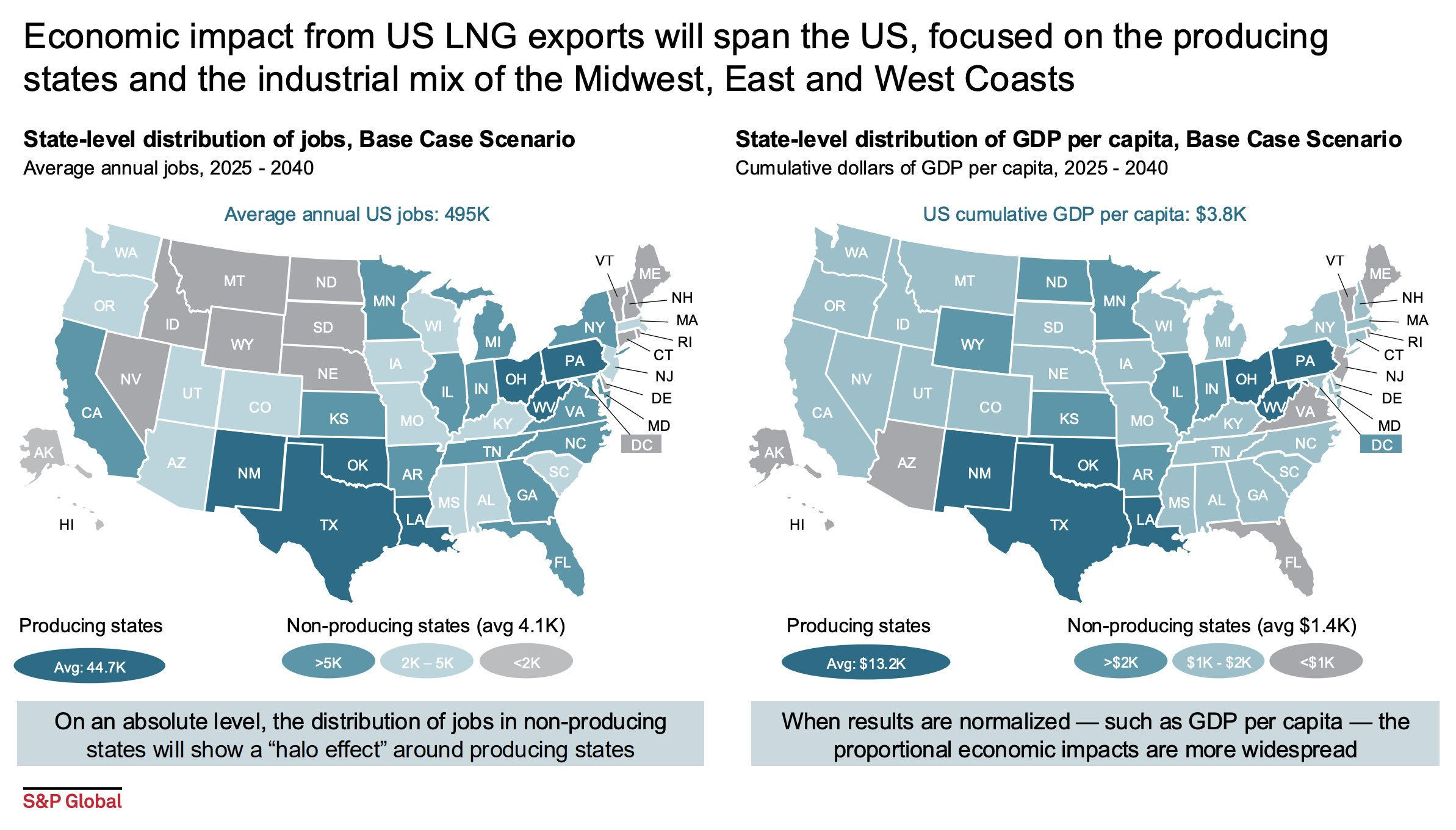
Last week, the great Dan Yergin and his team at S&P Global issued a report that explains how economically and environmentally important natural gas has become. Key findings from the report are pasted below:
Higher US LNG exports lead to lower overall global emissions by displacing the more GHG intensive fuels that would replace them.
End use combustion is responsible for 57–87% of GHG intensity for coal, oil, gas and LNG, with supply chain methane emissions the key driver of variation between fuels (e.g., domestic vs. international LNG, domestic versus piped natural gas imports, or different crude oil streams).
Coal emits roughly 70% more greenhouse gases than the US LNG it would replace across all the alternatives analyzed.
US LNG’s unprecedented growth is enabled by an extended cross-state value chain, that reaches beyond the core-producing states – about 90% of every dollar spent remains within United States supply chains
Of the annual average of 495,000 US jobs supported through 2040, 37% will be in non-producing states. As many jobs will be supported in on-producing states as in Texas
Over the same period, LNG Exports will contribute $1.3 trillion in GDP, with $383 billion or 30% in non-producing states. On a per capita basis, producing states benefit from a cumulative $13.2K GDP per capita
The US Northeast (NE) has vast amounts of low-cost gas reserves in the Marcellus and Utica formations (New York, Pennsylvania, West Virginia, Ohio), sufficient to meet nationwide demand for ~17 years
Due to pipeline constraints these reserves are being developed at a suboptimal rate, pushing gas prices at Boston, Chicago and New York City Gates up 160% higher than the national gas market in peak months
Expanding NE pipeline capacity by 6.1 Bcf/d could reduce HH gas prices by $0.20/MMBtu and significantly lower prices across the region. Cumulative nationwide consumer savings could reach $76 billion through 2040
Senator Schiff and 22 California representatives sent the attached letter to Gov. Newsome urging him to:
Require the Fire Marshal to reconsider the state waiver for the pipeline, conduct environmental review, and hold a public hearing;
Require a coastal development permit for restart of the pipeline;
Require State Parks to conduct environmental review and hold a public hearing prior to deciding whether to approve a new easement for the pipeline through Gaviota State Park.
The good news for Sable: Despite the bluster in the letter’s opening paragraphs, none of the requests to Gov. Newsome are knockout punches. The first two relate to matters that have already been addressed and Sable is in a favorable position. The third, the Gaviota State Park easement renewal, is currently under review and should not be a decisive blow.
The bad news for Sable: Punches will continue to be thrown even after production resumes (should that ever actually happen.)
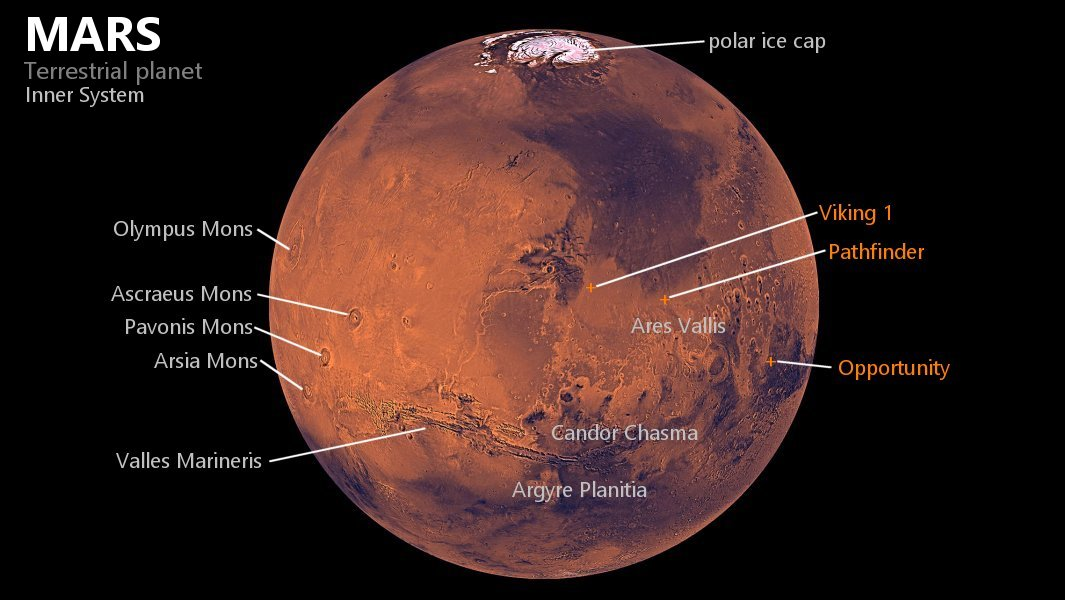
In light of the recent NASA/SpaceX advances in rocketry, a manned mission to Mars seems inevitable, perhaps within the next 5 years. See the SpaceX Mars landing video below.
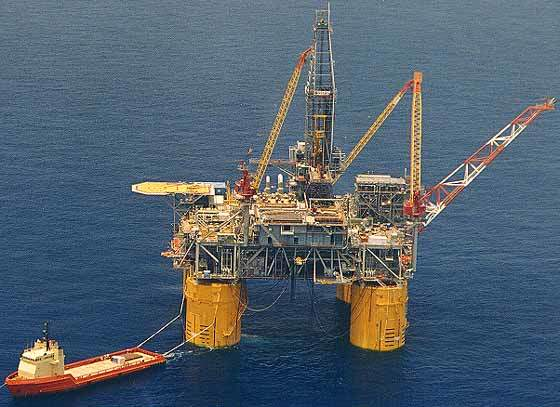
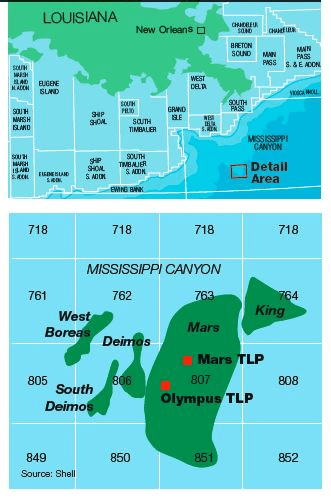
While the space program generates more media buzz given the sci-fi appeal, the achievements of the offshore oil and gas industry are similarly impressive. The Gulf of America has its own Mars, a massive deepwater project that has been ongoing and expanding for 30 years, and may ultimately produce more than 1 billion barrels of oil equivalent (boe).
Like a mission to Mars, the successful development of deepwater oil and gas resources is a technical marvel that requires:
Identifying prospects deep beneath the seafloor using advanced subsurface imaging capabilities.
Drilling exploratory wells from floating rigs, using advanced stationkeeping systems that maintain a precise location on the water surface.
Drilling deep beneath the seafloor while transmitting real-time geologic, temperature, and pressure data to the rig and distant onshore locations.
Ensuring well integrity by installing and cementing multiple strings of protective casing.
Processing production at buoyant surface facilities designed to withstand worst case storm conditions.
Connecting clusters of subsea wells to a host surface facility that may be many miles away.
Increasing ultimate recovery with reservoir engineering studies and advanced well completion practices.
Life on the planet Mars will be dependent on technology developed for the offshore Mars and other deepwater projects.
BSEE’s risk-based inspection and safety alert programs have effectively drawn attention to grating risks. Attached is a recent alert describing a grating incident that could have been fatal.
A worker installing a pump in a skid above unsafe grating was kneeling on scaffolding boards. The tip of his boot was on the corroded grating when it suddenly gave way. The worker was able to grab a nearby section of piping to support himself. The 36″ x 36″ piece of grating collapsed and fell into the water.
The oil industry has a long history of dealing with the correlative rights issues associated with oil drainage from competitive reservoirs. Similar issues are arising in the offshore wind industry.
Orsted claims that four nearby wind farms in the Irish Sea could result in a drop in Orsted’s annual energy production of up to 5.34%, and is seeking mitigation or compensation.
This is all rather familiar to the oil industry and its regulators, particularly the call for compensation!
“The California Coastal Commission is simply out of control and has veered far from its purpose of protecting the coast,” said Rep. Kiley. “From blocking SpaceX rocket launches to obstructing fire prevention projects, the Commission has repeatedly threatened the safety of Californians and weakened our national defense, while needlessly undercutting innovation and economic progress. The need to rein in the Commission has become urgent as we face the challenge of rebuilding Los Angeles following the fires. ”
The bill (attached), introduced by Kevin Kiley (CA), would amend the Coastal Zone Management Act (CZMA) to expedite important coastal activities, including national security initiatives, critical infrastructure development, and disaster mitigation and recovery efforts. Key provision:
‘‘(2) LIMITATION ON OBJECTION.—An objection or other challenge by a coastal state to an activity subject to a conclusive presumption of concurrence under paragraph (1) may not delay or otherwise prevent the activity from proceeding.”
While perhaps unlikely to be enacted, the bill addresses regulatory authority that many perceive to be unchecked and abusive. Congressional attention is clearly warranted.
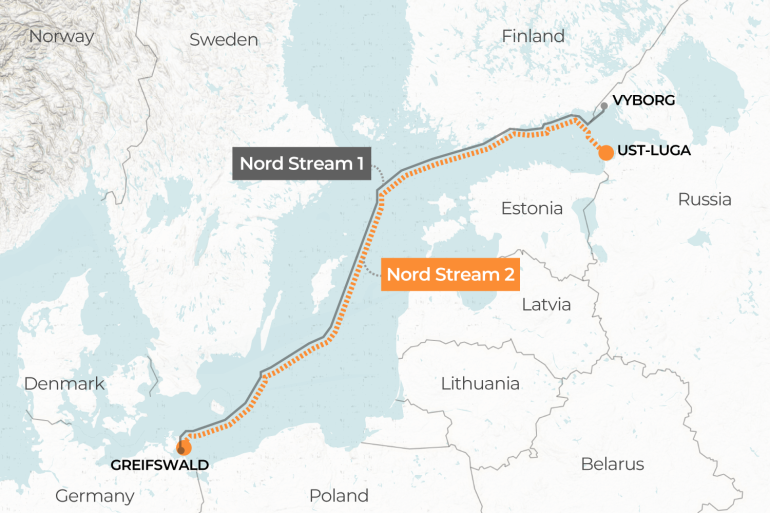
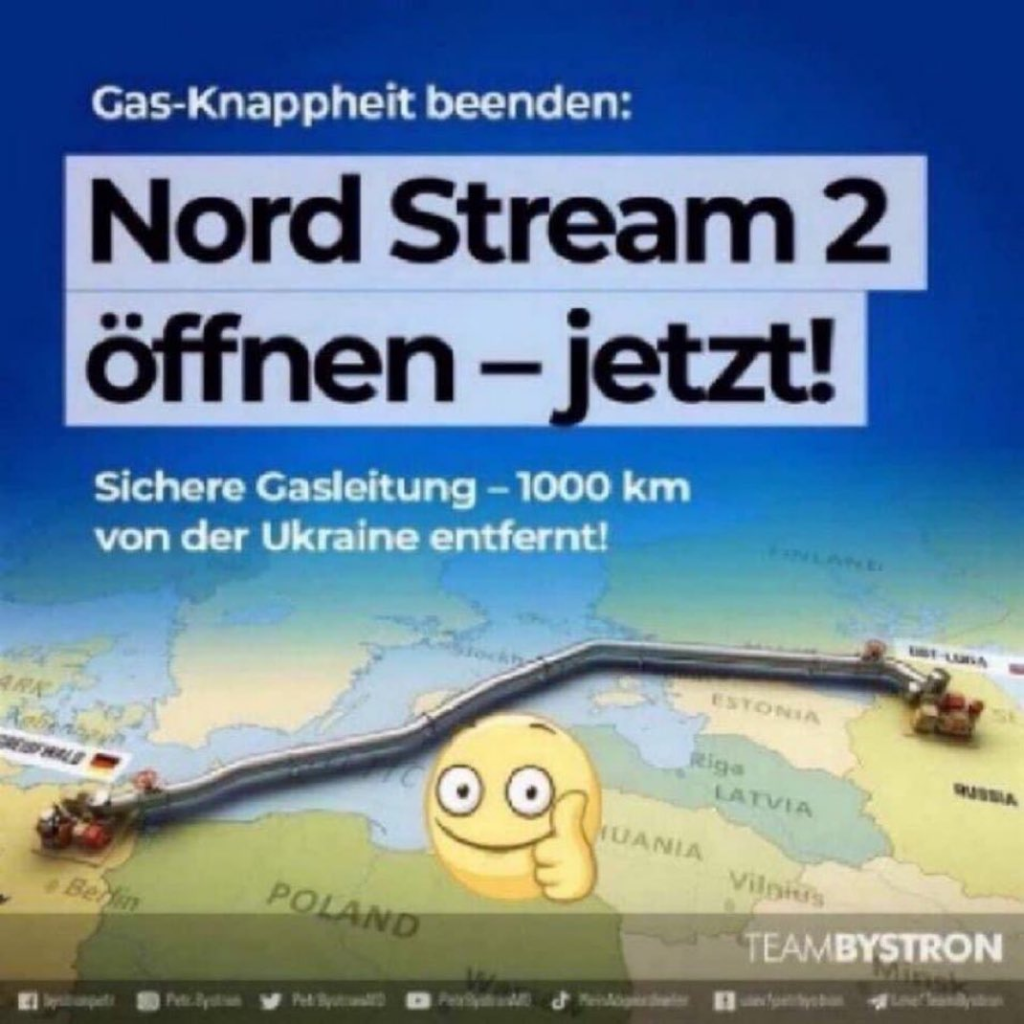
Is Germany taking energy masochism to a new level?:
MSN: “Germany is exploring levers to prevent the resumption of Nord Stream 2. The pipeline may allegedly be restarted under an agreement between the US and Russia as part of the settlement of the war in Ukraine, Bild reports.“
“According to Bild and the Financial Times, secret talks have been going on between representatives of Russia and the United States for several weeks now about American investors buying the damaged Nord Stream 2 pipeline in the Baltic Sea.“
Good questions by Swedish engineer and independent Nord Stream investigator Erik Andersson:
“Wow! Why on earth would Germany stop gas through Nord Stream 2 if the war ends and USA approves it?“
“Richard Grenel who was involved in sanctioning NSP2 in 2019 is mentioned as a player in the article. After the explosions 2022, Grenel said the first Trump admin was against NS2 but not NS1 which was delivering an acceptable amount of gas without making Germany too dependent on Russia. I wonder if the current Trump admin still think that two out of the four Nord Stream pipelines could be opened without creating a dangerous dependency on Russia?“
The Alternative für Deutschland (AfD) party, supports a Nord Stream restart. Despite the AfD’s strong second place finish in the recent national elections, the leading CDU party is trying to keep the AfD out of the governing coalition.
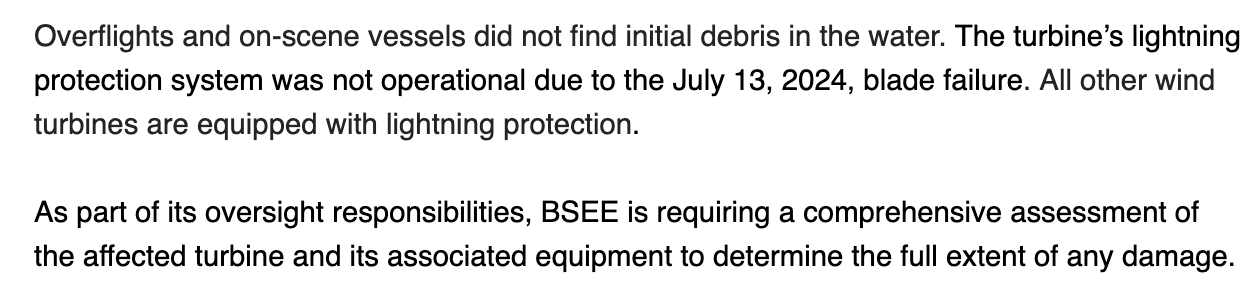
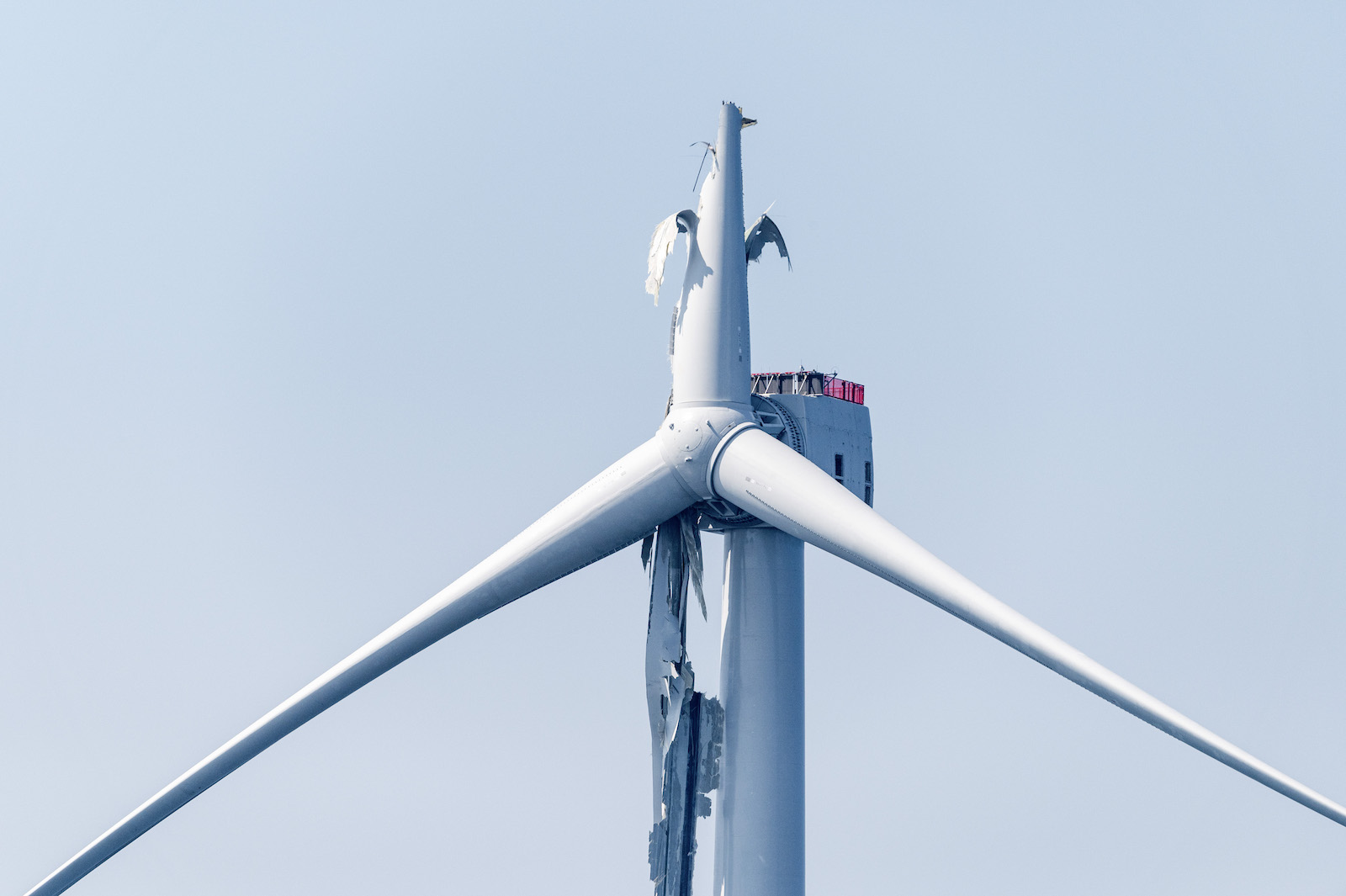
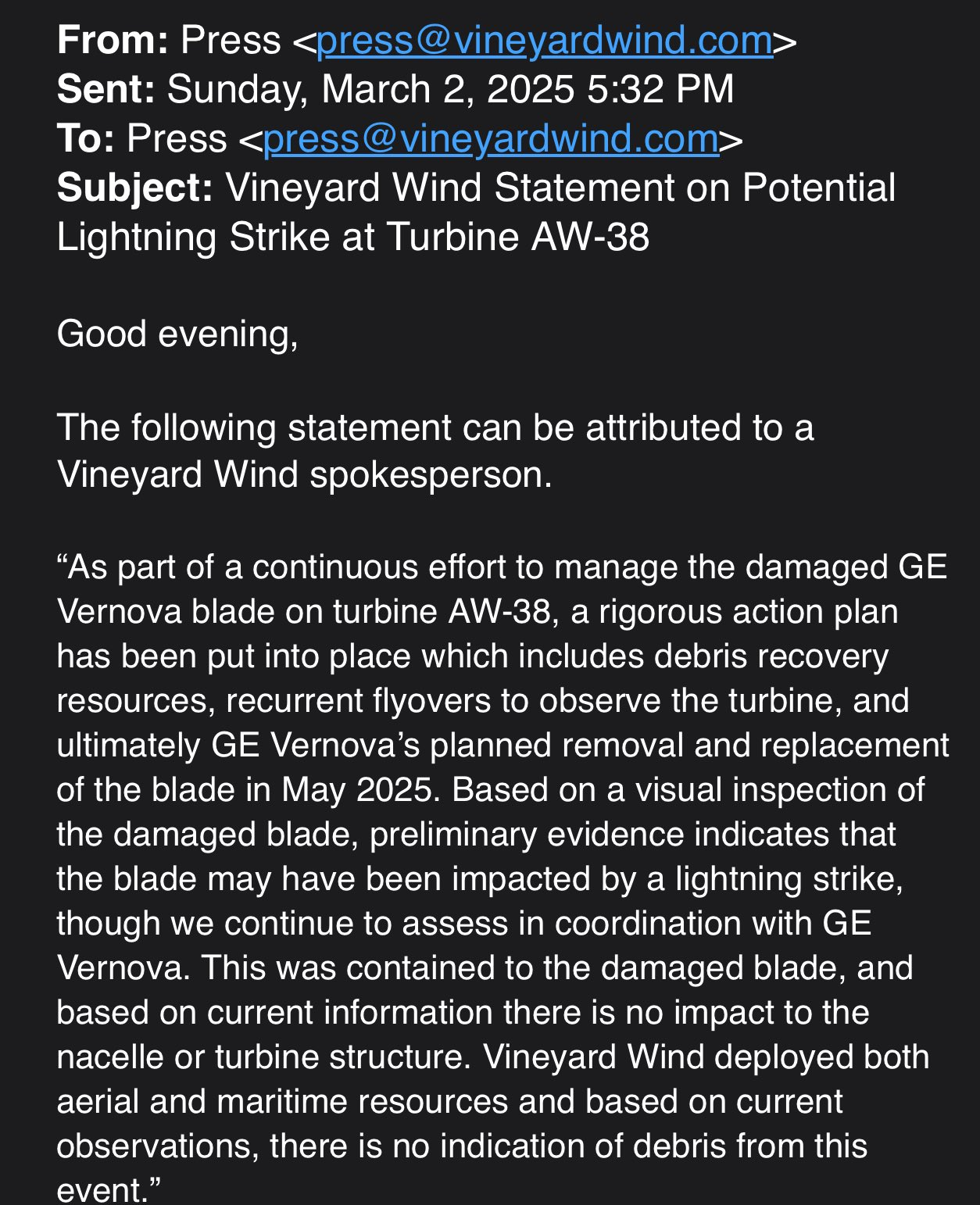
The same Vineyard Wind turbine blade that failed last summer has now been struck by lightning:
“Lightning struck the fractured stub of Vineyard Wind’s broken turbine blade in the early morning hours on Friday (2/27), according to representatives from Vineyard Wind and the Coast Guard. It was the remnants of the broken blade that snapped this July that were still attached to the turbine.”
“It appears the town (Nantucket) was not informed of the lightning strike by Vineyard Wind until it received media inquiries about it, over 48 hours after it happened.”
Politico.EU: “NATO will send around 10 ships to guard important underwater infrastructure in the Baltic Sea by the end of the week, Finnish newspaper Yle reported on Tuesday.
Why increase operating costs and expose platform operations to power disruption risks when there is no net environmental benefit?