“The government documents for ALL the Atlantic projects make it clear that there will be no benefit to climate change from implementing wide scale offshore wind.”
“And how is it possible that an attorney representing an island that is receiving the full brunt of the environmental impacts from this massive industrial project is lecturing the press that historic preservation can co-exist with offshore wind? The sight of just the first 40 towers from Vineyard Wind makes it clear they can’t.”
“Blindly following public relations statements about offshore wind as a critical solution to climate change that must be implemented immediately is how we got here in the first place. It has become clear that Nantucket receives no benefits from, but is significantly harmed by, Vineyard Wind. Our Select Board’s role should not be to advocate for any energy source that harms Nantucket.”
“Dawn Hill, a signatory to the Good Neighbor Agreement and the current Select Board Chair, was a bright spot in the meeting. Her acknowledgment that the project is way more impactful than communicated at the time the Good Neighbor Agreement was signed gives hope that more rational thinking and action is on the way.“
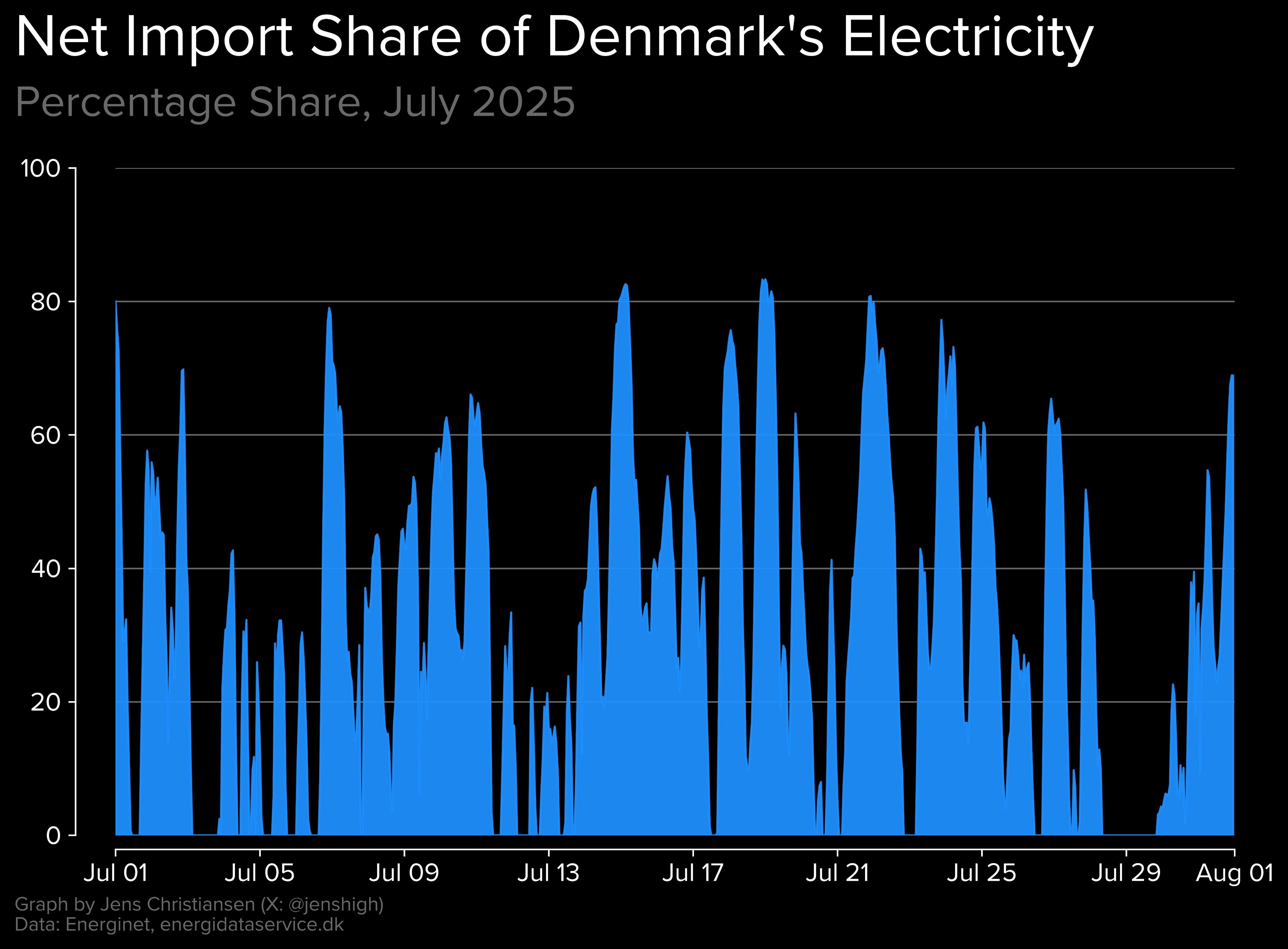
As indicated in the Jens Christiansen graphic above, Denmark’s net imports exceeded 80% of demand several times in July. Per Jens, a Danish physicist, “this is the downside of being a wind leader we have to talk about.”
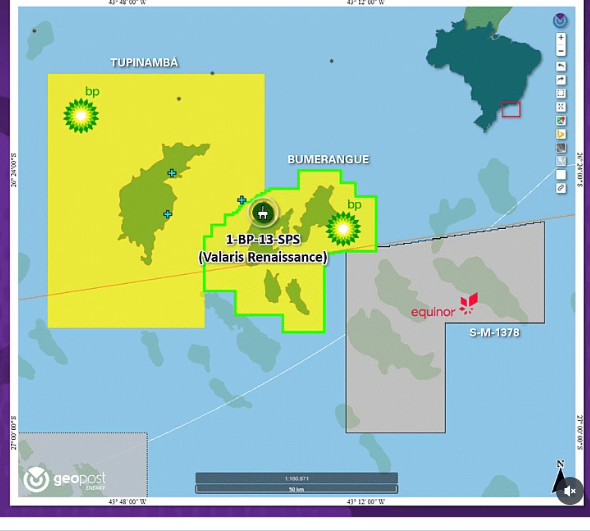
Per bp, the Bumerangue block well is located in the Santos Basin, 404 kilometres from Rio de Janeiro, in 2,372 metres of water. The well was drilled to a total depth of 5,855 metres.
Looks like the buzz may be warranted:
The well intersected the reservoir about 500 metres below the crest of the structure and penetrated an estimated 500 metre gross hydrocarbon column in high-quality pre-salt carbonate reservoir with an areal extent of greater than 300 square kilometres.
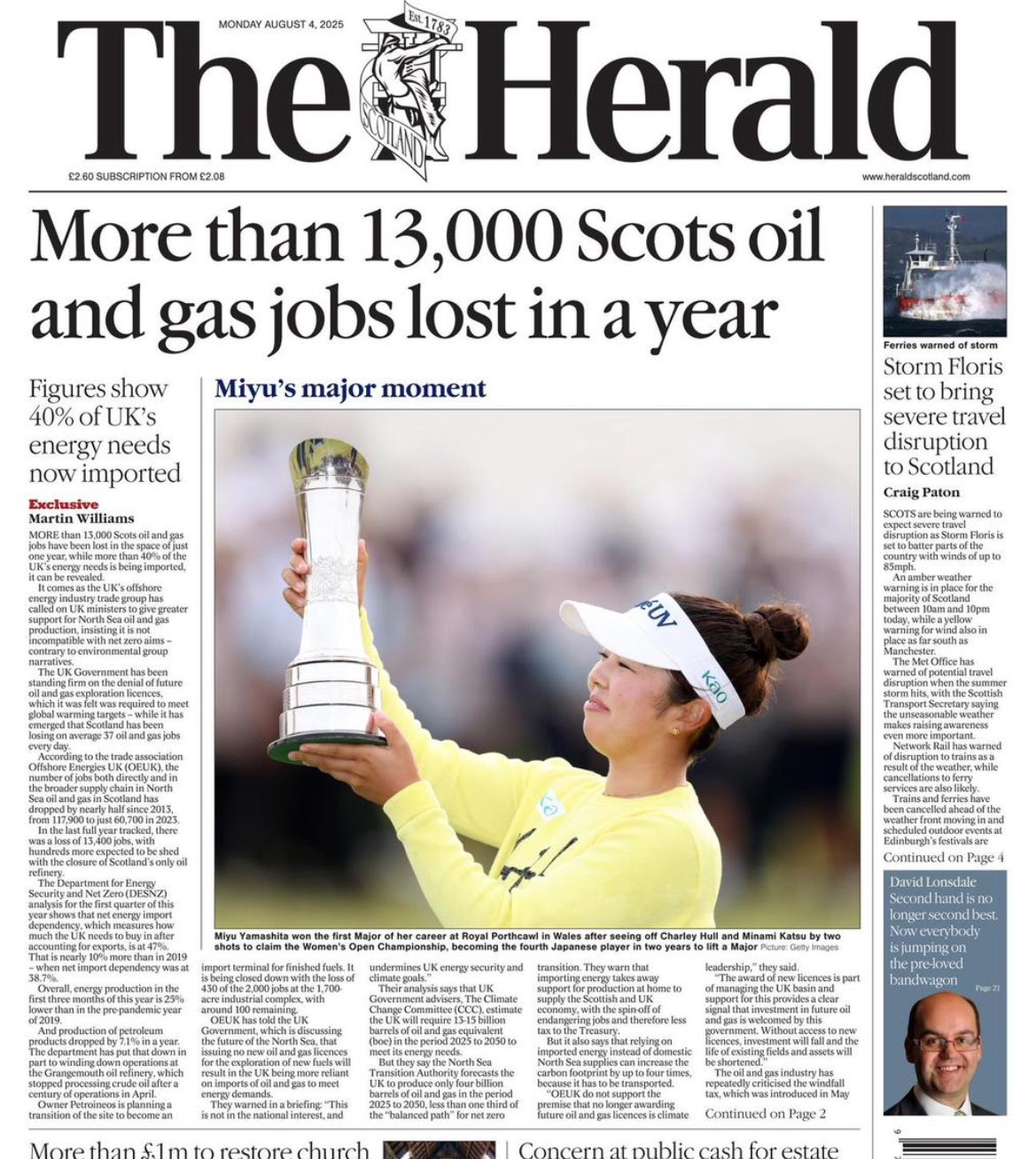
North Sea pioneer, JL Daeschler, reports from Scotland that “more than 13,000 Scots oil and gas jobs have been lost in the space of just one year while over 40% of the UK’s energy needs is being imported ….”
The UK’s self destructive energy policy, while sadly not unique, is particularly troubling because of the North Sea’s enormous contribution to the domestic economy over the past 50 years. As Gillian Bowditch aptly commented:
“We all want to protect our environment and Scotland, with its vast natural resources and expertise in energy, should be leading the way. Instead, we have squandered an opportunity in favour of a facile show of moral posturing.”
MV Times: “The recent site visit raised questions on the production of the wind farm. The Times has been able to neither verify the report independently nor confirm disparities between visuals on the ground and the Iberdrola report.”
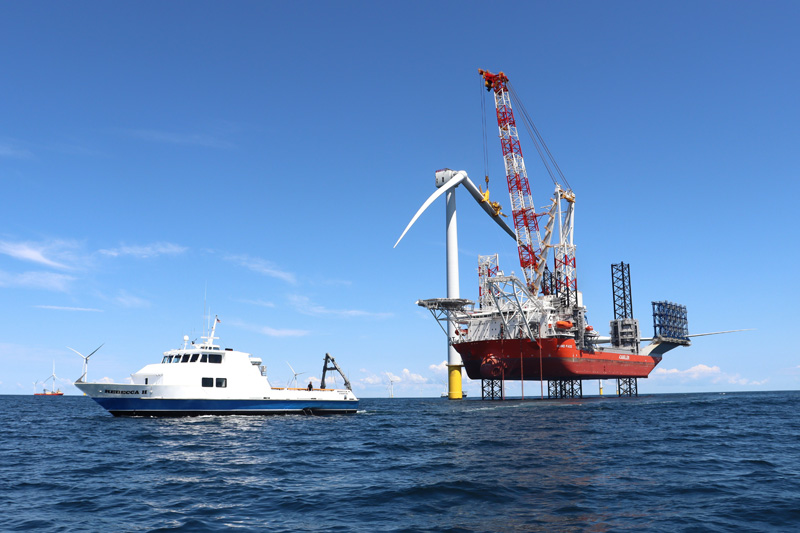
Avangrid, an Iberdrola subsidiary and one of Vineyard Wind’s developers, reported that 17 out of 62 turbines were currently sending power to the Massachusetts grid.
The MV Times counted between five and nine turbines spinning at different points, and for different intervals, in their two hour visit.
BOE comment: Although there are many possible reasons for this discrepancy, it’s reasonable to question the absence of turbine output data. Developers assert that generator specific data are sensitive and could have market implications. However, these turbines are operating on public lands and were in part publicly funded. Output data and other performance metrics clearly have policy implications.
Note that Iberdrola “expect[s] no impact from new federal budget legislation, as it doesn’t impact 1,000 megawatts under construction.”
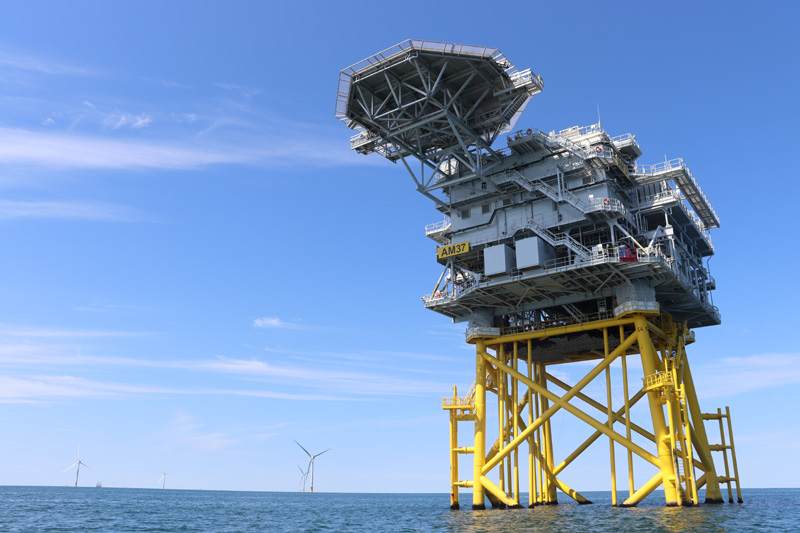
An MV Times photo of a Vineyard Wind substation is pasted below. These substations are large structures. Per the Construction and Operations Plan (COP) for Vineyard Wind, the topsides for a conventional electrical service platform (ESP) (also known as an offshore substation or OSS) are 45 x 70 x 38 m, which is larger in surface area than a typical 6-pile oil and gas platform (~30 x 30 m), and is comparable in size to a large jackup drilling rig.
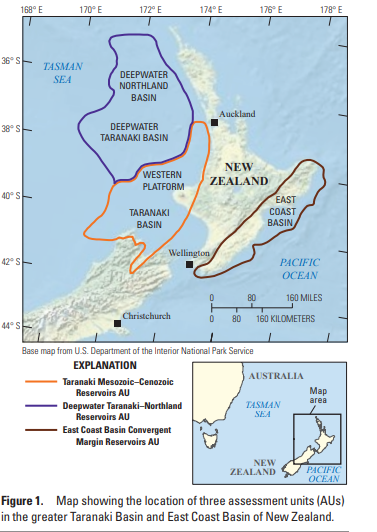
New Zealand may again issue new oil and gas permits following yesterday’s action by parliament.
The extent to which this will result in new exploration remains to be seen. Increased natural gas production is the primary objective.
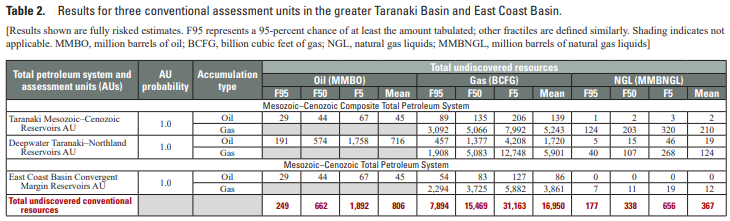
USGS (2020) undiscovered resource estimates are encouraging. The fully risked total for natural gas is 17 Tcf (mean), with a range of 7.9 to 31.1 Tcf. See the table pasted below.
Policy shift at a glance:
April 2018:New Zealand is halting all new offshore oil and gas exploration to become a global leader in the fight against climate change, the centre-left government said Thursday, but opponents accused it of “economic vandalism”.
June 2024: The country’s coalition government is preparing to invite energy companies to resume exploration in the three major offshore fields that supply most of its gas. It comes after National Grid operator Transpower was last month forced to warn families to limit their electricity usage to avoid a shutdown during a cold snap.
July 31, 2025: Parliament reverses the law banning new offshore oil and gas exploration permits.
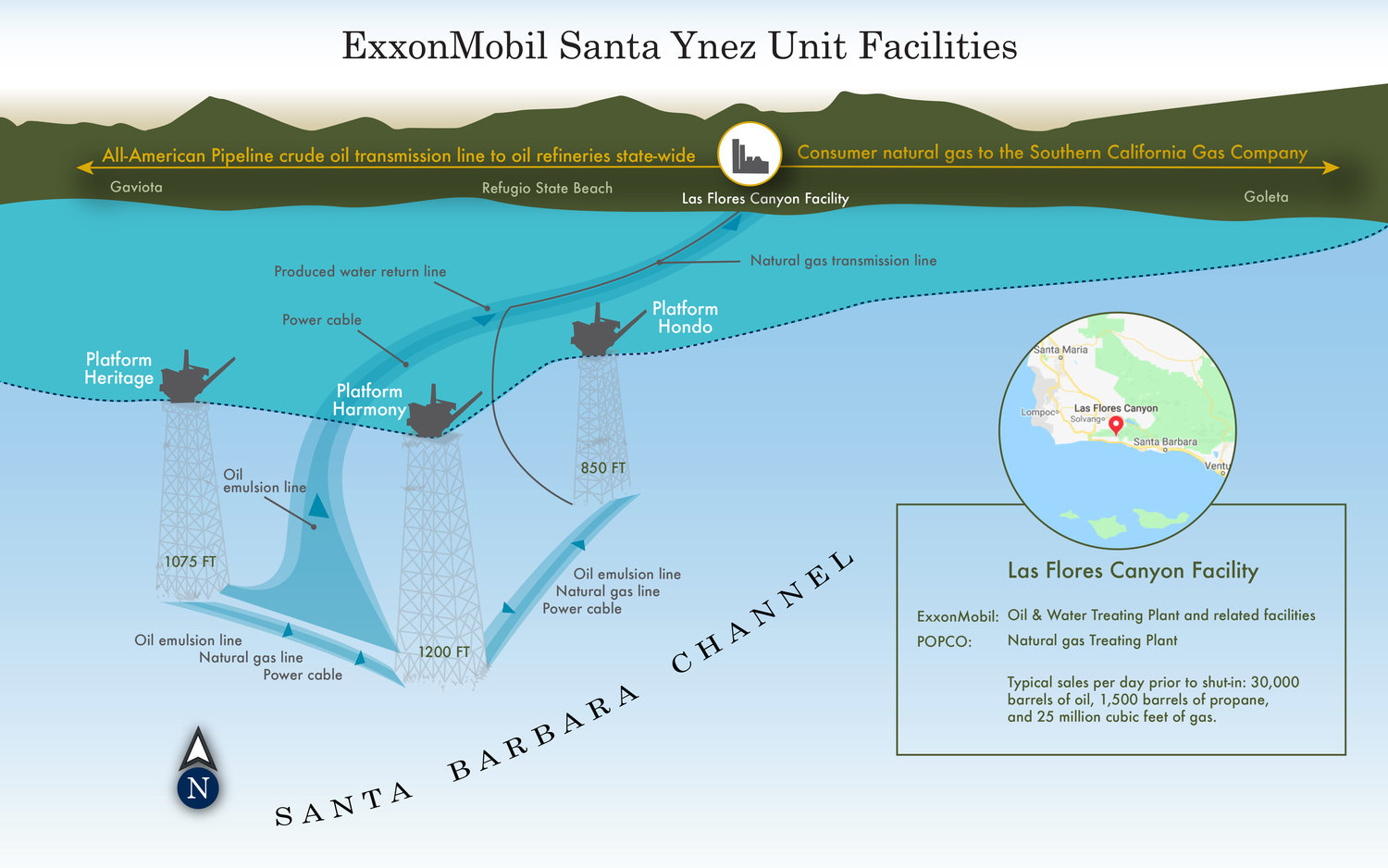
On July 25, 2025, more than 2 months after Sable’s brief production restart and 7 weeks after a court decision halted further production, BSEE surprisingly announced the resumption of Santa Ynez Unit (SYU) production boasting:
“This is a significant achievement for the Interior Department and aligns with the Administration’s Energy Dominance initiative, as it successfully resumed production in just five months.“
Were the authors of the press release unaware that the SYU production, which was largely from well tests, was halted by court order shortly after it began? More philosophically, is such cheerleading appropriate for the principal safety regulator, particularly given that BSEE is engaged in litigation over its practices in facilitating SYU production?
Ironically, just 3 days after BSEE hailed the resumption of production, the attached lawsuit was filed on behalf of investors who purchased Sable Offshore securities between May 19, 2025 and June 3, 2025. BOE contributor John Smith shared the filing.
The plaintiffs allege misleading statements regarding the resumption of production. Some of the key points cited in the filing:
On May 19, 2025, before the market opened, the Company issued a press release entitled “Sable Offshore Corp. Reports Restart of Oil Production at the Santa Ynez Unit and Anticipated Oil Sales from the Las Flores Pipeline System in June 2025.”
The release informed that Sable expected to fill the ~540,000 barrels of crude oil storage capacity at LFC (Los Flores Canyon onshore processing facility) by the middle of June 2025 and subsequently recommence oil sales in July 2025.
Following the May 19 Press Release, Sable Offshore stock climbed from a closing price of $28.86 per share on May 16, 2025 to $33.02 per share on May 19, 2025, a 14.4% climb in share price.
Contrary to Defendants’ representations, Sable Offshore had not resumed commercial production off the coast of California.
Defendants then used the share price appreciation following the May 19 Press Release to conduct a secondary public offering (or “SPO”) at a higher offering price per share than would have otherwise been possible.
State Lands Commission staff informed the Lt. Gov./Commission Chair that the limited oil flows were the result of well-testing procedures required by BSEE prior to restart. These activities did not constitute a resumption of commercial production or a full restart of the SYU.
Characterizing testing activities as a restart of operations is not only misleading but also highly inappropriate –particularly given that Sable has not obtained the necessary regulatory approvals to fully resume operations at SYU.
Any attempt to restart commercial operations at the SYU without final regulatory approvals may place the company in violation of its lease terms and jeopardize the status of Sable’s holdover State lease.
Santa Barbara County Judge Thomas Anderle granted a preliminary injunction requested by the California Coastal Commission against Sable Offshore for alleged violations of The California Coastal Act.
“By rescinding WEAs, BOEM is ending the federal practice of designating large areas of the OCS for speculative wind development, and is de-designating over 3.5 million acres of unleased federal waters previously targeted for offshore wind development across the Gulf of America, Gulf of Maine, the New York Bight, California, Oregon, and the Central Atlantic.”
On Tuesday morning, the Nantucket Select Board blasted Vineyard Wind and gave the company 2 weeks to respond to their 15 demands. The Nantucket Current provides good coverage of the press conference. The specific demands are listed below.
Text emergency notifications to designated Town officials within 1 hour.
Alert the same officials when blade monitors detect anomalies.
Share with Nantucket the content of any written communications with or from federal agencies regarding project failures that have impacts on Nantucket.
Email detailed monthly project updates to the Select Board and Town Manager.
Present updates and take public questions at Select Board meetings upon request and no less than quarterly.
Respond to written questions from the Select Board within three business days.
Provide relevant project reports within 1 week of submission to any agency.
Share all studies or data reports on adverse effects within five business days of receipt.
Disclose correspondence with regulatory agencies within 15 business days.
Notify the Town if the company is asserting any confidentiality claims to shield public disclosure of reports or data in regulatory filings.
Pay liquidated damages ($250,000) per violation of the above communication protocols.
Pay liquidated damages ($25,000) per turbine per day) for each day that turbine lights are on without the Aircraft Detection and Lighting System (ADLS) being active.
Within 2 months, initiate a process to seek public input on new emergency response plans—including blade failure scenarios.
Establish and maintain a $10 million escrow fund to ensure coverage of cleanup costs from future failures.
Permanently suspend new projects if any future incident forces beach closures or shellfish harvesting bans for seven consecutive days or 14 total days in any 6-month period.
I observed the press conference on the Town’s YouTube channel, and my sense is that this may be Vineyard Wind’s last chance to amicably resolve these issues. Board member Dawn Hill, who now regrets signing the increasingly unpopular Good Neighbor Agreement with Vineyard Wind, didn’t hold back when she said:
“These wind turbines are bigger, brighter, and much more impactful than we ever thought, and not to mention the environmental hazard from failures. But my choice would be with our new, federal administration to really wake up and try and put an end to these things, because they’re not worth it to the coast of the United States.”