Interestingly, none of Exxon’s 69 high bids for shelf leases have been accepted to date. Given that the Exxon bids were for tracts that are presumably considered “nonviable” from an oil and gas production standpoint, those bids should have been accepted by now were they deemed to be valid.
Perhaps BOEM, to their credit, is planning to reject the CCS bids as they may when an unusual bidding pattern has been identified. It is now quire clear (unlike in the immediate aftermath of Sale 257) that Exxon was seeking to acquire these leases for carbon sequestration purposes. That is not allowed given that both Sales 257 and 259 were oil and gas lease sales. As similarly noted for Sale 257:
Sale 259 was an oil and gas lease sale. The Notice of Sale said nothing about carbon sequestration and did not offer the opportunity to acquire leases for that purpose. Therefore, the public notice requirements for CCS leasing (30 CFR § 556.308) were not fulfilled.
Because there was no draft or final Notice of Sale for CCS leases, interested parties and the public did not have the opportunity to consider and comment on CCS leasing, tract exclusions, bidding parameters, and other factors.
30 CFR § 556.308 requires publication of a lease form. No CCS lease form was posted or published for comment.
CCS operations were not considered in the environmental assessments conducted prior to the sale.
No evaluation criteria for CCS bids have been published.
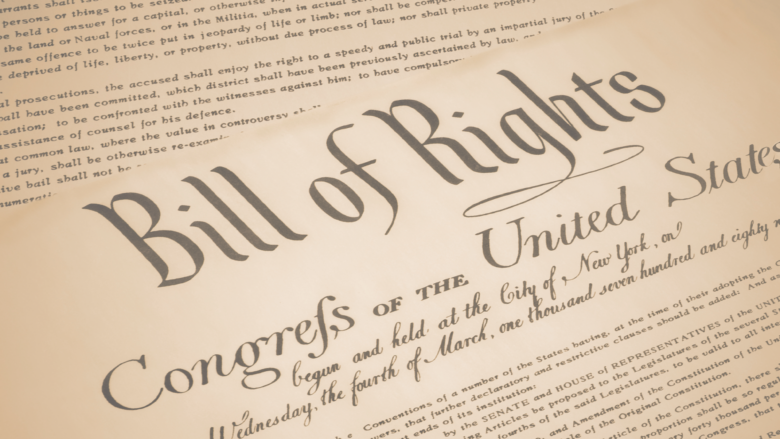
Grateful for those who gave their lives to protect our freedoms, as expressed in the Bill of Rights.
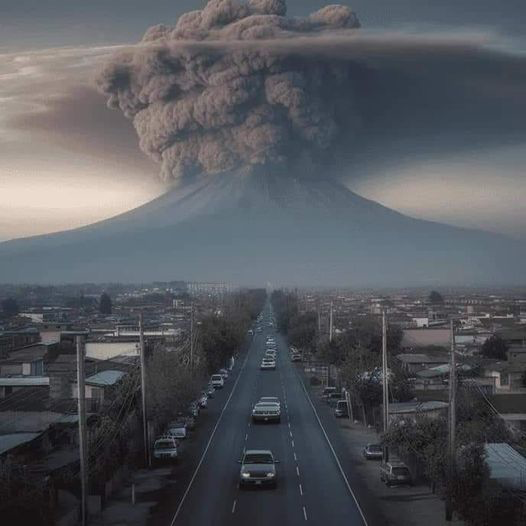
Wary of political and media campaigns that tell us what and how to think, and threaten our freedom to speak openly and express contrary opinions. In that regard, this video posted by Elon Musk is disturbing.
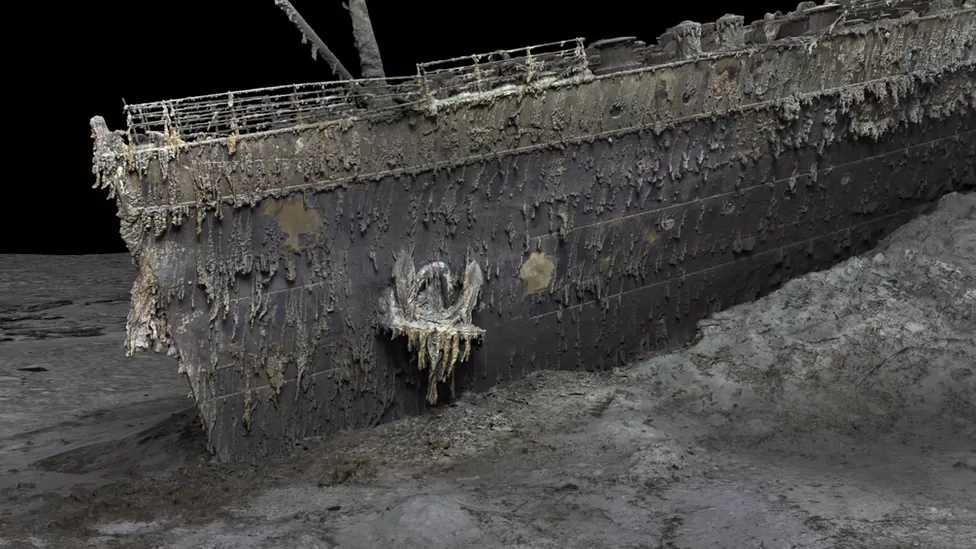
The images were provided by Magellan, a UK company that conducts surveys for the offshore oil and gas industry:
“Established in 2015, Magellan is driven by a management team whose background includes offshore contracting, geotechnical survey and ultra-deep water ROV operations, including environmental and site investigation. These operations have been conducted for a wide range of clients across the oil and gas, fibre-optic and subsea recovery industries.
Supported by the board, the management team have guided and overseen the integration of standard oil and gas practices as well as the building and development of 6,000m ROVs, specialist and innovative winches and a range of purpose-built subsea tooling.”
IRF conferences present an excellent opportunity for dialogue among regulators, operators, trade organizations, contractors, academics, and other interested parties.
Some suggested agenda topics for the Perth conference:
Further categorizing incidents by the type of facility (e.g. MODU, fixed platform, floating platform, subsea production system, pipeline, etc.), and activity (e.g. well operations, production, diving, helicopter transit, etc.)
The NOIA/ICF report is favorable from a Gulf of Mexico perspective, but 2 general caveats should be highlighted:
“The estimation of the production related GHG for various crude oils and condensates is a complex process that is hindered by lack of public, up-to-date, and high-quality data.“
“There is considerable controversy regarding certain critical data including quantity of gas flared, operational flare efficiencies, and the volumes of methane releases along oil and gas supply chains.”
Comments:
More work is needed to better determine cold venting volumes:
Table 7, p. 13, of the NOIA/ICF report indicates venting (methane) emissions of 71,200 metric tons/year for GoM operations. That number is aligned with the 2017 GOADS data (70,488 tons per Table 6-11, p. 112).
The recent PNAS report found that much more gas is being vented: 410,000 – 810,000 tons annually. If the PNAS findings are accurate, venting is being significantly underestimated and/or under-reported.
Per ICF, lower flaring and venting volumes are the main reason for the GoM’s lower GHG emission intensity, so data accuracy is important. The difference between the government data and the PNAS findings (see table below) should be carefully assessed.
The NOIA/ICF report did not distinguish between GoM deepwater and shelf emissions.
The PNAS report indicates much higher methane emissions intensity on the shelf, as do most subjective assessments.
Future studies should provide separate GHG intensity data for shelf and deepwater facilities.
All production cannot be from the lowest emission intensity sources. The objective should be to minimize emissions from each source, not to eliminate production.GoM shelf operations have other advantages, most notably the production of nonassociated natural gas.
Kudos to offshore-energy.biz for drawing attention to the recent Coast Guard medevacs from the pipelay vessel Solitaire. Three health-related medevacs from the same facility in <2 months would seem to warrant further scrutiny. Will the Coast Guard investigate?
The only timely information on medevacs is from Coast Guard news releases. Information on private medevacs is seldom provided, except as included in the BSEE incident tables, which are typically more than 1 year behind, and update presentations by BSEE’s Gulf of Mexico region.
Below is information on 2023 YTD Coast Guard medevacs associated with Gulf of Mexico oil and gas activities. As previously posted, at least 12 workers died at OCS facilities in 2021-22 of natural causes. Unfortunately, “natural cause” fatalities and illnesses receive little industry or regulator attention.
date
vessel or platform
description
condition report
5/18
OSV Brandon Bordelon
50-year-old male crewmember with an injury to his leg
stable
5/17
Allseas’ pipelay vessel Solitaire
65-year-old male crewmember was experiencing heart attack-like symptoms
stable
4/26
crew boat Mr. Fred
halted search for missing crewmember
presumed dead
4/23
Allseas’ pipelay vessel Solitaire
32-year-old male crewmember experiencing severe abdominal pain.
stable
3/22
Allseas’ pipelay vessel Solitaire
crewmember was experiencing seizure-like symptoms
stable
3/18
BP’s Atlantis platform
28 year old male, eye injury
stable
3/13
unidentified platform 40 miles south of Port Fourchon
German investigators are sceptical of claims that Russian naval ships sabotaged the Nord Stream gas pipelines and are instead pursuing leads that point to the Ukrainian authorities, according to a report.
The vacuum of official information has been filled by speculation variously pinning the blame on the United States, Russia, the Ukrainian secret services and an unnamed businessman in Ukraine. All three states have denied responsibility.
Per the BSEE borehole file, there were 2 deepwater exploratory well starts since 4/1/2023. The Shell well is another GoM milestone in that it is the 150th well spudded in >8000′ of water. The first was in the year 2000.
Operator
spud date
location
water depth
Chevron
5/5/2023
Mississippi Canyon 608
6678′
Shell
4/13/2023
Alaminos Canyon 728
8660′
Arena and Cantium continue to drive shelf drilling. Below are the shelf development wells since 4/1/2023: