Feeds:
Posts
Comments

BSEE will continue to evaluate the process for issuing decommissioning orders and will continue to issue decommissioning orders to jointly and severally liable parties on a case-by-case basis.

Final decommissioning rule (preamble). 4/18/2023

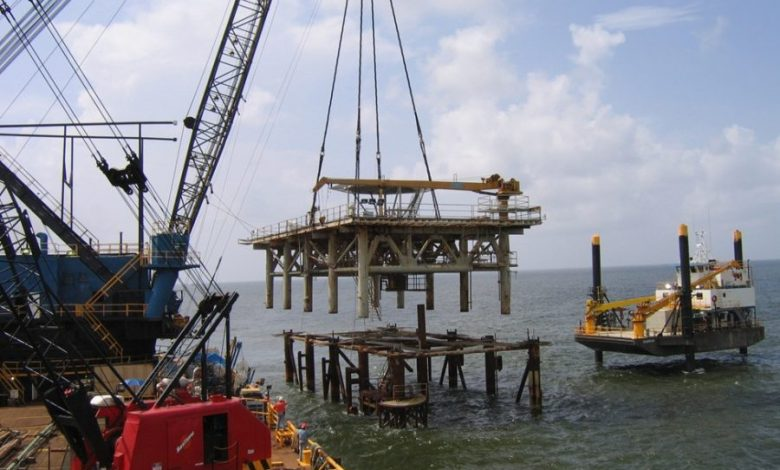
Although the news release for BSEE’s final decommissioning rule asserts that the regulations “provide the certainty requested by industry,” that does not seem to be the case. The main change in the final rule was to delete the reverse chronological order (RCO) provision which called for issuing decommissioning orders to the most recent predecessor first. Instead, BSEE may continue to issue decommissioning orders arbitrarily.

While deleting the RCO provision may be advantageous for the regulator, and in some cases for the public, claiming that the decision provides certainty for industry is quite a stretch. BSEE may continue to issue a decommissioning order to anyone in the ownership chain, whether the company was a recent lessee or one that had owned the lease decades ago. Original or early lessees may be held liable for decommissioning old facilities regardless of subsequent damage, modifications, or neglected maintenance.

The absence of a defined procedure for issuing decommissioning orders may also expose BSEE to new legal challenges, particularly in cases where a company has not held the lease for decades. A 1988 letter from the Director of the Minerals Management Service to Amoco (attached below) explicitly relieves the assignor (predecessor) of decommissioning liability after the lease has been assigned. A revised bonding rule published on May 22, 1997 reversed that policy, but decommissioning liability for leases assigned prior to the 1997 rule may still be very much in question.

Another concern is the split jurisdiction for decommissioning between BSEE and BOEM. The financial, land management, operational, and environmental aspects of decommissioning are inextricably intertwined and attempts to divide these responsibilities between two bureaus with separate regulations is a prescription for gaps, overlap, inconsistency, inefficiency, disputes, and confusion. Decommissioning should be regulated holistically, not with separate “BOEM-only” and “BSEE-only” regulations.

Finally, wind facility decommissioning may prove to be even more challenging given the higher facility density and economic uncertainties. The regulatory regime needs to be clearly established early in the development phase.

Related posts:

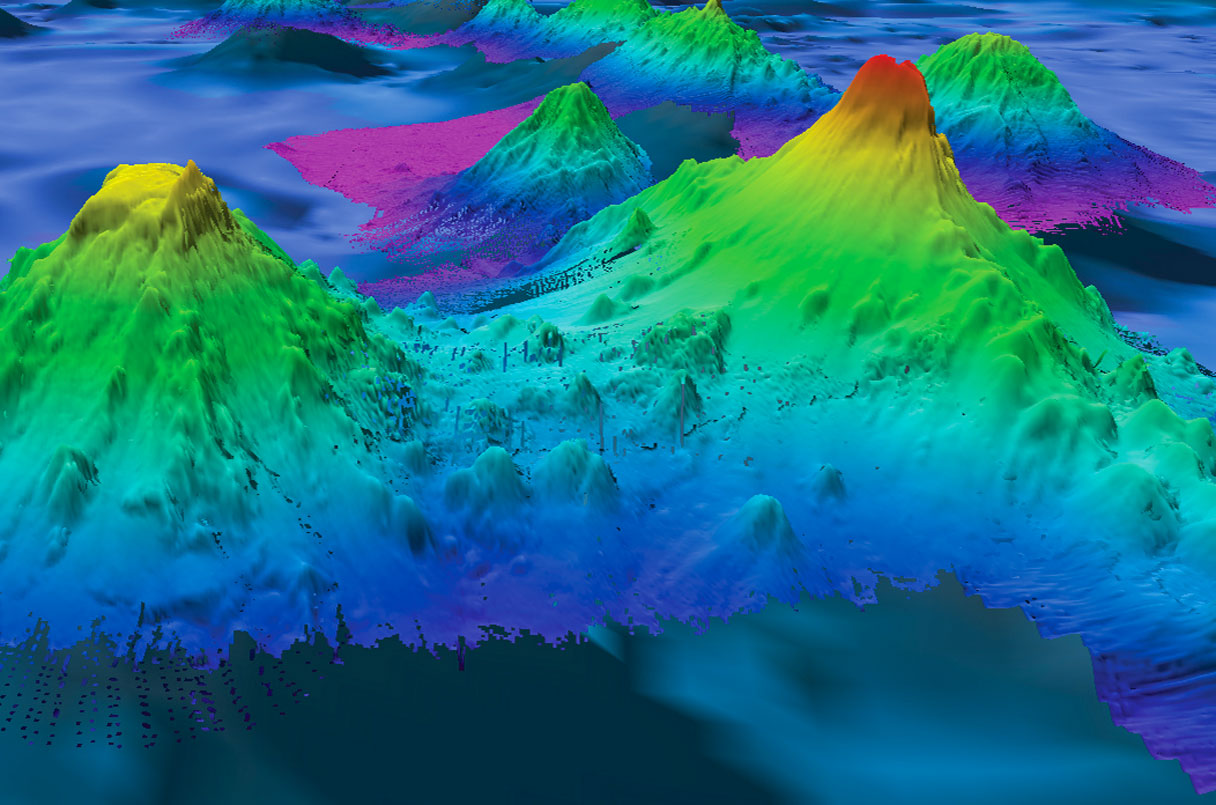
“The 4776-meter-tall Pao Pao Seamount (right) in the South Pacific Ocean has been mapped by sonar. Many others haven’t.” NOAA OFFICE OF OCEAN EXPLORATION AND RESEARCH

This Science article underscores how little we know about the oceans.

With only one-quarter of the sea floor mapped with sonar, it is impossible to know how many seamounts exist. But radar satellites that measure ocean height can also find them, by looking for subtle signs of seawater mounding above a hidden seamount, tugged by its gravity. A 2011 census using the method found more than 24,000. High-resolution radar data have now added more than 19,000 new ones. The vast majority—more than 27,000—remain uncharted by sonar. “It’s just mind boggling,” says David Sandwell, a marine geophysicist at the Scripps Institution of Oceanography, who helped lead the work.

Besides posing navigational hazards, the mountains harbor rare-earth minerals that make them commercial targets for deep-sea miners. Their size and distribution hold clues to plate tectonics and magmatism. They are crucial oases for marine life. And they are pot-stirrers that help control the large-scale ocean flows responsible for sequestering vast amounts of heat and carbon dioxide, says John Lowell, chief hydrographer of the National Geospatial-Intelligence Agency (NGA), which runs the U.S. military’s satellite mapping efforts.

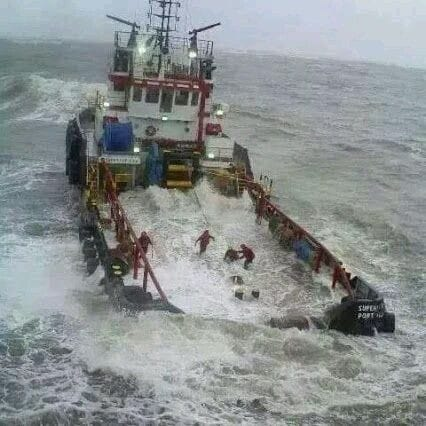
This photo is from OceanMariners.com; I don’t know when or where it was taken.

  • Be grateful for energy production which gives us the economic means to address environmental issues
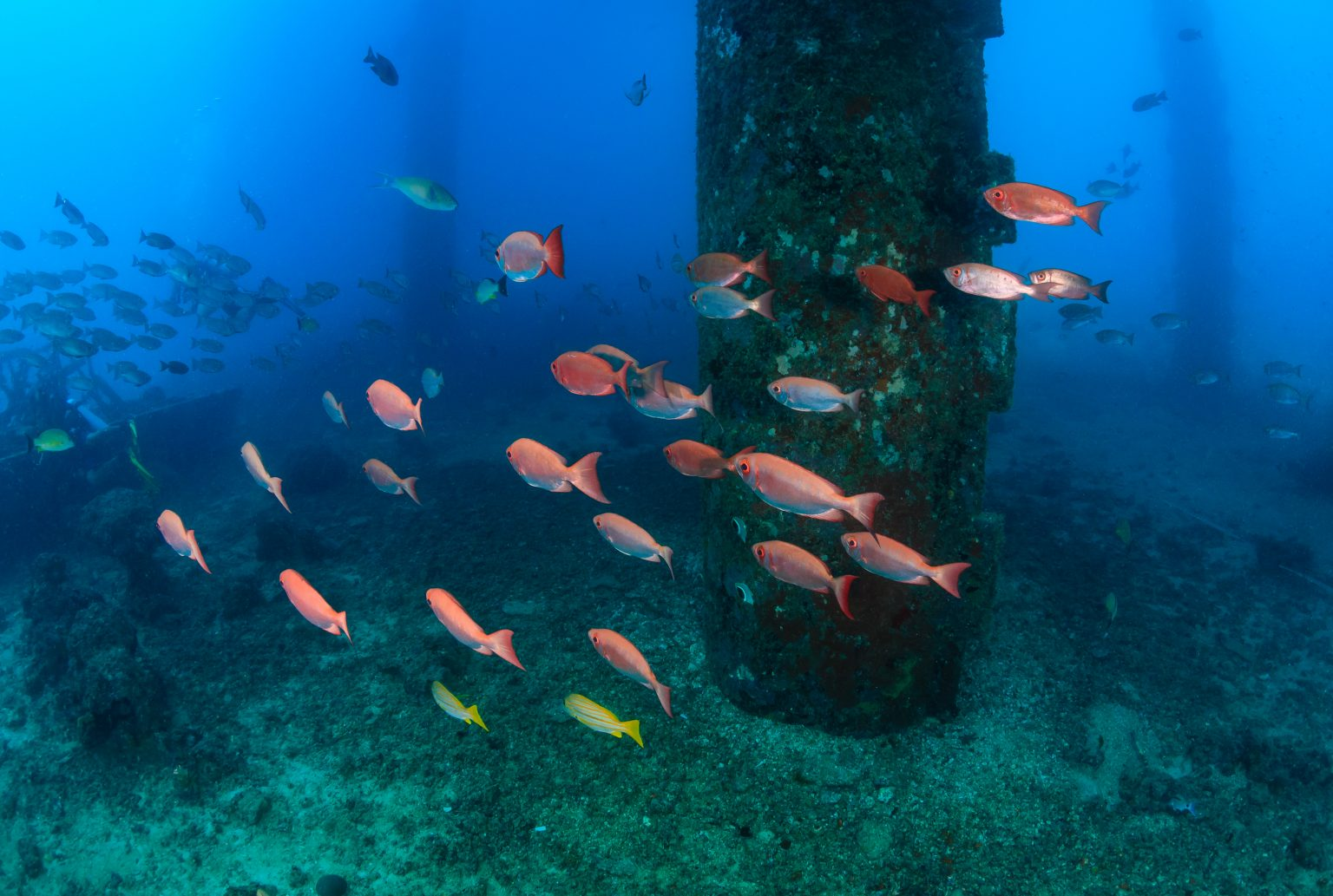
  • Appreciate the beauty and ecological significance of offshore facilities
  • Explore, study, and protect the marine environment
  • Strive for continuous improvement in safety and environmental performance
  • Acknowledge and learn from past mistakes
  • Live responsibly as individuals, families, and communities

In addition to the details previously provided, some interesting insights from Envoi, agent for United Oil and Gas, follow:

  • Only 11 exploration wells have ever been drilled in the entire country (comprising an area of around 258,137 kmincluding all the offshore areas), all between 1955 and 1982
  • Hydrocarbon shows were observed in all but one of these wells despite not having tested valid structures, as is evident on the latest data
  • Just 2 of the 11 wells were drilled offshore
  • Extensive onshore fieldwork and seep analysis studies have confirmed mature Eocene and Cretaceous oil-prone source rock potential, with migrated oil identified in onshore wells and outcrop samples. These include Late Cretaceous (Cenomanian-Turonian) aged organic shales exhibiting total organic carbon (TOC) up to 8% with maturity.
  • Modelling also suggests significant oil potential exists in mature Cretaceous source kitchens in both the Walton and Morant basins while shallower Palaeogene shales with TOCs up to 15% could also locally be deep enough to be mature.
  • An independent Prospective Resources Audit completed by Gaffney Cline & Associates in December 2020 estimates that just 11 of the total 21 prospects & leads defined to date contain a combined total unrisked mean prospective recoverable resources in excess of 2.4 Billion STOOIP (stock-tank oil initially in place). Of this, 406 MMbbls is attributable to the Colibri Prospect alone, with an upside of 966 MMbbls STOOIP.
  • United is offering a material interest and potential operatorship to suitably qualified parties in the license in return for a commitment to fund a well to test the Colibri Prospect before January 2026, which would fulfill the obligations for the current Second Exploration Period of the Licence.

Sharing this touching tribute to the 11 men who died on the Deepwater Horizon on April 20, 2010. These American heroes gave their lives exploring for energy to power our economy. The video is introduced by singer Trace Atkins, a former Gulf of Mexico rig worker. Please take a moment to watch.

Other Macondo posts.

BOE continues to call for an International Offshore Safety Day each year on April 20th.

Proposal: Let’s make April 20th International Offshore Safety Day to honor those who have been killed or injured, to recognize the many workers who provide energy for our economies and way of life, and to encourage safety leadership by all offshore operators, contractors, and service companies.

BOE

With the announcement of first oil at Argos, 3 of the 5 next generation deepwater platforms (simpler, safer, and greener) are now producing oil and gas in the Gulf of Mexico. The other 2 platforms are expected to begin production in 2024.

Prior to the installation of these platforms, the last deepwater platform addition was Shell’s Appomattox in 2018. That gap in deepwater platform installations was the longest since Bullwinkle was installed in 1988.

The 5 new structures will increase the deepwater platform count by 9% from 56 to 61, and in the next few years should account for approximately 1/4 of GoM oil production.

platformoperatorwater
depth
(feet)
first
production
design
production
(boe)
King’s QuayMurphy3725April 2022100,000
VitoShell4000Feb 2023100,000
Argosbp4500April 2023140,000
AnchorChevron50002024 (est.)80,000
WhaleShell86002024 (est.)100,000
Argos

This comment from Save LBI (Long Beach Island, NJ) on BOEM’s Renewable Energy Modernization Rule (proposed) highlights an important regulatory policy consideration:

Promoting the offshore wind program is a very high BOEM priority. The bureau is charged with deploying 30 gigawatts of offshore wind energy capacity by 2030, which requires extensive advocacy. However, BOEM is also a core regulator for offshore wind projects, and the concern is that their regulatory role could be compromised by their advocacy priorities.

Per Notice to Lessees 2023 N-01, which arguably should have been published for public comment given its regulatory significance, BOEM has retained important responsibilities for wind project development and operations. These include review and approval of construction and operations plans, site assessment plans, and general activities plans. BOEM may also exercise enforcement authority through the issuance of violation notices and the assessment of civil penalties.

BOEM exists because in 2010 the Administration wanted to separate the OCS program’s leasing (sales/advocacy) and safety (regulatory/enforcement) functions. The intent was to avoid conflicting missions (or the appearance thereof) in the post-Macondo era. (More on this in an upcoming post.)

Ironically, the Save LBI comment describes BSEE as “a distinct unit within BOEM.” That may seem to be the case, but BSEE is actually a separate bureau in the Department of the Interior.