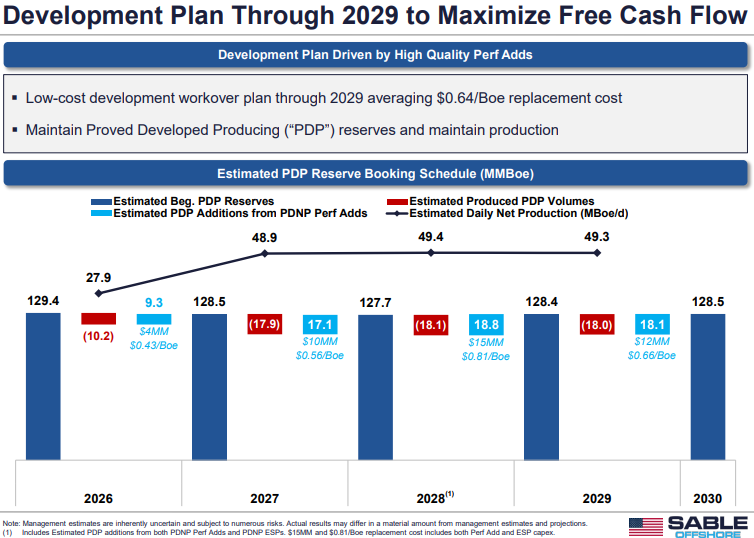
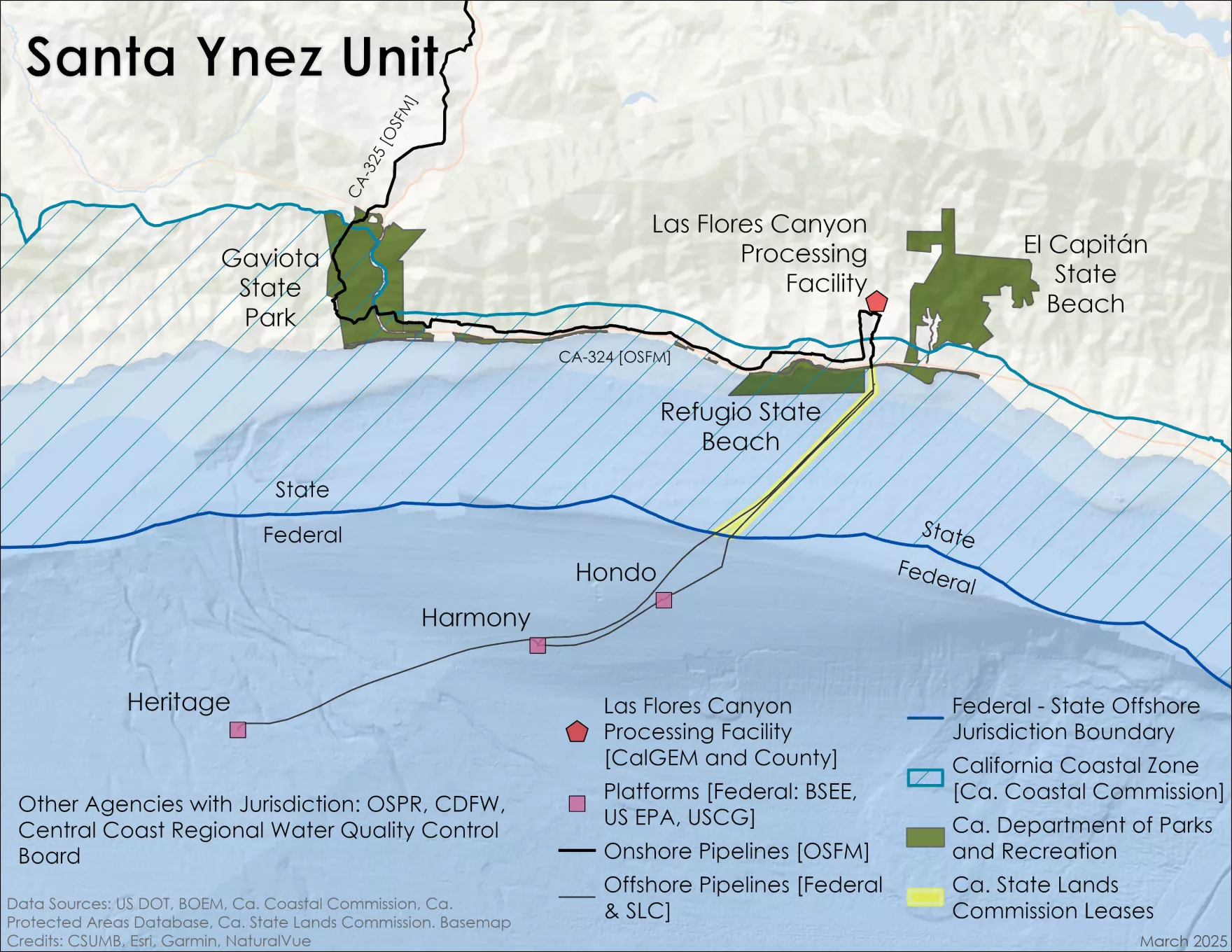
Those who have been following the Santa Ynez Unit saga should take a look at Sable’s informative PowerPoint update (attached). The presentation includes reserve data, well operation plans, production forecasts, financial and legal updates, and regional energy supply information.
Also, Sable CEO Jim Flores has announced that Energy Secretary Wright and Interior Secretary Burgum will be visiting the project this week. Transportation Secretary Duffy was also expected, but he will not be attending.
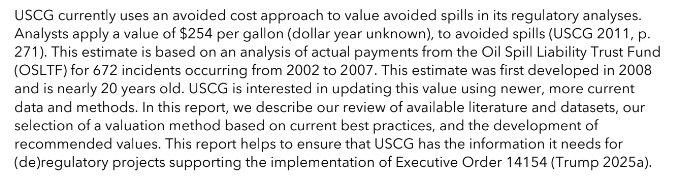
The report is intended to update the Coast Guard’s methodology for estimating the cost savings resulting from spill prevention regulations. The paragraph pasted below is a good summary of the objective.
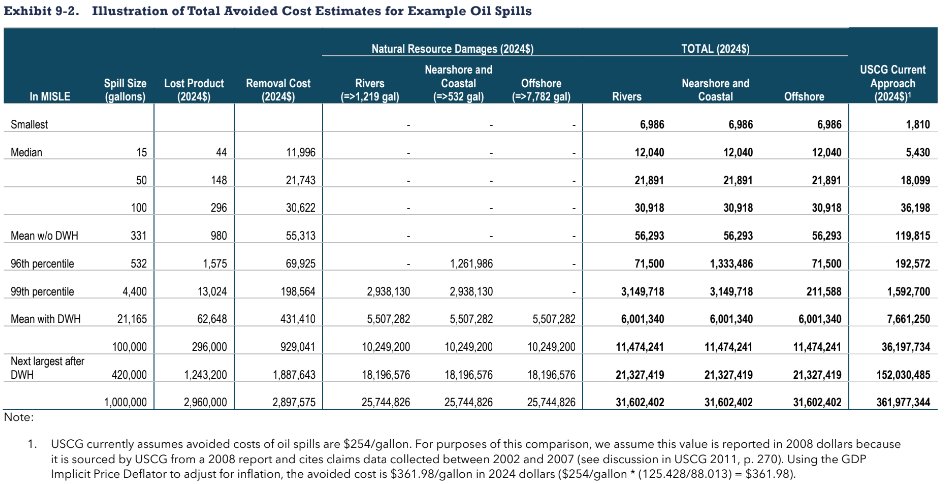
The offshore industry could benefit from this report, because the estimated cost of spills >100 gallons is reduced, dramatically so when the DWH/Macondo blowout is excluded (see the second table below). That reduction would support regulatory reform initiatives,and could thus generate some controversy.
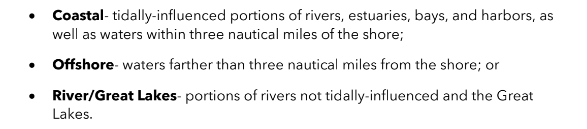
My main concern is that there is only a single distance-from-shore category for offshore spills (see text below). The natural resources damage from a spill 3 miles from shore will almost always be much greater than from an equivalent volume spill 100 miles from shore.
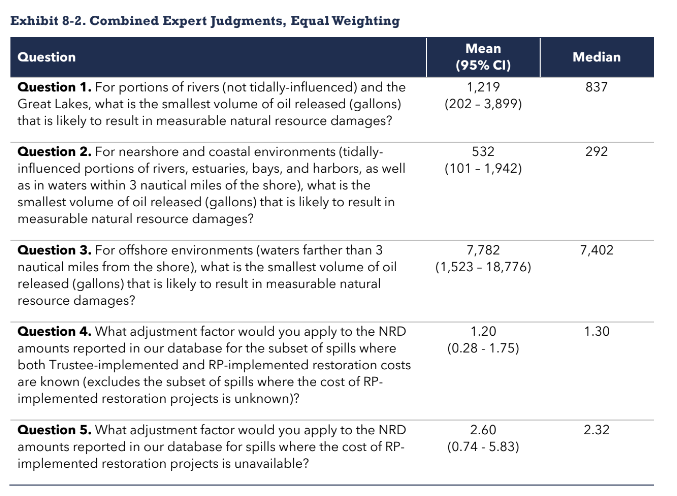
The single-offshore-category issue is illustrated in the 2 tables pasted below. The first table presents a summary of expert opinions on the smallest spill size that is likely to result in measurable natural resource damages. The mean response to Question 3 (offshore) is 7782 gallons. A spill of that size occurring 3 miles from shore is much more likely to result in resource damage than a spill originating 50 or 100 miles from shore.
In the second table, note the new methodology results in the same cost estimates for large nearshore/coastal spills as for offshore spills. Again, this is presumably because there is only a single offshore category.
The public comments on this report should be interesting.
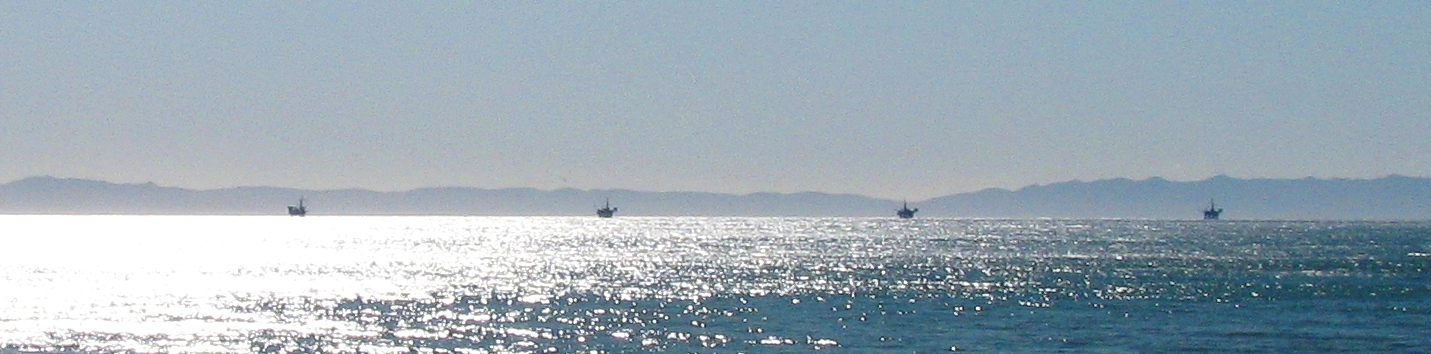
Santa Barbara Channel, Dos Cuadras Field platforms (L to R): Hillhouse, A, B, and C; Antandrus Wiki photo
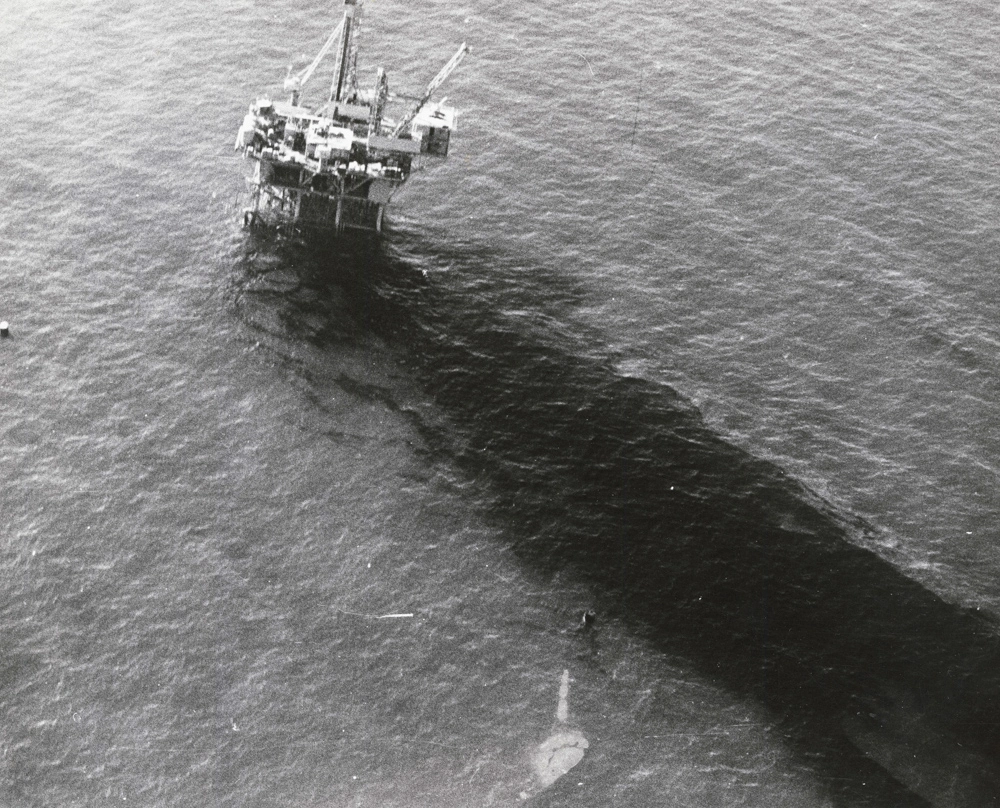
As part of the recent focus on decommissioning and financial assurance requirements, I looked at borehole data for platforms A, B, and C on Lease OCS-P 0241 in the Santa Barbara Channel. Platform “A” is where a well blew out in 1969, permanently scarring the US offshore program. Observations:
There are 140 completed and unplugged wells on the 3 platforms. None of the wells on these platforms have been permanently plugged and only one is temporarily abandoned.
The latest available production information (2024 data) indicates ave. daily oil production of 3791 bopd for the lease, including 1901 bopd from Platform A, the highest production for any platform in the region in 2024.
41 of the lease’s completed (unplugged) wells are on Platform A.
The number of these wells that are currently producing is not publicly available.
30 of the completed Platform A wells were drilled prior to 1985.
The blowout well was the 5th well drilled from platform A. All 4 of the wells drilled prior to the 1/28/1969 blowout are still unplugged:
well A-20: spudded on 11/19/1968, reached total depth on 12/2/1968
well A-41: spudded on 11/27/1968, TD on 12/19/1968
well A-25: spudded on 12/18/1968, TD on 12/28/1969
well A-38: spudded on 1/12/1969, TD on 1/24/1969
Note how quickly the wells were drilled. The wells were shallow (2299-4051′ true vertical depth), and the operator (Union Oil) saved time by omitting a casing string. (This decision was a root cause of the blowout and thus changed history 😡)
Lease documents and regulations at 30 CFR § 250.1710require that all wells be permanently plugged within one year of lease termination. For leases like 0241 that are still active, 30 CFR § 250.1711 stipulates that BSEE will order a well to be permanently plugged if the well poses a hazard to safety or the environment, or is not useful for lease operations and is not capable of oil, gas, or sulphur production in paying quantities. In the Gulf of America Region, the policy is to require wells that have not been used in the past 5 years to be permanently plugged. Allowing old wells to remain unplugged is neither prudent nor consistent with the regulations.
Judge Stephen V. Wilson, US District Court for the Central District of California ruled that Sable’s pipeline doesn’t imminently harm Gaviota Park. Judge Wilson said the state “is grasping at straws,” for evidence of real environmental harm, and the federal consent decree governing the terms of the system’s restart is controlled by the California Office of the State Fire Marshall, not the parks department.
The judge didn’t rule on the larger question of whether the Defense Production Act order to restart the Las Flores pipeline system was lawful.
John Smith’s update on California OCS Decommissioning Obligations is attached. His comments:
Chevron and FMC hold joint and several liability responsibilities for many platforms and all of those operated by DCOR. This reflects Chevron’s long history in developing CA onshore and offshore oil and gas resources. A 2020 report issued by BSEE estimated the nine platforms operated by DCOR had a combined decommissioning cost of $397 million.The actual cost could be 2-3-fold higher based on estimates for decommissioning California state water platforms prepared by experienced decommissioning consultants.
Chevron may be checking out of California by moving its corporate offices to Houston, but as someone once said about decommissioning – referring to the popular Eagles Hotel California song “You can check out but you can never leave.”
Official decommissioning anthem 😉: Hotel California
Excerpt from the lyrics – Hotel California, Eagles, 1976
Last thing I remember I was running for the door I had to find the passage back To the place I was before “Relax, ” said the night man “We are programmed to receive You can check out any time you like But you can never leave”
The CBD had challenged an April 2025 BOEM decision concludingthat Sable was not required to revise its development and production plan for the SYU. They sought a court order requiring a revised plan. This suit seemed to be a stretch, so its dismissal is not a surprise.
Per the Dept. of Justice, the court dismissed the lawsuit because the plaintiffs’ asserted procedural injury had no basis in the statute, was not traceable to any action by BOEM, and could not be redressed by an order of the court.(Other than that, it was just fine. 😉)
Among other problems the court identified with the plaintiffs’ case, they invoked a provision of the statute that governs “approval of a development and production plan,” not revision of an already-existing plan. It will be interesting to see the full decision so that we can better understand the context for that statement. Distinguishing revised plans in that manner could have significant policy implications.
For a full update on Sable litigation, see the section of their Quarterly Report beginning on p. 12.
Thankfully, from the standpoint of those of us whose primary concerns are the integrity of the OCS program and protecting taxpayers from decommissioning liabilities, the API comments (attached), along with those submitted by Shell and Chevron, have exposed the folly of eliminating financial assurance whenever there is a financially strong company somewhere in the lease chain of custody.
Mindful of ongoing and anticipated decommissioning liability battles, API effectivelychallenges the BOEM proposal on legal grounds. API also demonstrates why revisions intended to improve regulatory efficiency and increase production would do exactly the opposite. Excerpts from the API comments (emphasis added):
Further, foisting financial assurance obligations on predecessors will not achieve BOEM’s stated aims of financial “savings” and increased OCS oil and gas production; it more likely will do the opposite. The Proposed Rule would just shift financial assurance burdens to financially stronger predecessors, many of which remain engaged in the majority of leasing and production across the OCS and are far more likely to be future investors in increased OCS development and production. By contrast, nothing ensures that entities standing to benefit from the Proposed Rule will reinvest saved financial assurance premium dollars into OCS production; in fact, such entities largely do not explore or increase reserves, but merely buy pre-discovered reserves and produce them to a lower economic limit.
Nor would the Proposed Rule promote or save costs for future OCS transactions since, in the absence of any option for BOEM-demanded financial assurance from current interest holders, assignors will demand financial assurance at sufficiently conservative levels to address the risk of residual liability if assignees default on their obligations.
Even more problematically, the Proposed Rule would retroactively impose this new regulatory burden on entities that divested their OCS property interests years (or decades) earlier—in reliance on BOEM’s regulations that required their assignees to provide any supplemental financial assurance. Such entities are no longer in privity with BOEM, and have no control over current operations on those OCS properties. The Proposed Rule would reach back even to impose these obligations on predecessors that divested their interests before the 1997 regulatory imposition of joint and several liability for assignors (a time period on which the Proposed Rule is silent).
This novel and misguided approach allows, and even encourages, current interest holders to eschew their lease and grant obligations, and instead freely operate on the backs of predecessors and taxpayers. Meanwhile, current interest holders could choose to allocate little or no funding for end-of-life obligations like decommissioning whenever they desire to conclude production, file for bankruptcy, and leave BOEM to eventually issue decommissioning orders to predecessors that have not operated the grants and leases for years or even decades. This would create higher administrative and financial burdens for the government and system as a whole, including where no viable predecessor had accrued liability for decommissioning all facilities present on the lease or grant, and potential operational impacts that a predecessor has no obligation to cure.
This new proposed obligation on predecessors is arbitrary and capricious and unlawful on multiple grounds. It violates the rule against retroactivity by creating new federal liability stemming from already-completed transactions. It violates the agency change in position doctrine, particularly given that BOEM on multiple occasions has rejected precisely the same approach as in the Proposed Rule. It is unsupported, as it overstates the burdens under the discretionary Existing Rule, disregards repeated U.S. Government Accountability Office (“GAO”) and BOEM findings calling for more robust financial assurance by current interest holders, cites only anecdotal prior comments while ignoring the bulk of countervailing comments detailing reality on the OCS, and identifies no means by which BOEM can compel collect, and assess adequate financial information for all predecessor entities. And it is self contradictory, including by tying up more capital among entities producing the vast majority of oil and natural gas on the OCS.
Chevron points to their potential liability balance of ~ $2 billion for satisfying the decommissioning obligations of default owners:
John Smith and I do not agree with the industry support for the use of reserves as financial assurance. The margin of error in reserve, oil price, and decommissioning cost estimates, not to mention the potential for facility damage, the ever-changing political environment, and the administration challenges, present an unacceptably high risk for taxpayers. If companies want to guarantee decommissioning based on reserves, let them do so. Shell makes a good point about why it is especially important to prohibit the use of reserve estimates on a company-wide basis:
BSEE (2020) estimates the cost of decommissioning these facilities to be $85 million (too low), and there is no collateral or third party guarantee.
The responsibility for decommissioning these platforms has yet to be settled. ConocoPhillips, Oxy, and Devon have appealed decommissioning orders from BSEE. The Interior Board of Land Appeals (IBLA) has yet to rule on those appeals. The appellants are funding some plugging operations and facility upgrades pending the IBLA decision.
Per BSEE’s borehole file, this is the current status of the Hogan and Houchin wells:
33 completed and not yet plugged; these wells were drilled between 1968 and 2010
43 temporarily abandoned (TA) wells plugged in accordance with 30 CFR § 250.1721
10 wells have been updated to TA status in the past 6 months (latest 3/22/2026), so some progress is being made
If you are interested in the Hogan/Houchin mess or decommissioning liability in general, I highly recommend that you look at Devon’s informative and rather compelling appeal to IBLA. Similar appeals were submitted by Oxy and ConocoPhillips.
Lease history (excerpted from the Devon appeal):
Lease OCS-P 0166 was issued effective January 1, 1967.
Phillips Petroleum Company (“Phillips”) (predecessor to ConocoPhillips), Cities Service Oil Company (predecessor to Oxy), and Continental Oil Company (predecessor to ConocoPhillips) were the initial lessees
Phillips was designated operator on January 25, 1967
February 28, 1983: Petro-Lewis Funds, Inc., obtained the 37.5% interest of the Continental Oil Company (which in 1979 had changed its name to Conoco Inc., now Conoco Phillips Company (“ConocoPhilips”)).
November 1983: Cities Service Oil Company assigned its 37.5% interest to Cities Service Oil and Gas Corporation (now OXY U.S.A. Inc).
July 2, 1987: the Minerals Management Service (“MMS”) approved two more assignments of the Lease. One, from PetroLewis Funds, Inc. to American Royalty Producing Company (“American Royalty”), was approved retroactively to December 31, 1984. The other, from American Royalty to Santa Fe Energy Company(“Santa Fe”), was approved retroactively to April 30, 1987.
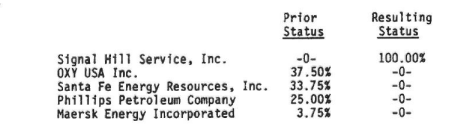
April 1, 1988: Santa Fe transferred a 3.75% interest to Maersk Energy Incorporated, reducing Santa Fe’s share to 33.75%.
1991 Assignment to Signal Hill: MMS approved assignment of the lease to Signal Hill effective February 5, 1991. The assignment was approved without any provision under which the assignors agreed to be liable for decommissioning operations on the lease. MMS’s approval actually had the opposite effect, leaving such obligations to the assignee. The assignment was approved despite concerns within the MMS about the financial strength of Signal Hill and the technical competence of Pacific Operators Offshore Inc (POOI), the affiliate that would operate the facilities.
Comments:
The assignment to Signal Hill should have never been approved. The outcome was predictable.
The Devon, Oxy, and ConocoPhillips appeals are very strong and would seem to have a good chance of success. Perhaps that is why the IBLA decision is taking so long (nearly 5 years to date).
Given the uncertainty regarding this appeal, the absence of transparency about other potential decommissioning liabilities, and the uncertainties regarding the administration of predecessor liability, this is not the time to be relaxing financial assurance requirements and further exposing taxpayers to decommissioning risks.
This is the final day to comment on BOEM’s proposal:
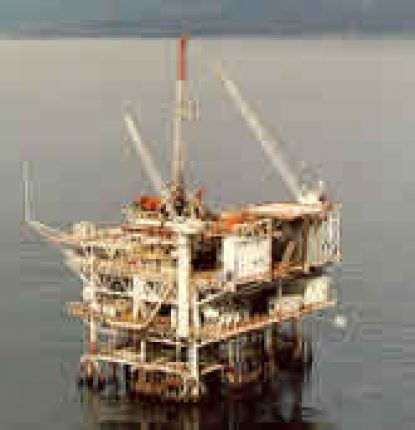
At a minimum, the fire will further delay and increase the cost of well plugging operations on Platform Habitat. Per BSEE’s borehole file, 17 wells remain to be permanently abandoned, 3 of which have yet to be temporarily abandoned. These wells are 23-44 years old, and have been inactive for 11 years.
If there is significant platform damage, the remediation delays and costs would be substantial, comparable to those associated with major Gulf platforms damaged by hurricanes. Structural damage could increase the urgency of removing the platform. Given California’s decommissioning quagmire, this would be a major challenge.
Who pays, and what does the financial assurance picture look like? Per the attached BOEM spreadsheet (excerpt pasted below):
The 2020 cost estimate for decommissioning Habitat was $44.3 million. That number is optimistic even if platform damage is minimal.
$13.6 million in supplemental assurance has been provided.
A third party guarantee has been secured.
The guarantee was provided by Freeport-McMoRan Oil & Gas (FMOG)
Per BOEM, FMOG is the guarantor for all DCOR leases. Unless BOEM has allowed otherwise, the guarantor pays all costs not covered by the lessees. Given the number of old platforms and California decommissioning challenges, the risks for FMOG are indeed large.
Although DCOR LLC is the current Habitat operator, the company owns only a 4.18% share of the project. CHANNEL ISLANDS CAPITAL, L.L.C., a private company about which little is known, holds a 95.82% share.
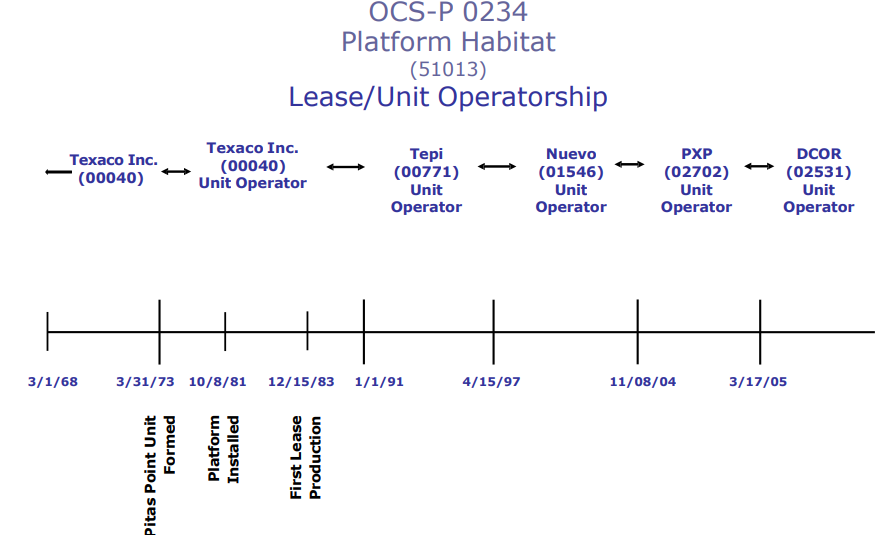
Should the 2 owners default, BOEM/MMA will look to the guarantor and predecessor lessees (see the chart below). Unfortunately for FMOG, they are both the guarantor and the predecessor lessee. FMOG acquired Plains Exploration & Production (PXP), the operator prior to DCOR. Nuevo Energy was acquired by PXP and thus also tracks back to FMOC. (This may explain FMOC’s decision to be a guarantor!).
Should FMOC fail to fulfill their obligation. Chevron would likely be the next target. The original Harvest partners were Texaco (operator) and Union Oil, both of which were acquired by Chevron.
TEPI=Texaco Expl. & Production. Nuevo Energy was acquired by Plains Expl.&Production (PXP), which was acquired by Freeport McMoRan Oil & Gas (FMOG)
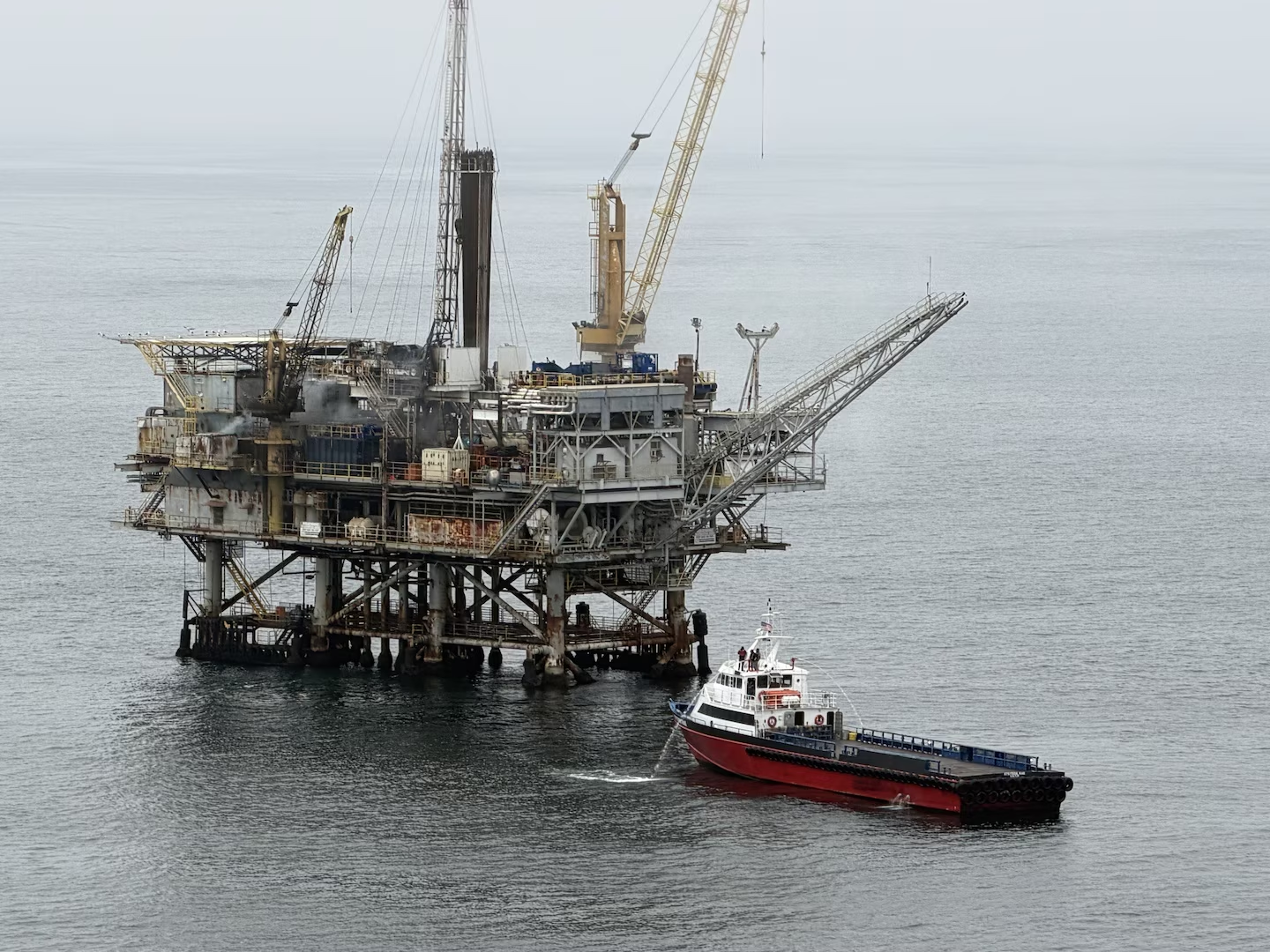
The Platform Habitat fire was extinguished at 11:40 a.m. on 5/11/2026 after burning for 5 hours.
All 26 workers were safely evacuated from DCOR’s Platform Habitat. The big question now is the fitness of the structure for continuing well plugging/abandonment and platform decommissioning.
As indicated in the attached letter, BSEE had informed DCOR that their Pitas Point Unit leases (where Platform Habitat is located) expired on 3/15/2016 owing to the cessation of well operations 6 months prior. Following the Interior Board of Land Appeals (IBLA) May 7, 2021 affirmation of BSEE’s directive, DCOR was notified that they must permanently plug all wells within one year of the lease termination (i.e. one year after the 2021 IBLA decision). I’ll include the informative IBLA decision in a future post.
Although details have not been shared, it appears that well plugging operations were still ongoing on 5/11/2026 when the fire occurred. According to BSEE’s borehole file, most of the Habitat wells have been temporarily abandoned, but few have been permanently abandoned, and several are still completed (i.e. neither temporarily nor permanently abandoned).
The risks and costs associated with delaying well plugging and abandonment have once again been demonstratedat Habitat. Fortunately, there were no casualties or pollution.
With regard to overall safety compliance, DCOR is the violations leader in the Pacific Region. In 2025 and 2026 (YTD) they were cited for 70 violations, 66 of which required component or facility shut-ins. The age of the 9 DCOR platforms (installed by others between 1968 and 1984) has likely contributed to the compliance challenges.
BSEE spreadsheets for 2020-2024 show 6 incidents at Platform Habitat. BSEE’s incident summaries are pasted in the second attachment.
Neither DCOR nor BSEE has issued a statement on the Habitat fire.



Restart seems likely for decommissioning financial assurance rule
Posted in Regulation, decommissioning, energy policy, tagged Chevron, Shell, decommissioning, BOEM, API, financial assurance, comments, NEFSA, proposed regulation on May 18, 2026| Leave a Comment »
Thankfully, from the standpoint of those of us whose primary concerns are the integrity of the OCS program and protecting taxpayers from decommissioning liabilities, the API comments (attached), along with those submitted by Shell and Chevron, have exposed the folly of eliminating financial assurance whenever there is a financially strong company somewhere in the lease chain of custody.
Mindful of ongoing and anticipated decommissioning liability battles, API effectively challenges the BOEM proposal on legal grounds. API also demonstrates why revisions intended to improve regulatory efficiency and increase production would do exactly the opposite. Excerpts from the API comments (emphasis added):
Further, foisting financial assurance obligations on predecessors will not achieve BOEM’s stated aims of financial “savings” and increased OCS oil and gas production; it more likely will do the opposite. The Proposed Rule would just shift financial assurance burdens to financially stronger predecessors, many of which remain engaged in the majority of leasing and production across the OCS and are far more likely to be future investors in increased OCS development and production. By contrast, nothing ensures that entities standing to benefit from the Proposed Rule will reinvest saved financial assurance premium dollars into OCS production; in fact, such entities largely do not explore or increase reserves, but merely buy pre-discovered reserves and produce them to a lower economic limit.
Nor would the Proposed Rule promote or save costs for future OCS transactions since, in the absence of any option for BOEM-demanded financial assurance from current interest holders, assignors will demand financial assurance at sufficiently conservative levels to address the risk of residual liability if assignees default on their obligations.
Even more problematically, the Proposed Rule would retroactively impose this new regulatory burden on entities that divested their OCS property interests years (or decades) earlier—in reliance on BOEM’s regulations that required their assignees to provide any supplemental financial assurance. Such entities are no longer in privity with BOEM, and have no control over current operations on those OCS properties. The Proposed Rule would reach back even to impose these obligations on predecessors that divested their interests before the 1997 regulatory imposition of joint and several liability for assignors (a time period on which the Proposed Rule is silent).
This novel and misguided approach allows, and even encourages, current interest holders to eschew their lease and grant obligations, and instead freely operate on the backs of predecessors and taxpayers. Meanwhile, current interest holders could choose to allocate little or no funding for end-of-life obligations like decommissioning whenever they desire to conclude production, file for bankruptcy, and leave BOEM to eventually issue decommissioning orders to predecessors that have not operated the grants and leases for years or even decades. This would create higher administrative and financial burdens for the government and system as a whole, including where no viable predecessor had accrued liability for decommissioning all facilities present on the lease or grant, and potential operational impacts that a predecessor has no obligation to cure.
This new proposed obligation on predecessors is arbitrary and capricious and unlawful on multiple grounds. It violates the rule against retroactivity by creating new federal liability stemming from already-completed transactions. It violates the agency change in position doctrine, particularly given that BOEM on multiple occasions has rejected precisely the same approach as in the Proposed Rule. It is unsupported, as it overstates the burdens under the discretionary Existing Rule, disregards repeated U.S. Government Accountability Office (“GAO”) and BOEM findings calling for more robust financial assurance by current interest holders, cites only anecdotal prior comments while ignoring the bulk of countervailing comments detailing reality on the OCS, and identifies no means by which BOEM can compel collect, and assess adequate financial information for all predecessor entities. And it is self contradictory, including by tying up more capital among entities producing the vast majority of oil and natural gas on the OCS.
Chevron points to their potential liability balance of ~ $2 billion for satisfying the decommissioning obligations of default owners:
John Smith and I do not agree with the industry support for the use of reserves as financial assurance. The margin of error in reserve, oil price, and decommissioning cost estimates, not to mention the potential for facility damage, the ever-changing political environment, and the administration challenges, present an unacceptably high risk for taxpayers. If companies want to guarantee decommissioning based on reserves, let them do so. Shell makes a good point about why it is especially important to prohibit the use of reserve estimates on a company-wide basis:
Lastly, kudos to the New England Fisherman’s Stewardship Association for raising the concern about financial assurance for decommissioning offshore wind facilities
Read Full Post »