Sławomir Cenckiewicz, who leads Poland’s national security bureau and is a key adviser to President Karol Nawrocki, told the Financial Times in an interview that Germany should not continue the prosecutions if it wanted to align Russia policy with Poland and other Nato allies.
“From our point of view, this investigation doesn’t make sense, not only in terms of the interests of Poland but also the whole [Nato] alliance,” Cenckiewicz said, adding that prosecuting Nord Stream saboteurs might serve German justice, but also “Russian injustice.”
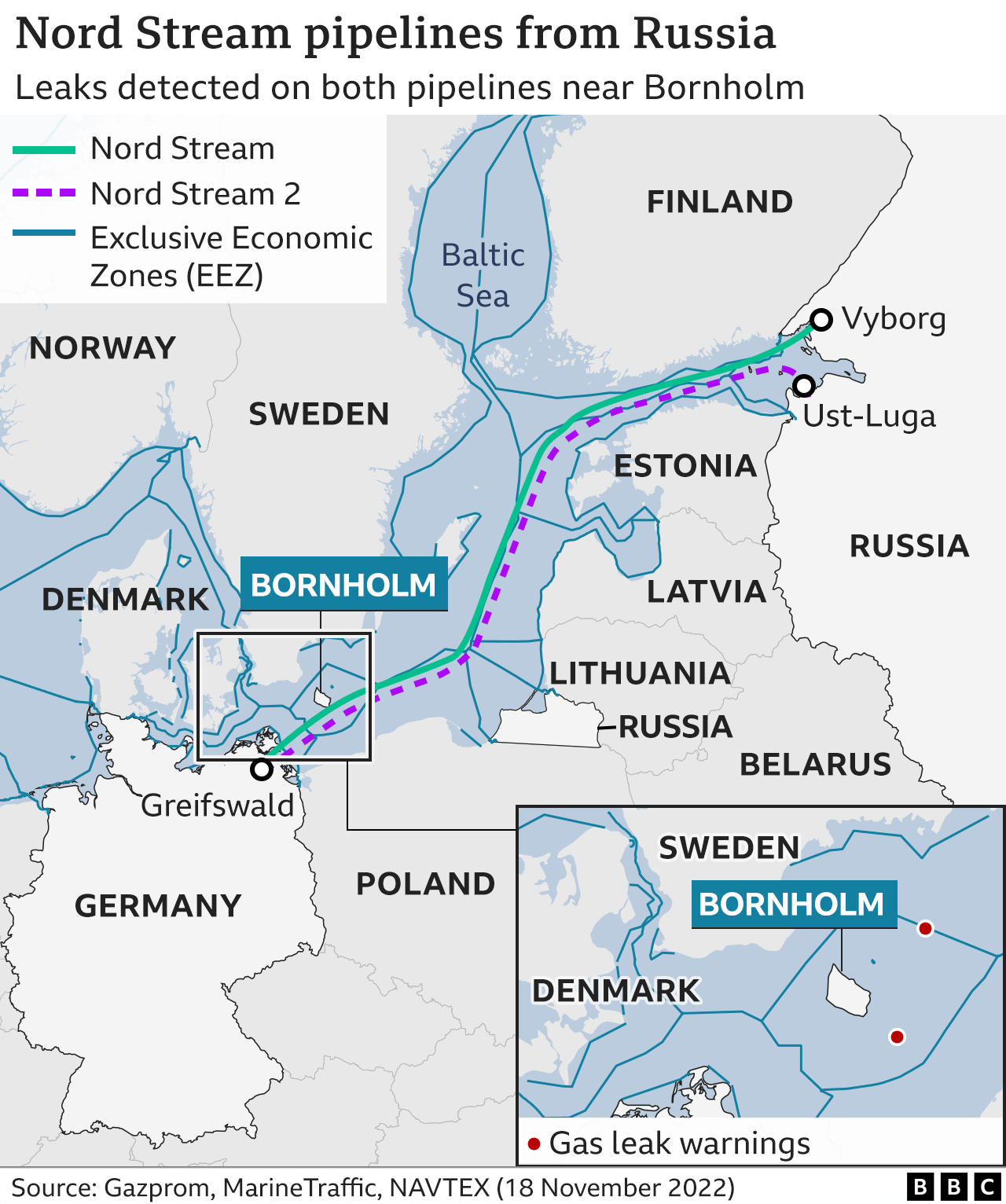
Whether or not the sabotage was justified, finding out who directed and executed the destruction of economically important energy infrastructure should have been a high priority for Sweden, Denmark, and Germany. Sweden and Denmark conveniently opted out after lengthy investigations, leaving only Germany to pursue what many believe to be a half-hearted inquiry.
As a result, on Sept. 29 Sable Offshore filed a declaratory judgement action against the State of California in Kern County. Sable is asking the court to confirm that the objectionable permitting provisions of SB 237 do not apply to their Las Flores Pipeline System.
Also, on Oct. 6 Sable filed a motion increasing the monetary damages in its ongoing case against the California Coastal Commission to $347 million. Sable asserts that their pipeline repair program was authorized by existing permits issued by the County of Santa Barbara under its Local Coastal Program and delegated Coastal Act authority.
These seem like good tactical moves on the part of Sable.
Meanwhile, two new floating production units, Beacon’s Shenandoah and LLOG’s Salamanca are now on line. More on this and bp’s Tiber announcement in an upcoming post.
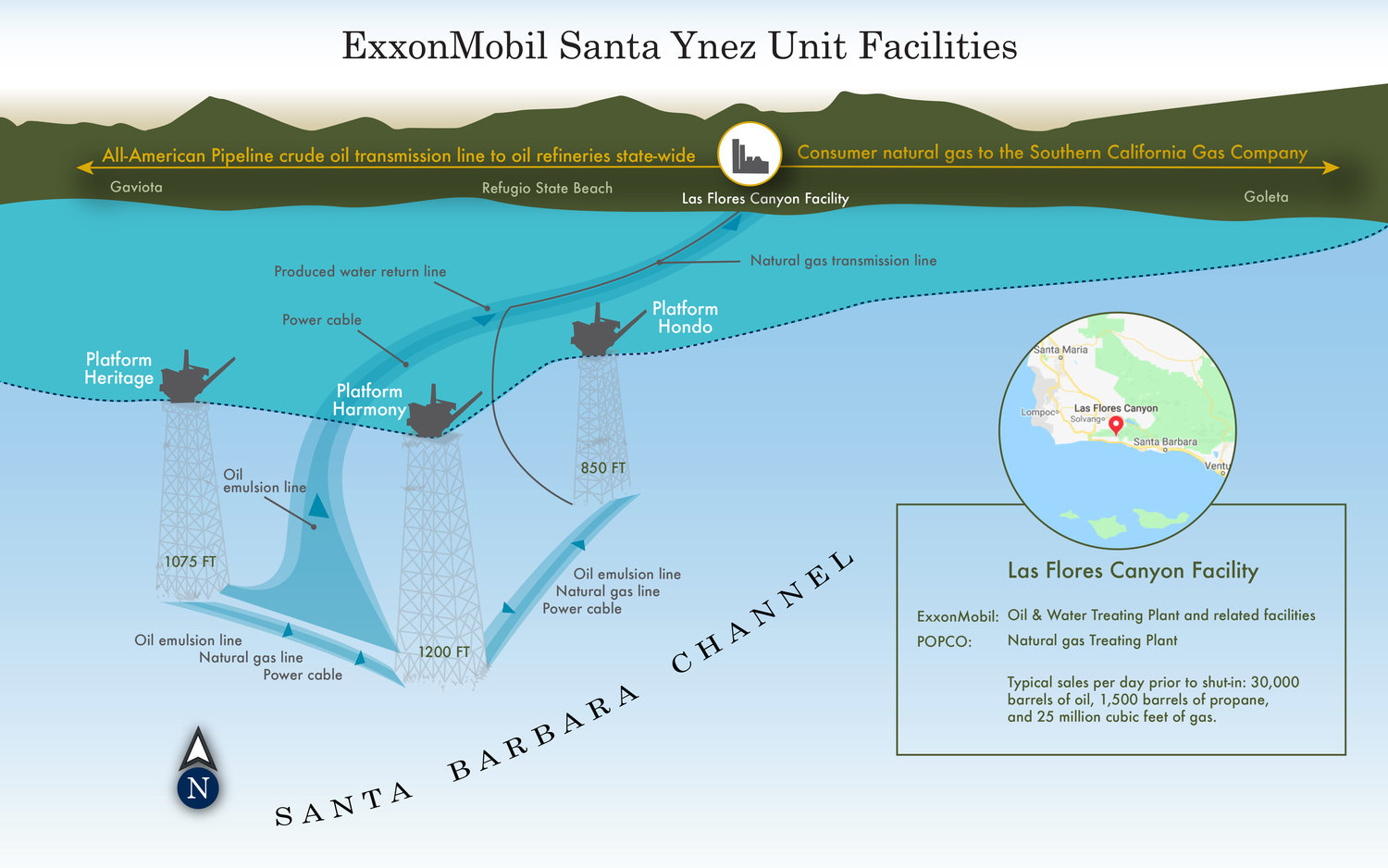
Those of us who were involved with OCS oil and gas operations in the 1970s remember the heated battles between Exxon and Santa Barbara County that led to the installation of the infamous Offshore Storage & Treatment (OS&T) facility in Federal waters. This was the first floating production, storage, and offloading facility (FPSO) in US waters by 3 decades!
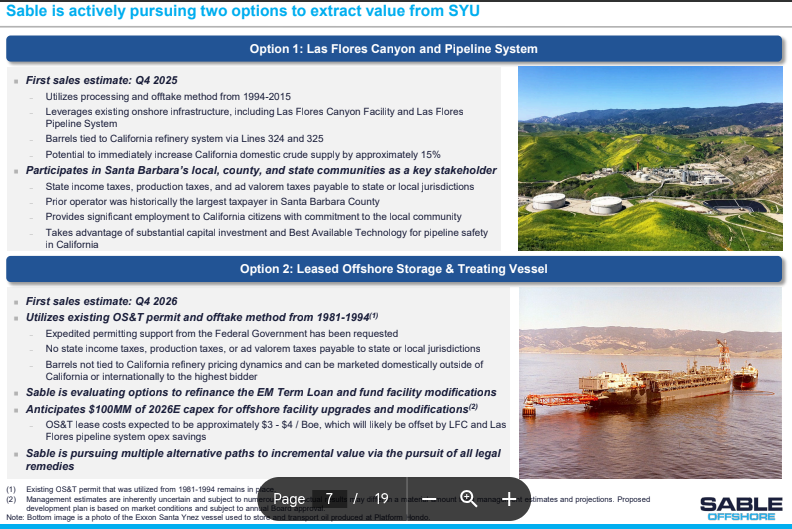
In light of Sable’s difficult (bordering on impossible) onshore permitting challenges, the company resurrected the OS&T option in a recent presentation to investors (pertinent slide pasted above). The extent to which this is purely a tactical maneuver remains to be seen, but this option would be very difficult to execute, even with a supportive Federal regulatory environment.
Updatedincident tables for OCS oil and gas operations. The most recent data are nearly 2 years old. The public has a right to timely information on the type of incidents that are occurring, the operating companies, and the resulting casualties, pollution, and property damage.
A summary of incidents associated with the OCS wind program. From press reports, we know about the fatality during Empire Wind construction. What other incidents have occurred to date?
John Smith has highlighted the attached bill that could, if passed, further derail Sable’s plans to restart Santa Ynez Unit (SYU) production.
This provision appears to target Sable:
Section 3(b)(2): Repair, reactivation, and maintenance of an oil and gas facility facility, including an oil pipeline, that has been idled, inactive, or out of service for five years or more shall be considered a new or expanded development requiring a new coastal development permit consistent with this section.
The legislation would be effective on 1/1/2026 so perhaps Sable will already be producing. Sable may also explore the jurisdictional and interstate commerce issues touched on in this post.
This LA Times update adds to the confusion as to the implications for Sable.
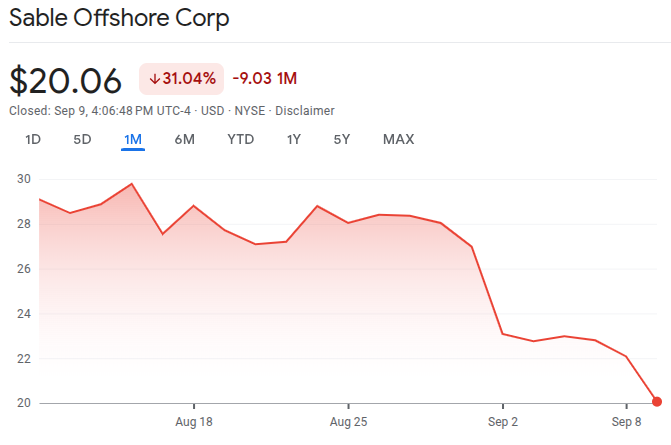
Sables’ share price sank on Tuesday following reports from Bloomberg and others that Governor Newsom is proposing new restrictions on California’s offshore oil industry. With Sable Offshore as a primary target, stricter requirements for restarting inactive intrastate oil pipelines would be imposed. •
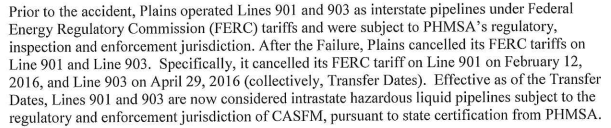
This could trigger yet another legal battle or increase the complexity of those that are ongoing. The onshore pipeline, now owned by Sable Offshore, was originally classified as an interstate pipeline under Federal jurisdiction. However, following the 2015 Refugio oil spill, it was reclassified as an intrastate pipeline via a 2016 letter of understanding signed by representatives of the Federal Office of Pipeline Safety (DOT-PHMSA) and the Office of the State Fire Marshal (pertinent text pasted below).
Given that the Sable pipeline will carry OCS production, it would seem to fundamentally be an interstate line (Federal jurisdiction), as it was when owned by Plains. Could DOT reverse the 2016 letter agreement? That is conjecture for the attorneys and courts to consider.
Meanwhile, below is an upbeat Sable video on the pipeline!
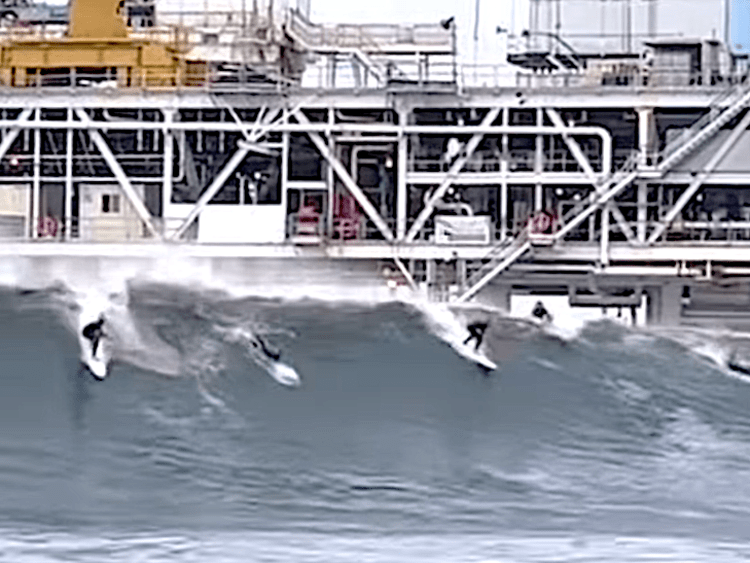
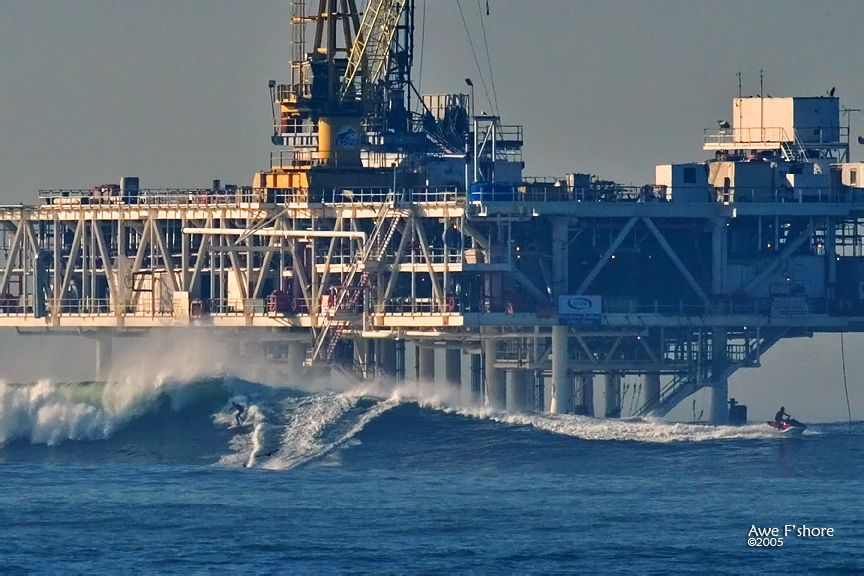
Eloquent eulogy by DCOR (platform operator) CEO Alan Templeton: “Last Sunday, August 10, I joined a small group of DCOR personnel on Platform Esther to witness her final moments of operation. At exactly 3:00 p.m., we pressed the ESD on the production deck, and one by one, the sounds of compressors and pumps faded until the platform fell silent — a profound and bittersweet moment in California’s energy history.
For over half a century, Esther stood off the coast of Orange County, first installed in the early 1960s as one of California’s iconic man-made oil islands. She blended into the horizon while quietly producing oil and gas, surviving storms, and later being rebuilt in 1985 into the platform we know today. More than just steel and pilings, Esther was a proving ground for innovation, a dependable asset, and a source of pride for the men and women who worked safely on her decks.
While she has now been permanently shut in, her legacy remains — a testament to the ingenuity, resilience, and dedication that have defined California’s offshore industry for generations.“
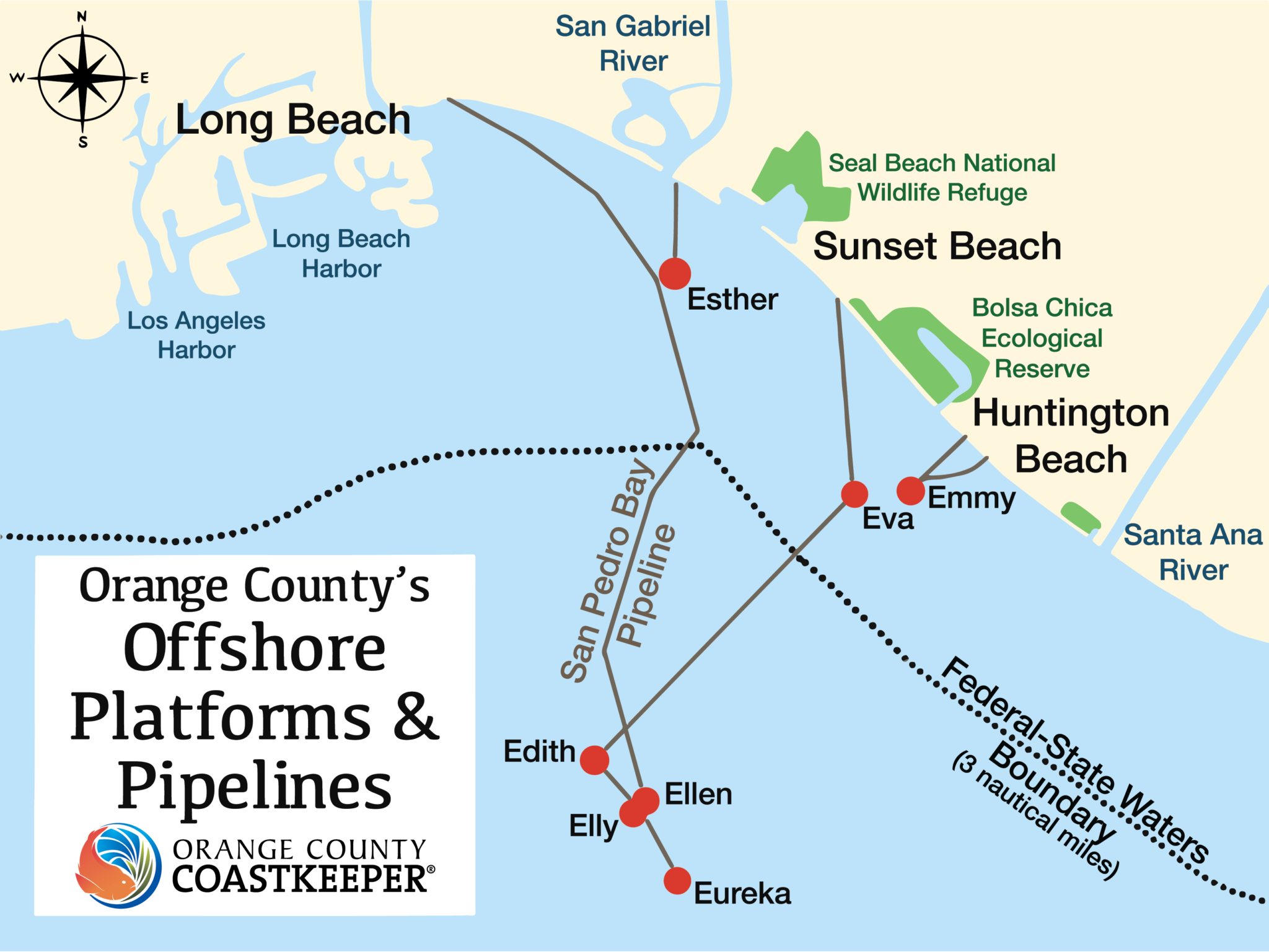
Litigation prematurely ended production at Esther, which would have had an estimated 15 more years of operative life. The attached settlement agreement, shared by John Smith, ends a dispute between the State Lands Commission and DCOR over repurposing a pipeline to transport oil from state Platform Eva to Federal Platform Edith (diagram above).
In exchange for relinquishing its mineral rights and decommissioning Platform Esther, the settlement grants DCOR a $10 million royalty credit on future oil produced from Platform Eva. This credit is significantly less than the value of remaining production from Esther.
Platform Esther, is one of three remaining oil production platforms in California state waters.
On July 25, 2025, more than 2 months after Sable’s brief production restart and 7 weeks after a court decision halted further production, BSEE surprisingly announced the resumption of Santa Ynez Unit (SYU) production boasting:
“This is a significant achievement for the Interior Department and aligns with the Administration’s Energy Dominance initiative, as it successfully resumed production in just five months.“
Were the authors of the press release unaware that the SYU production, which was largely from well tests, was halted by court order shortly after it began? More philosophically, is such cheerleading appropriate for the principal safety regulator, particularly given that BSEE is engaged in litigation over its practices in facilitating SYU production?
Ironically, just 3 days after BSEE hailed the resumption of production, the attached lawsuit was filed on behalf of investors who purchased Sable Offshore securities between May 19, 2025 and June 3, 2025. BOE contributor John Smith shared the filing.
The plaintiffs allege misleading statements regarding the resumption of production. Some of the key points cited in the filing:
On May 19, 2025, before the market opened, the Company issued a press release entitled “Sable Offshore Corp. Reports Restart of Oil Production at the Santa Ynez Unit and Anticipated Oil Sales from the Las Flores Pipeline System in June 2025.”
The release informed that Sable expected to fill the ~540,000 barrels of crude oil storage capacity at LFC (Los Flores Canyon onshore processing facility) by the middle of June 2025 and subsequently recommence oil sales in July 2025.
Following the May 19 Press Release, Sable Offshore stock climbed from a closing price of $28.86 per share on May 16, 2025 to $33.02 per share on May 19, 2025, a 14.4% climb in share price.
Contrary to Defendants’ representations, Sable Offshore had not resumed commercial production off the coast of California.
Defendants then used the share price appreciation following the May 19 Press Release to conduct a secondary public offering (or “SPO”) at a higher offering price per share than would have otherwise been possible.
State Lands Commission staff informed the Lt. Gov./Commission Chair that the limited oil flows were the result of well-testing procedures required by BSEE prior to restart. These activities did not constitute a resumption of commercial production or a full restart of the SYU.
Characterizing testing activities as a restart of operations is not only misleading but also highly inappropriate –particularly given that Sable has not obtained the necessary regulatory approvals to fully resume operations at SYU.
Any attempt to restart commercial operations at the SYU without final regulatory approvals may place the company in violation of its lease terms and jeopardize the status of Sable’s holdover State lease.
Santa Barbara County Judge Thomas Anderle granted a preliminary injunction requested by the California Coastal Commission against Sable Offshore for alleged violations of The California Coastal Act.

 Bud's Offshore Energy (BOE)