Feeds:
Posts
Comments

Archive for the ‘Offshore Energy – General’ Category

Still waiting for:

Read Full Post »

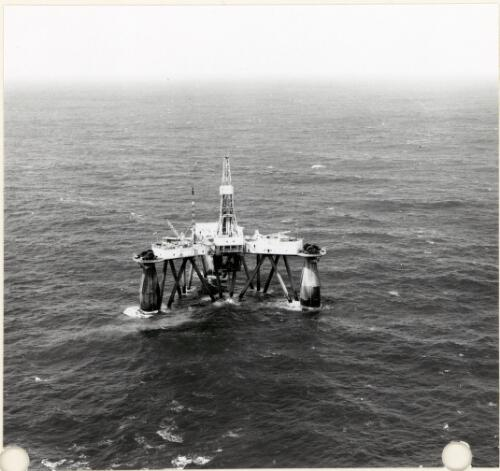
Jean-Louis Daeschler, a native of France who lives in Scotland, was a pioneering subsea engineer who worked on rigs worldwide. Below, he recounts a 1969 incident on the Sedco 135 E.

Sedco 135 E

Sept. 1969 on the Sedco 135 E offshore Miri, East Malaysia

At about 10.00 PM the crew was running 24 ” riser pipe. The rig used a 2 stack BOP system. The weather was superb – no wind and a temperature of 26 deg C.

When the 4th joint of riser pipe (45 ft) was picked up through the “V” door and was almost vertical, it unlatched from the elevator. There was a massive clang followed by silence. The riser pipe hit the drill floor, fell backward into the derrick frame and got jammed there. No one was hurt.

The incident would have been much worse if the pipe had fallen through the catwalk, perforated the maindeck, fell into the water, and damaged the the rig’s sponson tanks !!!! A piece of pipe falling overboard turns into a high velocity torpedo. A dropped 13 3/8″ casing joint is sometimes found 400 ft away. Heavy drill collars go almost straight down, which is the worst case given the potential for damage to the wellhead equipment.

I left the office and went to the rig floor, which was silent. Everyone was looking up and down. With the brake tied down, I asked Bill Ellis what we were going to do now. Bill was an experienced 45+ year old driller from Ruidoso New Mexico. His answer was “Go back home to the USA” with a big smile. He was always in control.

Bill demonstrated great leadership; there was no panic or blame. The all-Chinese and Malay crew was listening and smiling. After some rigging up, we got the operations back into swing. We checked the elevator latch and other equipment, laid down the joint that had been stuck, picked up another one, and continued running the riser.

I met again with Bill and Jo, his wife, in Aberdeen in 1975, and we still talked about that night-shift event.

Sadly, in 1976 their young son Clay Ellis passed away on a diving job in the North Sea.

This is life in the oil patch, a great family all over.

JL Daeschler on the Sedco 135 E

Read Full Post »

NAE announcement

As the Minerals Management Service’s liaison to the Marine Board of the National Academies and subsequently as a Marine Board member, I had the privilege of working with many outstanding engineers on matters related to offshore safety and environmental protection. Dr. Martha Grabowski was a clear standout because of her exceptional leadership and communications skills, modest ego, and willingness to assist.

Dr. Grabowski excels in analyzing and mitigating operational risks including those associated with human and organizational factors. As such, she was a great resource in our work on safety management and culture.

Congratulations to Dr. Grabowski!

Read Full Post »

The 2023 Safety Honor Roll list will be posted tomorrow.

As background information, below is a summary of compliance data for 2022 and 2023.

The performance of Fieldwood and Cox skewed the 2022 and 2023 data. In 2022, Fieldwood was issued 448 INCs, 26% of the Gulf of Mexico total. In 2023, Cox was by far the leading violator with 718 INCs, 39% of the GoM total (780/43% when Cox affiliates are included). These data point to the importance of considering safety and compliance in approving lease assignments and making supplemental bonding determinations.

20222023
facility inspections33093100
inspection types1085610341
W INCs8091050
CSI INCs530600
FSI INCs376180
total INCs17151830
INCs/facility inspection0.520.59
INCs/inspection type0.160.18
Pacific facility inspections280300
Pacific inspection types802744
Pacific W INCs2211
Pacific CSI INCs1314
Pacific FSI10
Pacific total INCs3625
Pacific INCs/facility inspection0.130.08
Pacific INCS/inspection type0.040.03
Alaska facility inspections85
Alaska inspection types3722
Alaska W INCs01
Alaska CSI INCs01
Alaska FSI INCs00
Alaska INCs total02
Alaska INCs/facility inspection00.4
Alaska INCS/inspection type00.09
INC=incident of noncompliance, W=warning, CSI=component shut-in, FSI=facility shut-in.
No Alaska facilities are located on the Federal OCS. One Alaska facility, Hilcorp’s Northstar island, has wells that are completed on the OCS; hence the limited BSEE inspections.

Read Full Post »

  • Must average <0.3 incidents of noncompliance (INCs) per facility-inspection.
  • Must average <0.1 INCs per inspection-type. (Note that each facility-inspection may include multiple types of inspections (e.g. production, pipeline, pollution, Coast Guard, site security, etc). On average, each facility-inspection included 3.3 types of inspections in 2023. Here is a list of the types of inspections that may be performed.
  • Must operate at least 3 production platforms and have drilled at least one well (i.e. you need operational activity to demonstrate compliance and safety achievement).
  • May not have a disqualifying event (e.g. fatal or life-threatening incident, significant fire, major oil spill). Due to the extreme lag in updates to BSEE’s incident tables, district investigations and media reports are used to make this determination.

Read Full Post »

With Sept. production revised down slightly, there have been no 2 million bopd months for 4 years (since Nov. 2019).

Read Full Post »

At Oil and Gas Lease Sale 261, Repsol was the sole bidder for 36 nearshore Texas tracts in the Mustang Island and Matagorda Island areas (red blocks at the western end of the map above). Exxon acquired 163 nearshore Texas tracts (blue in map above) at Sales 257 and 259. All 36 of the Repsol bids have now been accepted.

As previously posted here and here, carbon disposal bidding at the last 3 oil and gas lease sales has made a mockery of the leasing process and the regulations that guide it.

Hopefully, the carbon sequestration regulations that are under development will preclude conversion of leases acquired at Sales 257, 259, and 261. At a minimum, these regulations should require a competitive process for converting any oil and gas leases.

Read Full Post »

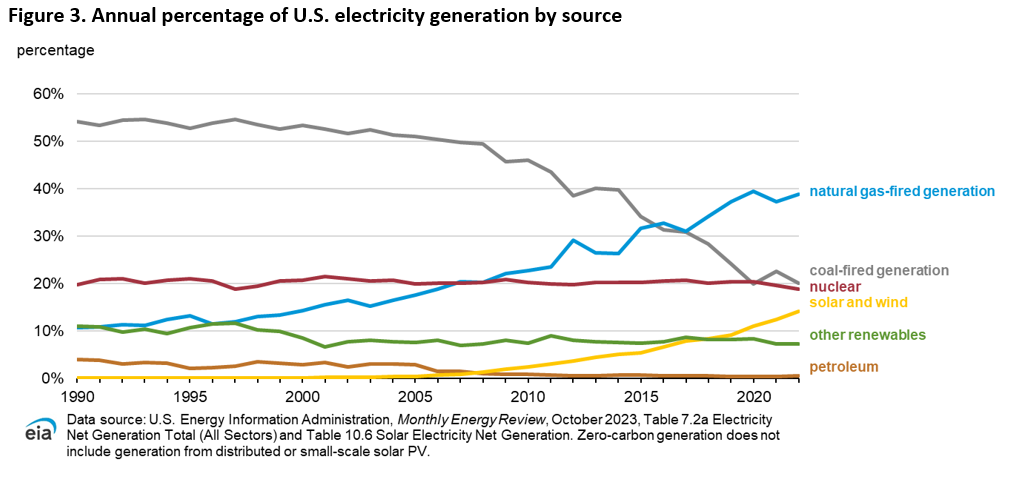
In the wake of the decision to “pause” LNG export approvals, it’s important for us to also pause and reflect on the natural gas revolution.

Gas now accounts for 40% of our power generation.

The gas boom’s economic and environmental benefits are compelling. Greenhouse gas emissions currently get most of the attention. In that regard, methane (CH4) is a hydrogen transporter that emits far less CO2 than other fossil fuels when burned.

Less attention has been given to natural gas’s other important air quality advantages – low NOx. SO2, and particulate emissions. These emissions have greater local significance from a human health standpoint. Those who have ridden a bike behind a natural gas powered bus have no doubt experienced the natural gas advantage firsthand.

Other environmental considerations particularly favor offshore natural gas when compared to energy alternatives. These include low well and facility density, no groundwater pollution risk, and minimal risk to wildlife.

Compiled below are links to BOE posts on natural gas issues and advantages.

Read Full Post »

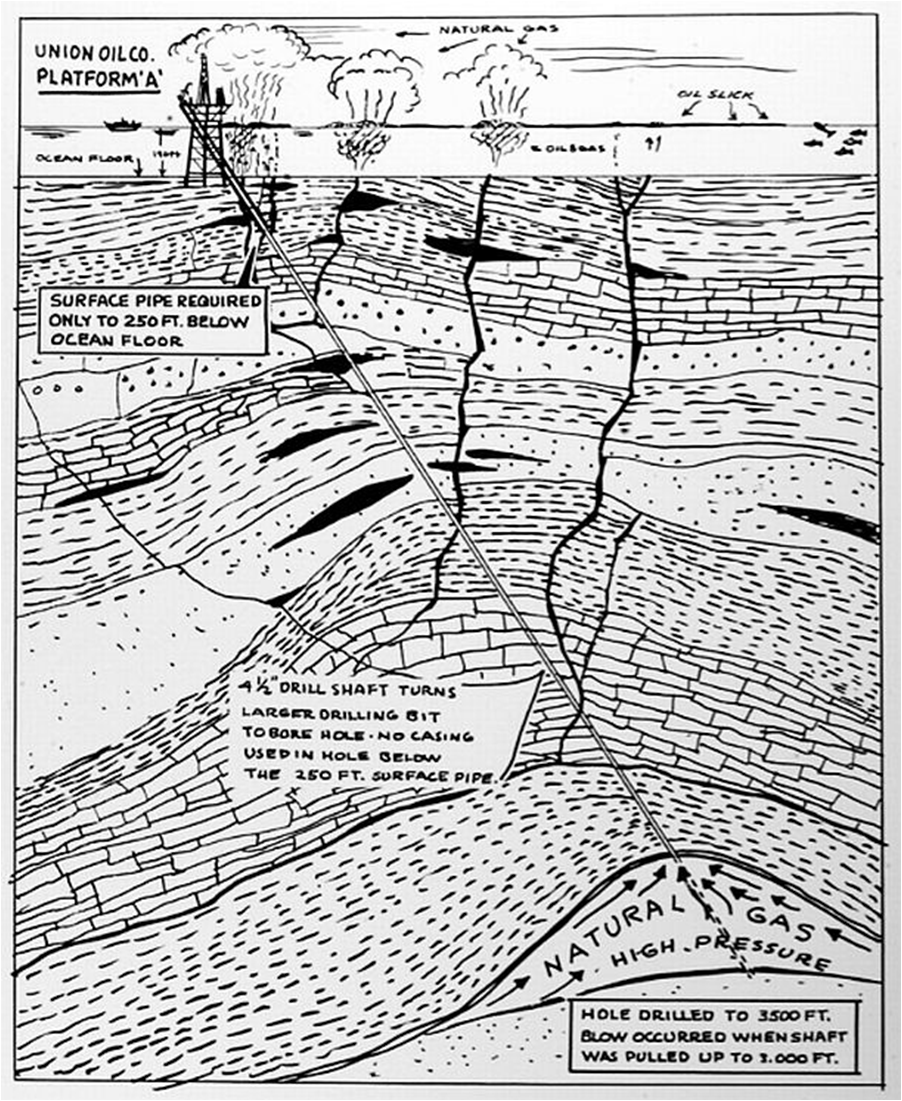
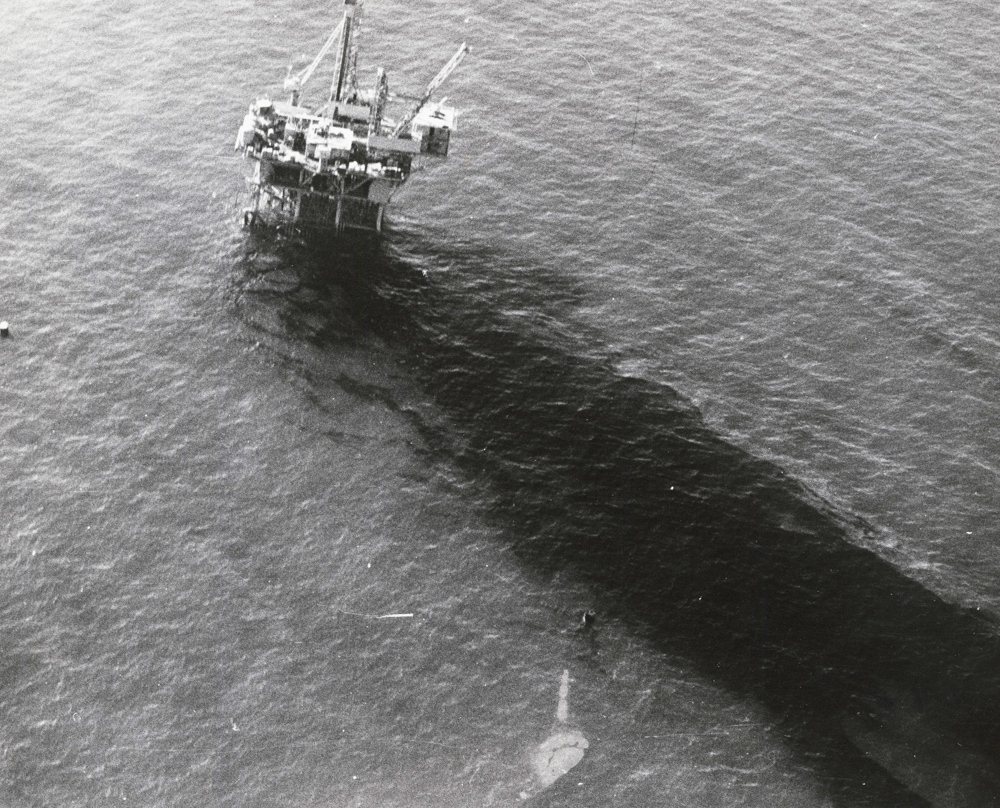
On January 28, 1969, well A-21, the 5th well to be drilled from Union Oil Company’s “A” platform began flowing uncontrollably through fractures into the Santa Barbara Channel.

The absence of any well casing to protect the permeable, fractured cap rock meant that the operator couldn’t safely shut-in a sudden influx of hydrocarbons into the well bore (i.e. a “kick”). Shutting-in the well at the surface would create well bore fractures through which oil and gas could migrate to shallow strata and the sea floor. The probability of an oil blowout was thus essentially the same as the probability of a kick (>10-2). Compare this with the historical US offshore oil blowout probability (<10-4) and the probability of <10-5 for wells with optimal barrier management.

Here, in brief, is the well A-21 story:

  • Well drilled to total depth of 3203′ below the ocean floor (BOF).
  • 13 3/8″ casing had been set at 238′ BOF. The well was unprotected from the base of this casing string to total depth.
  • Evidence of natural seeps near the site suggested the presence of fracture channels
  • The well was drilled through permeable cap rock and a small high pressured gas reservoir before penetrating the target oil sands.
  • When the well reached total depth, the crew started pulling drill pipe out of hole to in preparation for well logging.
  • The first 5 stands of drill pipe pulled tight; the next 3 pulled free suggesting the swabbing of fluids into the well bore..
  • The well started flowing through the drill pipe. The crew attempted to stab an inside preventer into the drill pipe, but the well was blowing too hard. The crew then attempted unsuccessfully to stab the kelly into the drill pipe and halt the flow.
  • The crew dropped the drill pipe into the well bore and closed the blind ram to shut-in the well.
  • Boils of gas began to appear on the water surface. Oil flowed to the surface through numerous fracture channels. The above sketch by former colleague Jerry Daniels (RIP) depicts the fracturing, which greatly complicated mitigation of the flow.

Here is the link to an excellent US Geological Survey report from 1969 that describes the geologic setting, well activities, and remedial measures after the blowout.

We need to continue studying these historically important incidents, not just the technical details but also the human and organizational factors that allowed such safety and environmental disasters to occur. The idea is not to shame, but to remember and better understand.

Read Full Post »

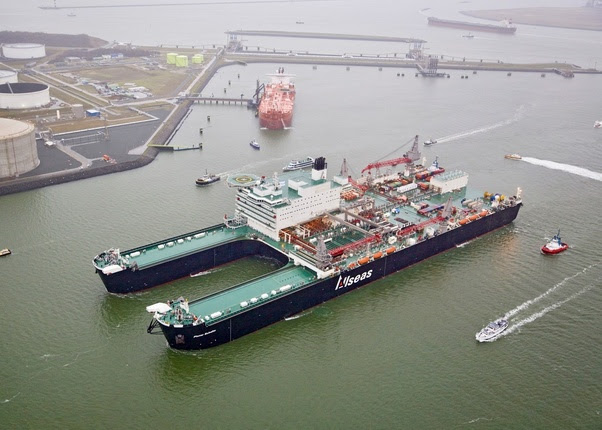
The financial, technical, and regulatory aspects of decommissioning have received much attention on this blog. Andrew Konczvald sends this photo with regrets that the behemoth “Pioneering Spirit” wasn’t available when he was concerned with such matters.

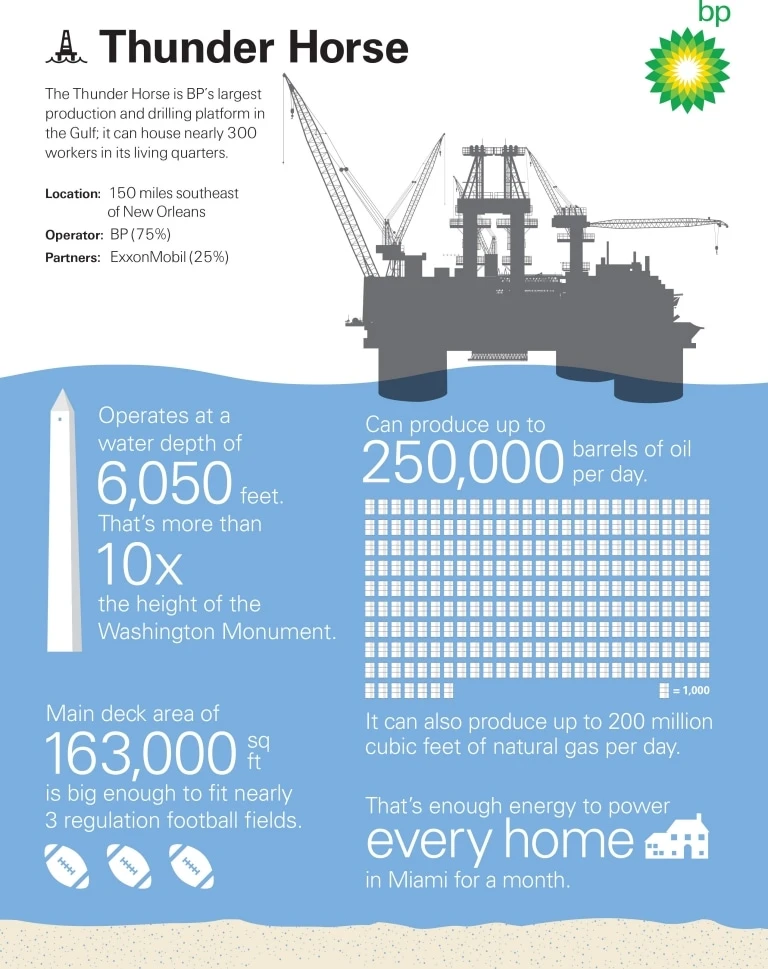
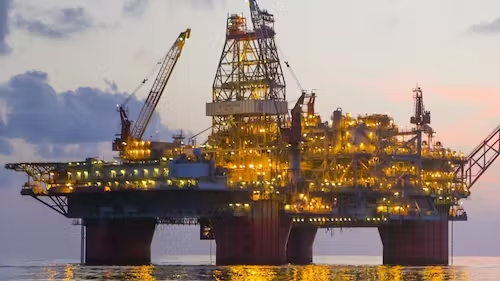
For comparison (size only given the different missions), the massive Thunder Horse floating production platform (see below) in the Gulf of Mexico is 136 m x 112 m, only 12 m narrower but just over 1/3 of the Pioneering Spirit’s length.

The worlds largest 403,342 gross tonnage ship ‘Pioneering Spirit’ (formerly Pieter Schelte) is a catamaran crane vessel owned by the Switzerland-based All Seas Group designed for the single-lift installation and removal of large oil and gas platforms and the installation of record-weight pipelines. The 382-metre-long (1,253 ft), 124-metre-wide (407 ft) vessel is the world’s largest vessel by gross tonnage, and since September 2021 also the largest floating sheer-leg in the world. It was built in South Korea by Daewoo Shipbuilding & Marine Engineering in 2013 at a cost of €2.6 billion. It commenced offshore operations in August 2016.
Thunder Horse

Read Full Post »

« Newer Posts - Older Posts »