Feeds:
Posts
Comments

Archive for the ‘Offshore Energy – General’ Category

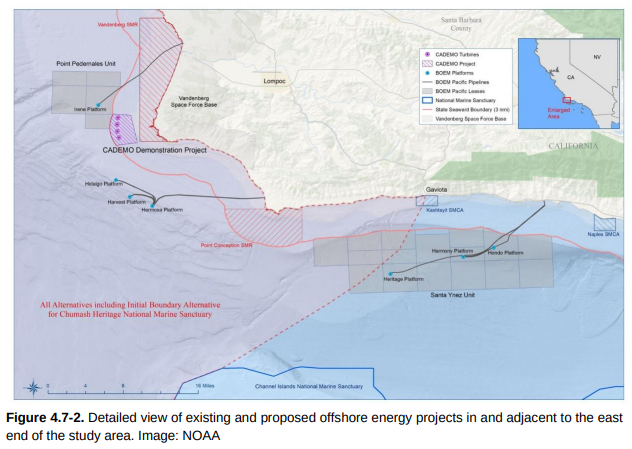
Almost 40 years ago, four large oil and gas platforms were installed in the beautiful offshore area that was part of our Santa Maria District (Pacific Region of the Minerals Management Service). Those platforms are now within the boundaries of the Chumash Heritage National Marine Sanctuary (see map above).

We watched those platforms being installed, inspected the drilling and production operations, and performed a myriad of other duties including the curtailment of offshore operations prior to launches from Vandenberg AFB. Those Vandenberg launches weren’t always perfect as this link clearly demonstrates. Even knowing that, it was still a bit unnerving when missiles were recovered during post-abandonment site clearance trawls.

All four of those Santa Maria District platforms are now on terminated OCS leases. All were installed by companies that are now part of Chevron Corp. (Chevron, Texaco, and Unocal). They are currently maintained by Freeport-McMoRan Oil & Gas, with Chevron retaining financial responsibility for decommissioning.

PlatformInstall yr.installed bywater depth (ft)Est. removal weight (short tons)wells drilled
Harvest1985Texaco67535,15019
Hermosa1985Chevron60330,86813
Hidalgo1986Chevron43023,38414
Irene1985Unocal2428,76226

BSEE reports that the 46 wells on Harvest, Hermosa, and Hidalgo have been plugged and tested, and that the well conductors have been removed. No information has been posted on the status of the wells at Platform Irene, but presumably they are (or will soon be) plugged in accordance with BSEE regulations.

Will the inclusion of these platforms in the Chumash Marine Sanctuary further complicate the already difficult decommissioning process? Decommissioning specialist John Smith thinks it may:

In addition to the BOEM and BSEE approval process, Chevron and FMC are going to be dealing with the NOAA permitting regime for Sanctuaries.  Those permitting and environmental compliance requirements are extensive.  NOAA’s NEPA documentation for West Coast marine sanctuaries will also need to be amended to include the Chumash.”

So the “Mission Impossible” that is California OCS decommissioning now has yet another complex regulatory element.

John also thinks the Sanctuary designation presents yet another obstacle for Sable’s plans to restart Santa Ynez Unit production:

“Even though most of the SYU facilities are outside the Sanctuary, the proximity of the operations to the Sanctuary is problematic. The Chumash are now going to be a co-manager of the Sanctuary, adding another player in the process.   Sable is going to obtain multiple Federal, State and local permits to restart SYU, and law suits are likely at every stage of the process.” 

BOE will be watching!

Read Full Post »

David Scarborough, Island Operating Co., was one of the 4 workers who died in the 2022 crash at a West Delta 106 platform.

Read Full Post »

The California Coastal Commission, which exercises enormous power and limited restraint, is making headlines for preventing SpaceX, arguably America’s most extraordinary company, from increasing the number of satellite launches from the Vandenberg Space Force Base, a Federal facility. The Coastal Commission made this decision just 3 days before SpaceX’s awe inspiring rocket booster catch in Texas:

Sable Offshore, despite being spawned by super-major Exxon, is a relative minnow compared to SpaceX, at least politically. The restart of production from Sable’s Santa Ynez Unit is facing another obstacle now that the Coastal Commission has entered the fray.

The Coastal Commission has ordered Sable to stop the installation of pipeline shutdown valves that are not only prudent, but required by the California Fire Marshall, the State’s safety authority for pipelines. The Commission has intervened by asserting that the pipeline upgrades require a coastal development permit.

Sable argues that repair and maintenance activities are exempt from Coastal Act permitting requirements, and have been conducted under their existing permits for 35+ years.

The Commission does not like to see its authority questioned, and is influenced by groups whose sole objective is to prevent the restart of production. We’ll see how this sorts out.

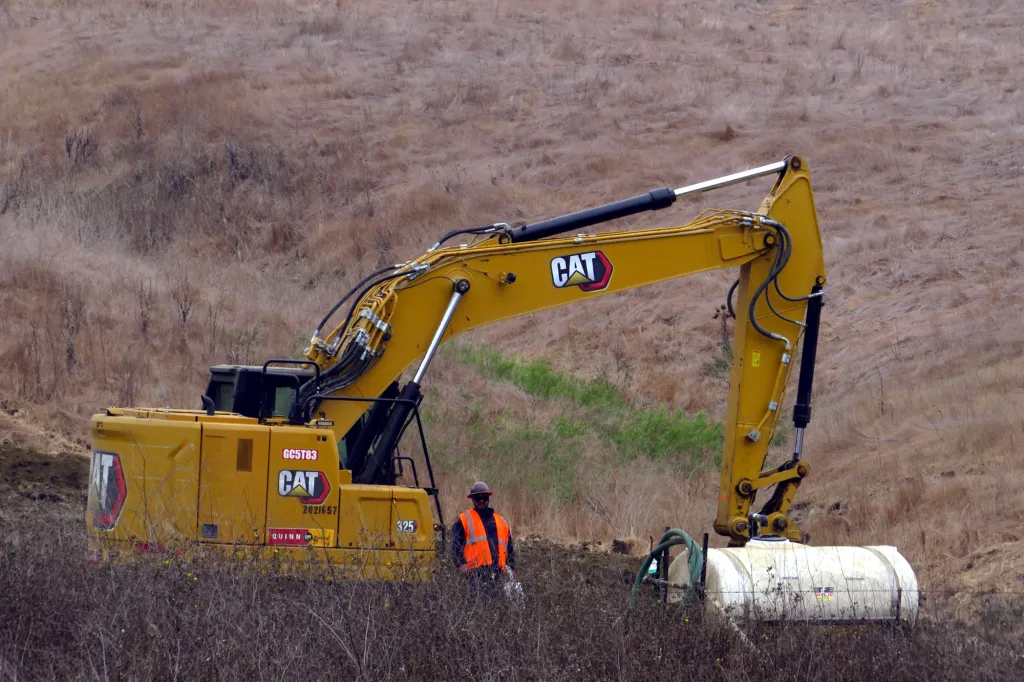
Center for Biological Diversity photo of pipeline repair work as published by Noozhawk

Meanwhile, Elon Musk did not hold back after the Commission’s decision not to allow an increase in the number of launches from Vandenberg:

“The California Coastal Commission should be dissolved as an organization.  An utterly insufferable and misanthropic group of Karens if there ever was one! Their idea of the perfect coastline is one where there are zero humans or even signs of human! Anyone who has had any dealings with them will attest to this.  They should not exist.”

Ouch! Tell us what you really think Elon! 😉

Read Full Post »

See the video embedded below or view it here.

Some of us are long-time observers of North Sea operations. Others like JL Daeschler are pioneers who were involved with North Sea exploration and development from the outset. It’s sad to see what is happening to the UK offshore industry.

And for what purpose? Virtue signaling by politicians? Pandering to the international climate cartel? Shutting down North Sea production will have no measurable effect on our climate.

Now that the entire U.S. Atlantic and Pacific, and nearly all of offshore Alaska, are closed to oil and gas leasing, the goal of some is to shut down the Gulf of Mexico. That intent is clear in the 5 year leasing plan that provides for a maximum of 3 sales, the fewest of any 5 year plan in the history of the US offshore program. This is really a 5 year moratorium, not a 5 year leasing plan.

As noted in the post below, GoM production is 1.8 million bopd. BOEM’s reasonable forecast of >2 million bopd through 2027 will not be achieved because of policy decisions, not resource limitations or technical capabilities.

And shame on those who are attributing Hurricane Helene’s destruction to GHG emissions. This is uninformed opportunism at its worst.

Read Full Post »

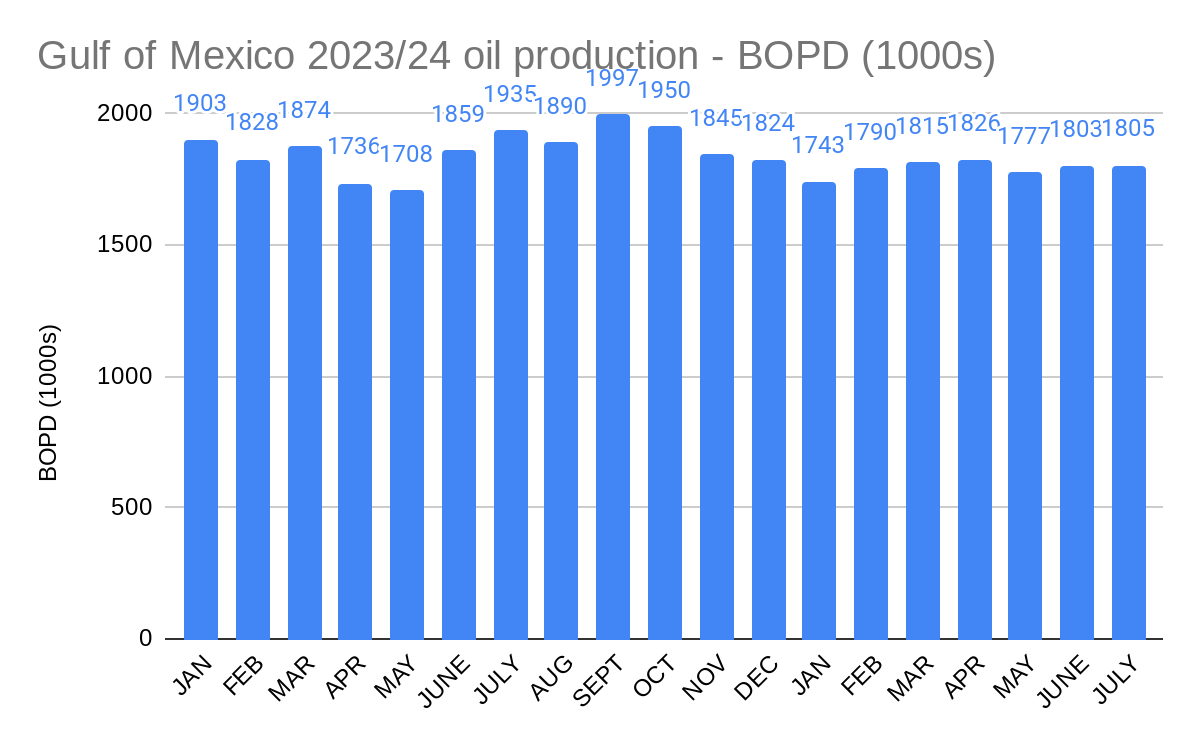
The stability in Gulf of Mexico oil production rates, as noted when the data for June were released, continued into July. Oil production once again remained remarkably consistent at 1.8 million bopd.

Average daily production was within 1.4% of 1.8 million bopd for each month from February to July. As previously observed, this is as stable as production has been for any 6 month period in the past 10 years. I’m not sure this observation is terribly significant, but it’s interesting nonetheless. 😀

If the streak didn’t end in August, it most certainly did in September given the shut-ins for Hurricanes Francine and Helene.

Read Full Post »

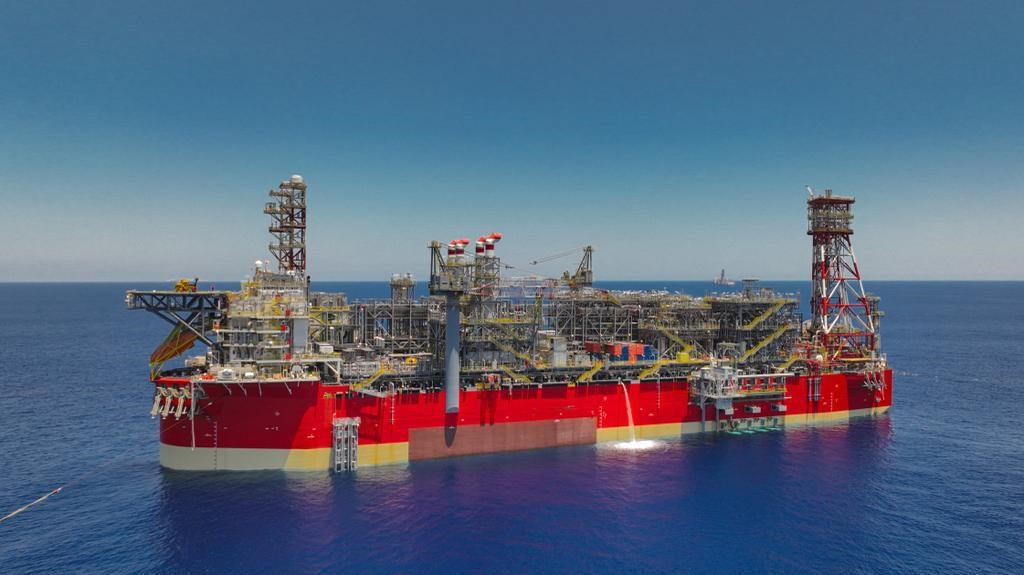
FPSO in the Karish gas field

Below is IDF video of a drone intercept by an Israeli naval vessel offshore northern Israel.

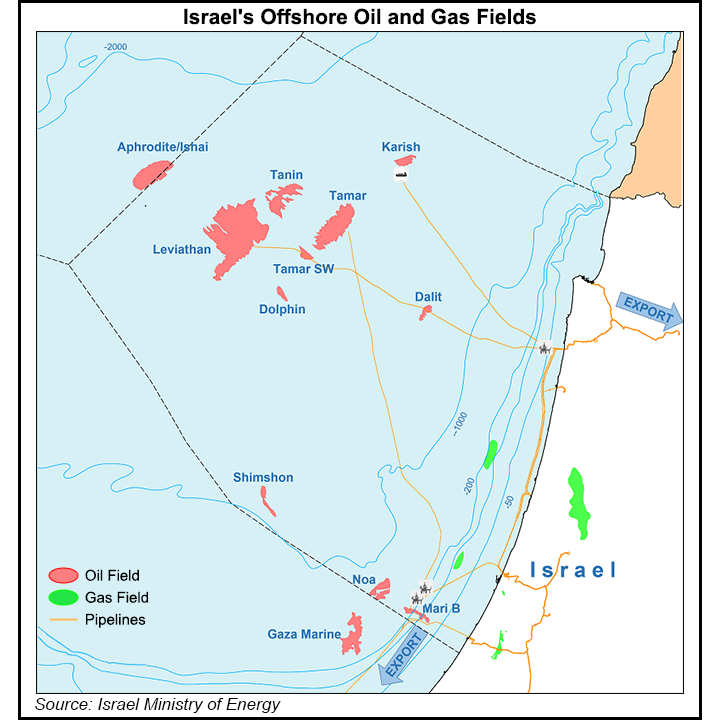
Initial assessments suggest that the drone was headed for offshore infrastructure at the Karish gas field, presumably the FPSO pictured above.

Read Full Post »

Update: BSEE reports that as of 9/29/2024, essentially all production had been restored.

As of 9/28, 210,000 BOPD remained shut-in with only 4 platforms still evacuated. Presumably, production had not resumed (or had only partially resumed) on some high rate deepwater platforms.

BSEE shut-in, evacuation, and relocation data in the table below are as of 12:30 p.m. ET on the specified date.

date9/249/259/269/279/28
oil s.i.(BOPD)
% of total
284,000
 16.21
511,000
29.18
441,923
25.25
427,000
 24.39
210,000
12
gas s.i.(MMCFD)
% of total
208
11.2
313
16.85
363.39
19.81
343
18.46
112
6.04
platform evacs
% of total
4
1.08
17
4.58
27
7.28
9
2.43
4
1.08
rig evacs
% of total
0
0
1
20
1
20
00
DP rigs moved
% of total
2
9.5
3
14.3
3
14.3
1
4.76
1
4.76

Read Full Post »

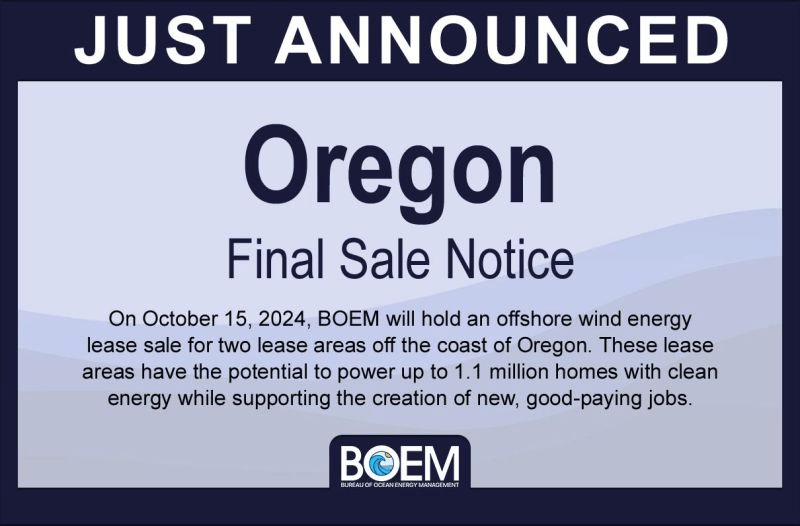
I am disappointed that BOEM’s accelerated process over the last year has further divided stakeholder communities, and put the Confederated Tribes of the Coos, Lower Umpqua and Siuslaw Indians in the position of challenging BOEM in federal district court. Oregon’s legislative Coastal Caucus is likewise now in full opposition to BOEM’s proposed lease.

Despite the usual hype about the number of homes that could be powered and “good-paying jobs,” the upcoming Oregon wind lease appears to be very much in doubt. If legal action by Oregon tribes doesn’t halt or delay the sale, the absence of bidders may.

OregonLive reports that only one company, NewSun Energy, continues to be interested in participating in the sale. NewSun is primarily a solar energy developer with no apparent offshore wind experience.

Wind development offshore Oregon would be complex and very expensive given the need for floating turbines and new high-voltage transmission lines over the Coast Range. At least two counties, Coos and Curry, are set to vote on whether to publicly oppose offshore wind development off their coast.

If the sale is delayed such that BOEM is not able to issue leases before 12/20/2024, the leases cannot be issued until a qualifying oil and gas lease sale is held.

Read Full Post »

Note: I have attached a PDF for those who want to download the charts and table. I have also added a “flaring and venting” category for easy access to these posts.

Minimizing flaring and venting is important from both environmental and resource conservation standpoints. Flaring and venting volumes are also good indicators of how well production systems are designed, managed, and maintained.

The best performance indicators are the percentages of produced gas that are flared and vented both for oil-well gas (OWG, also known as associated gas or casinghead gas) and gas-well gas (GWG or non-associated gas).

I compile monthly flaring and venting volumes for the Gulf of Mexico using data submitted to the Office of Natural Resources Revenue (ONRR). Reporting these data is mandatory and strictly enforced. Violators are subject to civil and criminal penalties.

In assessing performance trends, it’s important to segment venting and flaring volumes for both OWG and GWG production. Venting produced gas (mostly methane) is a more significant environmental concern from both air quality and greenhouse gas (GHG) perspectives. Reductions in methane emissions are a priority for regulators and leading operators.

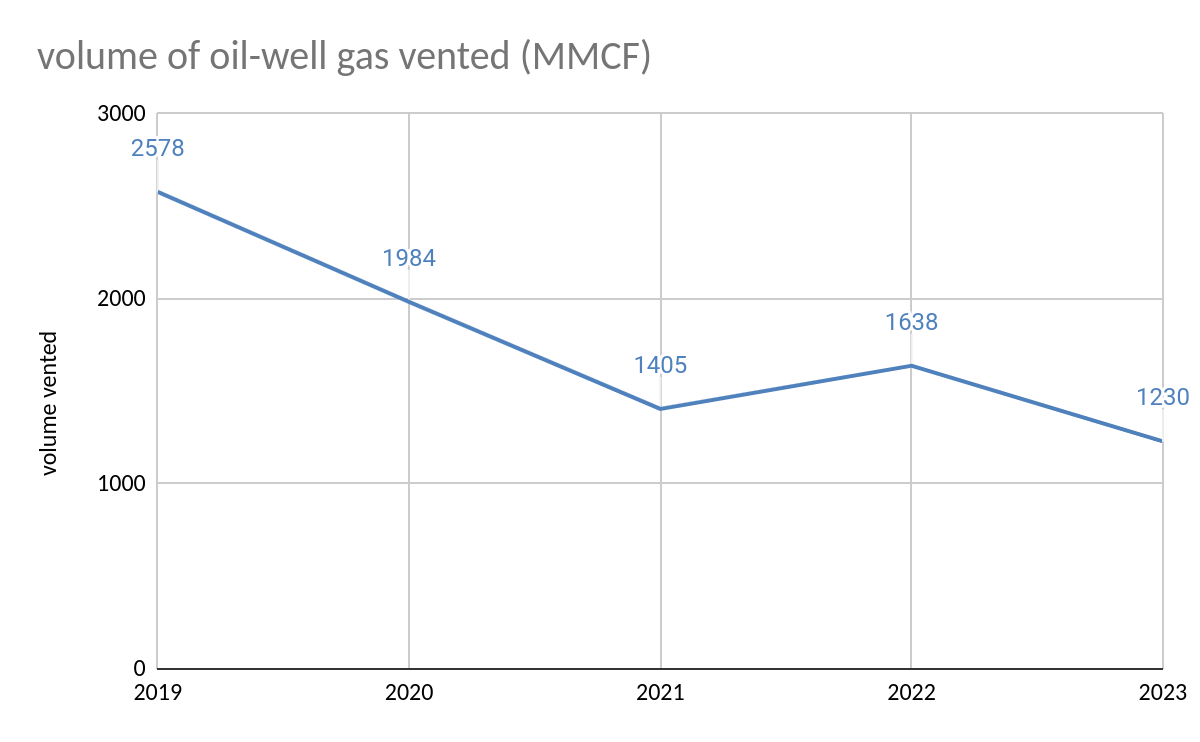
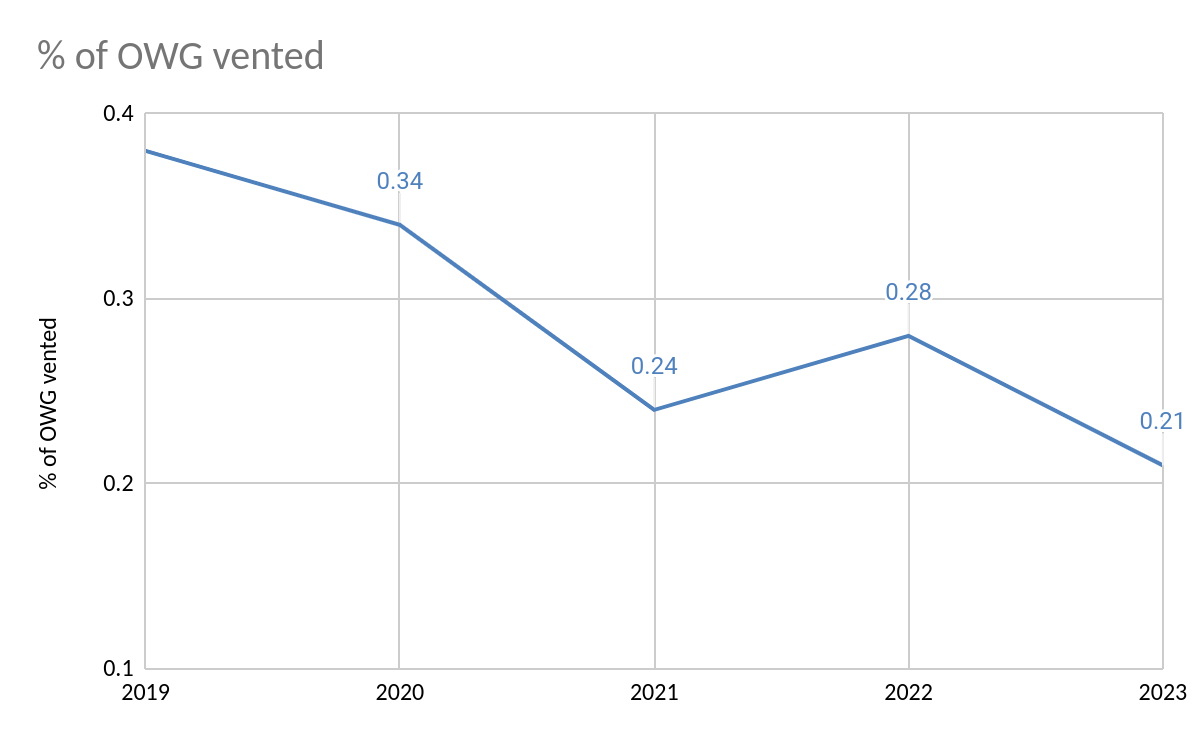
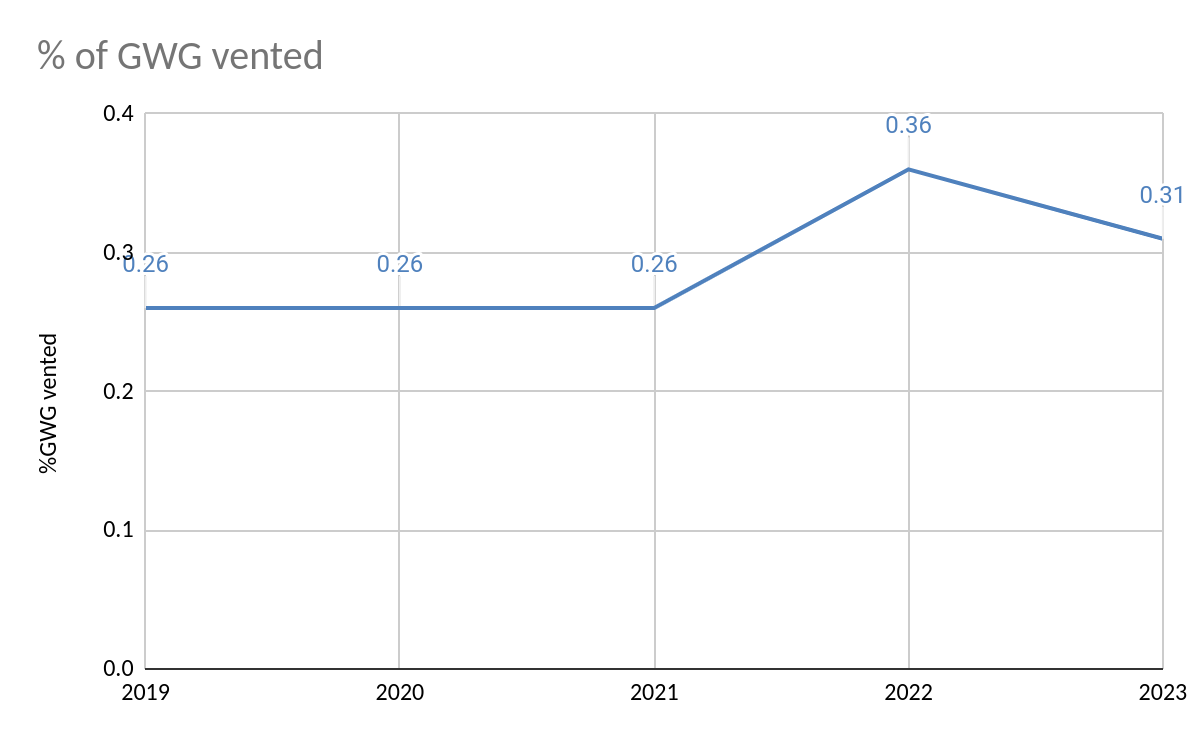
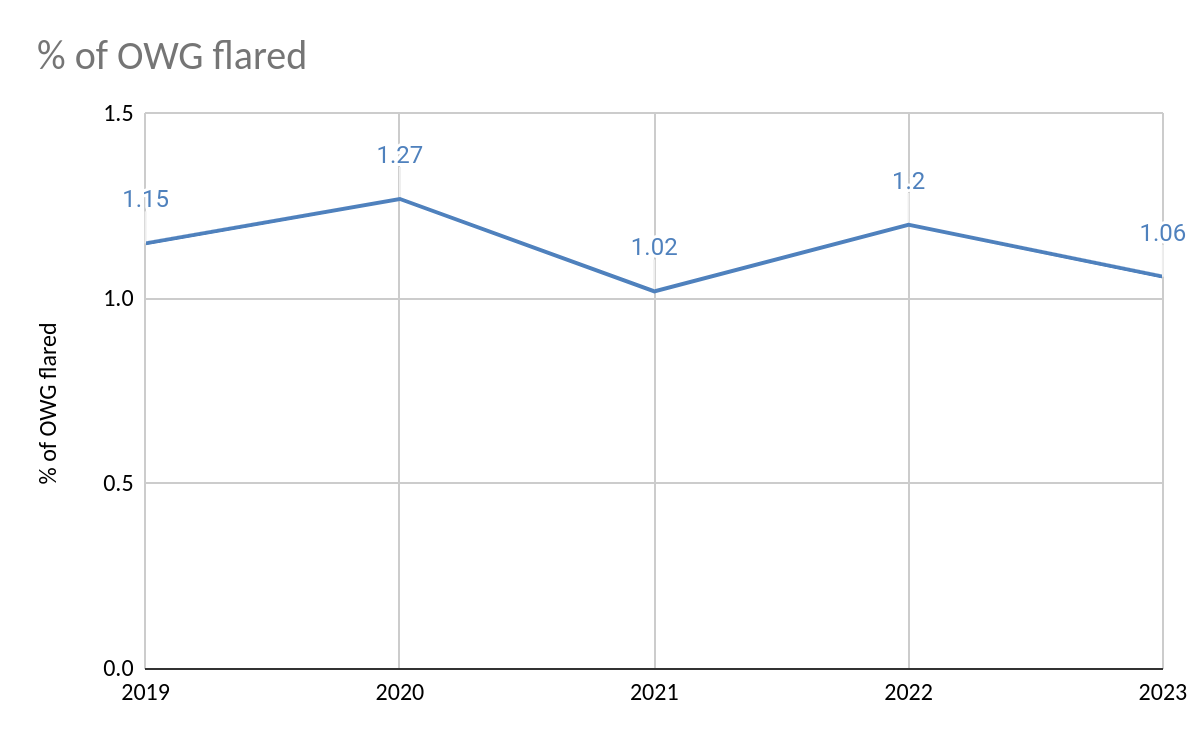
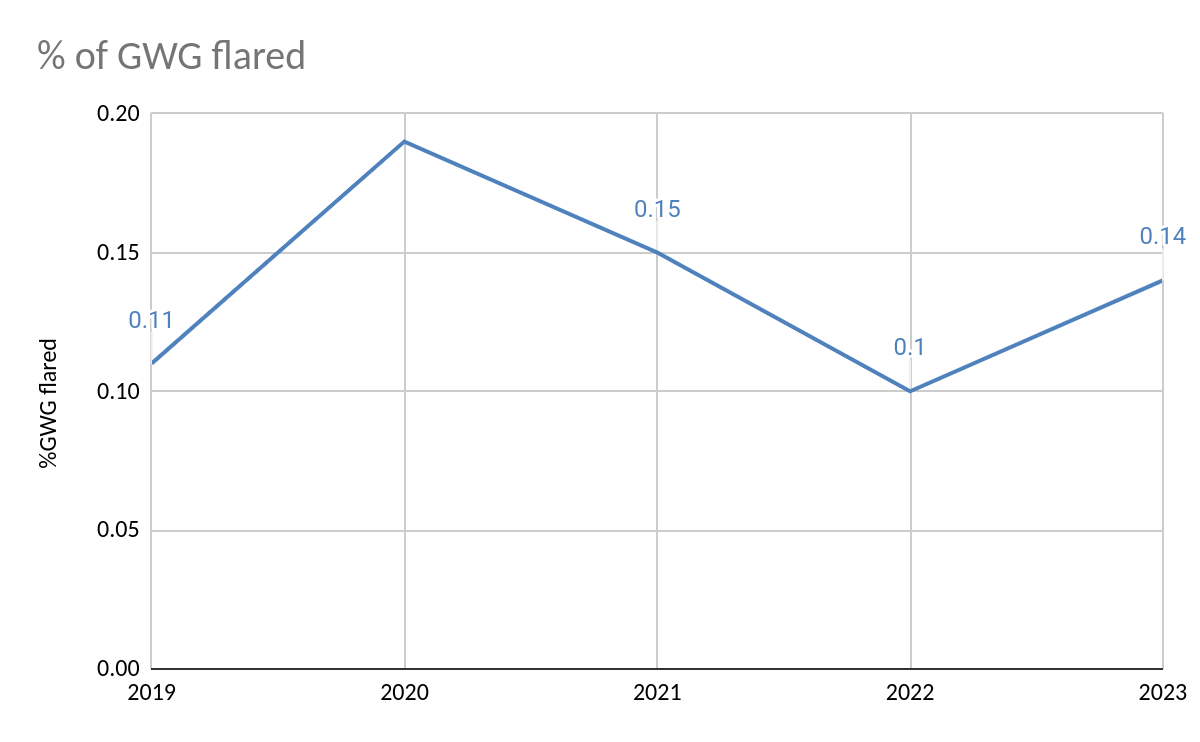
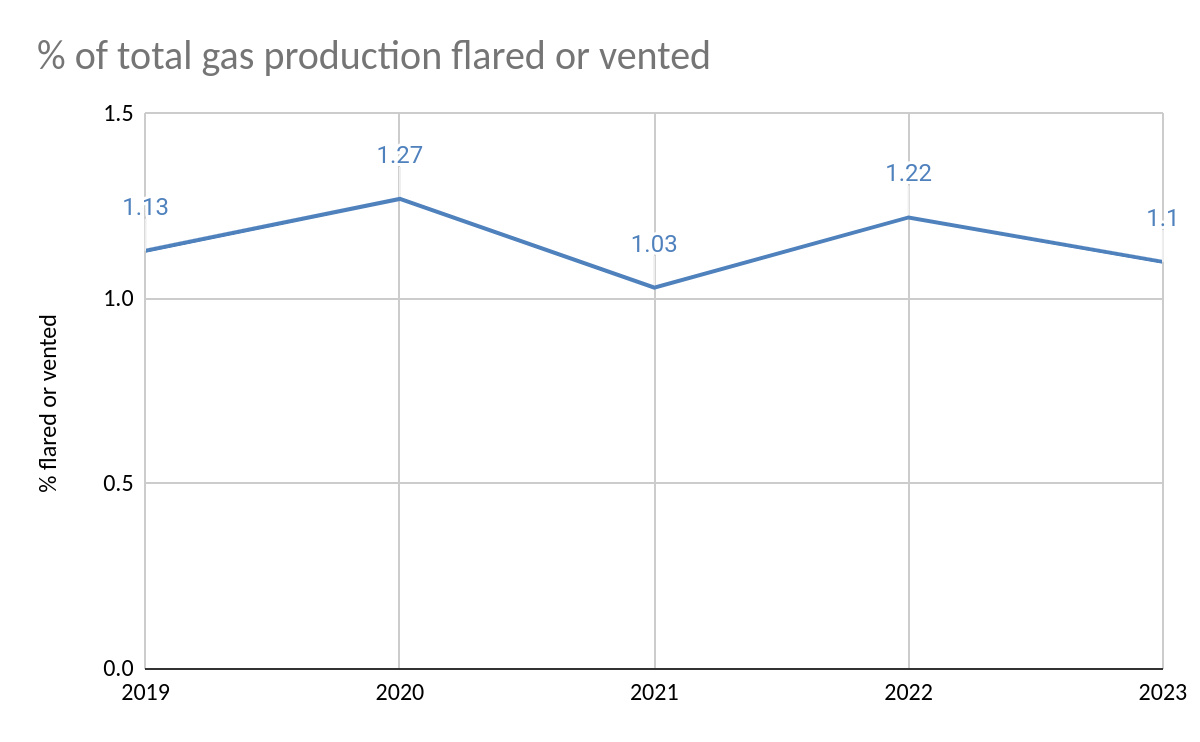
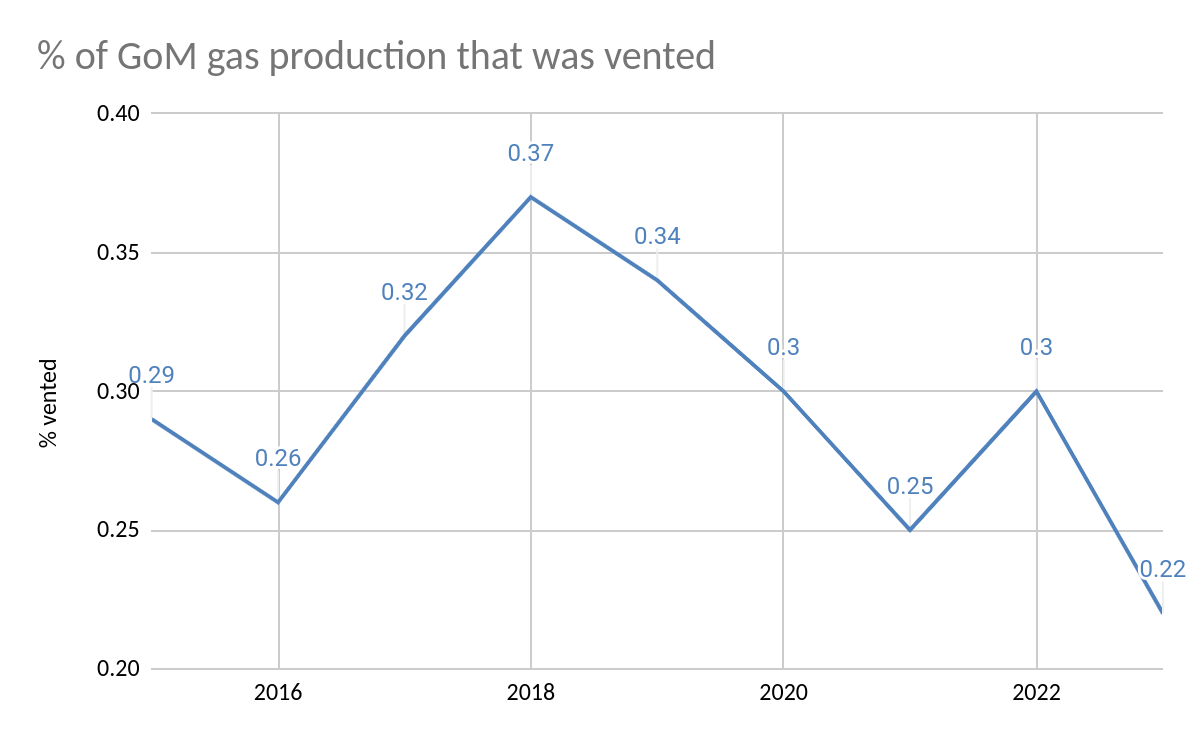
Flaring and venting data for 2019-2023 are summarized in the charts and table below. All volumes are in millions of cubic feet (MMCF). For the last chart (% of total gas production vented), I added ONRR data for 2015-2018 to provide a longer term perspective on overall venting performance.

Observations:

  • OWG venting has declined significantly both in terms of the total volume and % flared. Most OWG is now produced at modern deepwater platforms equipped with efficient flare stacks. Venting from these facilities is minimal. A performance target of <0.2% for OWG venting should therefore be achievable.
  • GWG venting volumes have declined sharply. However, given the parallel decline in GWG production, the % of GWG vented has actually increased. Most gas wells are on older shelf platforms where flare booms cannot be safely and economically added. Nonetheless, it’s disappointing that the % of GWG vented increased to > 0.3% in both 2022 and 2023.
  • OWG flaring has remained relatively constant both in terms of the volume and % flared. Given that most OWG is produced at deepwater facilities, reduction of the flaring % to <1.0 should be achievable.
  • The % of the total gas flared or vented has remained relatively constant at >1.0%. Again, a target of <1.0% should be achievable.
  • In the table, the figures in blue are particularly encouraging and the figures in red are the most disappointing.
  • Overall, the numbers are good, but continuous improvement should be the objective. Reductions in GWG venting and OWG flaring should be prioritized.
  • As previously discussed, flaring/venting performance could be better assessed if information on large flaring/venting episodes was made publicly available. Explanations are needed for spikes in monthly ONRR flaring/venting volumes. Are these spikes associated with production startups, tropical storm restarts, major compressor issues, administrative/accounting corrections, or something else?
20192020202120222023
OWG flared77277385591969876342
OWG vented25781984140516381230
OWG produced670,699582,254582,824581,235598,005
% OWG flared1.151.271.021.201.06
% OWG vented0.380.340.240.280.21
GWG flared405432311213212
GWG vented958578548722468
GWG produced364,082224,808209,558203,342152,400
%GWG flared0.110.190.150.100.14
%GWG vented0.260.260.260.360.31
total flared and vented1166810233818395598252
total gas production1,034,782807,062792,382784,577750,405
% flared or vented1.131.271.031.221.10
total vented35362416195323601698
% vented0.340.300.250.300.22
total flared81327817623072006554
% flared0.790.970.790.920.87

OWG=oil well gas; GWG=gas well gas; all volumes are in MMCF

Read Full Post »

2024 will be the first year since 1958 without a single OCS oil and gas lease sale. There would not have been a sale in 2023 either were it not for a legislative mandate. The only 2022 lease sale was a micro-sale in the Cook Inlet that resulted in only a single bid. So, at the end of 2024 three years will have elapsed with only one meaningful sale, and that sale was mandated by Congress.

The current plan is for these de facto sanctions on US offshore production to continue. The Dept. of the Interior’s 5 year leasing plan includes a maximum of 3 sales, by far the fewest sales in any 5 year plan in OCS program history.

Meanwhile, the sanctions on Venezuelan production were further eased with the understanding that the Maduro regime would hold fair elections. To the surprise of no one, the evidence strongly suggests that those elections were not fair. Nonetheless, the sanctions on production have not been reimposed.

Apparently, the climate activists who have imposed their will on the OCS oil and gas program have less influence over our policy toward Venezuela. Or perhaps the production (and consumption) of Venezuelan oil is cleaner and greener (🙃 sarcasm intended!)

Read Full Post »

« Newer Posts - Older Posts »