BSEE’s decision to revise downhole commingling policy by increasing the allowable pressure differential between reservoirs is sound and supported by an impressive University of Texas (UT) Petroleum Engineering study. Although the announcement hype is a bit much, this is the way regulation is supposed to work.
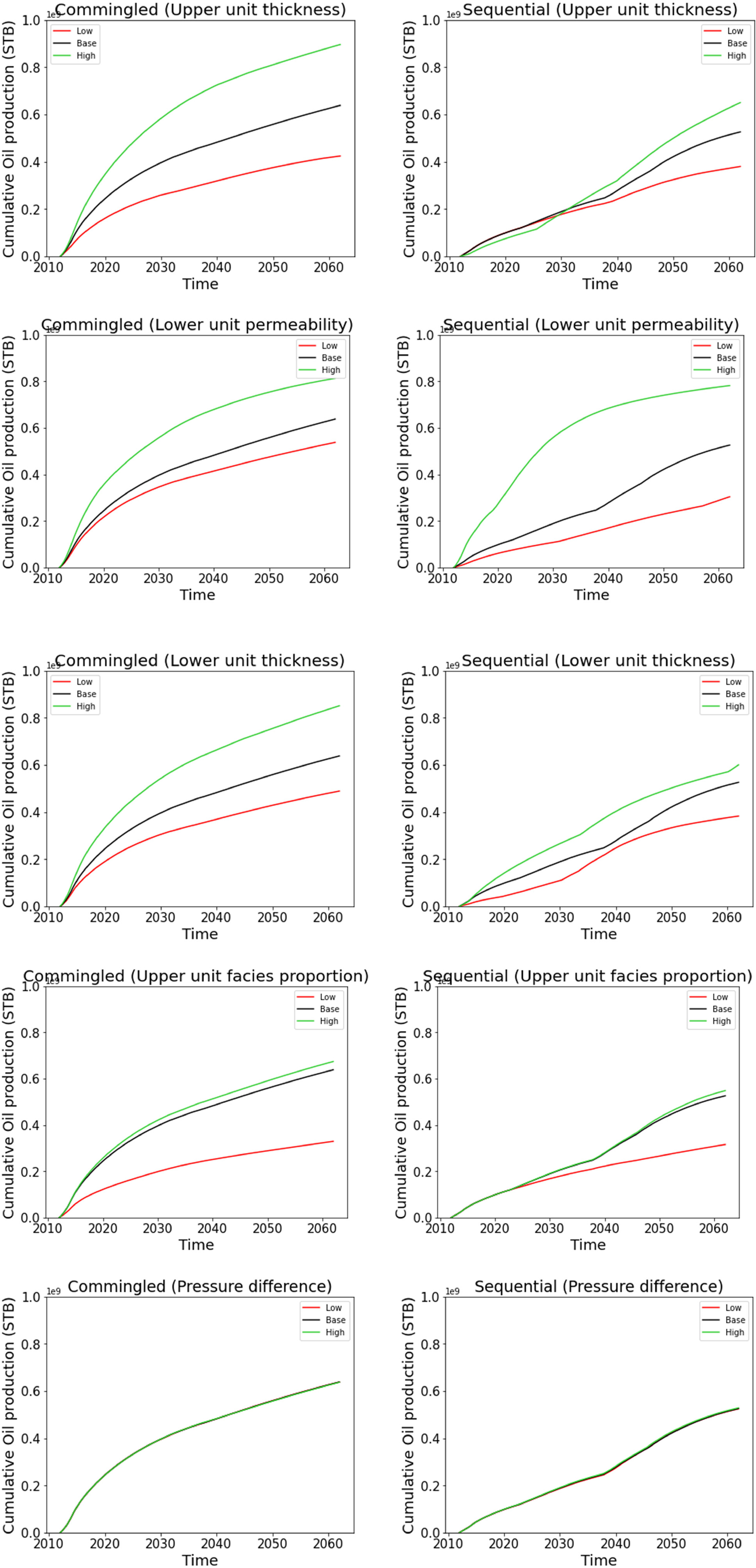
The main benefit of commingling (vs. sequential production) is the accelerated return on investment, which is fine as long as other risks are not introduced and ultimate oil recovery is not sacrificed. The UT study of Paleogene (Wilcox) reservoirs found that downhole commingling actually maximizes per-well oil production compared to sequential schemes. Over 30 and 50 years, commingling yields 61% and 21% more oil respectively.
The UT study analyzed 3 cases with 19 variables (Table 2 in their report). The reservoir pressure differentials were 500, 1000, and 1500 psi. Interestingly, pressure differential had essentially no impact on cumulative production in either the commingled or sequential scenarios.
Figure 13. Cumulative production over 50 years for commingled (left) and sequential (right) production scheme. The most significant variables are shown in the first four pairs of plots. The last pair of plots shows the least important parameter which is pressure difference between reservoir units.
Also note that (fig. 13):
As the upper reservoir thickness increases to 1000 ft (high case), total production increases by 41% for the commingled production scheme and 26% for the sequential production scheme.
The second most important field feature is upper reservoir facies proportion for both production schemes. A higher sand proportion in the reservoir results in higher production.
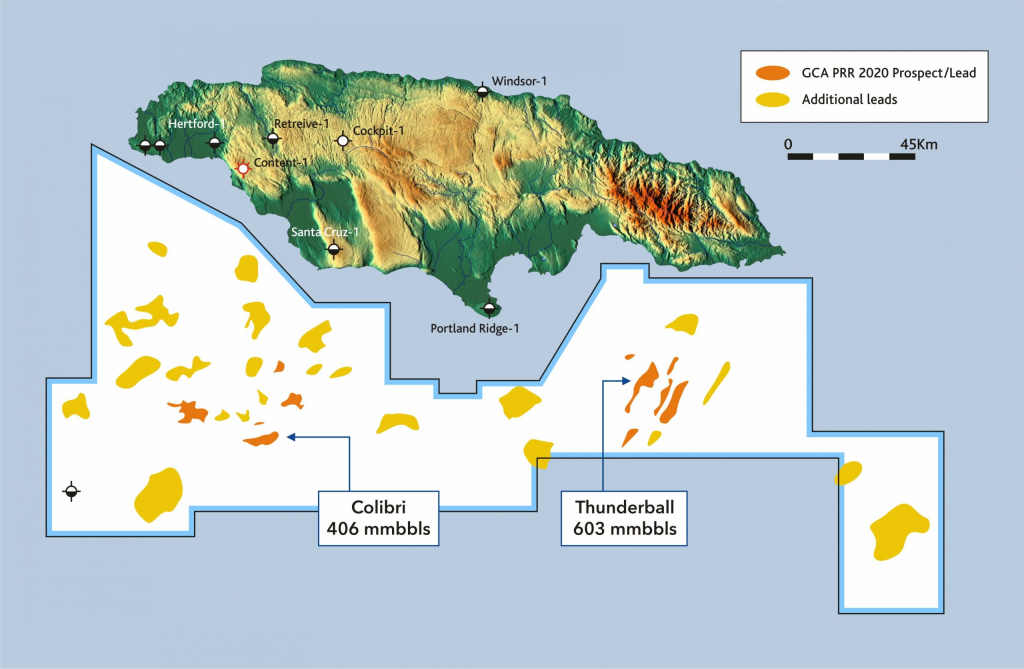
United Oil & Gas Plc (AIM: “UOG”), the oil and gas company with a high-impact exploration asset in Jamaica and a development asset in the UK, is pleased to announce that it has secured an early two-year extension to the Walton Morant licence offshore Jamaica, now valid until 31 January 2028, where it holds a 100% working interest.
The Company would like to formally acknowledge and thank the government and people of Jamaica for the continued support of oil and gas exploration in Jamaica. The extension provides UOG with the security required to advance discussions with farm-in partners and progress technical work, reinforcing the significant exploration potential of this licence.
With the extended tenure confirmed, United have re-engaged with selected parties who had previously expressed interest before the farm-out process was suspended in December 2024, as well as new interest from additional groups. At present, multiple companies are under Non-Disclosure Agreements (NDAs) and actively reviewing data as part of the farm-out process.
Comments:
The Jamaican govt not only granted a second 2 year license extension, but they did so 10 months before the deadline. Could the upcoming elections, scheduled for later this year, have been a factor in the timing of their decision?
Does the govt have that much confidence in a company that is dependent on finding a partner to fund an exploration well?
If the license had been allowed to expire, was the govt concerned about administrative or political constraints associated with re-offering the license area?
United Oil and Gas excels at promotion and isn’t shy about making bold statements about their Walton-Morant license. They have been talking for several years about strong interest from prospective partners, but no deal has been made.
United’s estimate of 7 billion barrels for the license area represents the sum of the prospective unrisked resources for each prospect. The resource estimate is dependent on oil being discovered and developed at each prospect, and is thus speculative.
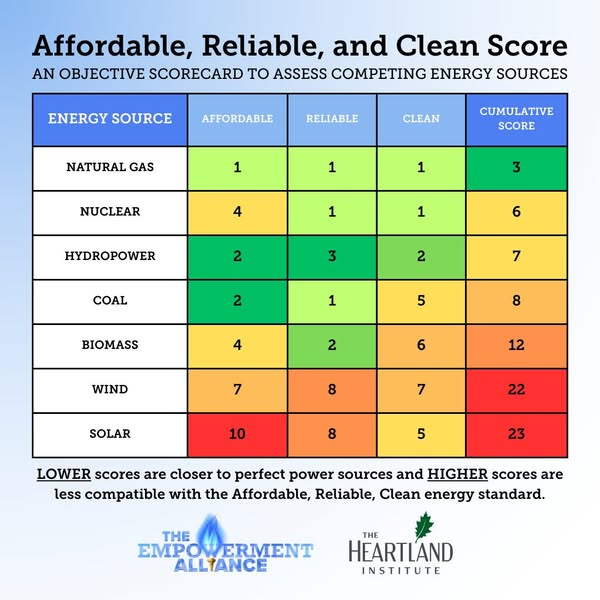
Although combustion of natural gas emits 30% and 45% less CO2 than oil and coal respectively, the CO2 emissions are still significant. As a result, those who focus solely on greenhouse gases and ignore all other impacts (e.g. other air pollutants like NOx, SO2, and particulates, land use and space preemption, visual effects, and wildlife risks), want to limit the production and use of gas. However, whether or not fossil fuel consumption is significantly affecting the climate, the use for natural gas will be economically and environmentally imperative for the foreseeable future.
Not all natural gas production is equal from an environmental standpoint. Because this is an offshore energy blog, I draw your attention to the unique advantages of offshore gas production: minimal visual impact, bird friendly (rigs-to-roosts!), no risks to freshwater aquifers, and few land use issues.
Currently, most offshore gas production is in the form of oil-well gas (AKA associated or casing head gas). Offshore gas production is thus being primarily driven by oil demand, and is an added benefit from deepwater oil development.
Offshore gas-well or non-associated gas is largely the domain of independent operators producing in the shallower waters of the continental shelf. Non-associated gas has an added benefit in that there is little or no spill risk (depending on how dry the gas is). Shelf gas platforms also provide ecosystem benefits through their reef effect (rigs-to-reefs). Sustaining this non-associated gas production is therefore desirable from both energy and environmental standpoints.
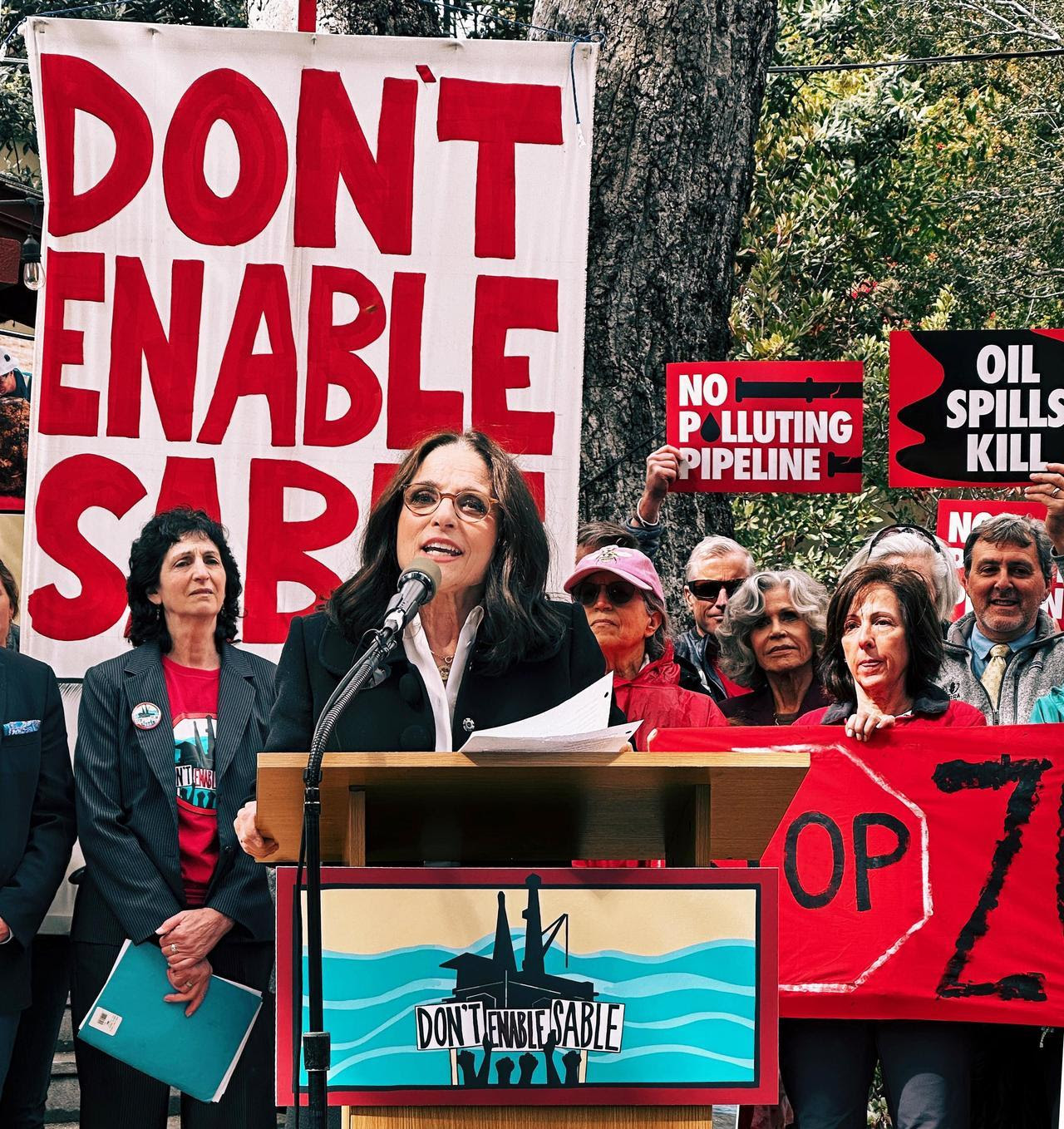
California Attorney General Rob Bonta unsuccessfully requested that a Santa Barbara Superior Court judge issue a temporary restraining order on the Texas-based oil company for defying a cease-and-desist order issued last week by the California Coastal Commission.
Initially, Judge Anderle planned on granting the restraining order at Bonta’s request in his tentative ruling. However, his opinion changed after reading Sable’s opposition documents in the courtroom on April 17.
Arguments for a preliminary injunction will be heard on May 14.
Meanwhile, in an “All Hands on Deck” message to their mailing list, the Environmental Defense Center (EDC) predicts doom and gloom unless supporters answer their fundraising call:
This fight is now in a critical phase. We need your help to ensure EDC can continue to present the strongest defense against Sable’s dangerous proposal.
EDC photo
Lastly, Market Beat reports the following large purchases of Sable shares. Those investors better have a high risk tolerance!
Harraden Circle Investments LLC bought 220,000 shares of Sable Offshore stock. Sable now accounts for approximately 4.6% of Harraden’s investment portfolio, making the stock its 9th largest position.
State Street Corp boosted its stake in shares of Sable by 74.3% during the 3rd quarter. State Street Corp now owns 1,589,395 shares of the company’s stock after acquiring an additional 677,426 shares in the last quarter.
Vanguard Group Inc. boosted its holdings in Sable Offshore by 23.6% in the 4th quarter. Vanguard now owns 3,486,126 shares of the company’s stock.
Emerald Advisers LLC bought a new stake in shares of Sable Offshore in the fourth quarter valued at about $6,700,000.
Bridgewater Associates LP acquired a new position in Sable Offshore in the 4th quarter valued at approximately $4,693,000.
Renaissance Technologies LLC grew its holdings in shares of Sable Offshore by 313.8% during the 4th quarter. Renaissance now owns 269,800 shares of the company’s stock worth $6,178,000 after purchasing an additional 204,600 shares in the last quarter.
26.19% of Sable’s stock is owned by hedge funds and other institutional investors.
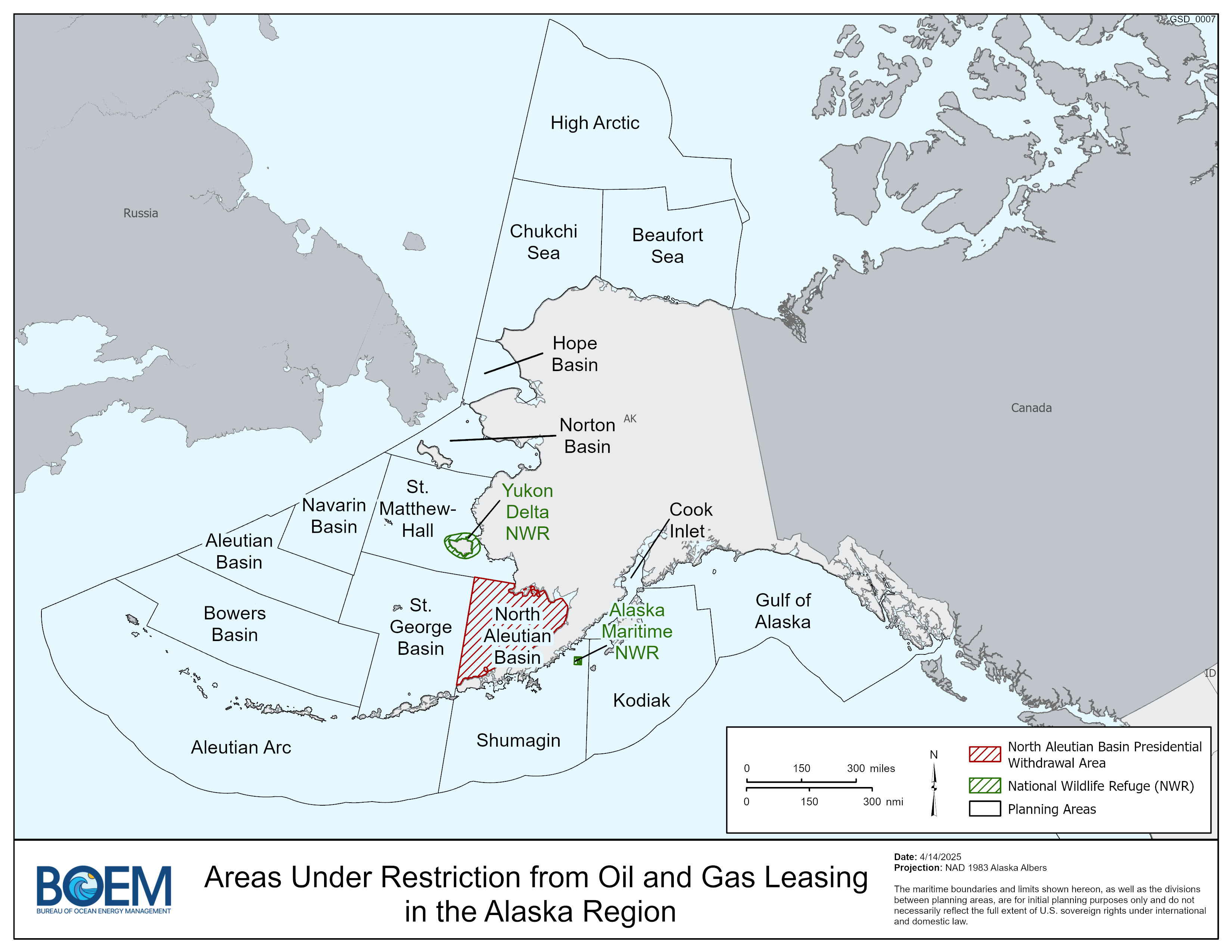
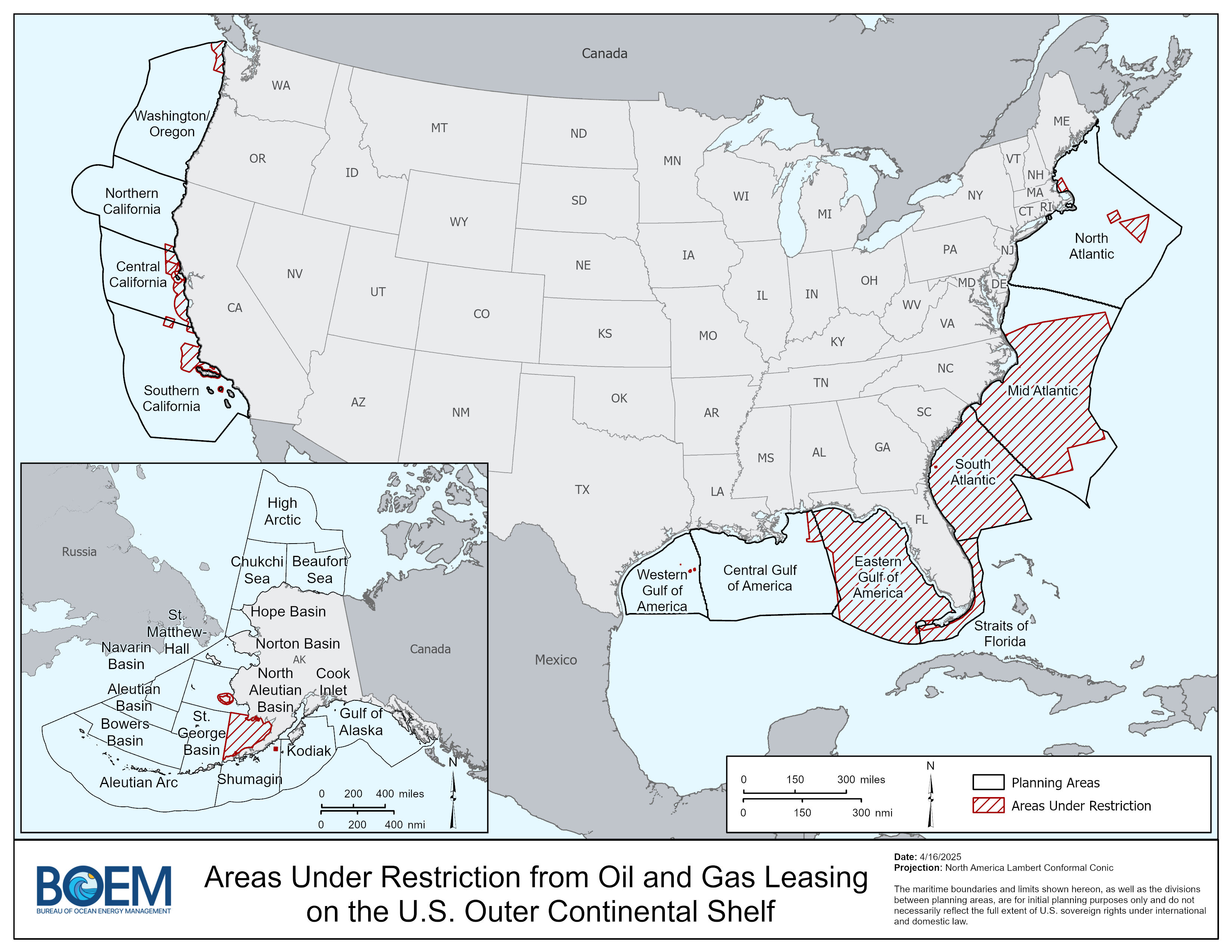
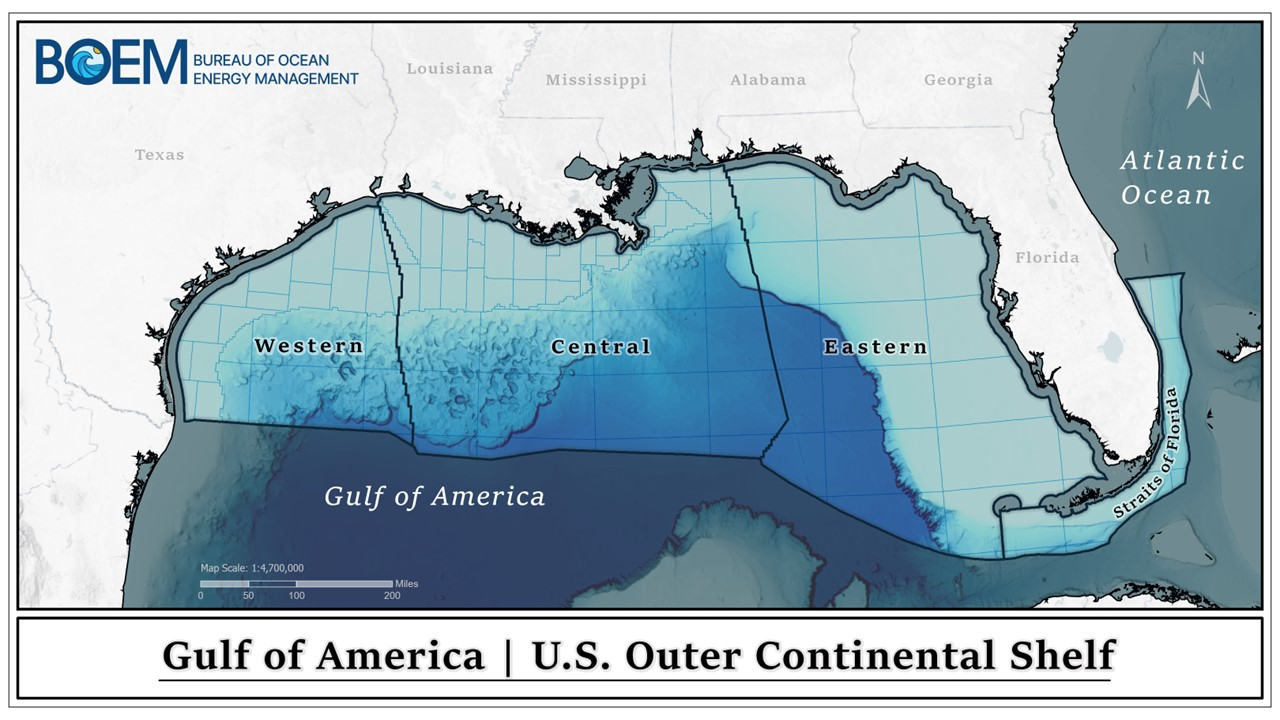
Notably, BOEM’s jurisdiction on the OCS has recently changed. A new planning area offshore Alaska—the High Arctic—is being established as the 27th OCS planning area. Additionally, boundaries of other existing planning areas are being updated to align with BOEM’s revised jurisdiction. Details on these changes will be included in a forthcoming Federal Register notice and posted to BOEM’s website.
I am again sharing this touching tribute to the 11 men who lost their lives on the Deepwater Horizon on April 20, 2010. The video is introduced by country singer Trace Atkins, a former Gulf of Mexico rig worker. The video and Trace’s song serve as a memorial to the 11 Deepwater Horizon workers and others who have died exploring for and producing oil and gas around the world. Please take a moment to watch.
According to a Financial Times report, the White House is drafting an executive order that will facilitate the stockpiling of critical metals found in the Pacific. The Administration is intent on countering China’s rare earth supply chains and battery mineral dominance.
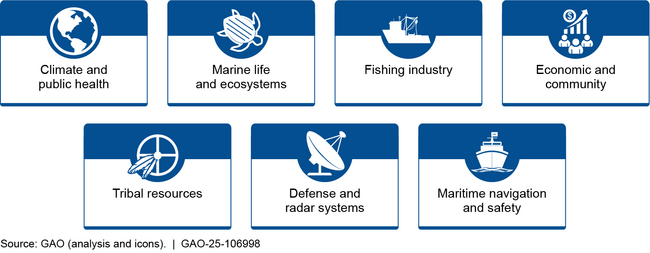
The Government Accountability Office report on Offshore Wind Energy (full report attached) does a good job of summarizing the potential impacts from offshore wind development. They are categorized in the report as follows:
Marine Life and Ecosystems (see table pasted below)
Fishing Industry and Fisheries Management
Economic Development and Community Impacts
Tribal Resources, Including Sacred Sites and Established Fishing Grounds
Defense and Radar Systems
Maritime Navigation and Safety
Unfortunately, GAO’s recommendations, which focus on consultation and staffing (perennial favorites), are rather meaningless. Does GAO really think more consultation will resolve the fundamental concerns of the tribes and fishing industry? Does GAO really think increasing BOEM/BSEE staff is a solution? Wind was the signature offshore energy program of the previous Administration, and it was well resourced.
When the legislation authorizing offshore wind energy development was drafted, we envisioned energy alternatives that could complement thermal energy sources like gas, coal, and nuclear plants. Natural gas plants are particularly important to intermittent energy sources, because their power can be readily dispatched on demand.
Never did we expect attempts to ban the dispatchable energy sources on which renewable energy goals were dependent. Policies that limit gas production, transportation, and consumption don’t boost offshore wind development, they doom it.
In a rush to achieve the Administration’s energy goals, the wind leasing program brushed aside important economic, safety, national security, and environmental issues. Coastal residents, tribes, fishing interests, power customers, and other affected parties have rebelled. Their concerns won’t be smoothed over by increasing consultation.
So now the wind program is in a dark and windless place (a regulatory dunkelflaute?). Five projects are under construction or in the early stages of operation. Construction has been authorized for 6 other projects. Five more projects are in various stages of permitting. What next?
Meanwhile, we still haven’t seen a report on the ugly and embarrassing Vineyard Wind blade failure offshore Nantucket last July. Shouldn’t that report be a precursor to further offshore wind development in the US Atlantic? Also of note, that same turbine was struck by lightning 2 months ago.
Should directed suspension orders be issued pending a complete review of the wind program? If so, for which leases and for how long? Suspension of projects still in the permitting phase would be relatively painless and maybe even attractive given the current state of the wind industry. However, financial impacts for projects in the construction phase would be significant. These important next-step decisions need to be made soon. Muddling along is not a strategy.
Construction and survey activities produce underwater noise that can disturb sensitive marine species. Offshore wind projects take measures to mitigate underwater noise, including the use of bubble curtains to dampen pile driving sound and pausing operations if protected species are sighted.
Changes to marine habitat
Installation of infrastructure, such as turbine foundations and transmission cables, introduces new structures and causes changes to the ocean floor that can alter marine habitat and affect the distribution, abundance, and composition of marine life in the area. These new structures can create artificial habitat that may benefit some species while displacing others and could affect bottom-dwelling species through disturbing the seabed. Artificial habitat effects of wind turbines are well documented, but research is ongoing to monitor and understand impacts on marine life.
Hydrodynamic effects
Operation of wind turbines can affect hydrodynamics and ocean processes such as currents and wind wakes, but little is known about regional effects of widescale deployment on ecosystems.
Vessel disturbance
Vessels can disturb some species and pose strike risks to large marine animals, but the increase in offshore wind vessels is projected to be small compared to the total volume of vessel traffic. Offshore wind vessels are required to take measures such as following speed restrictions and employing protected species observers.
Entanglement risk
Structures, such as mooring cables from floating wind turbines, could snag fishing gear and other marine debris and create entanglement risk to marine animals. Wind projects employ measures to minimize entanglement (e.g., mooring systems designed to detect entanglement), but there is uncertainty about the extent of the risk from floating turbines because of limited deployment.a
Collision risk to birds and bats
Turbine blades pose a collision risk to some sea birds, but little is known about offshore collision risk to bats. Research on collision risks and mitigation measures (e.g., lighting and curtailment) is ongoing.
The EO requires agencies to issue a rule, effective not later than September 30, 2025, that inserts a sunset date into each “covered regulation.” The sunset date must be 1 year after the effective date of the sunset rule, but may be extended multiple times for a total of up to 5 years.
From an offshore energy perspective, the confusion starts with the EO’s applicability. One section of the order exempts regulatory permitting regimes authorized by statute. Another section specifies that the order “applies to all regulations issued pursuant to the Outer Continental Shelf Act of 1953 and any amendments thereto.” This is a fundamental contradiction given that OCSLA is a statutory planning and permitting regime. Which regulations are subject to the EO?
Comments:
For some reason (too complicated?), EPA and the Army Corps of Engineers are given 30 days to provide a list of statutes that are subject to the EO. Perhaps all affected regulators should have been given 30 days to comment on the draft EO before it was finalized.
The EO is sure to create chaos as regulators, under the direction of managers keen on complying with the President’s directive, attempt to determine the EO’s applicability and establish implementation procedures.
The EO, which is intended to provide order and certainty, will do exactly the opposite. How does the regulated industry plan for future operations while this vague and controversial “zero based regulatory budgeting” exercise is ongoing? What are the chances of this directive being sustained?
Reducing the number of pages in the US Code, while desirable, is not regulatory reform.
The order assumes that most regulations are meaningless, which is not the case. What is the plan for filling the void after regulations are deleted?
The EO should embrace, rather than circumvent, the notice and comment requirements of the Administrative Procedures Act. The tedious and sometimes burdensome APA has protected the public and the energy industry from countless unjustified, unauthorized, and poorly considered regulatory initiatives.
Eliminating rules is not synonymous with establishing a regulatory framework that will improve efficiency and stimulate innovation.
Other factors are paramount in improving regulatory effectiveness and efficiency. These include regulatory fragmentation, effective goal setting, management systems, culture, data gathering, performance monitoring, continuous improvement, collaboration, and the adoption of industry standards.
Quality regulators are more important than quality regulations. Regulating with fewer rules requires skilled regulators.
Agencies should be directed to consider how they can best reduce the regulatory burden without compromising safety and environmental performance. Page reduction should be secondary.
If regulatory efficiency is the goal, this EO is likely to do more harm than good. Federal agencies are largely comprised of bright people with good intentions. Challenge them to propose innovative reforms that will simplify and improve their regulatory regimes.
“The Bureau of Ocean Energy Management’s analysis reveals an additional 1.30 billion barrels of oil equivalent since 2021, bringing the total reserve estimate to 7.04 billion barrels of oil equivalent. This includes 5.77 billion barrels of oil and 7.15 trillion cubic feet of natural gas—a 22.6% increase in remaining recoverable reserves.”
Year
Number of fields
Original Reserves
Historical Cumulative Production
Reserves
Oil Bbbl
Gas Tcf
BOE Bbbl
Oil Bbbl
Gas Tcf
BOE Bbbl
Oil Bbbl
Gas Tcf
BOE Bbbl
1975
255
6.61
59.9
17.3
3.82
27.2
8.66
2.79
32.7
8.61
1980
435
8.04
88.9
23.9
4.99
48.7
13.66
3.05
40.2
10.20
1985
575
10.63
116.7
31.4
6.58
71.1
19.23
4.05
45.6
12.16
1990
782
10.64
129.9
33.8
8.11
93.8
24.80
2.53
36.1
8.95
1995
899
12.01
144.9
37.8
9.68
117.4
30.57
2.33
27.5
7.22
2000
1,050
14.93
167.3
44.7
11.93
142.7
37.32
3.00
24.6
7.38
2005
1,196
19.80
181.8
52.2
14.61
163.9
43.77
5.19
17.9
8.38
2010
1,282
21.50
191.1
55.5
17.11
179.3
49.01
4.39
11.8
6.49
2015
1,312
23.06
193.8
57.6
19.58
186.5
52.78
3.48
7.3
4.78
2016
1,315
23.73
194.6
58.4
20.16
187.5
53.58
3.57
6.8
4.79
2017
1,319
24.65
195.2
59.7
20.78
188.9
54.21
3.87
6.3
5.00
2018
1,319
24.86
195.5
59.7
21.42
189.8
55.21
3.44
5.7
4.45
2019
1,325
26.77
197.0
61.8
22.12
190.9
56.09
4.65
6.1
5.74
2023
1,336
30.43
201.2
66.2
24.66
194.0
59.19
5.77
7.2
7.04
Oil and gas reserves and cumulative production at end of year, 1975-2023, Gulf of America, Outer Continental Shelf and Slope. “Oil” includes crude oil and condensate; “gas” includes associated and non-associated gas. Reserves estimated as of December 31 each year.
This increase in reserves will not please those responsible for the current 5 Year Oil and Gas Leasing Plan. They told us that we don’t need more OCS lease sales and that our biggest concern is producing too much oil and gas for too long!
The long-term nature of OCS oil and gas development, such that production on a lease may not begin for a decade or more after lease issuance and can continue for decades, makes consideration of net-zero pathways relevant to the Secretary’s determinations on how the National OCS Program best meets the Nation’s energy needs.“
“Crude reserves are being found and developed at a much slower pace than they’ve been in the past. Specifically, she said the world has only newly identified less than half the amount of crude it’s consumed over the course of the past 10 years. Given the current trends, this means demand will exceed supply before the end of 2025.“
A bit off-topic, but Jeff Walker, a former colleague and the MMS Regional Supervisor in Alaska, had the best quip about reserve numbers. In explaining an operator’s revised reserve numbers for a producing unit which had leases with different royalty rates, Jeff noted that “oil always migrates to the lower royalty leases.”😉

 Bud's Offshore Energy (BOE)