Feeds:
Posts
Comments

Archive for the ‘Gulf of Mexico’ Category

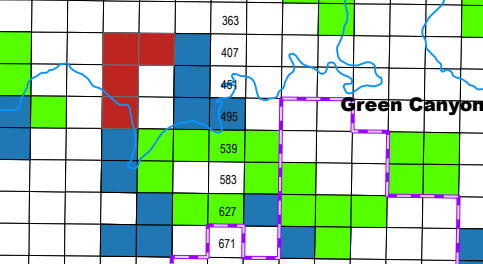
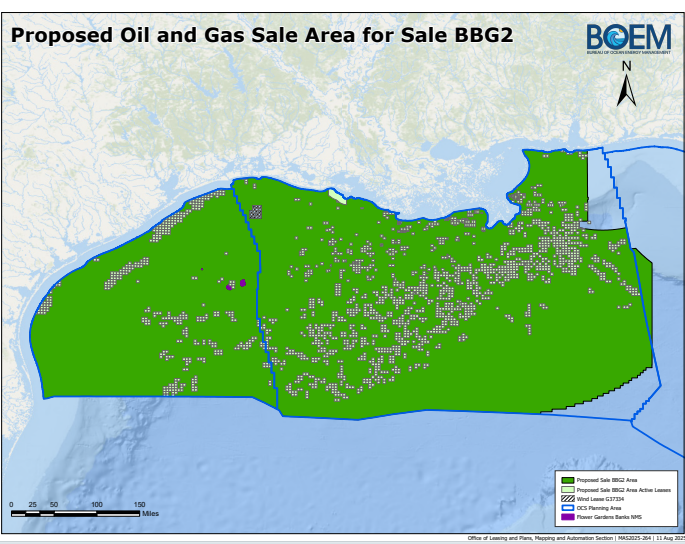
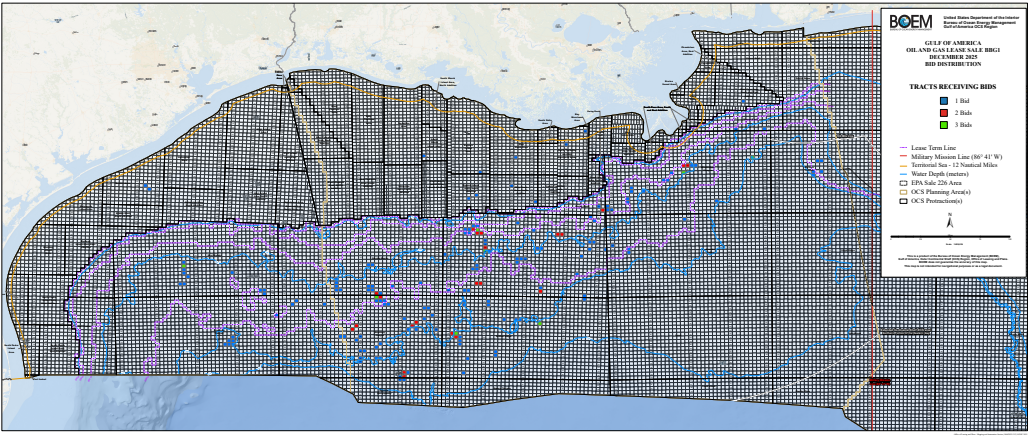
Tracts receiving bids in Sale BBG1

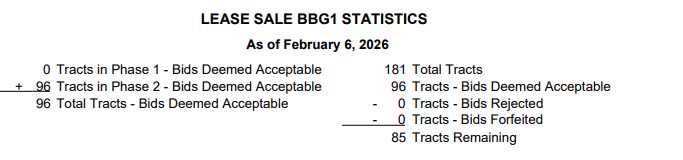
To date,BOEM has deemed 96 of the 181 BBG1 high bids to be acceptable. No high bids have been rejected. Although the sale was “beautiful but not big,” the bids were relatively strong on a per acre basis. The number of rejected bids may thus be quite low.

No bids were accepted during BBG1’s Phase 1 review. This means that none of the tracts receiving bids were determined to be nonviable as was the case for the 199 tracts that were improperly acquired for carbon disposal purposes in Sales 257, 259, and 261. (Unsurprisingly, neither of the acquiring companies has submitted an exploration plan for any of these CCS leases. The leases will likely expire without activity. Much to the dismay of the large and diverse group of opponents, the carbon disposal industry is focusing on onshore locations along the Gulf Coast.)

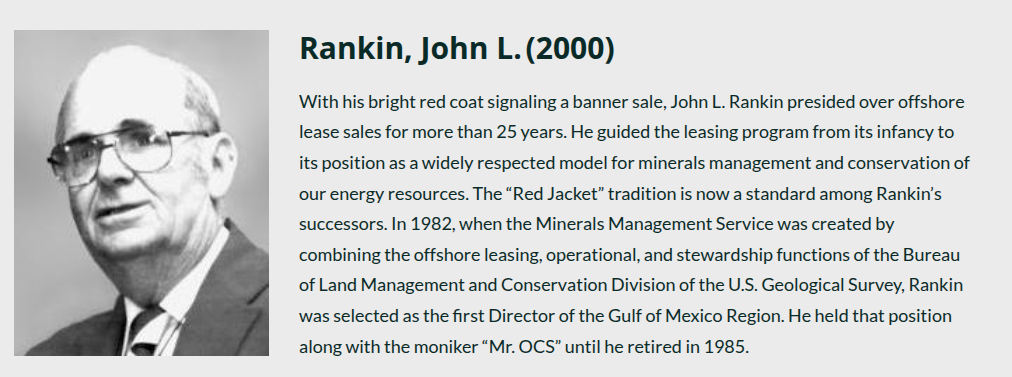
Meanwhile, a Cook Inlet lease sale is scheduled for March 4, and another Gulf of America sale will be held on March 11. Despite attractive terms, don’t expect either to be a banner “red jacket” lease sale. (See the John Rankin recognition below.)

More information on BOEM’s bid evaluation process.

Read Full Post »

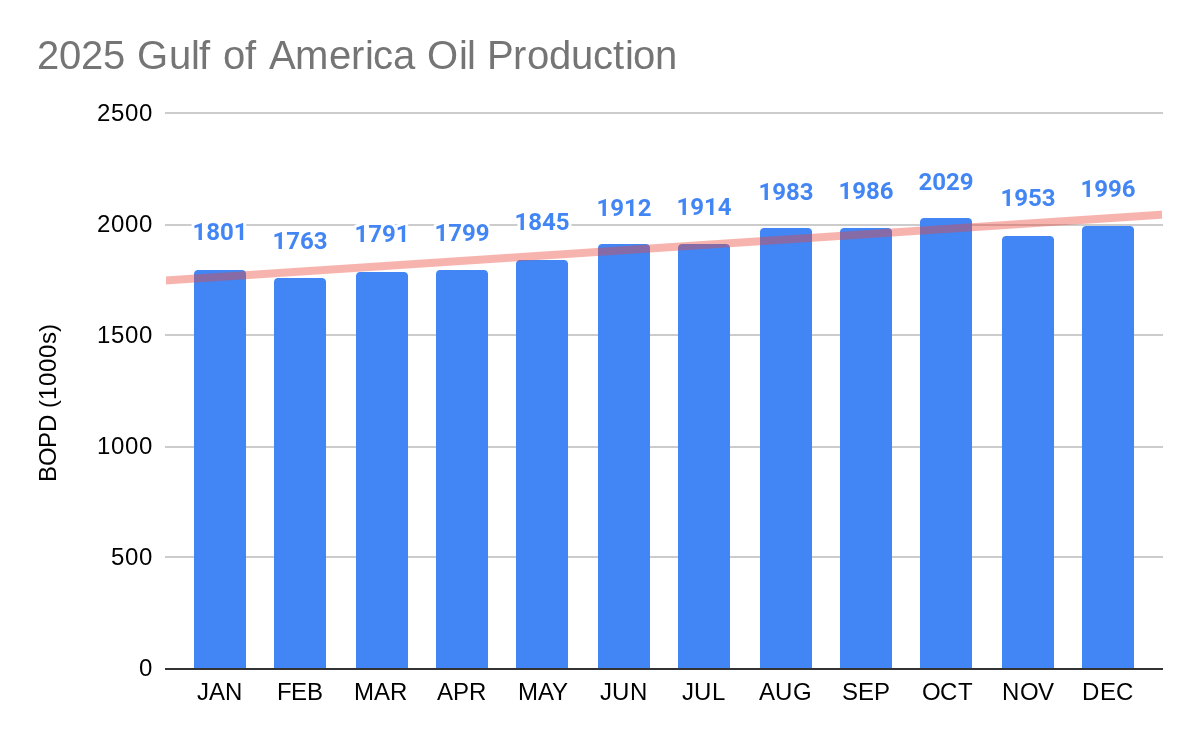
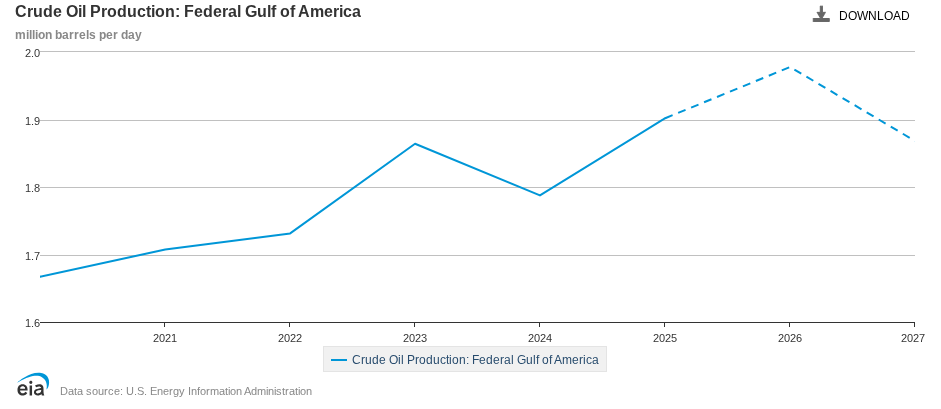
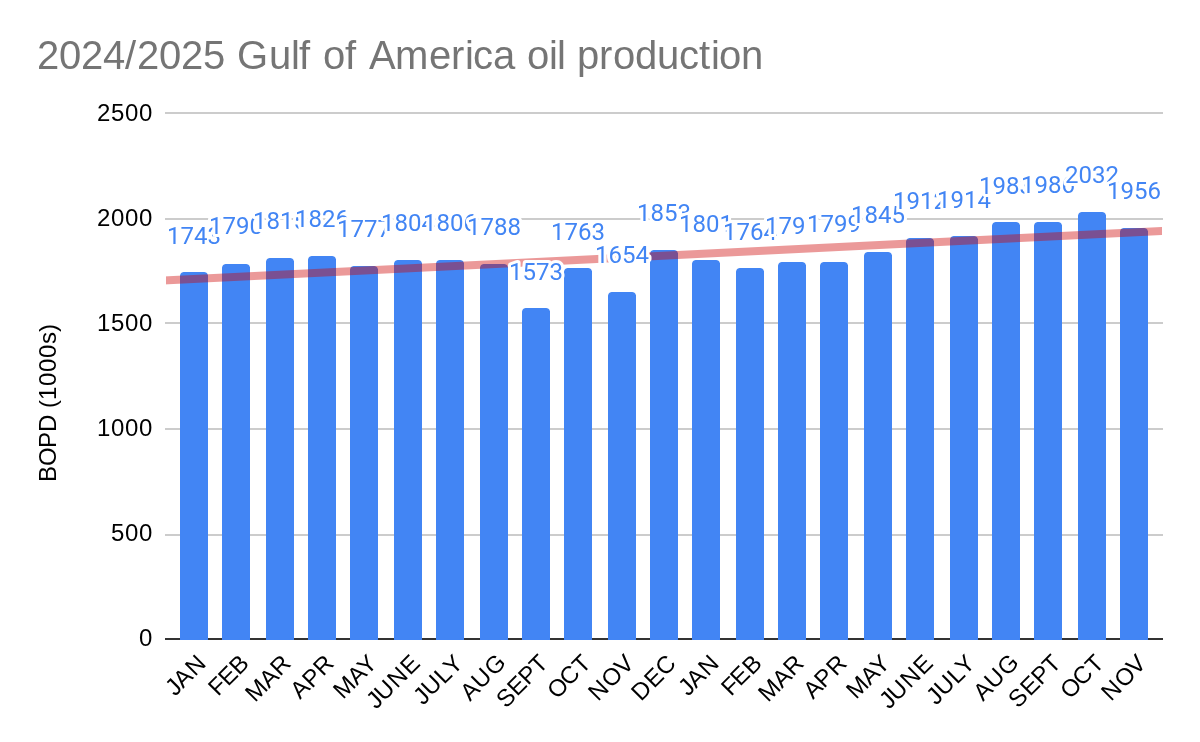
Was 2025 the Gulf’s highest ever production year? We’ll find out in 3 weeks when EIA posts the December 2025 data.

November production dipped a bit putting the production record in doubt. December production had to average 1.993 million bopd to match 2019.

There are also typically small revisions for the prior two months, which could affect the outcome. It will be a nail-biter! 😉

Top 3 oil production years for Federal waters in the Gulf:

Top 3 Yearsave. daily production (1000’s of barrels)
20191898
2025 (through November)1889
20231864

Read Full Post »

The 2025 Gulf of America Safety Compliance Leaders are ranked below according to the number of incidents of non-compliance (INCs) per facility inspection. To be ranked, a company must:

  • operate at least 2 production platforms
  • have drilled at least 2 wells during the year
  • average <1 INC for every 5 facility inspections (0.20 INCs/facility inspection). This is a higher standard (fewer INCs) than in previous years.
  • average <1 INC for every 10 inspections (0.1 INCs/inspection). Note that each facility inspection may include multiple types of inspections (e.g. production, pipeline, pollution, Coast Guard, site security, etc). In 2025, there were on average 3.2 inspections for every facility inspection.
operatorWCSIFSItotal INCsfacility inspINCs/
fac insp
inspINCs/
insp
Shell381122310.055570.02
Chevron1080182600.077720.02
Oxy26191330.073250.03
BP820101220.083040.03
Murphy6208700.111770.05
Cantium574161210.134880.03
Gulf-wide 202581544584134431790.42102180.13
Gulf-wide 2024957398109146431330.47106640.14
Notes: Numbers are from published BSEE data; INC=incident of non-compliance; W=warning INC; CSI=component shut-in INC; FSI=facility shut-in INC; INCs/fac insp= INCs issued per facility inspection; each facility-inspection may include multiple types of inspections (e.g. production, pipeline, pollution, Coast Guard, site security, etc), in 2025, there were on average 3.2 inspections for every facility inspection

Criteria: This ranking is based solely on BSEE’s published compliance data. The absence of timely public information on safety incidents (e.g. injuries, fires, pollution, gas releases, property damage) precludes inclusion of these data. Although Panel Investigations are conducted for fatalities, serious injuries, and significant pollution events, the last panel report was for an incident on 3/25/2022, and no information is available for any ongoing investigations. BSEE District offices investigate the more significant incidents that don’t qualify for panel investigations. These District Investigation reports are more timely, but some are not issued within 90 days of the incident. The District reports will be reviewed later in the year. Note that there were no occupational fatalities in 2025.

Observations:

  • The overall inspection and INC results for 2025 were similar to those for 2024.
  • The top companies performed better in 2025 than in 2024. In 2024, only 2 companies had INC/facility inspection ratios of <0.10 and only 3 had ratios <0.15. In 2025, all 6 of the performance leaders had ratios <0.15.
  • All 6 of these top companies were also on the 2024 top performers list.
  • Shell’s total INCs and INCs/facility inspection decreased by 73% and 78% respectively vs. 2024
  • Cantium, which operates 85 shallow water platforms, has demonstrated that a shelf operator can be an outstanding safety performer. Cantium’s total INCs and INCs/facility inspection decreased by 50% vs. 2024
  • Should fewer inspections be conducted at facilities that have such low INC rates? On the one hand, fewer inspections would reduce regulatory costs and transportation risks. On the other hand, there are benefits from BSEE inspection visits besides compliance enforcement. These include direct communication with offshore workers (including contractors) regarding regulatory policies and safety practices, witnessing safety tests, evaluating new technology, and assessing management system implementation and corporate culture at the facility level.
  • Absent specific details on the violations, no attempt was made to weight the INCs. Although shut-in INCs are generally considered to be more significant than warnings, that is not always the case. For example, a component shut-in INC for a safety device that is marginally out of tolerance and is corrected on the spot may be less serious than a warning that is indicative of structural deterioration, poor maintenance, or organizational shortcomings.

Not meeting one of the activity level requirements, but nonetheless noteworthy, were the compliance records of LLOG and BOE Exploration & Production (younger than and unrelated to the BOE blog 😀). See their impressive results below:

operatorWCSIFSItotal INCsfacility inspINCs/
fac insp
inspINCs/
insp
BOE0011330.03780.01
LLOG1113290.10780.04

Read Full Post »

Shell topped the list followed by Chevron, Oxy/Anadarko, bp, Murphy, and Cantium.

Details and observations will be posted tomorrow.

Read Full Post »

Excellent AAPG article

“We have not been finding enough new fields.” That’s William DeMis, president of Richelle Court, LLC, who said that, in addition to not finding enough, we keep erecting new ways to export what we’re not finding.

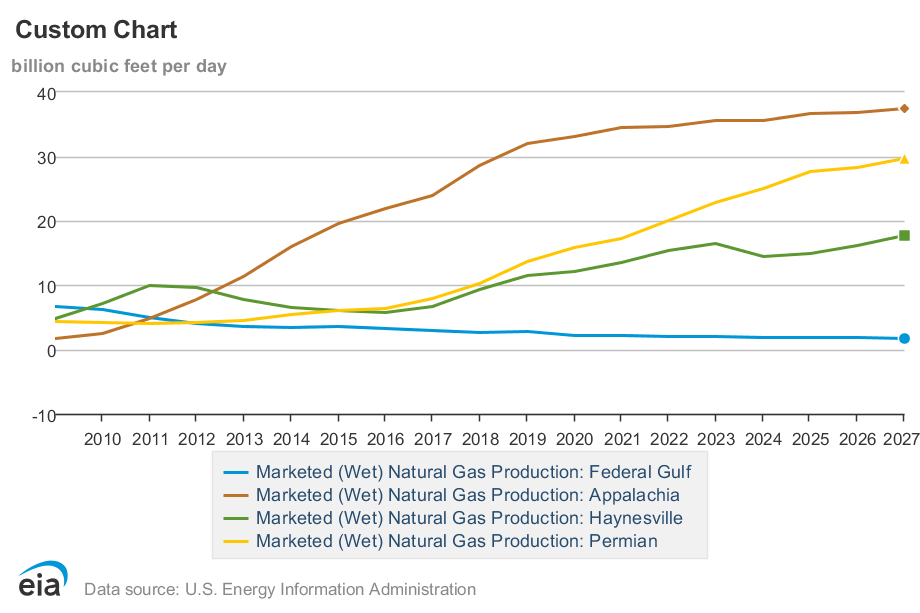
The way, he said, to avert the coming shortage is for people to find new sources of gas outside of Haynesville field, which for years, considering its proximity to the Gulf Coast, and the petrochemical plants of Southwest Louisiana, as well as pipelines, made it a swing producer for natural gas.

“But I can tell you from bitter experience over the last three years that finding people to fund greenfield exploration is darn near impossible. There is scant capital to drill natural gas wildcats in the U.S.” said DeMis.

Reiterating that it’s time for another look at ultradeep shelf gas in the Gulf. Should BOEM consider royalty incentives?

Read Full Post »

October 2025 Gulf of America oil production was the 2nd highest in history. As a result, the November data are much anticipated. Those data have been delayed from the scheduled date of 1/29/2026 until 2/6/2026. See the EIA advisory below

Petroleum Supply Monthly (PSM) data for November 2025 are scheduled for release on Friday, February 6, 2026.

The U.S. Census Bureau will release trade data (both imports and exports) for November 2025 on Thursday, January 29, 2026. As a result, we will delay release of PSM data for November 2025 from the original scheduled release date of January 30, 2026, until Friday, February 6, 2026. The delayed PSM release will allow us time to incorporate export data for November 2025.

Read Full Post »

Next week, BOE will rank the 2025 Gulf of America Safety Compliance Leaders according to the number of incidents of non-compliance (INCs) per facility inspection.

Last year’s results.

How is your company’s safety culture?

Read Full Post »

Observations after reviewing publicly available 2025 BSEE inspection data:

  • The number of BSEE inspections in 2025 (first chart) remained relatively constant despite the extended government shutdown.
  • The decline in the number of Incidents of Noncompliance (INCs) in 2025 is encouraging (chart 2).
  • Given that BSEE’s tables have yet to be updated to include 2024 incidents, let alone 2025, it’s difficult to assess whether there have been similar declines in the number and severity of incidents. We do know that there were no occupational fatalities in 2025. (Note that OCS incident tables were once updated within 30 days at the end of each quarter. The public has a right to timely information on the type of incidents that are occurring, the operating companies, and the resulting casualties, pollution, and property damage.)
  • Chart 3 shows the decline in INCs by type – warnings, component shut-ins, and facility shut-ins
  • As is typically the case, a few companies accounted for a disproportionate number of violations, most notably the Cox legacy operators. More on this in a subsequent post.
  • The top 6 oil producers all had excellent compliance records, as did a leading shelf operator. More to follow.
  • Sable Offshore, California’s most notorious operator, fared well during 77 inspections of their three platforms in the Santa Barbara Channel.

Read Full Post »

Wild and crazy New Year’s Eve! 🧨🎆

In addition to the Virginia Wind and Santa Ynez Unit courtroom drama, the EIA reported that Gulf of America oil production averaged 2.031 million bopd in October. That is the second highest Gulf OCS monthly oil production in history, trailing only the Aug. 2019 record of 2.044 million bopd.

Also, with only two 2025 months remaining to be reported, the annual production record is a distinct possibility. 693 million bbls were produced in the Gulf in 2019. That mark will be exceeded if daily production averaged >2 million bopd in Nov. and Dec.

Read Full Post »

LLOG’s Salamanca floating production unit, Gulf of America

The UK’s Harbour Energy is acquiring Louisiana’s LLOG Exploration Company for $2.7 billion in cash and $0.5 billion in shares.

Harbour CEO Linda Cook:

Today’s announcement delivers on Harbour’s long-standing ambition to establish a presence in the deepwater Gulf of America. With LLOG, we found the right combination of high-quality assets and a talented team, providing a strong strategic and cultural fit with our company. The transaction positions us as a leading player in a region with well-established infrastructure, a supportive fiscal and regulatory environment and opportunities for additional growth.”

LLOG was the 6th largest Gulf of America producer of both oil and gas in 2024 with production of 27 million bbls of oil and 34 BCF of gas. LLOG was the high bidder on 11 tracts in the recent BBG1 sale.

Harbour is not currently a Gulf of America leaseholder.

Reuters had reported that Shell was in advanced talks to acquire LLOG. Apparently, either Shell lost interest or Harbour made a more attractive offer.

Read Full Post »

Older Posts »