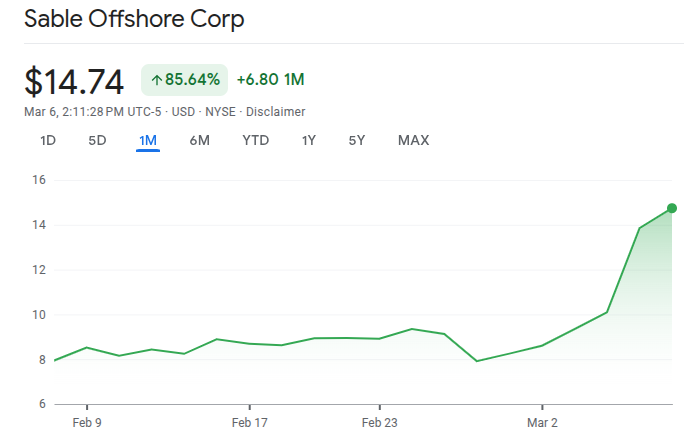
Big move by SOC following the issuance of the DOJ opinion. Justified optimism or irrational exuberance?
Posted in California, energy policy, Offshore Energy - General, pipelines, Regulation, Uncategorized, tagged Dept. of Justice, irrational exuberance, legal opinion, Sable Offshore, Santa Ynez Unit on March 6, 2026| Leave a Comment »
Big move by SOC following the issuance of the DOJ opinion. Justified optimism or irrational exuberance?
Posted in California, energy policy, Offshore Energy - General, pipelines, Regulation, tagged 9th circuit, DOE, DOJ Opinion, DPA, Federal supremacy, PHMSA, Sable Offshore, Santa Ynez Unit, SCOTUS on March 6, 2026| Leave a Comment »
Attached is an opinion prepared by the Assistant Attorney General, Office of Legal Counsel, for the General Counsel, Dept. of Energy. This opinion may boost prospects for Santa Ynez Unit (SYU) production, either by Sable Offshore or a successor.
BOE SYU watchers see this State-Federal battle ultimately ending up in the Supreme Court, perhaps following the 9th Circuit’s ruling on PHMSA’s preemption of State authority over the onshore pipeline segments.
A few key excerpts from the DOJ opinion (emphasis added):
p. 1: You have asked whether an order issued under the Defense Production Act of 1950 (“DPA” or “Act”), Pub. L. No. 81-774, 64 Stat. 798 (codified as amended at 50 U.S.C. § 4501 et seq.), to Sable by the President or his delegee would preempt the California laws currently impeding Sable from resuming production and operating the associated pipeline infrastructure. We conclude that it would.
p. 6: As the Supreme Court has explained, executive orders “may create rights protected against inconsistent state laws through the Supremacy Clause,” especially when such orders are issued pursuant to “congressional authorization.”
p. 20: State law, we have been advised, is not currently the only impediment to Sable’s ability to resume production and transportation of oil. A consent decree entered in United States v. Plains All American Pipeline L.P., No. 20-cv-02415 (C.D. Cal. Oct. 14, 2020), Dkt. 33 (“Consent Decree”), “currently vests authority over resumption of transportation through the onshore portions of the Santa Ynez Pipeline System with the California Office of the State Fire Marshal.” Sable Letter at 9. We have been advised that, in addition to the United States and various State of California entities, Sable is a party to the Consent decree as a result of an acquisition. You have asked whether an executive order under the DPA would displace these provisions of the Consent Decree, even though there are both federal- and state-law claims at issue in that case. For three reasons, we think it would.
Posted in California, energy policy, Offshore Energy - General, pipelines, Regulation, tagged $408 million loss, Exxon, Sable Offshore, Santa Ynez Unit on March 5, 2026| Leave a Comment »
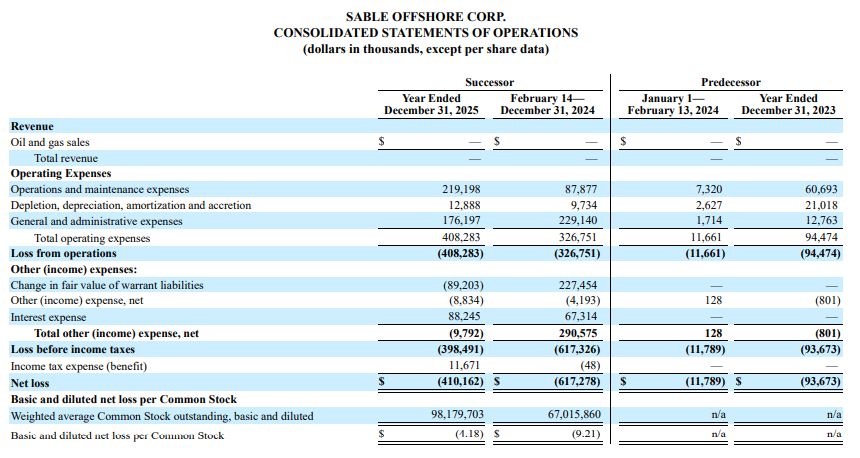
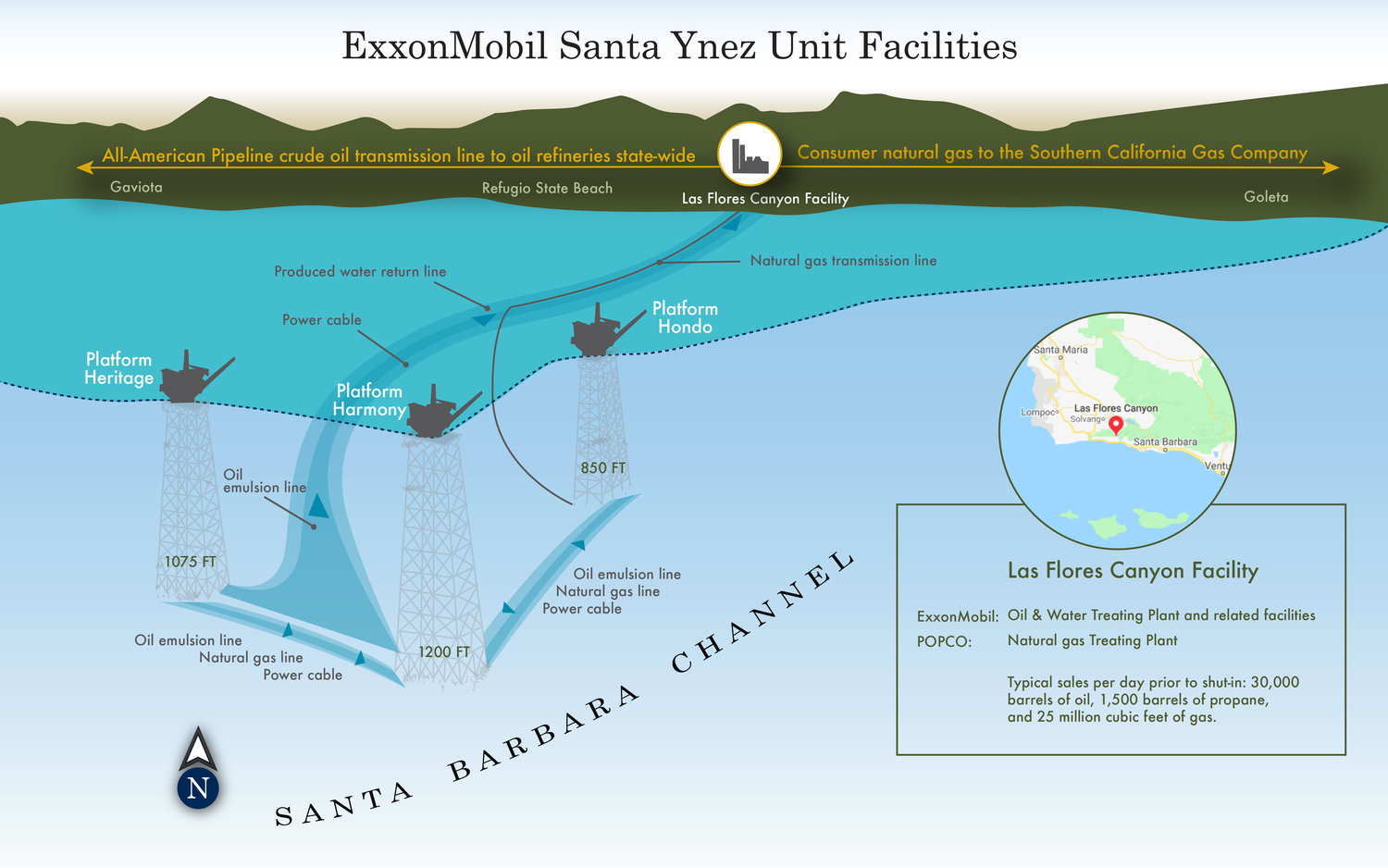
The potential rewards are great – 500+ million barrels of oil, 3 major production platforms, associated pipelines, onshore processing facilities – but can Sable survive the costly legal and administrative challenges? What is Exxon’s plan for the Santa Ynez Unit if Sable should fail?
Posted in Alaska, energy policy, Offshore Energy - General, tagged BBC1, Cook Inlet, lease sale, no bids, oil and gas on March 4, 2026| Leave a Comment »
The results of today’s Cook inlet oil and gas lease sale are disappointing, but not surprising.
BOEM: At this time, no bids have been received. In accordance with OBBBA, we will continue to hold leasing opportunities for Cook Inlet so that industry has a regular, predictable federal leasing schedule that ensures we achieve President Trump’s American Energy Dominance Agenda.
Posted in energy policy, tagged Biden, Iran, Israel, sanctions, SPR on March 4, 2026| Leave a Comment »
A post from October 13, 2023, is re-posted below due to its current relevance.
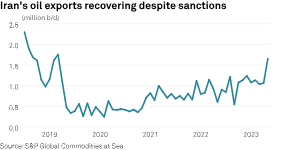
S&P Global reports on the surge in Iranian oil production and exports. In the quote below, note the concern about the higher oil prices that might result from tightening the sanctions. If oil price concerns are driving critical foreign policy decisions, this would be a rather stunning indictment of US energy policy, which is sometimes perceived as being more hostile toward domestic producers than international adversaries.
“Before the war, US-Iranian tensions had eased, which facilitated higher Iranian oil exports. Iranian crude oil production increased 500,000 b/d from March to September 2023 — to 3.1 million b/d from 2.6 million,” the analysts said. “Biden will be under pressure to enforce sanctions and curtail Iranian export revenue. This is a challenging situation for the Biden administration, which wants more oil on the market, not less. The attacks on Israel could override the oil issue.“
There was an exchange on this topic at yesterday’s White House press briefing:
Q. I wanted to ask you about oil, if I could, and the money that it’s bringing in. So, is the amount of oil that’s being brought in by Iran — specifically, records amount, 85 percent to China, more oil being sold above the price cap from Russia — giving the President any pause on changing these energy policies for fossil fuels here in the U.S.?
MR. KIRBY: I would — just let me back up a little bit. I mean, it’s important to remember that Iran gets most of its oil revenue off the black market and evad- — evading sanctions, which they do. It’s costly to them. In fact, our evidence is that they really only receive a fraction of the market value of the oil that they sell, because they have to sell it on the black market.
We will always, as we do in any case, typically, revisit sanctions regimes to see if they need to be changed or adjusted, specifically with respect to Iranian oil.
The President, since the beginning of the administration, has been concerned about making sure we have a viable global market for oil, working hard to keep the prices of gasoline down here in the United States. Part of that is making sure you remove some of the volatility in that global supply and demand.
I don’t have any announcements or decisions to make today with respect to any changes to the domestic oil production.
Q But isn’t it a national security issue when you have countries that are profiting off of oil and the increased price of oil that don’t like Israel, that don’t like America?
MR. KIRBY: We don’t want, for instance, Russia to be able to — to get a windfall in profits from the oil market so that they can then turn that around and — and apply that to weapons in Ukraine. We certainly don’t want to see Iran do — be able to do much of the same, which is why we’re — we’re putting as much pressure on them as we are.
Q So, why not increase oil production here?
MR. KIRBY: I — again, I don’t have any announcements to make today.
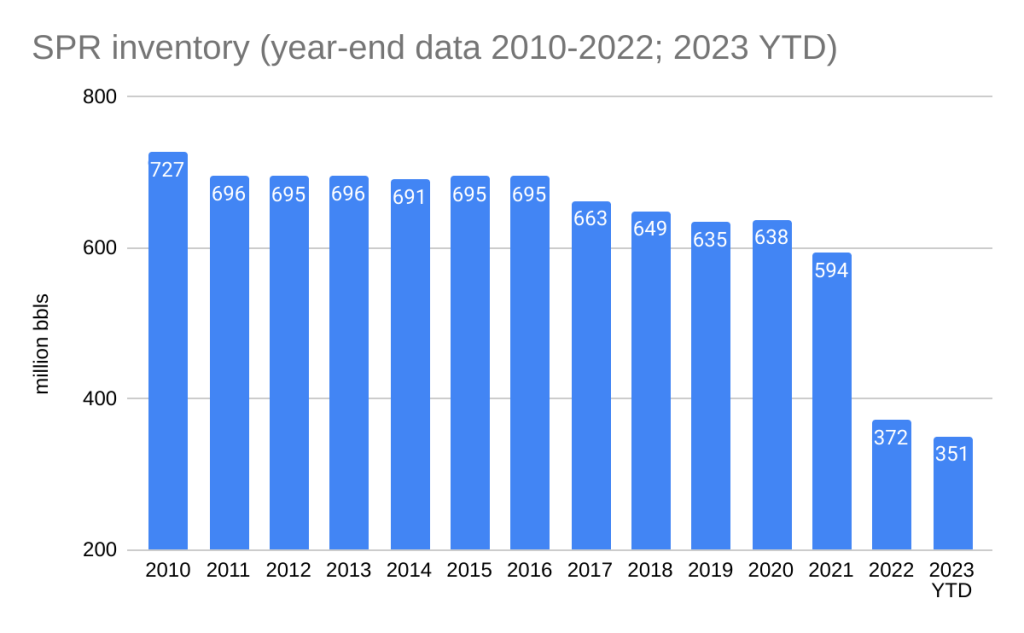
On a related note, the Strategic Petroleum Reserve has remained at historic low levels. The current volume is 351.3 million barrels, a slight rise from the low of 346.8 million barrels in July, the lowest volume since 8/19/1983 when the SPR was still being filled. Have the oil embargoes following the Yom Kippur War, the reason for the SPR’s existence, been forgotten?
Posted in California, energy policy, Offshore Energy - General, pipelines, Regulation, tagged FourWorld Capital Management, Judge Geck, NInth Circuit, Sable Offshore, Santa Ynez Unit on March 2, 2026| Leave a Comment »


On Friday, California Superior Court Judge Donna Geck upheld the restraining order that blocks Sable Offshore from restarting Santa Ynez Unit production. She scheduled a followup court hearing for June 27. Meanwhile, the Ninth Circuit Court of Appeal’s hearing on PHMSA’s assertion of Federal jurisdiction over the onshore pipeline segments is scheduled for July.
Can Sable survive financially until those hearings are concluded?
Contradictorily, we learn that FourWorld Capital Management just purchased 8 million shares of Sable. Is that the financial equivalent of Pickett’s Charge or does FourWorld have good reasons for their optimism?
Posted in energy policy, natural gas, Offshore Energy - General, tagged Israel, Karish Field, Leviathan, offshore gas, shut-in on March 2, 2026| Leave a Comment »
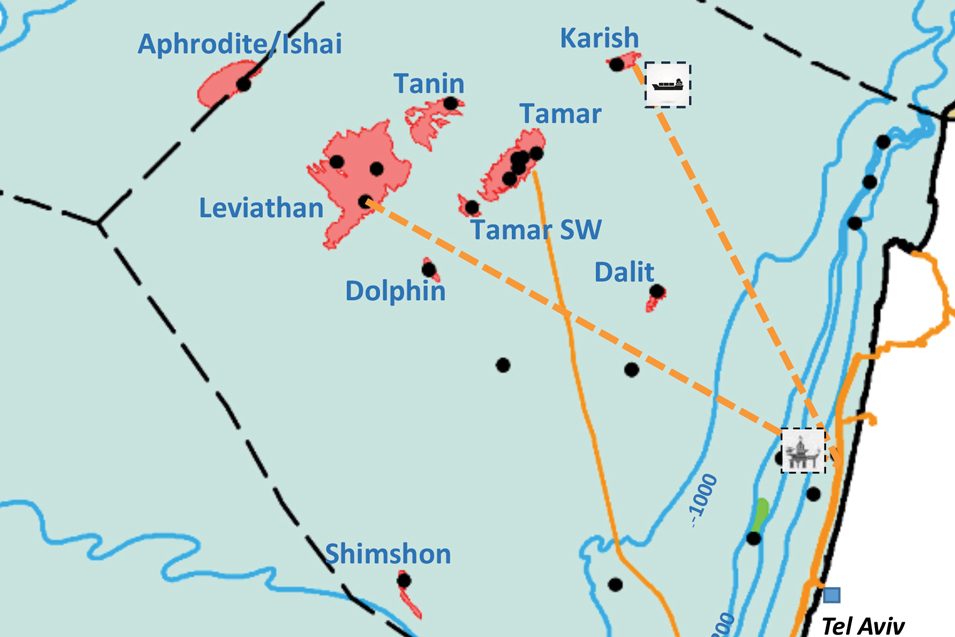
Argus reports that Israel’s energy ministry has instructed Chevron and Energean to suspend production at their offshore Leviathan and Karish gas fields.
Although, the Israeli facility shut-ins will result in the curtailment of exports, Egypt has implemented a backup plan to ensure adequate supply.
There is no indication that Chevron’s Tamar field has been shut-in.
Summary table:
| field (operator) | 2024 production (billion cubic meters) (% of Israel’s total) | June 2025 conflict | 2026 conflict |
| Leviathan (Chevron) | 11.33 45% | shut-in | shut-in |
| Tamar (Chevron) | 10.09 37% | producing | producing? |
| Karish (Evergean) | 5.96 18% | shut-in | shut-in |
Posted in energy policy, tagged Federal funding, grant programs, Hot Rock Act, Quaise Energy, super hot geothermal on February 27, 2026| Leave a Comment »

The Hot Rock Act (attached) would authorize a large grant program for superhot, ultradeep geothermal energy research and development. Here is the gist of the bill:
That’s a total of $127 million/yr for the next 5 years. Is this necessary?
Press reports indicate that Quaise is raising $200 million to develop its first commercial geothermal power plant. If superhot geothermal is as promising as many of us believe, companies should be able to attract sufficient private capital without financial support from the Federal govt.
Posted in California, energy policy, Offshore Energy - General, pipelines, Regulation, tagged environmental assessment, PHMSA, pipeline, Sable Offshore, Santa Ynez Unit, special permit on February 26, 2026| Leave a Comment »
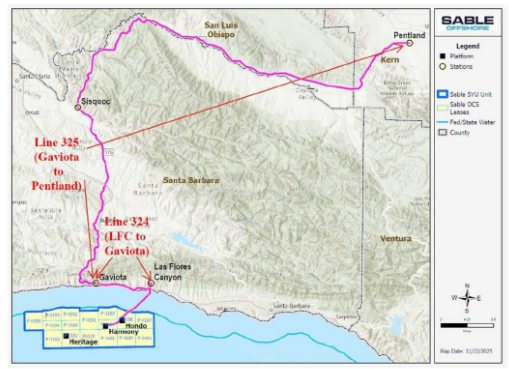
John Smith has shared the Environmental Assessment (attached) associated with PHMSA’s Special Permit for segments 324 and 325 of Sable’s Santa Ynez Unit (SYU) pipeline system. The document is an interesting read for those following Sable’s attempt to restart production from the SYU.
Posted in California, energy policy, Offshore Energy - General, pipelines, Regulation, tagged onshore pipeline, PHMSA, public notice, Sable Offshore, Santa Ynez Unit, special permit on February 25, 2026| Leave a Comment »
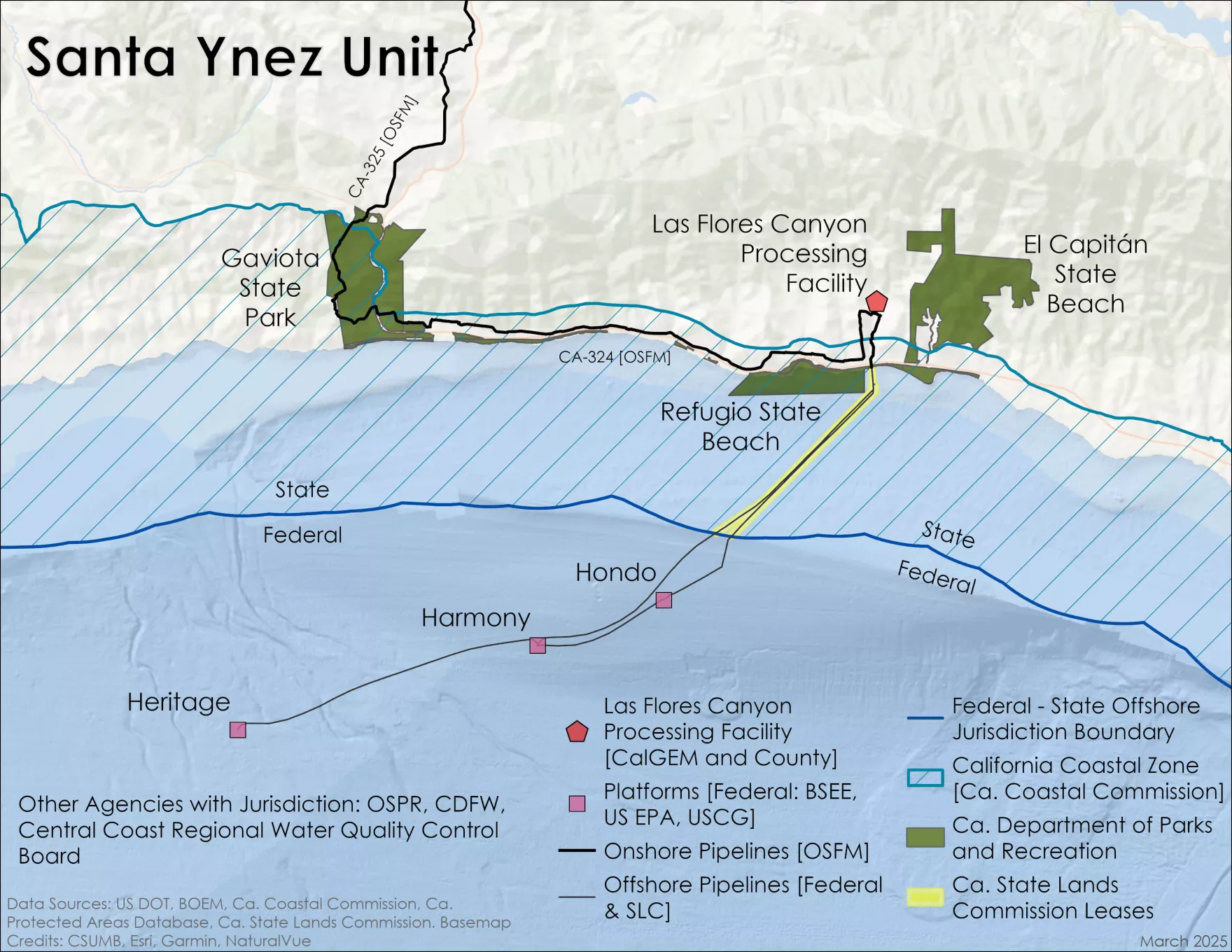
PHMSA’s public notice (attached) is required because Sable’s Emergency Special Permit expired on 21 FEB. Comments are due by 26 MAR. More background.
“PHMSA is publishing this notice to solicit public comments on a request for a special permit submitted by Sable Offshore Corp. (Sable). Sable is seeking relief from compliance with certain requirements in the Federal pipeline safety regulations. PHMSA has proposed conditions to ensure that the special permit is not inconsistent with pipeline safety. At the conclusion of the 30-day comment period, PHMSA will review the comments received from this notice as part of its evaluation to grant or deny the special permit request.“
 Bud's Offshore Energy (BOE)