Feeds:
Posts
Comments

Archive for the ‘drilling’ Category

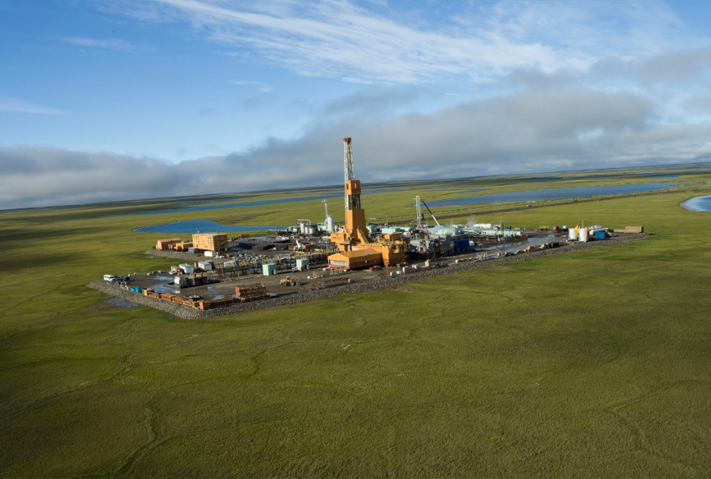
Alpine drill site, CP photo

In March, a gas release incident occurred while drilling a disposal well in the Alpine field on the North Slope of Alaska. While there were no injuries or environmental impacts, the investigation and findings will help minimize well construction risks during future operations. The report is attached.

Some comments:

  1. I like the way the report, related information, and all situation reports were posted in a timely manner on the Alaska Oil and Gas Conservation Commission (AOGCC) homepage. It’s refreshing that the AOGCC homepage is 100% substantive and completely devoid of the spin and propaganda you find on most government and corporate websites. (For comparison purposes, check out the Department of Energy and Department of the Interior homepages.)
  2. The ConocoPhillips (CP) incident report is concise, logically organized, and clearly written.
  3. The findings are consistent with the data, and the supporting figures are legible and understandable.
  4. Instead of blaming the crew or using the “human error” cop out for the leak-off test execution and subsequent monitoring issues, the report rightfully attributes those failures to company procedures and communications. This reflects well on CP’s understanding of the human and organizational factors that contribute to safety performance, and CP/AOGCC efforts to foster a strong safety culture. (Remember the shameful prosecution of well site leaders Bob Kaluza and Don Vidrine following the Macondo blowout.)
Read Full Post »

Through her research of Pennsylvania’s Marcellus Shale play, Lee found that highly concentrated lithium was found in the produced water (water produced as a byproduct during the extraction of oil and natural gas) along with produced natural gas and oil.

“We found lithium in the petroleum-based rock brines, which opens new pathways to address the shale plays as a substantial source of lithium, given that they are ubiquitous in the U.S.,” Lee said.

University of Houston

Read Full Post »

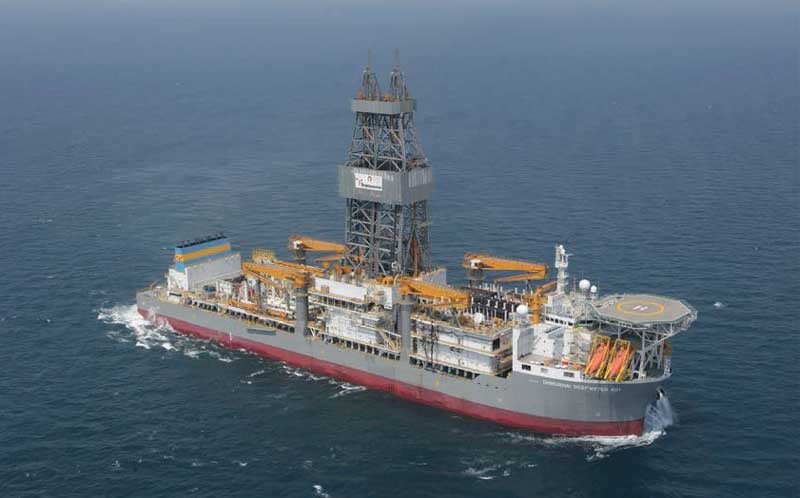
Transocean Deepwater Atlas

The drilling business, particularly the deepwater sector, has never been for the faint of heart, and the past few years have included the added stresses of COVID, negative oil prices, anemic exploration activity, and offshore leasing “pauses.” Transocean nonetheless managed to build two 8th generation drillships, the Deepwater Atlas and Titan, both of which are slated to operate in the Gulf of Mexico.

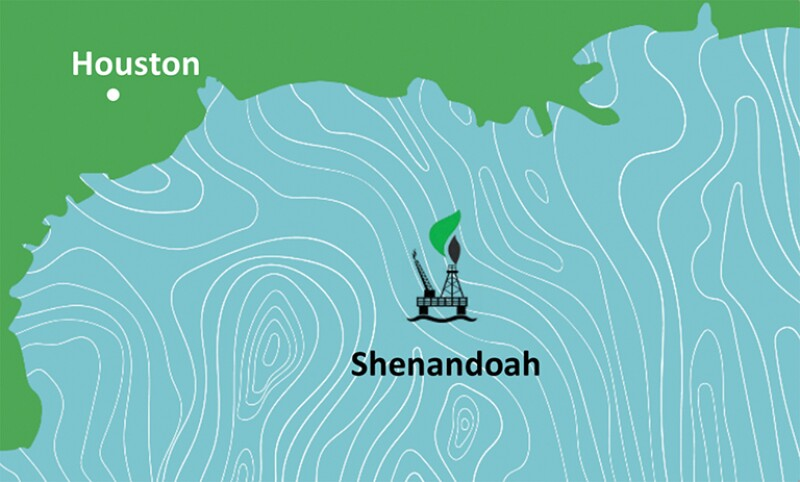
The Atlas will begin drilling for Beacon Offshore Energy (unrelated to the BOE blog 😀) in the Shenandoah field (almost heaven?😀) later this year. The Titan is expected to begin drilling for Chevron next year. The rigs will be outfitted with 20,000 psi blowout prevention equipment and will be well-equipped for the growing number of high pressure prospects in the Gulf. Here is Transocean’s promotional video for the two rigs.

Both Beacon and Chevron fared well on our Gulf of Mexico scorecard. A bit of information about Beacon (BOE):

  1. Wholly owned by funds managed by Blackstone Energy Partners.
  2. CEO Scott Gutterman was previously the CEO of LLOG.
  3. There are a number of related investment partnerships under the Beacon umbrella and they are often joint lease owners.
  4. Per BOEM data, BOE has interest in 11 Gulf of Mexico leases.
  5. The company has an excellent compliance record: 12 facility inspections (presumably all were drilling units) resulted in only 1 INC (violation).
  6. Per BSEE, Beacon had 22 well starts since 2008. (Mystery: While the Blackstone and Beacon websites indicate that the company was formed in 2016, BSEE’s online borehole file shows 10 well starts prior to that year with the exact same company name. Presumably, the borehole file data are in error because BOEM data do not show any Beacon lease interest prior to 2018.)
  7. Beacon bid on one tract in Lease Sale 257 (Nov. 2021) and was the sole bidder (sale was voided by DC Federal Court).
  8. Beacon bid on 3 tracts in Sale 256 (Nov. 2020) and was the high bidder on one.
  9. Beacon acquired interest in 2 leases in Sale 254 (March 2020), 7 in Sale 252 (March 2019), and 2 in Sale 251 (Aug. 2018)
  10. In February 2022, Blackstone reportedly advised clients that they would no longer invest in oil and gas projects. Presumably, that doesn’t affect the Beacon operations (or perhaps the folks at Blackstone have come to their senses 😀).

Read Full Post »

BOE was troubled by this incident and the contractor’s statements that followed.

BSEE has posted a strong safety alert.

The BSEE investigation concluded that the operator and contractor representatives failed to promptly start the Temporary Abandonment (TA) procedures.

BSEE’s investigation report provides complete details on the incident.

Globetrotter II

Read Full Post »

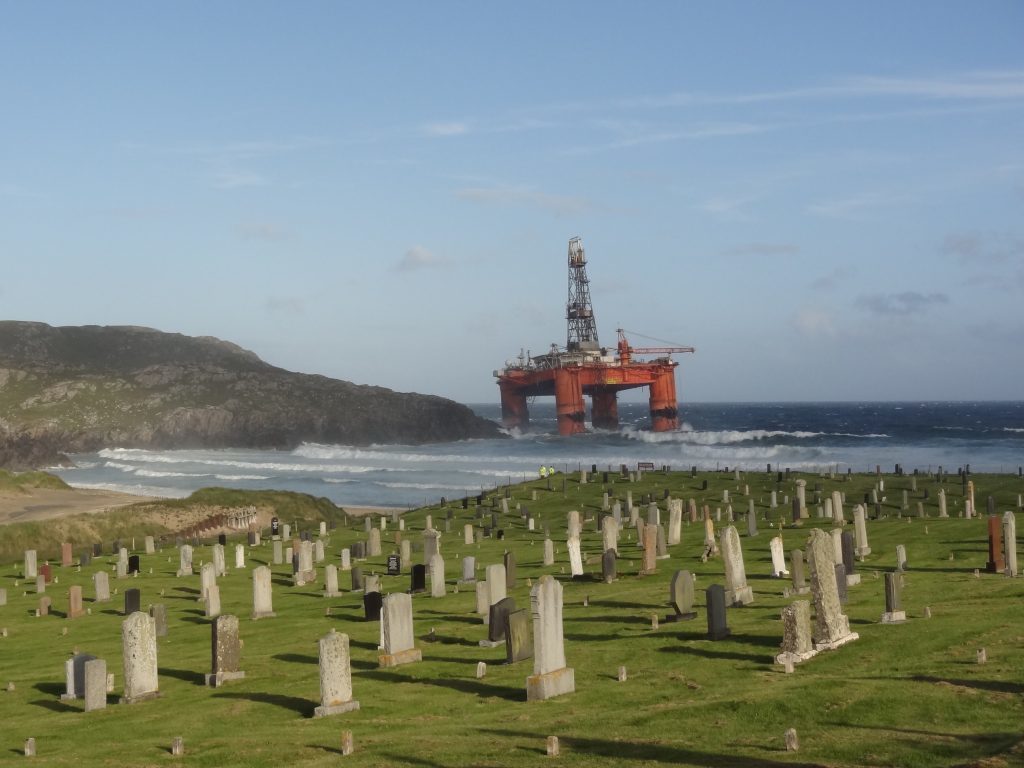
In 2016, this old Transocean semisubmersible was being towed from Norway to Malta prior to being scrapped in Turkey. The rig broke free and grounded at Dalmore, Scotland. This picture, with a Scottish cemetery in the foreground, is a fitting tribute to old rigs, the wells they drilled, the storms they endured, and the people they served.

The picture and title will be added to our world-famous Rigs-to-Reefs+++ page. Many thanks to those who have contributed to this important resource over the years.

Read Full Post »

Read Full Post »

  • Operating companies that produced >1 million bbls of oil or >1 BCF of gas in 2021 are listed in descending order based on oil production.
  • Both the total number of well starts and the number of exploratory wells are indicated
  • An INC is an Incident of Noncompliance (i.e. a violation). W=warning, CSI=component shut-in, and FSI=facility shut-in are the enforcement actions.
  • All of the below data are publicly available on the BSEE-BOEM websites.
2021
oil (MMbbls)
2021
gas (BCF)
2021/22
well starts

total-expl
2021/22
INCs
W-CSI-FSI
Shell149.8190.828-1211-14-4
bp114.082.75-26-3-4
Chevron83.742.28-81-1-3
Anadarko (Oxy)67.757.88-68-5-1
Hess27.561.72-27-4-0
Murphy25.150.07-74-8-1
LLOG20.429.03-01-1-1
Talos17.723.05-025-26-14
BHP14.55.93-22-3-0
Exxon13.22.31-1-1
Beacon10.515.71-00-0-0
Fieldwood10.424.7685-235-91
EnVen9.612.66-02-6-3
Kosmos9.48.41-11-0-0
Arena8.627.932-068-45-19
Walter8.136.22-23-1-2
Cox6.230.3237-169-3
Eni4.713.62-08-0-2
W&T5.027.21-065-40-7
Cantium4.55.518-023-15-2
QuarterNorth4.28.3no data
GoM Shelf2.34.852-5-2
ANKOR1.42.50-0-1
Byron1.04.45-8-2
Renaissance0.71.620-9-3
Sanare0.34.538-20-3
Helis0.21.21-0-2
Contango0.035.04-0-0
Samchully0.021.2no data

Comments:

  • “Energy transition” companies Shell and bp still love the Gulf of Mexico, which is a good thing for them and us. Together they accounted for 42.4% of the 2021 oil production.
  • The top 4 producers, Shell, bp, Chevron (includes Unocal), and Anadarko accounted for 2/3 of GoM oil production, nearly all of which was from deepwater leases.
  • Those are impressive production numbers for Anadarko (Oxy). No wonder Warren Buffett likes Oxy stock.
  • The relative number of deepwater exploratory wells is mildly encouraging given our concerns about sustaining production.
  • Exploratory well determinations are rather subjective and may not be entirely consistent.
  • Understandably, no exploratory wells were drilled by Arena or Cantium, the companies responsible for most well operations on shelf (shallow water) leases.
  • Overall, the INC numbers are impressively low for the deepwater operators, with Chevron and LLOG standing out. BSEE does not post the specific violation information (more on this in an upcoming post), so it’s difficult to properly assess a company’s compliance record.
  • Unfortunately, incident data could not be included on the scoreboard. BSEE’s incident tables are badly out of date, and no 2021/2022 summaries have been posted.
  • Fieldwood’s disturbing INC numbers were discussed earlier this year. High INC rates for 3 other operators have also were noted last month.
  • Exxon production is limited to the Hoover Diana spar, which was installed 22 years ago. The largest US oil company has only drilled one GoM exploratory well (2018) in the past 5 years. Currently, their main GoM interest seems to be the sequestration (disposal) of onshore emissions. (More on this topic in an upcoming post.)

Read Full Post »

[Disclosure: I assisted the legal team that defended Bob Kaluza. That said, I completely disagreed with the charges against him and Don Vidrine before my involvement in the case.]

Bob Kaluza (L) and Don Vidrine

Unsurprisingly, there was a lot of tough guy talk in Washington DC after the blowout:

“Our job is basically to keep the boot on the neck of British Petroleum” 

Ken Salazar, Secretary of the Interior

Weeks after the explosion, President Obama told NBC’s Matt Lauer he was trying to figure out “whose ass to kick.”

Texas Monthly

It was therefore predictable that the Department of Justice (DOJ) would choose to prosecute BP employees individually. There were BP managers who would have been good candidates, but instead DOJ chose to criminally prosecute the working stiffs – the two BP well site leaders on the rig. They were the lowest ranking BP employees associated with the incident. This was apparently acceptable to BP, since their plea agreement blamed Kaluza and Vidrine’s for their role in overseeing the negative pressure test (#blametheworker). Never mind that:

  • BP management was responsible for the well planning and shortcuts that were the root causes of the blowout (see the previous posts in this Macondo series).
  • the extent to which the negative pressure test was misconducted and misinterpreted was and remains a topic of dispute.
  • there were no regulations or standards requiring this test or explaining how it should be conducted, and BP’s internal guidance was woefully inadequate.
  • Bob Kaluza was a temporary replacement for the regular well site leader, had worked primarily onshore, and had never conducted or witnessed a negative pressure test.
  • Kaluza and Vidrine were themselves victims and were fortunate to have survived the incident.

Despite all of this, DOJ still chose to prosecute the two well site leaders. However, the weaknesses in the DOJ case became more obvious over time, and DOJ dropped all but a misdemeanor water pollution charge. Vidrine, who had health issues that were exacerbated by the case, accepted a plea deal. Kaluza was confident of his innocence and chose to make his case in court. His defense team was very strong, and the trial was essentially a walkover. After less than 2 hours of deliberation, the jury fully acquitted Bob Kaluza (2/25/2016). Sadly, Don Vidrine passed away the following year.

LInked is a very good Texas Monthly article about the case.

Read Full Post »

Read Full Post »

Read Full Post »

« Newer Posts - Older Posts »