Feeds:
Posts
Comments

Archive for the ‘drilling’ Category

In 1980, Don Kash, the great leader who was Chief of the Conservation Div. of USGS (the current equivalent of the Conservation Div. is BSEE plus the resource evaluation functions in BOEM plus some royalty management functions now in ONRR) asked me to move to Cape Cod to head a new office responsible for overseeing exploratory drilling operations on Georges Bank. We established a small office in an old maintenance building at Barnstable Municipal Airport in Hyannis. The space was decidedly unglamorous but functional and ideal for helicopter transit to the offshore rigs.

Karen was a Cape Cod artist and art teacher at Nauset Middle School in Orleans (for baseball lovers, that is where the Orleans Firebirds of the famous Cape Cod League play). Some of her teacher friends were connected to a running club I belonged to, and unknown to me at the time, Karen had designed my beloved Provincetown Dunes Run t-shirt.

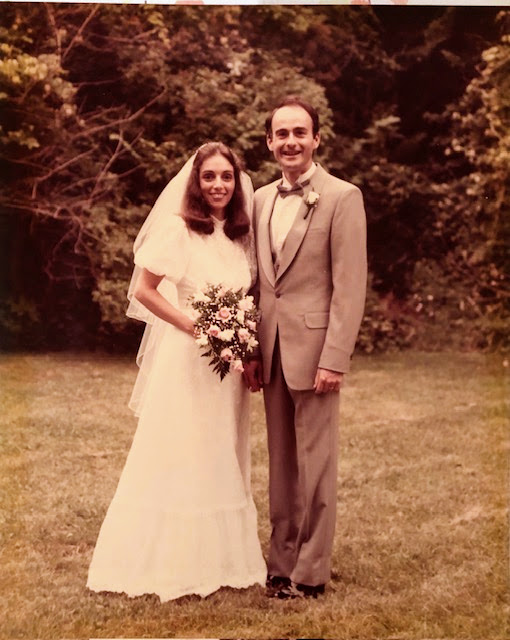
We had another connection in that we had bought condominiums built by the same company. Hers was in Orleans and mine was in Hyannis. A couple that owned a condo in each project got to know both of us and thankfully introduced us. A year and many great experiences later we were married at the historic Captain Linnell House in Orleans.

Interestingly, Karen’s mother was an opponent of Georges Bank drilling until she realized that her only daughter would be leaving Cape Cod when the drilling ended. She then changed her position, proving once again that all politics is local 😀

I was very lucky to have spent 4 challenging and exciting years on Cape Cod. The Georges Bank drilling story was uniquely remarkable for me and led to a daughter born at my next duty station (Santa Maria, CA) and 5 grandchildren (good ratio 😀). While I was particularly fortunate, I think the Georges Bank drilling experience was generally positive for all that participated including the State and local officials, Woods Hole scientists, media, industry personnel, commercial fishermen, and even the Greenpeace protesters who were on the scene 155 miles southeast of Nantucket!

Happy Valentine’s Day!

Read Full Post »

Jean-Louis Daeschler, a native of France who lives in Scotland, was a pioneering subsea engineer who worked on rigs worldwide. Below, he recounts a 1969 incident on the Sedco 135 E.

Sedco 135 E

Sept. 1969 on the Sedco 135 E offshore Miri, East Malaysia

At about 10.00 PM the crew was running 24 ” riser pipe. The rig used a 2 stack BOP system. The weather was superb – no wind and a temperature of 26 deg C.

When the 4th joint of riser pipe (45 ft) was picked up through the “V” door and was almost vertical, it unlatched from the elevator. There was a massive clang followed by silence. The riser pipe hit the drill floor, fell backward into the derrick frame and got jammed there. No one was hurt.

The incident would have been much worse if the pipe had fallen through the catwalk, perforated the maindeck, fell into the water, and damaged the the rig’s sponson tanks !!!! A piece of pipe falling overboard turns into a high velocity torpedo. A dropped 13 3/8″ casing joint is sometimes found 400 ft away. Heavy drill collars go almost straight down, which is the worst case given the potential for damage to the wellhead equipment.

I left the office and went to the rig floor, which was silent. Everyone was looking up and down. With the brake tied down, I asked Bill Ellis what we were going to do now. Bill was an experienced 45+ year old driller from Ruidoso New Mexico. His answer was “Go back home to the USA” with a big smile. He was always in control.

Bill demonstrated great leadership; there was no panic or blame. The all-Chinese and Malay crew was listening and smiling. After some rigging up, we got the operations back into swing. We checked the elevator latch and other equipment, laid down the joint that had been stuck, picked up another one, and continued running the riser.

I met again with Bill and Jo, his wife, in Aberdeen in 1975, and we still talked about that night-shift event.

Sadly, in 1976 their young son Clay Ellis passed away on a diving job in the North Sea.

This is life in the oil patch, a great family all over.

JL Daeschler on the Sedco 135 E

Read Full Post »

As we approach the 55th anniversary of the Santa Barbara blowout (more to follow), pioneering subsea engineer JL Daeschler reminds us of a lesser known, but very serious, drilling blowout that occurred the same year offshore Northern Australia.

As is the case with most historic incidents, the lessons learned are still pertinent today and should be studied by those involved with well operations. Training sessions should consider what went wrong then, how technology and practices have changed since, how similar incidents could still occur, and innovations and improved practices that could further mitigate well control risks.

While well control technology and procedures are much improved, the fundamental issues discussed in the attached video remain the same. Well control must always be considered a work in progress with continuous improvement being the objective.

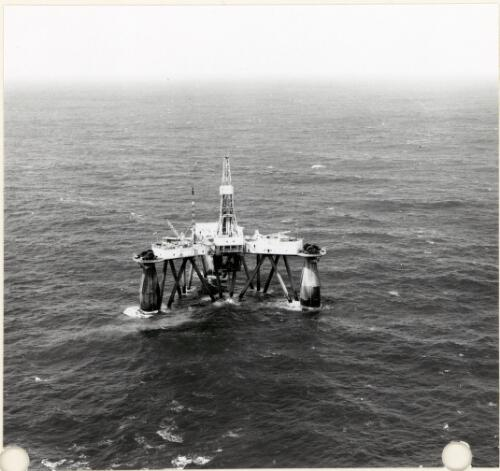
(The Sedco 135G semisubmersible that drilled this well is of the same design as the Sedco 135B rig that sank offshore Borneo in 1965.)

Read Full Post »

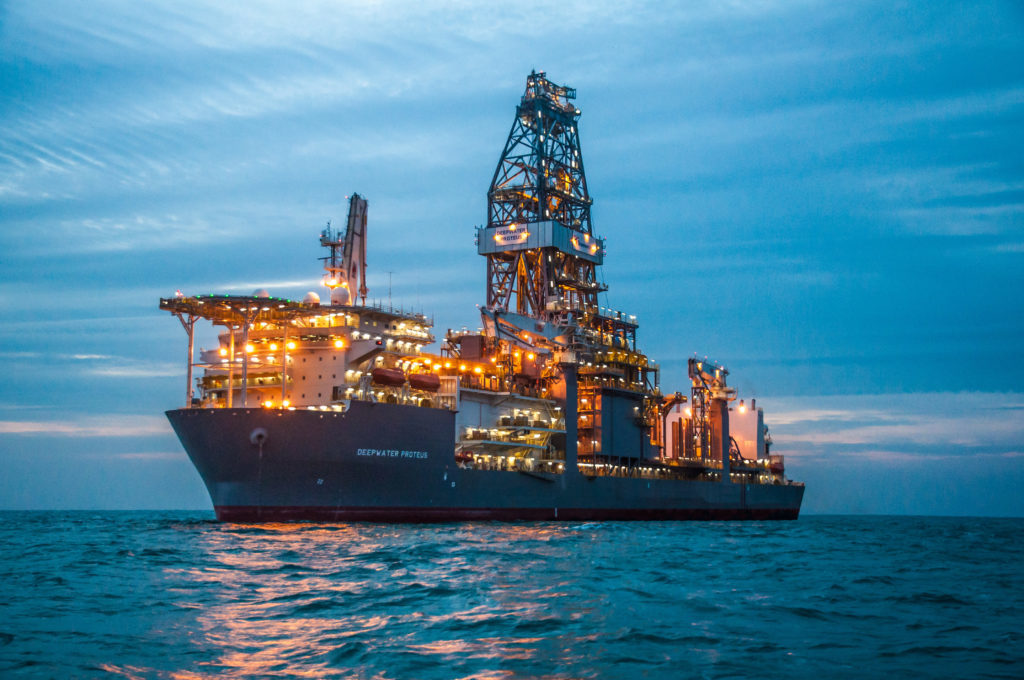
Pictured: Transocean’s Deepwater Proteus. T/O should name one of their drillships Deepwater Diligence 😉

Seven of the deepwater exploratory wells drilled in the Gulf of Mexico in 2023 (YTD) were spudded within 4.5 years of the effective date of their leases. Three of these wells were spudded within 3 years of their lease effective dates (see table below).

These are impressive achievements when you consider the time required for consultation with partners (if any) and contractors, site surveys, exploration plan development and approval, well planning, and drilling permit preparation and approval.

The subject wells accounted for 28% of the deepwater exploratory well starts in 2023 (25 net YTD wells after subtracting restarts at the same location).

date lease
effective
spud dateelapsed time
(months)
water
depth (ft)
operator
3/1/20218/27/2023306498Shell
8/1/20205/21/2023342211Talos
8/1/20203/15/2023313338Talos
12/1/20196/5/2023424228Chevron
11/1/20196/1/2023434603Hess
7/1/20197/11/2023487486Kosmos
12/1/20186/6/2023544127bp

Below are the exploration plan (EP) and permit (APD) approval timeframes for these 7 wells. With the exception of the Kosmos EP which required a number of modifications, the regulator actions appear to have been timely. For the bp, Shell, and Chevron wells, only 4-6 months elapsed between EP submittal and APD approval.

operatorblockdate EP
received
date EP
approved
APD
received
APD
approved
ShellWR 3653/1/20235/17/20235/11/20238/8/2023
TalosGC 781/19/20214/16/20213/8/20235/26/2023
TalosMC 1624/1/20227/13/20228/2/20223/2/2023
ChevronMC 93712/7/20225/19/20234/21/20235/21/2023
HessMC 7278/30/202211/3/202212/21/20224/24/2023
KosmosKC 9641/3/202010/12/20224/18/20237/3/2023
bpGC 4361/18/20234/14/20233/29/20236/5/2023
Notes: EP=Exploration Plan, APD=Application for Permit to Drill, WR=Walker Ridge, GC=Green Canyon, MC=Mississippi Canyon, KC=Keathley Canyon

Read Full Post »

As has been previously discussed on this blog, the renewable energy source that shows the greatest promise for generating the power needed to support economic growth is ultradeep geothermal.

This JPT article nicely describes the opportunities and challenges

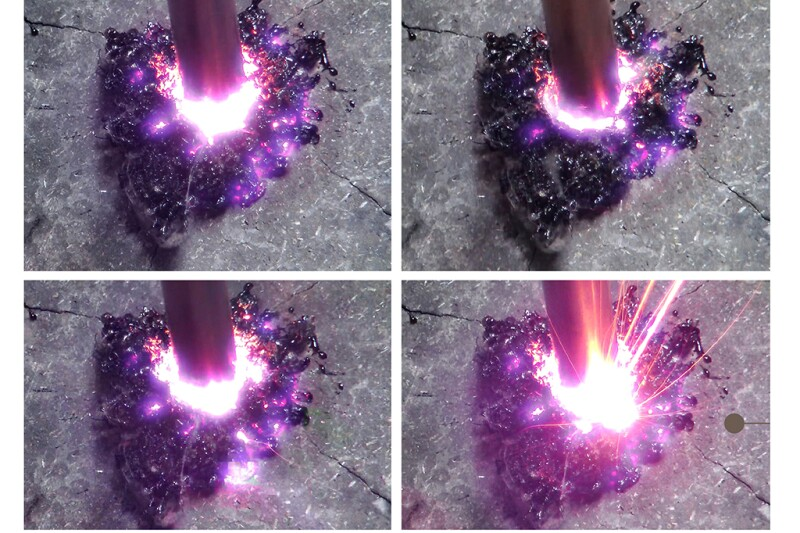
Microwave drilling test. Source JPT/Quaise Energy

Good comparison of drilling into hard basement rock with conventional and millimeter wave (microwave) technologies:

The technical readiness level (TRL) for microwave drilling reflects that it has yet to be field tested. The drilling rate includes an estimated amount of flat time. The levelized cost of energy (LCOE) is an all-in estimate of the cost per megawatt-hour (MWh). Source: JPT/Quaise Energy.

Quaise Energy’s first full-scale testing of a hybrid drilling rig combining conventional rotary drilling and millimeter wave drilling capabilities is scheduled for 2024.

Read Full Post »

Newfoundlander Howard Pike shared this interesting video.

BP’s Ephesus well – why was it a failure?

Read Full Post »

Published today.

Comments on the proposed rule.

Read Full Post »

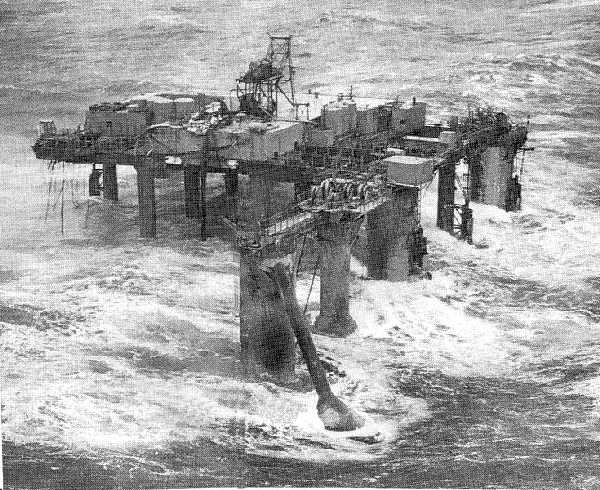
Offshore veteran JL Daeschler brought the historic destruction of the Ocean Prince to my attention.

“At about 2 am on the day of the storm, the rig’s superstructure was torn off during a gale. By 7:10 am about a third of the drilling plattform had dissapared under 60 feet water.”

I didn’t realize that some early North Sea wells were drilled with semisubmersible rigs that were sitting on bottom, ala submersibles.

Per JL Daeschler, “the barge master on Ocean Prince was unsettled about sitting on a sandbank in the North Sea with waves as deep as the water depth, hence accelerating the scouring around the pontoon on the sea bed and distorting the forces on an unsupported hull. On a semisubmersible floating rig there is a great level of compliance between the mooring system and the forces on the leg and bracing. Worst case, you let the mooring go and drift. 

It’s noteworthy that: “During the same storm which claimed the ”Ocean Prince,” the rig’s sister ship ”Ocean Viking,” while drilling afloat, withstood winds and waves of equal force.”

The entire crew of the Ocean Prince was safely evacuated. The helicopter pilot’s last name was fitting given his bravery during the rescue!

“Hero of the rescue effort was Capt. Robert Balls, 32, a former naval pilot who was alerted to remove the stranded crewmen. Within 45 minutes after he was awakened at Scarborough Hotel at 6 a.m., he was piloting a Wessex 60 helicopter across the North Sea fighting gale winds 400 feet up.”

“Captain Balls flew the copter with a minimum load of fuel in order to carry more than a full passenger load to the oil rig ”Constellation,” which was drilling about 20 miles south of the ”Ocean Prince.” On the first lift he transported 19 men. Usually, the capacity of the Wessex 60 is 16. On the second trip he took 18 crewmen. The final trip, he flew eight men directly to Scarborough.”

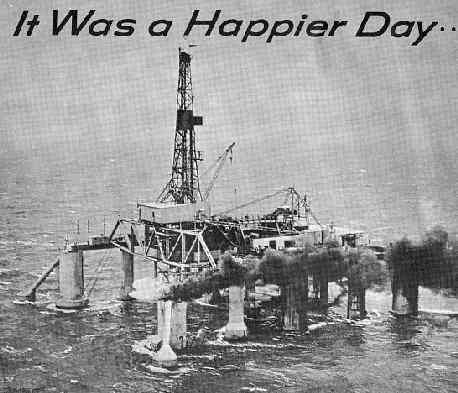
Before the storm:

Read Full Post »

For those interested in offshore history:

Read Full Post »

Jean-Louis Daeschler, a pioneering offshore engineer, has shared this very interesting story about his interaction with George HW Bush (pictured):

One day I was driving in Kennebunkport and told my wife that I met the man who lived in that house on the coastal road – the President George HW Bush!

Early in my career, a new drillship was being built in Port Arthur TX for Zapata Offshore. One morning, the entrance to the shipyard was closed off. A peaceful group of picketers told us we could not enter. Many of us had left work clothes, file drawings, and even passports and money at our camp in the yard. This was before mobile phones and the internet! So we went back home to wait for guidance. 2-3 days later we had to attend a meeting in Houston (a 2 hr drive) at the Pennzoil Tower, and we met Mr Bush. He was very cool and calmed us down. He advised us not to cross the picket line or get into an argument with the workers. He had already made arrangements to use 4-5 rooms at a Holiday Inn near Beaumont. They removed the hotel furniture and provided desks, pencils, and phones. Our personal effects had been collected from the yard and delivered to the our temporary workplace at the Holiday Inn.

My colleagues and I had a great chat with Mr. Bush. In particular he asked me questions about the D-Day invasion at Normandy. However, although I was born there, it was at the end of the war in 1945, so I did not personally experience the invasion. We left the meeting relaxed and with directives on what not to do. He kindly gave me one of his gold Cross pens, before we shook hands and departed.

Years later at a dinner in Aberdeen with Total Fina Elf, I gave that pen to the wife of the Project Manager (without the story). So there we go; a pen from Houston goes to Paris via Aberdeen in 17 years! Sometimes you smile in the oil patch!

JL Daeschler photo: Red Adair belt with a diamond drill bit from the Beaufort sea, a hardhat from Indonesia, and 2 new Cross pens! Life is good 😀

Read Full Post »

« Newer Posts - Older Posts »