Feeds:
Posts
Comments

Archive for the ‘accidents’ Category

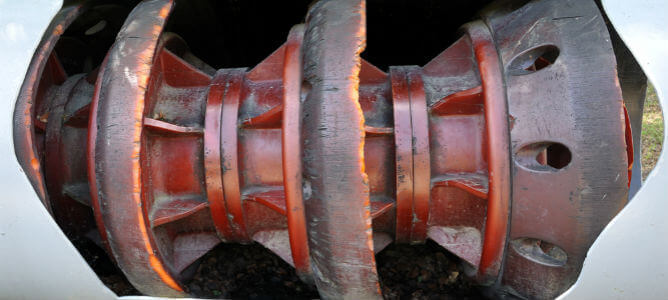
Pictured: pig for cleaning gas pipelines. Will Nord Stream’s suit against the insurers unplug investigation findings?

Nord Stream AG has sued insurers Lloyds and Arch in the English High Court for failing to pay for pipeline damage incurred during the Sept. 2022 Baltic Sea explosions. The estimated pipeline repair costs range from €1.2 to €1.35 billion, and Nord Stream is seeking €400 million from the insurers.

Could this litigation help us learn more about the findings of the official Nord Stream investigations? After 17 months of investigation, Denmark recently concluded that “there are not sufficient grounds to pursue a criminal case in Denmark.” Only nineteen days before Sweden had announced that “Swedish jurisdiction does not apply and that the investigation therefore should be closed.” These weak announcements at the end of lengthy investigations seem too convenient, and may lend credence to Hersh’s Nord Stream account or a recent variation that implicates the UK. Germany is presumably still investigating, and it remains to be seen whether they will release findings.

Could the parties in the Nord Stream case pursue documents or testimony from the Swedish, Danish, or German investigation teams? Both sides in this case, Nord Stream AG and the insurers, would benefit from details that could help identify the responsible parties.

It’s more than a little hypocritical for Western governments and their NGO partners to rail against offshore oil and gas operations while quietly accepting (without investigation) the economic and environmental consequences of the Nord Stream sabotage. Compare the Nord Stream methane emissions with those associated with Gulf of Mexico operations.
Read Full Post »

As we enter the third month of 2024, BSEE has finally updated the incident tables to include 2022 data.

The OCS program managers I was privileged to work for would never have accepted such delays in posting fundamental safety data. Carolita Kallaur (RIP) wouldn’t tolerate a delay of 14 days in publishing quarterly incident statistics, let alone a delay of 14 months for annual data with no quarterly updates. Transparency and timeliness in informing the public about offshore safety performance was her highest priority. Cynthia Quarterman, Tom Readinger, and other OCS program leaders were similarly insistent on timeliness and transparency in the reporting of incident data.

The belated 2022 BSEE tables also include a glaring error. The most important figure, the number of fatalities, is incorrect. Five workers died from US OCS incidents in 2022, not one. The fatal helicopter crash at the West Delta 106 A helideck on 12/29/2022 that killed four workers (photos below) is inexplicably not included. 

Is the failure to include this fatal incident a regulatory fragmentation issue? OCS safety data should be reported holistically and should not be parsed based on perceived regulatory jurisdiction? In any event, the tragic accident at the West Delta 106 A platform occurred at the helideck, which per the MOA with the Coast Guard is under BSEE jurisdiction.

It’s unfortunate that 2023 data are not available, even in summary form. At a minimum, BSEE should be proudly reporting that 2023 was the first zero fatality year on the US OCS since at least 1963! While acknowledging that this outstanding achievement will be difficult to repeat, it most certainly deserves public attention.

Lastly, what about incident data for the offshore wind program? When will these data be posted?

Read Full Post »

The Sikorsky S-92 helicopter is the most advanced aircraft in Sikorsky’s civil product line, certified to the most stringent safety requirements of the Federal Aviation Administration (FAA) and the European Aviation Safety Agency (EASA).” 

One person has died following the helicopter crash outside Bergen in Norway on the night of Wednesday 28th February. The helicopter was on a training assignment for Equinor ’s SAR service for the Oseberg area in the North Sea.

Equinor

Search and rescue service is critical to offshore safety, and North Sea operators have excellent SAR capabilities. Sadly, one person died and five were injured (two seriously) when a Sikorsky S-92 helicopter, owned by Bristow and under contract to Equinor, crashed offshore Bergen last night. The crew was training to serve offshore workers in need.

Read Full Post »

Either the investigators were incompetent (unlikely) or the political pressure was too great (likely).

“The investigation has led the authorities to conclude that there was deliberate sabotage of the gas pipelines. However, the assessment is that there are not sufficient grounds to pursue a criminal case in Denmark,” a Copenhagen police statement said.

Reuters

After 17 months of investigation, that’s a pretty lame statement. Will we see their report?

The ball is now in Germany’s court. Should we expect more of the same?

Our June 2023 summary remains unchanged.

Read Full Post »

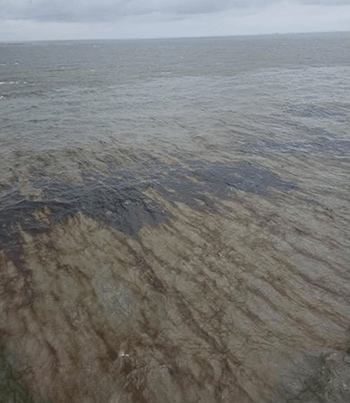
After 3 months of investigation, only a small connector leak has been identified in or near the Main Pass Oil Gathering system. According to the Coast Guard, that leak was not the source of the large November spill (pictured). The absence of findings raises many questions:

  • Is the Main Pass Oil Gathering system still being implicated? Surrounding pipelines?
  • Was a vessel or some other source responsible?
  • Were sheen samples fingerprinted and are those results definitive?
  • Given that the source has not been identified, what was the basis for the large (and rather sensational) spill volume estimate? The sheen was not indicative of a spill of that magnitude.
  • How much production has been shut-in since the slick was first identified? November production data indicate a GoM-wide oil production decline of ~80,000 bopd decline from September.

Given the public claims that were made about the size and potential implications of this spill, the authorities need to be more forthcoming regarding their findings to date.

Read Full Post »

Short answer: Yes!

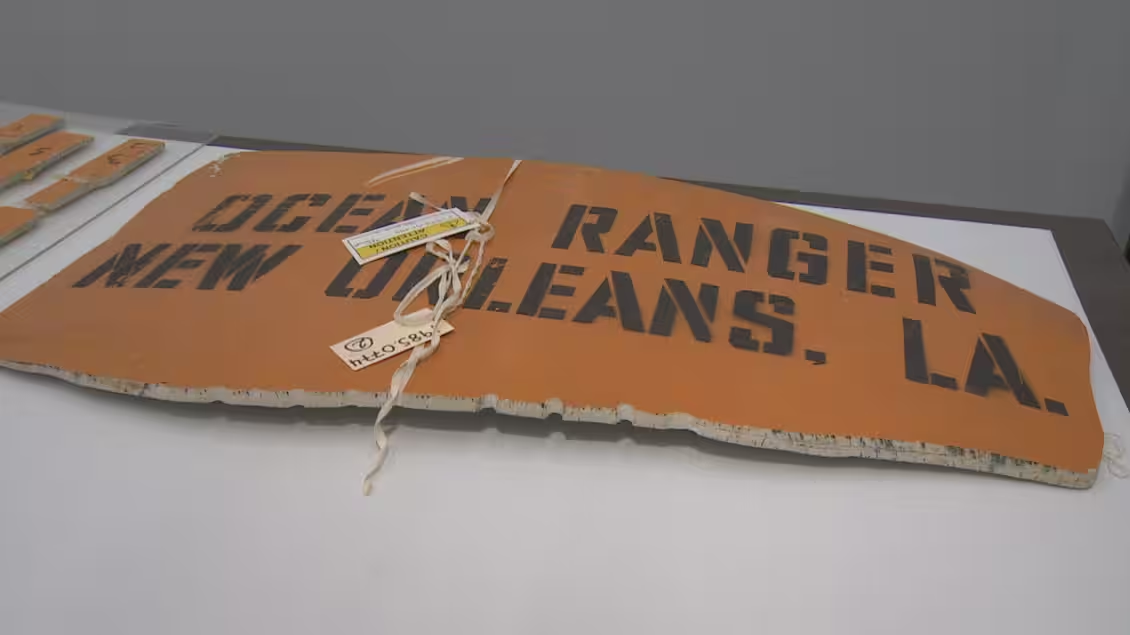
Ocean Ranger sign
recovered Ocean Ranger sign

A good article and video on the topic are linked. During my last visit to St. John’s, the late Charles Smith gave me an excellent tour of the Marine Institute that is featured in the video. The Institute is an outstanding training facility that has reduced operating risks offshore Newfoundland and elsewhere.

Posts about the Ocean Ranger tragedy.

Read Full Post »

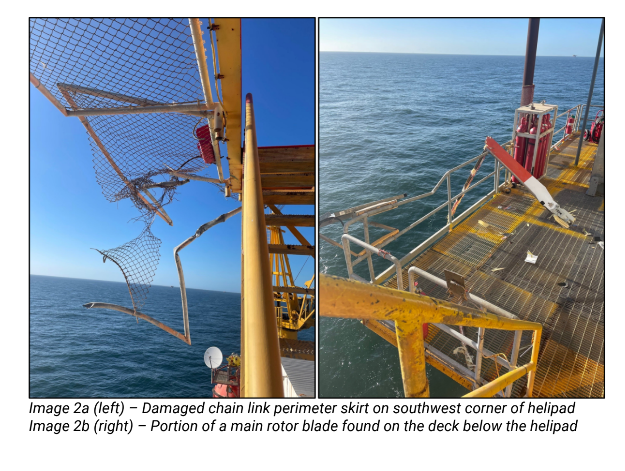
Less than a month ago  BSEE issued an alert that addressed chronic and persistent helideck safety issues. This week BSEE again issued an alert (attached) following yet another near-miss. Per BSEE:

After receiving clearance for landing at an offshore helideck, the aircrew noticed upon landing that a section of the helideck’s safety skirting was not properly secured to the support structure and was blowing upward and downward due to the helicopter’s rotor downwash. This created an imminent hazard to safe helicopter operations with potentially catastrophic results.

Of course, we are still waiting for the NTSB report on the tragic helideck incident at the end of 2022 that killed 4 workers.

The latest near-miss is yet another reminder that the muddled regulatory regime for helideck safety needs to be addressed. The most recent Coast Guard – BSEE MOA for fixed platforms only added to helideck regulatory uncertainty by assigning decks and fuel handling to BSEE and railings and perimeter netting to the Coast Guard. What about safety skirting? As is the case with all safety regulations, a holistic, systems based approach to helideck safety oversight is needed.

To their credit, BSEE has been addressing these helideck issues with safety alerts. Since they are bearing the responsibility for these incidents, they should have the unambiguous authority needed to take enforcement actions regardless of which helideck elements are involved.

Read Full Post »

Still waiting for:

Read Full Post »

Jean-Louis Daeschler, a native of France who lives in Scotland, was a pioneering subsea engineer who worked on rigs worldwide. Below, he recounts a 1969 incident on the Sedco 135 E.

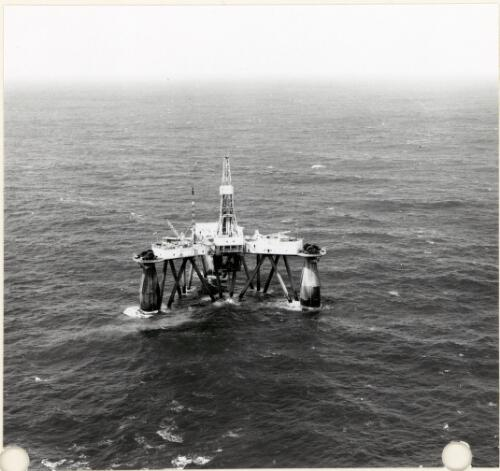
Sedco 135 E

Sept. 1969 on the Sedco 135 E offshore Miri, East Malaysia

At about 10.00 PM the crew was running 24 ” riser pipe. The rig used a 2 stack BOP system. The weather was superb – no wind and a temperature of 26 deg C.

When the 4th joint of riser pipe (45 ft) was picked up through the “V” door and was almost vertical, it unlatched from the elevator. There was a massive clang followed by silence. The riser pipe hit the drill floor, fell backward into the derrick frame and got jammed there. No one was hurt.

The incident would have been much worse if the pipe had fallen through the catwalk, perforated the maindeck, fell into the water, and damaged the the rig’s sponson tanks !!!! A piece of pipe falling overboard turns into a high velocity torpedo. A dropped 13 3/8″ casing joint is sometimes found 400 ft away. Heavy drill collars go almost straight down, which is the worst case given the potential for damage to the wellhead equipment.

I left the office and went to the rig floor, which was silent. Everyone was looking up and down. With the brake tied down, I asked Bill Ellis what we were going to do now. Bill was an experienced 45+ year old driller from Ruidoso New Mexico. His answer was “Go back home to the USA” with a big smile. He was always in control.

Bill demonstrated great leadership; there was no panic or blame. The all-Chinese and Malay crew was listening and smiling. After some rigging up, we got the operations back into swing. We checked the elevator latch and other equipment, laid down the joint that had been stuck, picked up another one, and continued running the riser.

I met again with Bill and Jo, his wife, in Aberdeen in 1975, and we still talked about that night-shift event.

Sadly, in 1976 their young son Clay Ellis passed away on a diving job in the North Sea.

This is life in the oil patch, a great family all over.

JL Daeschler on the Sedco 135 E

Read Full Post »

Here is the entire interview. The Nord Stream sabotage discussion begins just after the 1:11 mark.

Putin suggests that people consider who had an interest in sabotaging the pipelines and who had the capability. He also asks why Germany isn’t allowing gas to flow through the one Nord Stream line that wasn’t damaged. 

Read Full Post »

« Newer Posts - Older Posts »