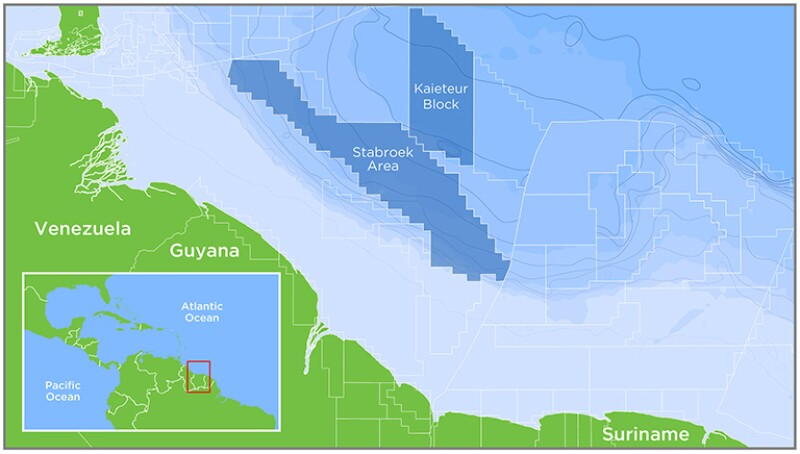
Exxon senior vice president Neil Chapman said he was confident that a three-member arbitration panel would rule in Exxon’s favor and determine it had a right-of-first-refusal to purchase Hess’ stake in a Guyana oil joint venture operated by Exxon.
Hess: “We remain confident that the arbitration will confirm the Stabroek right of first refusal does not apply to the merger.”
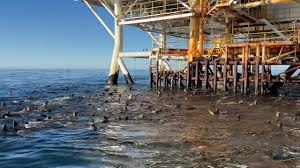
During a recent dive survey at Platform Holly off California’s coast, scientists from the University of California, Santa Barbara (UCSB) had to pause fieldwork because dozens of sea lions took shelter around the structure.
The reason? A pod of killer whales had been spotted hunting near another offshore platform in federal waters.
These real-time encounters reveal more than marine drama. They highlight the ecological role that offshore platforms can play as part of the seascape. UCSB’s work is part of our ongoing study, Understanding Biological Connectivity Among Offshore Structures and Natural Reefs, which explores how marine life moves among natural and manmade habitats.
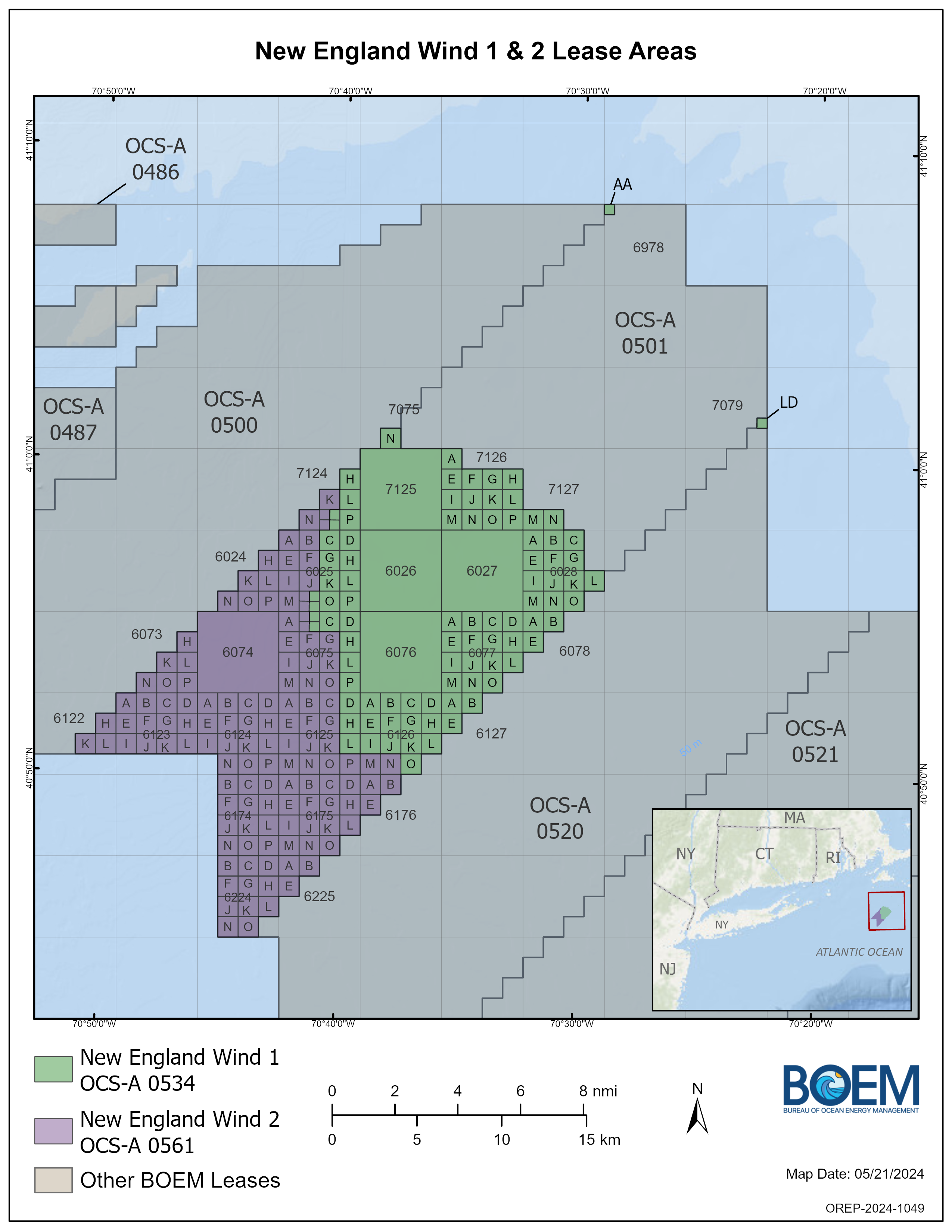
ACK For Whales, the Wampanoag Tribe of Gay Head / Aquinnah, Green Oceans, a coalition of charter fishing groups and seven individuals filed suit in federal court asserting that the Departments of Interior and Commerce violated the law when they approved the Record of Decision (ROD) for the New England Wind 1 and 2 projects.
Construction has not yet begun on the New England Wind 1 and 2 projects. The leases abut Vineyard Wind’s troubled lease 0501 (see above map), site of last summer’s turbine blade failure.
“In offshore wind project after offshore wind project, from Revolution Wind, Vineyard Wind and New England Wind to the others, the government was so desperate to rush these projects that it cut corners and violated the law,” Oliver said. “The government didn’t care if it trampled on the Wampanoag sacred beliefs and rites, hurt the charter boat, fishing and lobster industries or wiped out the Right whales. The only thing that mattered was to get these environmentally destructive turbines built, costs to the rest of us be damned.”
ACK FOR WHALES, INC., VALLORIE OLIVER, AMY DISIBIO, VERONICA BONNET, DOUGLAS LINDLEY, STEVEN AND SHARYL KOHLER, DANNY PRONK, WILLIAM VANDERHOOP, GREEN OCEANS, RHODE ISLAND PARTY AND CHARTER BOAT ASSOCIATION, CAPE COD CHARTER BOAT ASSOCIATION, INC., CONNECTICUT CHARTER AND PARTY BOAT ASSOCIATION, INC., MONTAUK BOATMEN AND CAPTAINS ASSOCIATION, INC. and WAMPANOAG TRIBE OF GAY HEAD AQUINNAH
Defendant:
UNITED STATES DEPARTMENT OF COMMERCE, NATIONAL MARINE FISHERIES SERVICE, BUREAU OF OCEAN ENERGY MANAGEMENT, UNITED STATES DEPARTMENT OF THE INTERIOR, DOUG BURGUM, in his official capacity as Secretary of the Interior, WALTER CRUICKSHANK, in his official capacity as the Director of the Bureau of Ocean Energy Management, HOWARD LUTNICK, in his official capacity as the Secretary of Commerce and EUGENIO PIEIRO SOLER, in his official capacity as the Assistant Administrator of the National Marine Fisheries Service
Stop the bluster about annexation of Canada. Almost no one on either side of the border supports this. Focus instead on strengthening strategic alliances – most notably with regard to energy supply.
Both the US and Canada are energy powerhouses. Both countries are also energy underachievers relative to their potential. The more efficiently our pipelines and transmission systems can be integrated, the better that potential can be realized and the more both countries can prosper.
See the attached energy trade map to get a better understanding of our integrated energy economies.
For the reasons set forth herein, the application of the California Coastal Commission for issuance of a preliminary injunction is granted. No bond is required. The Commission shall present a written order for entry by the court.
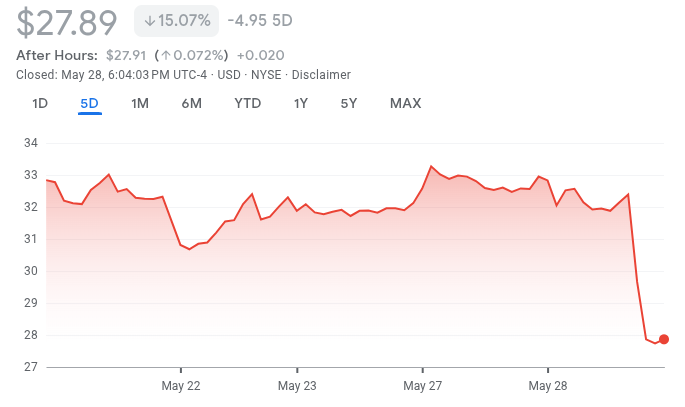
The roller coaster ride continues. Sable Offshore’s stock price plunged in response to the latest order.
The first step will be the publication of a request for information and Interest in the Federal Register. This notice will seek public input that will help inform BOEM’s assessment of geologic conditions, potential environmental and cultural impacts, and other uses of the area.
Impossible Metals has developed an autonomous underwater vehicle (AUV) for selective mineral harvesting. Their novel AUV uses advanced robotics, AI, and a buoyancy engine to hover above the seabed and minimize disruption to the habitat and native biodiversity. Impossible Metals believes this method will have the lowest environmental impact and cost among land and deep-sea mining approaches.
9 minute interview with the CEO of Impossible Metals:
Legal/regulatory: Although lease cancellation is not a reasonable option at this time, a pause for further review of the environmental and procedural issues is justified. During the previous Administration, the regulators seemed to function primarily as cheerleaders, as evidenced by the departures (examples here and here), the BOEM/NOAA strategy document, and the promotional tweets. Also, where is the long awaited report on the turbine blade failure? How do you proceed with development before that has been released for public review?
Norwegian govt intervention: Some would argue that Empire Wind was a bad investment by Equinor (2/3 govt owned) and it would have been better to take the losses and move on.
Trade unions: Concerns about the job losses are warranted, but the long term viability of the subsidy dependent offshore wind industry is in doubt, and important industries (e.g. fishing and tourism) may be negatively impacted. Other job losses could occur if offshore wind drives up electric prices and decreases grid reliability.
Pipeline deal: The regionally important Constitution natural gas pipeline is still very much in doubt despite reports of a deal with Governor Hochul. With or without her support, climate-ultras are driving NY/New England energy policy and will, at a minimum, stall this project. Fisheries Nation was particularly blunt in criticizing fishermen being “used as a poker chip” to gain tepid support for the pipeline project.
Following the reversal of the Empire Wind decision, Green Oceans, ACK for Whales, Long Island Commercial Fishing Association, Protect Our Westport Waters, Save Greater Dowses Beach, Save Right Whales Coalition, and the Wampanoag Tribe of Gay Head/Aquinnah petitioned Secretary Burgum to halt all wind construction in New England coastal waters and begin a “complete reevaluation” of their permits under applicable federal laws. In addition to right whale and tribal cultural resources concerns, the letter cited:
Part VIII, Offshore OIl and Gas Leasing, is a good read for those interested in OCS leasing policy. This cleverly crafted part of the bill specifies leasing schedules, streamlines the leasing process, and minimizes litigation risks. Highlights:
Minimum royalty rates return to 12.5% from 16.67% post-IRA. (This is good for small, shelf producers.) The maximum rate remains 18.75%.
Requires a Gulf of America lease sale by 8/15/2025, a sale by 3/15 and 8/15 in each of the following 14 years (2026-2039), and a sale by 3/15/2040. 80+ million acres must be offered at each sale unless that amount of acreage is no longer available for leasing.
The lease form, lease terms, economic conditions, and stipulations 4 through 10 must be the same as for Lease Sale 254 (3/18/2020). Stipulations 1-3 may be updated.
Requires seven 1+ million acre (if available) Cook Inlet lease sales from 2026 – 2032. Beginning in 2035, 90% of the revenues go to the State of Alaska.
The required lease sales may be in addition to the lease sales held under the 2024-2029 National Outer Continental Shelf Oil and Gas Leasing Program.
Adherence with the Biological Opinion shall satisfy the Secretary’s obligations under the Endangered Species Act of 1973 and the Marine Mammal Protection Act of 1972
Previous EIS’s for the Gulf of Mexico shall satisfy the Secretary’s NEPA obligation.
Consistency determinations prepared by BOEM for Lease Sale 261 for the States of Texas, Louisiana, Mississippi, Alabama, and Florida will satisfy the Secretary’s CZMA obligations.
The Secretary may waive any requirement under the Outer Continental Shelf Lands Act that the Secretary determines would delay issuance of a lease.
A lease must be issued to the highest responsible qualified bidder not later than 90 days after the sale date.
The Secretary shall establish a process through which a Governor may nominate for leasing under a lease sale held under this section an area of the OCS that is adjacent to the waters of the State; and is unleased and available for leasing. If the Governor of a State nominates an area, the Secretary shall include the area in the next scheduled sale. (It appears that this provision applies only to the Gulf of America. Objective?)
G&G surveys must be approved within 30 days after a complete application is received.
A lease awarded under Lease Sale 259 or Lease Sale 261 shall not be set aside, vacated, enjoined, suspended, or cancelled except in accordance with section 5 the Outer Continental Shelf Lands Act (43 U.S.C. 1334). Also, new terms or conditions may not be added to these leases. (This protects lessees from pending litigation related to these leases).
Any action to approve, require modification of, or disapprove any exploration plan, development and production plan, bidding procedure, lease sale, lease issuance, or permit or authorization related to oil and gas exploration, development, or production, or any inaction resulting in the failure to hold a lease sale shall be subject to judicial review only in a United States court of appeals for a circuit in which an affected State is located.
Their filing is attached. I found the following points to be particularly compelling:
p.3: “Despite no evidence that an Oil and Gas Program vessel has ever struck a Rice’s whale, the 2025 BiOp projects that Oil and Gas Program vessels will lethally strike numerous Rice’s whales over the term of the 2025 BiOp. On that basis alone, the Service found that the Oil and Gas Program will jeopardize the continued existence of the Rice’s whale, and developed a multi-step reasonable and prudent alternative which it asserts will reduce projected vessel strikes to zero.“
p. 4: “The Rice’s whale is a rarely found animal that the Service first identified as a new species (separate from the non-endangered Bryde’s whale) in 2021. 86 Fed. Reg. 47,022 (Aug. 23, 2021). There is no evidence that an Oil and Gas Program vessel has ever struck a Rice’s whale (or a Bryde’s whale) despite continued operation in the Gulf over many decades.”
p. 5: “The 2025 BiOp disregards the Bureaus’ logical, fact-based conclusion. Instead, the Service’s 2025 BiOp engages in speculation and guess-work to surmise that Oil and Gas Program vessels could be striking and killing Rice’s whales on a regular basis. The Service ignores the best available data (i.e., showing no recorded observations of an oil and gas vessel striking a Rice’s whale) and instead presumes that forceable and lethal collisions between oil and gas service vessels and 60,000-pound whales are regularly occurring but somehow going unnoticed by the vessels and their crews and that the carcasses silently disappear into the water, never to be seen again.“
 Bud's Offshore Energy (BOE)