Posts Tagged ‘Offshore Wind’
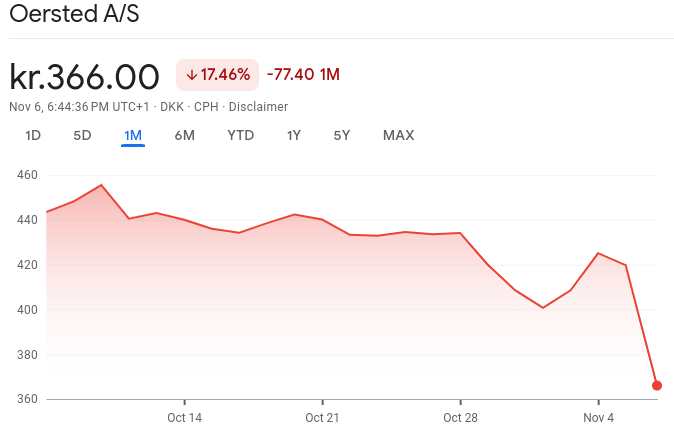
Tough day for Orsted
Posted in Offshore Wind, tagged 2024 election, bad day, Offshore Wind, Orsted on November 6, 2024| Leave a Comment »
Atlantic wind lease bids have declined by 99.4%. Is $50/acre fair market value?
Posted in Offshore Wind, tagged Avangrid, BOEM, declining bids, fair market value, Gulf of Maine, Invenergy, Offshore Wind on November 1, 2024| Leave a Comment »
The table below illustrates the dramatic decline in bidding for Atlantic wind leases over the past 2 years. (The California sale is also included in the table.)
| offshore area | sale date | leases sold | acres leased | bonus bids ($ millions) | $/acre |
| NY/NJ | 2/2022 | 6 | 488,000 | 4,370 | 8955 |
| California | 12/2022 | 5 | 373,268 | 757.1 | 2028 |
| Central Atl. | 8/2024 | 2 | 277,948 | 92.65 | 333 |
| Gulf of Maine | 10/2024 | 4 | 439,096 | 21.9 | 50 |
Accepting that bidding at the 2/2022 sale, which averaged nearly $9000/acre, was irrationally exuberant, bidding at this week’s sale was still incredibly weak. Even the bids at the Central Atlantic sale, just 2 months ago, averaged $333/acre, 6.7 times higher than the Gulf of Maine bids.
Energy giants Equinor, Repsol, and Total were among the eligible Gulf of Maine bidders that opted not to participate.
Do the Gulf of Maine bids pass BOEM’s fair market value tests? Apparently so; the sale notice established $50/acre as the minimum bid, and that is where the bidding started and ended. Invenergy and Avangrid had no competition and presumably got the tracts they wanted at the lowest possible price. We’ll see how this works out for the companies and power consumers.
Equinor buys 9.8% of Orsted – good counter cyclical investment or irrational pursuit of renewables goal
Posted in climate, energy policy, Norway, Offshore Wind, Uncategorized, tagged acquisition, Equinor, Norway, Offshore Wind, Orsted, renewable energy targets on October 7, 2024| Leave a Comment »


Equinor, which is 2/3 owned by the Norwegian government, has purchased a nearly 10% stake in offshore wind giant Orsted (50.1% Danish govt ownership).
With bp and Shell reducing their wind energy investments, Equinor’s Orsted acquisition is a contrarian move. Equinor is also the only major oil company that is still in the market for new US offshore wind leases.
While the Orsted acquisition does not appear to have been directed by the Norwegian government, the State’s 2/3 ownership of the company no doubt influences renewable energy targets and broader corporate strategy.
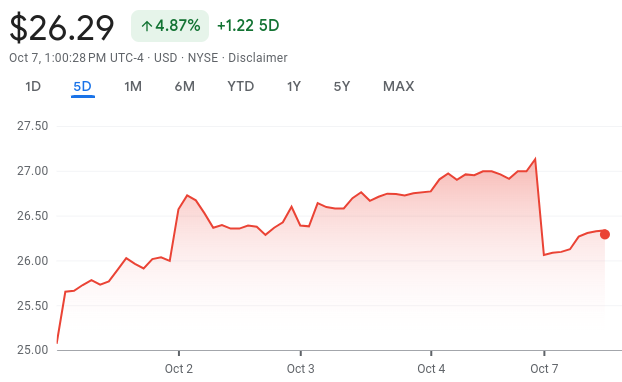
The initial market reaction to the Orsted purchase was negative (see chart below). On a day when most oil companies’ share prices rose in response to the jump in oil prices, Equinor shares opened sharply lower.

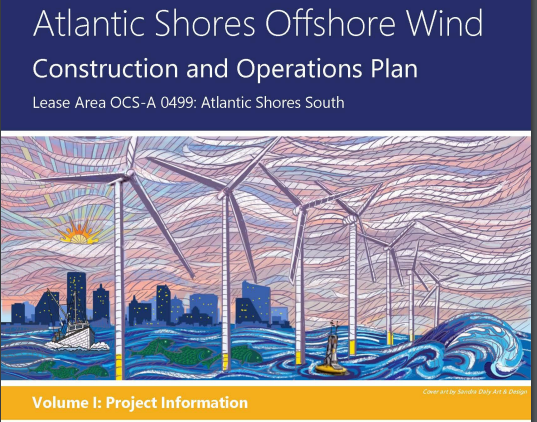
More offshore wind litigation: Save LBI to sue BOEM and NOAA over the Atlantic Shores South project
Posted in energy policy, Offshore Wind, tagged Ack for Whales, Atlantic Shores project, ESA, litigation, Offshore Wind, RIght Whale, Save LBI on October 4, 2024| Leave a Comment »

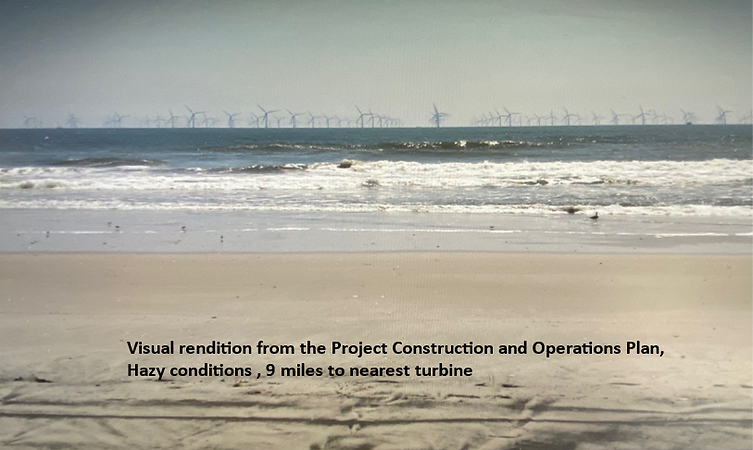
As a boy, my grandfather owned a home “down the shore” on Long Beach Island (LBI). From the beach, all we saw were swimmers, surf fishers, porpoises, and an occasional vessel on the horizon. The offshore wind industrialization will change the island dramatically.
Attached is the release announcing Save LBI’s intent to sue. Their issues are summarized below:
- Constructing and operating hundreds of wind turbines directly in a prime migration path for the critically endangered North Atlantic right whale.
- Operational noise from the larger and noisier turbines Atlantic Shores plans to build.
- Cumulative impact of the East Coast wind-turbine projects on the right whale’s migration.
- Interference with other uses of the ocean including fishing and national security.
- No plan or capability, technically or monetarily, to remove turbines and other facilities at the end of their useful life, upon their failure during normal operation, or in the aftermath of a hurricane or other extreme storm event.
- Failure to account for structural failures such as the Vineyard Wind turbine blade incident, the damage from such failures to the ocean and beaches, and how that damage will be remediated.
- Excessive electric bill increases under the State’s Offshore Wind Energy Development Act.
The Endangered Species Act issues are similar to those that the Nantucket group ACK for Whales is trying to elevate to the Supreme Court.

Nantucket group petitions the Supreme Court: “Hail Mary” or good chance of success?
Posted in energy policy, Offshore Wind, tagged Ack for Whales, Nantucket, Offshore Wind, Supreme Court on October 1, 2024| Leave a Comment »

The Nantucket non-profit ACK for Whales (ACK is the FAA abbreviation for Nantucket Airport) has petitioned the Supreme Court to review the 1st Circuit’s ruling on the Vineyard Wind project. Per the Supreme Court filing (full document attached):
Despite the agencies’ explicit statutory duty to consider all “best information available,” regarding the impacts its actions might have on an endangered or threatened species and those habitats, the National Marine Fisheries Service (NMFS) and the Bureau of Ocean Energy Management (BOEM), did not consider the cumulative impacts of other planned projects when they authorized and issued permits to construct the Vineyard Wind 1 Project.
Will the Supreme Court accept the case?
- “Hail Mary:” Per the Nantucket Current, the odds that the Supreme Court justices will accept the case are exceedingly slim. Of the 7,000 cases that the Supreme Court is asked to review each year, only 100 to 150 of them – about 2 percent – are accepted.
- “Really good chance:” Per Val Oliver, ACK for Whales founding director, “In light of the recent Chevron decision, we think we have a really good chance. That was about government overreach and that is what this (Vineyard Wind) has felt like since the beginning: go, go, go, and we’ll figure it out as we go. That’s just not responsible.“
Regardless of the outcome of this case, there is a profound inconsistency in the administration of the Endangered Species Act as evidenced by our comparison of the operating restrictions for the Right whale (Atlantic wind) and Rice’s whale (Gulf of Mexico oil and gas). Note that the more onerous Rice’s whale restrictions were removed by court order.
Oregon offshore wind: If litigation doesn’t stop the Oct. sale, the absence of bidders may.
Posted in energy policy, Offshore Energy - General, Offshore Wind, tagged Coos County, Curry County, floating turbines, lack of bidders, litigation, NewSun Energy, Offshore Wind, opposition, Oregon on September 28, 2024| Leave a Comment »
Update 2: Oregon’s Governor requested cancellation. (letter attached)
“I am disappointed that BOEM’s accelerated process over the last year has further divided stakeholder communities, and put the Confederated Tribes of the Coos, Lower Umpqua and Siuslaw Indians in the position of challenging BOEM in federal district court. Oregon’s legislative Coastal Caucus is likewise now in full opposition to BOEM’s proposed lease.“
Update: The sale has been cancelled.

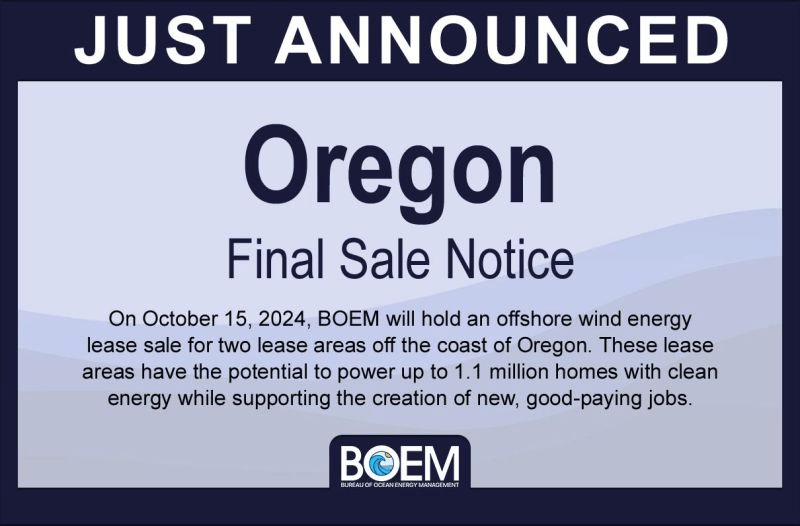
Despite the usual hype about the number of homes that could be powered and “good-paying jobs,” the upcoming Oregon wind lease appears to be very much in doubt. If legal action by Oregon tribes doesn’t halt or delay the sale, the absence of bidders may.
OregonLive reports that only one company, NewSun Energy, continues to be interested in participating in the sale. NewSun is primarily a solar energy developer with no apparent offshore wind experience.
Wind development offshore Oregon would be complex and very expensive given the need for floating turbines and new high-voltage transmission lines over the Coast Range. At least two counties, Coos and Curry, are set to vote on whether to publicly oppose offshore wind development off their coast.
If the sale is delayed such that BOEM is not able to issue leases before 12/20/2024, the leases cannot be issued until a qualifying oil and gas lease sale is held.
Wind is not an independent power source
Posted in energy policy, natural gas, Offshore Wind, Wind Energy, tagged Denmark, dispatchable power, electricity imports, gas turbines, intermittent energy, Offshore Wind on September 20, 2024| Leave a Comment »
As previously noted, these power generation realities cannot be ignored:
- Wind and solar power are intermittent, such that demand must respond to variable supply (not a prescription for economic growth).
- Assuming sufficient capacity, gas power plants respond to variable demand.
- Power grids can function effectively with only natural gas, but not with only wind/solar.
- Integrated wind, solar, and gas systems can reduce, but not eliminate, demand for gas-generated power.
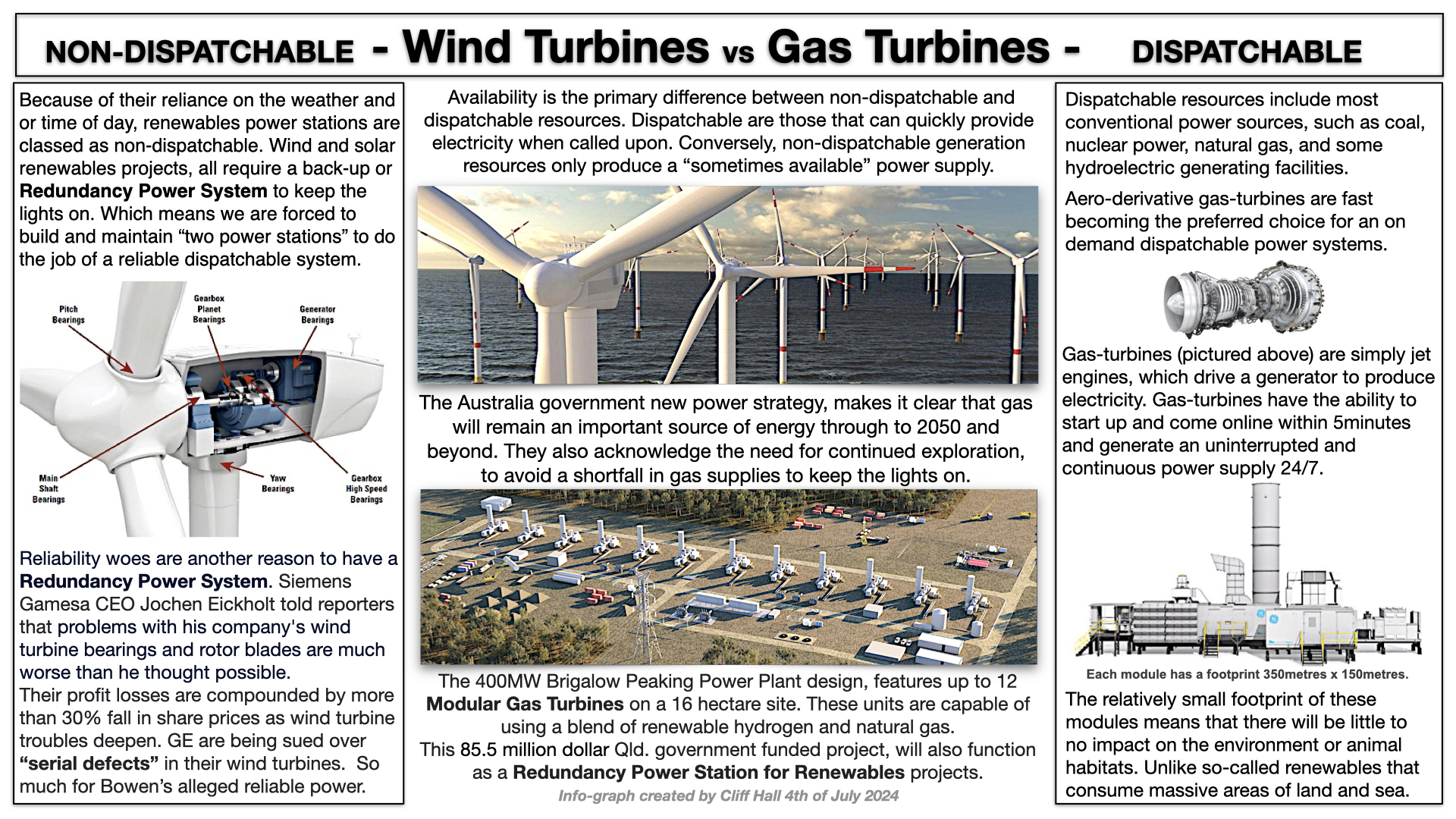
This graphic by Australian Cliff Hall explains the importance of “dispatchable” power. Of course, imported electricity, on which wind-leader Denmark relies heavily, is an alternative to dispatchable power. However, that option is less than optimal from economic growth and energy security standpoints.

Spider-Man?
Posted in accidents, Offshore Wind, tagged GE Vernova, Haliade-X, Nantucket Current, Offshore Wind, Spider-Man, turbine blade failure, Tyler Paton, Vineyard Wind on August 27, 2024| Leave a Comment »


This real-life Spider-Man, seen on a Vineyard Wind turbine blade, is Tyler Paton. Tyler is an independent composite specialist who inspects and repairs blades on site. The Nantucket Current shared these images on X.

US Offshore wind: from irrational exuberance to economic reality
Posted in energy policy, Offshore Wind, tagged Atlantic wind, decline in bidding, irrational exuberance, Offshore Wind on August 20, 2024| 1 Comment »

In the wake of last week’s lackluster Atlantic wind lease auction (summarized above), an excellent Renewable Energy World article documents the sharp decline in participation and bidding since the massive February 2022 sale of 6 leases offshore NY and NJ. That sale garnered bids ranging from $285 million to an astounding $1.1 billion, with total high bids of $4.37 billion! The sale was touted as the “nation’s highest grossing competitive energy lease sale in history.” The extravagant bidding, which made little sense then, seems downright irrational now.
Even the December 2022 California offshore lease sale, where development will be dependent on more expensive floating turbines, attracted substantially higher bids for leases (5) smaller than those auctioned last week.
The highly promoted Gulf of Mexico wind auctions were busts with the first sale receiving only one bid for $6.5 million and the second being cancelled due to lack of interest.
Major oil companies like bp and Shell seem to have exited the market for new US offshore wind leases. That leaves Equinor (2/3 Norwegian govt ownership) as the only major oil company pursuing US offshore wind leases.
In just 2 years, cost increases, coastal resident opposition, a troubling blade failure, and developer uncertainty have dramatically changed the outlook for US offshore wind. Nonetheless, the Administration’s wind advocates continue to sing from the same song sheet:
“Today’s lease sale reflects the forward momentum we are seeing to power millions of American homes with clean energy and create good-paying, climate jobs,” said White House National Climate Advisor Ali Zaidi. “With nine commercial-scale projects approved in the last three years and more to go, we are using every available tool to grow the American offshore wind industry as we strengthen the nation’s power grid and tackle the climate crisis.”
Quality control is a big challenge for wind turbine manufacturers
Posted in accidents, energy policy, Offshore Wind, Regulation, tagged BOEM, GE Vernova, Norway, Offshore Wind, quality control, safety culture, Siemens Gamesa, turbine blade failure, Vestas, Vineyard Wind on August 8, 2024| 1 Comment »


As the above examples illustrate, turbine blade failures, like the Vineyard Wind incident near Nantucket, are not unique to GE Vernova. GE’s rivals, Siemens Gamesa and Vestas, have also experienced serious quality control issues.
Per ReviewEconomy (2023), “Unexpected and increasing wind turbine failure rates, largely in newer and bigger models, are savaging the profits of some of the world’s biggest manufacturers, as Siemens Gamesa, GE and Vestas report heavy repair and maintenance losses.”
All 3 manufacturers will be providing turbines for US Atlantic wind development. The table below lists the manufacturers for active projects with approved Records of Decision (RODs).
In light of the manufacturing challenges, all 3 companies report increased emphasis on quality control. Why has quality control to date been inadequate and how will the past problems be corrected?
Has the wind industry’s sense of entitlement, as evidenced in their tax credit, rate increase, and departure expectations, affected their safety and quality culture? Has industry and governmental wind energy promotion rushed development and compromised design and fabrication decisions? It’s time for wind developers, manufacturers, and regulators to make sure their priorities are in order.
| project | turbine towers | manufacturer |
| Coastal VA Offshore Wind | 202 | Siemens Gamesa |
| Revolution Wind | 100 | Siemens Gamesa |
| Sunrise Wind | 94 | Siemens Gamesa |
| Atlantic Shores South | 200 | Vestas |
| Ocean Wind 1 | 98 | GE Vernova |
| Vineyard Wind 1 | 100 | GE Vernova |
| Empire Wind 1 & 2 | 147 | Vestas |
| New England Wind (phases 1&2) | 150 | Vestas |