Feeds:
Posts
Comments

Posts Tagged ‘offshore oil and gas’

Big Beautiful Gulf of America

Will the oil and gas lease sale boldly named Big Beautiful Gulf 1 (BBG1) live up to its grand name? Given the more favorable lease terms and the 2 year gap since the last sale, BBG1 should surpass the previous 3 sales (table below). Questions:

  • Which majors will be the most active bidders? Chevron? Shell? BP? Oxy/Anadarko?
  • Will former Gulf of Mexico stalwarts Exxon and Conoco Phillips participate for the first time in years? Probably not, but US super-majors should participate in the US offshore program.
  • How many companies will submit bids? Would like that to be a number >35.
  • How many tracts will receive bids? A number >300 would be very encouraging.
  • Will the total high bids exceed $400 million?
  • Will we see an increase in shelf interest?
  • Which independents will be the most active?
  • After the not-so-clever carbon disposal acquisitions in the last 3 sales, will the number of carbon disposal bids be zero? For the first time ever, the Federal government felt compelled to stipulate the obvious (see the proposed notice for OCS Sale 262) – that an Oil and Gas Lease Sale is only for oil and gas exploration and development.

See the summary data below for the last 3 Gulf lease sales. We’ll fill in the blanks next week.

Sale No.257259261BBG1
date11/17/20213/29/202312/20/202312/10/2025
companies
participating
333226
total bids223328423161
tracts receiving bids214324422751
sum of all bids
$millions
198.5309.8441.9
sum of high bids
($millions)
101.7263.8382.2
highest bid
company
block
$10,001,252.00
Anadarko
AC 259
$15,911,947
Chevron
KC 96
$25,500,085
Anadarko
MC 389
most high bids
company
sum ($millions)
46
bp
29.0
75
Chevron
108.0
65
Shell
69.0
sum of high bids ($millions)
company
47.1
Chevron
108
Chevron
88.3
Hess
most high bids by independent14-DG Expl.13-Beacon
13-Red Willow
22-Red Willow
1excludes 36 leases improperly acquired for carbon disposal purposes; 2excludes 69 leases improperly acquired for carbon disposal purposes; 3excludes 94 leases improperly acquired for carbon disposal purposes

Read Full Post »

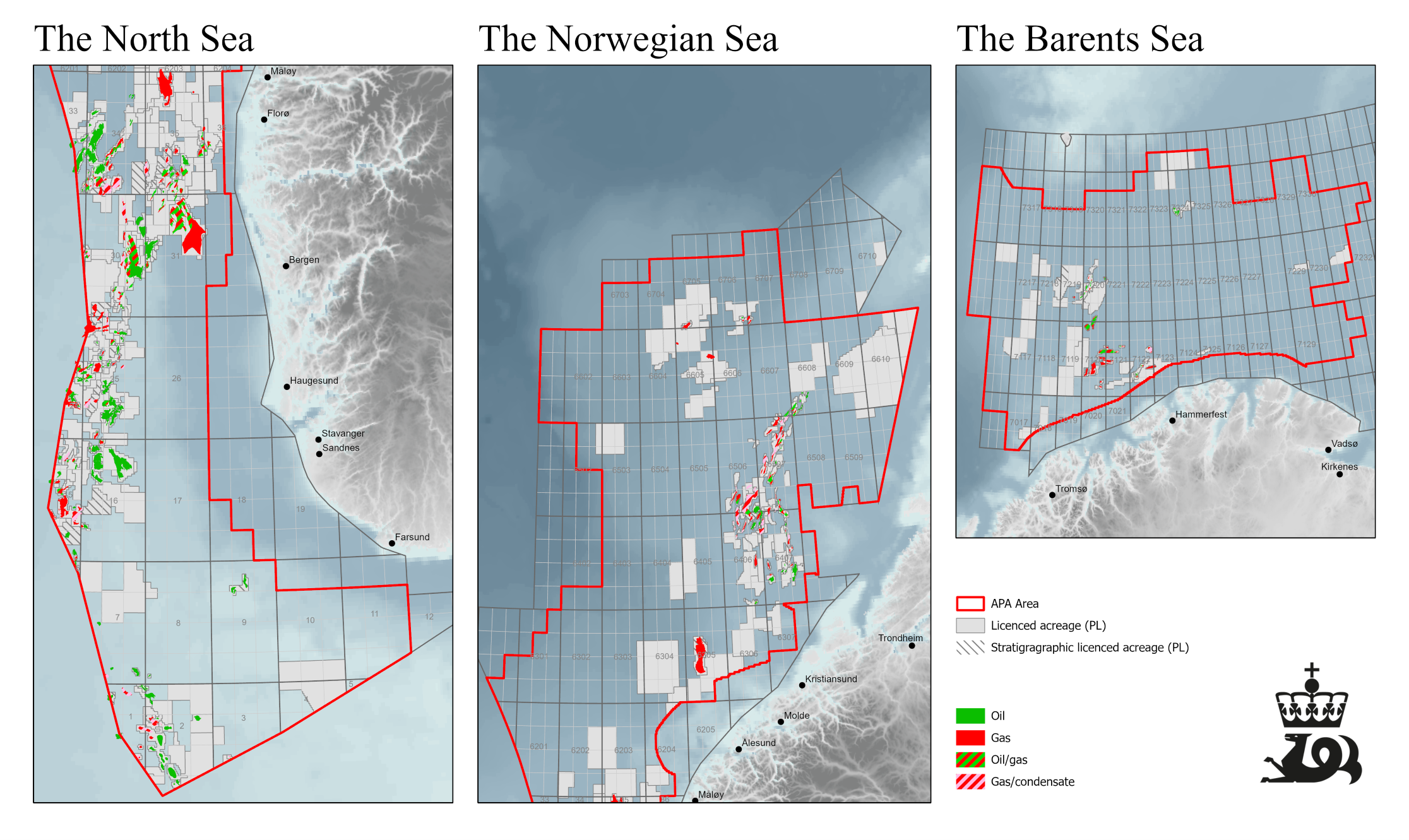
We will explore more, find more and extract more. Therefore, it is important to ensure that companies have stable access to exploration areas. Never before has a larger area been advertised in a licensing round. It is good for Norway and for Europe,” Energy Minister Terje Aasland said in a statement.

Further exploration and more discoveries are crucial to limiting the decline in production on the continental shelf after 2030. The expansion this year gives companies access to significant new acreage in the Barents Sea and we are thus even better positioned to clarify the resource base in the north,” added Aasland.

Comments:

  • This is a prudent policy decision that underscores Norway’s commitment to sustaining oil and gas production.
  • This should be good news for Equinor, which is 2/3 Norwegian govt owned and has made some ill-advised offshore wind investments.
  • Based on the Energy Minister’s quotes (above), one senses that Equinor’s wind investments, particularly those in the US, may not be fully aligned with Norwegian policy.
  • Is this a bit embarrassing for the UK, which has essentially been sanctioning its own offshore oil and gas industry? Only last week, Aasland met with his UK counterpart Ed Miliband and entered into a “green industrial partnership” (photo below).
from Upstream: NTB/SCANPIX photo

Read Full Post »

Scotsman letter

Industry sources tell us, authoritatively, that the North Sea could produce around half of all the oil and gas the UK will need up until at least 2050 – if new projects are developed. Meanwhile, as instead we shut down our existing wealth, China continues burning dirty coal and making us more dependent on their products.

As it stands, Offshore Energies UK (OEUK) says the UK is on track to produce just four billion of the 13-15bn barrels of oil and gas the country will need over the next 25 years.

It is time for those making decisions in London and Edinburgh to put away all the green zealotry nonsense and get the UK powerhouse moving again. Given 25 years they could make a good start on installing small, clean, nuclear plants dotted across the UK to help in great part to pick up the load.

We need planning, not zealotry. It is now even more clear the green emperor is not wearing clothes. When will Energy Secretary David Miliband be convinced?

Alexander Mckay

Edinburgh

And from an offshore worker @Deano9981:

As someone who actually works in the North Sea on oil rigs I have heard almost all my life how the oil and gas will be gone in 10 years. 35 years in this industry and the first time I am likely to be unemployed is because of the government. Not the end of oil fields.

Read Full Post »

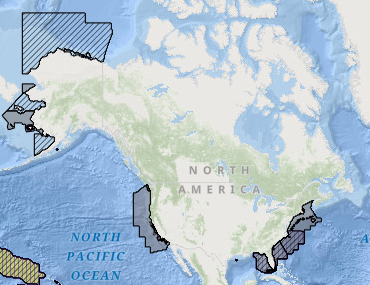
BOEM interactive map of areas where leasing is now prohibited (I.e everywhere but the Central and Western Gulf of Mexico and the Cook Inlet)

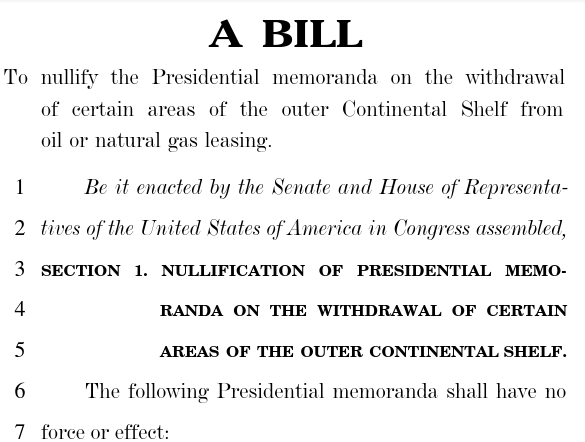
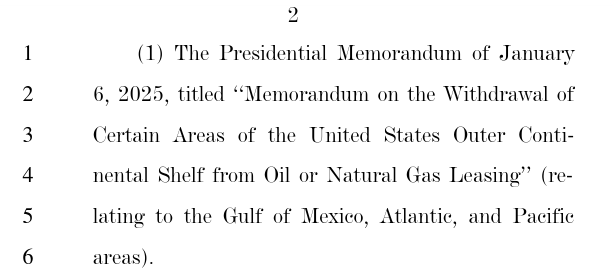
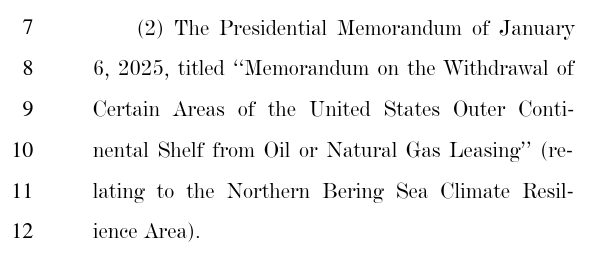
The Cruz-Arrington bill (pasted below), which would reverse the Biden oil and gas leasing bans, raises some interesting political questions:

  • Will Florida Republicans support this first step toward leasing offshore Florida, even if only tracts >100 miles from shore would be offered?
  • Will Mid- and South Atlantic State Republicans support the bill?
  • Will some Democrats, particularly those representing interior states, support the bill?

I suspect that the answer to each question is no, which means the bill will be difficult to pass.

If the bill should pass, President Trump would presumably nullify his own Atlantic and Eastern Gulf withdrawals, which would otherwise remain in effect through 2032.

50 wells were drilled in the Atlantic between 1975 and 1985. The drilling followed the oil embargoes, gas lines, and price surges in the 1970s. Waiting for similar turmoil to overturn the leasing bans would not be prudent given the time that is needed to issue, explore, and develop leases. The optimal approach would be limited, staged leasing to better assess the resource potential in these areas.

Read Full Post »

Sec. 12(a) of the Outer Continental Shelf Lands Act (OCSLA, 43 U.S. Code Β§ 1341(a)): β€œThe President of the United States may, from time to time, withdraw from disposition any of the unleased lands of the outer Continental Shelf.”

As previously posted, the Sec. 12(a) authority has been cynically exercised by Presidents from both parties and should be repealed or revised.

Unsurprisingly, there are now reports that President Biden intends to permanently withdraw large areas of the OCS from leasing consideration before he leaves office in 2 weeks. Apparently, the leasing ban will include large segments of the Atlantic, Pacific, and the eastern Gulf of Mexico.

Sec. 12(a) facilitates (encourages?) rash, politically motivated decisions that could have major long-term implications for energy security and the economy, and allows Presidents to ignore the deliberate, multi-phase review and comment process that has been established for making leasing decisions.

Note that Presidents have exercised this authority seven times. In every case, the action was taken just prior to the end of the President’s term in office.

Questions:

  • Can a President reverse a Sec. 12(a) decision made by a predecessor? That is a massive legal question that has yet to be fully considered by the legal system.
  • Could legislative action reverse a Sec. 12(a) decision? Yes, but such legislative action would be difficult to enact (just as it would have been difficult for any of the Sec. 12(a) withdrawals to have been enacted legislatively).
  • Is a revision to Sec. 12(a) being considered? Not that I am aware of. Given that the authority has been exercised by both parties and that strong opposition is likely, a revision would be challenging.

Related:

Read Full Post »

API is challenging the Dept. of the Interior’s 5 year oil and gas leasing plan, which includes the fewest lease sales in program history. That challenge was filed on 12 February, 60 days after Secretary Haaland approved the 5 plan and the first day appeals could be filed pursuant toΒ 43 U.S. Code Β§ 1349.

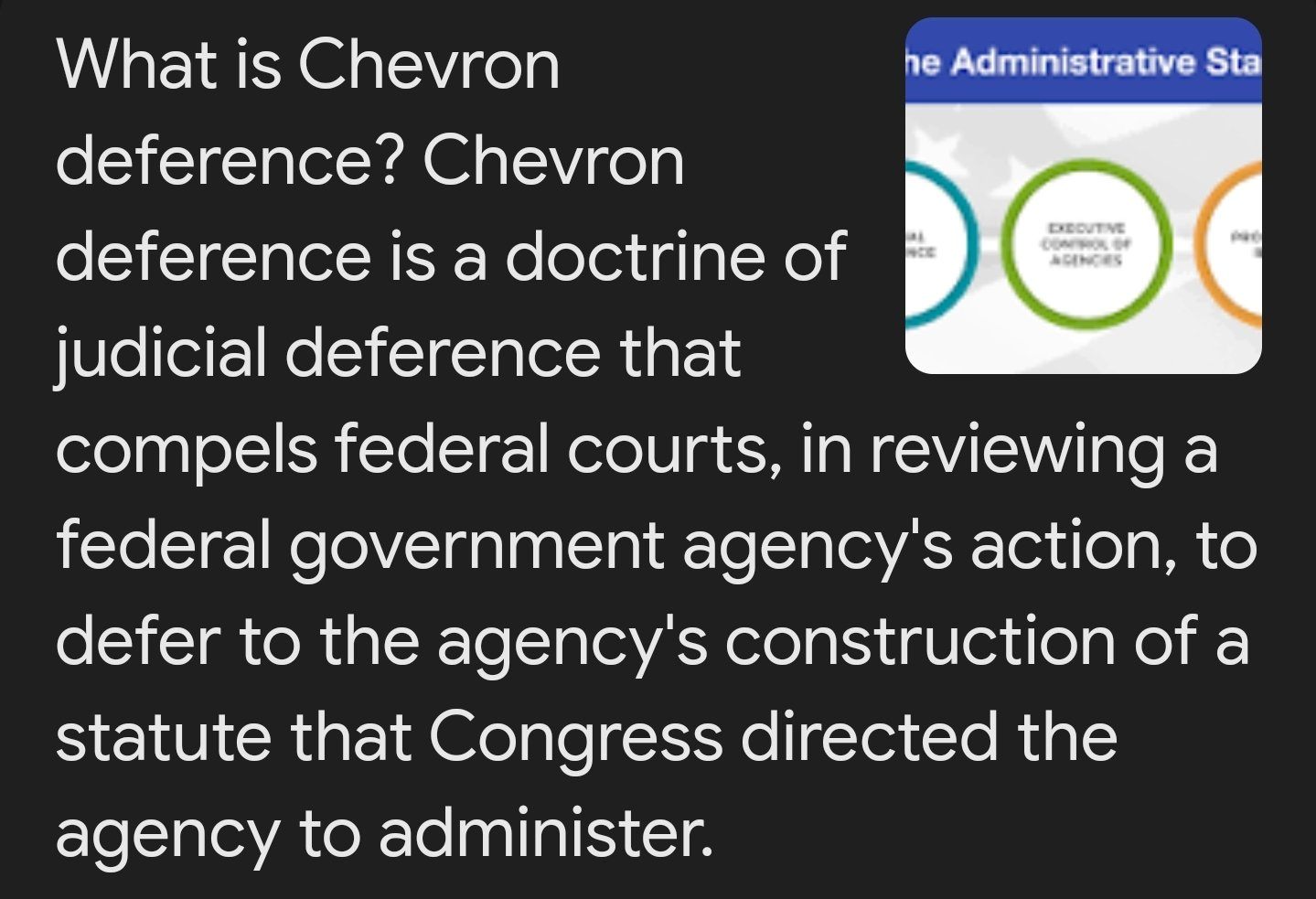
18 weeks after the API suit was filed, the Supreme Court overturned the Chevron Doctrine. That doctrine (described above) instructed judges to defer to agency interpretations when the language in a law was unclear.

Interior’s 5 year OCS oil and gas leasing plan provides for the fewest (3) lease sales in history and may not have included a single sale were it not for legislation prohibiting the issuance of offshore wind leases unless an offshore oil and gas lease sale was held during the prior year.

This unprecedented oil and leasing decision was based on “the need to confront the climate crisis through reducing greenhouse gas emissions” and on achieving “net zero pathways.” Neither of those objectives is articulated in the OCS Lands Act or other governing legislation.

Extending the Secretary’s general safety and environmental authority for OCS operations to include global climate considerations is a stretch and the type of interpretive administrative decision that the Supreme Court struck down.

Read Full Post »

(2) the Secretary may not issue a lease for offshore wind development under section 8(p)(1)(C) of the Outer Continental Shelf Lands Act (43 U.S.C.1337(p)(1)(C)) unlessβ€”
(A) an offshore lease sale has been held during the 1-year period ending on the date of the issuance of the lease for offshore wind development; and (B) the sum total of acres offered for lease in offshore lease sales during the 1-year period ending on the date of the issuance of the lease for offshore wind development is not less than 60,000,000 acres.

β€˜β€˜Inflation Reduction Act of 2022,” p. 646

Lease Sale 261 was held on 12/20/23. Absent legislative action, no wind leases may be issued after 12/20/24 unless another oil and gas lease sale is held prior to that date. Given that the minimalist 5 year oil and gas leasing plan, which is being challenged, does not propose a sale until 2025, wind lease issuance will likely be suspended at the end of the year. (Note: I wonder if the legislative restriction also applies to lease assignments from existing owners to new owners? Probably not, but that would be very significant given the current state of the offshore wind industry.)

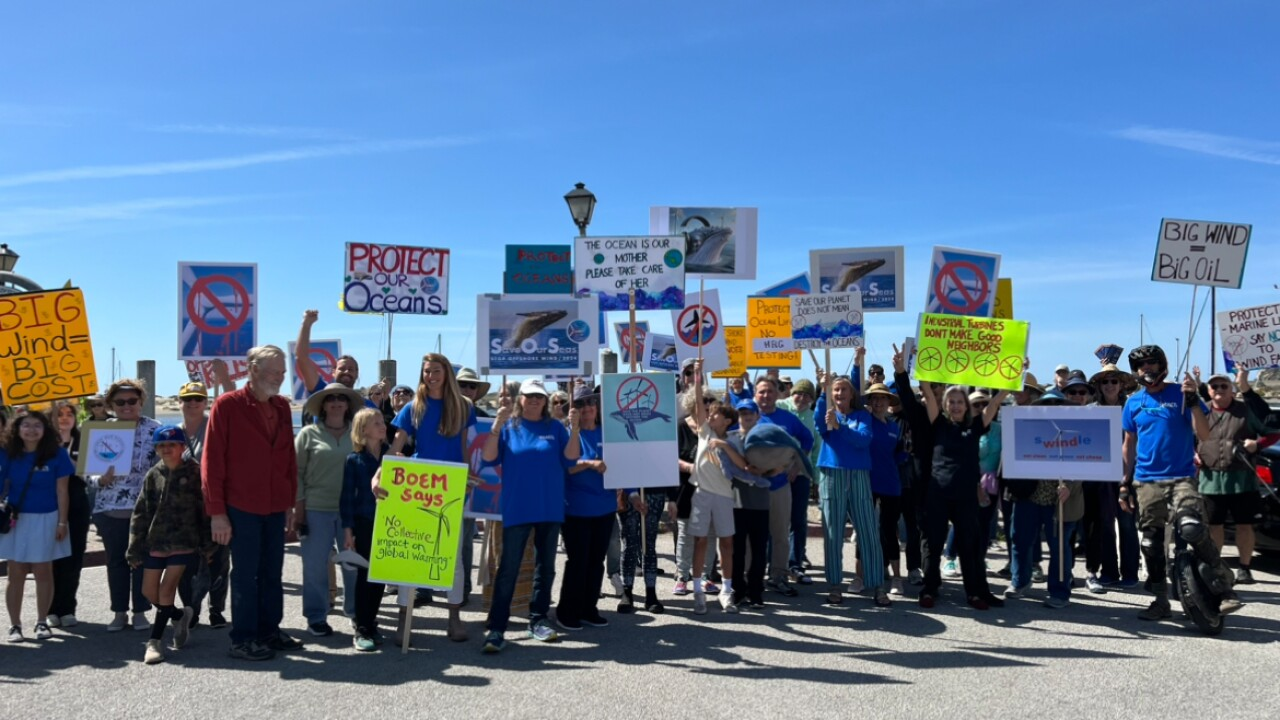
The legislative restriction may be a partial explanation for the apparent rush to issue wind leases. 16 new wind leases were issued in 2022 and 2023, bringing the total number of active leases to 36. The philosophy seems to be this: issue as many leases as you can, as fast as you can, wherever you can (ala James Watt’s failed strategy for the oil and gas program.) Coastal residents are not entirely thrilled.

Perhaps the wind program should be required to develop 5 year leasing plans, as is the case for the oil and gas program. This might facilitate a more holistic approach to wind energy development and ease concerns about cumulative impacts.

Morro Bay protest

Read Full Post »

The Gulf of Mexico and Norwegian branches of the offshore family have a long record of technological innovation and production leadership.

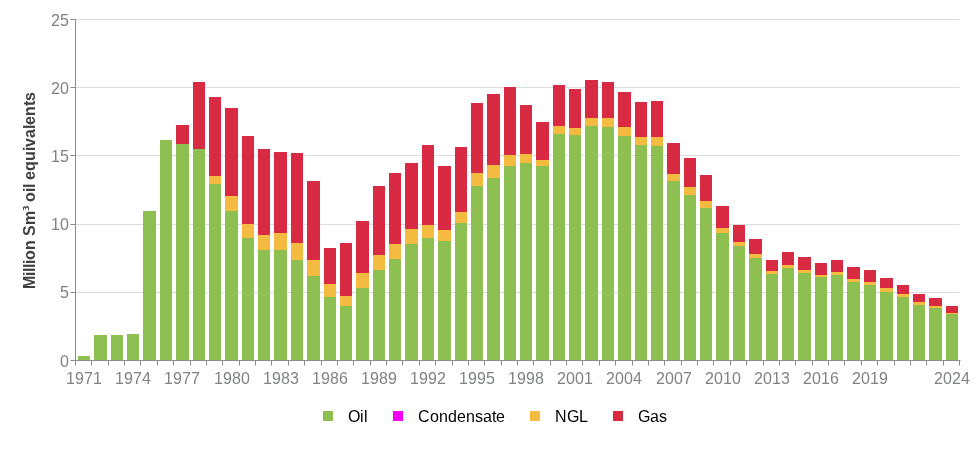
As a followup to our last GoM-Norway update, the respective oil production rates are presented below. The Gulf of Mexico now has a small edge as a result of new production from deepwater facilities.

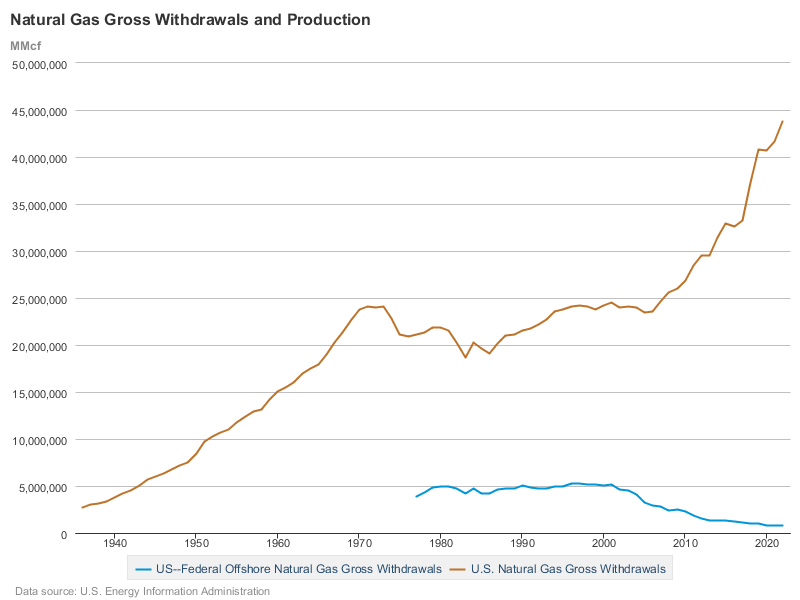
Natural gas is a different story, and Norway’s offshore gas production is much higher. US gas production (second chart below) has been dominated by the onshore sector since advances in horizontal drilling and well stimulation procedures triggered the shale gas revolution twenty years ago.

If you get a chance to visit Stavanger, the Norwegian Oil Museum is highly recommended. See the short video below.

Read Full Post »

Did you miss the boat on Guyana?πŸ˜‰ This may be a good opportunity. The risk-reward ratio looks pretty favorable.

Per the Energy Advisors Group:

  • Gaffney, Cline & Associates have audited the drill-ready target prospect with mean resources of 400 MMbbls
  • Standalone success on hitting the mean target is expected to achieve NPV10 of $2.5 billion at $60 oil
  • The test well cost is estimated to be $30 million and provides exposure to own a material interest in the entire license
  • The initial target is a carbonate platform and shows strong evidence of reservoir trap and intact seal, Cretaceous kitchen source and live oil seeps
  • Recent advanced seismic relative dispersion technical work provides further evidence of reservoir porosity and permeability, the presence of a seal, and additional reservoir potential
  • The License, formerly owned by Tullow, is well-supported by the Jamaican government with attractive fiscal terms

Read Full Post »

Good read.

Read Full Post »

Older Posts »