Feeds:
Posts
Comments

Posts Tagged ‘Gulf of Mexico’

After devastating South Florida during August 25, 1992, Hurricane Andrew struck Gulf of Mexico facilities the following day. Sustained winds were 140 mph with gusts to 160 mph, and significant wave heights were 35-40 feet. About 700 platforms were exposed to hurricane force winds. 241 platforms and 83 pipeline segments incurred substantial damage.

All workers had been evacuated from the offshore facilities without incident. Surface and subsurface safety systems performed as intended, and there were no uncontrolled flows from production wells. According to respondents to a JP Kenny survey for MMS, 2698 valves were closed during the storm as follows:

valve typeactivatedfailed
subsurface safety valves7160
master surface safety valves7295
wing surface safety valves4600
pipeline shutdown valve4150
pipeline check valve3780

The five MSSV failures were at facilities directly in the path of the eye in an area where the storm damage was most severe.

The valve performance reporting was associated with a research project and was thus voluntary. It’s therefore important to give credit to the companies that participated (a number of which no longer exist): Amoco, Aquila Energy, BP, Chevron, Four Star O&G, Gulfstream, Houston Expl., Kerr-McGee, Mobil, Pennzoil, Samedan, Shell, Sonat, Stone, Tennessee Gas PL, Texaco, and Unocal.

Also, in reviewing the survey responses it’s clear that there was some confusion about what to report. Most facilities were completely shut-in well ahead of the storm’s arrival and the survey requests information on valves that were shut-in (presumably automatically) during the hurricane. Reporting was therefore inconsistent, and the total number of shut-in valves was under-reported.

Read Full Post »

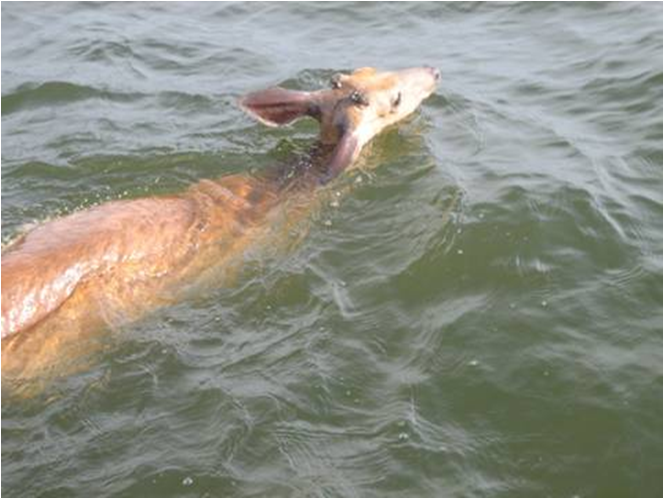
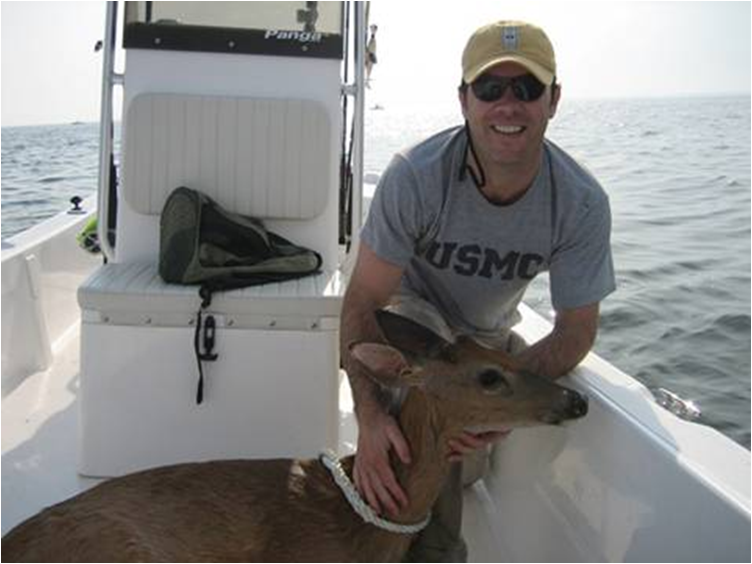
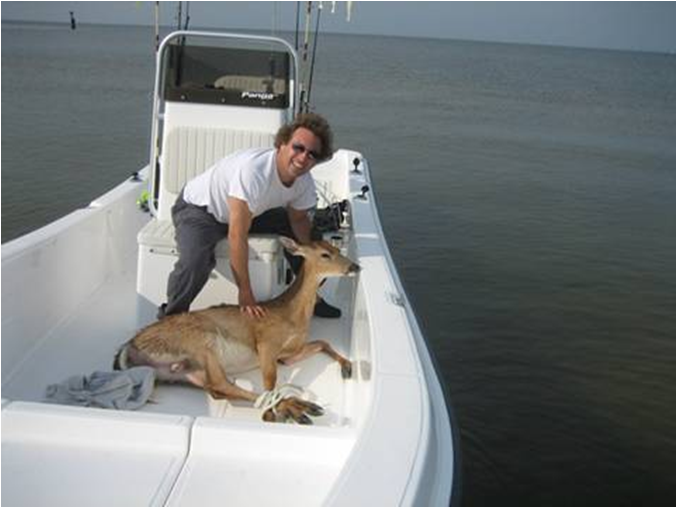
This deer was encountered 1.5 miles offshore during a fishing trip. The deer was brought to shore and released. Happy ending!

Read Full Post »

A small pipeline leak (estimated 2 bbl spill) at an onshore booster station is having a major impact on Gulf of Mexico production. Per Reuters, as much as 600,000 bopd could be temporarily shut-in. GoM production averaged 1.6 million bopd in May.

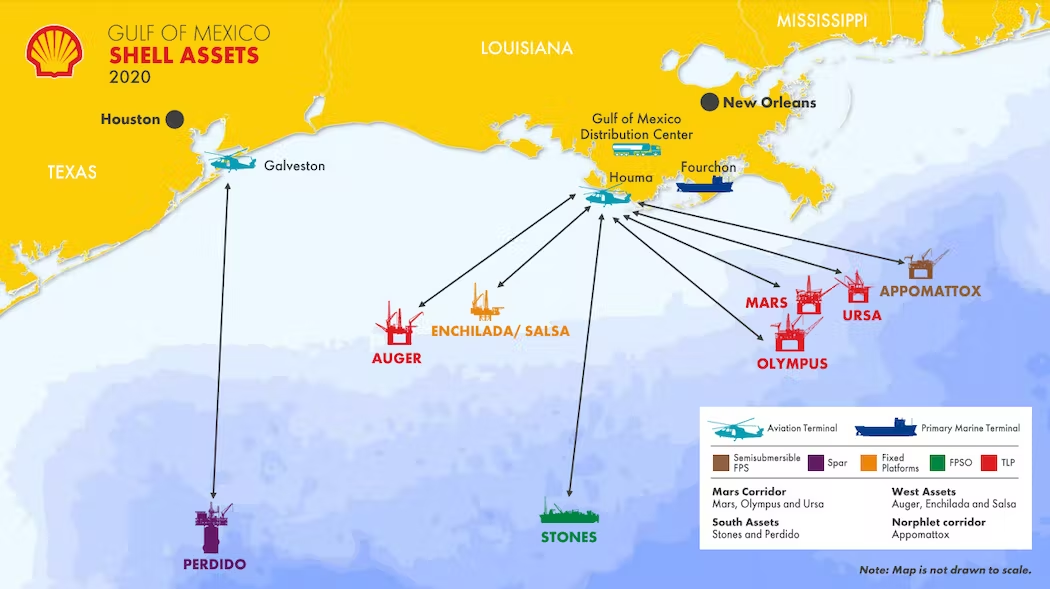
These major platforms are reported to be shut-in:

  • Shell: Mars, Ursa, and Olympus
  • Chevron: Jack/St. Malo, Tahiti, and Big Foot
  • Equinor: Titan

Shell, the pipeline operator, did not provide an estimate on the resumption of production.

Read Full Post »

Per our post on the first Gulf of Mexico OCS production, here is what has happened since:

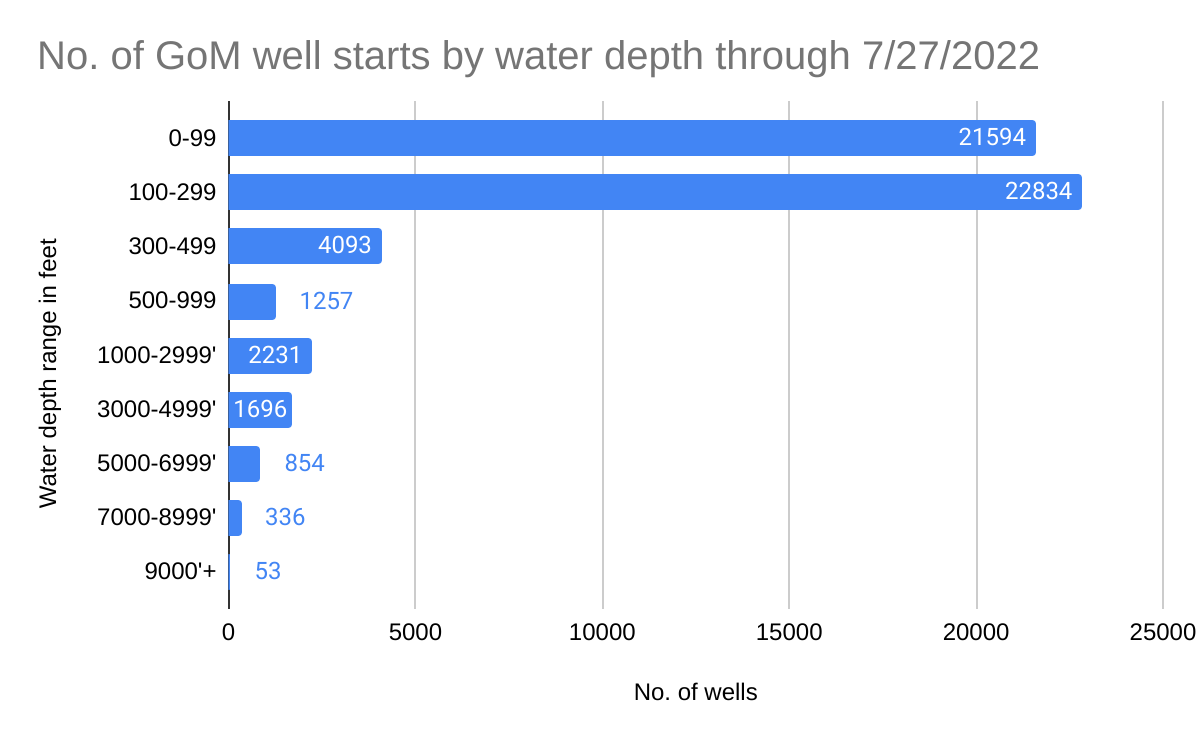
  • 54,948 wells drilled
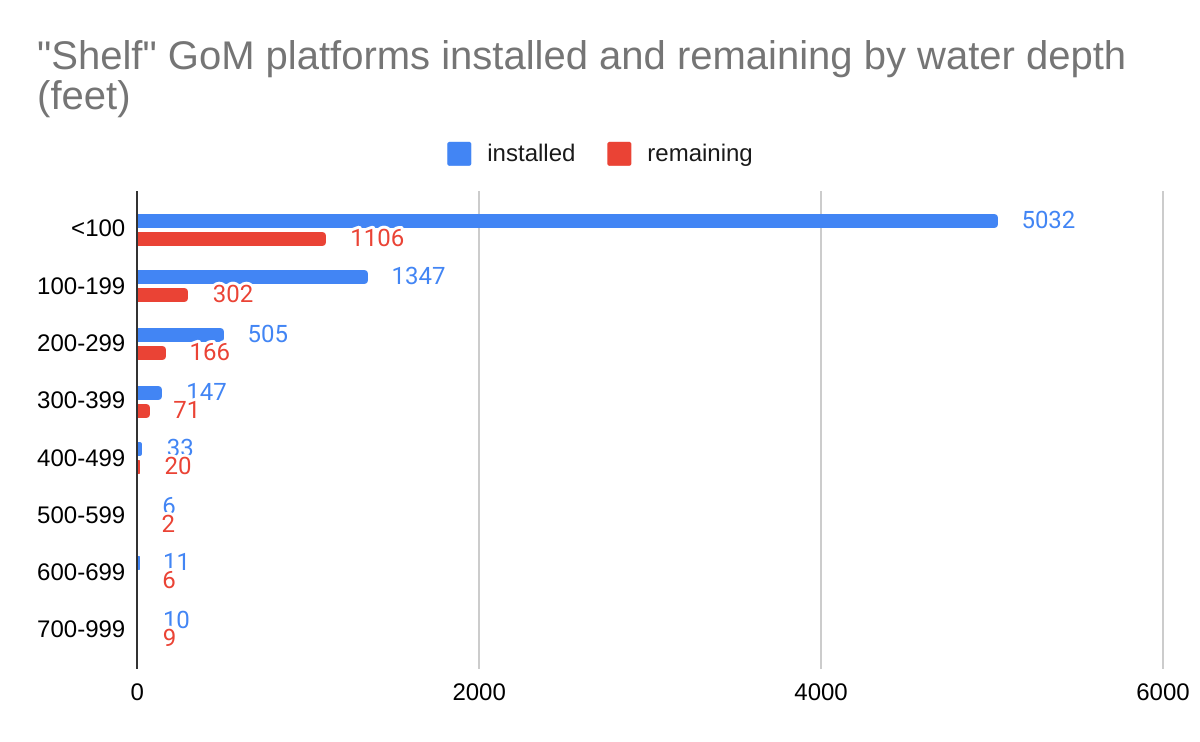
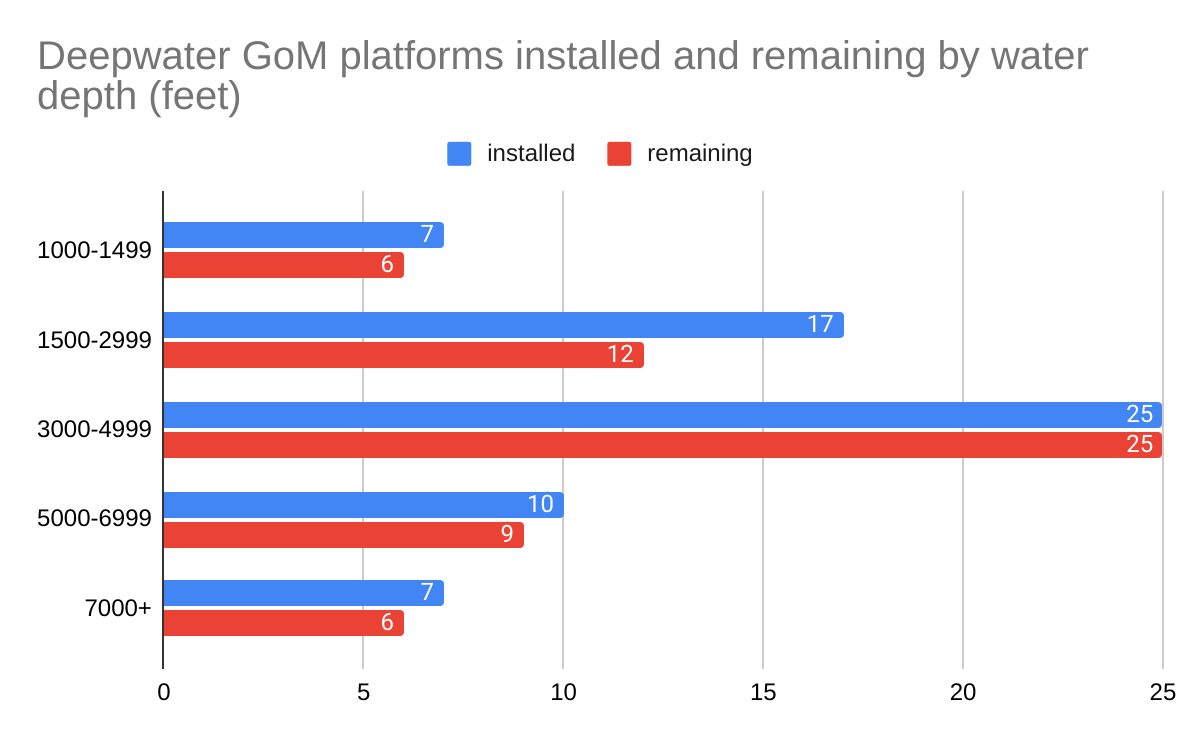
  • 7159 platforms installed; 1743 remain in place
  • 40,000 miles of pipeline installed (per GAO)
  • Deepest water depth well: 10141 feet, Murphy (2008)
  • Deepest water depth platform: 9560 feet, Stones (Turritella) FPSO, Shell
  • Total oil production: 1947-2022 YTD = 23.6 billion bbls
  • Total gas production: 1947-2022 YD = 190.1 trillion cubic feet
  • Max. annual oil production: 693 million bbls (2019)
  • Max. annual gas production: 5.15 trillion cu ft (1997)
  • 131 lease sales
  • 28,482 tracts leased

Except for the GAO pipeline estimate, all numbers are from BSEE and BOEM online data centers.

Read Full Post »

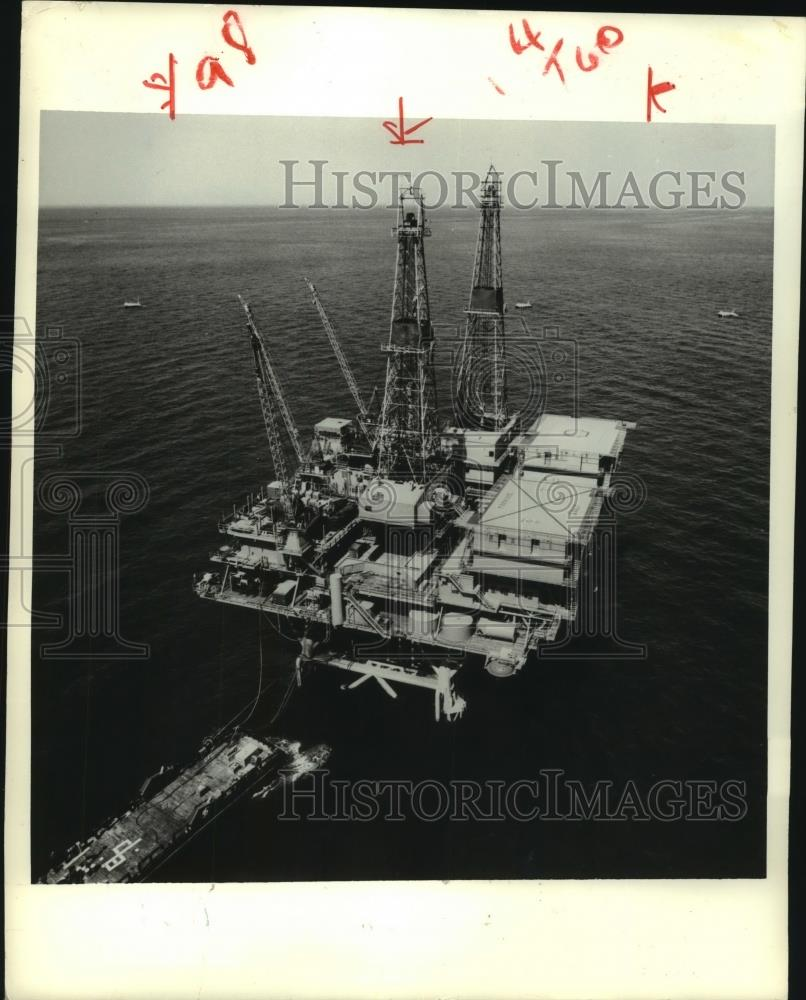
Kermac 16, Energy Global News
  • Located in Ship Shoal Block 32
  • Constructed by Brown & Root for Kerr-McGee.
  • Supported by sixteen 24-inch pilings, 104 feet of penetration
  • 2,700 square foot wooden deck (I recall reading that the deck had previously been used as a railroad bridge, but I can’t find the source.)
  • Withstood Category 5 hurricane a week after drilling began in 1947. (It must have withstood many more because BOEM’s platform file indicates that the platform remained in place until 1988. Other reports indicate that the platform produced continuously for 37 years.)
  • The platform was supported by an attendant barge that provided living quarters and equipment and materials needed for the drilling operations. This was reportedly the first drilling tender.
  • BSEE’s borehole file records indicate that 31 wells were drilled on this block beginning in September 1947.
  • BOEM’s production file shows initial production rates of 7000 to 10,600 bbls of oil per month. The accuracy of these old data is uncertain.
  • This was reportedly the first time drilling crews worked 12-hour tours for seven days and then rotated to shore for seven days off.

Read Full Post »

Foremost energy experts like Daniel Yergin understand that oil and gas will be critical to our economy and security for decades, and that offshore production is an important component of our energy supply chain. Unfortunately, our massive outer continental shelf has, from an oil and gas standpoint, been effectively reduced to the central and western GoM.

Opportunities in the GoM are being seriously constrained by the extended pause in leasing. A lease sale has not been held for 615 days, the longest US offshore leasing gap since the 1950’s.

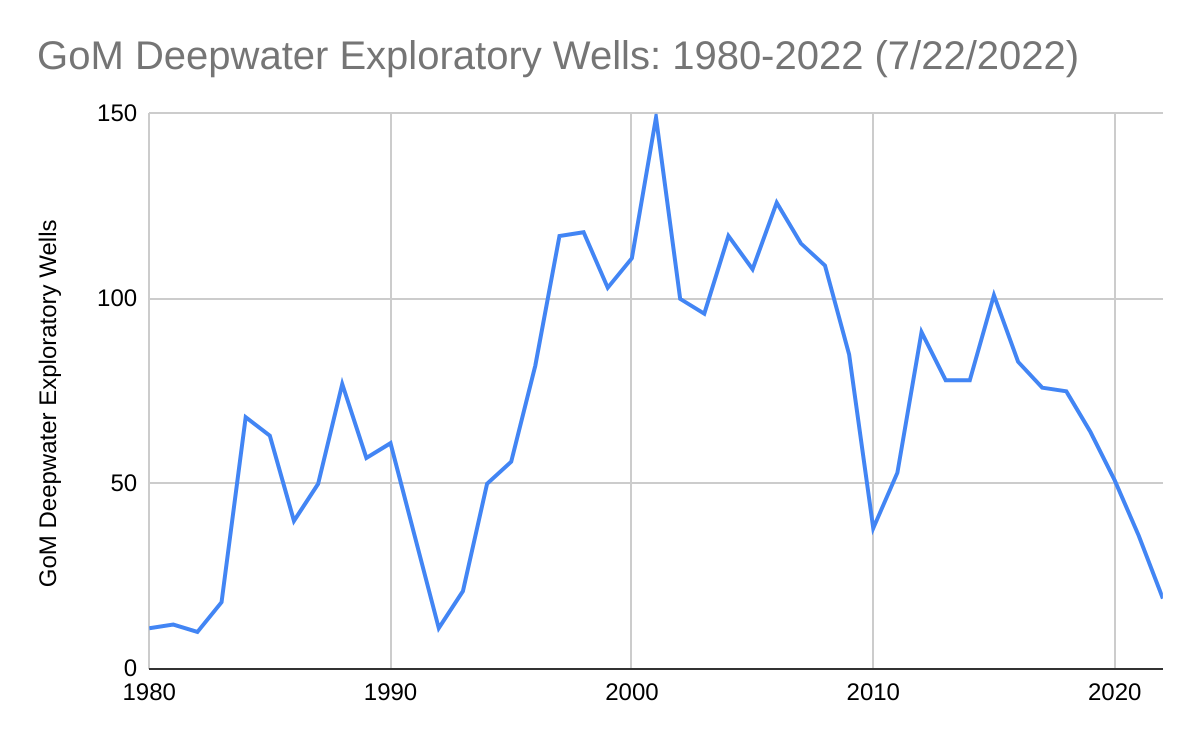
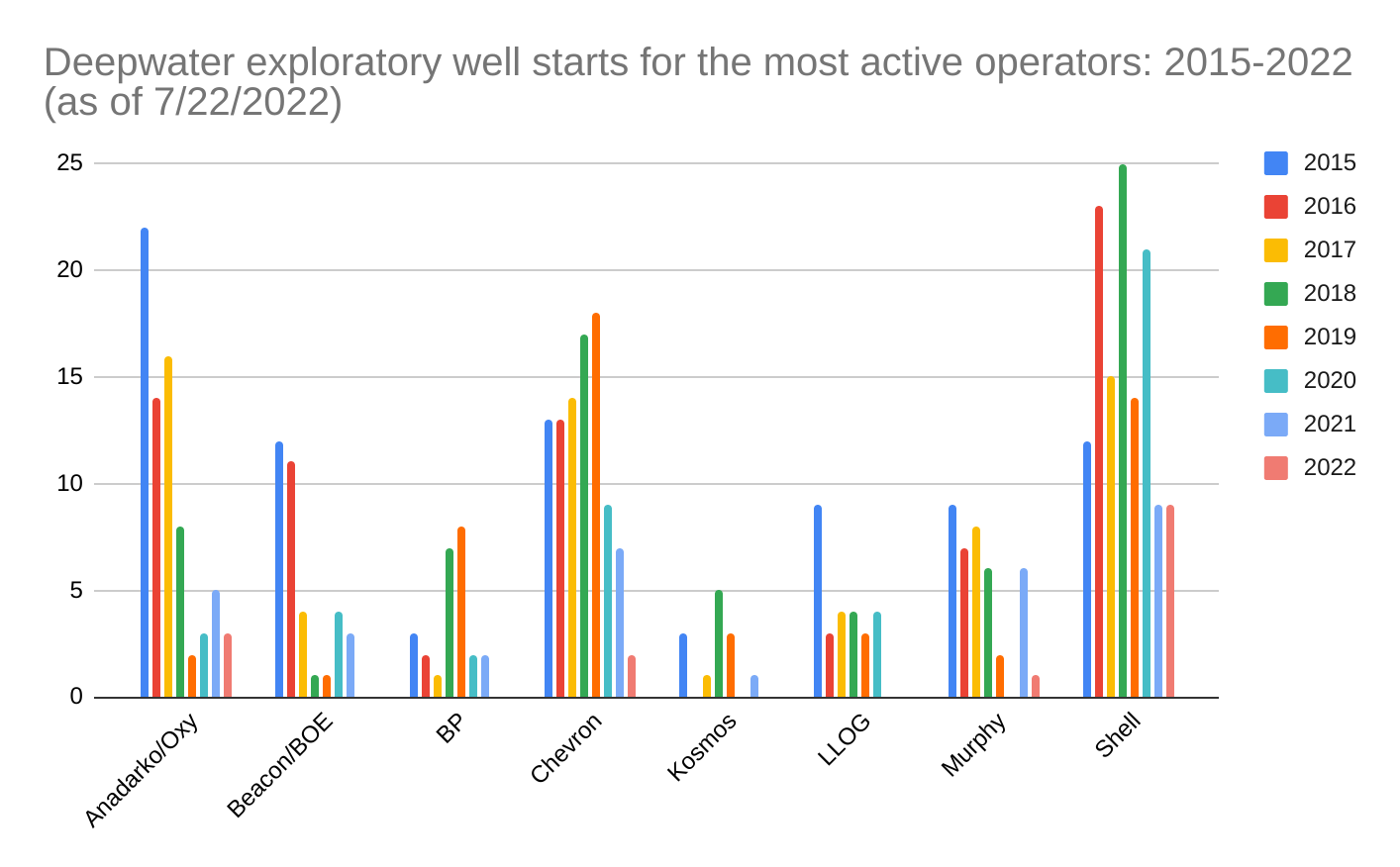
Reserve replacement and sustained production are dependent on exploration. The charts below illustrate the decline in GoM exploratory drilling and the reduced activity by some of the more important operating companies.

Per BSEE data, the number of exploratory well starts averaged only 3/month for the last 18 months (chart 2). This level of activity is the lowest since the early days of deepwater operations (chart 1). There was even more drilling during the post-Macondo moratorium (2010-2011).

ConocoPhillips and Exxon have not drilled a GoM exploratory well since 2016 and 2018 respectively. Activity by other operators has also declined significantly (chart 3). BP has not spudded an exploratory well since Sept. 2021.

No one should be surprised by the sharp decline in reserves and the dearth of recent field discoveries. Hopefully, government and industry will engage in a more thorough discussion of these trends and measures that might improve the intermediate and longer term production outlook.

chart 1
chart 2
chart 3

Read Full Post »

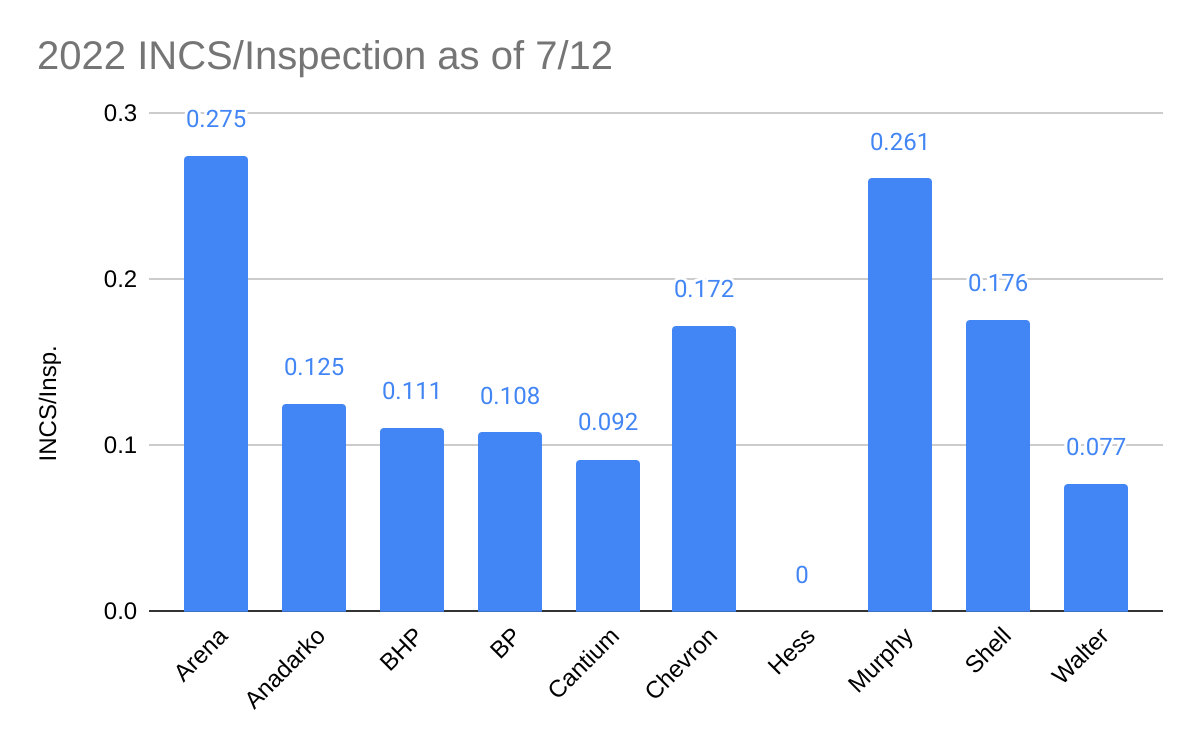
Operating companies (listed alphabetically): Arena, Anadarko (Oxy), BHP, bp, Cantium, Chevron, Hess, Murphy, Shell, and Walter

Criteria:

  • Must average <0.3 incidents of compliance (INCs) per inspection. (This is less than half the GoM 2022 YTD average of 0.64 INCs/inspection.)
  • Must operate at least 3 production platforms.
  • Must have drilled at least one well.
  • Pacific and Alaska operations will be considered in a separate post.

Comments:

  • Impressive performance by Hess: 21 inspections and no INCs
  • Cantium and Walter averaged less than 0.1 INCs/inspection. The INC rates for Anadarko (Oxy), BHP, and BP were only slightly higher.
  • Among the Honor Roll companies, Shell (highest production, 9 deepwater platforms, and 13 well starts) and Arena (115 shelf platforms and 12 well starts) were the deepwater and shelf activity leaders.They thus had the highest INC exposure.
  • Although CSI and FSI INCs are typically more significant than W INCs, that is not always the case, so the INCs have not been weighted by type.
  • As has been previously noted, more inspection data should be readily available online. At a minimum, the specific INC (type) numbers (e.g. P-103, G-110, etc) should be posted so the public can better assess performance. Absent this information, interested parties are left to speculate about the significance of the violations.
  • Incident data should also be considered in performance assessments. Unfortunately, the inexplicable lag in the posting of BSEE incident tables, precludes the use of these data in our analysis.

Compliance vs. Safety

While compliance is not synonymous with safety, most experienced observers believe there is a strong correlation. In the 1990’s, John Shultz, a PhD candidate at Carnegie Mellon Univ., studied US offshore facilities and safety data and developed expert and regression models to predict the likelihood of accidents and spills. That was a data rich era in that there were ~4000 US offshore platforms (more than twice the current number) and ~100 well starts/month (>10 times the current rate). In John’s thesis, he found that INCs are a very good predictor of accidents and spills. The offshore world has changed and further study of the correlation between compliance and safety performance is highly recommended.

Read Full Post »

Read Full Post »

“The two-well subsea development is producing, in combination, approximately 16,000 barrels of oil per day and 13 million cubic feet of gas per day via a 14-mile subsea tieback to the EnVen-operated Lobster platform in EW 873. First production was achieved less than three years after the initial exploratory discovery well was drilled.” 

LLOG

The project owners (below) are all independent producers and private equity firms. Houston Energy, LLOG, Red Willow, EnVen, and Beacon were also among the high bidders in Lease Sale 257, which was vacated by a questionable court decision that the Federal government chose not to appeal.

The companies responsible for these important projects (see “simpler, safer, greener”) that have or will soon initiate production were also active bidders at Lease Sale 257. The absence of leasing has thus seriously handicapped the companies most responsible for the production surge to over 2 million BOPD in 2019 and for sustaining the current Gulf production rate of 1.7 million BOPD.

Read Full Post »

Read Full Post »

« Newer Posts - Older Posts »