
Feeds:
Posts
Comments

Posts Tagged ‘oil reserves’

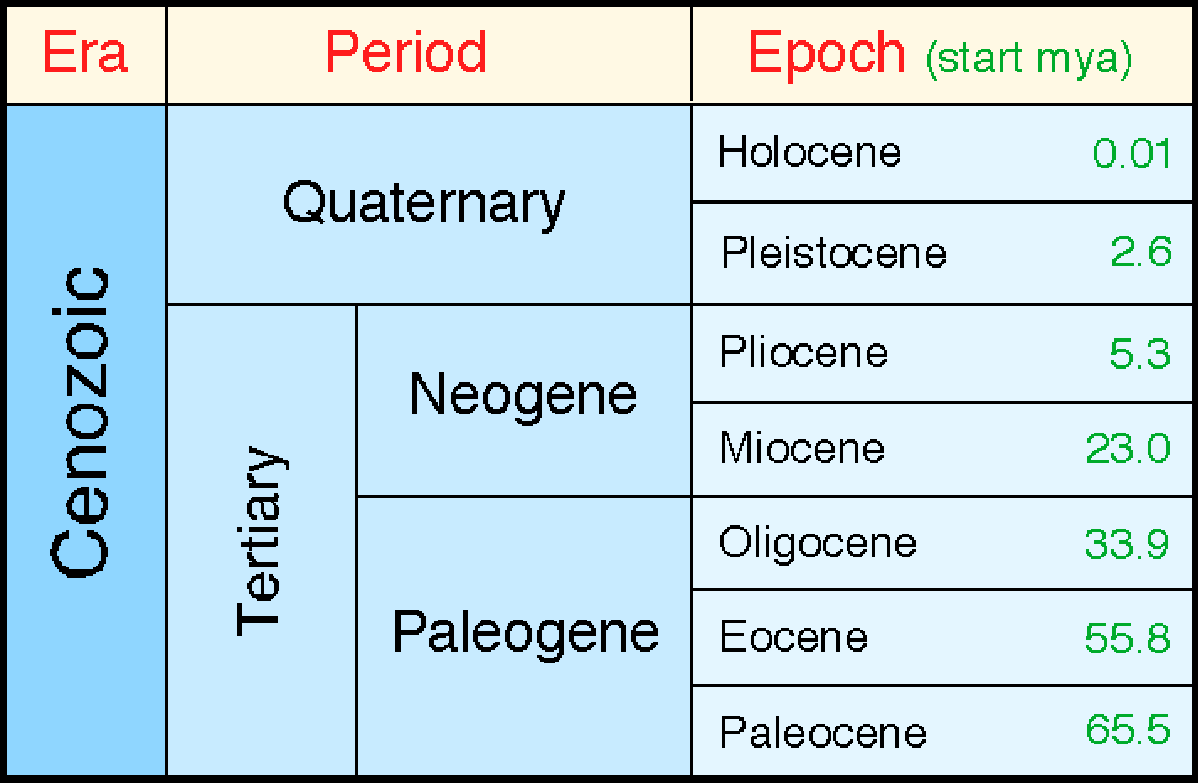
My colleague Keith Meekins shared an informative AAPG article about the importance of Miocene reservoirs in offshore oil and gas production worldwide.

“The Miocene delivered a significant amount of sand with excellent reservoir characteristics around the world,” noted Erik Scott, exploration geologist and consulting geologist/sedimentologist.

“Generally, hydrocarbons are coming from deeper, older rock – the Cretaceous, the Jurassic. By the time these source rocks get to the (hydrocarbon) generation window, the Miocene reservoirs are in place,” Scott said.

Generally, the Miocene deposits are surrounded by fine-grained muds that produced sealing potential,” he noted.

More:

  • Miocene reservoirs account for more than 40 percent of established hydrocarbon reserves in the deepwater Gulf. The Bureau of Ocean Energy Management identifies more than 9 billion barrels of undiscovered, technically recoverable Miocene resources.
  • Recently, Eni found a giant Miocene natural gas accumulation in the Kutei Basin offshore Indonesia with an estimated 5 trillion cubic feet of gas and 300 million barrels of condensate in place.
  • Azule Energy, equally owned by Eni and BP, made a recent Miocene oil discovery with an estimated 500 million barrels of crude offshore Angola.

Keith points to RTM (reverse-time migration) as an important factor in helping to unlock Miocene resources. RTM produces dramatically improved images below salt bodies and in areas of complex overburden. Per AAPG, Talos Energy used reprocessed RTM seismic to identify a bypassed Miocene fault-block closure in the Green Canyon Area of the Gulf. This structure had previously been invisible.
Read Full Post »

Foremost energy experts like Daniel Yergin understand that oil and gas will be critical to our economy and security for decades, and that offshore production is an important component of our energy supply chain. Unfortunately, our massive outer continental shelf has, from an oil and gas standpoint, been effectively reduced to the central and western GoM.

Opportunities in the GoM are being seriously constrained by the extended pause in leasing. A lease sale has not been held for 615 days, the longest US offshore leasing gap since the 1950’s.

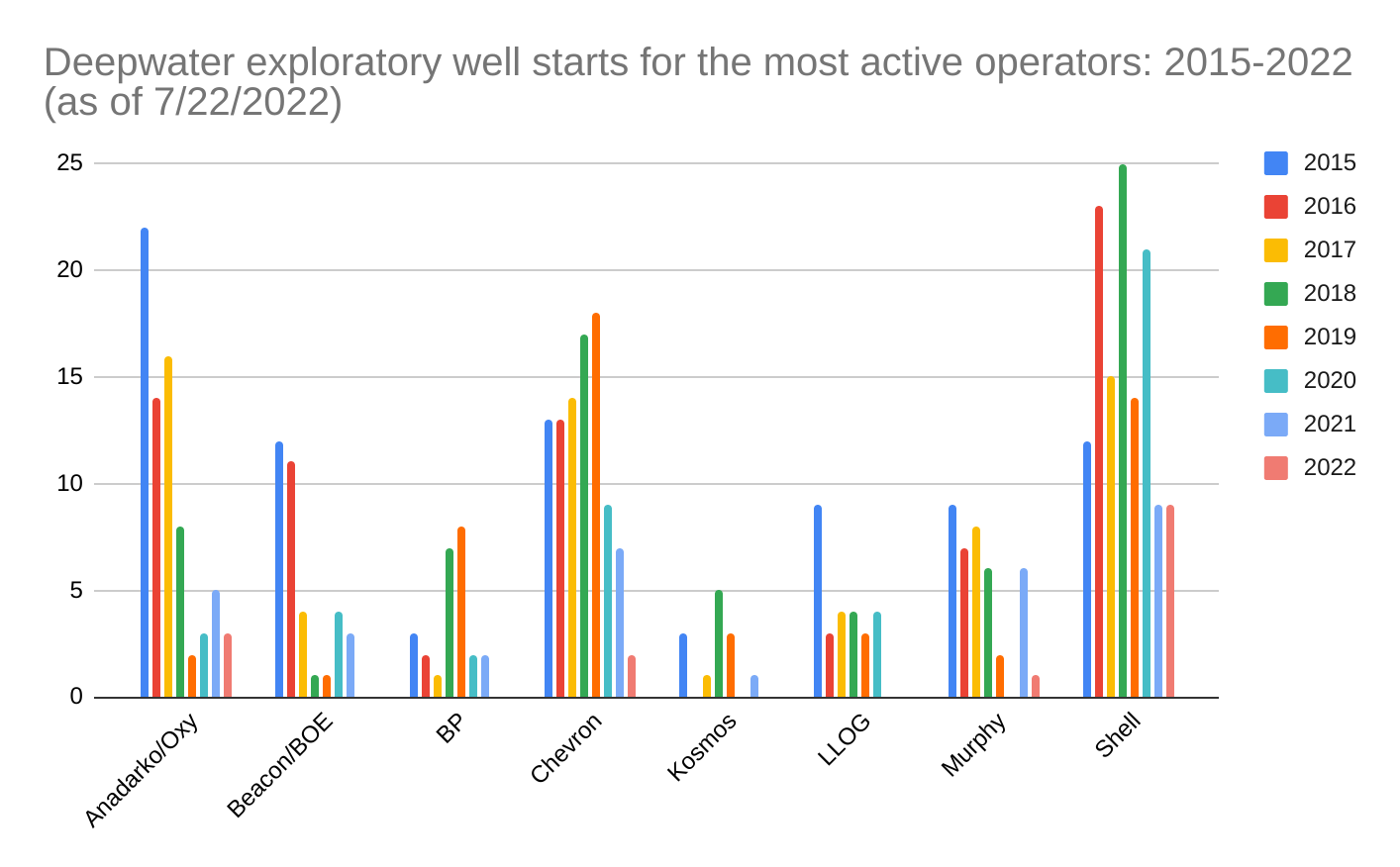
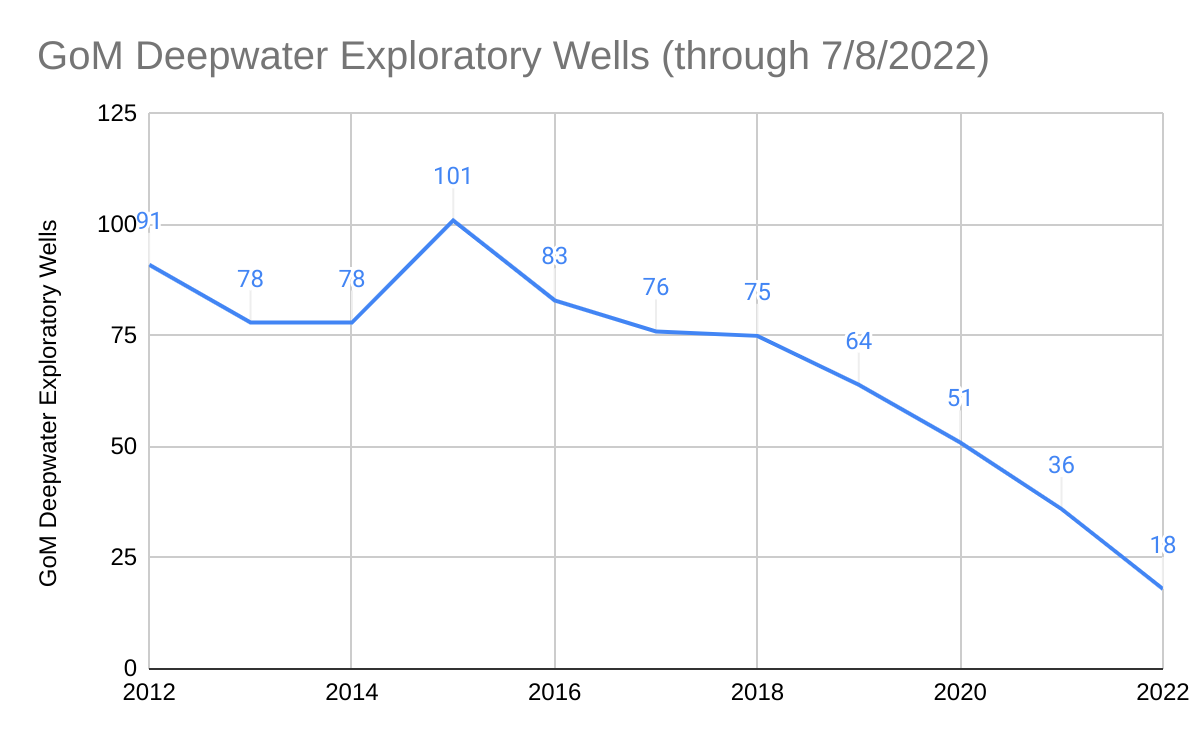
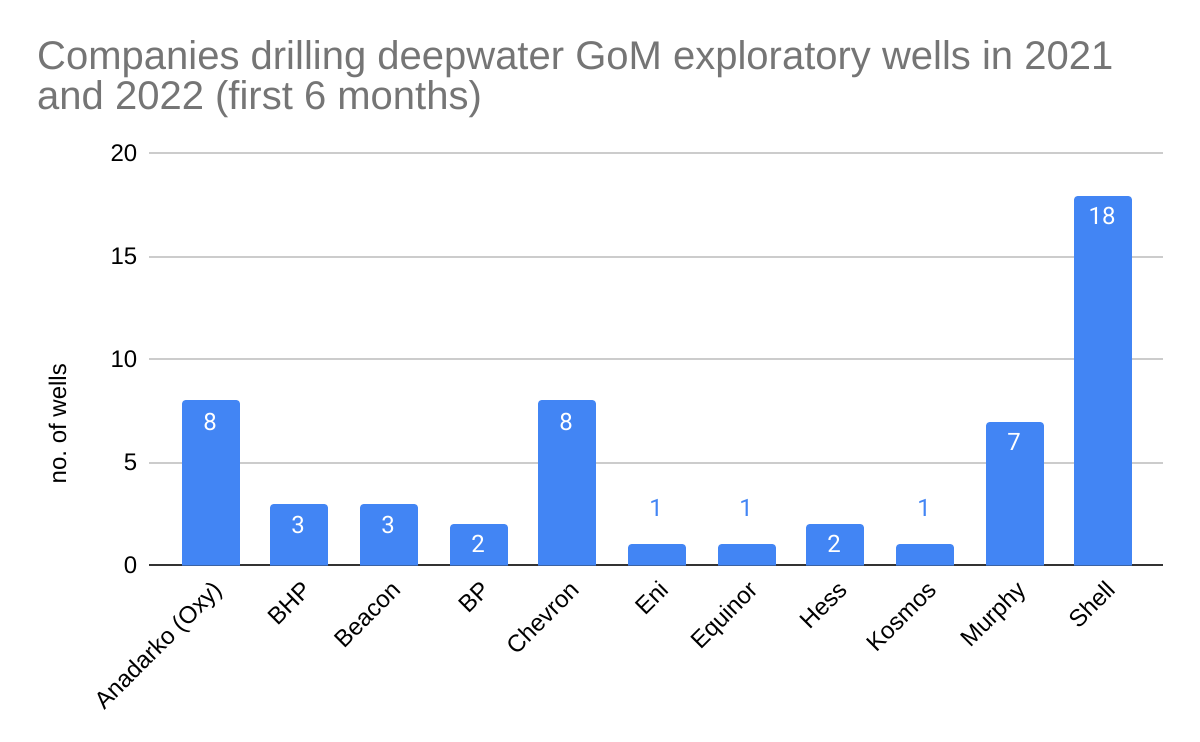
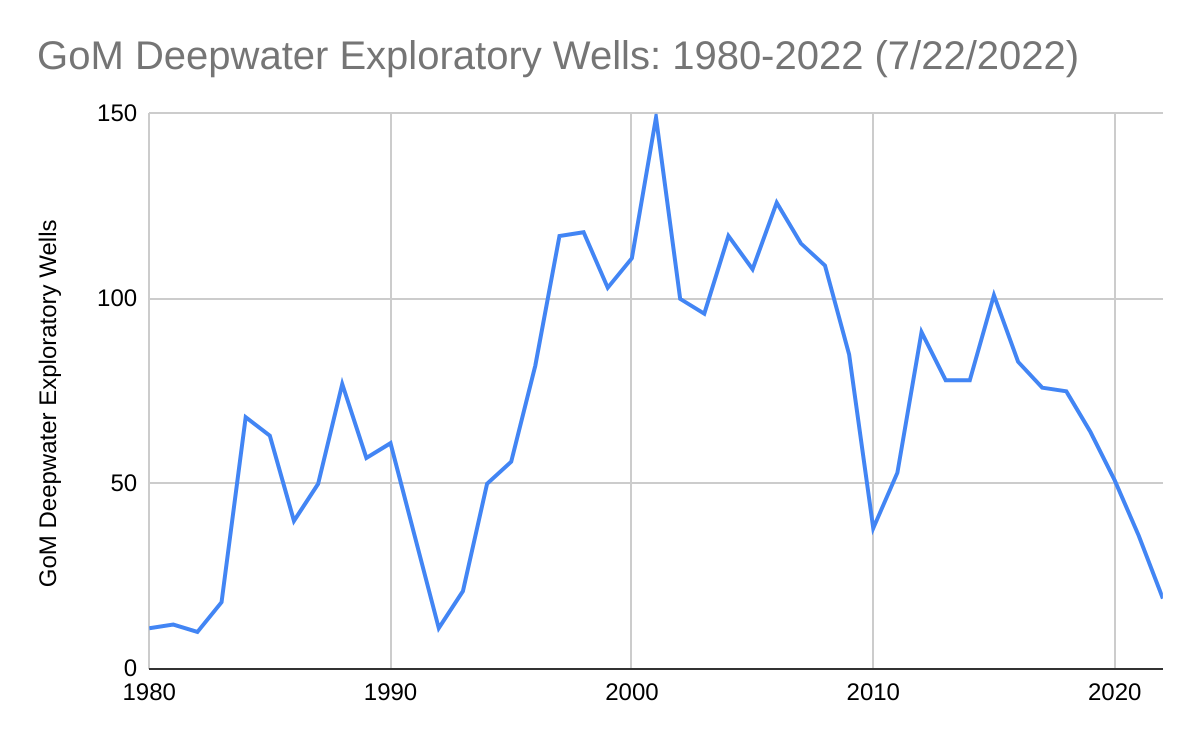
Reserve replacement and sustained production are dependent on exploration. The charts below illustrate the decline in GoM exploratory drilling and the reduced activity by some of the more important operating companies.

Per BSEE data, the number of exploratory well starts averaged only 3/month for the last 18 months (chart 2). This level of activity is the lowest since the early days of deepwater operations (chart 1). There was even more drilling during the post-Macondo moratorium (2010-2011).

ConocoPhillips and Exxon have not drilled a GoM exploratory well since 2016 and 2018 respectively. Activity by other operators has also declined significantly (chart 3). BP has not spudded an exploratory well since Sept. 2021.

No one should be surprised by the sharp decline in reserves and the dearth of recent field discoveries. Hopefully, government and industry will engage in a more thorough discussion of these trends and measures that might improve the intermediate and longer term production outlook.

chart 1
chart 2
chart 3

Read Full Post »

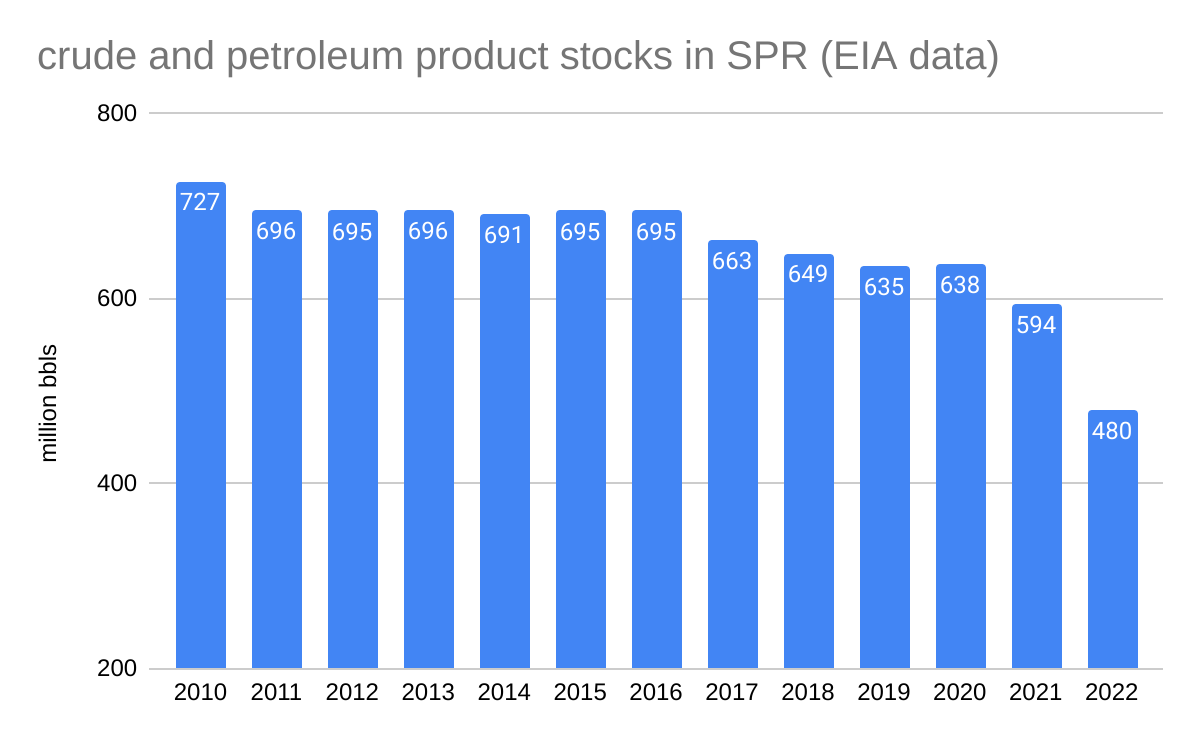
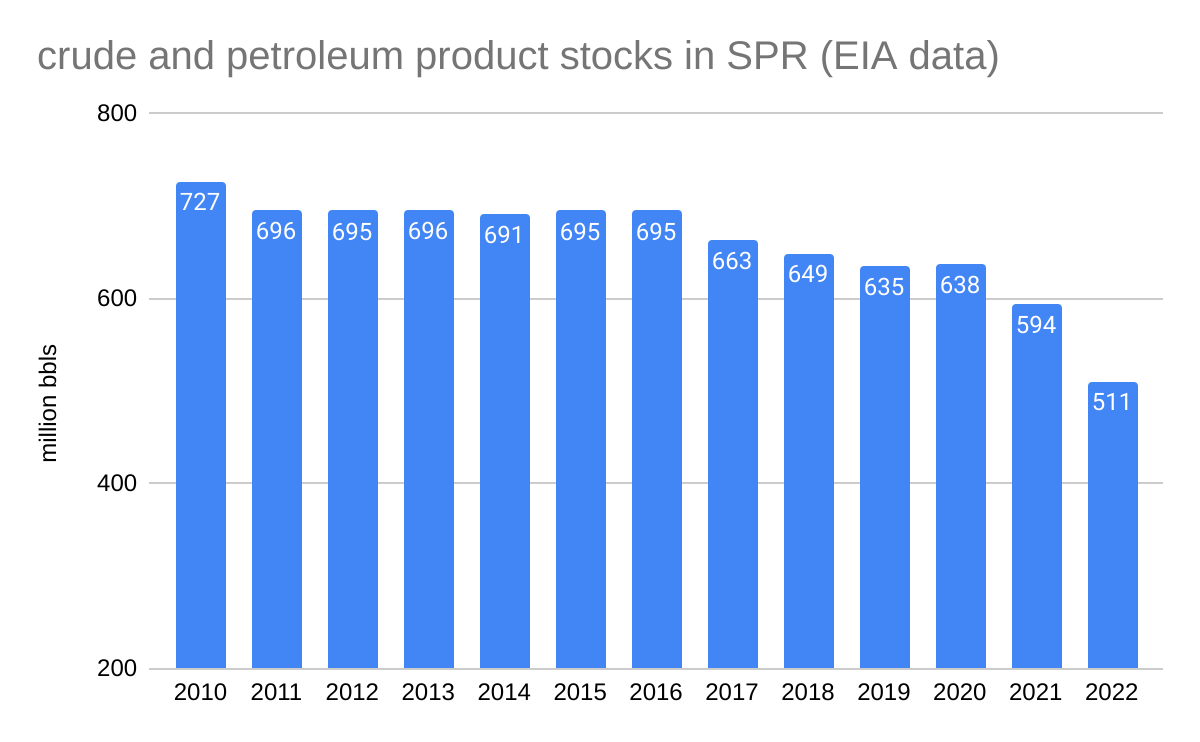
The SPR is down to 480.1 million barrels as of 7/15/2022. For prior years, the figures are year-end. See previous SPR post.

Read Full Post »

Per Rystad’s independent and highly regarded global energy assessment:

The (worldwide) drop in reserves is driven by the 30 billion barrels of oil produced last year, plus a significant reduction in undiscovered resources, to the tune of 120 billion barrels. The US offshore sector has contributed the largest total to that drop, where 20 billion barrels of oil will remain in the ground, largely thanks to leasing bans on federal land.

The decline in reserves should come as no surprise to those who follow the US offshore sector. Note the sharp decline in exploratory drilling in the (updated chart below) and the calls for action on this blog a year ago and more recently.

The OCS oil and gas program requires a sustained, consistent commitment by government and industry. Such a consistent commitment, even though required by legislation, is difficult to achieve in our political system, .

The proposed 5-year leasing plan portends further declines in the OCS program. Those who are celebating the progam’s downfall may not be so smug 5-10 years from now.

The commitment by the oil and gas industry has also been uneven and in some cases disappointing. BOE continues to be troubled by the reduction in exploration by some companies and the decision by others, including leading US companies with a long history of Gulf of Mexico operations, to exit the US offshore sector completely (see the chart below). The exploration decline began before the leasing shutdown (now 600 days in duration). Inconsistent signals from the Federal government and corporate directors, market considerations, and competing investment opportunities are major factors, but there are no doubt other considerations. Constructive dialogue to address these issues is badly needed.

Read Full Post »

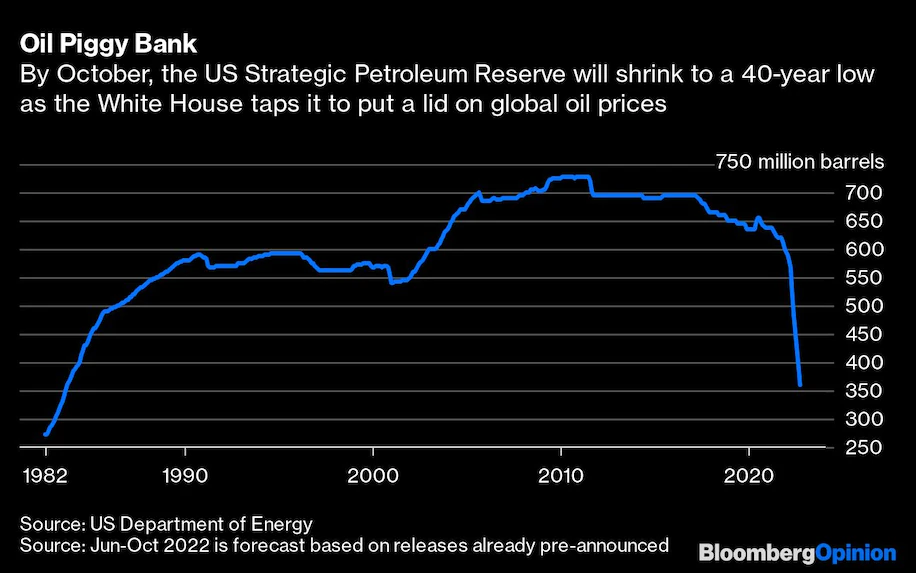
As of June, 2022
Bloomberg projection

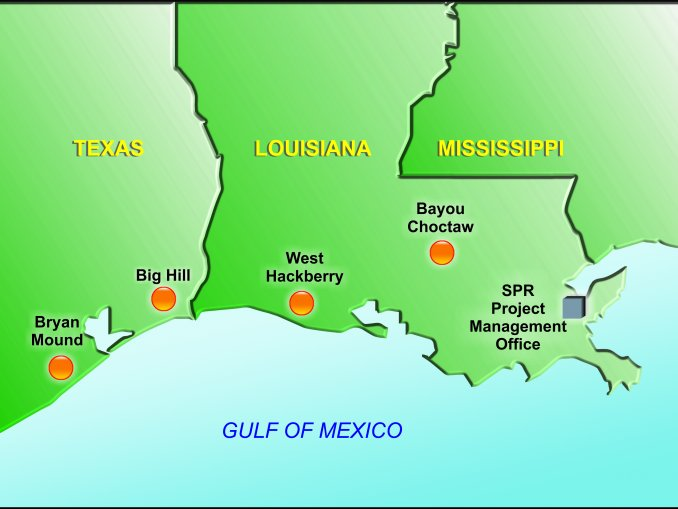
Meanwhile, no new leases have been issued in Federal waters immediately offshore from the SPR sites (see map below) for 580 days, the longest leasing gap since 1958.

Read Full Post »