Feeds:
Posts
Comments

Posts Tagged ‘Gulf of Mexico’

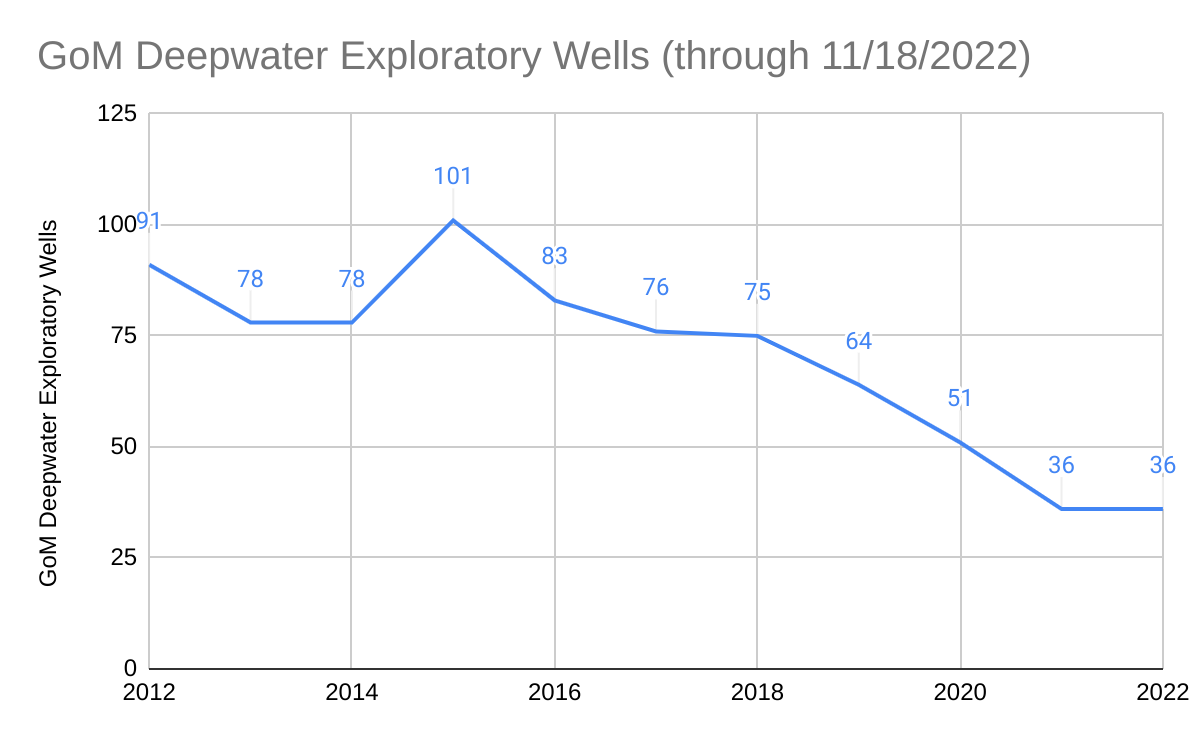
Was 2021 the low point? Hopefully that is the case, but consistent leasing is essential.

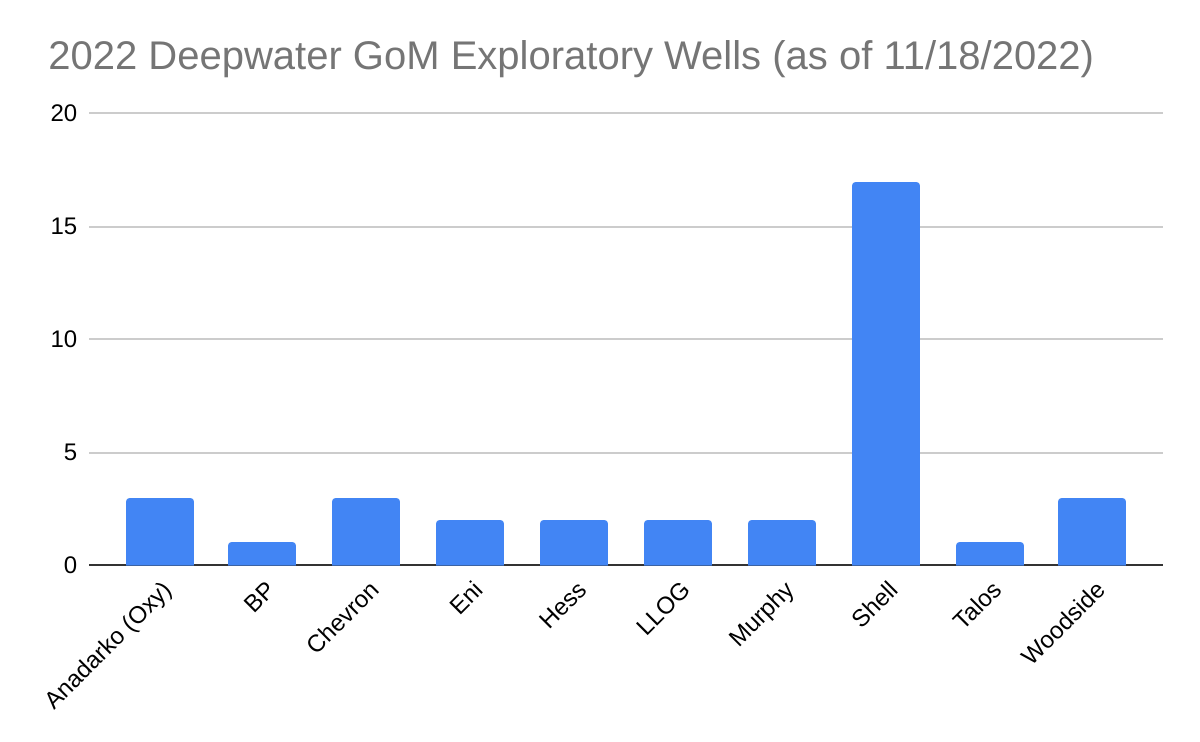
Looks like Woodside is now officially the GoM operator of record (was BHP prior to merger). Kudos to them.

Shell continues to be the GoM bellwether. There is no OCS program without them.

What’s up with BP and Chevron? Big declines from both.

US super-majors Exxon and ConocoPhillips remain out of the picture, both in terms of lease acquisition and exploration. Disappointing.

Tip of the hat to Hess, LLOG, Murphy, and Talos – independents committed to deepwater production.

Read Full Post »

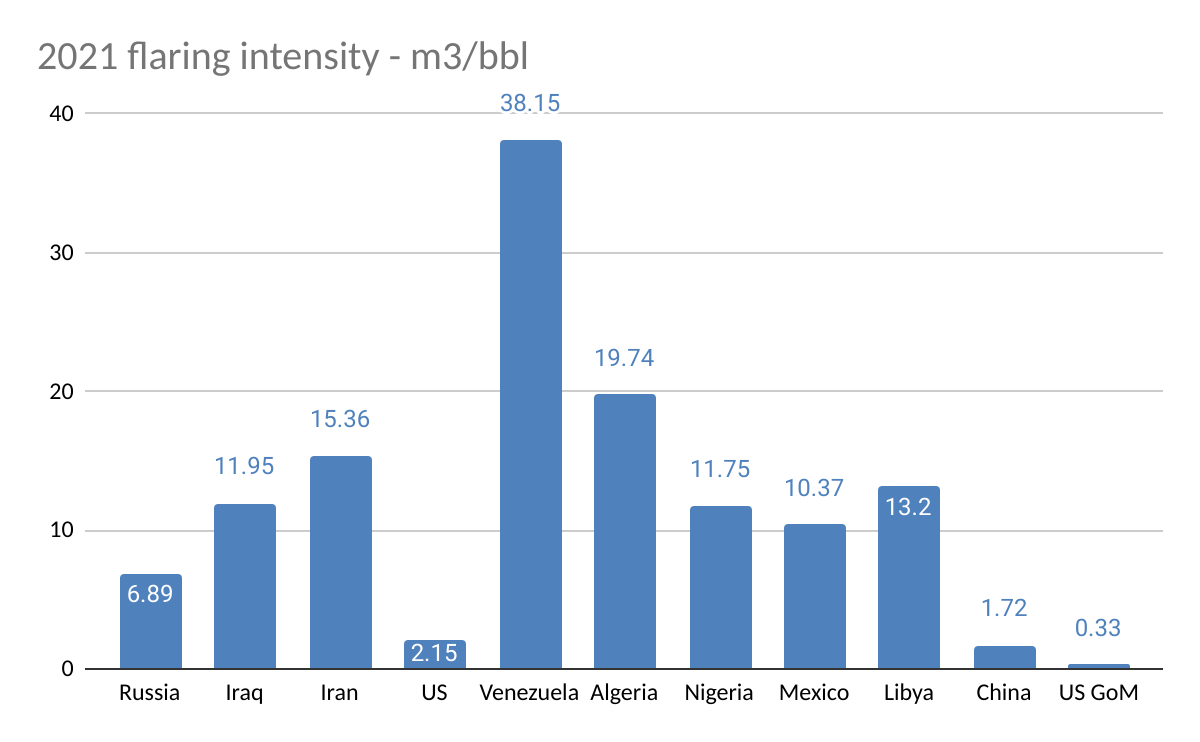
Using the World Bank’s worldwide flaring data and ONRR flaring and venting data for the GoM, I compared GoM flaring intensity for 2021 with that of the World Bank’s top ten flaring nations. This is just one example of why US offshore production is a preferred and vital component of our energy mix.

Further discussion: Kudos to the World Bank for their use of satellite data to estimate flaring volumes worldwide. Their primary performance indicator is flaring intensity (volume flared per bbl of oil produced). Absent better worldwide reporting regimes, satellite data are essential. However, there are issues with the World Bank’s system that merit further consideration:

  • Satellites miss some flares and vented gas (a more significant GHG concern) is not detected
  • A prior review of Gulf of Mexico data indicated that the World Bank flaring estimates are low.
  • The flaring intensity indicator penalizes higher gas-oil ratio (GOR) wells. Production upsets of the same duration yield higher flaring intensity scores at higher GOR facilities.
  • Associated gas is an environmentally favorable energy source that should not be discouraged. Most Gulf of Mexico gas production is now from oil wells. Efficient collection and utilization is the key.
  • There will always be some production upsets that result in flaring. The objective should be to minimize the % of oil-well and gas-well gas that is flared, irrespective of the amount of oil production. See the recent GoM summary data posted here and here.

Read Full Post »

BSEE’s temporary abandonment/decommissioning solicitation has been posted. Some details:

  • 14 wells to be decommissioned
  • 1 well to be checked to confirm temporary abandonment
  • Well depths: 2359′ to 11934′
  • Water depths: 70′ to 477′
  • 11 gas wells, 3 oil wells
  • Well completion dates: 2006-2008
  • Last production: 2010-2013 (Presumably, the short productive life of these wells either contributed to or was because of the lessees’ bankruptcies.)
  • $25,000😀 minimum to $100,000,000 maximum contract guarantee

If I was an offshore contractor, I wouldn’t touch this work without:

  1. Ironclad liability protection after the work is completed and inspected. A contractor should not inherit the perpetual liability that the lessees knowingly and willfully accepted when they purchased the leases and conducted operations; nor is the contractor responsible for the failure of industry and government to establish a financial assurance framework that protects the taxpayer from such liabilities.
  2. Protection against likely cost overruns related to the uncertain downhole condition of the wells.

Previous posts on this matter:

Taxpayer funded decommissioning – troubling precedent for the US offshore program

NOT a shining moment for the offshore industry

Read Full Post »

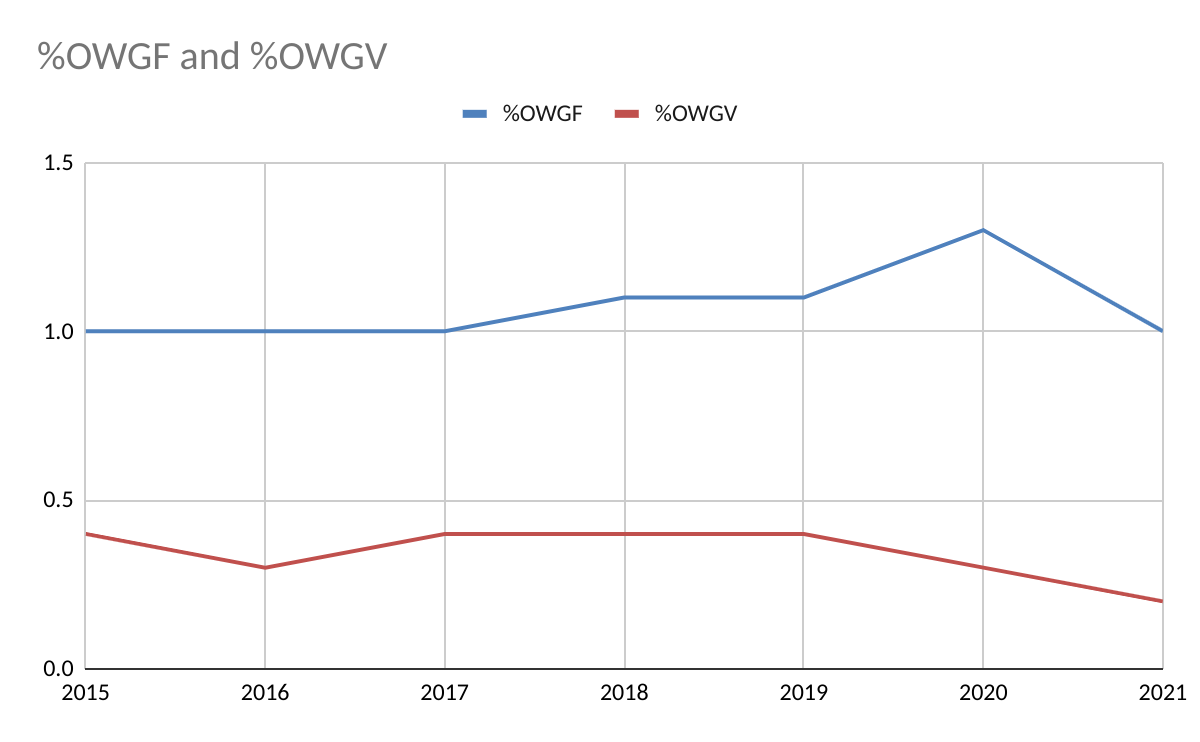
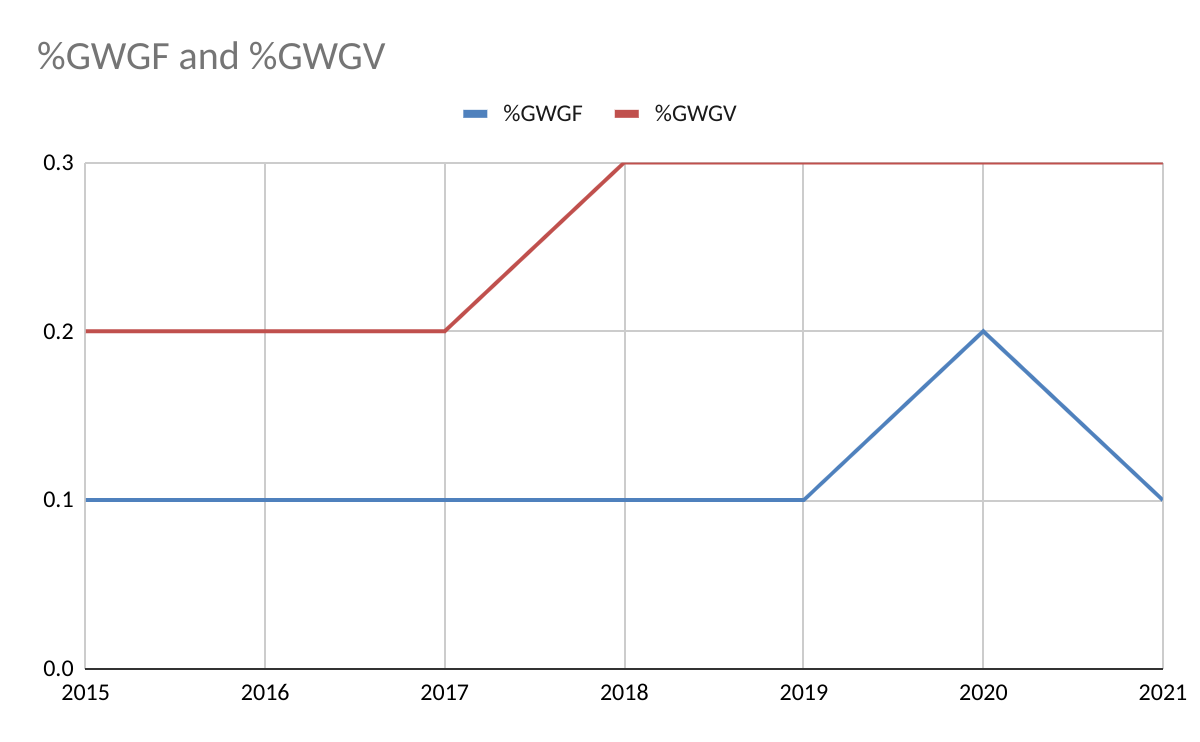
Gulf of Mexico flaring and venting data have been sorted for the years 2015-2021. The reporting of these data is mandatory and strictly enforced, so these ONRR numbers should be accurate.

Biggest surprise: The biggest surprise is that there were no big surprises in the data. The % of gas flared and vented were generally consistent with expectations based on familiarity with historical data.

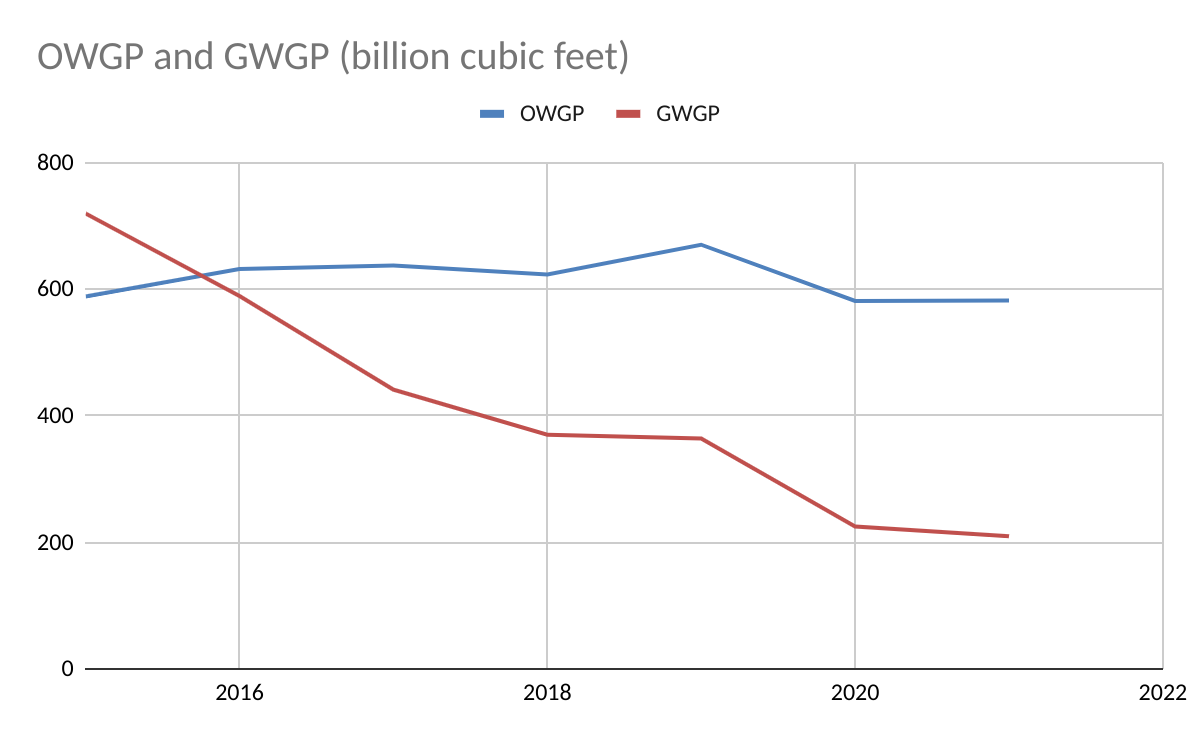
Biggest disappointment: the continued sharp decline in nonassociated (gas-well) gas production. GoM gas well gas production exceeded 4 tcf annually in the 1990s and was still above one tcf ten years ago. Since then, GWG production has declined by 80%. Nonassociated offshore natural gas has important environmental advantages, so the decline in production should be a major concern to policy makers

Encouraging sign: The % of oil-well gas vented has ticked down over the past 2 years which is encouraging from a GHG standpoint. This is presumably because most associated gas is produced on modern deepwater facilities equipped with flare booms. An astute politician would be rushing to take credit for this achievement.😀

Unfavorable ratio: Although the volumes are low (<1 Bcf combined in 2021), more gas-well gas was vented each year than flared. This is presumably because older shelf facilities without flare booms still produce much of the natural gas.

Abbreviations:

  • ONRR: Office of Natural Resources Revenue
  • GoM: Federal waters of the Gulf of Mexico
  • OWGP: oil-well gas production
  • GWGP: gas-well gas production
  • OWGF: oil-well gas flared
  • OWGV: oil-well gas vented
  • GWGF: gas-well gas flared
  • GWGV: gas-well gas vented

Read Full Post »

NASA has identified 50+ super-emitters of methane including sites in Turkmenistan (image below) that emit an estimated 111,000 pounds per hour.


By comparison, vented Gulf of Mexico methane emissions in 2021 totaled 1953 mmcf. This converts to 82 million pounds at atmospheric pressure and 60°F. The identified Turkmenistan sources would thus release the amount of methane in a month that all Gulf of Mexico facilities vent in a year (2021).

East of Hazar, Turkmenistan, a port city on the Caspian Sea, 12 plumes of methane stream westward. The plumes were detected by NASA’s Earth Surface Mineral Dust Source Investigation mission and some of them stretch for more than 20 miles (32 kilometers).

Read Full Post »

ONRR mandatory production reporting data are being sorted to assess GoM flaring and venting trends. This will help resolve inconsistencies previously identified. In the meantime, the table below summarizes the 2021 data. 1.03% of the gas produced that year was flared or vented. 0.25% of the gas production was vented.

Interestingly, more gas-well gas was vented than flared. This is presumably because older shelf facilities without flare booms still produce 25% of the gas (versus only 7% of the oil), mostly from gas wells. More to follow.

gas
production
flared (%)vented (%)flared &
vented (%)
OWG582,2045919 (1.01)1405 (0.24)7324 (1.26)
GWG209,779311 (0.15)548 (0.26)859 (0.41)
total 791,9836230 (0.79)1953 (0.25)8183 (1.03)
OWG=oil well gas; GWG=gas well gas; all volumes are in MMCF

Read Full Post »

Where is the leadership? Offshore decommissioning costs should never fall on the taxpayer. See the attached notice (excerpt below) and a previous post on this topic.

BSEE intends to execute a multi-award IDIQ Quantity Contract inclusive of a Base Year and Four (4) Option Years; however, the government reserves the right to award the IDIQ contract to a single firm. Time & Material, Labor Hour, and/or firm-fixed price task orders will be awarded for Decommissioning Services necessary to take nine (9) orphaned facilities, located in the OCS of the Gulf of Mexico, to the point of Temporary Abandonment (TA). The estimated decommissioning cost for temporary abandonment is $10,000,000 to $20,000,000.

Read Full Post »

Some production has already resumed as BSEE reports that 157,706 BOPD were shut-in as of 12:30 pm ET today, down from 190,358 in yesterday’s report.

Read Full Post »

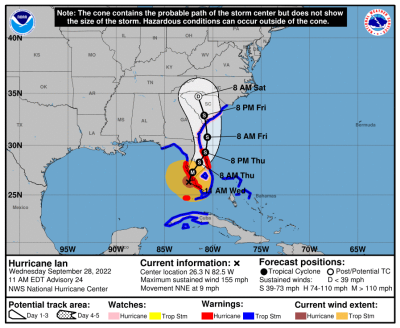
190,358 BOPD shut-in as of 12:30 p.m. ET today. Presumably, most of the shut-in production is associated with the major deepwater platforms mentioned in our previous post. Given the projected storm track, these shut-ins should be brief.

Read Full Post »

Sept 22 (Reuters) – Talos Energy Inc (TALO.N) said on Thursday it will buy EnVen Energy Corp, a private producer in the deepwater U.S. Gulf of Mexico, in a $1.1 billion deal including debt.

As the data below demonstrate, this is a significant merger from a regional perspective. In 2021, the combined company would have been the sixth largest GoM producer of both oil and gas. The two companies are operating 105 platforms, and their 8 deepwater (>1000′) platforms are 14% of the GoM total. Their compliance records, while not at Honor Roll levels, are better than the GoM average based on INCs/inspection. Some major decommissioning projects loom (see the second table below), and the extent to which the merged company is financially prepared for these obligations is unknown. Particularly noteworthy is the Cognac platform, which was the world’s first platform installed in >1000′ of water.

EnVenTalos
2021 Oil (MMbbls)9.617.5
GoM oil rank137
2022 Gas (Bcf)12.634.8
GoM gas rank169
2021/2022 well starts88
platforms: total1491
platforms >1000′44
BSEE inspections37176
2022 INCs (W, CSI, FSI)12/4/138/23/10
INCs/inspection0.460.40
INC=incident of noncompliance; W=warning; CSI=component shut-in; FSI=facility shut-in

Decommissioning obligations of note:

Platformownertypewater
depth
(ft)
installed
Amberjack Talosfixed11001991
VK 989Talosfixed12901994
Ram PowellTalosTLP32161997
GC 18Talosfixed7501986
CognacEnVenfixed10231978
LobsterEnVenfixed7751994
BrutusEnVenTLP29002001
PrinceEnVenTLP15002001
Cognac platform

Read Full Post »

« Newer Posts - Older Posts »