Feeds:
Posts
Comments

Leslie Beyer, Assistant Secretary for Land and Minerals Management (ASLM), has stepped down from her post as the leader of the Dept of the Interior’s offshore energy programs. She was the senior official at this month’s BGG1 lease sale, and made strong remarks about the importance of the offshore oil and gas program. Ms. Beyer was confirmed by the Senate in September.

Lanny Erdos, Director, Office of Surface Mining Reclamation and Enforcement, has been named Acting ASLM.

This leaves the offshore energy program without a confirmed Asst. Secretary and with Acting Directors at both BOEM (Matthew Giacona) and BSEE (Kenny Stevens).

Lanny Erdos

Merry Christmas!

Lars Herbst brought this fabulous Christmas sweater to my attention – a must for the holiday season! 😉

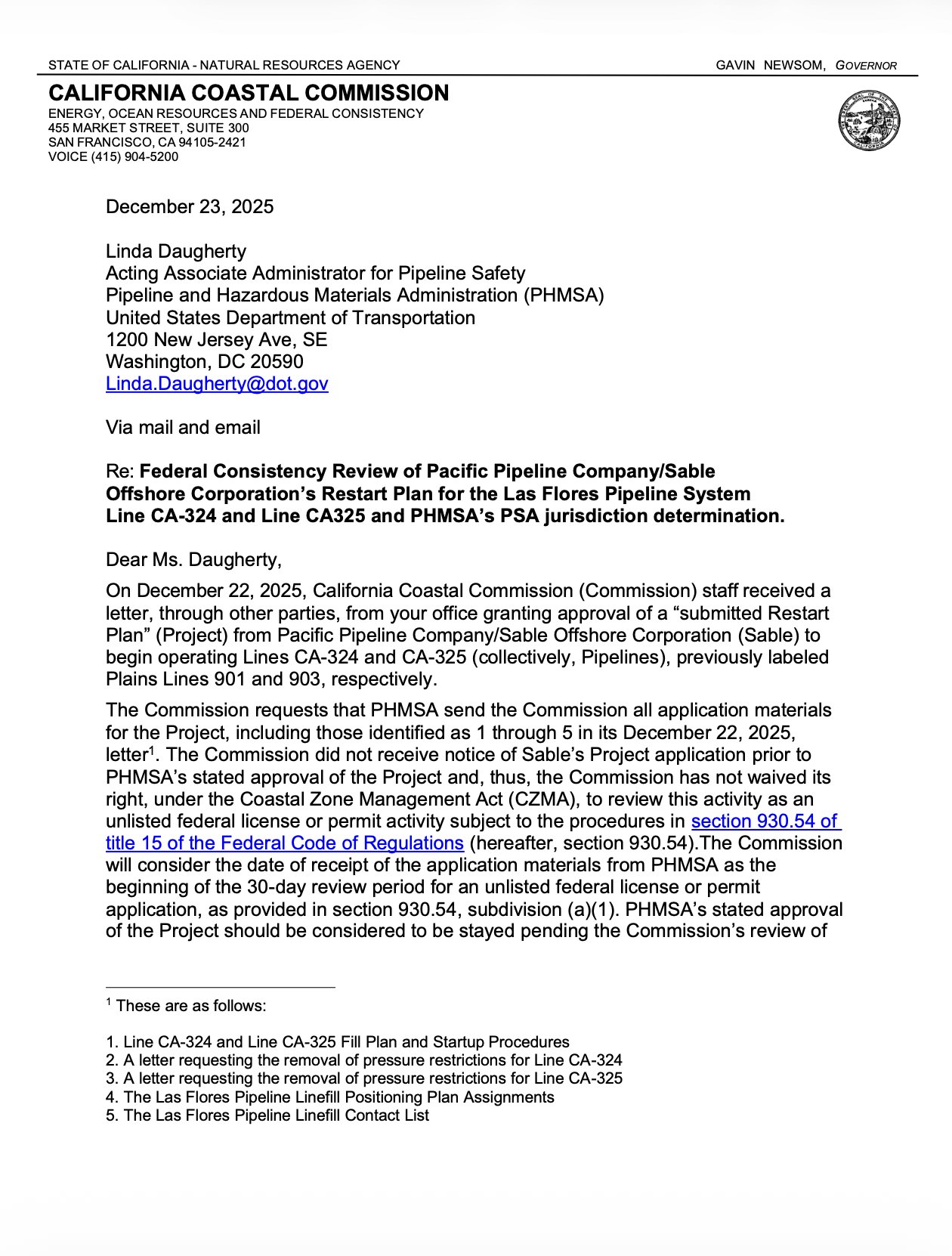
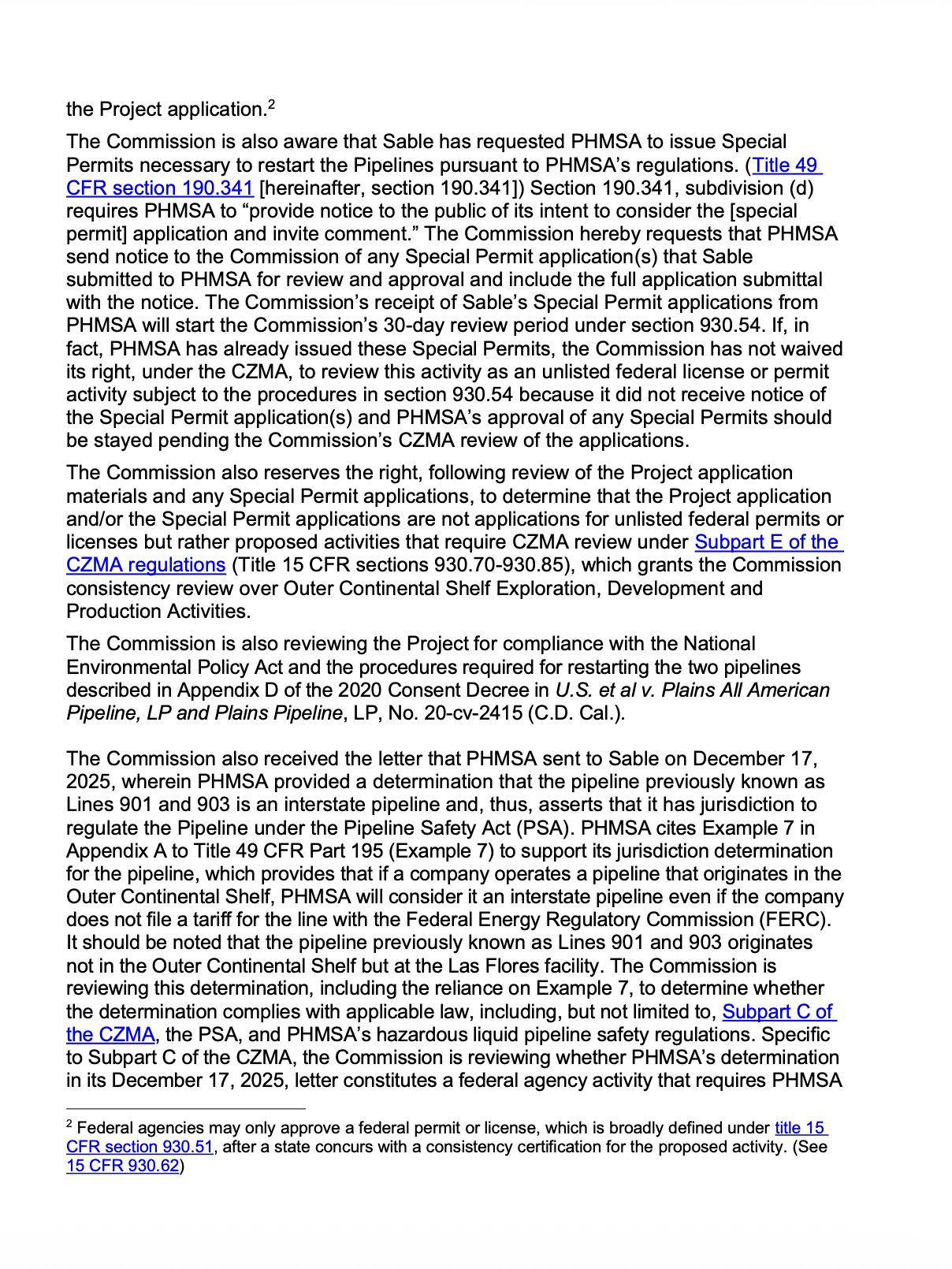
Attached is the letter sent to operators of the 5 projects that have been suspended. The cited regulation reads as follows:

§ 585.417 When may BOEM order a suspension?

BOEM may order a suspension under the following circumstances:

(a) When necessary to comply with judicial decrees prohibiting some or all activities under your lease; or

(b) When the suspension is necessary for reasons of national security or defense.

See the letter below.

California and Santa Barbara County remain silent. Caught off guard before the holiday?

More from the Santa Barbara Independent.

Excerpts from an excellent opinion piece by Derrick Max of the Thomas Jefferson Institute for Public Policy:

Coastal Virginia Offshore Wind (CVOW) is no ordinary renewable project. It was created by legislative command. The 2020 Virginia Clean Economy Act (VCEA) declared Dominion’s 2.6-gigawatt wind farm “in the public interest,” effectively tying the hands of the State Corporation Commission and guaranteeing Dominion full cost recovery and profit. The risk doesn’t sit with shareholders — it sits with Virginia’s ratepayers.

The Thomas Jefferson Institute opposed that structure from the start. We warned that forcing captive customers to underwrite an unproven, high-cost project located in a hurricane prone region would expose Virginians to escalating bills with little accountability. Yet when a group recently asked the federal government to shut CVOW down, we declined to join. Why? Because government shouldn’t pick winners and losers — not when it mandates projects, and not when it stops them. Especially when a project is in its final stretch and no economic analysis of such a decision has been completed (or shared). 

Virginia’s offshore wind story shows how risky it is when government drives energy decisions by decree. One administration mandates a massive buildout; the next halts it over security fears. Businesses can’t plan around that. Ratepayers shouldn’t have to pay for it.

LLOG’s Salamanca floating production unit, Gulf of America

The UK’s Harbour Energy is acquiring Louisiana’s LLOG Exploration Company for $2.7 billion in cash and $0.5 billion in shares.

Harbour CEO Linda Cook:

Today’s announcement delivers on Harbour’s long-standing ambition to establish a presence in the deepwater Gulf of America. With LLOG, we found the right combination of high-quality assets and a talented team, providing a strong strategic and cultural fit with our company. The transaction positions us as a leading player in a region with well-established infrastructure, a supportive fiscal and regulatory environment and opportunities for additional growth.”

LLOG was the 6th largest Gulf of America producer of both oil and gas in 2024 with production of 27 million bbls of oil and 34 BCF of gas. LLOG was the high bidder on 11 tracts in the recent BBG1 sale.

Harbour is not currently a Gulf of America leaseholder.

Reuters had reported that Shell was in advanced talks to acquire LLOG. Apparently, either Shell lost interest or Harbour made a more attractive offer.

Suspended wind leases

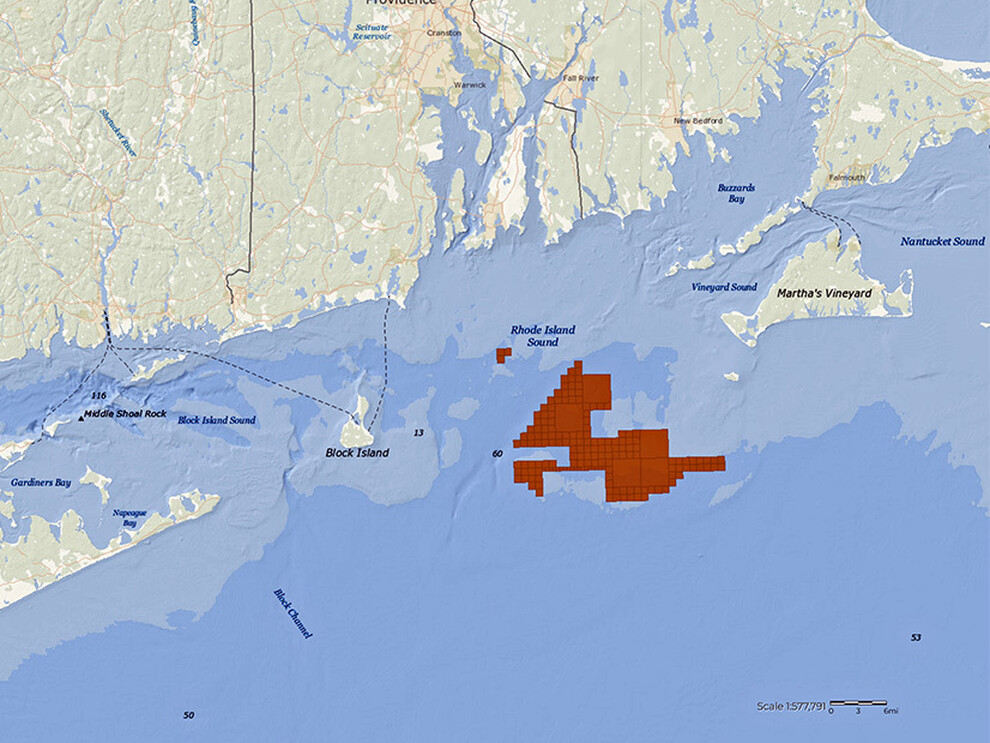
The suspended leases are for Vineyard Wind 1, Revolution Wind, Sunrise Wind, Empire Wind, and Coastal Virginia Offshore Wind. (See the map below).These are the only Atlantic Wind projects under construction.

Given the $billions in expenditures to date and coastal State support for these projects, expect negotiated mitigations or litigation.

This picture was posted on the “Rig Pigs” Facebook page by Huston Funk. Per Huston: First crew photo from the Deepwater Horizon. Taken in the Indian Ocean after we had left Singapore.”

Commenters identified 3 Macondo victims in the photo: Jason Anderson, Don Clark, and Stephen Curtis 🙏

Tribute to the Deepwater Horizon victims

Ekofisk was Norway’s first commercial oil discovery in 1969, with first production in 1971. Another redevelopment phase could extend production to 2050 and beyond. This is a good example of how technology and reservoir management can extend field life indefinitely. Finite resources are not really finite.

Ekofisk production history; water injection began boosting production in 1987. The expected final recovery factor for Ekofisk is now estimated to be >50%.

ConocoPhillips and partners have approved the redevelopment of three gas and condensate fields depicted below — Albuskjell, Vest Ekofisk, and Tommeliten Gamma. Better well placement and the use of horizontal well technology will increase resource recovery.

The $1.8 billion project consists of four new subsea templates and 11 production wells tied back to the Ekofisk complex. First production is planned towards the end of 2028. Recoverable gas and condensate reserve additions are estimated at between 90 million and 120 million barrels of oil equivalent.

If you ever get to Stavanger, be sure to visit the Petroleum Museum! HIghly recommended!

Norwegian Petroleum Museum, Stavanger