This Montecito Journal article explains the ecological importance of California offshore platforms and summarizes the challenging regulatory issues associated with their decommissioning.
According to a paper published in 2014 by marine ecologist Dr. Jeremy Claisse of Cal Poly Pomona, the oil and gas platforms off the coast of California are the most productive marine habitats per unit area in the world. “Even the least productive platform was more productive than Chesapeake Bay or a coral reef in Moorea,” said Dr. Love. (Milt Love, UCSB biologist)
The flaring provision complicates compliance and may increase safety risks: (p. 649) Exception 1 exempts “gas vented or flared for not longer than 48 hours in an emergency situation that poses a danger to human health, safety, or the environment.” This is inconsistent with the carefully constructed BSEE regulations which allow limited (48 hours cumulative) flaring for certain operations (e.g. during the unloading or cleaning of a well, drill-stem testing, production testing, and other well-evaluation testing). Such flaring is essential but not normally “an emergency situation.” The bill could thus compromise safety by unnecessarily restricting or complicating well operations and by limiting flaring in circumstances where such flaring reduces safety risks.
Time for BOEM to get to work 😉: (p. 650): Per our previous post, the highlight section of the bill (from an offshore oil and gas standpoint) reinstates Lease Sale 257 (GoM) and requires that the scheduled 2022 lease sales 258 (GoM) and 259 (Cook Inlet) be held by 12/31/2022. Lease Sale 261 (GoM) must be held by 9/30/2023.
Petty but perhaps necessary: p. 655: The provision restricting wind leasing when no oil and gas lease sale has been held in the prior year is in the final bill.
Assuming no significant tropical storm shutdowns this month, we should get a good read on the impact of the pipeline outage when the EIA production data for August are posted.
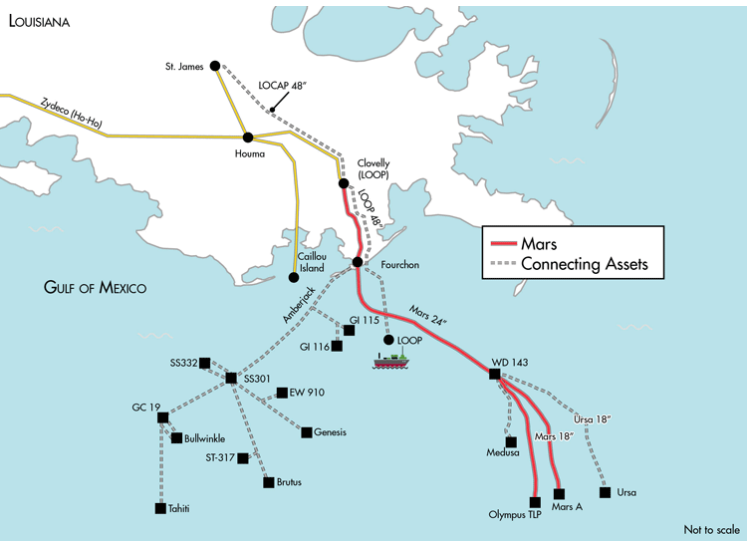
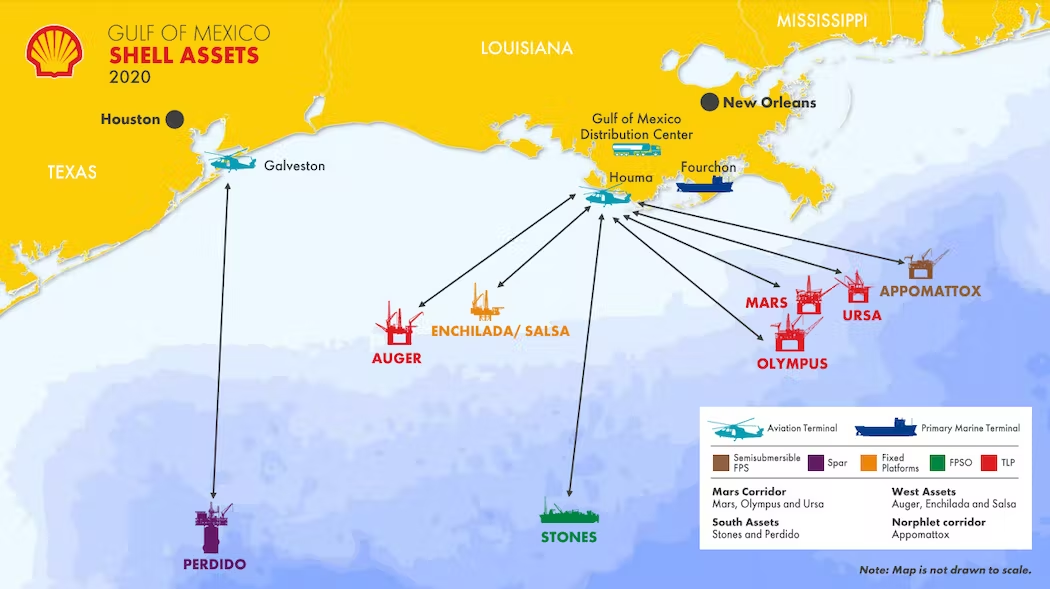
This is a good example of the interconnectivity of deepwater projects with major Shell, Chevron, and Equinor facilities shut-in as a result of a relatively minor downstream pipeline incident.
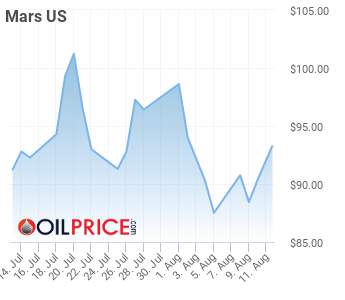
Mars crude price appears to have reacted to the shut-in news:
A small pipeline leak (estimated 2 bbl spill) at an onshore booster station is having a major impact on Gulf of Mexico production. Per Reuters, as much as 600,000 bopd could be temporarily shut-in. GoM production averaged 1.6 million bopd in May.
These major platforms are reported to be shut-in:
Shell: Mars, Ursa, and Olympus
Chevron: Jack/St. Malo, Tahiti, and Big Foot
Equinor: Titan
Shell, the pipeline operator, did not provide an estimate on the resumption of production.
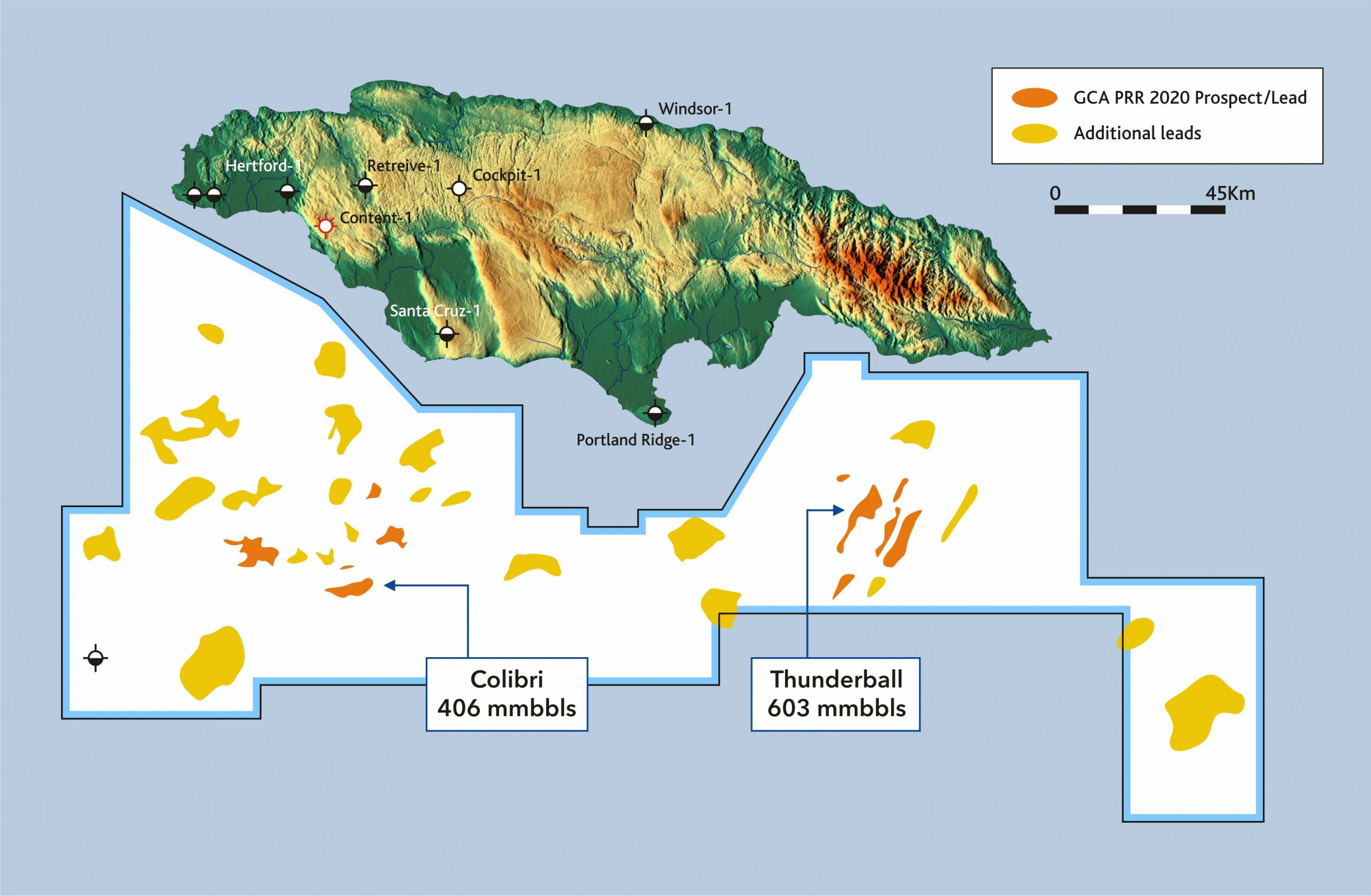
With extensive seismic data coverage, including 2,250 km2 of 3D data, numerous plays and prospects have already been identified and mapped across the area – leading to over 2.4 billion barrels unrisked mean prospective resources being assigned to the licence. The drill-ready, high-impact Colibri prospect alone contains mean prospective resources of 406 mmbbls.
The Colibri prospect is in 750 m of water, and according to this article, would be developed with a tenstion-leg platform if a commercial discovery is made.
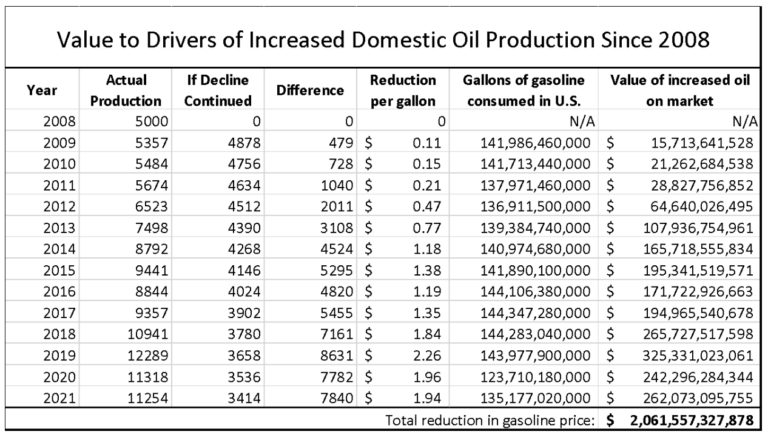
The bottom line is a $2/gallon savings to consumers totaling more than $2 trillion. As is the case with natural gas, most of the production boom is attributable to operations on private lands, without which we would be in deep economic trouble.

 Bud's Offshore Energy (BOE)