The attached letter was obtained by the Nantucket Current through a FOIA request. Key points:
Vineyard Wind power generation and blade installation suspension order remains in effect.
Vineyard Wind directed to conduct a site-specific study that evaluates the environmental harm and other potential damage from the blade failure, and to identify potential mitigation measures.
Vineyard Wind was required to submit a plan for the study by Oct. 11. It’s not clear whether the plan was submitted.
The study must include a mass balance of unrecovered debris material based on the weight of debris recovered and the weight of the subsea debris retrieved.
Comments:
The study requirement is appropriate given the significance of the blade incident and the implications for offshore wind development.
Why was a FOIA request needed to learn about the study requirement?
The author of the New Bedford Light article about turbine blades being transported from New Bedford to Cherbourg posted (below) that there are six blades on the vessel.
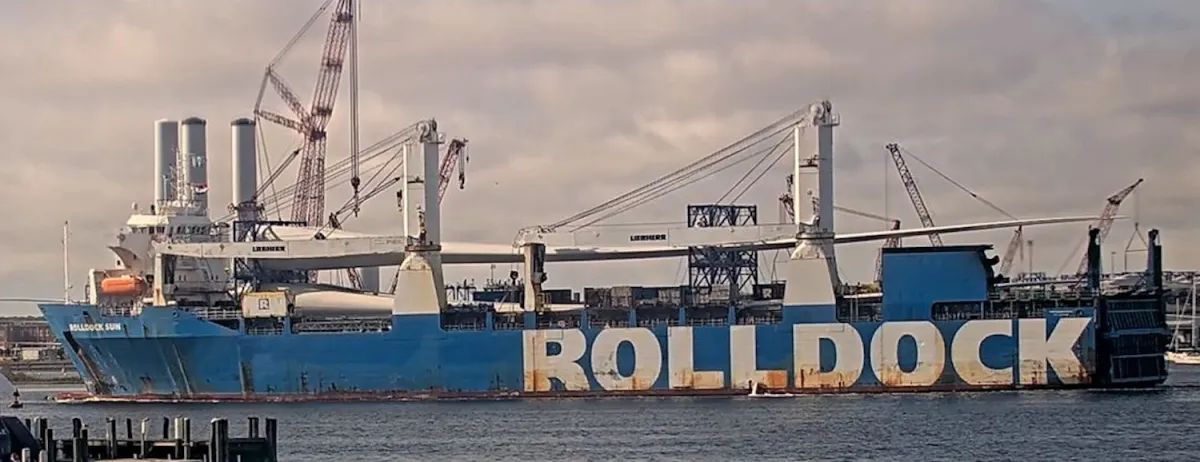
It looks like she may get some help from French journalists who have picked up on this story. The Rolldock Sun is scheduled to arrive in Cherbourg on Oct. 16.
GE Vernova or Vineyard Wind could simplify things by explaining the shipment.
A French outlet has picked up on the GE blades en route to France since @NewBedfordLight first reported it. Here's the rough translation from Google; the outlet is reporting 6 blades. Only 2 were visible departing New Bedford more than a week ago: https://t.co/C7dRMHg3Jgpic.twitter.com/ZsaJOTgYfF
The New England Fishermen’s Stewardship Association (NEFSA) is sending the attached letter to Maine Gov. Janet Mills along with a petition with over 2,500 signatures urging her to halt the development of offshore wind farms in the Gulf of Maine.
A Gulf of Maine wind lease sale is scheduled for Oct. 29.
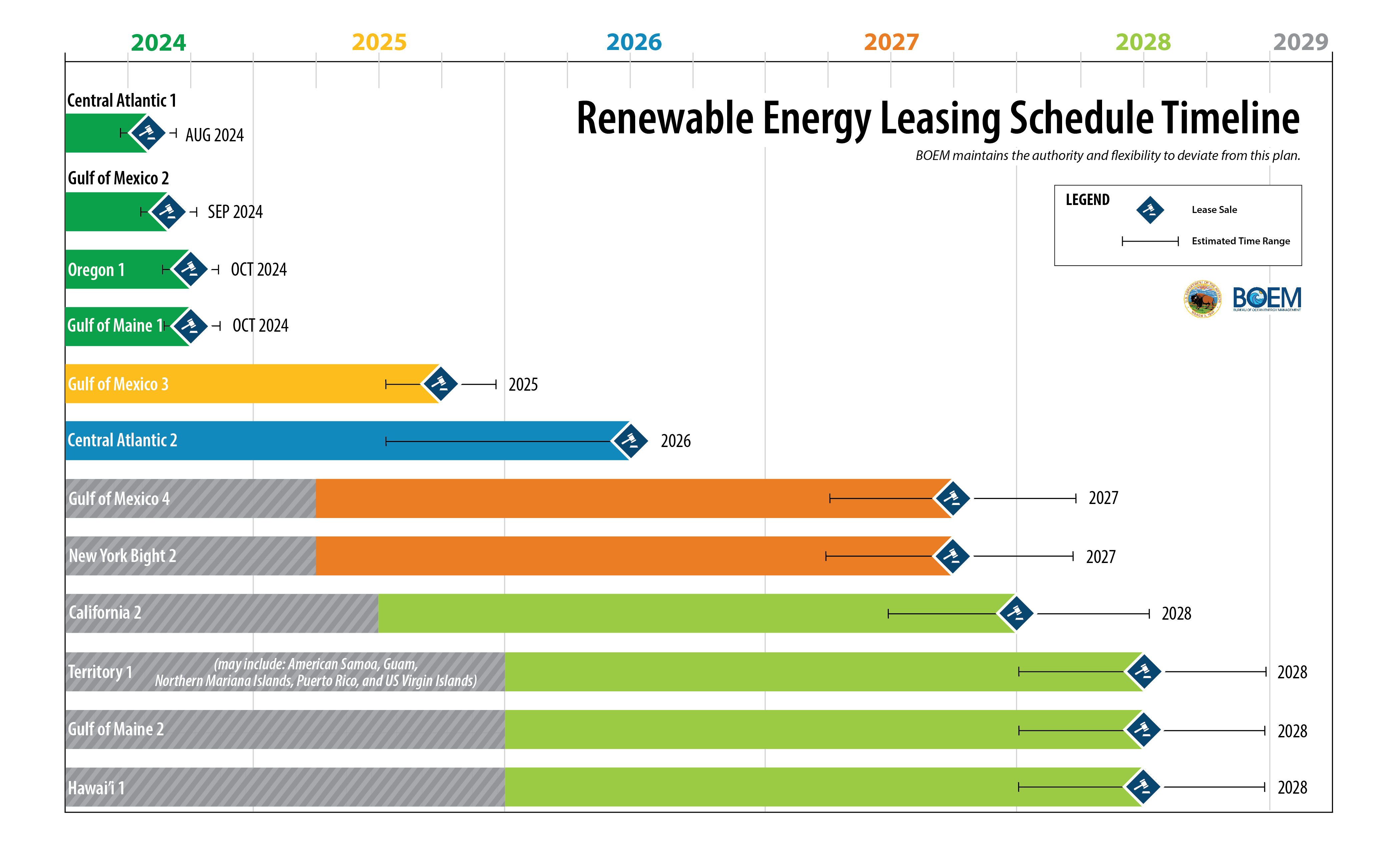
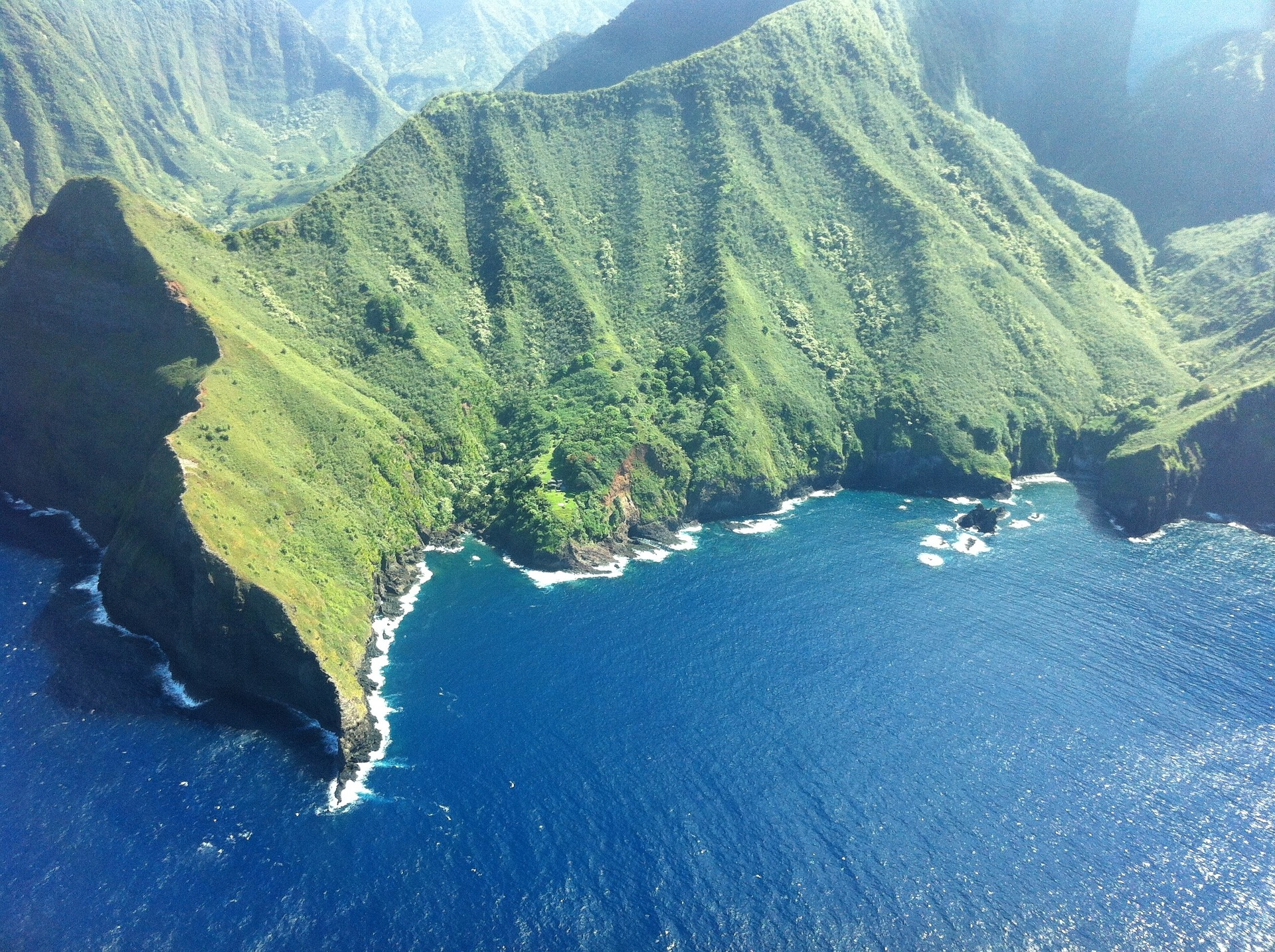
As indicated in the leasing schedule (above), a Hawaii offshore wind sale is scheduled for 2028. A recent article points to concerns from native Hawaiian communities about areas now under consideration. Presumably the concerns are with the potential for leasing in the Kaiwi (Molokai) Channel.
John Smith was the lead BOEM coordinator on the Hawaii task force before he retired in 2017. He is very familiar with the OCS wind potential offshore Hawaii. John worked with Progression, Alpha Wind and the Dept. of Defense on evaluating the best wind energy areas.
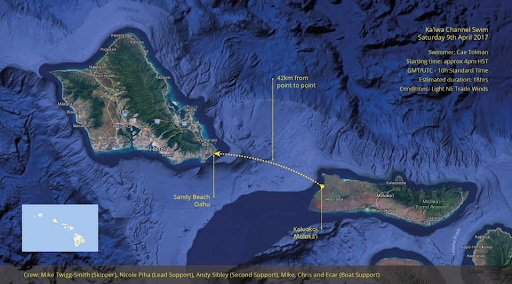
John and others on the task force agreed that the best location by far for Hawaiian wind development is 20-30 miles south of Oahu. However, the US Navy strongly opposed leasing there for national security reasons. Alternative locations in the Kaiwi channel between Oahu and Molokai are okay with the USN, but are otherwise problematic.
An informed Hawaiian oceanographer and ocean policy expert offered the following:
“As the Kaiwi Channel is a sacred fishing ground for native Hawaiians, this (wind leasing in the channel) is never going to happen. Sad to waste so much money on it.”
Kaiwi (Molokai) Channel
“Translated as “the bone,” Kaiwi recalls Hawaiians’ reverence for human bones as objects of great spiritual significance and symbols of connection. The word is used to fondly describe such concepts as homelife, family, and growing older. The saying “ho‘i hou i ka iwi kuamo‘o”—which literally translates to “return to the backbone”—expresses the joy of coming back to one’s family or homeland after being away.
During the 19th and 20th centuries, the Kaiwi Coast on O‘ahu’s southeast side provided thriving Native Hawaiian communities that called it home with abundant fishing, farming, ranching, and recreation. Maunalua Bay, which fronts the modern town of Hawai‘i Kai on the coast’s southern end, once housed the 523-acre Kuapā fishpond, the largest fishpond in Hawai‘i and the site of a massive annual migration and regeneration of mullet fish.“
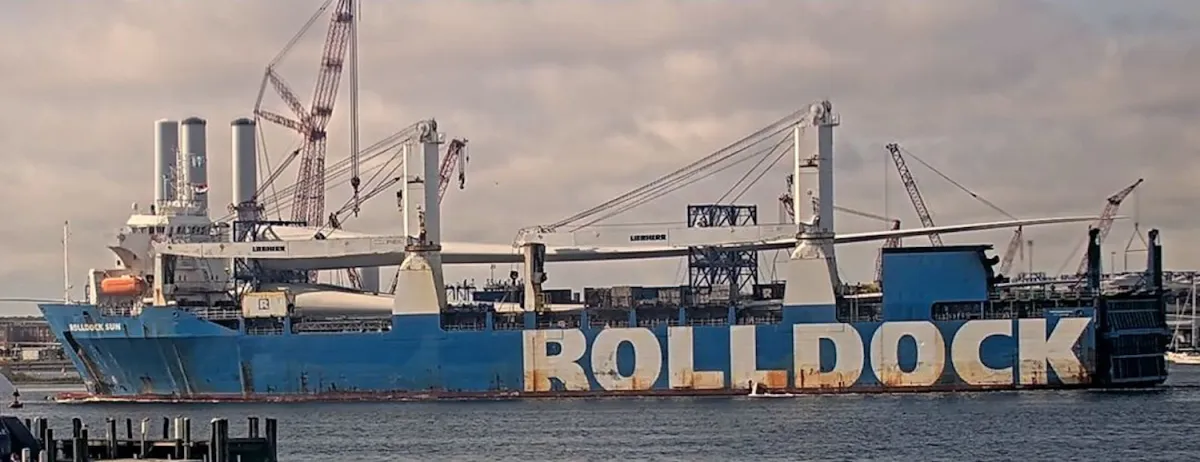
New Bedford Light: The Rolldock Sun leaves New Bedford on Friday with two blades visible. Credit: Courtesy of West Island Weather
Per the New Bedford Light, the turbine blade delivery vessel Rolldock Sun was seen on Friday carrying at least two blades out of New Bedford. It was not headed for the Vineyard Wind site. According to vessel tracking websites, the Rolldock Sun was en route to the Port of Cherbourg, where GE Vernova has a blade manufacturing facility.
The most likely explanation for returning the blades to Cherbourg is that defects were detected or suspected. The blade that failed, reportedly as a result of a manufacturing issue, is probably not the only one that was defective.
The New Bedford Light asked GE Vernova, Vineyard Wind, and the Federal regulator BSEE why the blades were being transported to Cherbourg. They received the following responses (my comments in parentheses):
GE Vernova: “No comment on this matter.” (This is the worst possible response. In the absence of information, people are left to speculate. If there was no problem with the blades, why wouldn’t GE simply provide an explanation? Their non-response simply reinforces suspicions that the blades were defective. If that is the case, why not take credit for procedures that identified the suspect defects, albeit belatedly?
Vineyard Wind:“The weekend has gotten in the way of the information flow,” and they would share information should they hear anything. Another request for information was not answered as of noon Monday. (Not exactly confidence inspiring from the company whose blade failure littered beaches and the offshore environment. They are deservedly being watched, and need to be more transparent and responsive.)
BSEE:A BSEE spokesperson did not answer questions and said by email that the agency has no new information. (Disappointing, but not surprising.)
While the Orsted acquisition does not appear to have been directed by the Norwegian government, the State’s 2/3 ownership of the company no doubt influences renewable energy targets and broader corporate strategy.
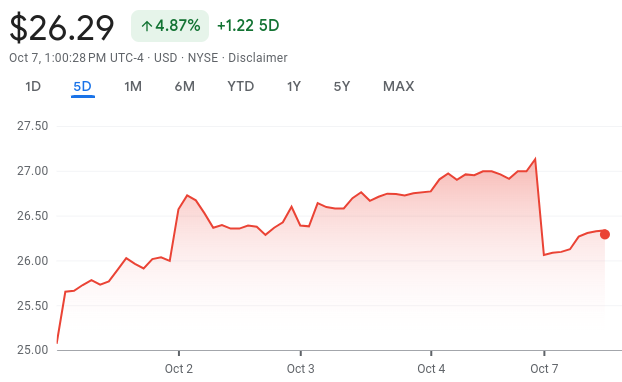
The initial market reaction to the Orsted purchase was negative (see chart below). On a day when most oil companies’ share prices rose in response to the jump in oil prices, Equinor shares opened sharply lower.
Given the absence of industry and government data on wind turbine incidents, Scotland Against Spin (SAS) has done yeoman’s work in filling the void. SAS gathers information from press reports and official releases. A PDF of the latest SAS update summary is attached. You can view their complete incident compilation (318 pages) here. Kudos to SAS for their diligence.
As good as their work has been, SAS acknowledges that their information is far from complete and may only represent the tip of the wind turbine incident iceberg. Per SAS:
In 2011, RenewableUK confirmed that there had been 1500 wind turbine incidents in the UK alone in the previous 5 years.
In July 2019, EnergyVoice reported a total of 81 cases where workers had been injured on UK windfarms since 2014. The SAS table includes only 15 of these incidents (<19%).
In February 2021, the industry publication Wind Power Engineering and Development admitted to 865 offshore accidents during 2019. SAS captured only 4 (<0.5%).
A 13 August 2018 publication by Power Technology reported 737 incidents from UK offshore windfarms during 2016 alone, with the majority occurring during operations rather than development. 44% of medical emergencies were turbine related. In comparison, only 4 UK offshore incidents are listed in the SAS data – equivalent to 0.5%.
Lars Herbst had previously reported, based on the Wind Power article cited above, that “with an estimated 700,000 blades in operation globally, there are, on average, 3,800incidents of blade failure each year.” Lars noted that the annual blade failure rate of about 0.5% translates to 1.5% of all operating wind turbines experiencing a blade failure every year, a remarkably high failure frequency.
“This marks a turning point in the clean energy transition. After many decades of advocacy, research, policymaking, and finally construction, America’s offshore wind industry has gone from a dream to reality,” said Governor Maura Healey. “Across Massachusetts, in 30,000 homes and businesses, when you turn on the light, you will now be using clean, affordable energy. This will make the air we breathe safer and healthier, save customers money, and bring us one step closer to achieving net-zero emissions.”
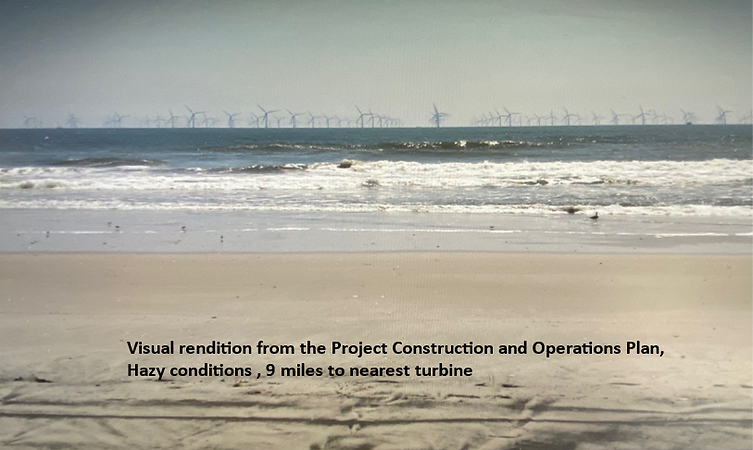
As a boy, my grandfather owned a home “down the shore” on Long Beach Island (LBI). From the beach, all we saw were swimmers, surf fishers, porpoises, and an occasional vessel on the horizon. The offshore wind industrialization will change the island dramatically.
Attached is the release announcing Save LBI’s intent to sue. Their issues are summarized below:
Constructing and operating hundreds of wind turbines directly in a prime migration path for the critically endangered North Atlantic right whale.
Operational noise from the larger and noisier turbines Atlantic Shores plans to build.
Cumulative impact of the East Coast wind-turbine projects on the right whale’s migration.
Interference with other uses of the ocean including fishing and national security.
No plan or capability, technically or monetarily, to remove turbines and other facilities at the end of their useful life, upon their failure during normal operation, or in the aftermath of a hurricane or other extreme storm event.
Failure to account for structural failures such as the Vineyard Wind turbine blade incident, the damage from such failures to the ocean and beaches, and how that damage will be remediated.
Excessive electric bill increases under the State’s Offshore Wind Energy Development Act.
The Endangered Species Act issues are similar to those that the Nantucket group ACK for Whales is trying to elevate to the Supreme Court.
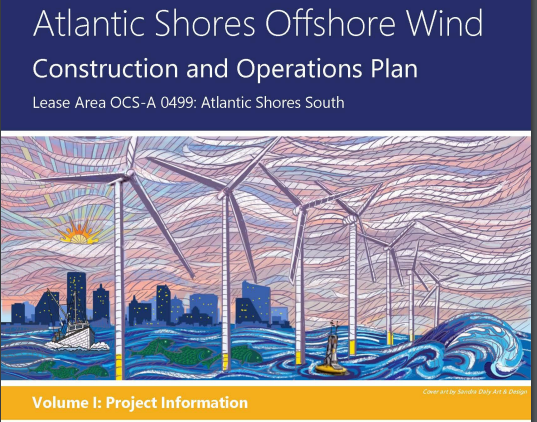
Perhaps not the best choice of graphic if you want to sell the project as being environmentally benign and compatible with other uses.
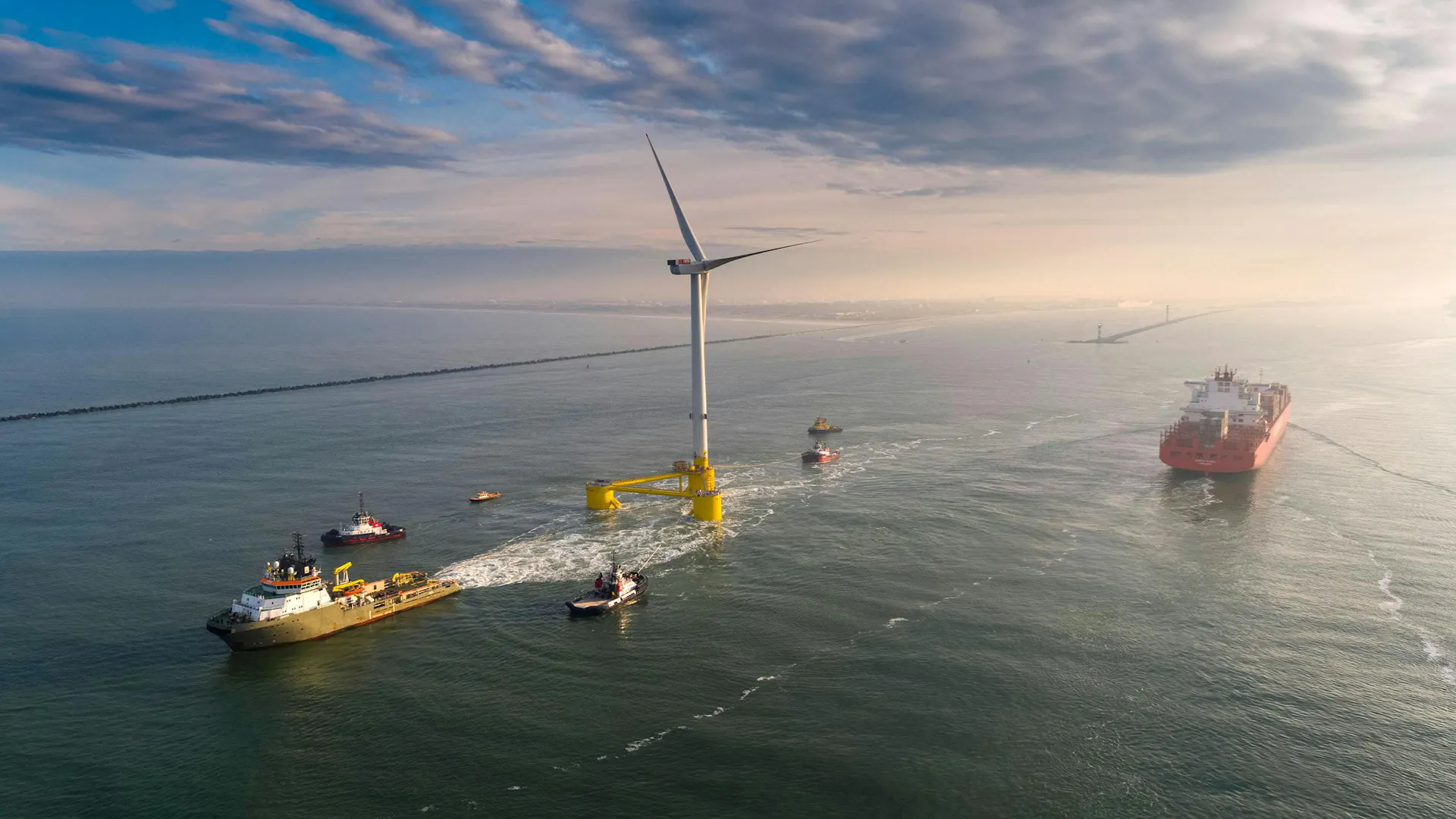
floating turbine being positioned in Kincardine wind farm
The 50 MW Kincardine Offshore Windfarm, which is billed as the “world’s largest floating wind farm,” experienced a £30 million loss in 2023 following a £18 million loss in 2022. The turbines are located 15 km off the coast of Aberdeenshire, in water depths ranging from 60 m to 80 m.
The graphic below summarizes the 2023 financial results, which were even worse than those for the prior years of operation. For those who want more detail, I have attached the 2023 audited financial statement for the wind farm. You can also view audited statements for prior years.
Although BOEM was forced to “postpone” the Oregon wind sale given the absence of bidders, opposition from tribes and county governments, and a last minute letter from the Governor (political cover?), California still seems to be all in on the development of the 5 deepwater wind leases in Federal waters.
It cost them 46 million quid to make 13 million quid's worth of electricity!
The Nantucket non-profit ACK for Whales (ACK is the FAA abbreviation for Nantucket Airport) has petitioned the Supreme Court to review the 1st Circuit’s ruling on the Vineyard Wind project. Per the Supreme Court filing (full document attached):
Despite the agencies’ explicit statutory duty to consider all “best information available,” regarding the impacts its actions might have on an endangered or threatened species and those habitats, the National Marine Fisheries Service (NMFS) and the Bureau of Ocean Energy Management (BOEM), did not consider the cumulative impacts of other planned projects when they authorized and issued permits to construct the Vineyard Wind 1 Project.
Will the Supreme Court accept the case?
“Hail Mary:” Per the Nantucket Current, the odds that the Supreme Court justices will accept the case are exceedingly slim. Of the 7,000 cases that the Supreme Court is asked to review each year, only 100 to 150 of them – about 2 percent – are accepted.
“Really good chance:” Per Val Oliver, ACK for Whales founding director, “In light of the recent Chevron decision, we think we have a really good chance. That was about government overreach and that is what this (Vineyard Wind) has felt like since the beginning: go, go, go, and we’ll figure it out as we go. That’s just not responsible.“
Regardless of the outcome of this case, there is a profound inconsistency in the administration of the Endangered Species Act as evidenced by our comparison of the operating restrictions for the Right whale (Atlantic wind) and Rice’s whale (Gulf of Mexico oil and gas). Note that the more onerous Rice’s whale restrictions were removed by court order.


 Bud's Offshore Energy (BOE)