Feeds:
Posts
Comments

Archive for the ‘Regulation’ Category

Aqueos 2020 external (ROV) inspection:

The 16” oil pipeline was found to be in good condition with no visible damage or anomalies.
One (1) CP test point that was installed in 2014 was found to be displaced from its location on the pipeline (this was also noted in the 2018 survey), and no damage was noted at the location (Fix #101).

Aqueos inspection report, May 2020

Pipe‐to‐electrolyte potential values recorded were:
 ‐ 921 millivolts (mV) on the 6” gas pipeline
 ‐ 910 millivolts (mV) on the 10” water pipeline
 ‐ 963 millivolts (mV) on the 10” gross fluids pipeline
 ‐ 906 millivolts (mV) on the 16” oil pipeline

As the NACE Standard SP0169‐2013 “Control of External Corrosion on Underground or Submerged Metallic Pipelines” criterion is ‐800 mV, all readings indicate that Cathodic Potential is within specifications.

Aqueos inspection report, May 2020

Metal loss data from Baker Hughes internal inspection (12/2019):

Depth of Metal LossExternal AnomaliesInternal Anomalies
30+%00
20-29%10
10-19%00
total10
Baker Hughes In-line Inspection Report, 12/30/2019

The metal loss findings are consistent with those reported in a previous internal inspection (Baker Hughes, 11/2017).

BSEE has general authority to require pipeline inspections under 30 CFR 250.1005. BSEE, the State Lands Commission, and the operator appear to have implemented an effective inspection program for the Beta Unit.

Read Full Post »

Establishing an OSHA rule takes an average of 7 years, and the process has ranged from 15 months to 19 years between 1981 and 2010, the Government Accountability Office (GAO) reported to Congress in 2012

EHS Daily Advisor

OSHA’s long rule promulgation timeframes are actually quite typical for US regulatory agencies. In some cases, employees work on a single rule for most of their careers! On the plus side, the rigorous internal and public review processes help prevent arbitrary and capricious actions by regulators. However, the long promulgation process often results in regulations that are outdated before they are published. As a result, the entire process repeats and you have a regulatory “do loop.”

To avoid the daunting rulemaking process, regulators often resort to issuing notices, letters, or conditions of approval that accomplish some of their objectives. However, these actions are not always consistent with the rule promulgation requirements of the Administrative Procedures Act and other directives, and are less likely to survive legal challenges.

The optimal approach is for the regulator to establish clear objectives for the operating companies and a schedule for achieving those objectives. This approach was demonstrated following the 2005 hurricane season (Katrina and Rita) when numerous mooring system and other stationkeeping issues were identified. In a face-to-face meeting, Department of the Interior Secretary Gale Norton outlined her concerns and informed offshore operators that there would be no drilling from moored MODUs or jackups during hurricane season until the issues identified during Hurricanes Katrina and Rita were addressed.

The collaborative effort that followed was a resounding success. In addition to addressing station keeping concerns, a comprehensive list of hurricane issues was developed. Industry and government then worked together to assess mitigations and develop new standards and procedures. The essential MODU standards were completed before the 2006 hurricane season, and all of the related concerns were effectively addressed prior to the 2009 hurricane season. Had the government elected to promulgate regulations to address all of these issues, much of this work would have never been completed.


Read Full Post »

Industry environment plans

Good read for you inspection and regulatory policy nerds. (I know you’re out there! 😃). The draft policy looks very good at first glance.

If (like me) you can’t help yourself, here is the link for providing feedback.

Read Full Post »

Per PHMSA:

  • At approximately 02:30 PDT (05:30 Eastern Daylight Time (EDT)) on October 2, 2021, Beta Offshore’s control room personnel received a low-pressure alarm on the San Pedro Bay Pipeline, indicating a possible failure.
  • Beta Offshore reported the San Pedro Bay Pipeline was shut down at approximately 06:01 PDT (09:01 EDT) on October 2, 2021—over three hours later.

Comment: Very interesting finding. Good to learn that the pipeline pressures were being monitored. Need to see the pressure history for the pipeline and hear from the crew before reaching any conclusions regarding the conduct of the operator.

Also note that PHMSA is estimating that the spill volume was 700 barrels, far less than the 3000+ bbl maximum estimate. Further, a footnote in the PHMSA letter reports an updated company estimate of 588 barrels. I’m assuming that the refined estimate was based on meter differentials. These lower estimates are more in line with the oil recover data that have been provided and the visual images of the slick.

Read Full Post »

The evidence to date indicates that the leak was detected by visual observation of the oil slick. There are some reports that the slick and associated smell were evident on Friday night (10/1). The pipeline operator Amplify issued a statement advising that they first observed an oil sheen on Saturday morning (10/2), which is when the response was initiated. Nothing in Amplify’s statement suggests that a drop in pipeline pressure or a reduction in the flow rate at the onshore terminal was observed.

So, what do the regulations require with regard to leak detection? It depends whether the pipeline is regulated by the Department of Transportation (DOT) or the Department of the Interior (DOI/BSEE). This is how DOI authority is delineated:

DOI pipelines include:
(1) Producer-operated pipelines extending upstream (generally seaward) from each point on the OCS at which operating responsibility transfers from a producing operator to a transporting operator;
(2) Producer-operated pipelines extending upstream (generally seaward) of the last valve (including associated safety equipment) on the last production facility on the OCS that do not connect to a transporter-operated pipeline on the OCS before crossing into State waters;
(3) Producer-operated pipelines connecting production facilities on the OCS;
(4) Transporter-operated pipelines that DOI and DOT have agreed are to be regulated as DOI pipelines; and
(5) All OCS pipelines not subject to regulation under 49 CFR parts 192 and 195.

Unless provision (4) applies, the Elly to shore pipeline is either a producer or transporter-operated pipeline (depending on how the Amplify’s San Pedro Bay Pipeline Co. is classified) that falls under DOT jurisdiction. DOT leak detection requirements (49 CFR 195.134) are new as of 10/1/2019 and do not take effect until 10/1/2024. Unless DOI or similar leak detection requirements are being applied (by agreement, condition of approval, or some other administrative means), there are no such requirements for this pipeline.

Assuming the protection specified below for DOI pipelines is being required, why wasn’t the leak detected and production shut-in. This will be determined during the investigation, but the most probable explanation is that the pressure sensor was set too low, perhaps because the pipeline’s operating range is broad. With regard to a volumetric comparison system (250.1004 (5)), I don’t get the sense that such a capability was in place. If it was, the operator should be able to provide a good estimate of the amount of oil that was spilled (i.e. Elly output – onshore input – any oil recovered from the line after the leak was detected).

§ 250.1004 Safety equipment requirements for DOI pipelines.

(3) Departing pipelines receiving production from production facilities shall be protected by high- and low-pressure sensors (PSHL) to directly or indirectly shut in all production facilities. The PSHL shall be set not to exceed 15 percent above and below the normal operating pressure range. However, high pilots shall not be set above the pipeline’s MAOP.

(5) The Regional Supervisor may require that oil pipelines be equipped with a metering system to provide a continuous volumetric comparison between the input to the line at the structure(s) and the deliveries onshore. The system shall include an alarm system and shall be of adequate sensitivity to detect variations between input and discharge volumes. In lieu of the foregoing, a system capable of detecting leaks in the pipeline may be substituted with the approval of the Regional Supervisor.

One would hope that this major spill will lead to an independent review of the regulatory regime for offshore pipelines. Consideration should be given to designating a single regulator that is responsible and accountable for offshore pipeline safety (a joint authority approach might also merit consideration) and developing a single set of clear and consistent regulations.

Read Full Post »

Read Full Post »

Per the latest update from the Unified Command, a total of only 75 barrels of oil have been recovered (up from 29 bbls reported on Sunday). The 75 bbls no doubt includes some water. It’s unclear as to why so little oil has been recovered (unfavorable offshore conditions? response focused on the shoreline?). Perhaps the volume of oil spilled was less than the 3000 barrel estimate. A few hundred barrels of oil can generate a very large slick.

As BOE and others have suggested, the most likely cause of the spill was a ship’s anchor. SkyTruth’s review of satellite data points to that possibility.

SkyTruth image

The Orange County District attorney seems unhappy with the possibility that (1) the pipeline was struck by an anchor and (2) the leak was in Federal waters:

The Orange County district attorney, Todd Spitzer, said he has investigators looking into whether he can bring state charges for the spill. Spitzer said his jurisdiction ends 3 miles offshore.

Spitzer also said Amplify’s divers should not be allowed near the pipeline without an independent authority alongside them.

AP article

The DA’s insistence that independent divers accompany the company’s divers may be a first in the history of the US offshore program. Isn’t video documentation sufficient? Diving is not risk free.

Read Full Post »

Cleanup contractors unload collected oil in plastic bags trying to stop further oil crude incursion into the Wetlands Talbert Marsh in Huntington Beach, Calif., Sunday, Oct. 3, 2021. One of the largest oil spills in recent Southern California history fouled popular beaches and killed wildlife while crews scrambled Sunday to contain the crude before it spread further into protected wetlands. (AP Photo/Ringo H.W. Chiu)
AP Photo/Ringo H.W. Chiu
  • Large, sudden pipeline spills are usually caused by external impacts (e.g. anchor dragging). If that was not the case, the spill was presumably caused by significant, undetected corrosion.
  • The internal (smart pig) and external inspection history of the pipeline will be an important part of the investigation.
  • Another important consideration is the extent to which pressure and volumetric monitoring systems were in place and functioning. Early reports imply that the leak was not discovered until the slick was observed on the water surface.
  • An excellent 2008 case study details the challenges that were experienced in internally inspecting this pipeline. This presentation provides good background information on the pipeline and the initial internal inspection efforts.
  • Why isn’t BSEE, the Federal bureau that inspects the Beta Unit facilities and approves the spill response plan, part of the Unified Command? BSEE is also a leader in spill response research.
  • Per the Unified Command, 1218 gallons of oil-water mix were recovered as of Sunday. This is pretty minimal – only 29 barrels (including water) and <1% of the estimated spill volume, but is not atypical for mechanical spill response operations. It may also be that the 3000 bbl spill estimate was overly conservative (i.e. high).
  • Also per the Unified Command: “One oiled Ruddy duck has been collected and is receiving veterinary care. Other reports of oiled wildlife are being investigated.” If this was the extent of wildlife impacts as of Sunday, some of the reporting on this spill has been hyperbolic.
  • A comprehensive review of the balkanized regulatory regime for offshore pipelines is long overdue, as is an update to Federal pipeline regulations.
  • This spill, Hurricane Ida, and offshore COVID issues have further demonstrated the importance of BSEE. Why has the Administration still not appointed a BSEE Director? Keep in mind that this appointment does not require Senate confirmation.

Read Full Post »

US Coast Guard Subchapter N (current language as of 9/29/2021)

33 CFR §140.4   Relationship to other law.

(b) Any apparent conflict between the application of any requirement of this subchapter and any regulation or order of the U.S. Geological Survey should immediately be brought to the attention of the Officer in Charge, Marine Inspection.

I was proud to have worked for the Conservation Division of the U.S Geological Survey (USGS) when the US offshore program was at its peak in terms of scope and activity. I therefore like the nostalgia value of this provision. That said, USGS has not been the offshore safety regulator since 1982. While updating regulations can be extraordinarily difficult, simple administrative fixes are not. Such corrections are a good way to give old, outdated rules a fresh look. 😃

Read Full Post »

For illustration only - One of Shell's platforms in the U.S. Gulf of Mexico / Image by Stuart Conway - Photographic Services, Shell International Limited.

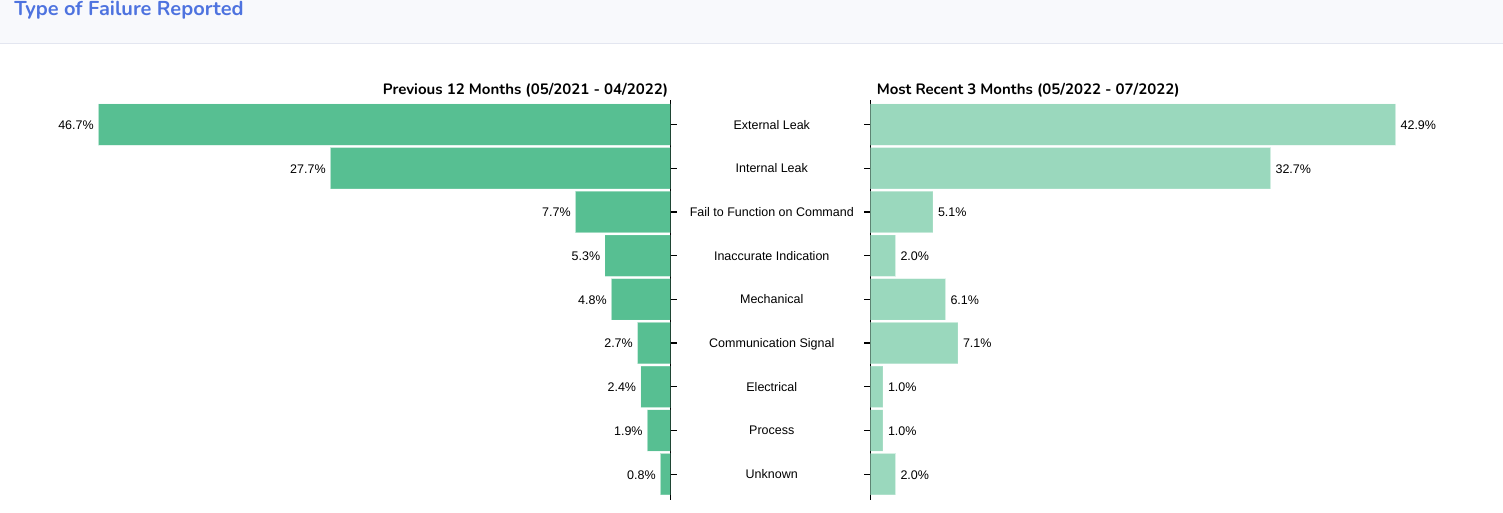
Attached is an outstanding presentation by Jason Mathews that reviews the latest Gulf of Mexico incident data and trends. The collection and analysis of incident data are critical to safety achievement and continuous improvement, and are among an offshore energy regulator’s most important functions. Kudos to BSEE’s Gulf of Mexico Region for their timely and comprehensive reviews and alerts.

Read Full Post »

« Newer Posts - Older Posts »