Feeds:
Posts
Comments

Archive for the ‘Offshore Energy – General’ Category

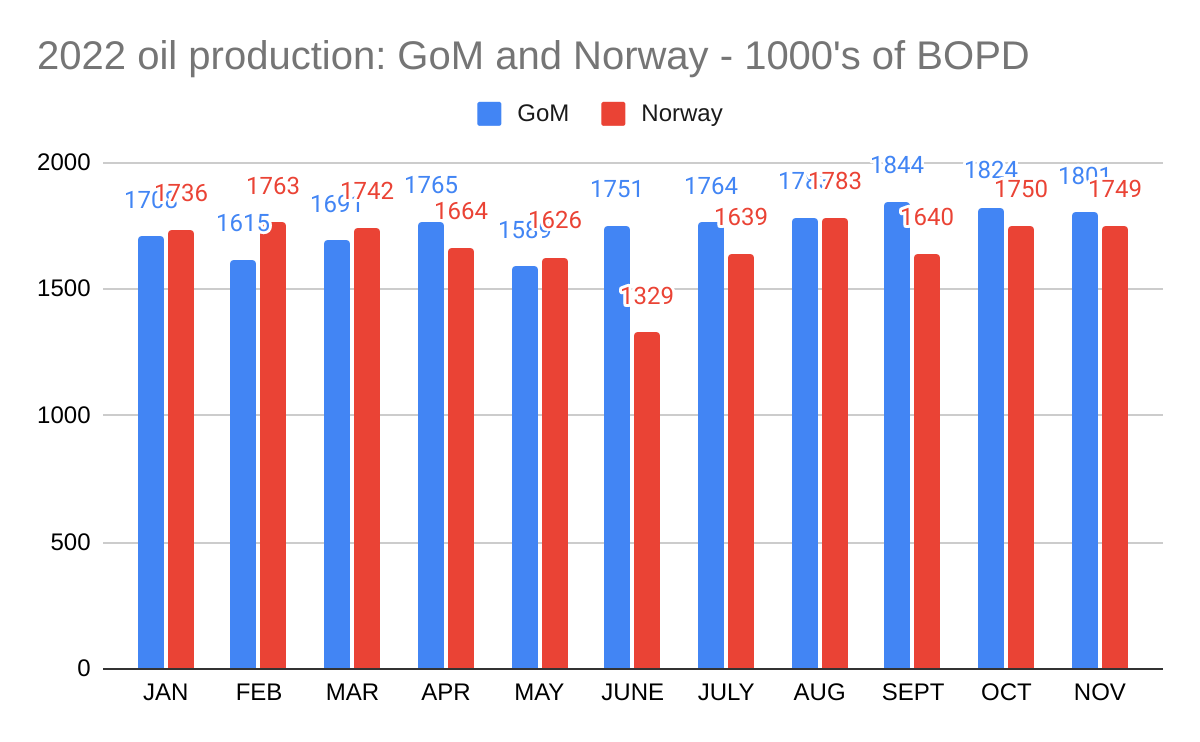
…and were in fact identical in August (1.763 million BOPD). GoM production should strengthen a bit in 2023 as new deepwater projects come online. Norwegian production should also increase. The longer term is more uncertain, particularly for the US OCS which is seemingly being managed to fail.
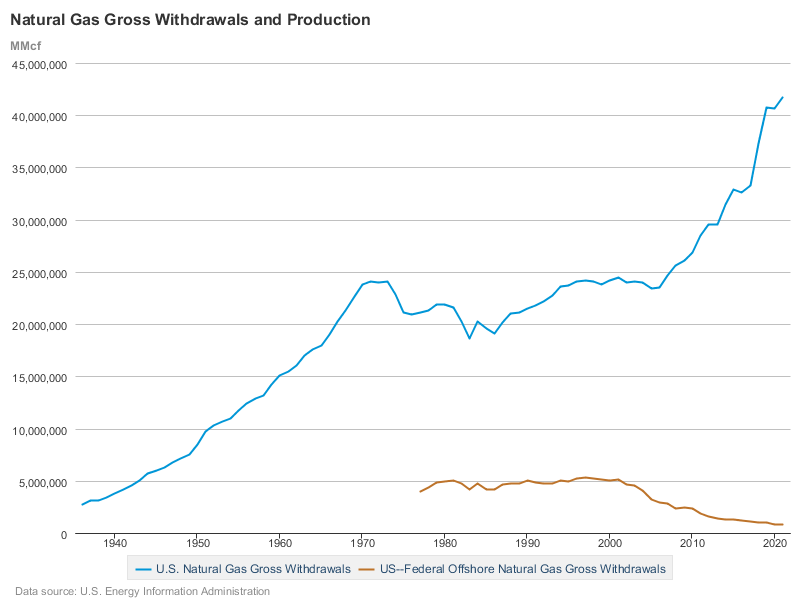
Natural gas production is a different story. Norway has been sustaining and growing offshore gas production, while Gulf of Mexico gas production has been in free-fall. Total US production has nonetheless grown sharply over the past 17 years thanks to the shale boom (see the chart below). In the 1980’s, the GoM accounted for 20-25% of US gas production. The GoM share is now only 2%, most of which is gas that is associated with deepwater oil production. Nonassociated offshore gas has important advantages that should not be ignored.

Read Full Post »

On January 20th, the offshore world lost a superstar when Gary Lore’s courageous battle with pancreatic cancer ended. Gary was the nation’s top expert on offshore oil and gas resources, an outstanding geologist, a natural leader, and a witty and supportive friend and colleague.

Gary grew up in Camden, NJ where he was an outstanding student and athlete at Woodrow Wilson high school. He joined the Dept. of the Interior’s offshore program after earning an M.S. in geology at Rensselaer Polytechnic Institute in 1974.  

During his 32 years with the US offshore program, Gary led resource evaluation units in the Pacific and Gulf of Mexico Regions, and was promoted to Chief of the Resource Evaluation Division at the Minerals Management Service headquarters office in Herndon, VA. A few of Gary’s many career highlights:

  • Authored numerous professional papers on US offshore oil and gas resources and exploration and evaluation models.
  • Advised congressional and cabinet officials on offshore resources and production potential.
  • Directed the use of the complex MONTE CARLO tract evaluation model and was among the few that actually understood it.
  • Participated on the prestigious US oil resources panel convened by DOE and the Univ. of Texas in 1992.
  • Contributed to many special energy assessments including Oil and Gas Technologies for the Arctic and Deepwater.
  • Led the pioneering OCS Connect “e-gov” project that automated governmental transactions with industry, improved timeliness and efficiency, and minimized redundant reporting.

Those of us who worked with him were most fortunate to have had that privilege. RIP Gary, you made a difference.

Gary with Bud and geologist-bagpiper Norm Weaver (This and the previous photo by Keith Good)
Gary and Janet at their wedding 49 years ago

Read Full Post »

This misleading headline was featured in Reuters’ “Power Up” newsletter (26 Jan 2023):

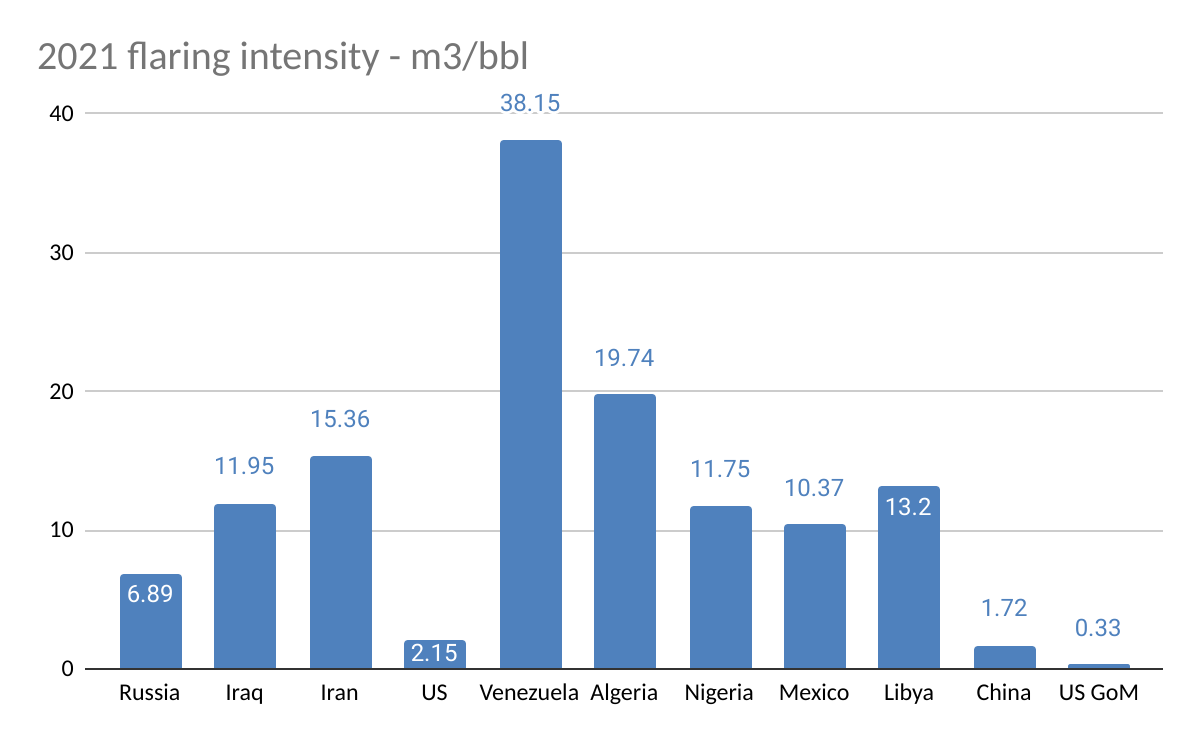
An objective flaring assessment would have also considered the volume of oil and gas produced. The World Bank uses flaring intensity (m3 flared per bbl of oil produced) to normalize their flaring data and provide perspective. The chart below is derived from World Bank flaring intensity data and Gulf of Mexico data from mandatory flaring and venting reports for the same year (2021). These normalized data sharply contradict the Reuters message.

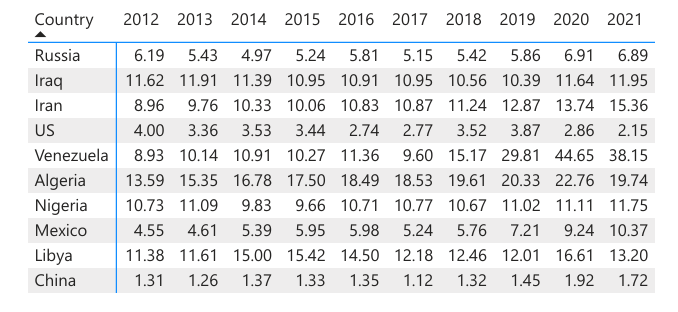
Reuters might also have noted (World Bank table below) that the US flaring intensity score declined by 46% between 2012 and 2021. Each of the other “top flaring” countries had flaring intensity increases during that period.

World Bank

Finally, while I applaud the World Bank’s efforts to monitor worldwide flaring, some issues with their methodology were identified in a prior BOE post.

Read Full Post »

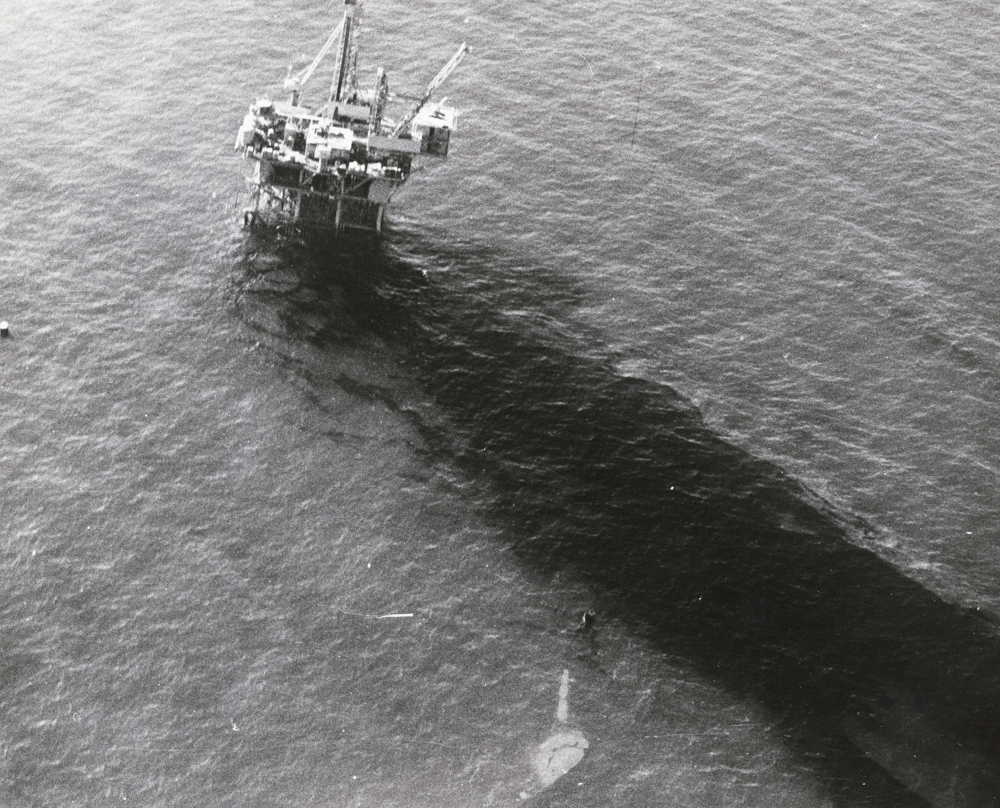
Details on the Santa Barbara blowout from last year’s BOE post.

Read Full Post »

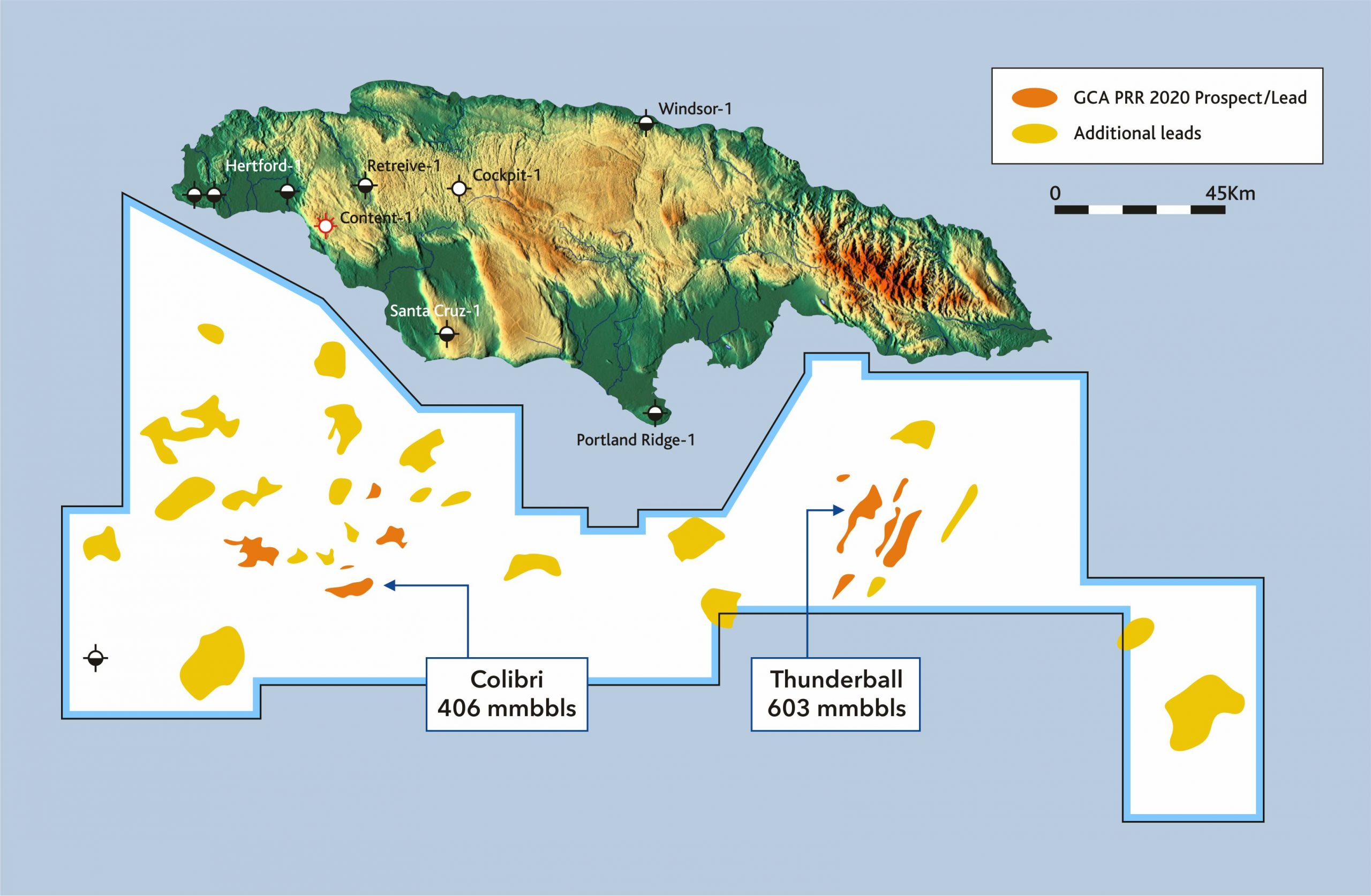
United’s Walton-Morant license, offshore Jamaica

Note that the license covers 22,400 sq km, as compared to ~25 sq km for a typical US offshore lease block.

“In Jamaica, the farm-out of our high impact exploration licence with 2.4 billion barrels of unrisked mean prospective oil resource is picking up pace with a timetable for receipt of indicative offers due in Q2 2023. 

In Jamaica, as part of the licence extension that was granted, technical studies that have provided additional positive support to the farm-out process have been completed

United Oil and Gas

previous Jamaica posts

Read Full Post »

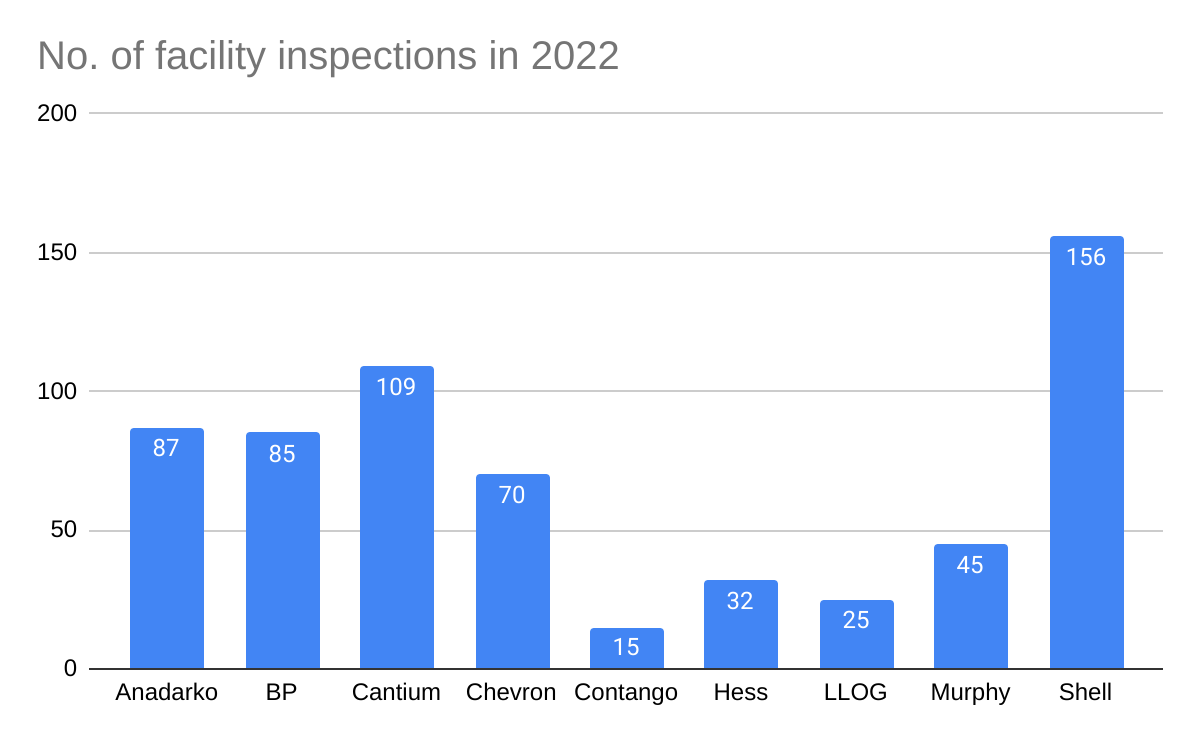
The Honor Roll companies for 2022 (listed alphabetically) are Anadarko (Oxy), bp, Cantium, Chevron, Contango, Hess, LLOG, Murphy, and Shell.

Our criteria:

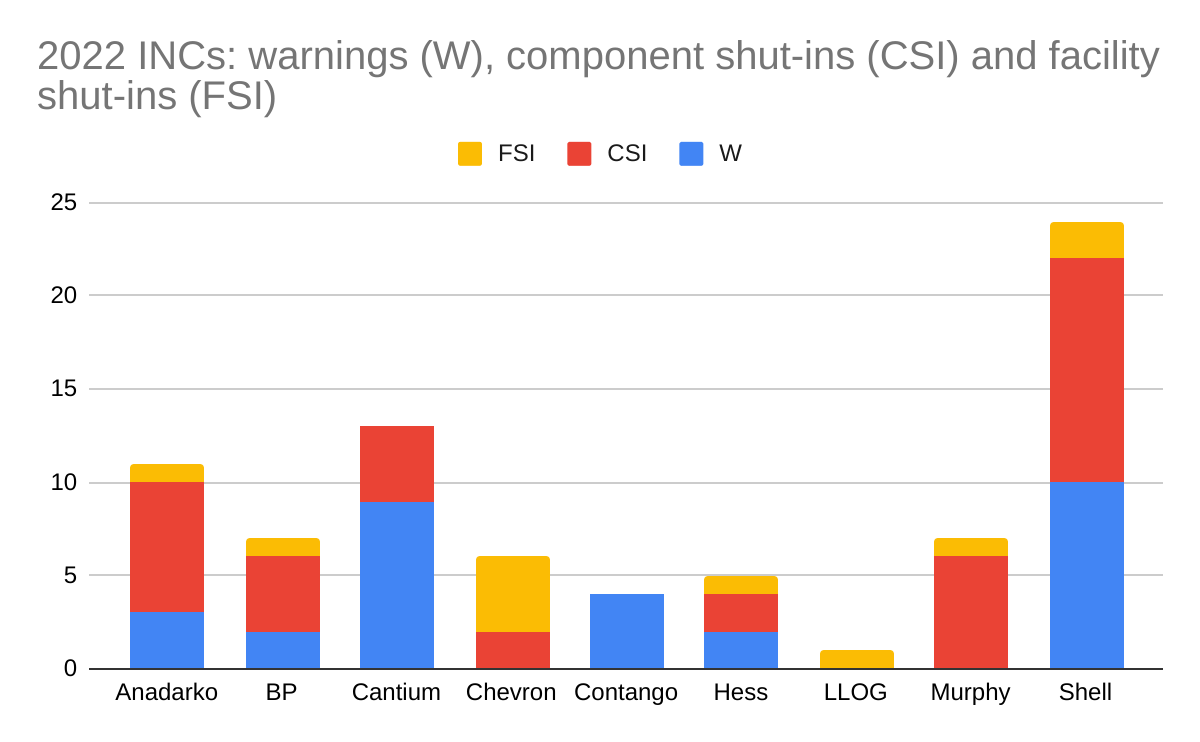
  • Must average <0.3 incidents of noncompliance (INCs) per facility-inspection.
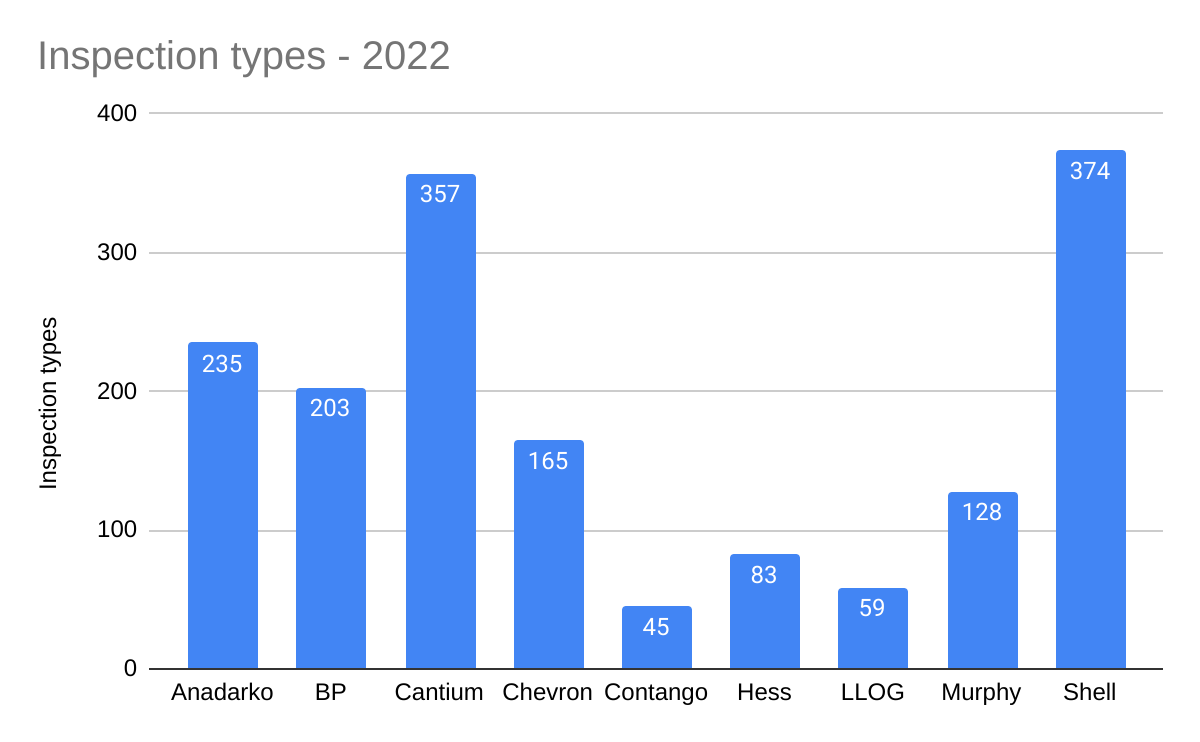
  • Must average <0.1 INCs per inspection-type. (Note that each facility-inspection may include multiple types of inspections (e.g. production, pipeline, pollution, Coast Guard, site security, etc). On average, each facility-inspection included 3.25 types of inspections in 2022. Here is a list of the types of inspections that may be performed.)
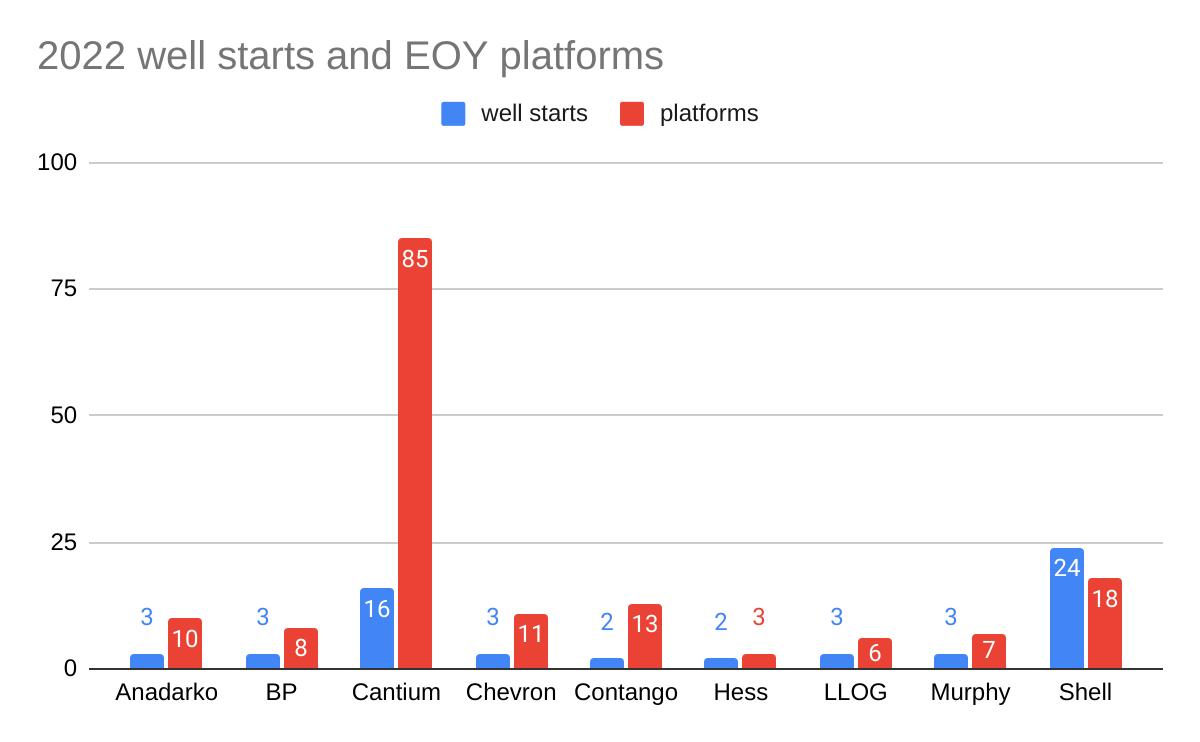
  • Must operate at least 3 production platforms and have drilled at least one well (i.e. you need operational activity to demonstrate compliance and safety achievement).
  • May not have a disqualifying event (e.g. fatal or life-threatening incident, significant fire, major oil spill). Due to the extreme lag in updates to BSEE’s incident tables, investigation and news reports are used to make this determination.
  • Pacific and Alaska operations will be considered separately.
oil (million bbls)gas (BCF)
Shell145.8163.5
bp82.457.1
Chevron79.445.2
Anadarko59.650.8
Murphy28.145.5
LLOG19.634.3
Hess17.939
Cantium3.95.3
Contango0.023.5
2022 production through Oct.

Mid-Year 2022 review

Read Full Post »

Nine operating companies have qualified.

Read Full Post »

A rare photo of a Big-Fin Squid, caught on camera on November 11th 2007 by a Shell Oil company ROV, at a depth of 2,386 meters (1.5 miles). This species of Squid dwell at extreme depths, and are characterised by their long, thin tentacles. They can reach almost 20ft long when fully grown.

Hasan Jasim

ROV video:

Of course, much of our knowledge about deepwater biology is attributable to oil and gas exploration and the associated environmental studies. This includes the discovery and study of chemosynthetic communities in the Gulf of Mexico:

Some of the same conditions responsible for petroleum deposits also provide the basis for biological communities that receive energy from chemicals through a process called chemosynthesis (in contrast to photosynthesis that provides energy to terrestrial and shallow-water communities through processes in which sunlight is the basic energy source).

NOAA
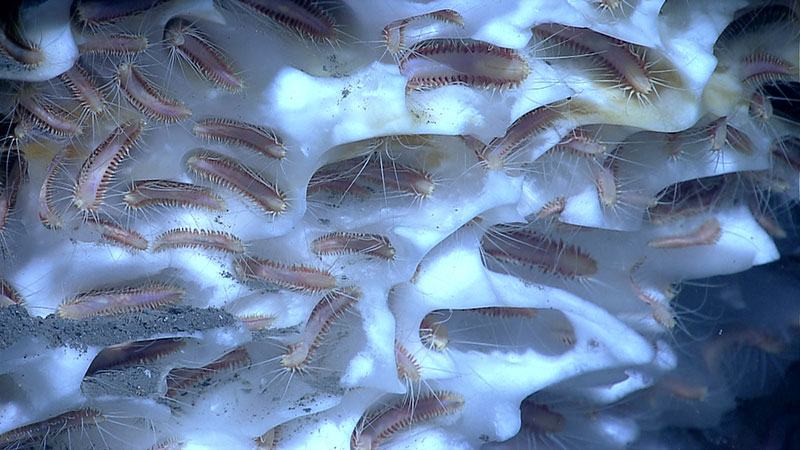
An aggregation of ice worms inhabiting methane hydrate. These worms eat chemoautotrophic bacteria using chemicals in the hydrate. Image courtesy of the NOAA Office of Ocean Exploration and Research, Gulf of Mexico 2012

Read Full Post »

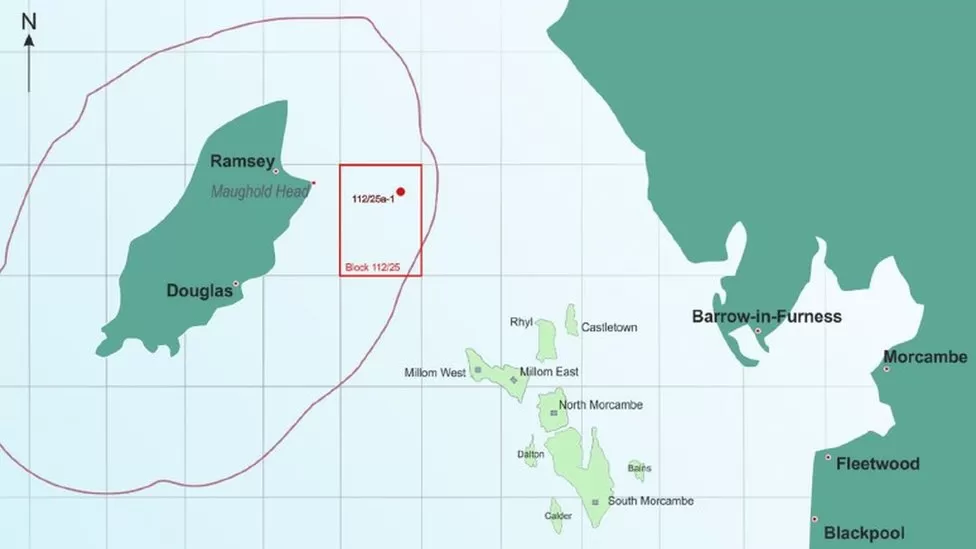
A firm with a licence to drill for natural gas in Manx waters expects to begin exploratory works in October, its chief executive has said.

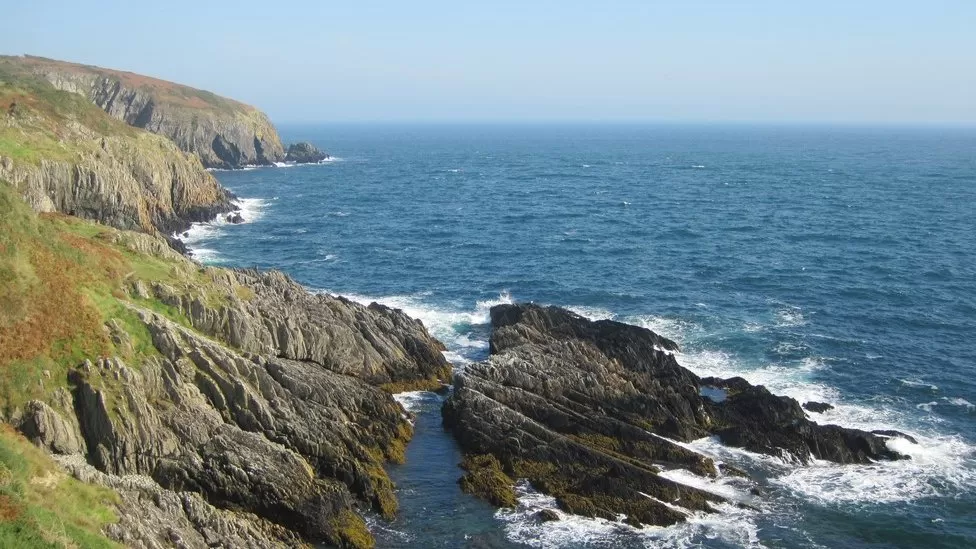
Crogga has appointed Three60 Energy to drill an appraisal well to understand how much gas is under the seabed 17km (10.5miles) off Maughold Head.

BBC
Isle of Man

Read Full Post »

The attached NTSB report includes details on the timing of the accident, observations from personnel remaining on the platform, condition of the helipad, nature and location of the debris, and the recovery of the fuselage and separated tail boom. The engine control unit (ECU) was recovered and sent to an NTSB lab for data extraction.

Link to previous posts on the crash.

Read Full Post »

« Newer Posts - Older Posts »