Feeds:
Posts
Comments

Archive for the ‘Offshore Energy – General’ Category

I’m posting Sunday’s 60 Minutes segment that focused on deep sea mining and the failure of the US to ratify the UN Convention on the Law of the Sea (UNCLOS). Supplementary comments:

  • Most Federal employees involved with ocean energy policy, past and present, have supported US government ratification of UNCLOS.
  • The offshore industry has long supported UNCLOS. Industry trade associations, including API, IADC, and NOIA, are on the record as favoring ratification.
  • While concerns about UN management of deep sea mining access are understandable, some coordinated administrative structure is needed.
  • The Metals Company and other companies pursuing deep sea mining opportunities clearly disagree with the assertion that ocean floor mineral harvesting is not economically viable.
  • While it’s too soon to draw firm conclusions, there are reasons to believe that deep sea mining is environmentally preferable to onshore mining.

Read Full Post »

Remembering the 123 offshore workers who lost their lives on this day in 1980 in one of the offshore industry’s great tragedies 🙏

See the excellent interview with Magne Ognedal that describes the evolution of Norway’s highly regarded offshore regulatory regime following the Alexander Kielland tragedy.

Photo: Norwegian Petroleum Museum

Read Full Post »

Unsurprisingly, the winner is natural gas.

A new report ranks eight key energy industry sectors based on their ability to meet the growing demand for affordable, reliable, and clean electric power generation.

As governments around the nation attempt to impose a transition from traditional energy resources to energy sources open referred to as renewables, natural gas is the energy source that is best suited to integrate with the intermittency inherent in the use of wind and solar. Gas provides a reliable, affordable, and increasingly clean source of energy in both traditional and “carbon-constrained” applications.

Gas faces headwinds in the form of increasingly extreme net zero energy policies that will constrict supplies if implemented as proposed. Gas could also improve overall reliability if onsite storage was prioritized to help avoid supply disruptions that can occur in just-in-time pipeline deliveries during periods of extreme weather and demand.

MCPP-NWU Report Card

This blog has been saluting natural gas for years, most recently in this post. From an environmental standpoint, offshore natural gas production is particularly attractive, especially nonassociated gas-well gas.

Read Full Post »

State-owned Chinese National Offshore Oil Corp. (CNOOC) has now joined Exxon in filing an arbitration claim to establish their right over Hess’s share of the prolific Stabroek block offshore Guyana. How did CNOOC acquire its 25% share in the block?

So, an apparent afterthought in CNOOC’s takeover of Nexen has (1) proven to be extremely profitable, (2) given the company and the Chinese government leverage in the Exxon-Chevron supermajor dispute, and (3) opened the door for CNOOC to increase their interest in the massive Stabroek field.

Read Full Post »

Swimming upstream against the Federal policy current, Gulf of Mexico drilling is demonstrating impressive forward progress. Baker Hughes reports 22 active GoM rigs on 3/15/2024, an increase of 3 from the previous week.

Glancing at the charts, this appears to be the highest GoM rig count since Nov. 2019, and is double the recent low of 11 in 2022.

It’s unclear whether Baker Hughes is including the CCS drilling operation offshore Texas. If so, the actual oil and gas rig count is 21 rather than 22.

Baker Hughes also reports 1 active rig offshore California (decommissioning?) and 1 active rig offshore Alaska (Endicott or Northstar?)

Per Baker Hughes, no rigs are currently active offshore Canada.

Read Full Post »

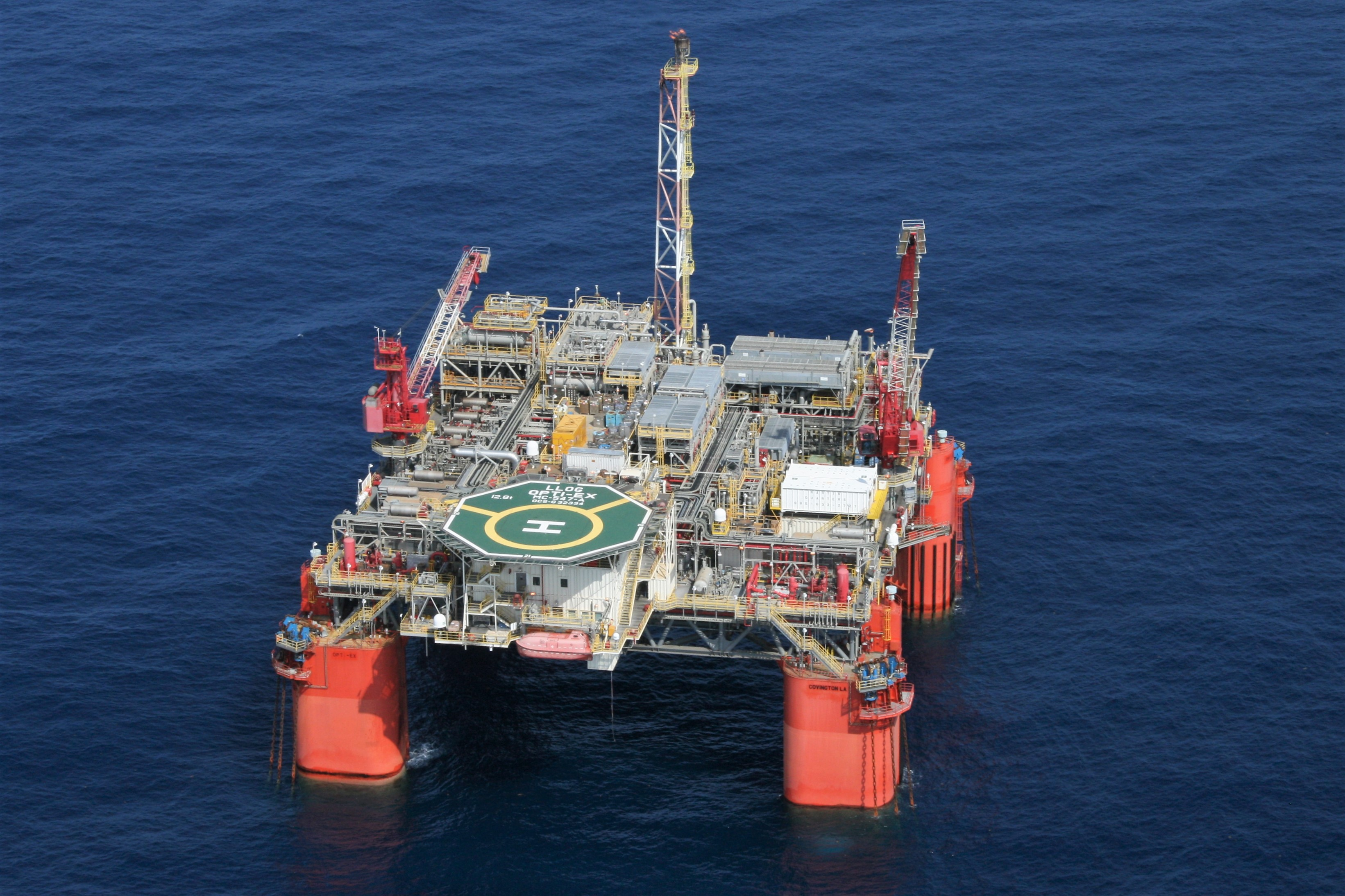
Jerry Boelte, LLOG founder and offshore energy leader, passed away last month in a single vehicle accident. Boelte, a New Orleans native and LSU petroleum engineering grad, turned LLOG into a major deepwater player in the Gulf of Mexico.

In 2023, LLOG was the 6th biggest oil producer in the Gulf of Mexico trailing only Shell, bp, Anadarko, Chevron, and Murphy. As a natural gas producer, LLOG ranked fifth ahead of major GoM operators like Chevron and Hess.

Boelte built LLOG into a company with a strong commitment to safety and environmental protection. In that regard, the company achieved BOE Honor Roll status in 2023 and 2022.

LLOG’s ‘Who Dat’ floating production system in 3100′ of water in Mississippi Canyon Block 547 has produced more than 100 million bbls of oil equivalent. More on ‘Who Dat.’

Read Full Post »

A post from last March discussed the high and seemingly unfair royalty and rental rates for new leases in the shallow waters of the Gulf of Mexico shelf. A 50% increase in the shelf royalty rate for lease sales 259 and 261 combined with rather punitive rental rates have likely contributed to the sharp decline in bidding for shelf lease blocks (see table below).

This decline in shelf bidding is unfortunate because the smaller companies that operate in the shallow waters of the Gulf are critical to sustaining the production infrastructure. These companies are also significant producers of environmentally favorable nonassociated (gas-well) natural gas.

lease saleshelf blocks with bids
(excluding CCS bids)
sum of high shelf bids
($million, excluding CCS bids)
25746$8.1
25929$4.1
26113$1.7
The royalty rate for shelf production jumped 50% from sale 257 to sales 259 and 261

BOEM has completed their evaluation of the Sale 261 shelf bids (see below). Each of these blocks received only a single bid, and every bid was accepted. Ironically, the invalid CCS bids for blocks that have no oil and gas value, were the first to be accepted. This was also the case for Sales 257 and 259.

(1) All of the Repsol bids were $32.50/ac. Total bids varied by block size, but were $187,200 for the 5760 acre blocks.
  • Seek a legislative fix to the Inflation Reduction Act😉 provision that established a 1/6 royalty rate floor for all OCS leases (formerly the royalty rate was 1/8 for leases on the shelf).
  • In the interim, administratively lower the royalty for shelf leases to 1/6 (from 18 3/4%).
  • Reconsider the rental rate scheme for shelf leases.
  • For future oil and gas lease sales, accept all high bids that exceed the specified minimum bid (currently $25/ac for the shelf). The Gulf of Mexico shelf has been extensively explored and developed for 70 years. While prospects remain, they are generally marginal as evidenced by the recent lease sale results. Fair market value is what any company is willing to bid (above the specified minimum).
  • Focus on assuring that lease purchasers are technically qualified to minimize safety risks, and that financial assurance for decommissioning (for new and existing leases owned by the high bidder) has been fully addressed.

Read Full Post »

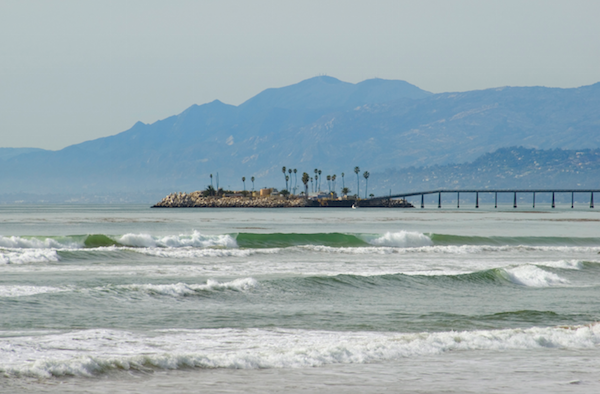
Rincon Island, “the 9th Channel Island

Per John Smith, Rincon Island (Phase 2) will be the first major production facility decommissioning project in California state waters since the Chevron 4-H platform removals in 1996.

Rincon Island and the onshore facility were constructed in 1959 and used for oil and gas production. In December 2017, Rincon Island Limited Partnership, the most recent lessee, transferred its lease interests to the State after becoming financially insolvent. Phase 1 of decommissioning included the plugging and abandonment of all oil and gas wells and removal of service equipment at Rincon Island.

The proposed Phase 2 project, analyzed within the Environmental Impact Report (executive summary attached), would prudently retain Rincon Island and the Rincon Island Causeway in their current configuration. Phase 3 will prepare Rincon Island and the Onshore Facility to be leased for yet-to-be determined new uses.

Read Full Post »

In light of the TikTok drama in Washington, I thought I’d take another look at Chinese ownership of Gulf of Mexico oil and gas leases.

A year ago, it was reported that State owned China National Offshore Oil Corp. (CNOOC) was considering an exit from its operations in the US, Canada, and the UK because of sanctions concerns. That may still be the case for other properties, but CNOOC has retained its Gulf of Mexico lease interests.

Per BOEM lease data, CNOOC continues to own 25% and 21% interest respectively in the important Stampede (Green Canyon 468, 511, and 512) and Appomattox (Mississippi Canyon 391, 392, and 393) deepwater projects. CNOOC reports are positive on those operations, noting that the production wells have performed better than expected.

CNOOC also owns interest in five other GoM leases. No CNOOC lease interest has been assigned to other companies in the past two years.

As is the case with CNOOC’s position in Guyana’s Stabroek block, their GoM lease holdings were acquired as part of CNOOC’s takeover of Nexen in 2013.

I welcome foreign investment in our offshore program, and see little downside in Chinese entities owning minority shares of OCS leases. GoM lease ownership does advance CNOOC’s understanding of deepwater exploration and development technology, but that knowledge can also be acquired elsewhere, sometimes in partnership with US companies (as is the case in Guyana).

Read Full Post »

(2) the Secretary may not issue a lease for offshore wind development under section 8(p)(1)(C) of the Outer Continental Shelf Lands Act (43 U.S.C.1337(p)(1)(C)) unless
(A) an offshore lease sale has been held during the 1-year period ending on the date of the issuance of the lease for offshore wind development; and (B) the sum total of acres offered for lease in offshore lease sales during the 1-year period ending on the date of the issuance of the lease for offshore wind development is not less than 60,000,000 acres.

‘Inflation Reduction Act of 2022,” p. 646

Lease Sale 261 was held on 12/20/23. Absent legislative action, no wind leases may be issued after 12/20/24 unless another oil and gas lease sale is held prior to that date. Given that the minimalist 5 year oil and gas leasing plan, which is being challenged, does not propose a sale until 2025, wind lease issuance will likely be suspended at the end of the year. (Note: I wonder if the legislative restriction also applies to lease assignments from existing owners to new owners? Probably not, but that would be very significant given the current state of the offshore wind industry.)

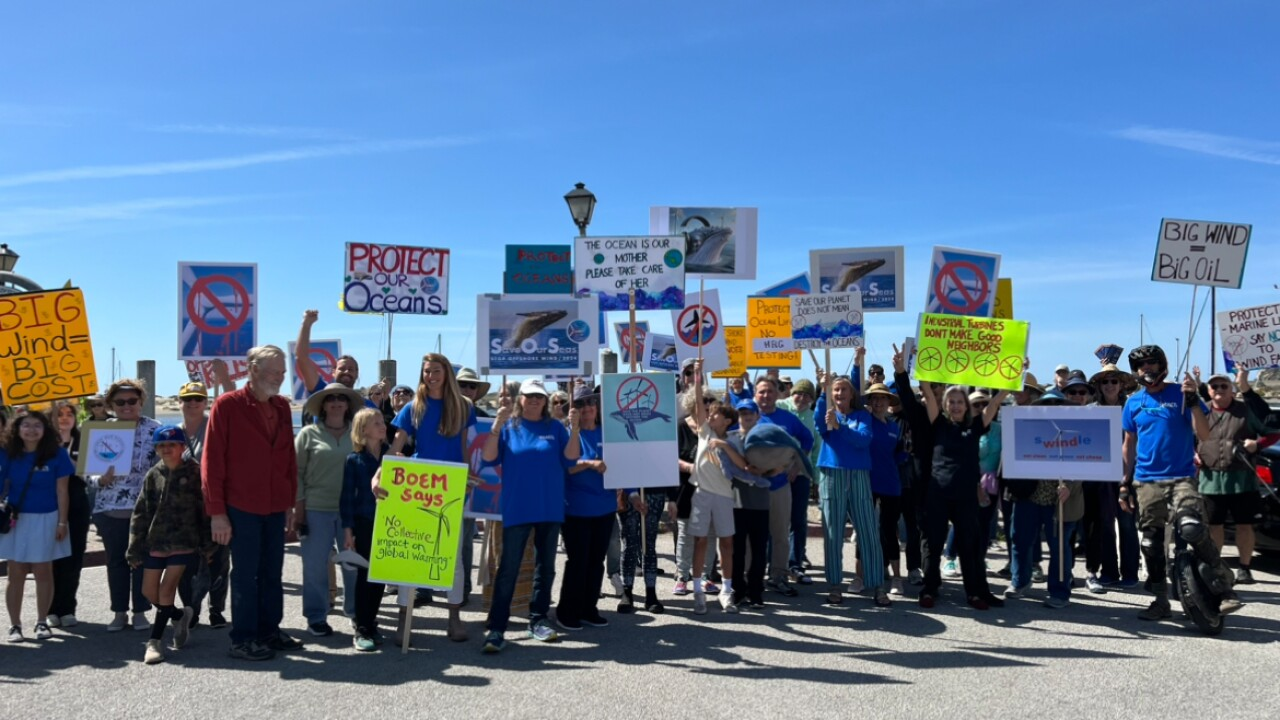
The legislative restriction may be a partial explanation for the apparent rush to issue wind leases. 16 new wind leases were issued in 2022 and 2023, bringing the total number of active leases to 36. The philosophy seems to be this: issue as many leases as you can, as fast as you can, wherever you can (ala James Watt’s failed strategy for the oil and gas program.) Coastal residents are not entirely thrilled.

Perhaps the wind program should be required to develop 5 year leasing plans, as is the case for the oil and gas program. This might facilitate a more holistic approach to wind energy development and ease concerns about cumulative impacts.

Morro Bay protest

Read Full Post »

« Newer Posts - Older Posts »