Top 5 Gainer Stocks for May 19, 2025$UNH UnitedHealth Group Incorporated 8.21%$BGC BGC Group, Inc 8.90%$HSAI Hesai Group 10.07%$ZI ZoomInfo Technologies Inc. 10.27%$SOC Sable Offshore Corp. 14.41%#stocks #stockmarketcrash #StocksToWatch #StockMarket #StocksToBuy… pic.twitter.com/CMieHfpbJU
— AryaFin (@AryaFintech) May 19, 2025
Archive for the ‘Offshore Energy – General’ Category
Sable Offshore topped the charts yesterday
Posted in California, Offshore Energy - General, tagged production restart, Sable Offshore, Santa Ynez Unit on May 20, 2025| 2 Comments »
Sable restarts production!!!
Posted in California, Offshore Energy - General, pipelines, tagged 5/15/2025, onshore pipeline, production restart, Sable Offshore, Santa Ynez Unit on May 19, 2025| Leave a Comment »
05/19/2025
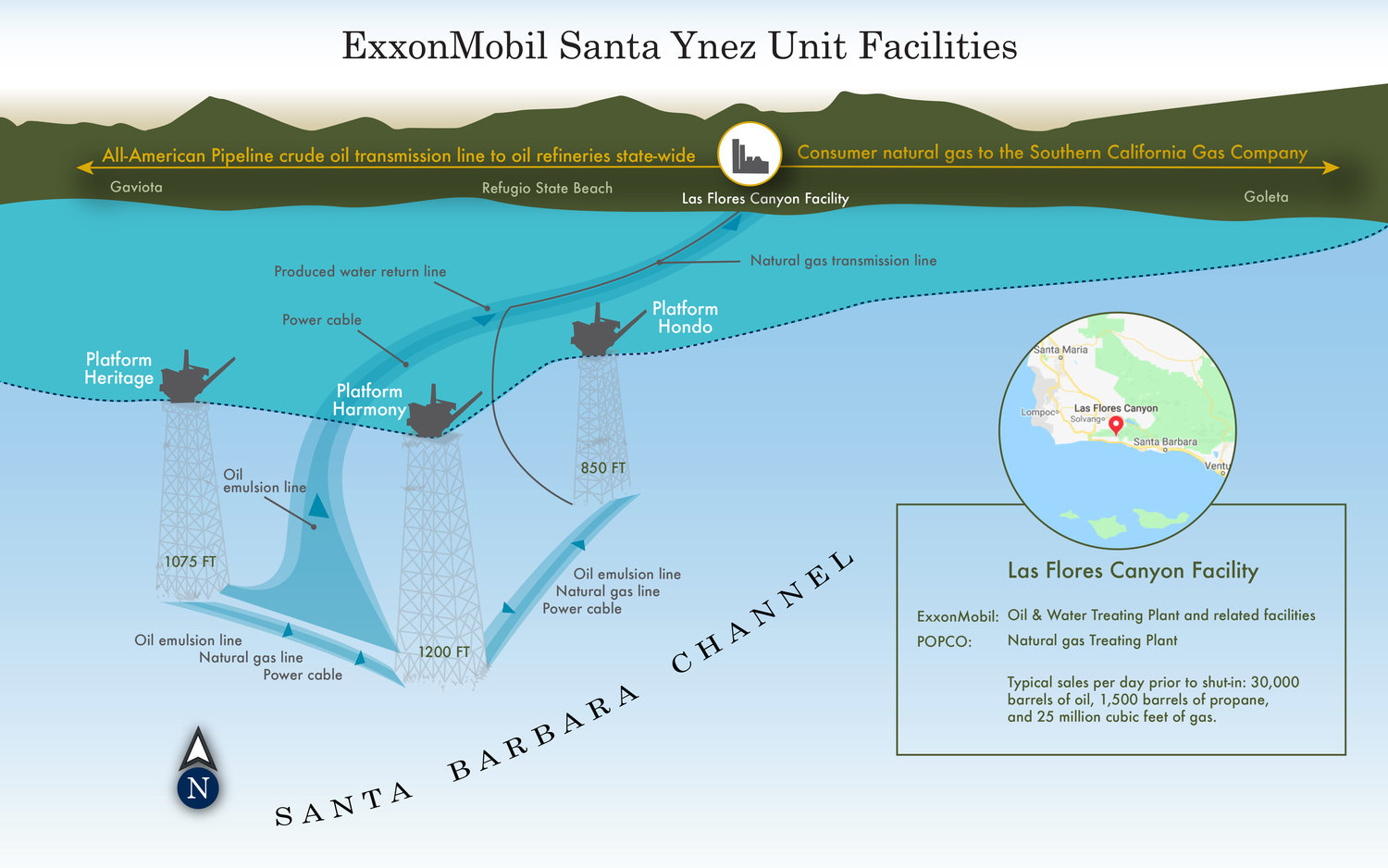
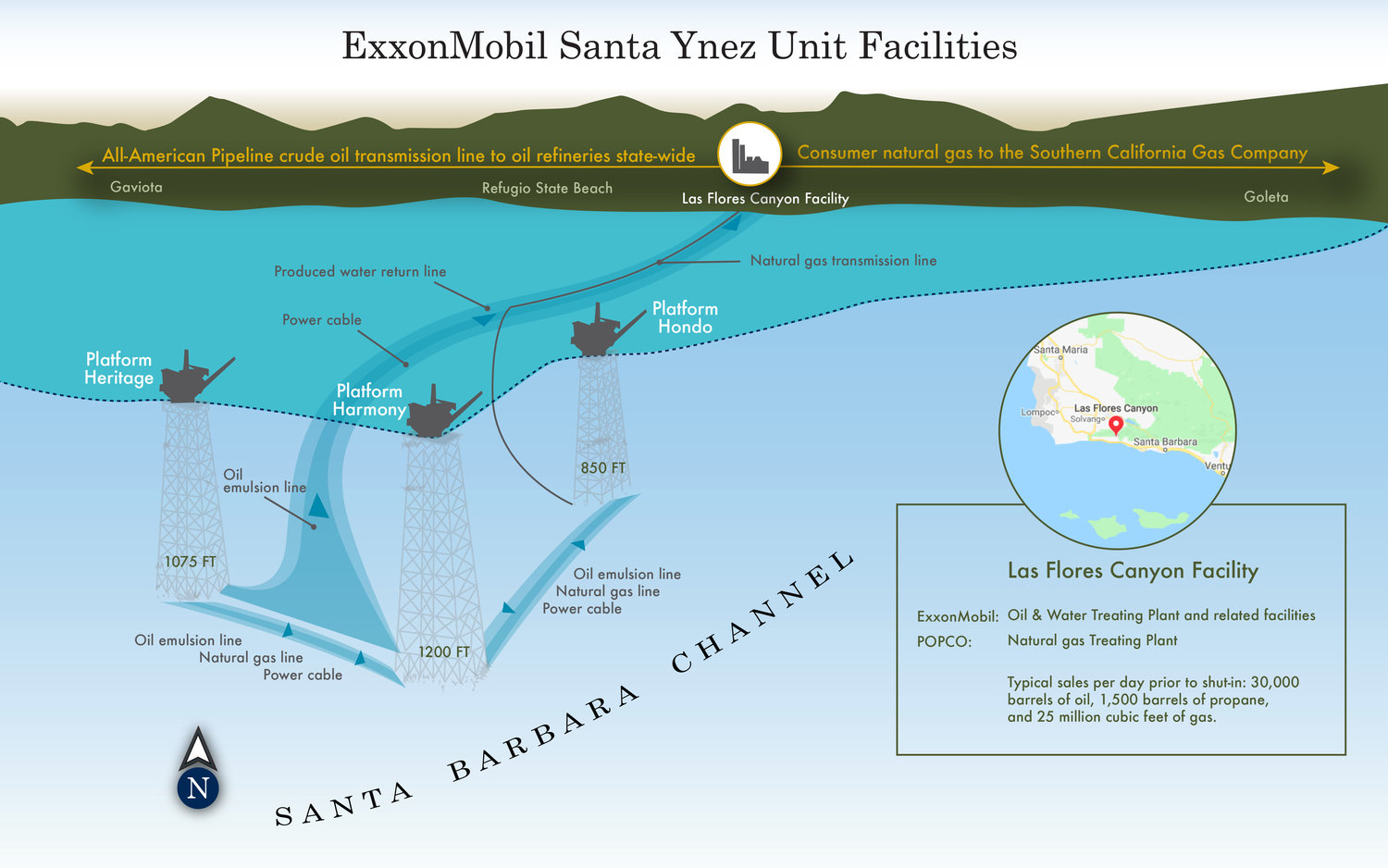
HOUSTON–(BUSINESS WIRE)— Sable Offshore Corp. (“Sable,” or the “Company”)(NYSE: SOC) today announced that as of May 15, 2025, it has restarted production at the Santa Ynez Unit (“SYU”) and has begun flowing oil production to Las Flores Canyon (“LFC”). Additionally, with the completion of the Gaviota State Park anomaly repairs on the Las Flores Pipeline System (the “Onshore Pipeline”) on May 18, 2025, Sable has now completed its anomaly repair program on the Onshore Pipeline as specified by the Consent Decree, the governing document for the restart and operations of the Onshore Pipeline.
Seven of the eight sections of the Onshore Pipeline have been successfully hydrotested. Sable will complete the final hydrotest in order to meet the final operational condition to restart the Onshore Pipeline as outlined in the Consent Decree. Sable expects to fill the ~540,000 barrels of crude oil storage capacity at LFC by the middle of June 2025 and subsequently recommence oil sales in July 2025.
Production Restart
- On May 15, 2025, Sable initiated the flow of oil production from six wells on Platform Harmony of the SYU to LFC at a rate of ~6,000 barrels of oil per day.
- Sable has been testing wells on Platform Harmony throughout May 2025 and the well tests have performed consistently stronger than they did at the time of shut-in on May 19, 2015 when the SYU produced approximately 45,000 barrels of oil equivalent per day.
- Approximately 30% of the 32 producing wells at Platform Harmony have been tested as of May 18, 2025 with the remaining Platform Harmony wells projected to be tested over the course of the next several days.
- Sable expects to initiate production from the additional 44 wells on Platform Heritage and the additional 26 wells on Platform Hondo in July 2025 and August 2025, respectively.
Kudos to NOPSEMA for their priorities and attention to non-work related fatalities
Posted in Australia, NOPSEMA, Offshore Energy - General, tagged Georges Bank Monitor, non-occupational fatalities, NOPSEMA, offshore safety, priorities, The Regulator on May 14, 2025| Leave a Comment »
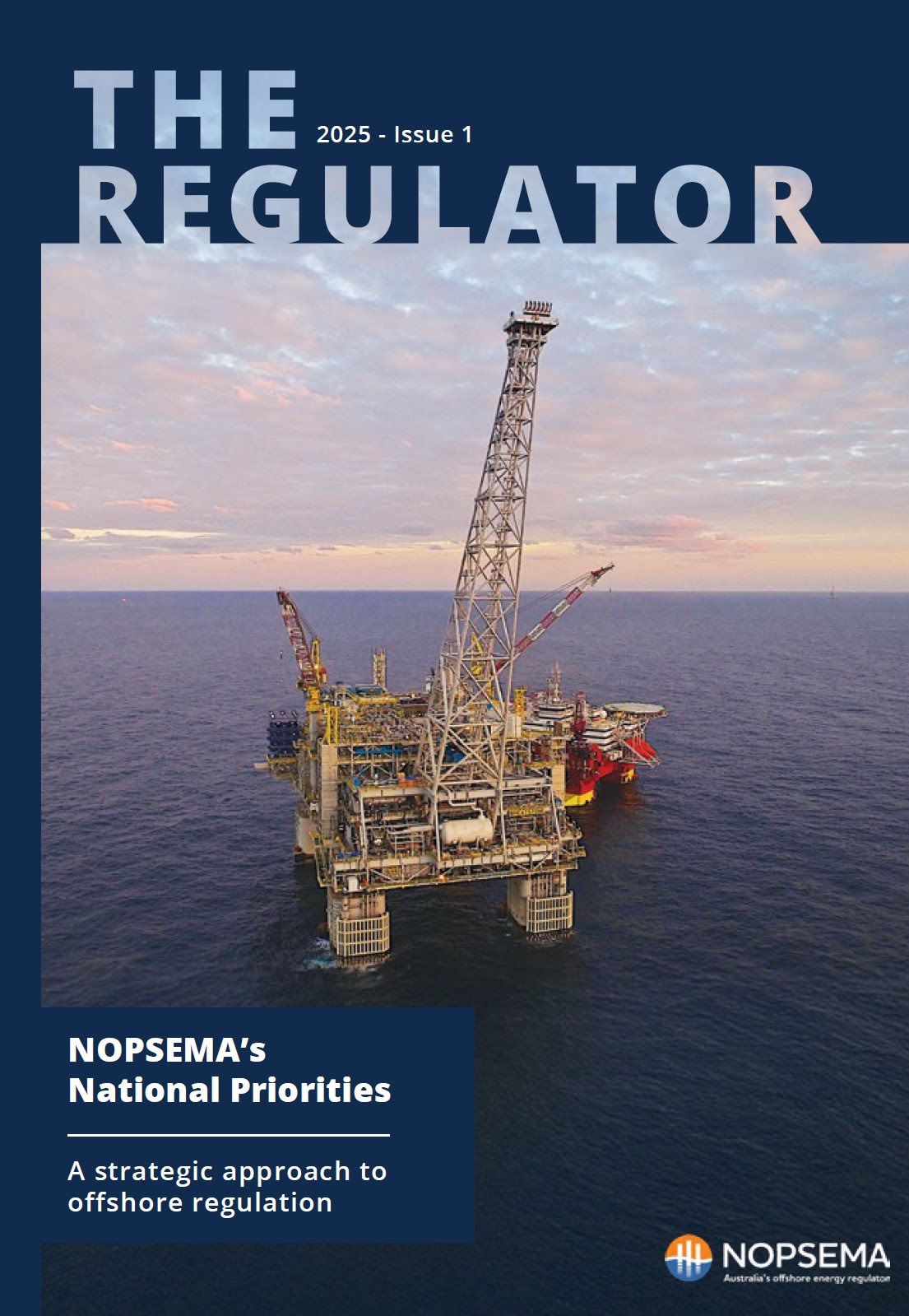
Firstly, BOE applauds NOPSEMA for being the only offshore safety regulator to publish a newsletter on a regular basis.
Their latest issue identifies and explains their five National Priorities. These priorities could apply worldwide:
- Structural integrity – Ensuring offshore assets remain safe and well maintained.
- Addressing redundant wells – Strengthening oversight to ensure wells are decommissioned responsibly.
- Psychosocial health – Protection of worker mental health and well being.
- Control of work – Promoting effective systems to ensure work is carried out safely and we learn from incidents to continually improve.
- Leadership and management – Sharing how decision-making impacts safety and environmental outcomes on offshore facilities
I also strongly support their commitment to investigating non-work related fatalities at offshore facilities. These incidents should not simply be classified as non-occupational with no further explanation. NOPSEMA’s investigation of these fatalities involves the following steps:
- Identify the circumstances of the reported death.
- Assess the immediate response to the reported death.
- Identify any work related causal factors present prior to the reported death.
- Identify the cause of death as provided by the relevant Coroner or medical practitioner
Lastly, I like the name of their newsletter, which shows pride in being an offshore safety regulator. Safety regulators facilitate offshore energy development by identifying and mitigating safety and environmental risks. With few exceptions, they perform their legislatively mandated duties effectively and efficiently. I’m proud to have been an offshore safety regulator for many years.
Sable Offshore Sues Santa Barbara County over Blocked Transfer Permit
Posted in California, Offshore Energy - General, Regulation, tagged Exxon, litigation, Sable Offshore, Santa Barbara County, Santa Ynez Unit, tie vote on May 13, 2025| Leave a Comment »
A good Nick Welsh, Santa Barbara Independent article has been brought to my attention by John Smith. Bonus points for the baseball analogy:

“In baseball, ties famously go to the baserunner, but in county government it’s forced a legal fight in the courts.”
“The oil company Sable Offshore is insisting that when the County Board of Supervisors voted 2-2 on whether or not to allow another oil company, Exxon, to transfer its permits to Sable, the tie goes to Sable.”
“Accordingly, Sable — much in the limelight recently — just filed a lawsuit against the Santa Barbara County Board of Supervisors in federal court to make that point. Joining Sable in this dispute is ExxonMobil, the oil giant that sold Sable its three offshore platforms, its 120-mile pipeline, and its onshore oil storage and processing facilities known as the Santa Ynez Unit two years ago.”
Because the Planning Commission had voted 3-1 to allow the transfer, Sable argues that the 2-2 Supervisors vote upholds the Planning Commission decision.
Never a dull moment in the Santa Ynez Unit restart doneybrook. More on the tie vote here and here.
Sable clears another hurdle
Posted in California, Offshore Energy - General, Regulation, tagged California Dept of Parks, exemption notice, Gaviota State Park, pipeline repairs, production restart, Sable Offshore, Santa Ynez Unit on May 12, 2025| Leave a Comment »

John Smith reports that Sable has cleared another significant hurdle in its attempt to restart production in the Santa Ynez Unit. The California DEPARTMENT OF PARKS AND RECREATION has determined that no permit is required for the pipeline anomaly digs in Gaviota State Park (see attached).
The reasons for the exemption are that the project consists of repairs to an existing facility with no expansion of use, and the footprint of the pipeline remains the same.
Maybe the SYU restart is not Mission Impossible after all.
Norway launches largest oil and gas exploration offering featuring the Barents Sea
Posted in energy policy, Norway, Offshore Energy - General, UK, tagged Barents Sea, largest offering, Norway, offshore oil and gas, Terje Aasland on May 10, 2025| Leave a Comment »
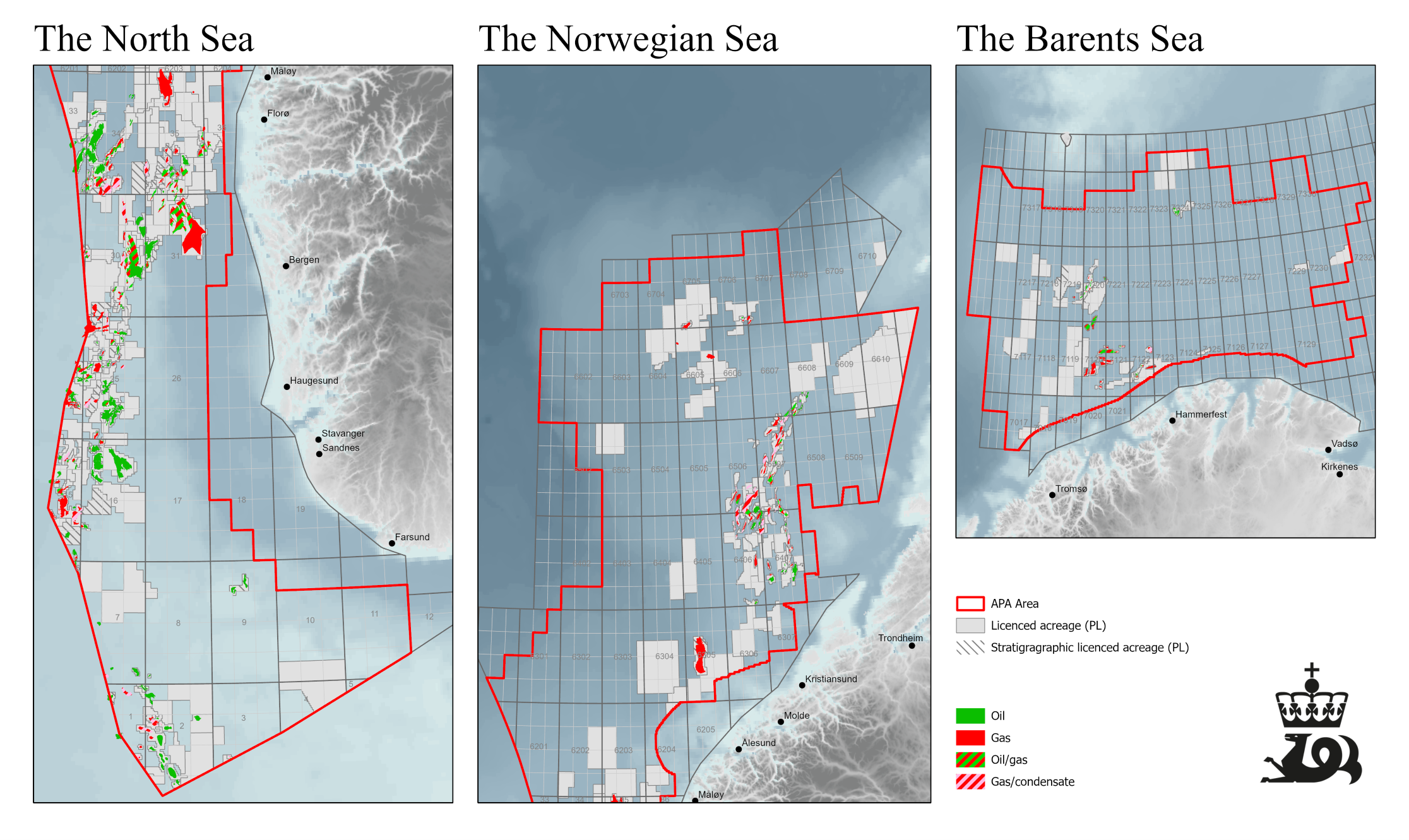
“We will explore more, find more and extract more. Therefore, it is important to ensure that companies have stable access to exploration areas. Never before has a larger area been advertised in a licensing round. It is good for Norway and for Europe,” Energy Minister Terje Aasland said in a statement.
Further exploration and more discoveries are crucial to limiting the decline in production on the continental shelf after 2030. The expansion this year gives companies access to significant new acreage in the Barents Sea and we are thus even better positioned to clarify the resource base in the north,” added Aasland.
Comments:
- This is a prudent policy decision that underscores Norway’s commitment to sustaining oil and gas production.
- This should be good news for Equinor, which is 2/3 Norwegian govt owned and has made some ill-advised offshore wind investments.
- Based on the Energy Minister’s quotes (above), one senses that Equinor’s wind investments, particularly those in the US, may not be fully aligned with Norwegian policy.
- Is this a bit embarrassing for the UK, which has essentially been sanctioning its own offshore oil and gas industry? Only last week, Aasland met with his UK counterpart Ed Miliband and entered into a “green industrial partnership” (photo below).

New Orleans woman named President of Shell USA
Posted in Offshore Energy - General, Uncategorized, tagged Collette Hirstius, New Orleans, President USA, Shell, St. Mary's Dominican, Tulane on May 8, 2025| Leave a Comment »

Colette Hirstius, currently Executive Vice President, Gulf of America, will take on the responsibility of President, Shell USA, in addition to her current role as Executive Vice President, Gulf of America, effective August 1, 2025.
In a city where high school ties tend to be strong and enduring, Ms. Hirstius is a graduate of St. Mary’s Dominican HS. Supreme Court Justice Amy Coney Barrett, whose father was an attorney for Shell, and my former Minerals Management Service colleague Kathy Swiler, are also St. Mary’s Dominican graduates.
Ms. Hirstius stayed in New Orleans as an undergraduate, receiving a B.S. degree in geology from Tulane.
Shell is the no. 1 oil and gas producer in the Gulf of America. In 2024, the company produced 171.7 million bbls of oil (26.2% of the GoA total) and 167.4 bcf of gas (24.4% of the GoA total).
Stabroek super-major showdown – who ya’ got? Chutzpah award for CNOOC?
Posted in energy policy, Guyana, Offshore Energy - General, tagged arbitration, Chevron, CNOOC, Exxon, Guyana, International Chamber of Commerce, Stabroek on May 8, 2025| Leave a Comment »
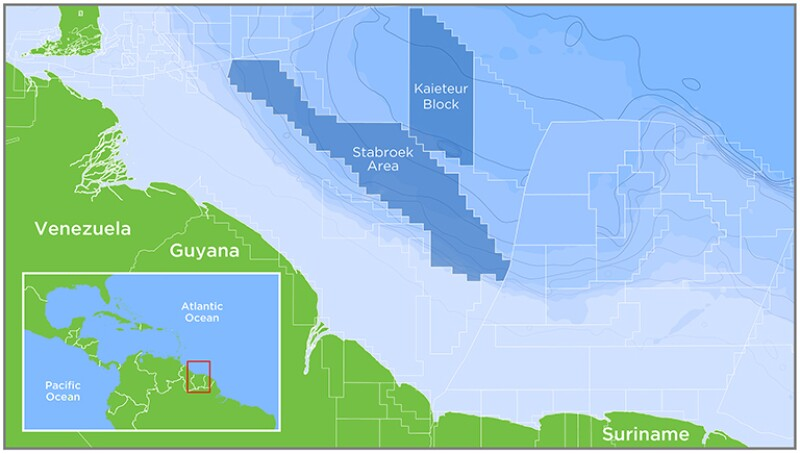
On May 26 in London a three-judge International Chamber of Commerce panel will finally begin considering the Exxon claim that the Stabroek joint operating agreement grants them the right-of-first-refusal in Chevron’s acquisition of Hess’s 30% share of the massive field (>11 billion boe) offshore Guyana.
Exxon’s position claim seems weak to most analysts given that Chevron is not buying the Stabroek share; they are buying the company (Hess) that holds that share.
Exxon’s rather unlikely ally in this case is state-owned China National Offshore Oil Corp. How did CNOOC get a stake in Stabroek and why is their position on the Hess acquisition hypocritical?
CNOOC became a 25% Stabroek partner by acquiring Canadian Nexen in 2013. Their Nexen acquisition, which included Canadian, US, and international assets, was only reluctantly approved by the Canadian and U.S. governments, and probably would not be approved today.
CNOOC’s Stabroek acquisition is thus very similar to Chevron’s. In both cases, the entire company, not just the Stabroek asset, was acquired.
The Stabroek acquisition has proven to be most fortuitous for CNOOC, not only because of the oil and gas resources, but also through the deepwater development expertise that has been gained. Now CNOOC is trying to further leverage their Stabroek position by joining Exxon in challenging the Chevron acquisition.
It would be great if the arbitration proceedings were streamed, but that will not be the case. It also appears unlikely that media will be allowed to attend or that transcripts will be made available.
As previously noted, I would have liked the Guyanese government to be more assertive in this dispute. Stabroek is Guyana’s offshore gem, their most important economic asset. This lengthy dispute has to affect partner teamwork and communication. From safety, environmental, and production standpoints, do you want feuding partners managing such an important national asset?
UK report: “Fishermen v Big Wind: A David and Goliath story”
Posted in energy policy, Offshore Energy - General, Offshore Wind, UK, tagged commercial fishing, conflicts, David v Goliath, Offshore Wind, UK on May 7, 2025| Leave a Comment »
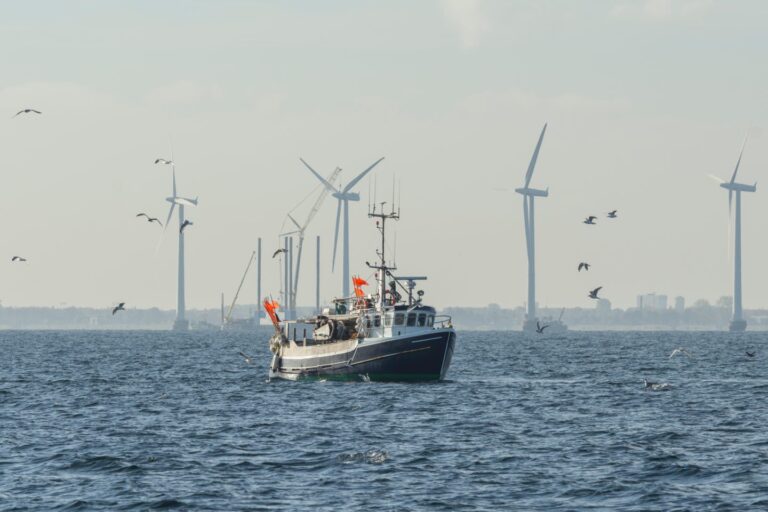
“David is small, semi-nomadic and works across a vast sea area; Goliath is massive and growing rapidly.”
Energy Voice describes the challenges offshore wind poses for the small but culturally important UK commercial fishing industry, highlighting the findings of a fisheries research lab report.
Per Elspeth Macdonal of the Scottish Fishermen’s Federation:
“How it often feels to us is that government says all the right things, has this blue economy vision and all of those great things but, at the end of the day, it actually feels like government is picking winners and losers and, at the moment they seem unable to see past the wind industry as the only game in town.“
This comment on the evolution of the relationship between the fishing and oil industries in the North Sea also aptly describes the US offshore experience:
“The fishing industry eventually learned to live with Big Oil, which is now on the wane, but living with territory-guzzling offshore wind farms – fixed and floating – may prove a lot more challenging.”
“Idle Iron Decommissioning Offshore California and the Need to Amend Reefing Legislation”
Posted in California, decommissioning, energy policy, Offshore Energy - General, Regulation, tagged artificial Reefing plan, California, decommissioning, idle iron, John B Smith, rigs to reefs on May 6, 2025| Leave a Comment »
John Smith shared an outstanding paper (attached) that was presented by co-author Robert Byrd at the SPE Regional Meeting in Garden Grove, CA last week.
John Smith: “My objective in writing the paper is to hopefully spur legislators to recognize the benefits of reefing and the legislative fixes required to facilitate reefing and the removal of aging infrastructure. The California Department of Fish and Wildlife Habitat Lead was very complimentary of the paper and has distributed it to the Interagency Team which is developing a California Artificial Reefing Plan.”
John adds: “They are in the process of creating a statewide artificial reef plan and you can sign up for updates and get more information. The California Artificial Reef Program (CARP) Plan won’t discuss the specifics of Rigs-to-Reefs but will be compliant with the National Fisheries Enhancement Act and National Artificial Reef Plan and meet the BSEE requirement of having an adopted state artificial reef plan. The intent is to add an addendum to the plan when resources become available to move Rigs-to-Reefs forward in California. You can check out the latest program update that further discusses the CARP Plan and Rigs-to-Reefs.”
 Bud's Offshore Energy (BOE)