As explained in the attached Safety Alert, BSEE’s risk-based inspection program has identified deficiencies in safety device bypass practices including:
inadequate documentation
inoperative data history software
bypassing more devices than is necessary
bypassing devices for longer than necessary
missing audit documentation
mistakenly bypassing the entire safety system during production
The regulations restricting the bypassing of safety devices are core elements of OCS regulatory and operator management programs. Because they are critical to process safety, these requirements are widely supported and strictly enforced.
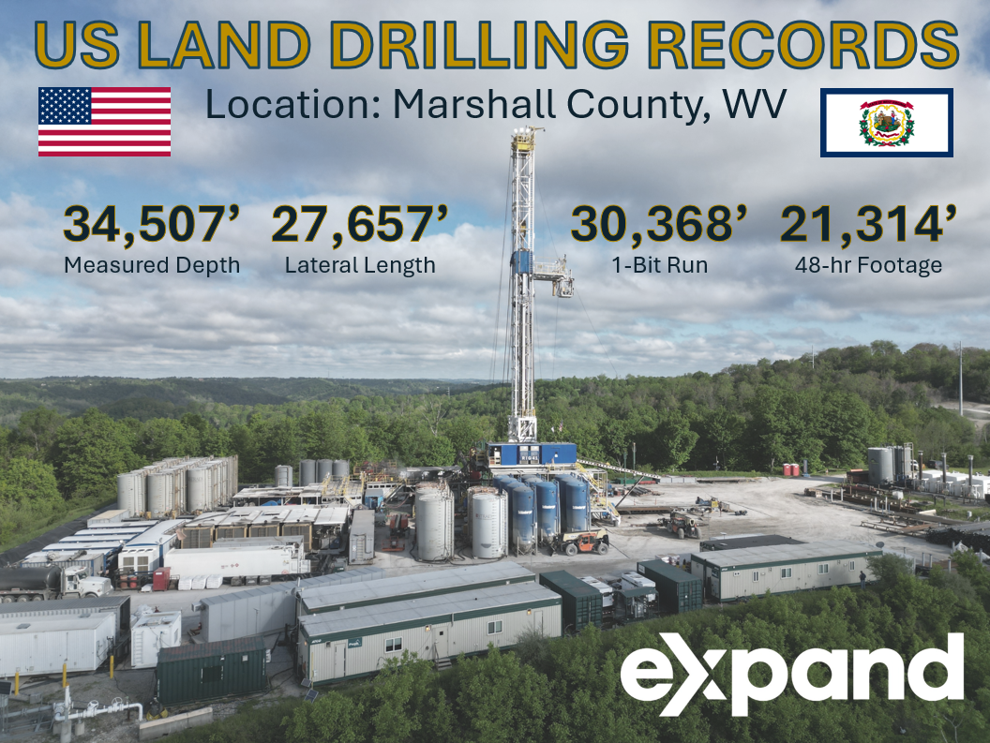
“Country roads” take us to Moundsville, West Virginia where new records were set drilling a “postcard well.”
In addition to the records noted in the picture, these impressive company marks were achieved:
24-hour footage record: 12,370 feet
daily footage record: 2,774 feet/day
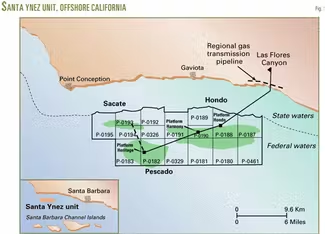
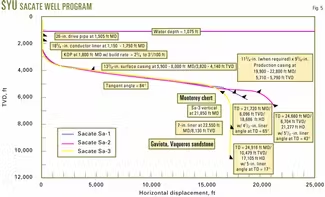
The record US offshore lateral well is in the Santa Ynez Unit, which has been much discussed on this blog and elsewhere in light of Sable Offshore’s efforts to resume production. In 2010, Exxon drilled a well with a horizontal reach of 6 miles from Platform Heritage into the Sacate field (see the diagrams below).
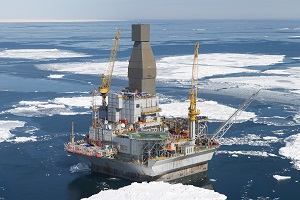
The world’s longest horizontal reach well appears to be the O-14 well drilled by the Sakhalin-1 Consortium in the Sea of Okhotsk, Russia, in April 2015. This well had a horizontal reach of 14,129 meters (46,358 feet).
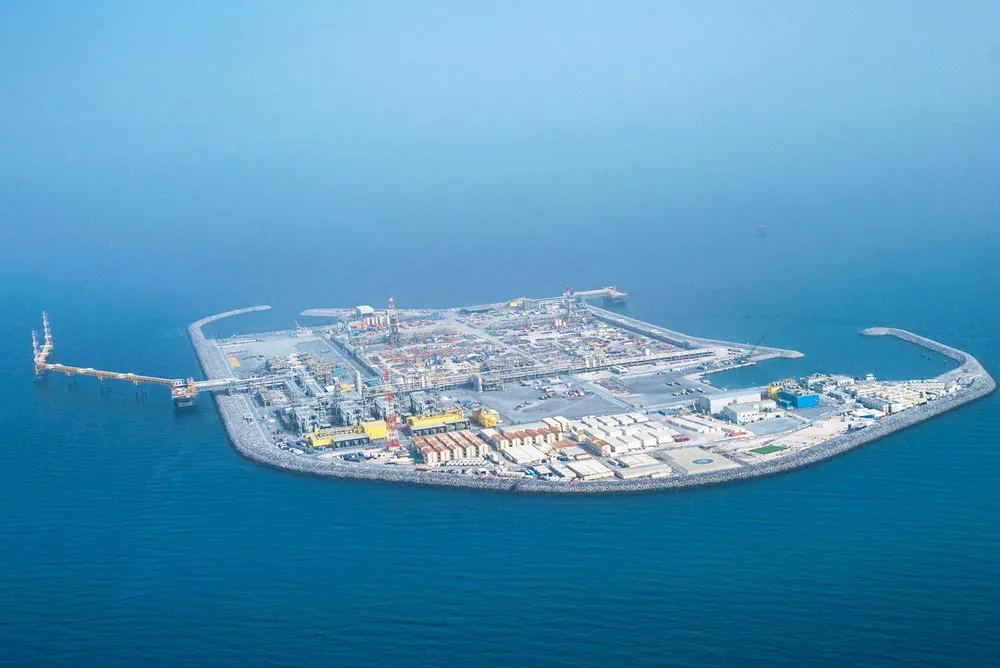
ADNOC, the Abu Dhabi National Oil Company, has the world record (2022) for the longest well (50,000′) in the Upper Zakum field. However, no horizontal reach distance is provided, so it is assumed that the Sakhalin well had the longer reach.
Artificial islands at Adnoc’s Upper Zakum field.Photo: Adnoc
Congratulations to Walter Cruickshank on his retirement from the U.S. Dept. of the Interior!
Walter’s policy acumen, in depth understanding of the offshore program, and balanced perspective on energy development earned him the respect of the political leadership from both parties, a rare achievement. As a result, Walter served more time as Director and Deputy Director of both the Minerals Management Service and Bureau of Ocean Energy Management than any other individual. He also served as Acting Secretary of the Interior during the latest transition, a first for a career offshore program employee.
Walter earned a Bachelor of Arts in Geological Sciences from Cornell University and a Doctorate in Mineral Economics from the Pennsylvania State University (We Are!). Although his Federal career spanned more than 40 years, he has rather remarkably retained his intellect and sanity! 😉
Best wishes to Walter going forward. I hope he finds time to root for his Harwich Mariners in the Cape Cod Baseball League!
Consistent with the proud tradition of the OCS program, I am posting the masterpiece “Rig at Sunset” in Walter’s honor.
“Rig at Sunset” was painted 50 years ago by a US Geological Survey (USGS) employee who chose to remain anonymous. The masterpiece was presented to USGS (later MMS) engineers and scientists who had made important contributions to the offshore oil and gas program. Understandably, the intended recipients were so humbled by the magnificence of the painting that they could not accept it. As the painting grew in value and international prominence, framed copies were presented to retirees and the original painting was kept at a secure, undisclosed location.More on the painting’s important symbolism at a later date. 😉
Attached is the full NTSB report. Here’s what happened:
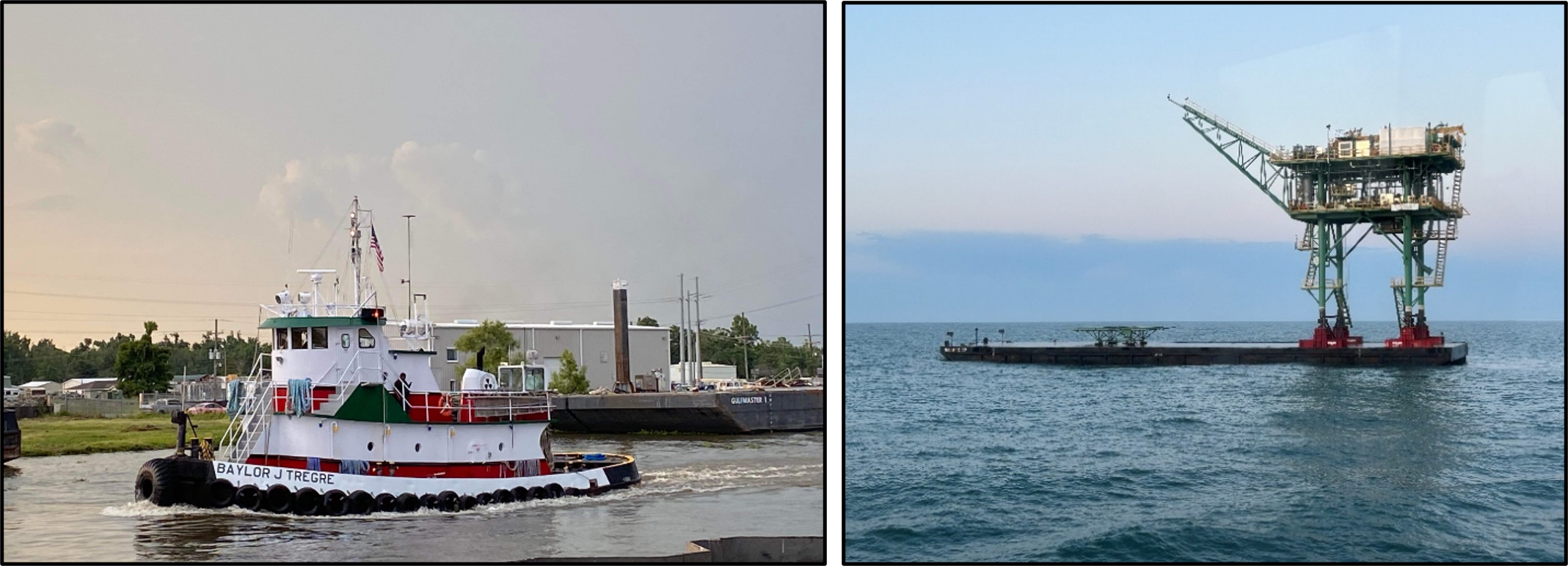
In May 2024, the Baylor J. Tregre tugboat was towing a platform on the barge MARMAC 27 to Brazos Block 538 in the Gulf of America.
The tug capsized in stormy conditions.
The 4 crew members were rescued by the Coast Guard.
The NTSB determined that the probable cause of the capsizing was “the mate’s inability to maneuver the tow into the wind due to the overwhelming towline force generated by the towed barge during the sudden onset of severe weather, resulting in unrecoverable heeling.”
Comments:
Who knew? When a tugboat capsizes while towing a platform on a barge, endangering the crew, that’s a very serious incident. Yet there was no public announcement by the companies involved or the Coast Guard, and there was no media coverage following the incident (May 2024). The NTSB docket includes only the final investigation report.
The NTSB report says a production platform was being towed, but it was actually a gas transmission platform owned by Transco Gas Pipe Line Co. There is no production in Brazos Area Block 538, an unleased block.
Here and here are bits of information on the Transco’s Brazos Area 538 Platform modification project.
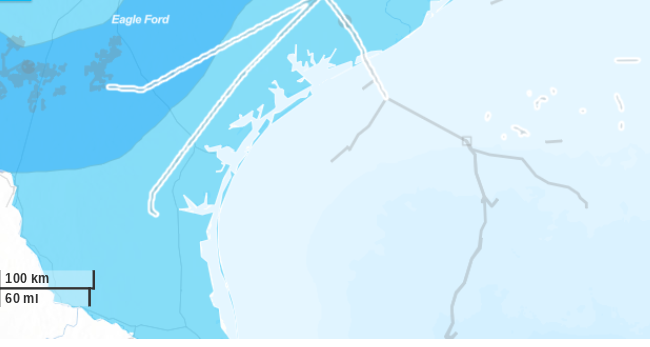
Per a 2007 article, Williams’ Seahawk gathering system, which collects deepwater gas production, connects at Brazos Block 538 with a pipeline that transports gas to the Transco processing plant in Markham, TX (see map below).
The NTSB report lacks contextneeded to understand the planning process, organizational factors, and timing/urgency of the project.
The NTSB report attributes the failure to the mate’s inability to respond to the weather conditions, but provides no information on the safety management system, risk assessment, job safety job planning process, crew training, and other project management factors.
Two of the crew members are suing Trinity Tugsalleging that they suffered personal injuries resulting from the negligence of Trinity and the unseaworthiness of the M/V BAYLOR J. TREGRE.
Deepwater gas gathering system connects with Brazos 538 transmission platform at the “Y” in the center of the screen.
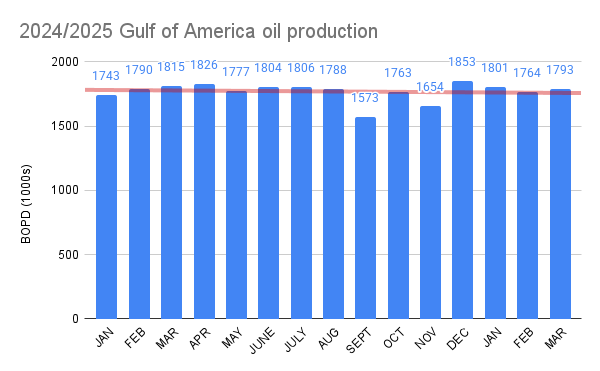
March Gulf of America oil production was nearly identical to the 2024/2025 average, and the trend line (red) is remarkably flat. However, production remains below the volumes forecasted by EIA and well below those forecasted by BOEM.
It appears that new deepwater production is replacing Gulf-wide production declines, but is not yet sufficient to increase total production. We will see if that changes as the year progresses.
March 2025 Gulf of America production: 1.793 million bopd
2024/2025 average production: 1.77 million bopd
2024/2025 average omitting Sept. 2024 (tropical storms): 1.784 million bopd
EIA forecast for 2025 (published 9/16/2024): 1.9 million bopd
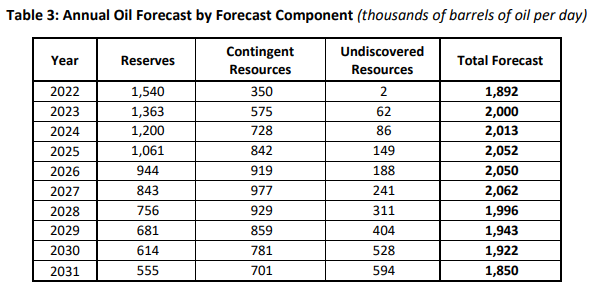
BOEM forecast for 2025 (published in 2022, table below): 2.052 million bopd
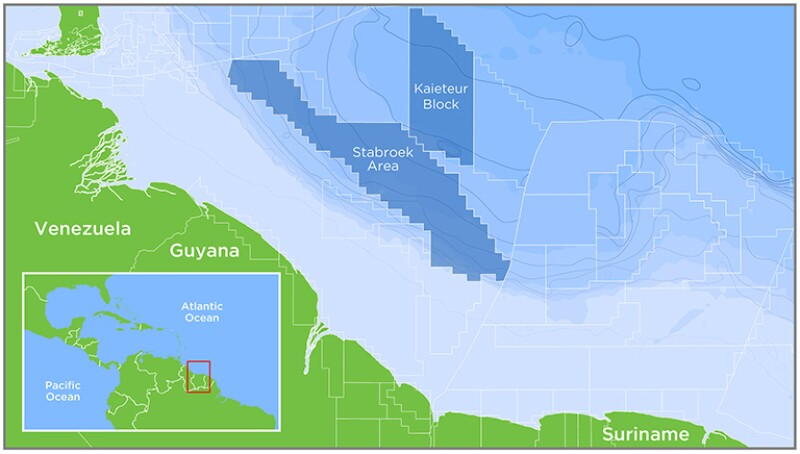
Exxon senior vice president Neil Chapman said he was confident that a three-member arbitration panel would rule in Exxon’s favor and determine it had a right-of-first-refusal to purchase Hess’ stake in a Guyana oil joint venture operated by Exxon.
Hess: “We remain confident that the arbitration will confirm the Stabroek right of first refusal does not apply to the merger.”
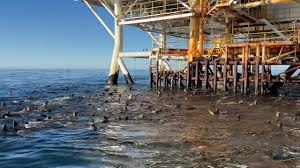
During a recent dive survey at Platform Holly off California’s coast, scientists from the University of California, Santa Barbara (UCSB) had to pause fieldwork because dozens of sea lions took shelter around the structure.
The reason? A pod of killer whales had been spotted hunting near another offshore platform in federal waters.
These real-time encounters reveal more than marine drama. They highlight the ecological role that offshore platforms can play as part of the seascape. UCSB’s work is part of our ongoing study, Understanding Biological Connectivity Among Offshore Structures and Natural Reefs, which explores how marine life moves among natural and manmade habitats.
Part VIII, Offshore OIl and Gas Leasing, is a good read for those interested in OCS leasing policy. This cleverly crafted part of the bill specifies leasing schedules, streamlines the leasing process, and minimizes litigation risks. Highlights:
Minimum royalty rates return to 12.5% from 16.67% post-IRA. (This is good for small, shelf producers.) The maximum rate remains 18.75%.
Requires a Gulf of America lease sale by 8/15/2025, a sale by 3/15 and 8/15 in each of the following 14 years (2026-2039), and a sale by 3/15/2040. 80+ million acres must be offered at each sale unless that amount of acreage is no longer available for leasing.
The lease form, lease terms, economic conditions, and stipulations 4 through 10 must be the same as for Lease Sale 254 (3/18/2020). Stipulations 1-3 may be updated.
Requires seven 1+ million acre (if available) Cook Inlet lease sales from 2026 – 2032. Beginning in 2035, 90% of the revenues go to the State of Alaska.
The required lease sales may be in addition to the lease sales held under the 2024-2029 National Outer Continental Shelf Oil and Gas Leasing Program.
Adherence with the Biological Opinion shall satisfy the Secretary’s obligations under the Endangered Species Act of 1973 and the Marine Mammal Protection Act of 1972
Previous EIS’s for the Gulf of Mexico shall satisfy the Secretary’s NEPA obligation.
Consistency determinations prepared by BOEM for Lease Sale 261 for the States of Texas, Louisiana, Mississippi, Alabama, and Florida will satisfy the Secretary’s CZMA obligations.
The Secretary may waive any requirement under the Outer Continental Shelf Lands Act that the Secretary determines would delay issuance of a lease.
A lease must be issued to the highest responsible qualified bidder not later than 90 days after the sale date.
The Secretary shall establish a process through which a Governor may nominate for leasing under a lease sale held under this section an area of the OCS that is adjacent to the waters of the State; and is unleased and available for leasing. If the Governor of a State nominates an area, the Secretary shall include the area in the next scheduled sale. (It appears that this provision applies only to the Gulf of America. Objective?)
G&G surveys must be approved within 30 days after a complete application is received.
A lease awarded under Lease Sale 259 or Lease Sale 261 shall not be set aside, vacated, enjoined, suspended, or cancelled except in accordance with section 5 the Outer Continental Shelf Lands Act (43 U.S.C. 1334). Also, new terms or conditions may not be added to these leases. (This protects lessees from pending litigation related to these leases).
Any action to approve, require modification of, or disapprove any exploration plan, development and production plan, bidding procedure, lease sale, lease issuance, or permit or authorization related to oil and gas exploration, development, or production, or any inaction resulting in the failure to hold a lease sale shall be subject to judicial review only in a United States court of appeals for a circuit in which an affected State is located.
John Smith’s excellent decommissioning presentation at the recent Western States Petroleum Assoc. luncheon in Santa Barbara is attached. John used an amended version of Bob Byrd’s OTC powerpoint, adding slides on the proposed California Marine Legacy Act amendments.
For those who have been following the Santa Ynez Unit story, Harmony, Heritage, and Hondo are the platforms in that unit. Platform Harmony, where production resumed on the date of John’s presentation (5/15), is in 1198′ of water and is one of the world’s largest offshore structures.

 Bud's Offshore Energy (BOE)